You might be interesting:

Why Natural Stone Never Looks Flat
10 min | 27.05.2026Why Natural Stone Never Looks Flat
When material depth is born not from pattern, but from natural structure, light, and time


Depth That Exists Within the Material
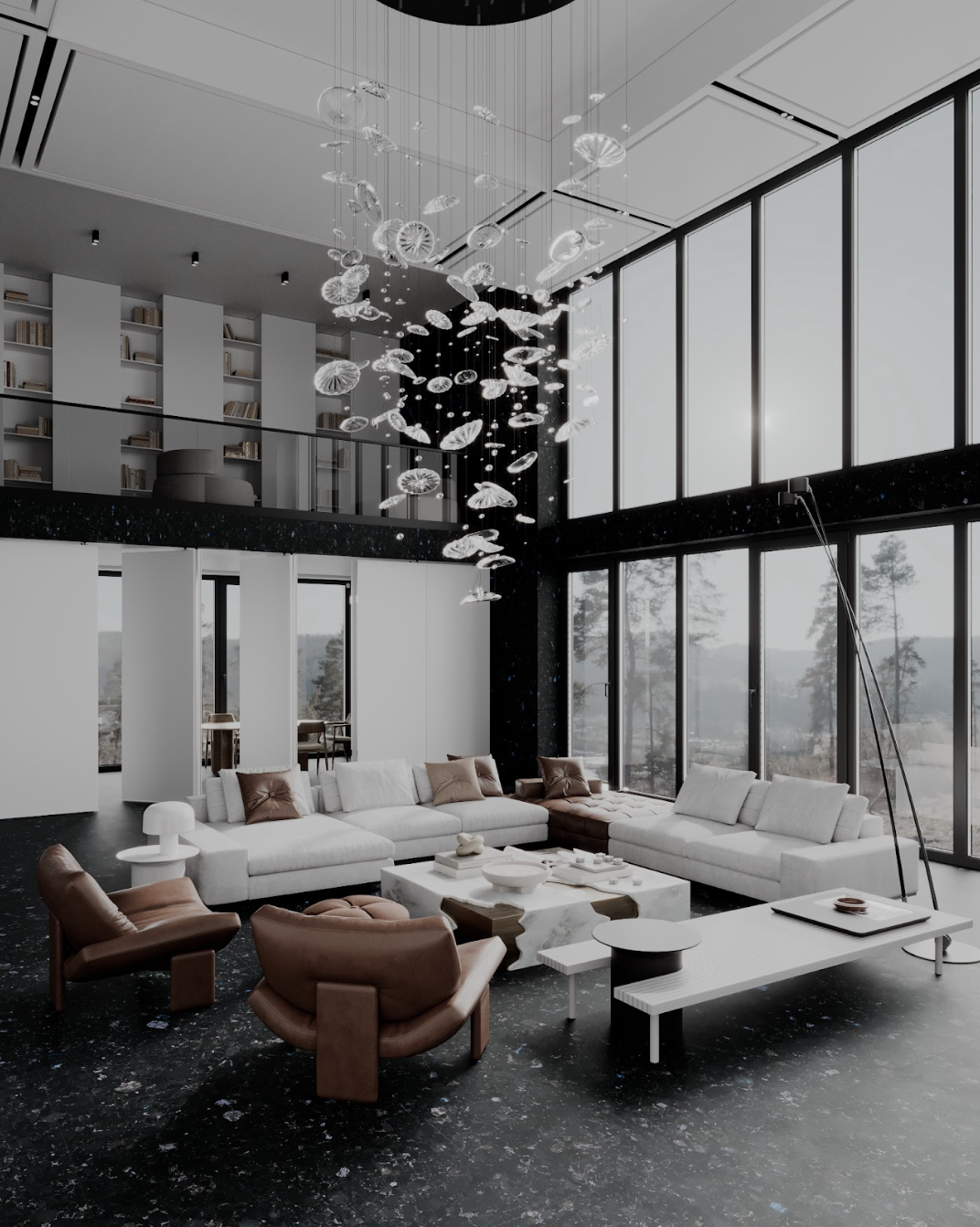
Natural stone is never perceived as a simple surface. Even when it has a restrained color and a calm character, there is always an inner depth within it — a structure that changes with light, viewing angle, and the atmosphere of the space.
This is one of the key differences between natural material and artificial or composite surfaces. Their pattern may be beautiful, precise, and even very well reproduced, but it often remains on the surface. Natural stone works differently: its depth is not applied on top, but born within the material itself.
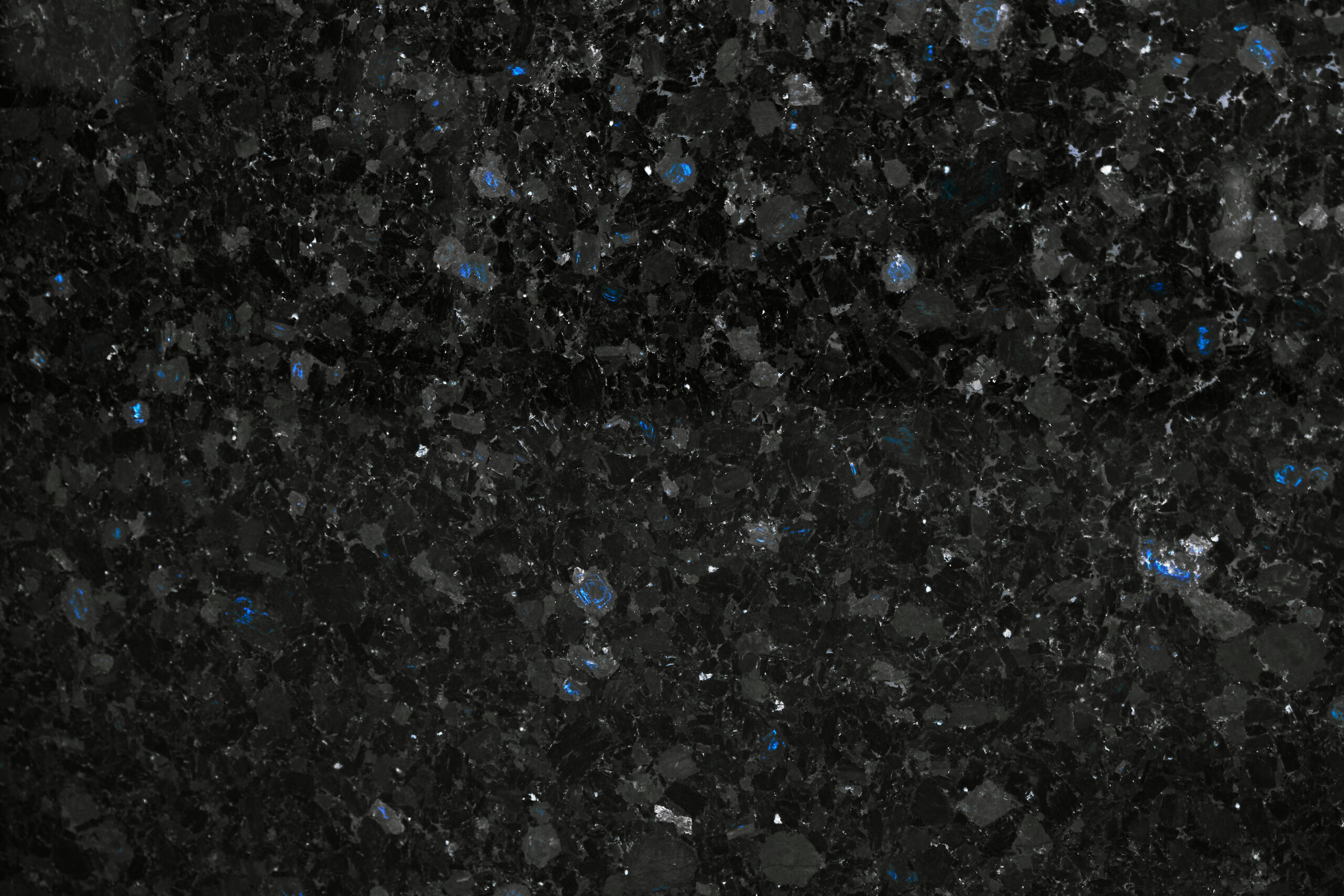
Every natural stone has its own nature of depth: some materials reveal it through veining and tonal transitions, others through porosity, grain, density, or crystalline structure. This is the difference between a real material and a surface that only imitates its pattern.
Depth That Cannot Be Printed
Artificial surfaces often try to reproduce the appearance of natural stone through color, texture, or pattern. They may imitate veining, a dark base, contrast, or the effect of natural variation. But there is always a difference between visual imitation and real material depth.
In natural stone, structure is not an image. It is part of the material itself.
A printed or repeated texture can convey the outer appearance of stone, but not its internal structure. In a natural material, depth does not exist separately from the mass of the stone: it appears through minerals, density, subtle color transitions, natural irregularities, and the way the surface responds to light.
That is why natural stone does not look like a static plane. Even in a restrained interior, it has its own rhythm — calm, natural, and unrepeatable. The surface is not mechanically repeated, does not read like a print, and does not lose its sense of material presence.
Light That Changes the Perception of the Surface
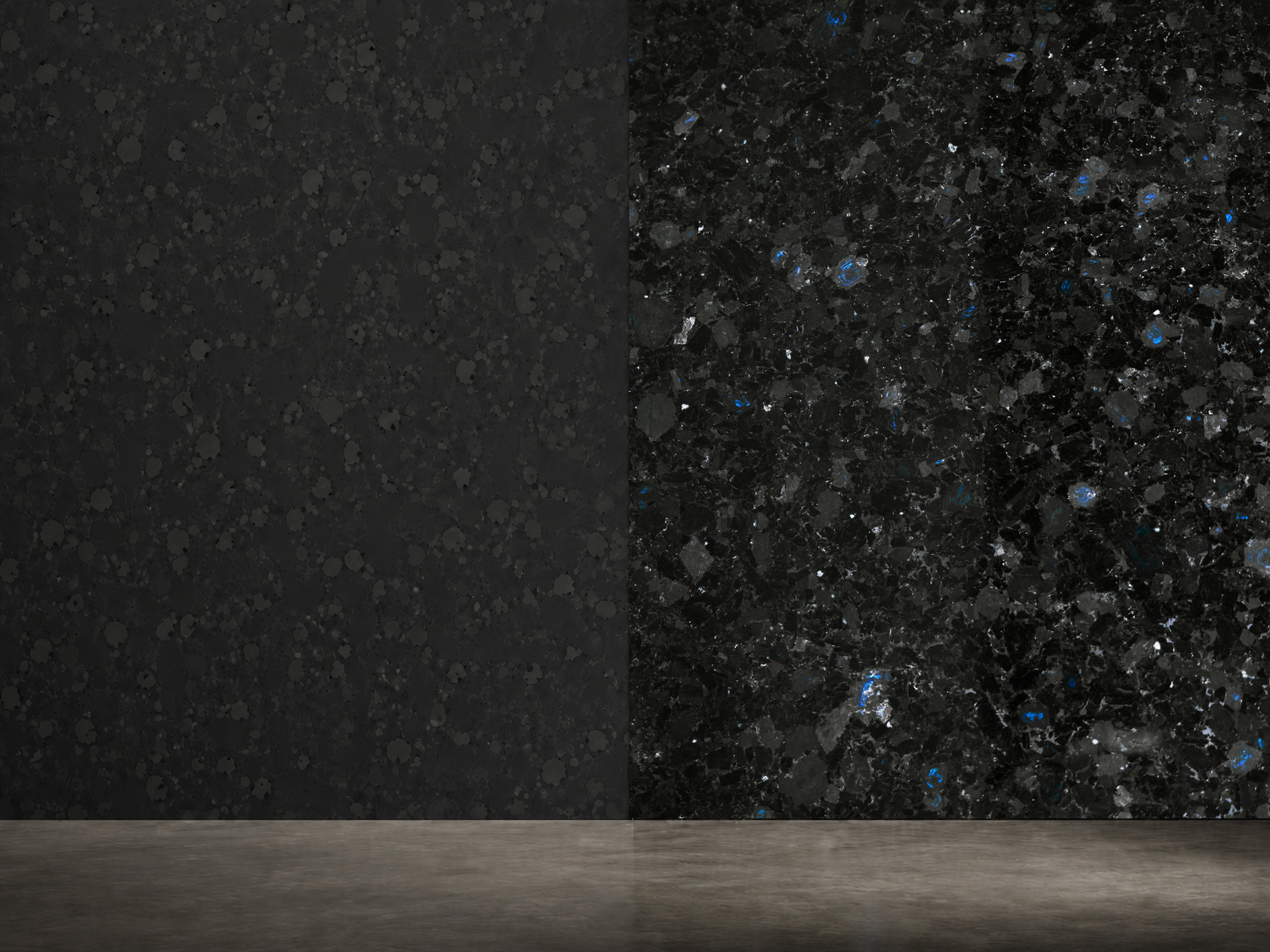
Natural stone behaves differently in daylight, evening light, and artificial lighting. It does not remain the same throughout the day, because its surface responds to changes in light, shadow, light transitions, and surrounding materials.
Light does not simply make natural stone lighter or darker. It changes the way its structure is read: some areas become deeper, others softer, and certain mineral inclusions begin to appear more delicately. The surface does not remain fixed, because it has not a printed pattern, but a natural internal structure.
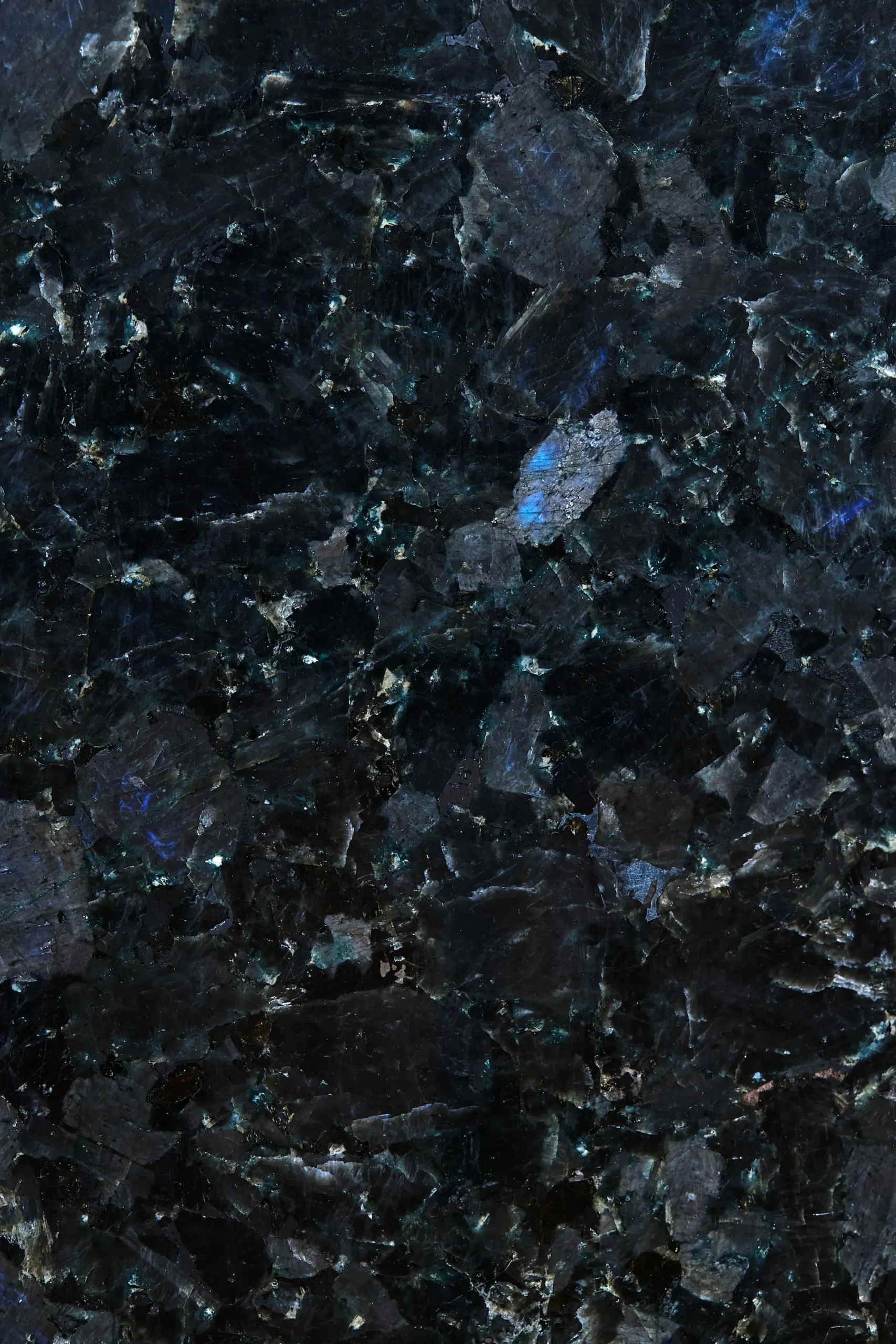
Compared with many natural stones, labradorite responds especially subtly to changing light. Its crystalline structure does not simply receive illumination on the surface — light seems to enter the material, enhancing the graphite base, natural iridescence, and inner layered depth of the stone.
This is not decorative shine and not an artificial effect. Labradorite has a natural crystalline structure through which iridescence emerges from the depth of the material itself, not from a surface coating or applied pattern.
The surface does not look the same from different angles — it changes with the space, delicately and naturally.
Why Artificial Surfaces Often Look Static
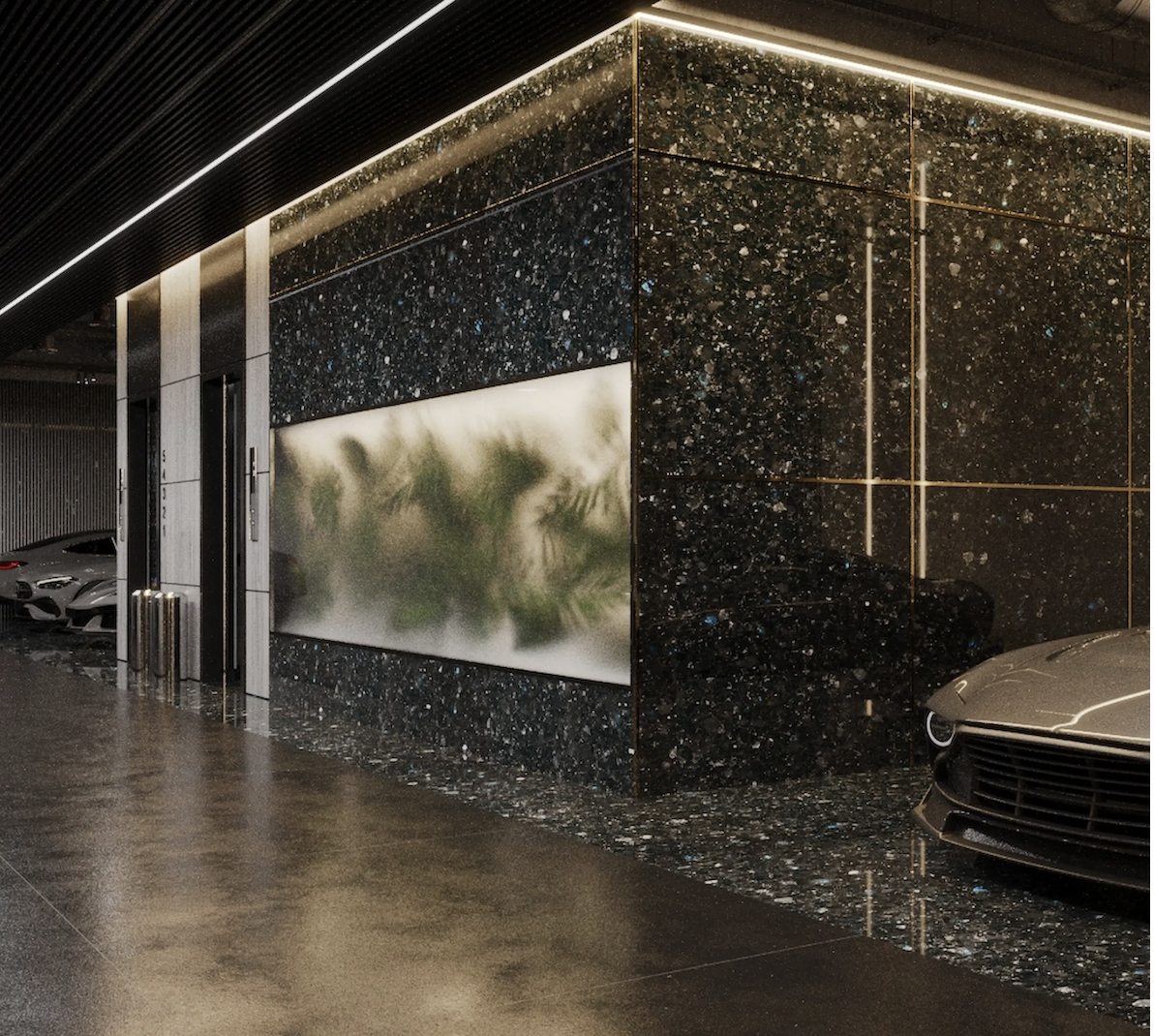
Composite materials, porcelain, or decorative surfaces can reproduce a particular visual image very accurately. But their structure often remains predictable. The pattern repeats, depth reads as an image, and light usually stays on the outer layer.
In a space, such a surface may look neat, but it does not always create the feeling of a living material.
Natural stone works differently. It has internal irregularity, density, and natural complexity that are not mechanically repeated. Each plane has its own character: soft transitions, shifts in tone, structural depth, and a response to light.
That is why natural stone can be calm, restrained, and even highly minimalist, while still carrying movement within the material.
Natural Structure as a Source of Depth
The depth of natural stone does not need much explanation when the material is present in a space. It is felt through density, texture, light on the surface, and the natural uniqueness of each plane.
Unlike artificial surfaces, natural stone does not repeat the same pattern again and again. There is no feeling of serial production or printed texture. Each plane has its own character: soft transitions, mineral inclusions, natural irregularity, depth of color, and response to light.
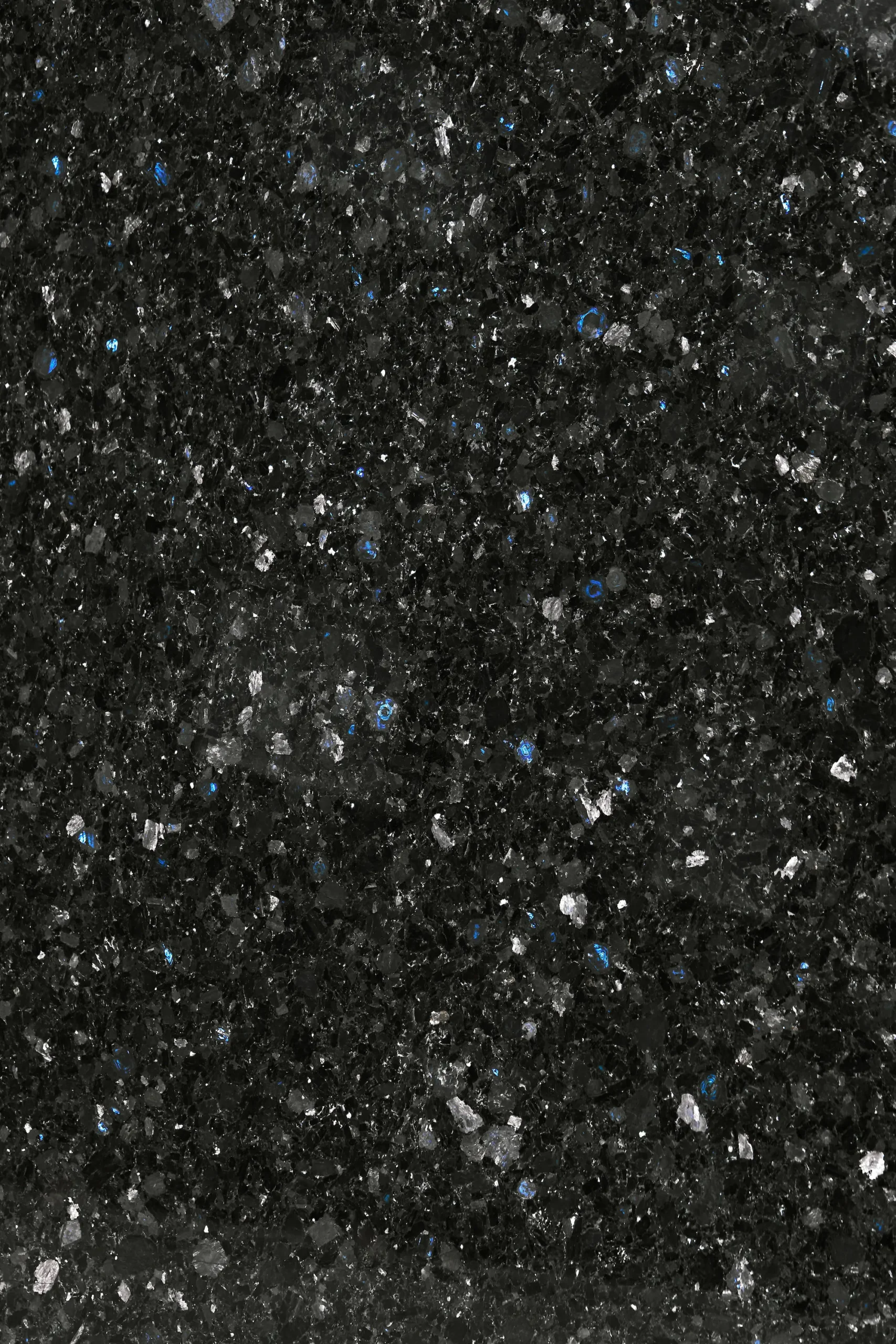
In materials with a deep crystalline structure, this quality becomes even more perceptible. Labradorite does not try to attract attention through an active pattern. Its surface works more quietly — through a graphite base, crystalline structure, light transitions, and delicate iridescence.
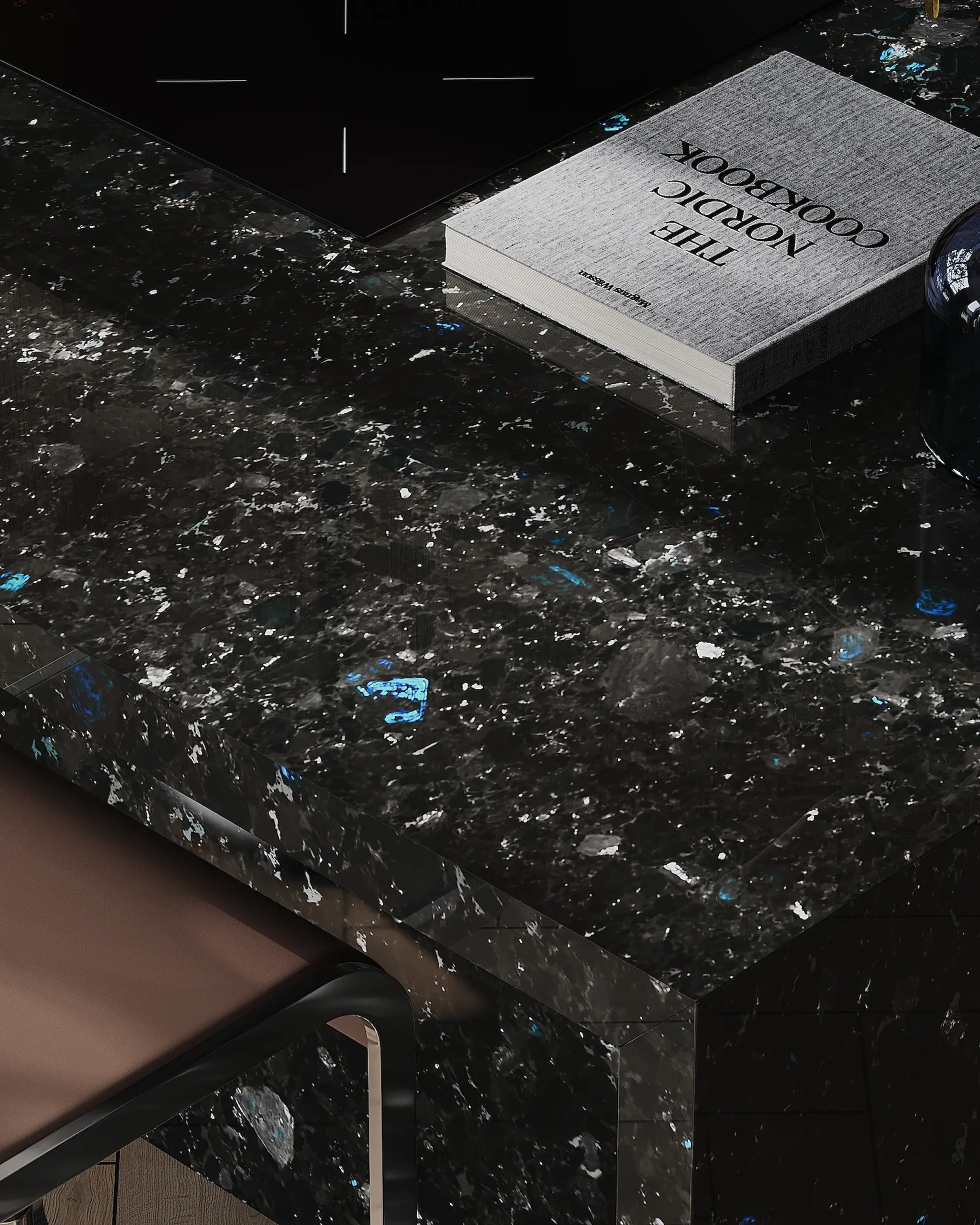
Golovinski Labradorite does not look like a surface with a pattern, but like stone with inner depth. It remains restrained, but not empty. Its strength reveals itself gradually — through light, scale, and the natural layered structure of the material.
A Material That Changes with the Space
True natural stone never exists separately from its environment. It changes beside wood, glass, water, metal, textiles, and architectural light. The same stone surface can look different in different interiors, because its character depends not only on the material itself, but also on the atmosphere around it.
Artificial materials are more often predictable. They can imitate the external image of stone well, but they usually do not have the natural layered depth that allows a surface to change with light, scale, and environment. Their depth is more often read as an image, while natural material carries it within its own structure.
In marble, light moves through the veins, enhancing their flow and making the surface more decorative and expressive. Travertine works more softly: its porous structure seems to mute the light, filling the space with warmth, calm, and natural minerality. Granite holds a different character — denser, more granular, more restrained, and more stable in perception.
Labradorite has a different nature of depth. It does not reveal itself through an active pattern or obvious relief. Its graphite base, crystalline structure, and delicate iridescence work more subtly: the stone seems to absorb the mood of the space, light, shadow, and the warmth of surrounding materials — and return them through its own depth.
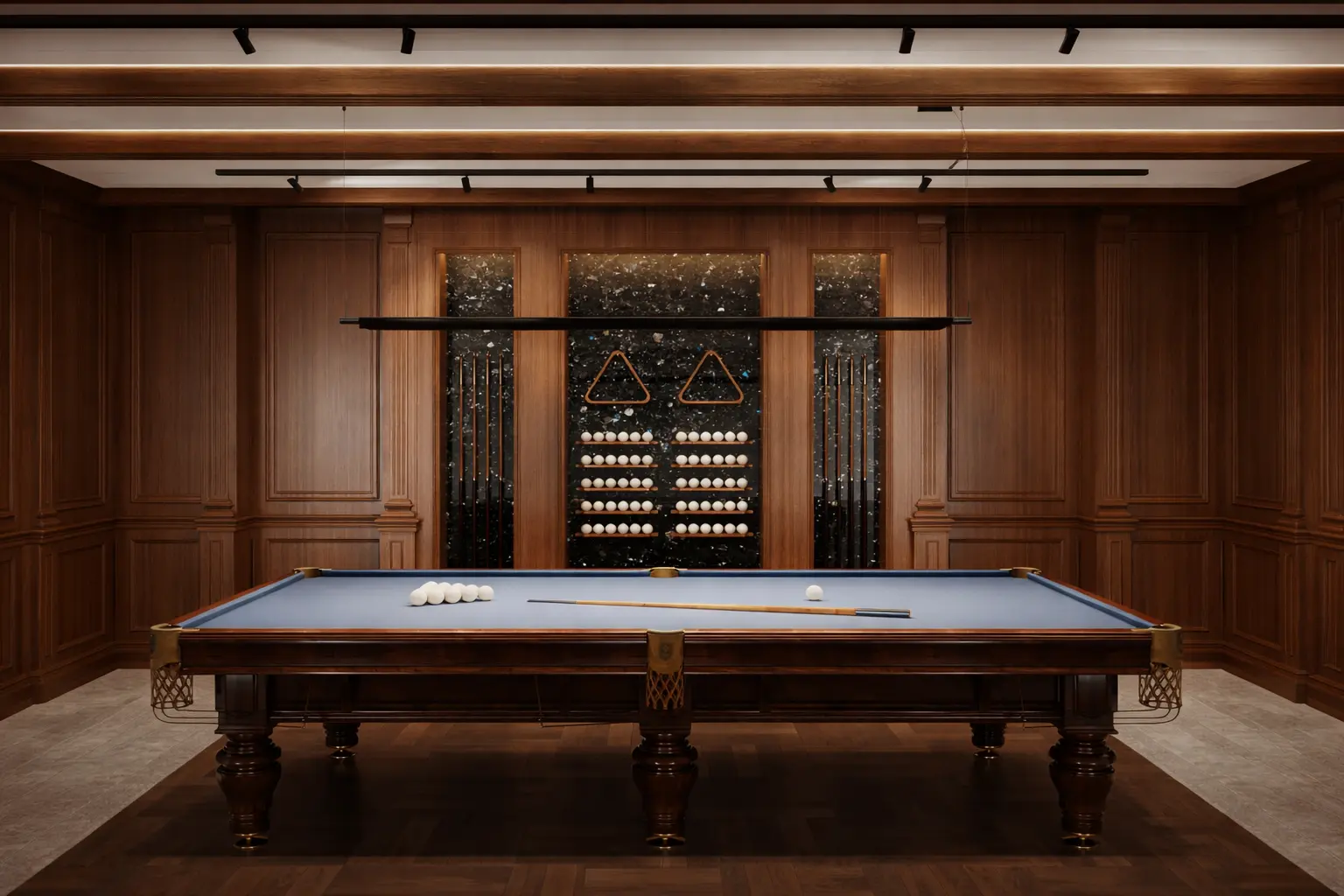
In this context, Golovinski Labradorite adds not visual noise, but a calm material presence to an interior. In daylight, the surface reads as more graphite-toned and restrained; under warm architectural lighting, it becomes deeper, more alive, and more shimmering.
Not a Flat Surface, but Natural Materiality
Natural stone does not look flat because its beauty is not limited to color, pattern, or external texture. It is born within the material — in its structure, density, mineral depth, and ability to receive light in different ways.
A surface that only imitates stone can repeat the general image: color, veining, texture, or contrast. But it is difficult for it to convey the most important qualities — the feeling of natural mass, inner depth, and uniqueness that arise not on the surface, but inside the material itself.
Next to marble, travertine, or granite, labradorite has its own, more restrained and deeper language of materiality. Its graphite base remains calm, but within that restraint there is a complex depth of stone. Natural iridescence does not make the surface loud or decorative. It only enhances the character of the material, adding movement, inner light, and the feeling of true natural mass that cannot be repeated by an artificially created or printed surface.
Golovinski Labradorite does not create an illusion of depth. It forms it naturally — through the structure of the stone, light, and the atmosphere of the space. That is why such a surface is not perceived as a flat dark plane. It remains alive, calm, and deep, even in a minimalist interior.