
You might be interesting:

How a Slab Becomes an Architectural Surface
10 min | 02.06.2026How a Slab Becomes an Architectural Surface
When natural stone stops being a separate material and begins to shape the character of a space


From Material to Architecture
A natural stone slab is not just a large stone plate. It already carries the story of the material: natural structure, depth of color, mineral density, light transitions, and a unique character that cannot be fully recreated by an artificial surface.
But the true strength of a slab is not revealed when we look at it separately. It appears in architecture — when the scale, finish, light, and placement of the stone begin to work together with the space.
At that moment, the slab stops being just a material. It becomes a surface that holds a wall, sets the rhythm of an interior, emphasizes the geometry of a facade, or creates depth in a main zone. The stone is no longer perceived as a decorative insert. It becomes part of the architectural language.
Golovinski Labradorite reveals itself especially well in this logic. Its deep graphite base, natural crystalline structure, and delicate iridescence allow the slab to work not through a loud pattern, but through calm material presence. This is a stone that does not simply cover a surface — it gives the space depth, weight, and character.
Scale That Changes the Perception of Stone
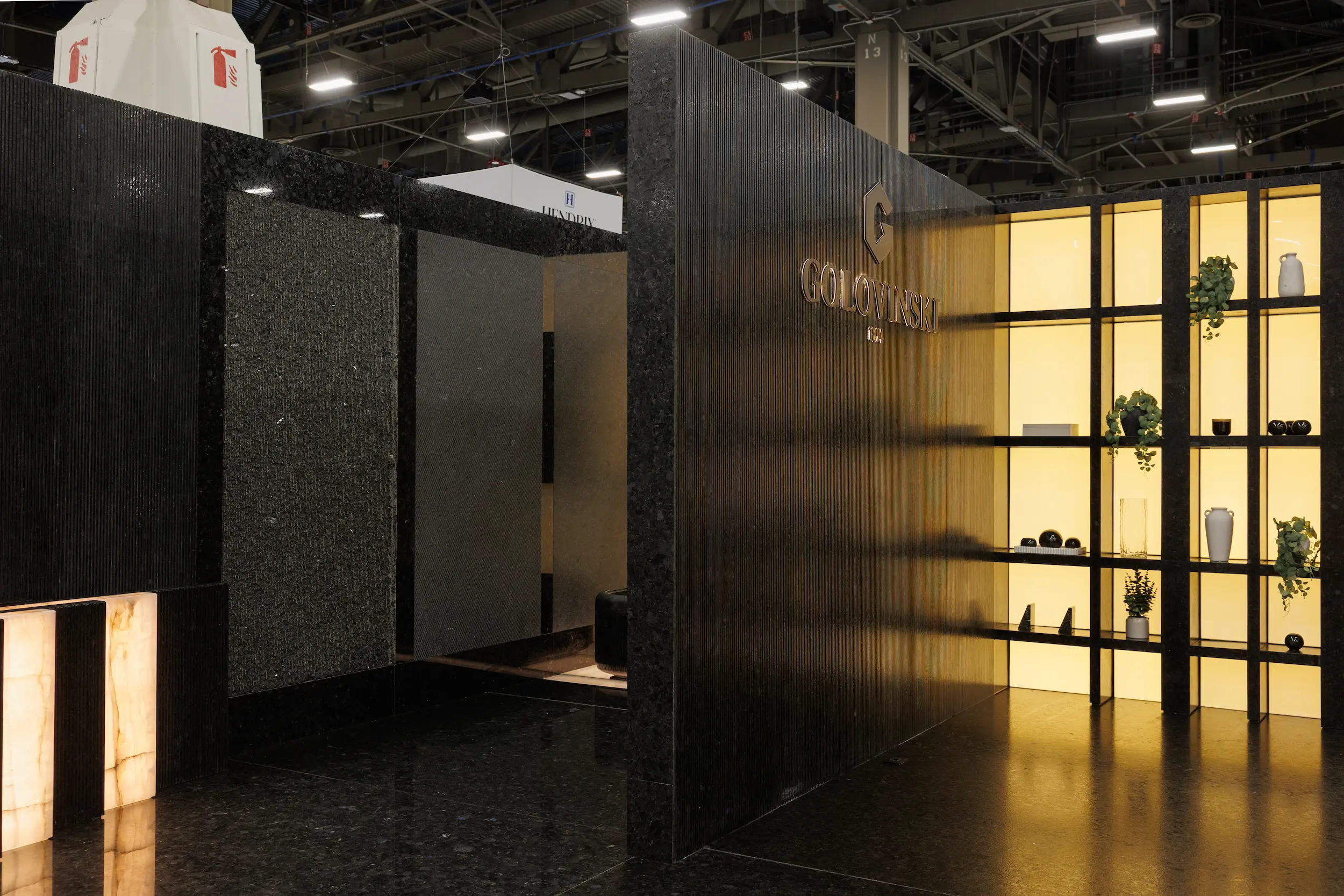
The same stone is perceived very differently in a small fragment and across a large surface. A small sample shows color, part of the structure, and a single fragment of iridescence. A large slab reveals something else — the rhythm of the material, its inner depth, natural transitions, and architectural strength.
Scale allows the stone to speak more fully. Across a large surface, it does not break into random elements. It works as one material field, where the graphite base, crystalline structure, and light create a calm yet expressive image.
For labradorite, this is especially important. Its beauty does not lie only on the surface. It appears in the depth of the stone — in its dense structure, natural iridescence, subtle transitions, and the way its mood changes depending on the viewing angle. In a large format, these qualities are read not as fragments, but as a whole.
When a slab has enough scale, it no longer needs additional decorative explanation. Its presence becomes self-sufficient: calm, confident, and architectural.
Surface Continuity as a Feeling of Calm
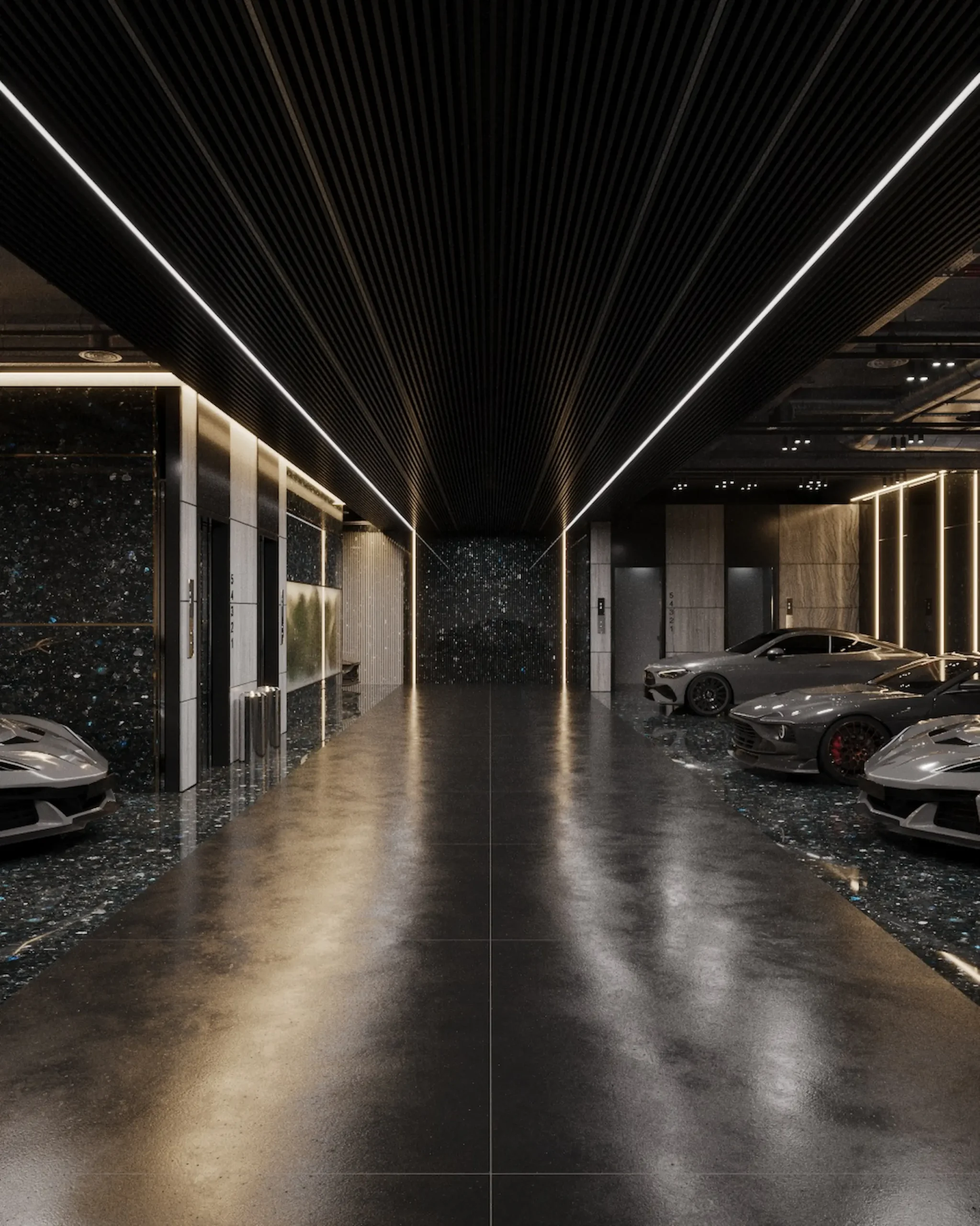
An architectural surface begins where the material is perceived not as a set of separate parts, but as one continuous plane. That is why slab continuity matters so much for interiors and facades.
When the eye does not stop on unnecessary seams or accidental lines, the stone reads with more depth. The surface becomes calmer, cleaner, and more composed. In the space, there appears a feeling not simply of finishing, but of real material presence.
For dark stone, this is especially important. A graphite surface has to work confidently and cleanly. If it is excessively divided, it loses part of its architectural strength. But when the structure of the slab opens across a large surface, the stone begins to create a different feeling — silence, scale, and depth.
In Golovinski Labradorite, this continuity allows the natural structure of the material to be seen more clearly. The surface does not look flat or printed. It has inner movement: a graphite base, mineral transitions, crystalline density, and rare blue flashes that do not dominate, but only enhance the character of the stone.

Light, Finish, and the Character of the Future Surface
A slab becomes an architectural surface not only because of its size. Equally important is how the stone receives light and what kind of character the finish gives it.
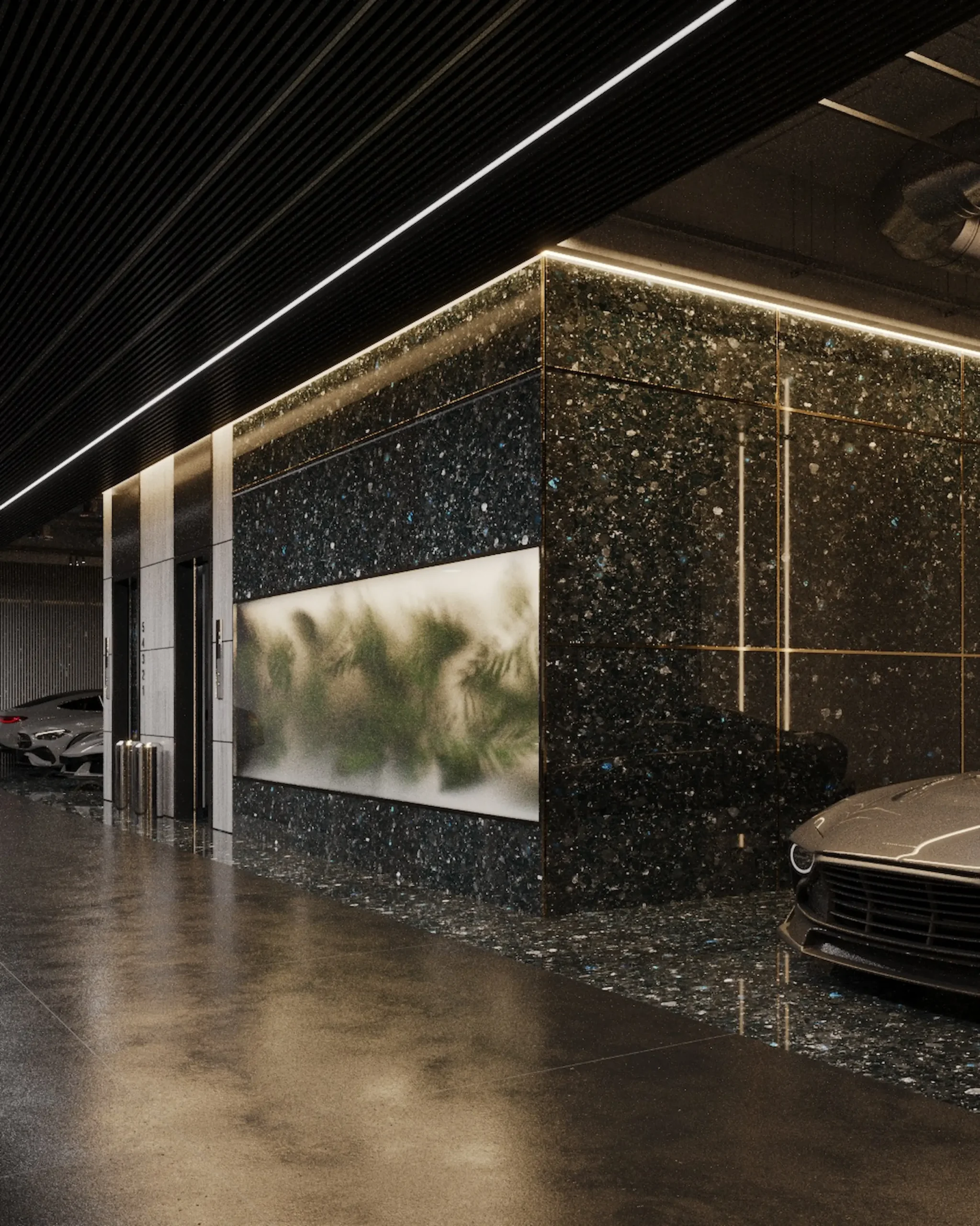
The same plane can feel different in daylight, under warm architectural lighting, or next to water, wood, glass, or metal. Light does not simply make the stone lighter or darker. It changes the way its structure is read.
In labradorite, light works especially subtly. It enhances the depth of the graphite base, reveals the crystalline structure, and opens delicate iridescence. The stone does not remain static. It changes with the space, receiving its mood and returning it through its own natural depth.
The finish adds another layer to this perception. A polished surface reveals light, depth, and the feeling of inner movement more strongly. More restrained finishes make the stone softer, calmer, and more tactile. Textured surfaces work through shadow, touch, and rhythm.
That is why a slab should not be judged only as “dark,” “polished,” or “large.” It should be read as a future atmosphere: where the light will be, from what distance the surface will be seen, what materials will stand beside it, and what feeling should appear in the space.
A Slab in the Interior: Not an Accent, but Part of the Space
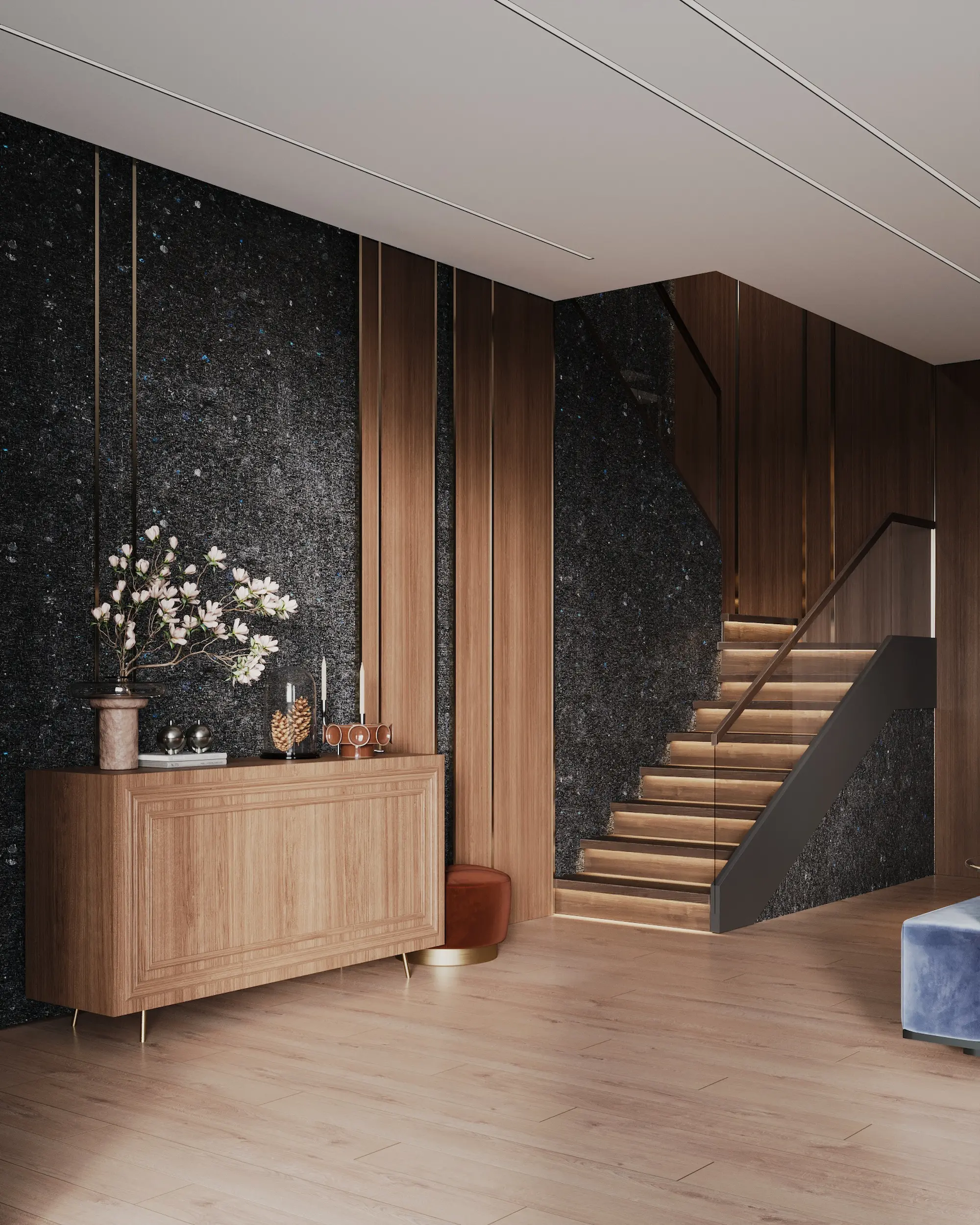
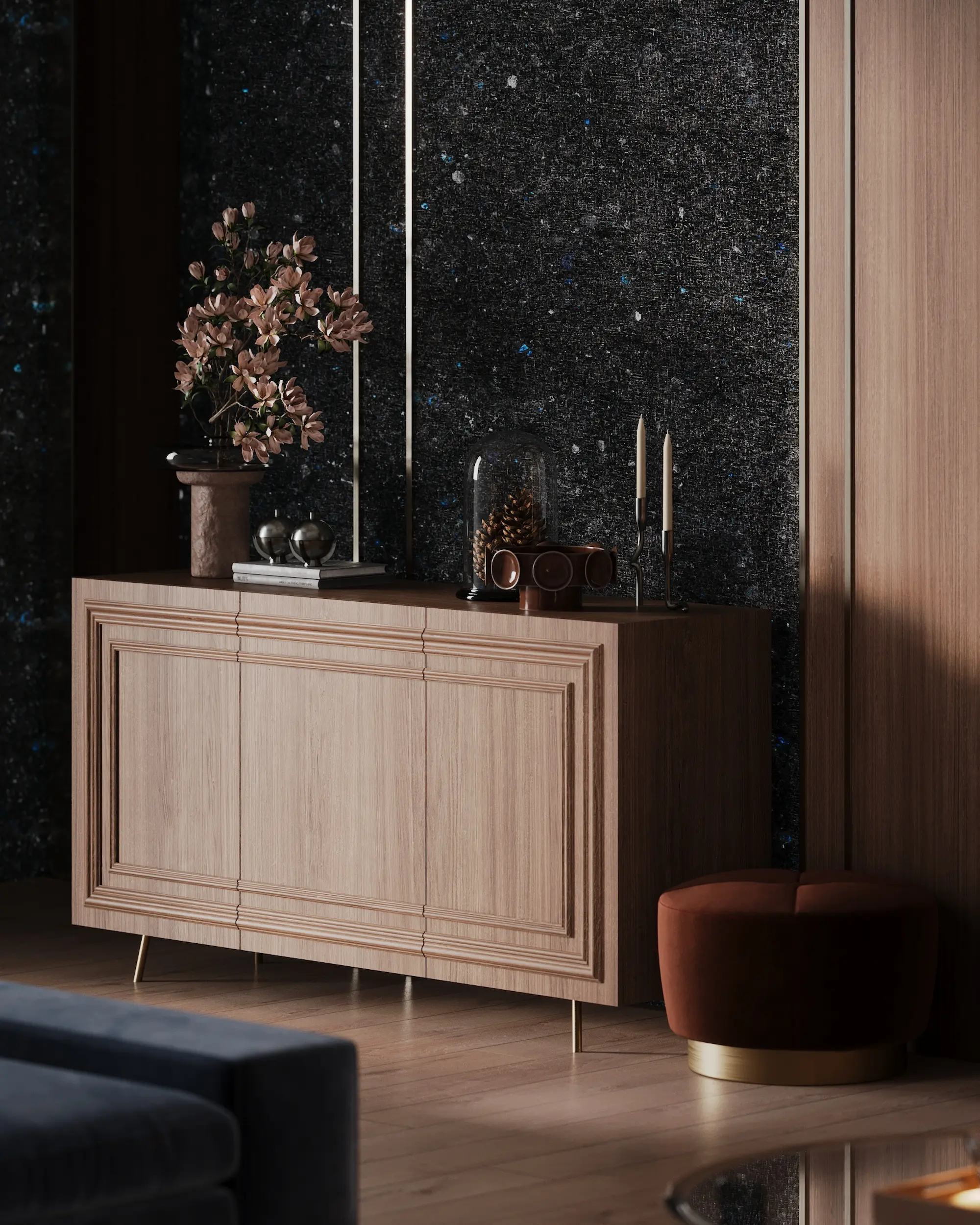
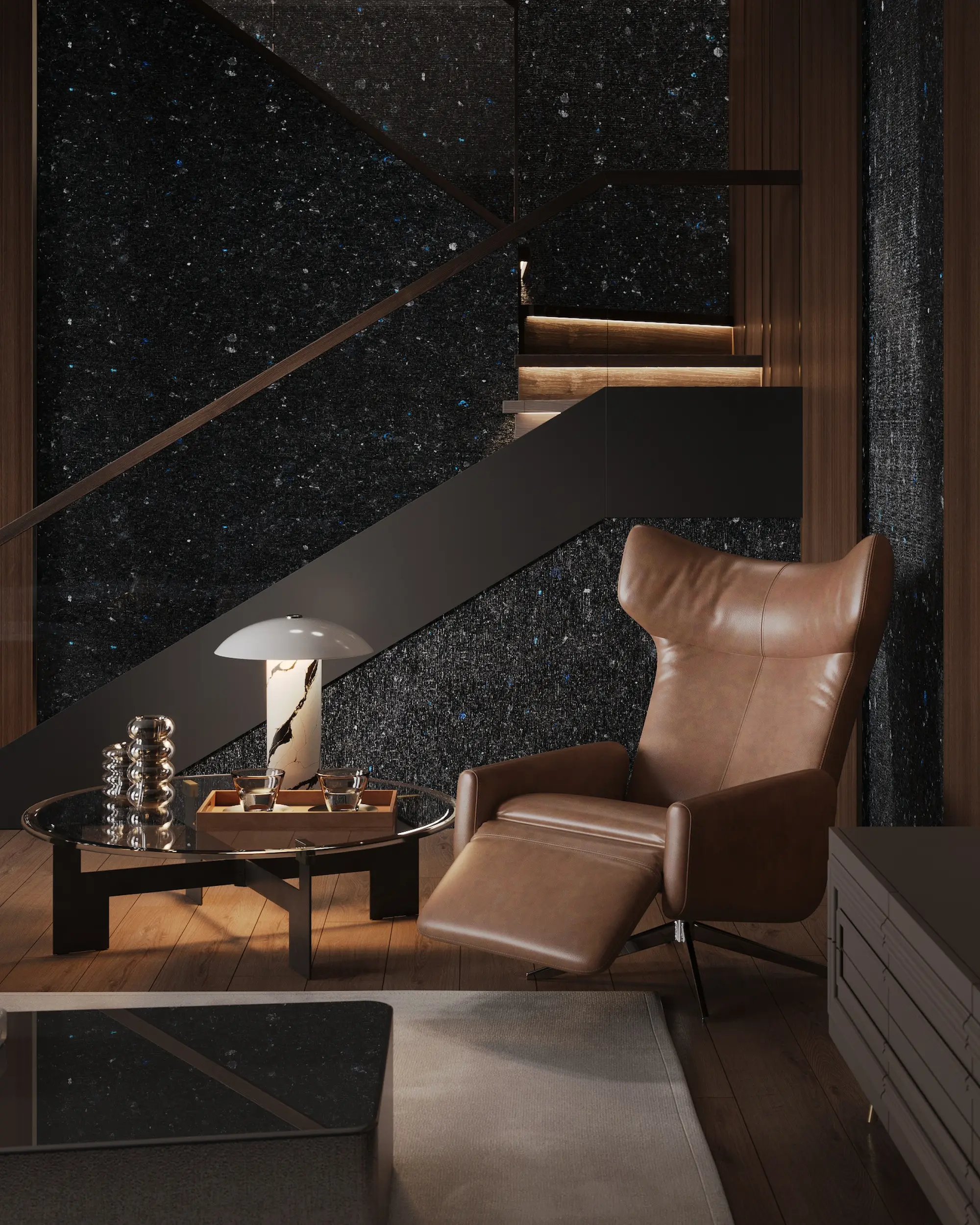
In an interior, a slab becomes an architectural surface when it does not look like a random decorative insert. Natural stone works most strongly where its presence is supported by the overall logic of the space: clean lines, correct proportion, light, and materials that do not compete with it.
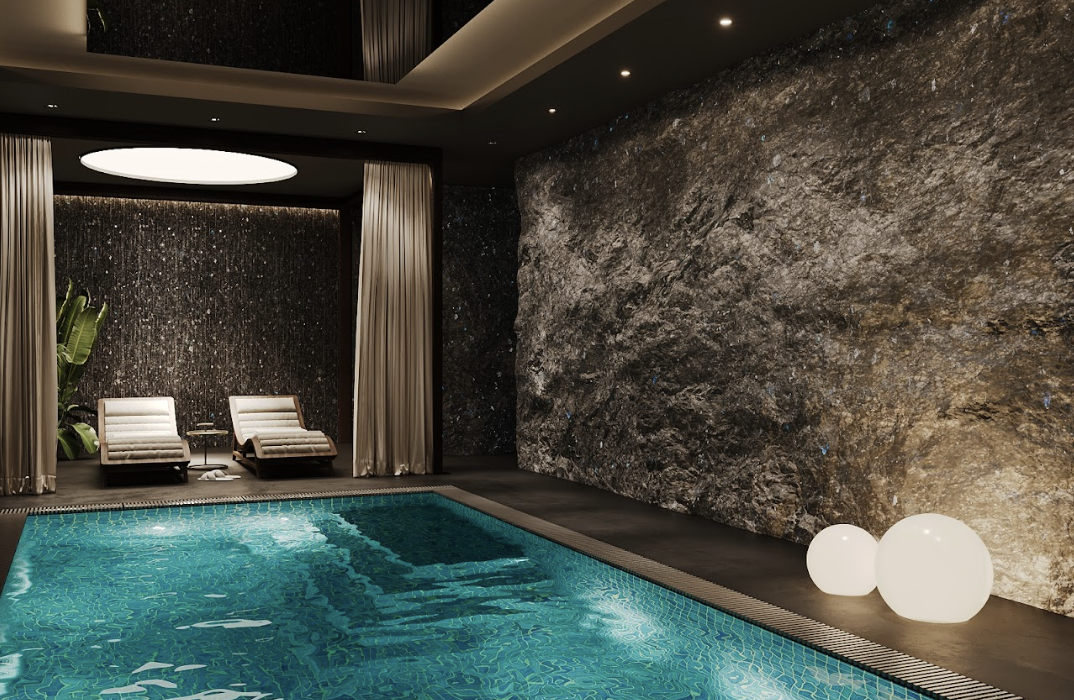
Across a large wall surface, labradorite can create a deep graphite background without any feeling of emptiness. In a fireplace area, it can strengthen the center of the space. In a kitchen island, it can form material mass and architectural weight. In a bathroom or SPA space, it can work beside water, soft light, and tactile surfaces.
What matters is not only where the stone is used, but what role it receives in the architecture of the space. A slab can emphasize a vertical line, form a horizontal plane, gather other materials around itself, or create a calm boundary between zones.
In this scenario, Golovinski Labradorite works not as finishing for effect. It changes the very feeling of the interior: adding depth, silence, material weight, and natural complexity.
A Slab on the Facade: Stone at the Scale of Architecture
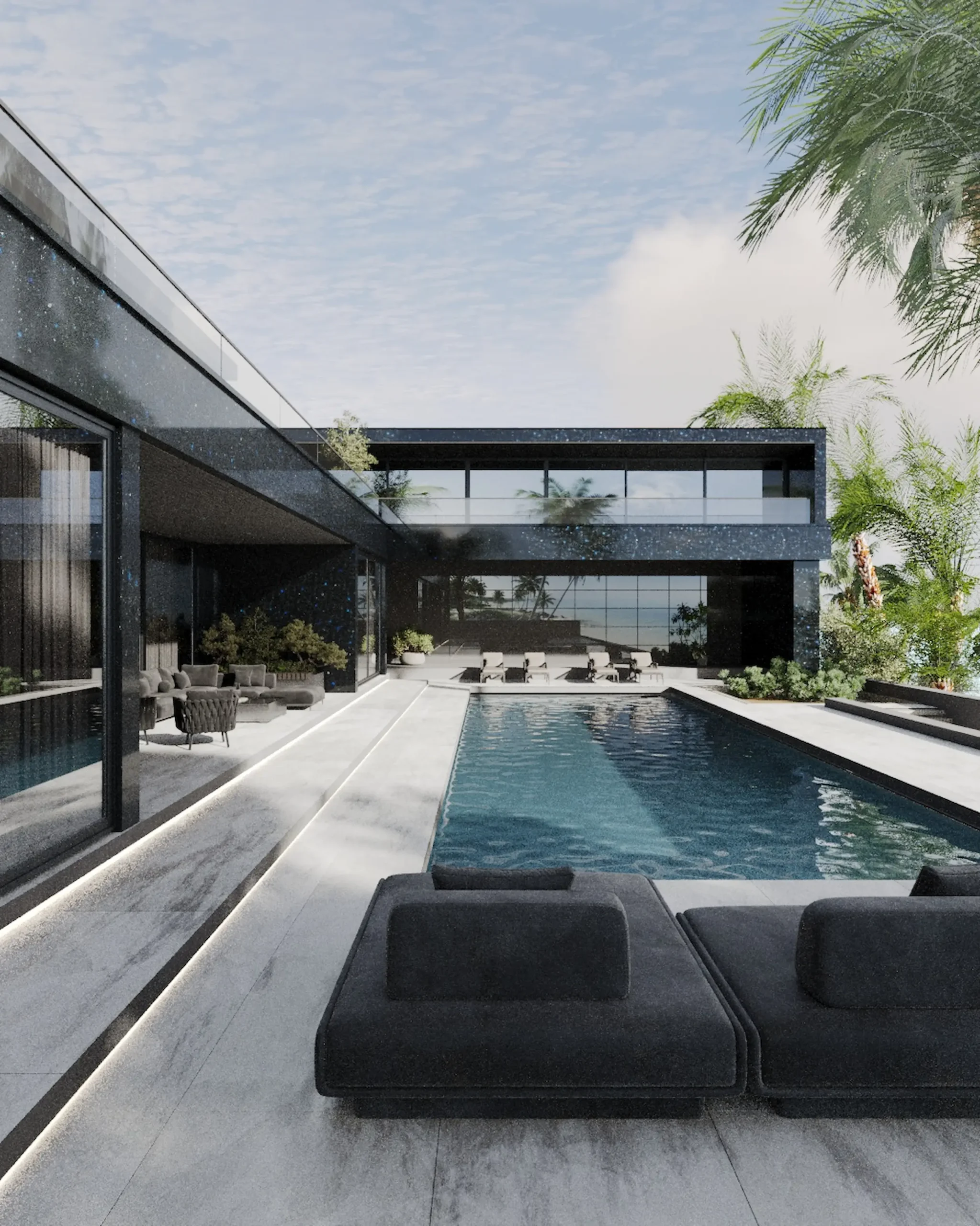
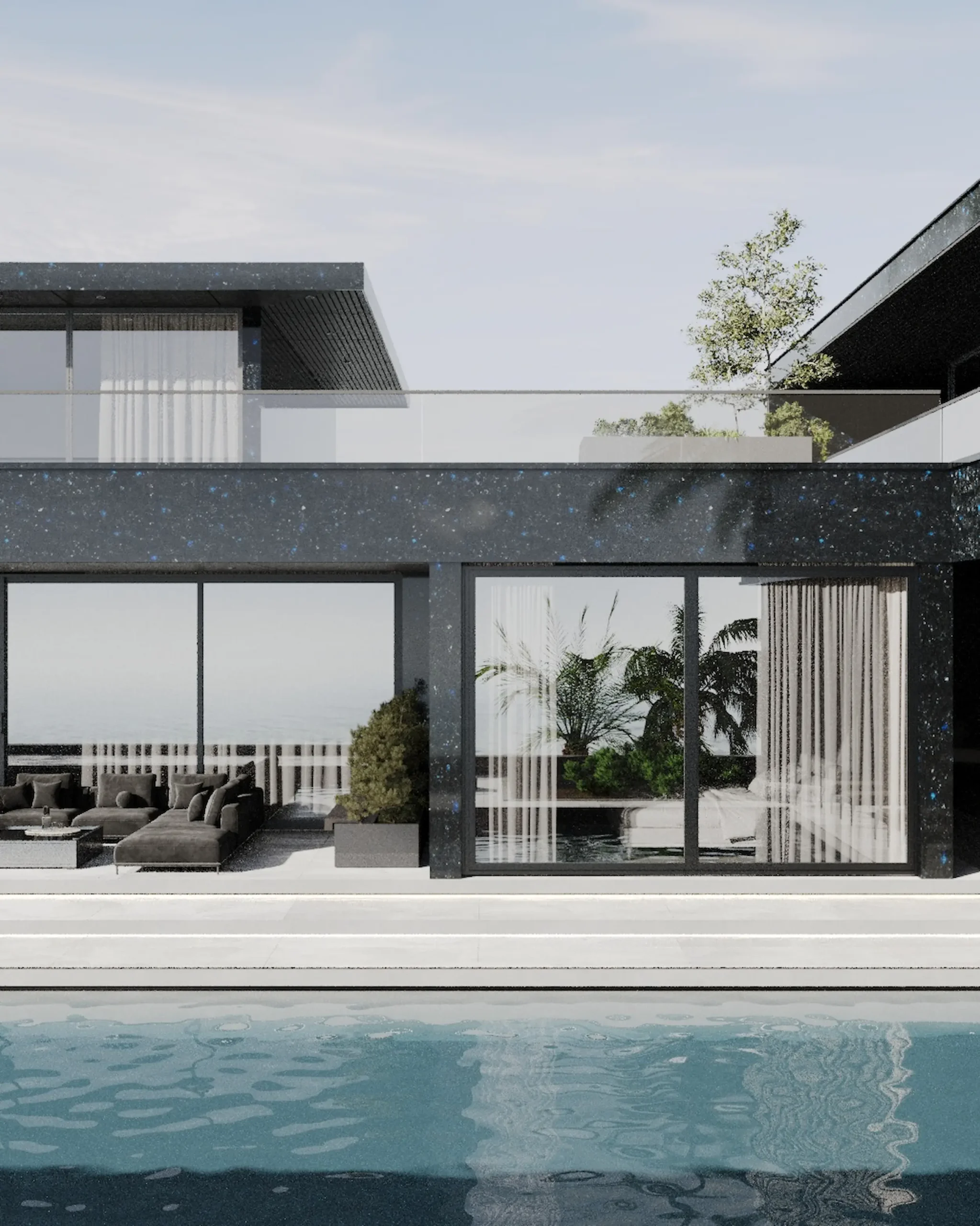
On a facade, a slab receives an even greater scale of responsibility. Here, the stone works not only with close contact, but also with distance, natural light, shadow, weather, and the overall form of the house.
A facade surface has to be convincing from different angles. Up close, the structure of the stone, its texture, depth, and natural transitions are important. From a distance, what matters is the overall mass, rhythm, restrained color, and the way the material supports the architectural form.
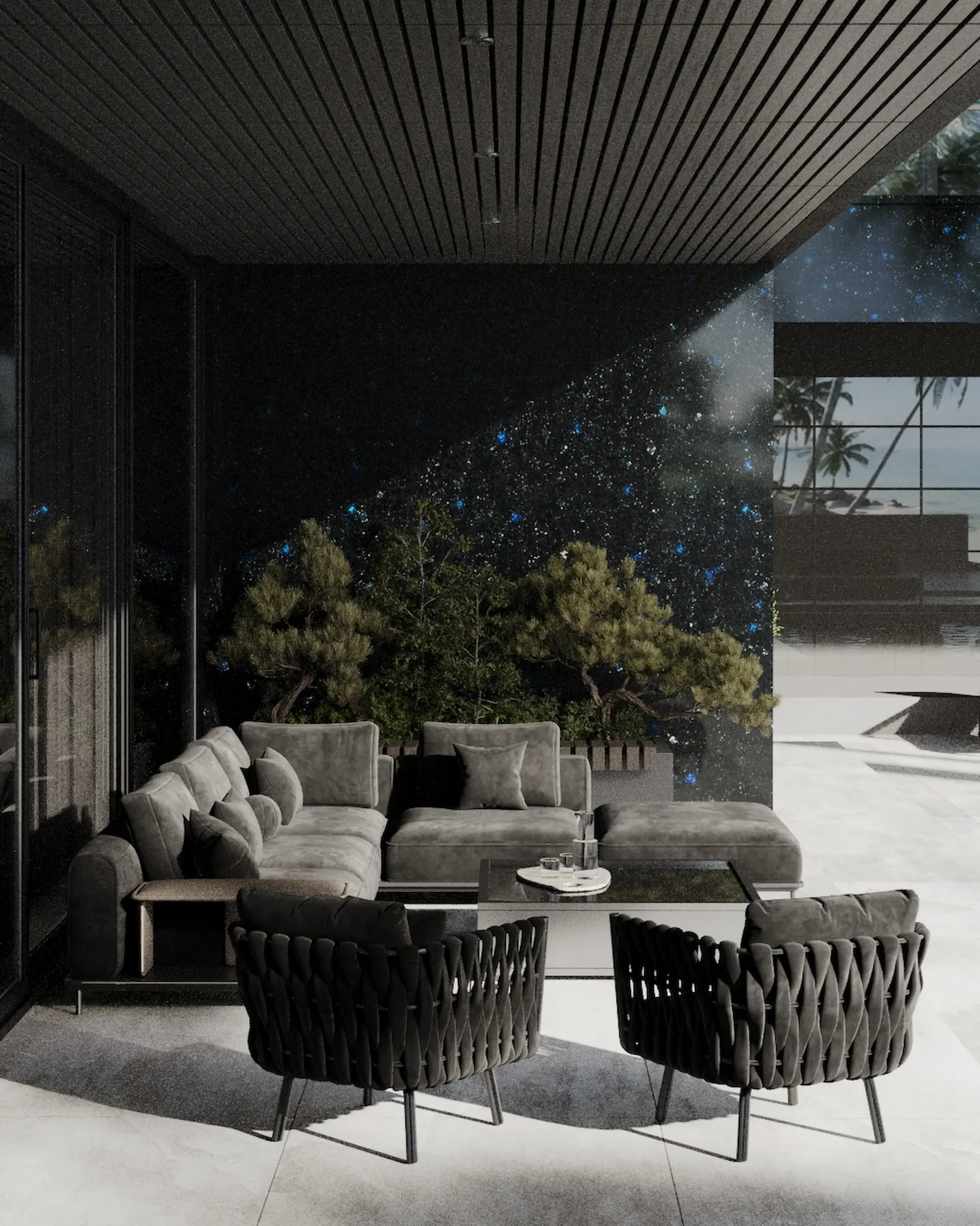
Labradorite on a facade can look calm, graphite-toned, and composed. It does not need an active pattern to create a strong impression. Its expressiveness is born not from decorativeness, but from the depth of the material, the density of the surface, and its interaction with natural light.
When the same stone appears inside the house as well, the architecture begins to feel more cohesive. The slab stops being only facade cladding or an interior accent. It becomes part of one shared material language of the space.
From a Separate Plate to the Material Language of Space
The architectural strength of a slab appears when its natural structure begins to work at the scale of space. Stone becomes a language through which architecture speaks about depth, calm, status, nature, and precision.
In this sense, a slab is not the final form of the material, but the beginning of an architectural decision. Its future role depends on how an architect or designer reads the structure of the stone, chooses the finish, defines the scale, and places the surface in interaction with light.
The same material can reveal itself differently. Across a large wall plane, it creates silence and depth. On a facade — monumentality and stability. In a detail — precision and status. Near water — softness, reflection, and a living play of light.
This is why a natural stone slab should not be seen only as a product. In the right architectural logic, it becomes a surface that shapes the character of the space.
When Stone Shapes the Space
A slab becomes an architectural surface when the material stops being a separate object and begins to work together with the space. Its scale, structure, finish, and interaction with light create not just a beautiful plane, but a complete material feeling.
Golovinski Labradorite expresses this idea especially well. Its deep graphite base, crystalline structure, and delicate iridescence allow the stone to remain restrained, but not empty; expressive, but not visually overloaded; strong, but not heavy.
When such a slab becomes part of architecture, it does not simply cover a surface. It creates depth, rhythm, and a sense of material presence in the space.
This is the difference between stone as a material and stone as an architectural surface.