
You might be interesting:

How Labradorite Finish Changes the Feeling of a Space
10 min | 08.06.2026How Labradorite Finish Changes the Feeling of a Space
When the surface of stone becomes part of the architectural atmosphere — through light, shadow, depth, and tactility


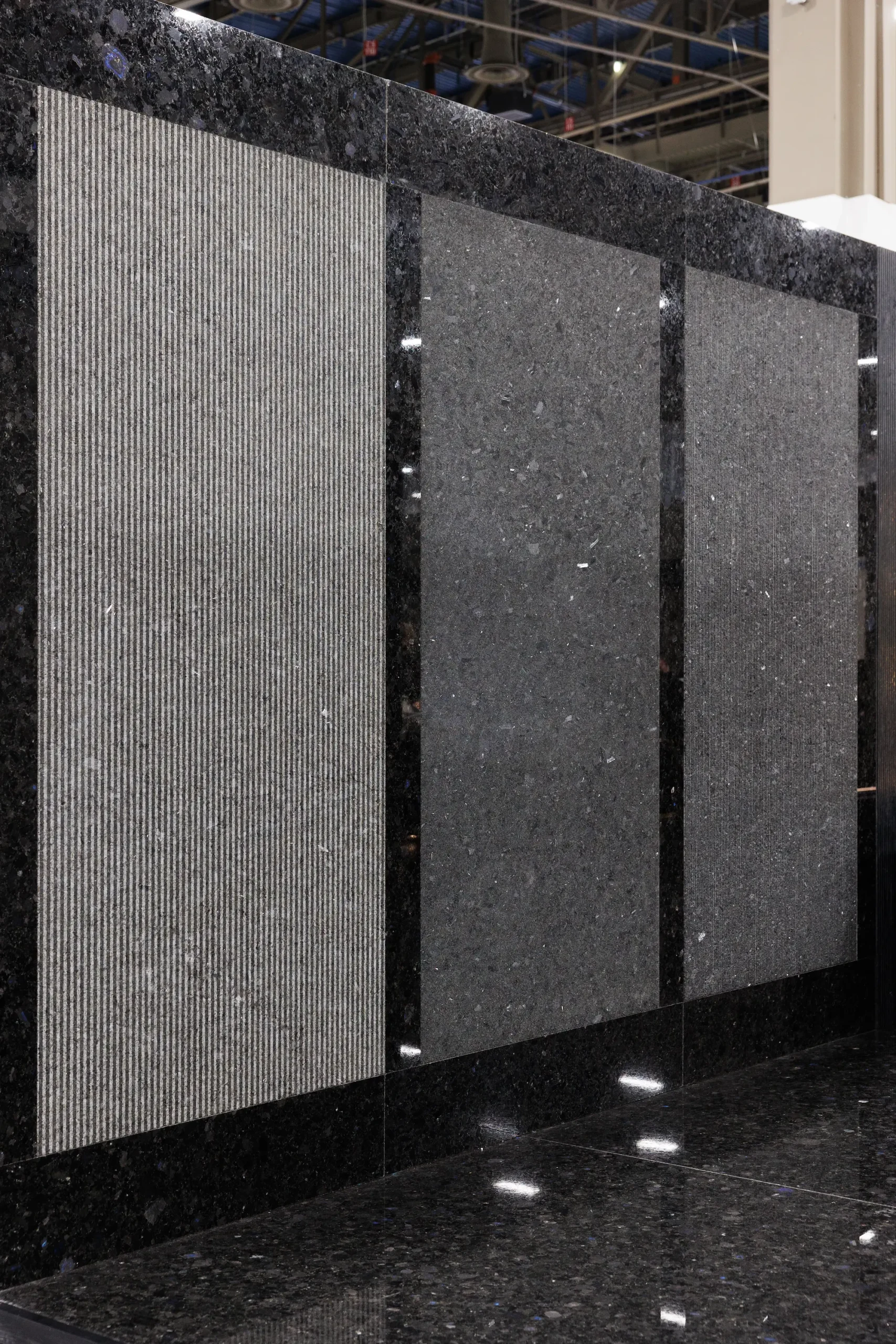
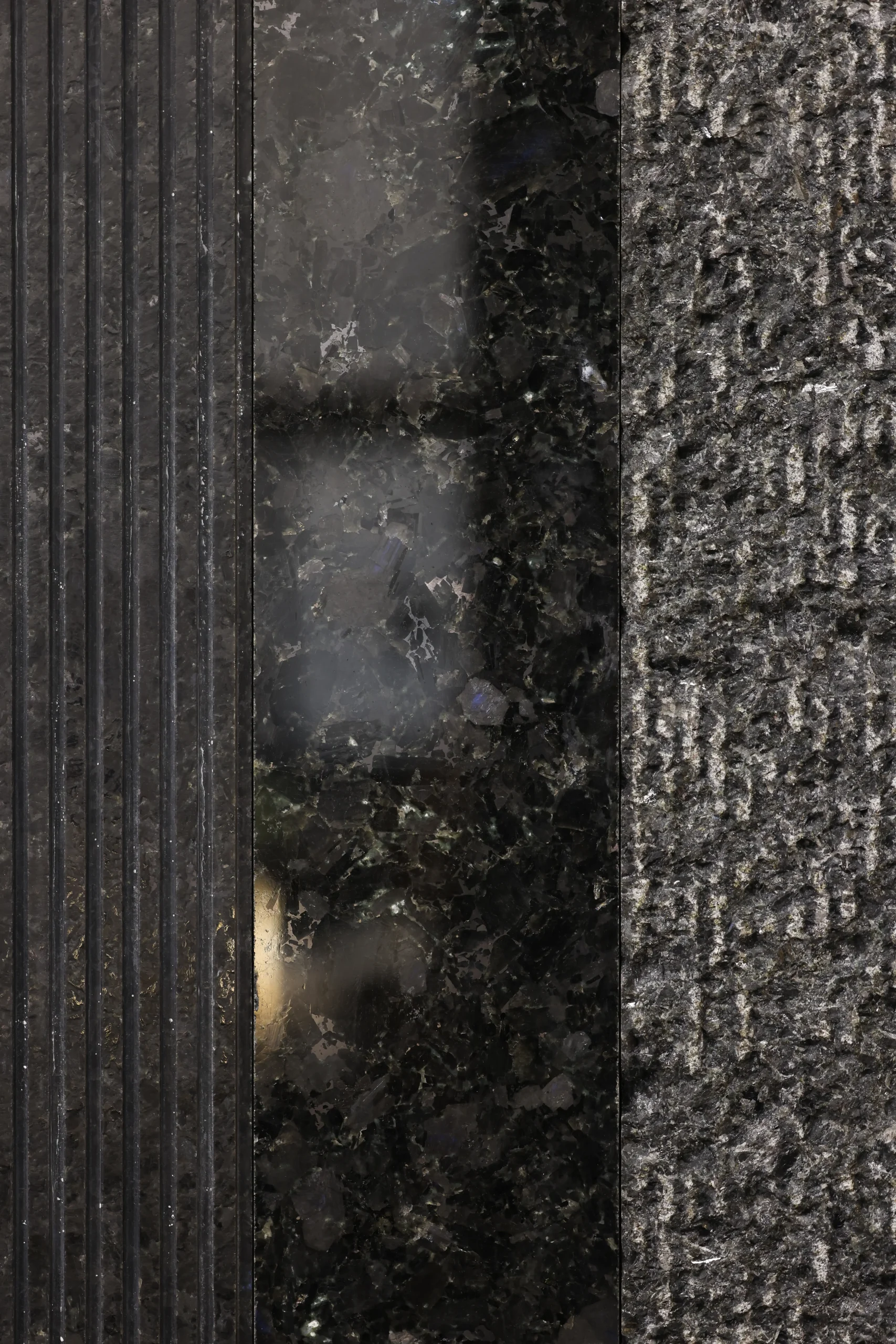
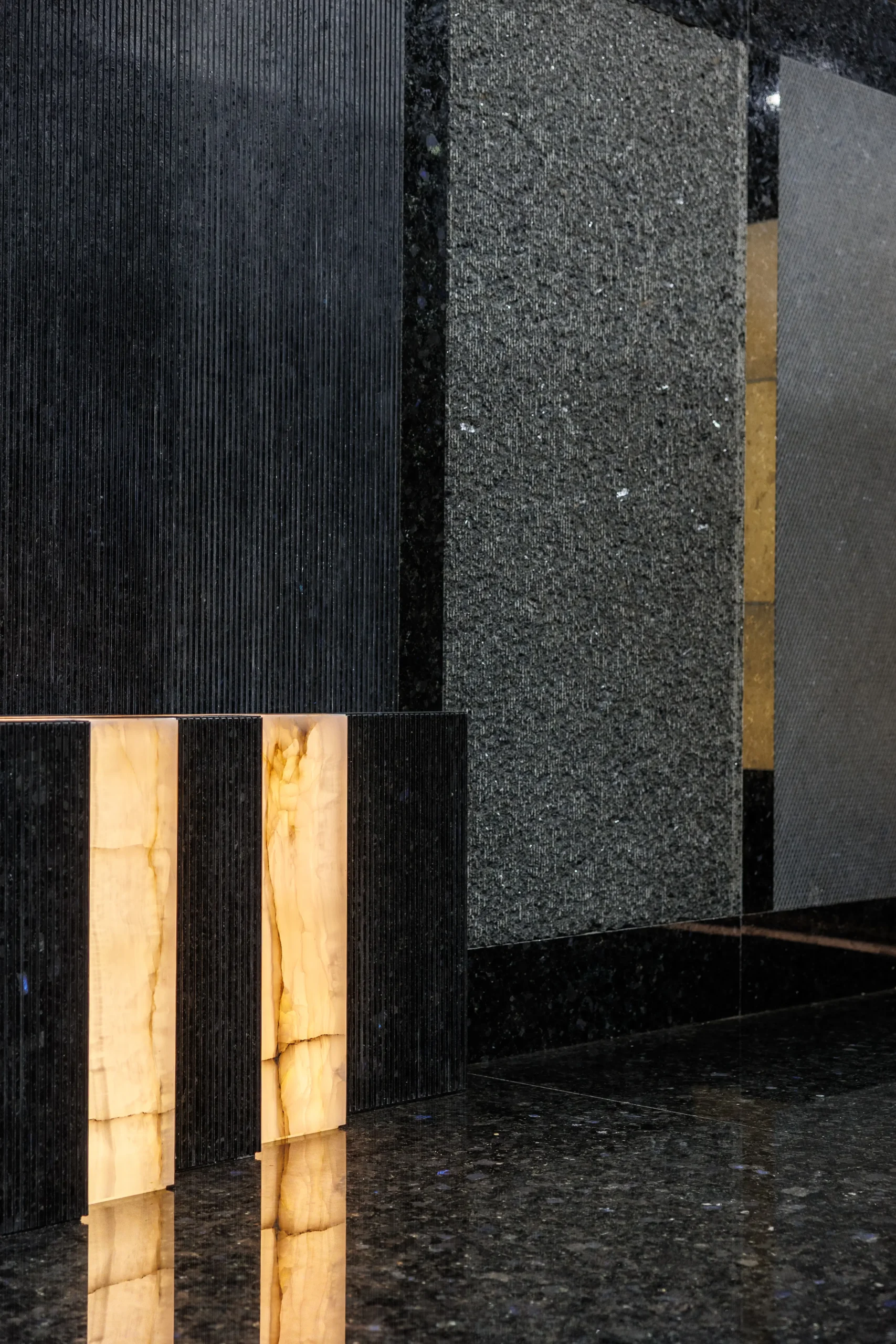
A Surface That Changes the Space
Labradorite finish affects more than the surface of the stone. It changes the atmosphere of a space: how light behaves within it, how deeply the plane is perceived, and whether the material feels restrained, mirror-like, tactile, or textured.
The same stone can speak in different ways. Near water and panoramic windows, it becomes deeper and more dynamic. In a calm interior, it feels softer, quieter, and closer to its natural texture. On a textured surface, it gains shadow, rhythm, and a stronger architectural presence.
In Golovinski Labradorite, this difference is especially expressive because the material has its own internal depth: a dark graphite base, dense mineral structure, and natural iridescence. The finish does not change the nature of the stone, but it changes its role in the space.
The finish of labradorite is not the final touch after choosing the material. It is part of the architectural decision that defines how natural black stone will be perceived in an interior, on a facade, or within a separate architectural plane.Why Finish Matters in Architecture
In a completed space, stone is never read in isolation. Its character appears together with scale, proportions, lighting, glass, wood, metal, water, and the overall composition of the interior or facade.
The surface defines the first impression of the material. It can add depth to the stone in light, make it calmer and more matte, or give the plane volume through relief and shadow. In each case, not only the appearance of the stone changes, but also the mood of the space around it.
For an architect or designer, finish becomes an instrument for shaping atmosphere. It helps set the tone: open to light, restrained and tactile, or plastic and rhythmic.
In this sense, finish works quietly, but very precisely. It does not need to be explained in the completed space. Its effect is felt in how the surface receives light, how it changes throughout the day, and how it supports the overall architectural idea.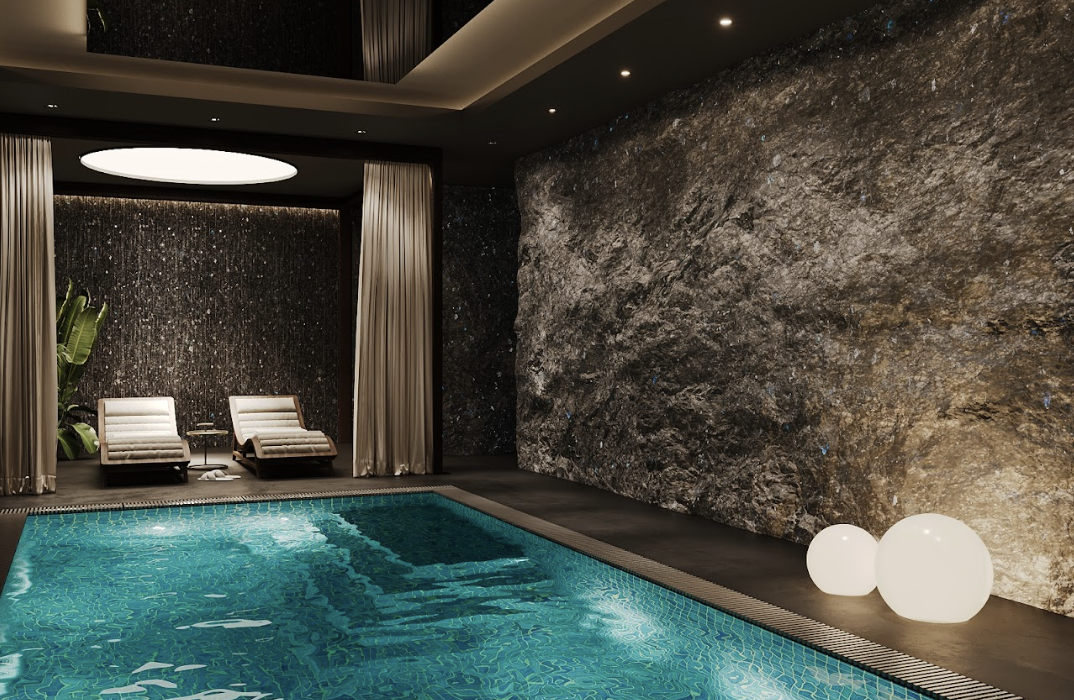
POLISHED — When Space Works Through Light and Depth
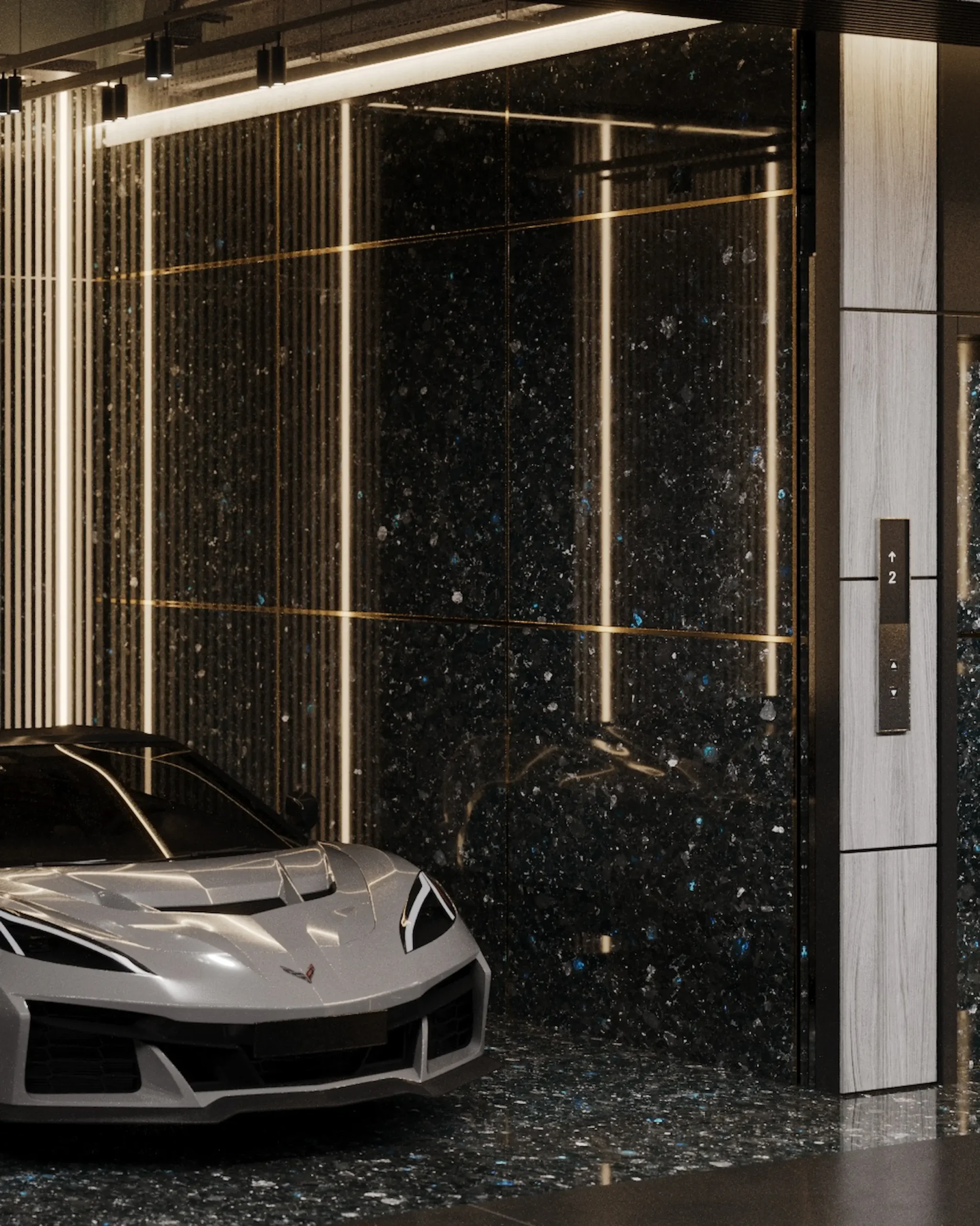
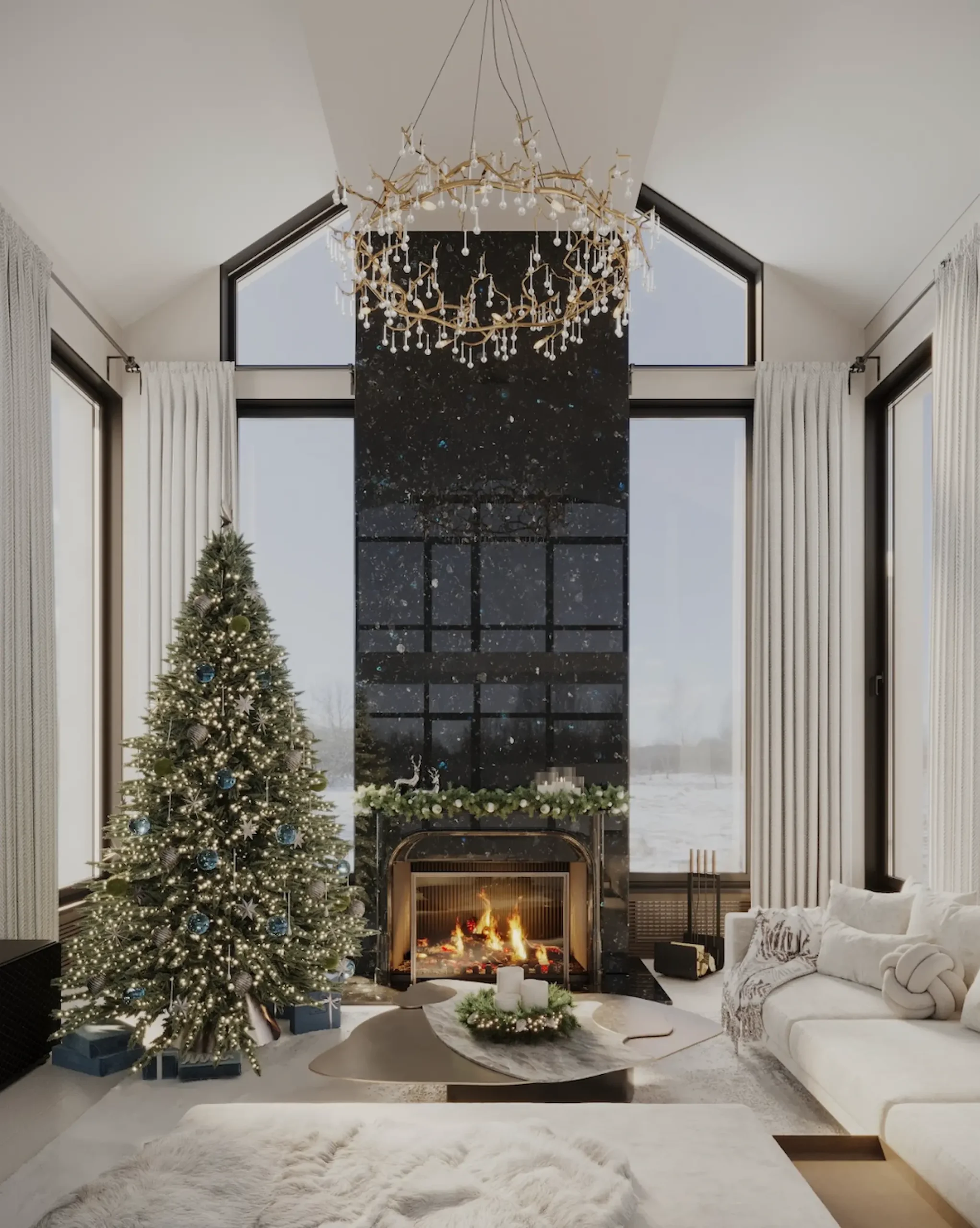
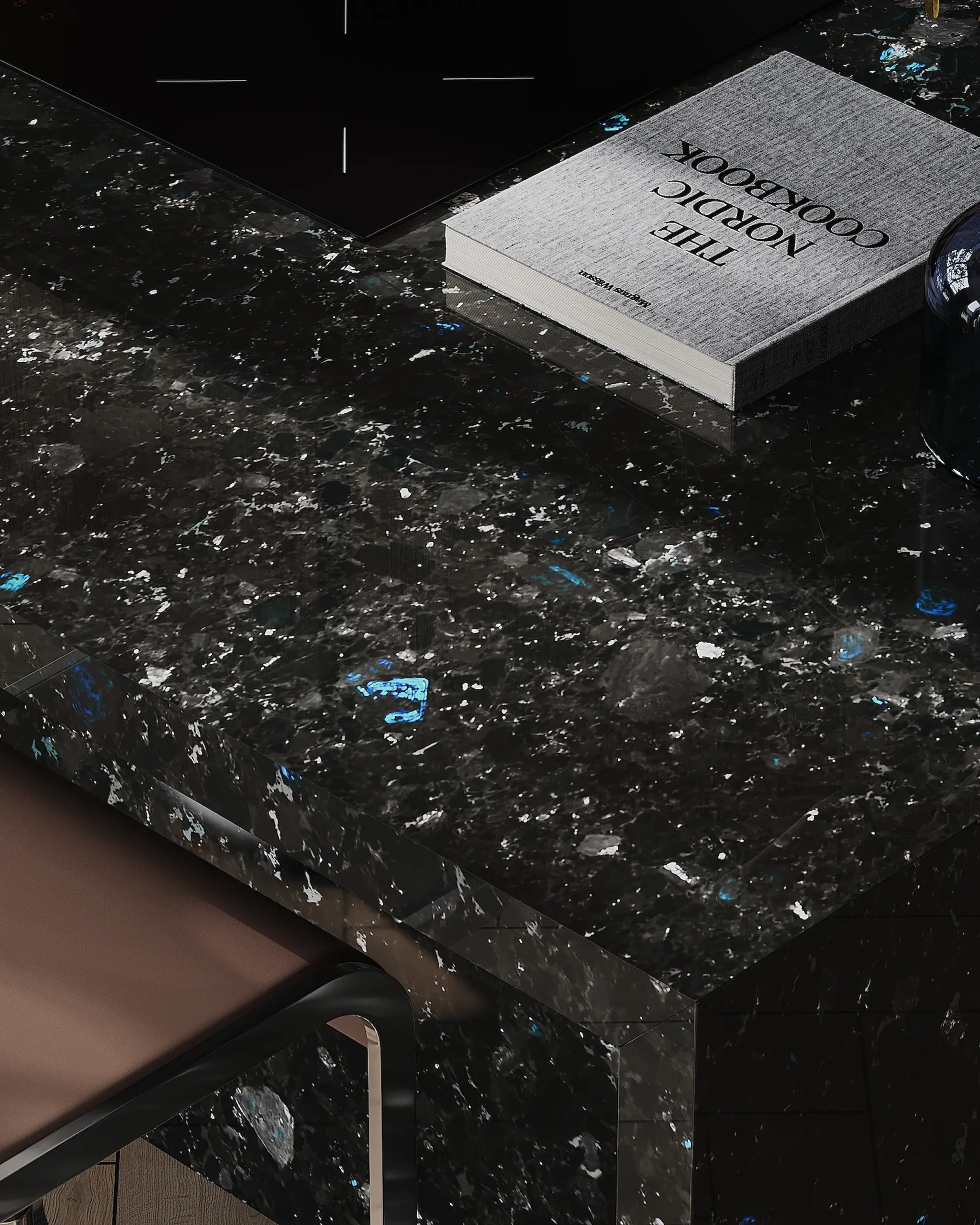
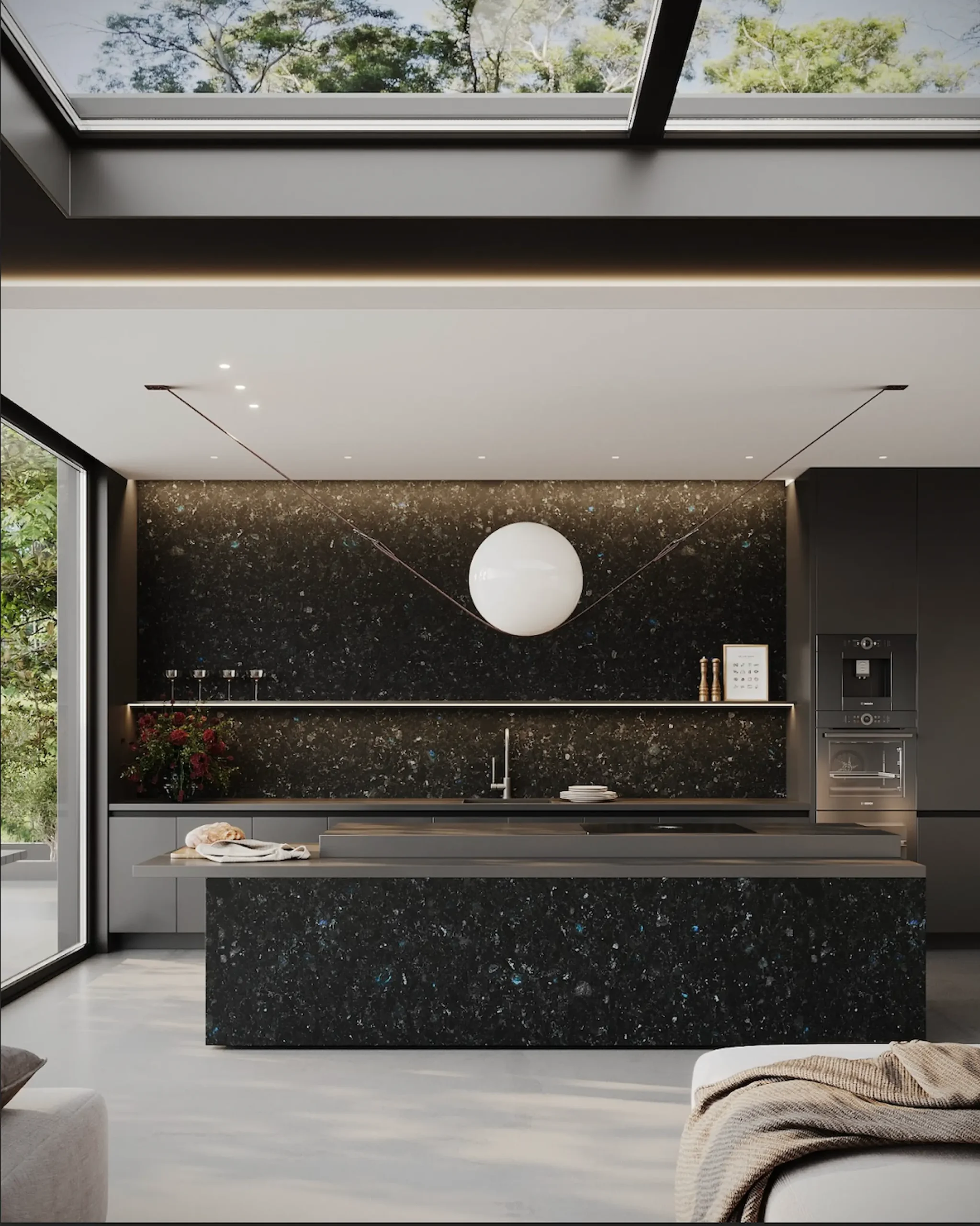
POLISHED reveals labradorite through depth, light, and natural iridescence. The polished surface enhances the feeling of internal depth in the stone and gives light more room to work with the material.
In this finish, natural black stone does not look like a closed dark plane. It accepts reflections, responds to changing light, and reveals delicate blue flashes of labradorescence. The surface remains clean, but alive.
POLISHED is especially appropriate in spaces where the architecture is built around light: near water, beside panoramic windows, in SPA areas, on facades, and across large interior planes. Here, the stone works not only as a material, but as part of the lighting scenario.
In daylight, polished labradorite feels restrained and graphite-toned. In evening light, the surface becomes softer and deeper. Near water or glass, the stone gains additional layering without turning into an excessive decorative effect.
POLISHED works well where a space needs to feel open, deep, and visually rich without unnecessary complexity. It is a finish for architecture in which the stone interacts with light as meaningfully as it does with form.
SILK — When Architecture Needs Softness and Restraint
Not every space needs shine. In premium architecture, another quality often speaks more strongly — a calm surface, material silence, and a sense of balance.
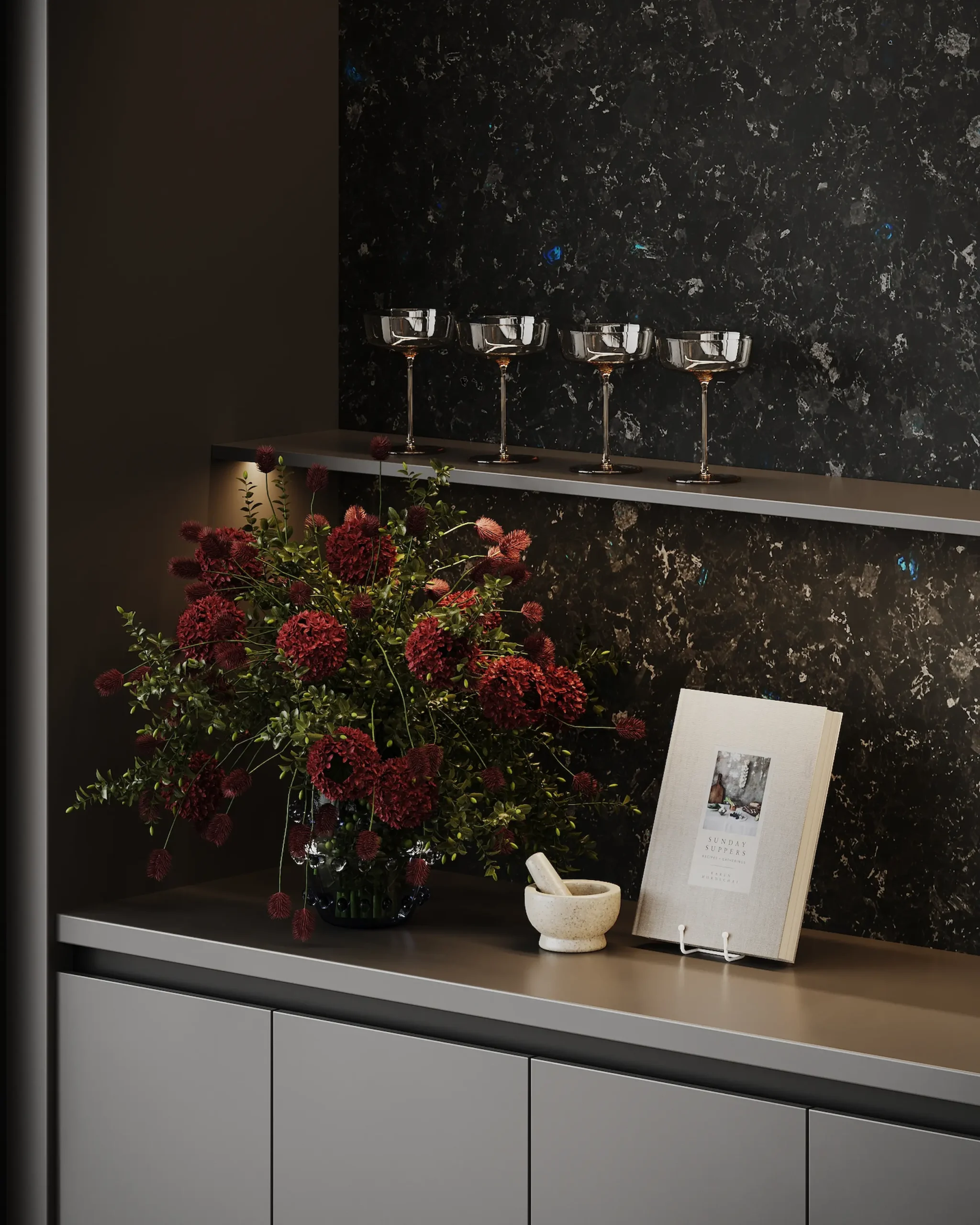
SILK reveals labradorite in a more restrained tone. Light falls on the surface more softly, without active reflection. The stone keeps its depth, but feels calmer, closer to its natural texture and to the physical presence of the material.
In this finish, the space does not become less expressive. On the contrary, it receives another form of expression — not through shine, but through restrained material presence. The surface does not compete with the architecture; it supports it.
SILK works well in interiors where silence, balance, and closeness of material to the human scale are important: living rooms, halls, bathrooms, SPA spaces, minimalist zones, and large vertical planes.
This finish makes natural black stone feel softer, but it does not take away its character. It suits spaces where the material must remain deep, tactile, and confident without being demonstrative.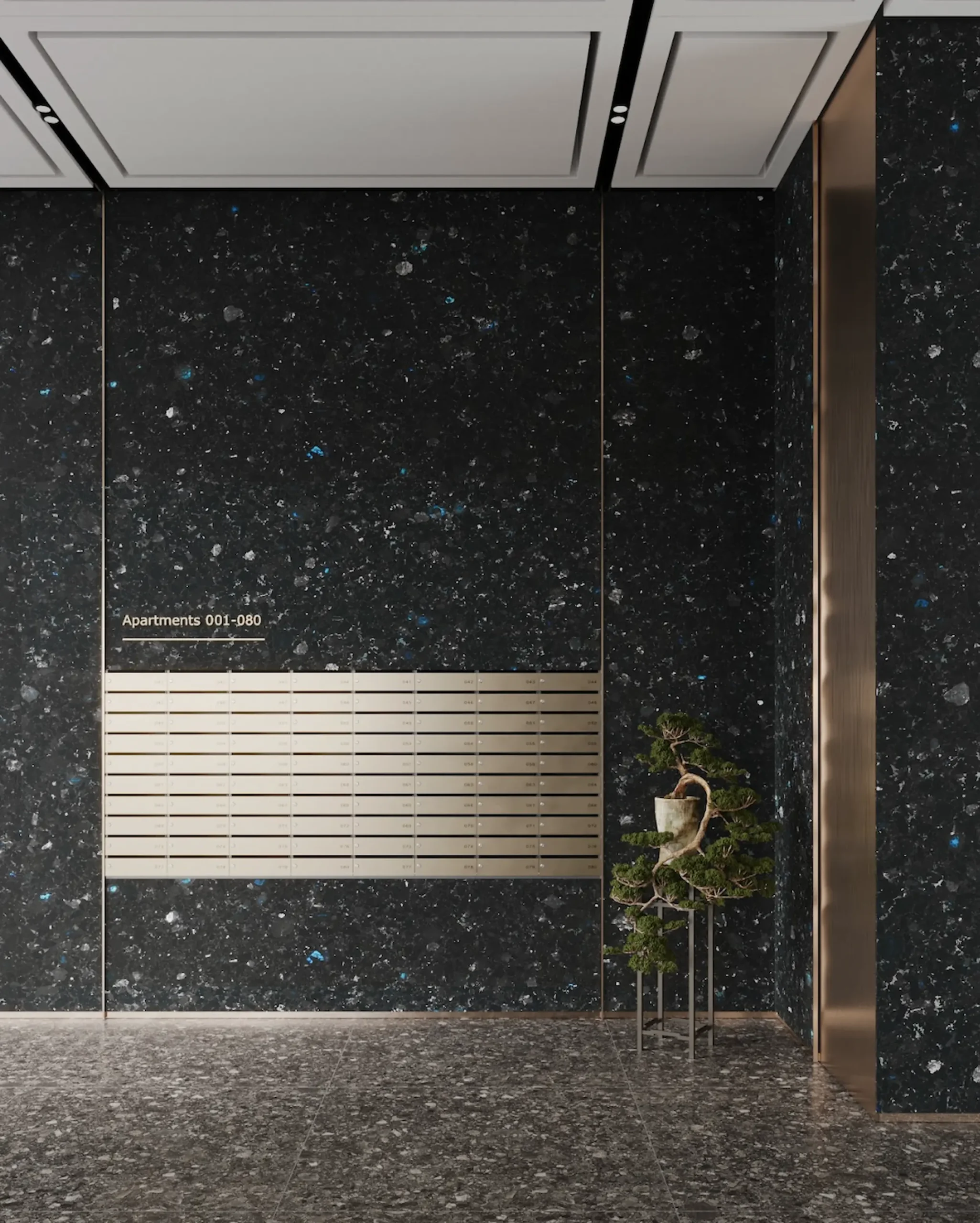
PLUVIUM, LUNA, CUBORUM, and DIAMANTE — Relief and Tactility
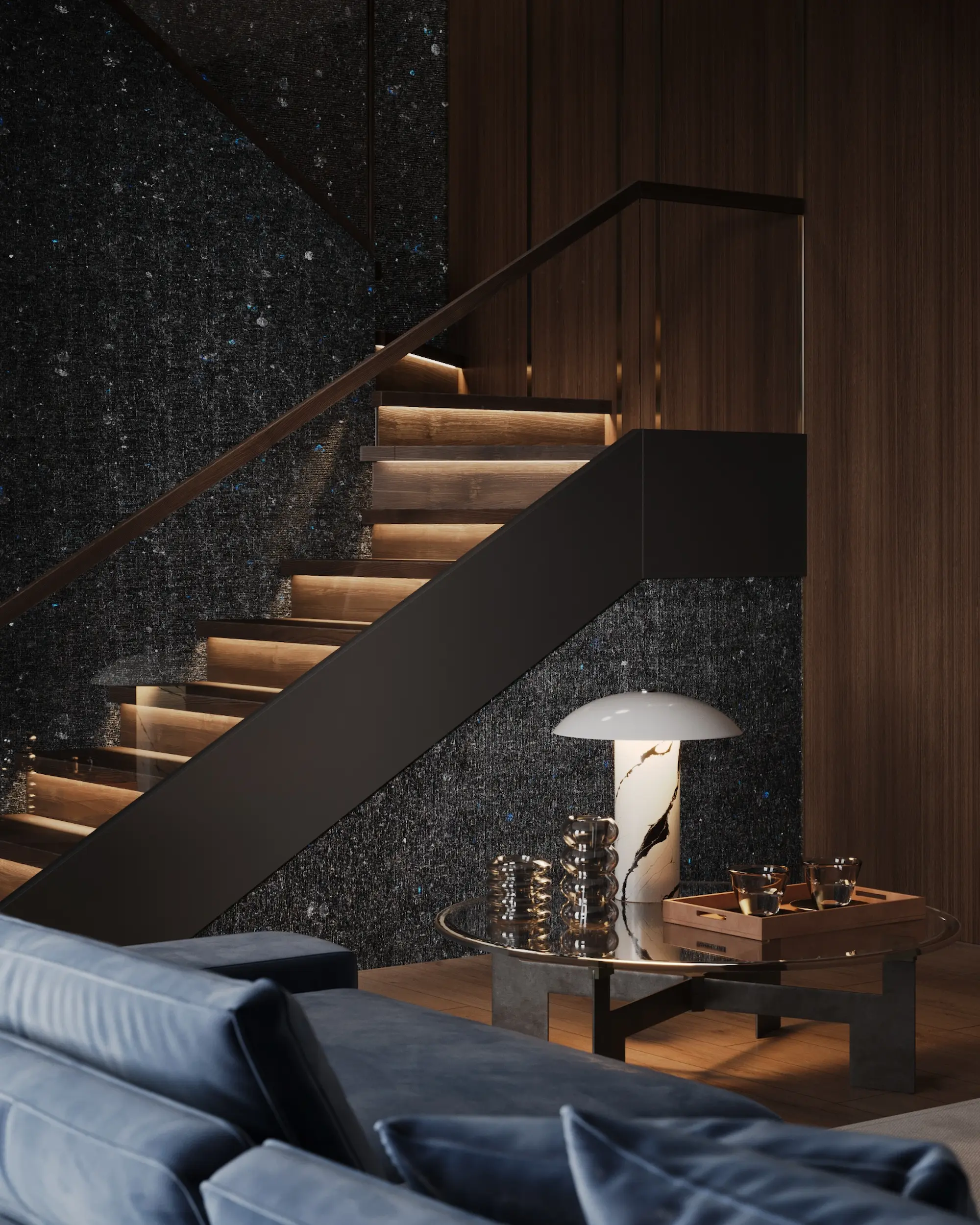
Textured finishes change the perception of labradorite through the physicality of the surface. Here, the stone works not only through color or depth, but through light and shadow, plasticity, and touch.
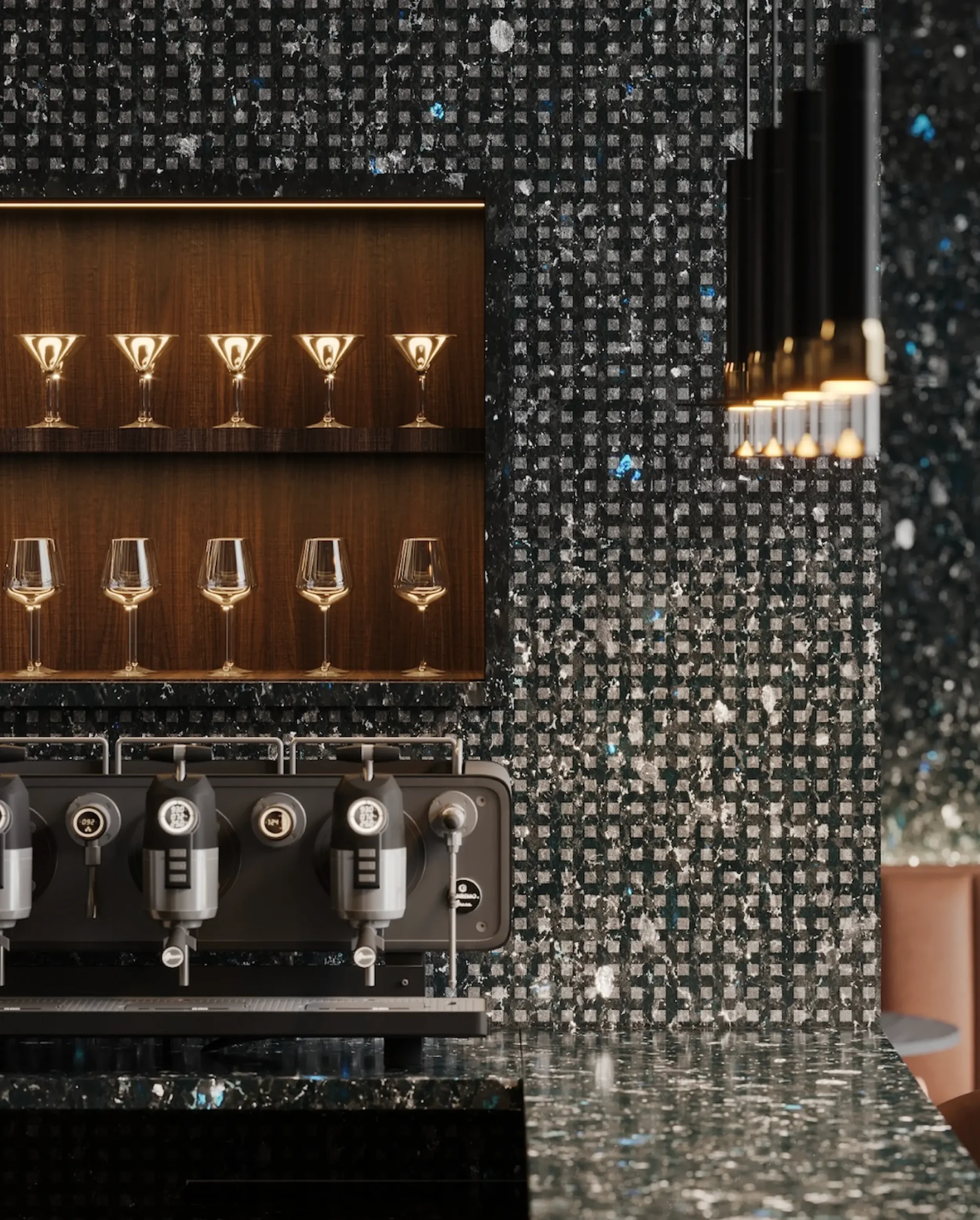
PLUVIUM, LUNA, CUBORUM, and DIAMANTE add architectural rhythm to the surface. Light moves across the relief, settles into recesses, emphasizes raised areas, and makes the plane feel more dimensional. The stone remains restrained in color, but becomes much more expressive in feeling.
PLUVIUM creates a soft directional movement. Its linearity gives the surface a calm dynamic, especially on vertical planes.
LUNA has a more organic character. Its relief feels more natural and plastic, giving the stone an almost sculptural presence.
CUBORUM works through geometry. Its orderly rhythm pairs well with contemporary architecture, clean lines, and minimalist spaces.
DIAMANTE forms an expressive textured plane with a diamond-like character. Its geometry reveals itself especially well in side lighting, where shadow emphasizes the facets of the surface and gives the stone a sense of architectural precision.
Textured labradorite does not need decorative reinforcement. Its plasticity already creates enough visual complexity — through light, shadow, tactility, and the way the surface changes throughout the day.
These finishes are appropriate where architecture needs not an active pattern, but material expressiveness: in halls, entrance areas, fireplace zones, reception walls, SPA spaces, or private interiors with large vertical planes.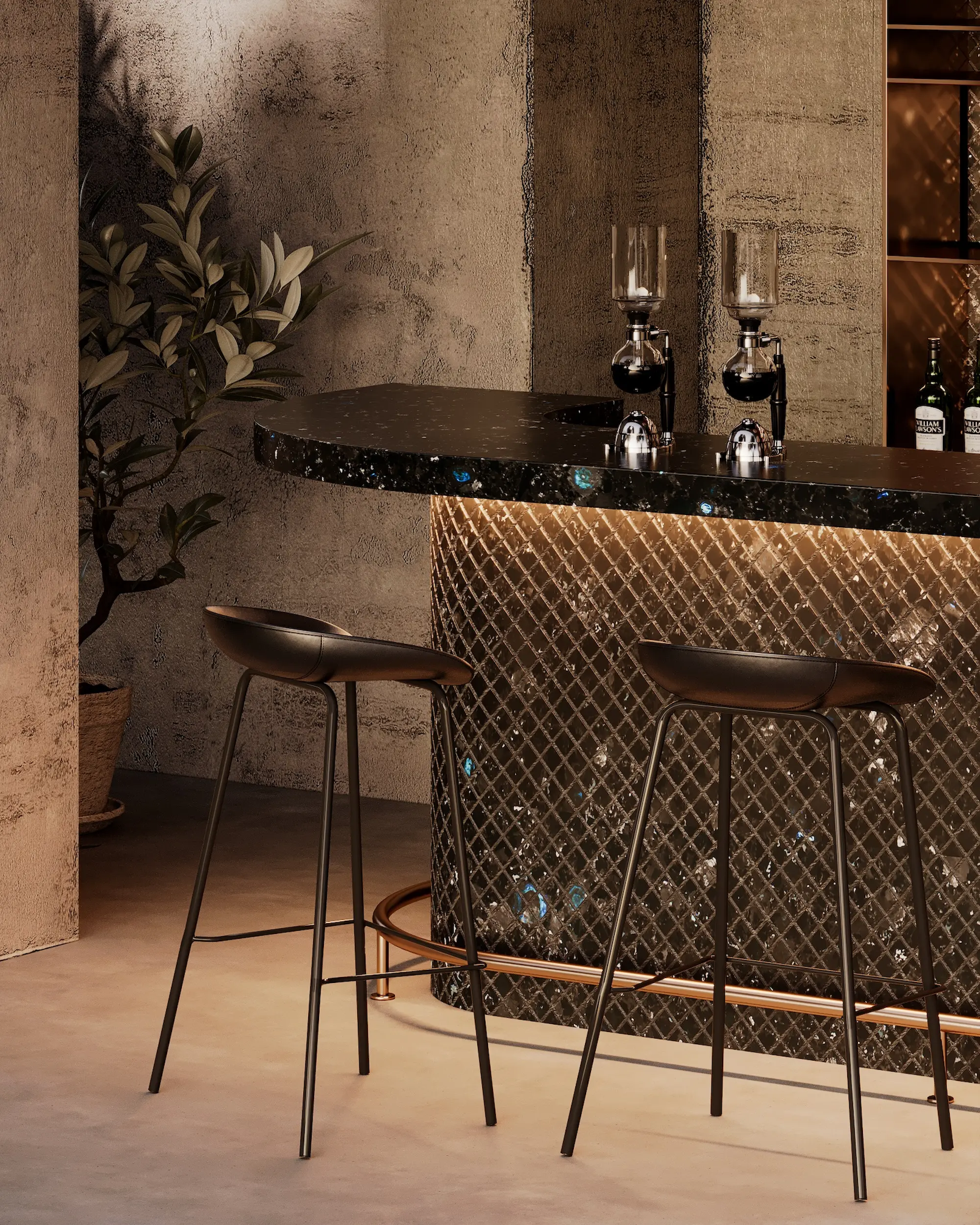
How to Choose a Finish for the Atmosphere of a Space
The choice of finish begins with the atmosphere of the future space.
For architecture built around light, water, panoramic windows, or open perspectives, POLISHED works naturally. It enhances the depth of labradorite, reveals iridescence, and allows the surface to interact with lighting and the environment.
For restrained interiors where material silence, softness, and tactile closeness are important, SILK becomes appropriate. It preserves the character of Golovinski Labradorite, but makes it calmer and more delicate.
For spaces that need shadow, rhythm, and plasticity, PLUVIUM, LUNA, CUBORUM, or DIAMANTE are worth considering. These finishes add volume to the stone and allow the surface to work not only through color, but through its textured structure.
In each case, the nature of the stone does not change — its role in the space does. Golovinski Labradorite can speak through depth and light, through calm and softness, or through relief and tactility. The finish defines the tone the material will receive in architecture.
The finish of labradorite is part of the architectural concept. It influences atmosphere, scale, and the feeling of a space as strongly as slab format, lighting, or the combination of materials.