
You might be interesting:

Stone as an Architectural Boundary: How Black Stone Divides and Connects Space at the Same Time
10 min | 08.06.2026Stone as an Architectural Boundary: How Black Stone Divides and Connects Space at the Same Time
When a boundary in architecture does not simply separate one zone from another, but creates rhythm, depth, and a cohesive feeling of space


A Boundary That Shapes Space
In architecture, a boundary does not always mean separation. It does not have to be a wall that closes off space. It can be a material line that helps reveal the logic of a space: where the entrance area begins, how the space moves into the living room, where the exterior architecture continues inside, and how the more open parts of the home gradually transition into more private areas.
This is where material becomes especially important. It does not simply fill a surface; it creates the feeling of transition. Natural black stone can work as an architectural boundary — restrained, deep, and highly expressive. It does not need additional décor to mark an important point in the space. It is enough to use it precisely: in a portal, a wall plane, an entrance area, a fireplace zone, a staircase fragment, or at the boundary between the interior and the terrace.
In this context, black stone does more than divide. It gathers the space around itself. Its deep graphite base, natural structure, and interaction with light make it possible to create a boundary that does not feel sharp or accidental. It becomes part of the architecture — calm, material, and clear.
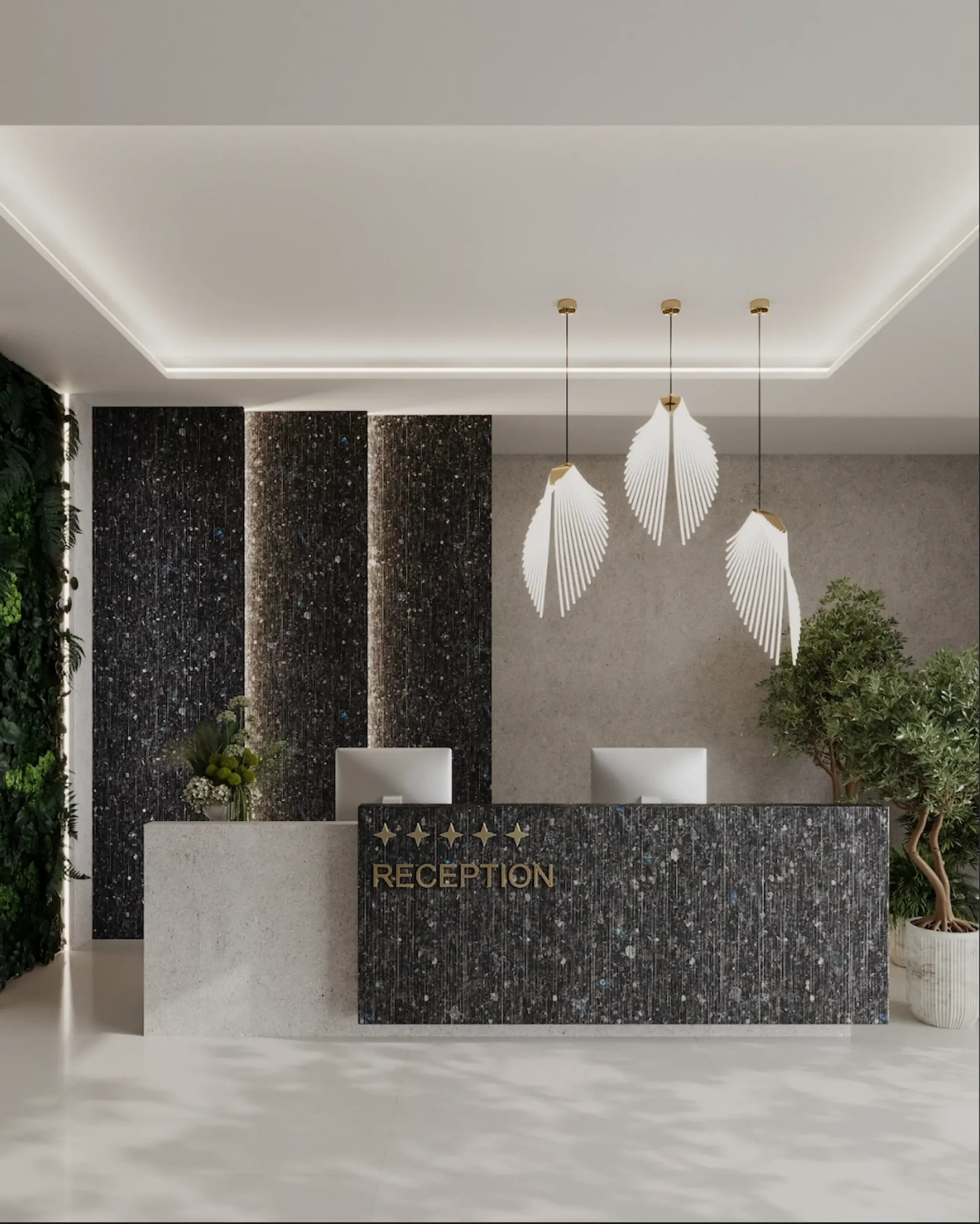
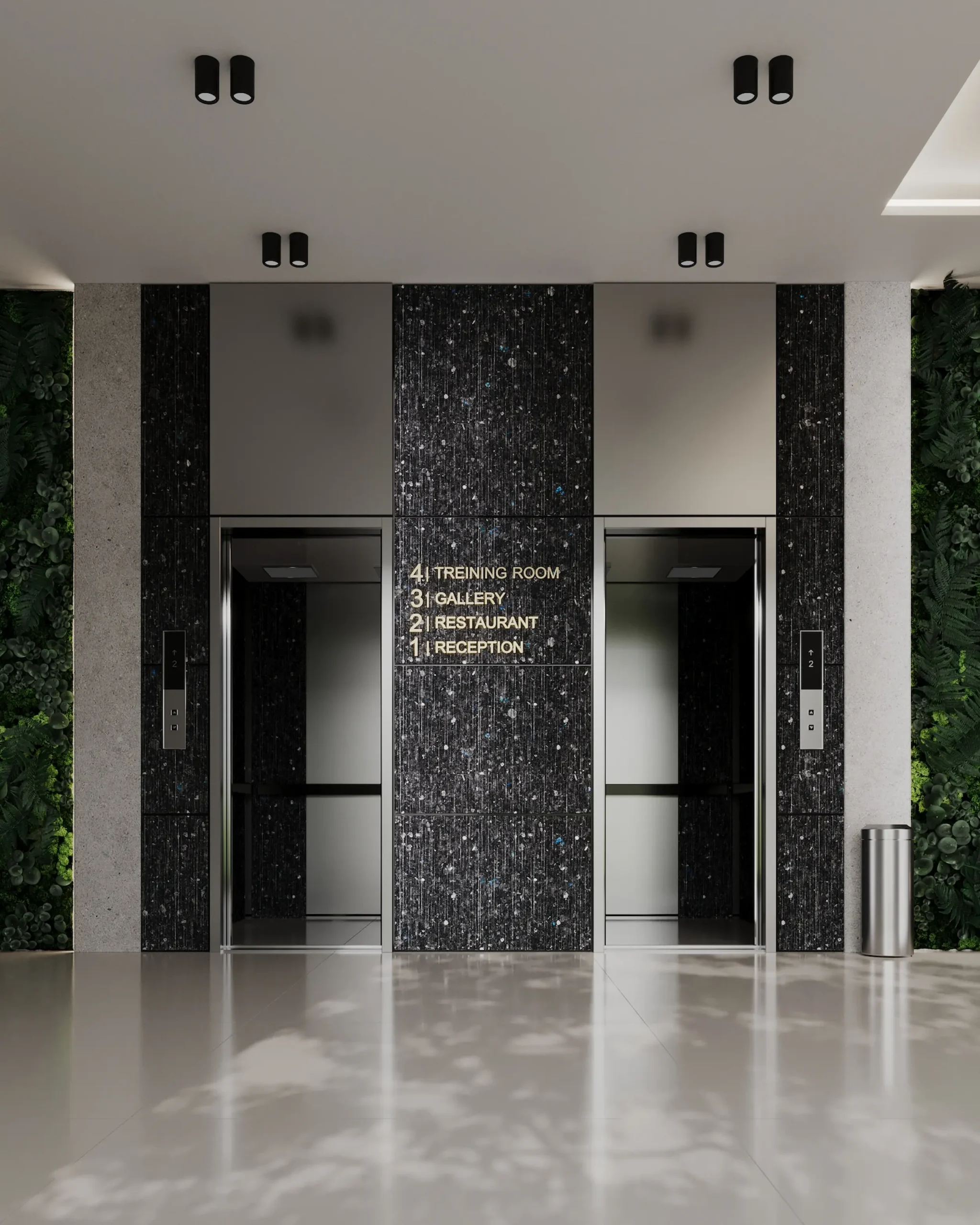
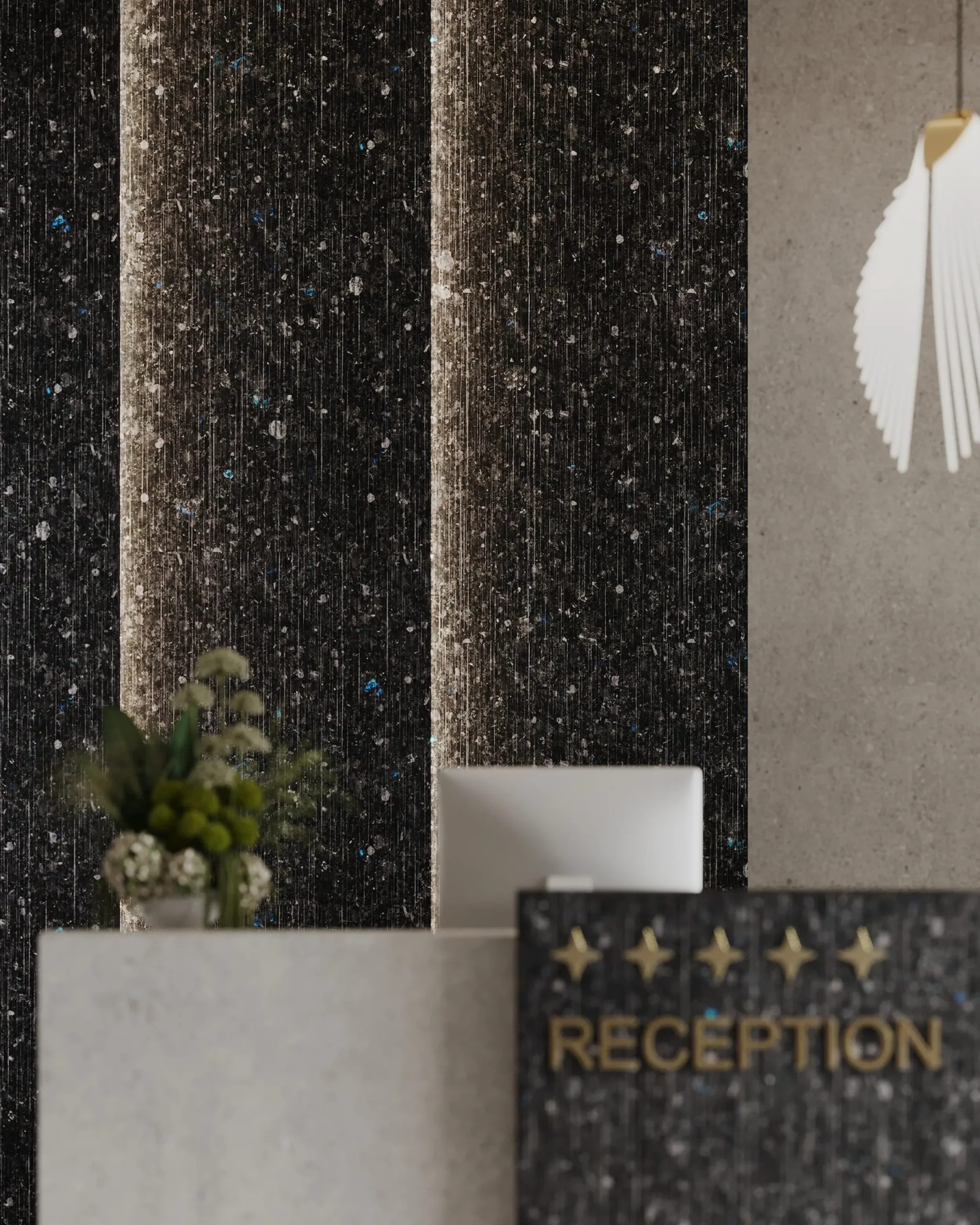
Black Stone Between Zones
In contemporary architecture, space is often built not around closed rooms, but around open scenarios. The living room moves into the kitchen, the hall opens into the main area, the interior continues toward the terrace, and the facade begins to interact with the inner space through glazing. In such solutions, it is not enough to simply arrange furniture. The boundaries between zones must be defined with precision.
Black stone works well in this role because it has enough visual strength without requiring an aggressive gesture. It can mark a transition between spaces through a plane, texture, portal, or change of material. Where other surfaces may look neutral, natural stone adds depth and weight to the space.
This is especially interesting with Golovinski Labradorite. Its graphite base does not create the feeling of heavy darkness. On the contrary, thanks to its crystalline structure and delicate iridescence, the stone remains alive. It can feel calm in daylight, deeper under warm architectural lighting, and more expressive where the surface meets shadow.
In this way, black stone becomes not just a finishing material, but a way to organize space. It helps a person intuitively feel where one zone transitions into another, without breaking the overall continuity of the interior.Portals, Entrances, and Transitions
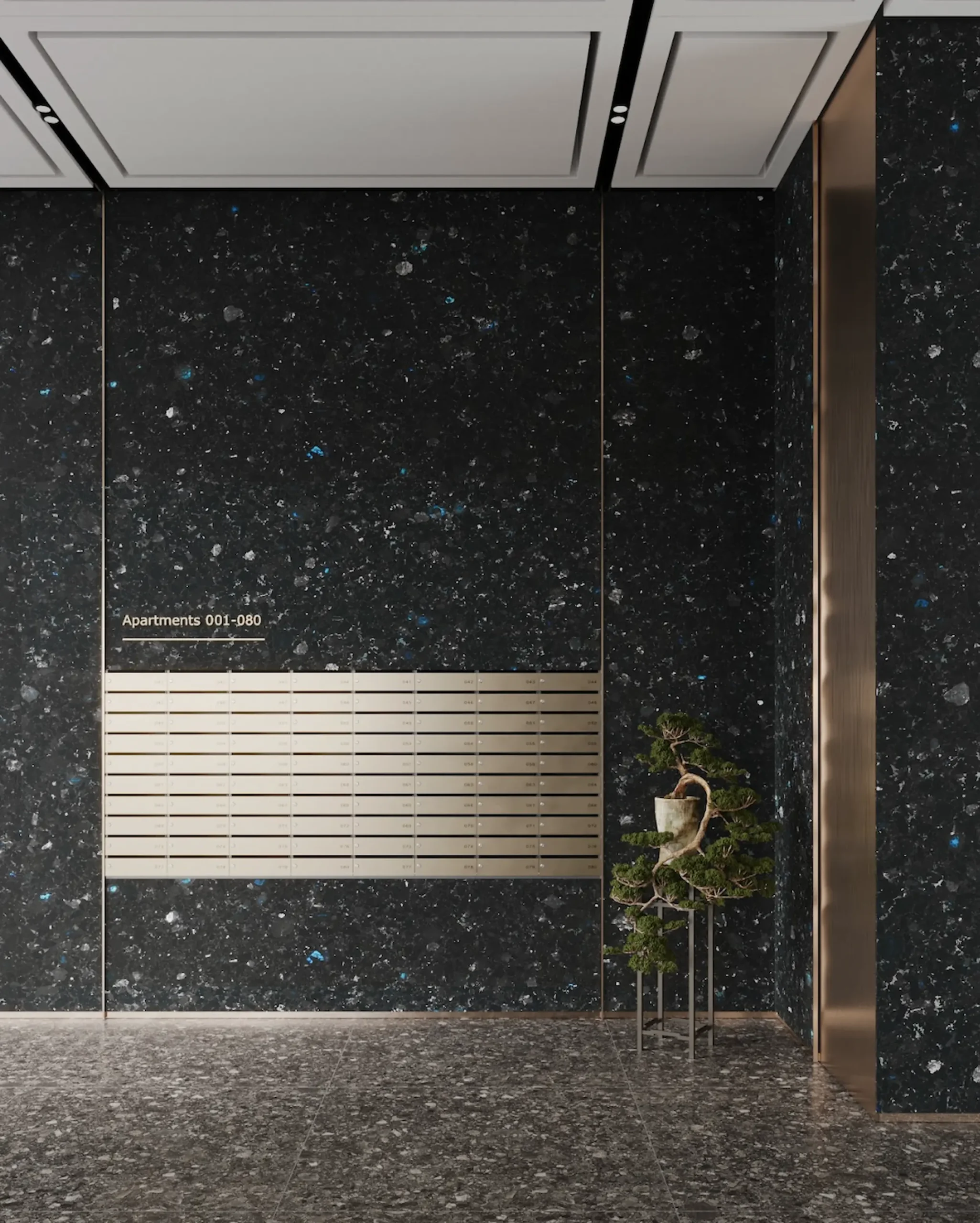
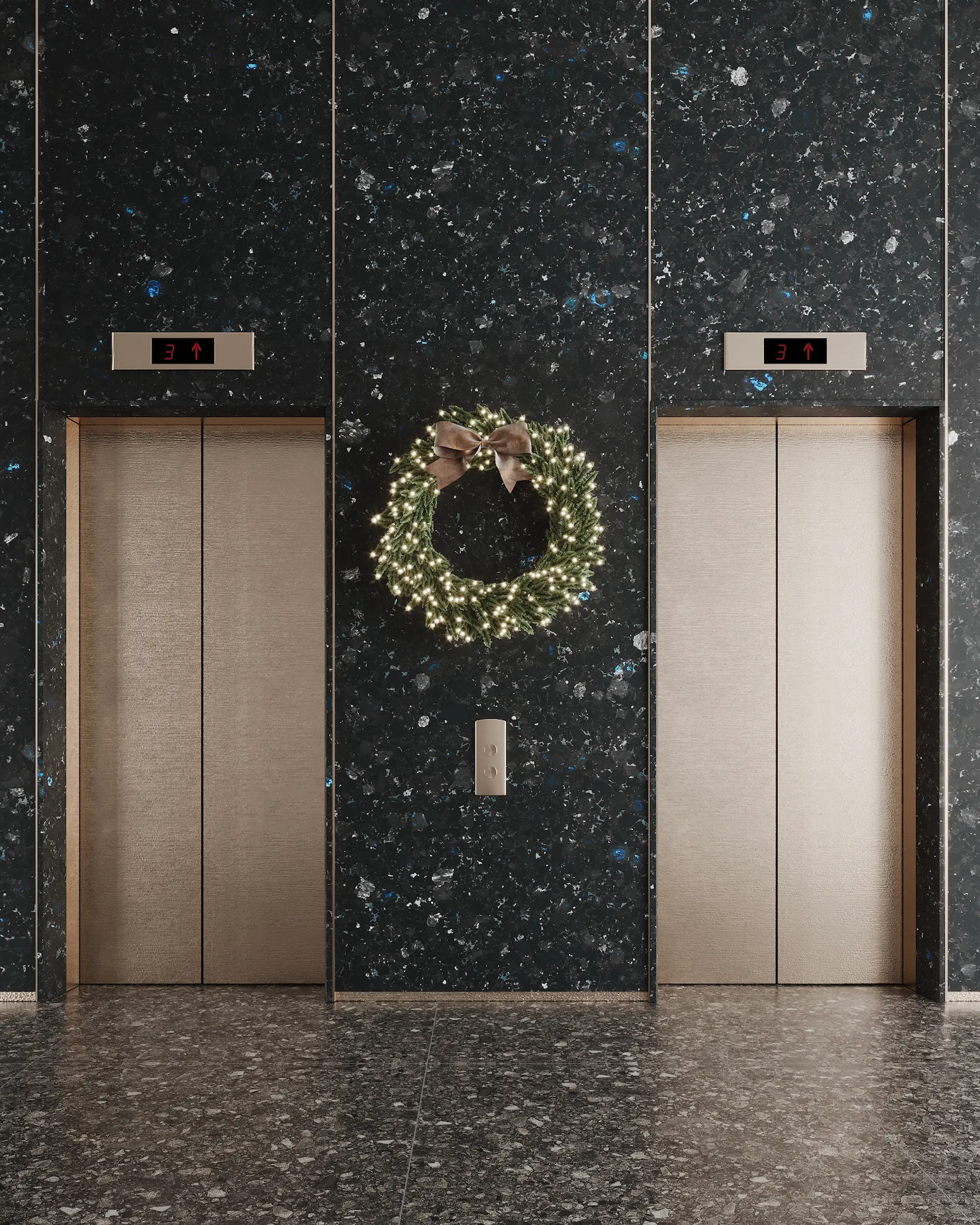
One of the strongest roles of black stone is its use in architectural transitions. An entrance portal, the framing of a passage, an elevator zone, a fireplace group, or a wall fragment near a staircase can become more than functional elements. They can become points through which the space gains character.
A portal made of natural black stone creates the feeling of entry not only physically, but emotionally. It introduces a pause before moving into another part of the space. A person feels the change in scale, light, material, and atmosphere. This is how architecture begins to work not only through the eyes, but also through the feeling of movement.
In private architecture, such a boundary can connect the facade and the interior. In commercial or representative spaces, it can shape the first impression. In residential interiors, it can emphasize the main axis of movement without overloading the space with details.
Labradorite has particular strength in these scenarios. It does not look like a flat dark insert. Its surface has natural depth, so even a small plane can work architecturally. It does not simply frame a passage or a zone — it creates a sense of material presence.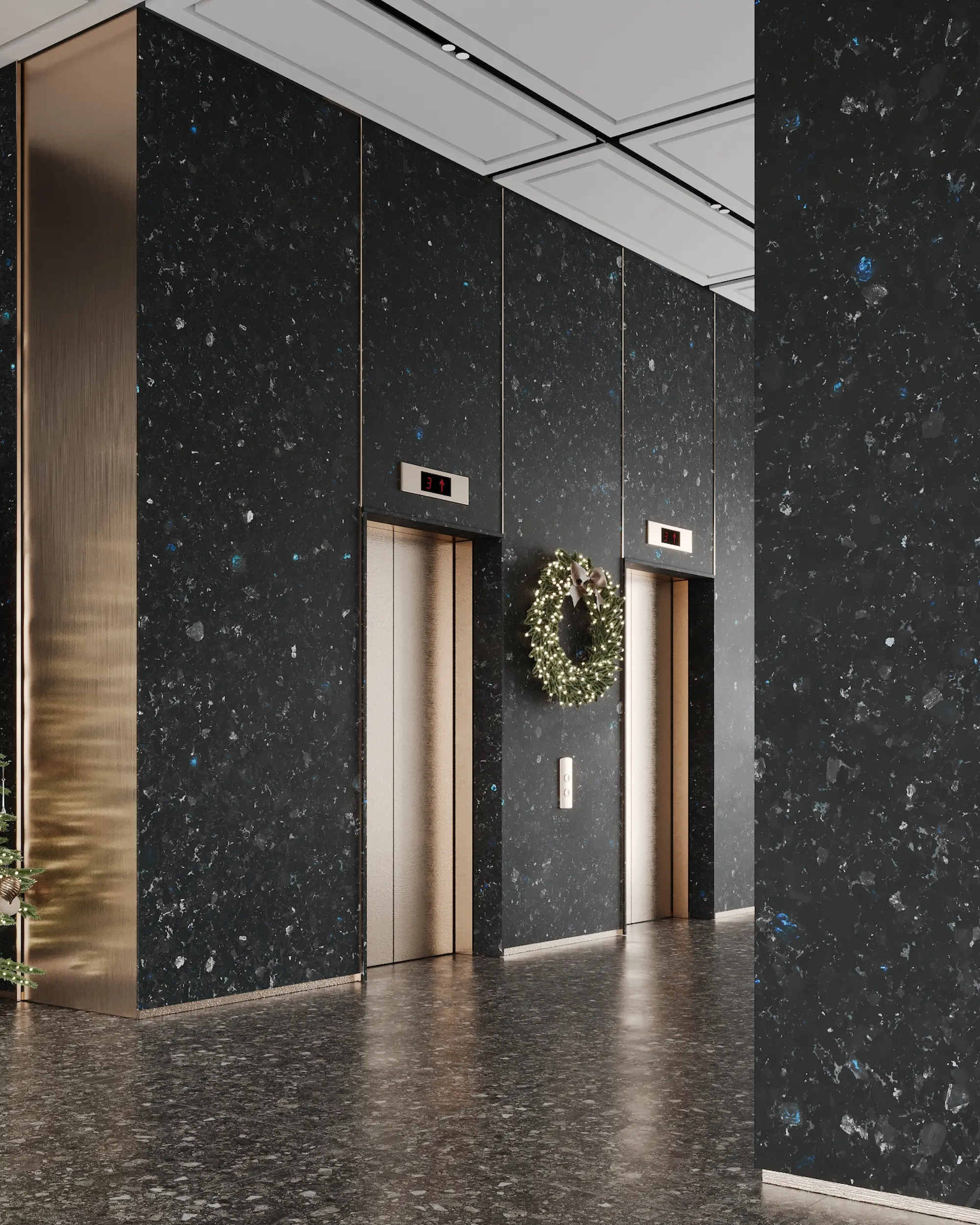
The Boundary Between Interior and Exterior Space
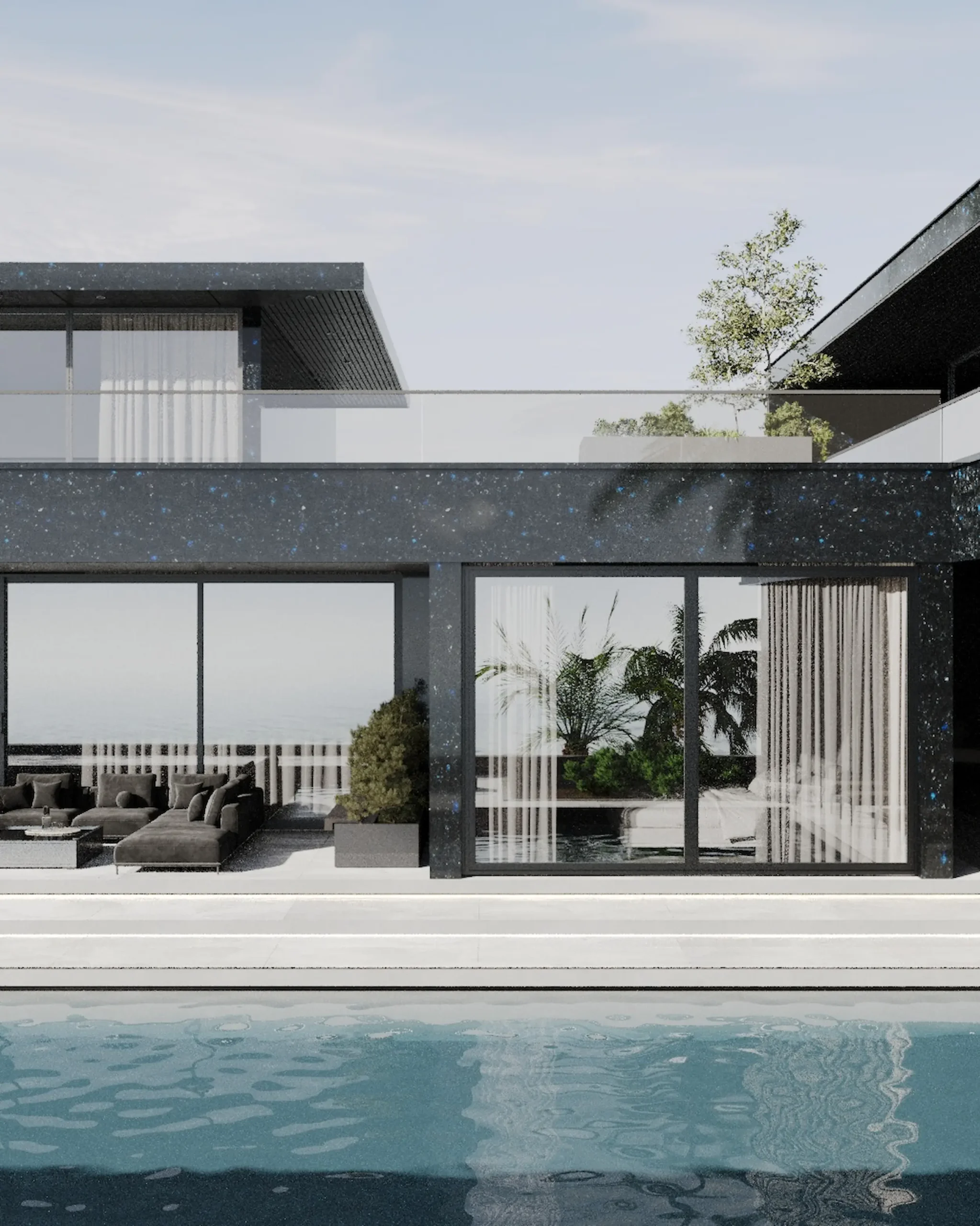
No less important is the connection between interior and exterior space. In contemporary private homes, the facade, terrace, living room, inner courtyard, or area near water are often perceived as parts of one scenario. Here, the boundary should not be hard. It should work more subtly — as a transition, not as a break.
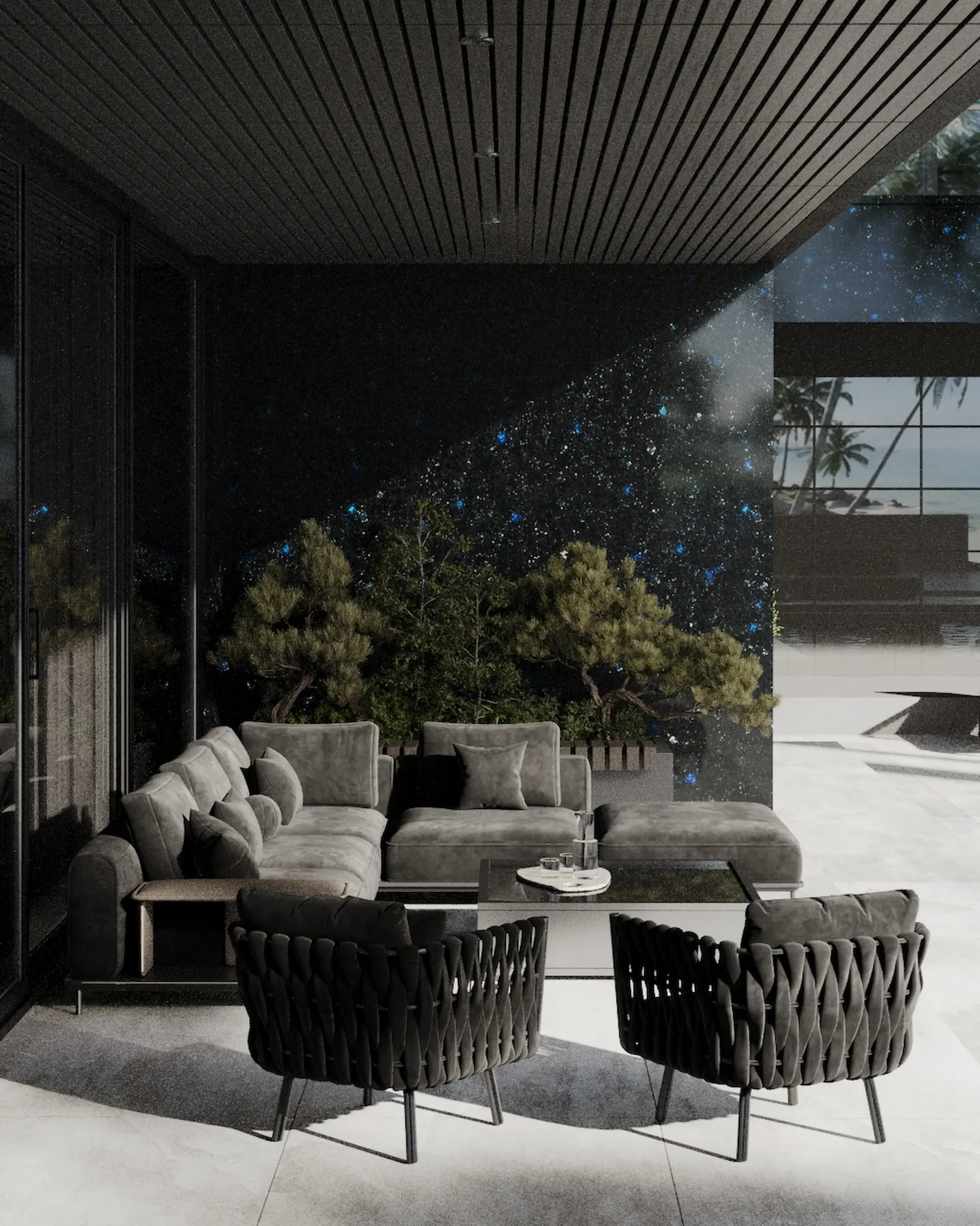
Natural black stone can help create exactly this kind of transition. On the facade, it forms a sense of stability, depth, and architectural composure. Inside the space, the same material — or a material close to it in character — can sound softer through warm light, contact with wood, glass, water, or textile.
This allows the house not to break into an exterior shell and an interior that exist separately from one another. Stone becomes a shared language between them. It can mark the boundary between “outside” and “inside,” while making this transition feel natural.
Golovinski Labradorite works especially well in this logic because its perception changes depending on the environment. In open light, it can appear more restrained and graphite-toned. Inside the space, it becomes deeper, warmer, and more atmospheric. The material remains recognizable, while each zone receives its own mood.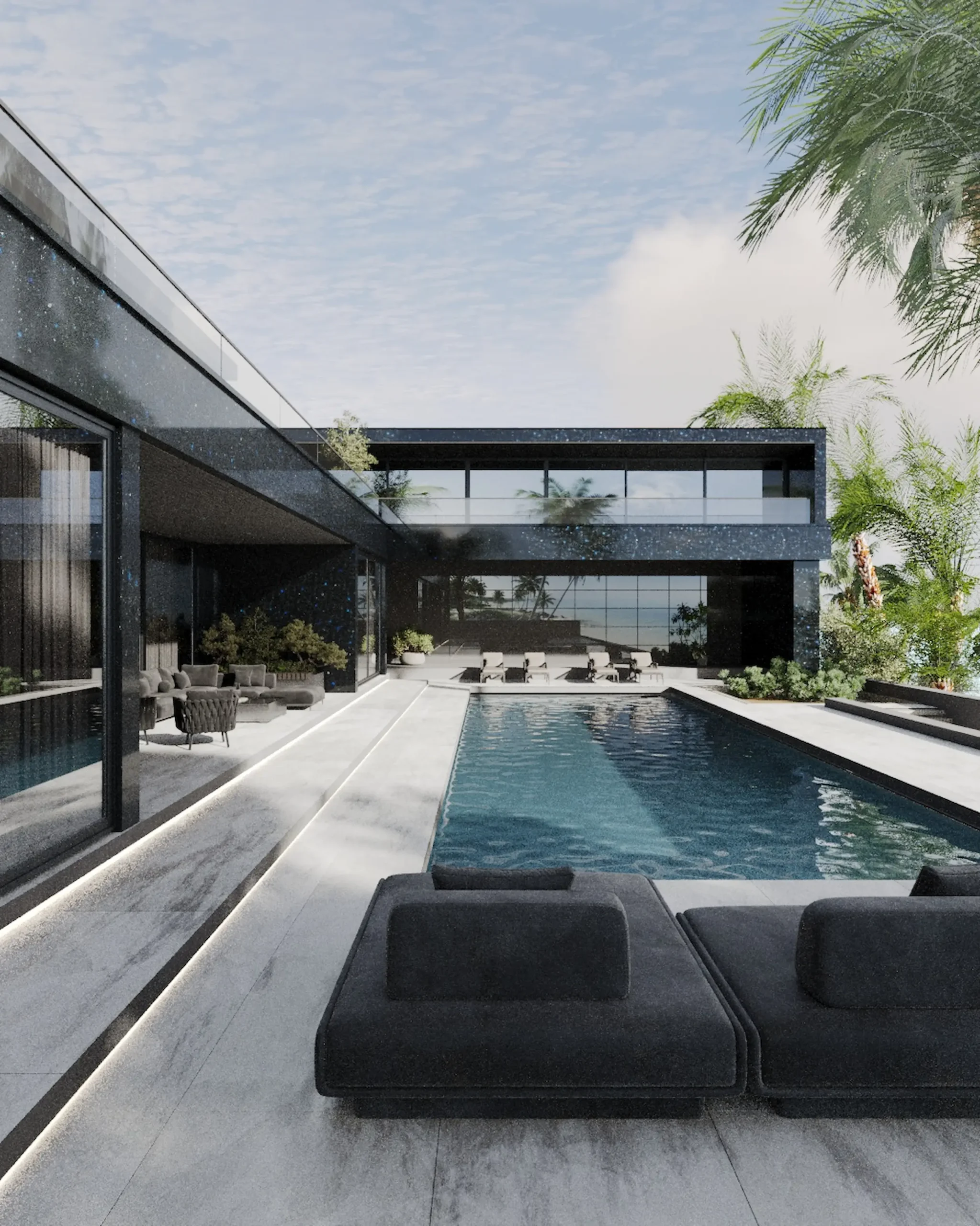
Light, Shadow, and the Material Line
An architectural boundary becomes especially expressive when the material works with light and shadow. In this sense, black stone has strong potential: it does not simply darken a plane, but creates depth, contrast, and a sense of structured space.
Light can emphasize the edge of a stone plane, make a portal more expressive, reveal the texture of the surface, or show the delicate iridescence within the structure of labradorite. Shadow, in contrast, gives the stone calmness and weight. Together, they create not a decorative effect, but an architectural connection — a subtle material line that helps the space feel composed.
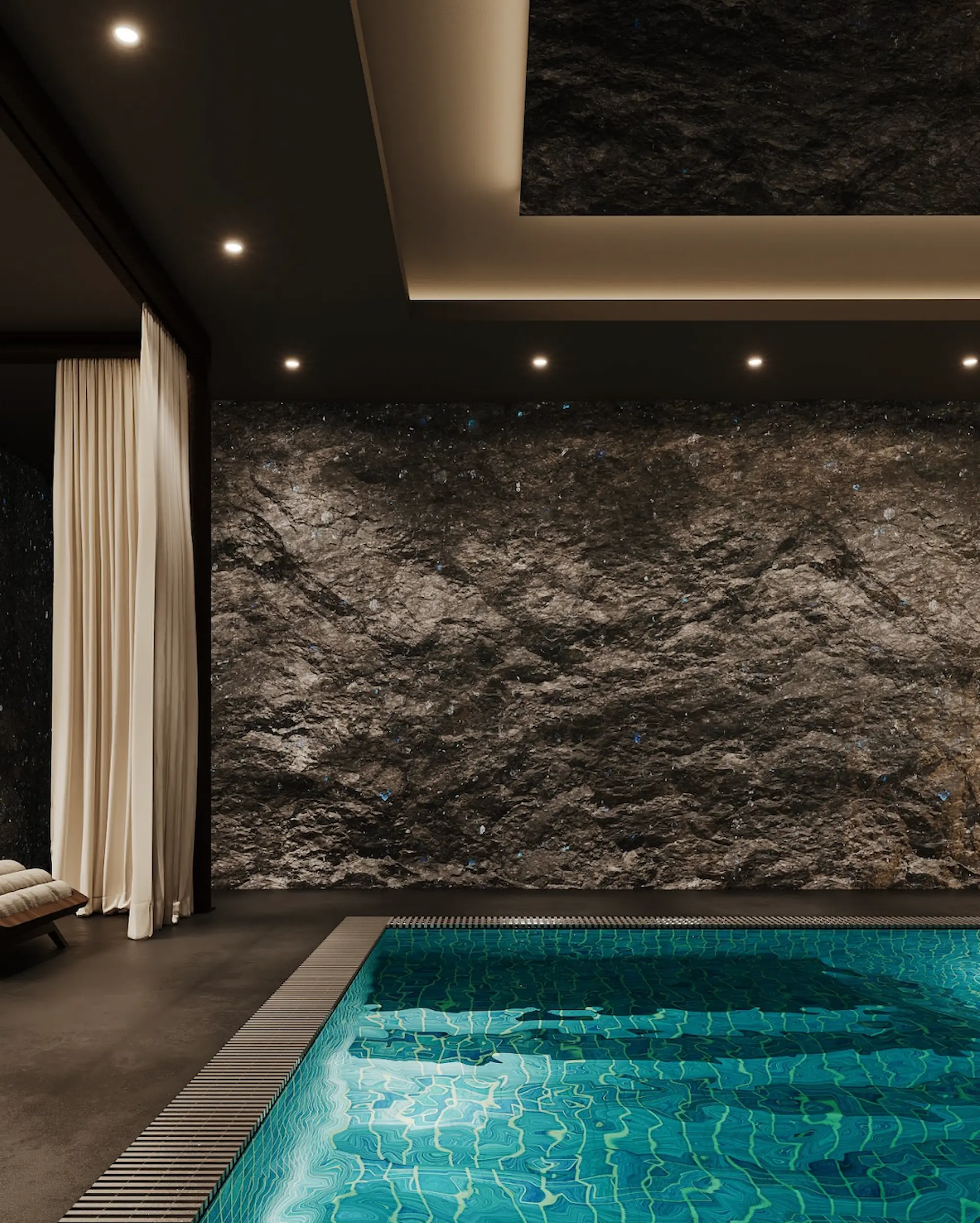
In a polished finish, the stone interacts more actively with light, revealing depth and inner transitions. In more restrained or textured finishes, it works through tactility, shadow, and the calm rhythm of the surface. This is why finish matters not only as a type of treatment, but as a way to guide the feeling of a boundary.
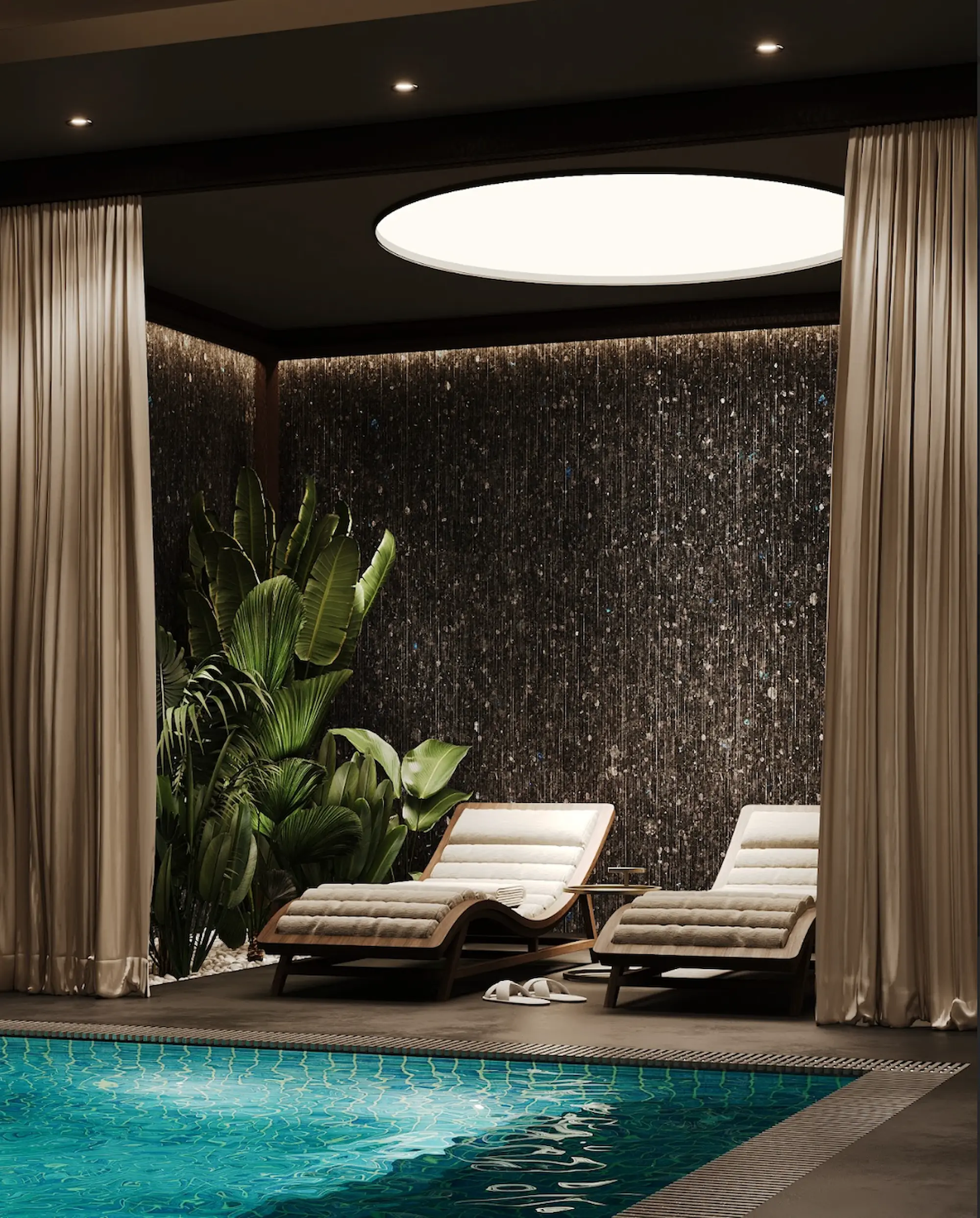
Several finishes of the same stone can be combined within one space when the architectural logic requires it. For example, a deeper polished plane can work as an accent in a light-focused area, while a more restrained or textured finish can emphasize a transition, tactility, or a calmer part of the space. In such a solution, the material remains unified, while its surface helps separate scenarios more precisely and preserve the continuity of the architecture.
When black stone is used with precision, it does not look heavy. It creates a material line that helps the space feel clearer.
Stone That Divides Without Breaking
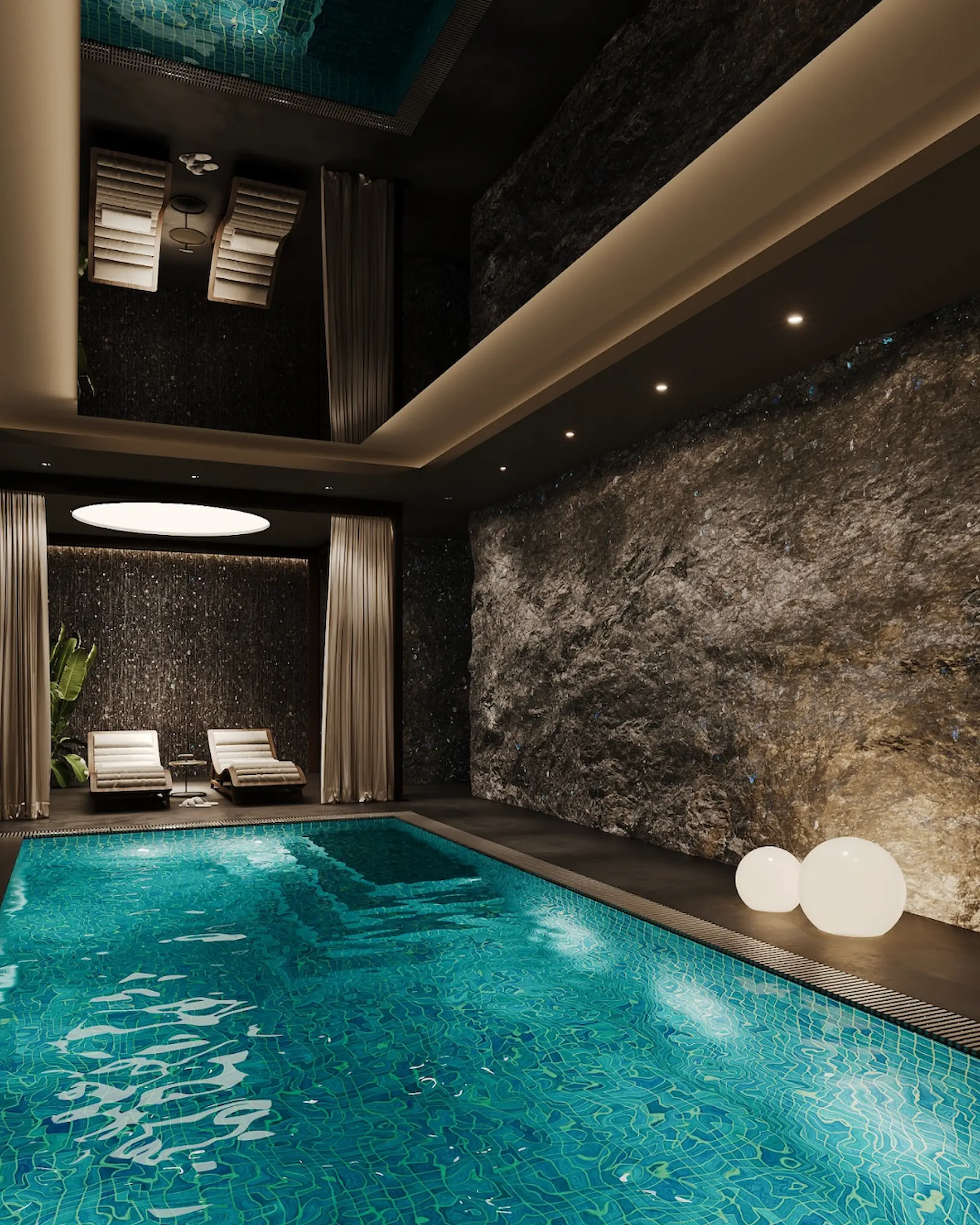
A strong architectural boundary should not destroy the continuity of a space. On the contrary, it should help the space become more understandable. This is especially important in interiors with open layouts, glass, light, and large planes.
Black stone can take on the role of a calm structural element: separating one zone from another without making them feel foreign to each other; creating a pause without stopping movement; adding depth without overloading the space. Its strength is not in a hard division, but in making the boundary feel natural and architecturally clear.
This is what makes it different from a decorative accent. Décor often draws attention to itself. An architectural boundary, on the other hand, helps the space work as a whole. It does not shout, but it creates order.
Labradorite is especially convincing in this role because it has not only a dark color, but also a natural internal structure. Its surface does not look flat, so a boundary made from this material is not perceived as a simple black line. It has depth, light, and natural materiality.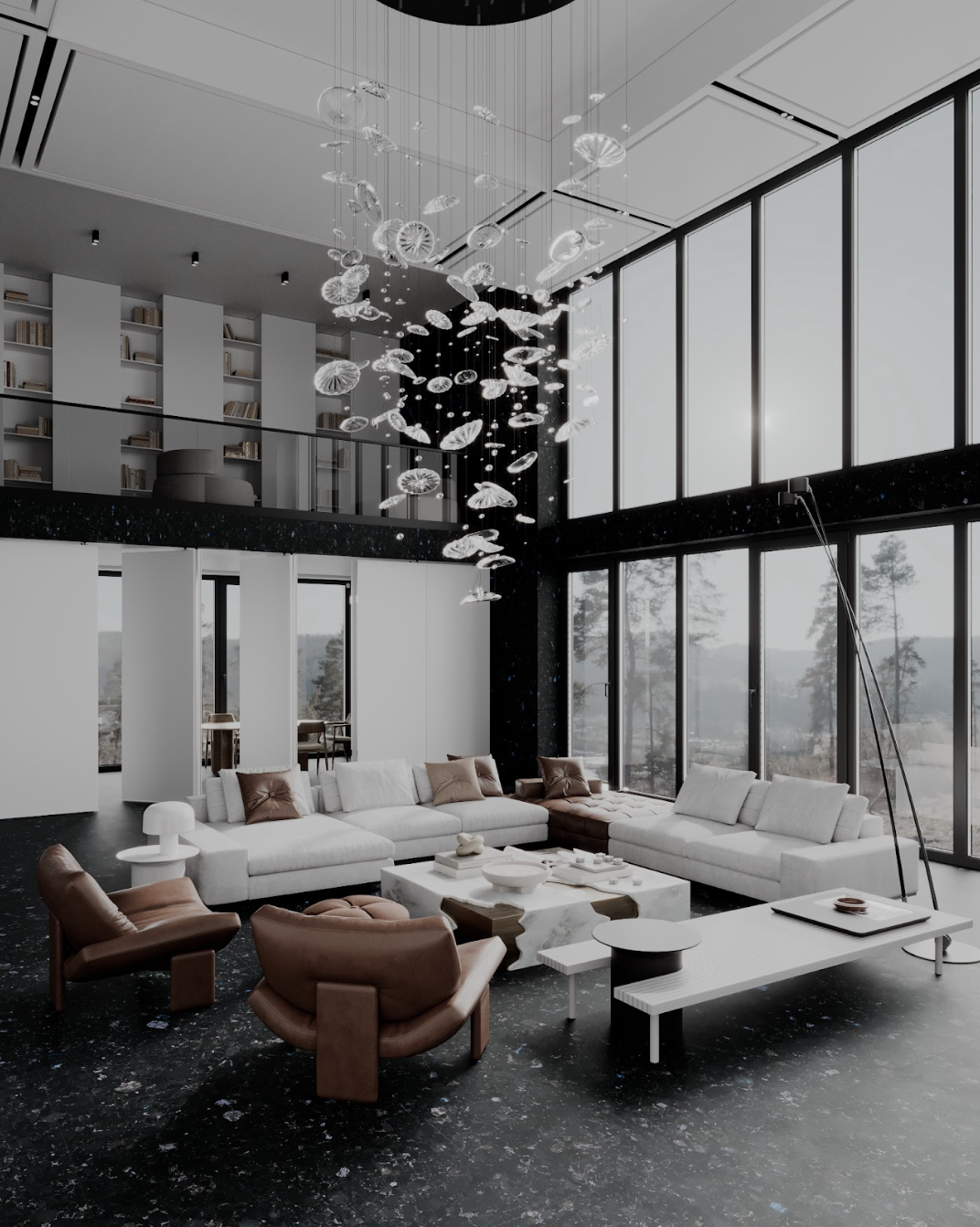
How Black Stone Connects Space Through Rhythm
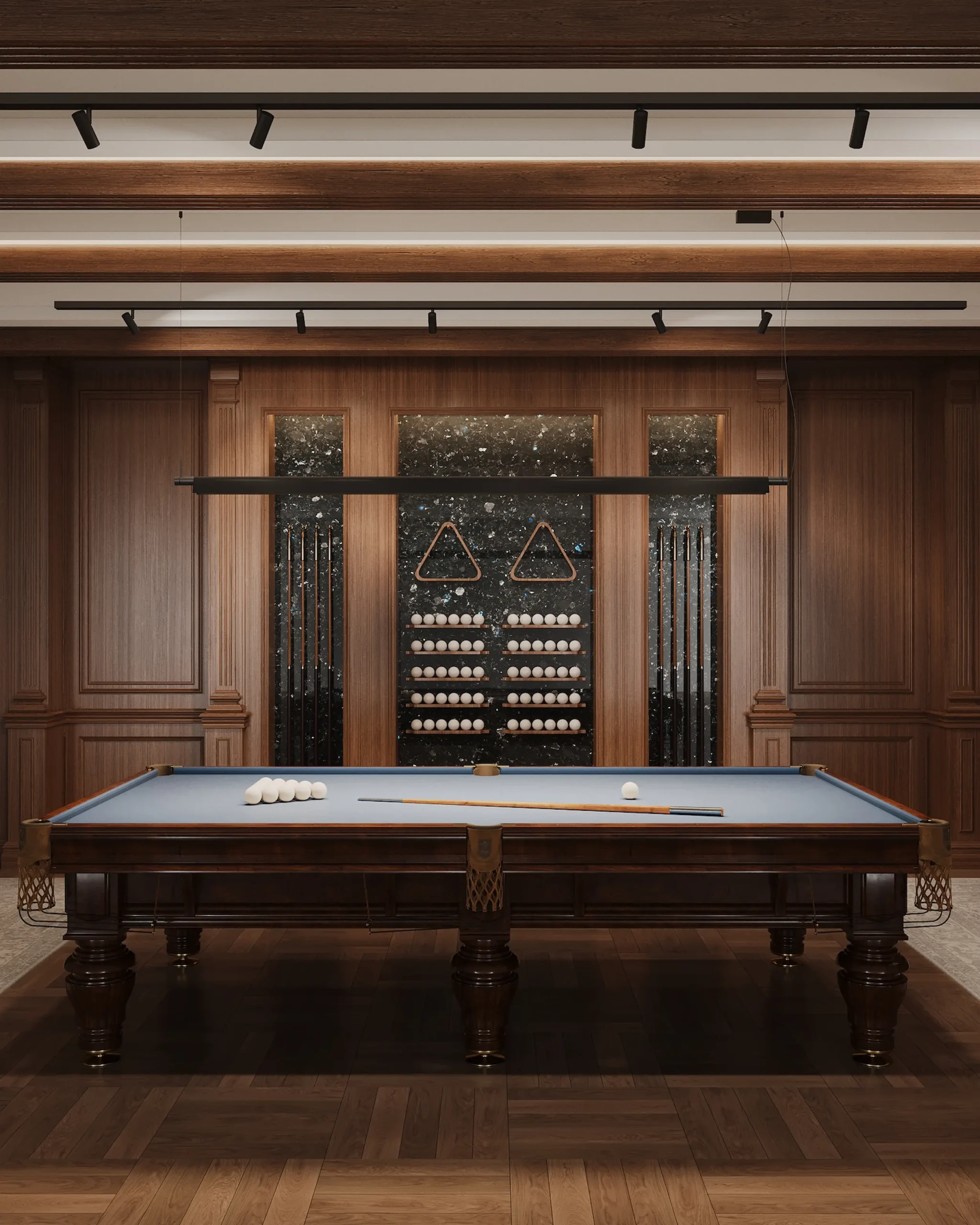
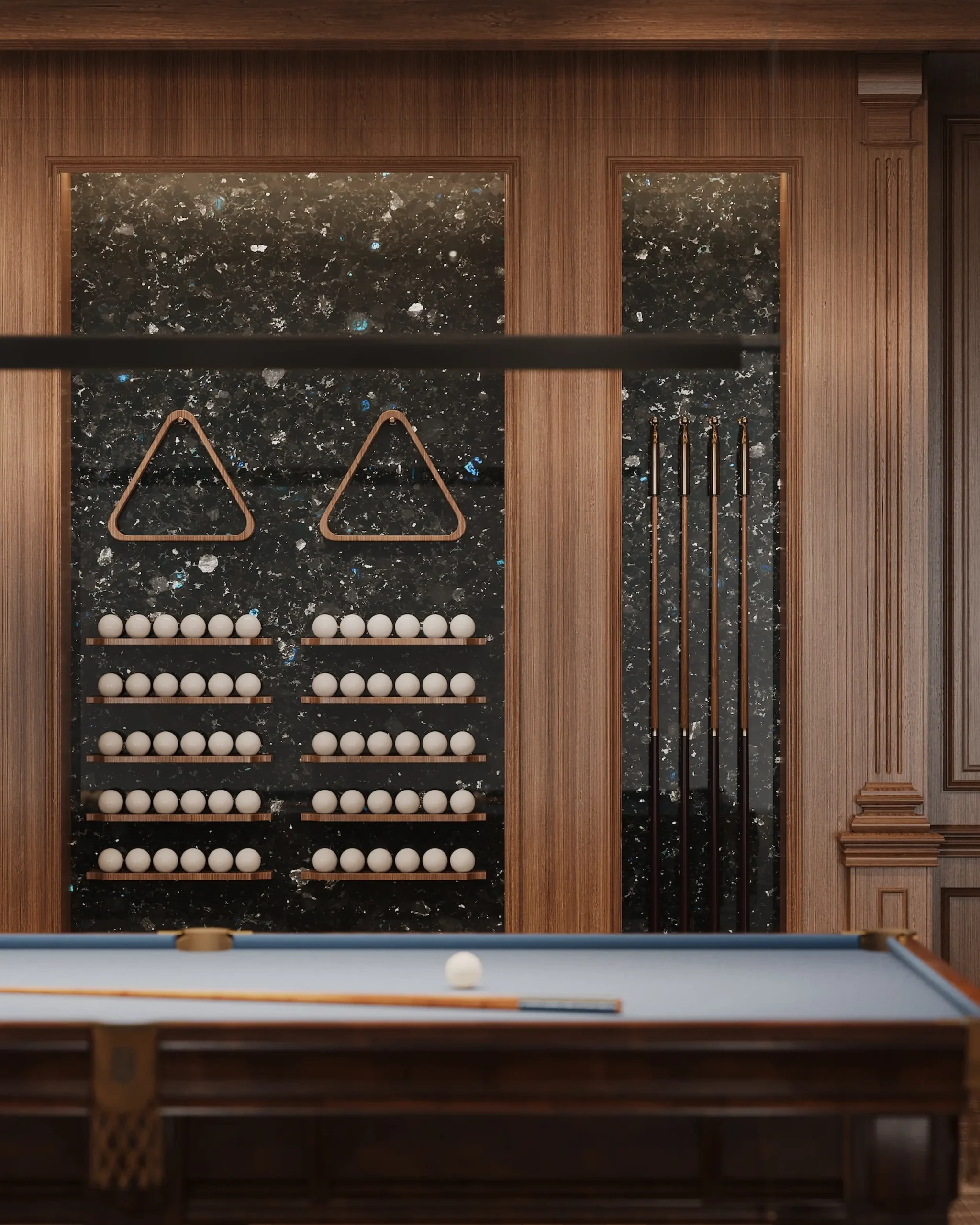
A material can connect space not only when it occupies a large surface. Sometimes several precise repetitions are enough: a stone portal near the entrance, a wall fragment in the living room, a fireplace zone, a detail in the bathroom, or a plane that continues onto the terrace. If these elements are connected by material, tone, and surface character, the space begins to read as more cohesive.
This rhythm should not feel forced. In premium architecture, what matters is not the quantity of material, but the precision of its use. Natural black stone can appear in different parts of the space and perform a different role each time: defining a boundary, creating depth, emphasizing light, or working as a quiet material support.
Golovinski Labradorite allows this rhythm to be built without a sense of repetition. Its graphite base creates a shared character, while its natural structure and iridescence give each plane its own expression.
As a result, the space does not look assembled from random materials. It gains one material logic — restrained, deep, and architectural.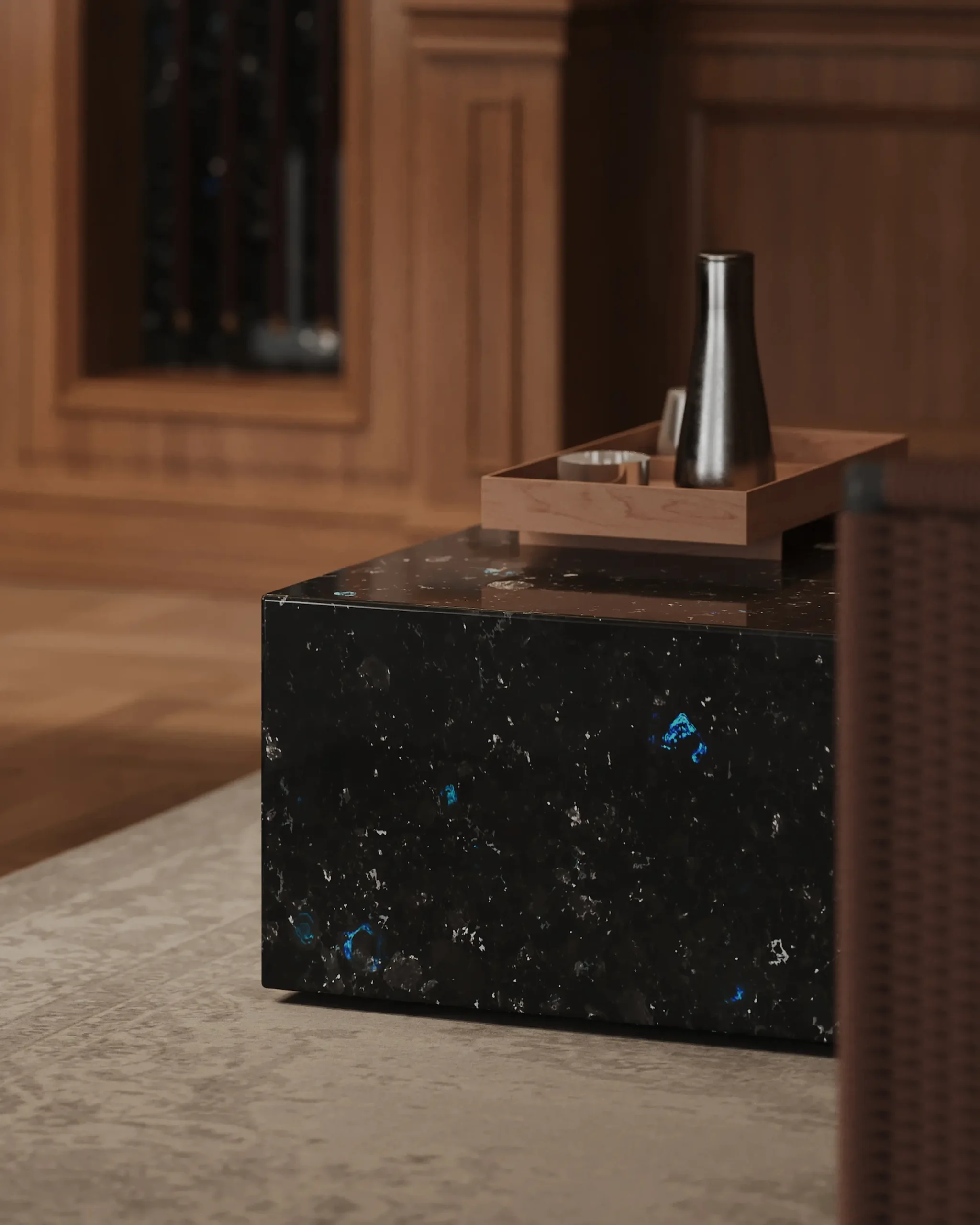
When the Boundary Becomes Part of the Atmosphere
Stone as an architectural boundary works best when it is not perceived as a separate decorative element. Its task is not simply to decorate a plane, but to help the space become clearer, deeper, and more cohesive.
Black stone can separate zones, emphasize transitions, form portals, work at the boundary between interior and facade, create rhythm, and connect everything into one material story at the same time. This is its architectural strength.
Golovinski Labradorite adds natural depth to this role. Its surface is not reduced to color or decorative pattern. It works through its graphite base, crystalline structure, delicate iridescence, light, and finish. That is why a boundary made of this stone does not feel accidental. It becomes part of the atmosphere of the space.