
You might be interesting:

Golovinski Labradorite in Minimalist Interiors: When Material Speaks Louder Than Décor
10 min | 27.05.2026Golovinski Labradorite in Minimalist Interiors: When Material Speaks Louder Than Décor
When a space does not need unnecessary details, and the main atmosphere is shaped by the material itself


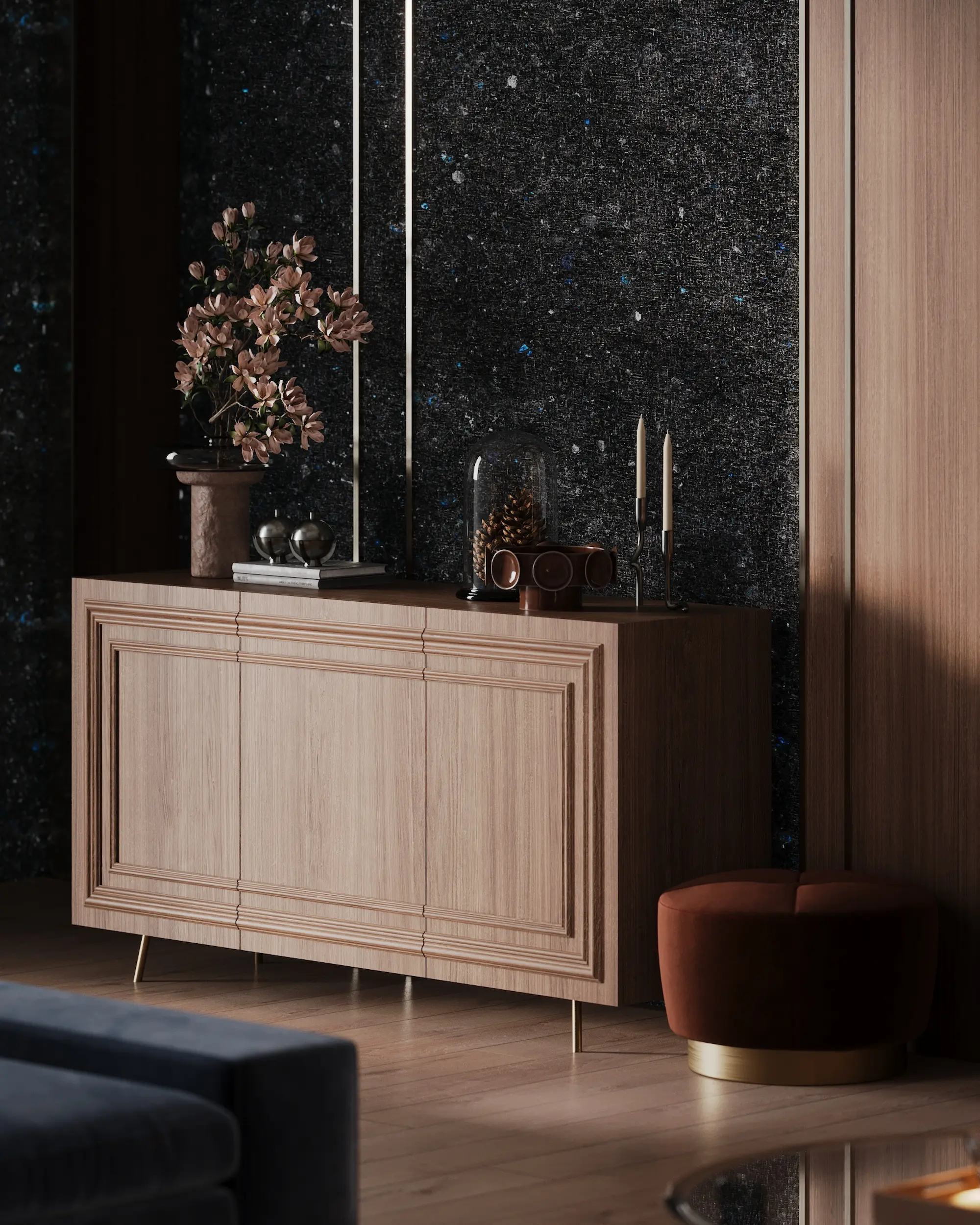
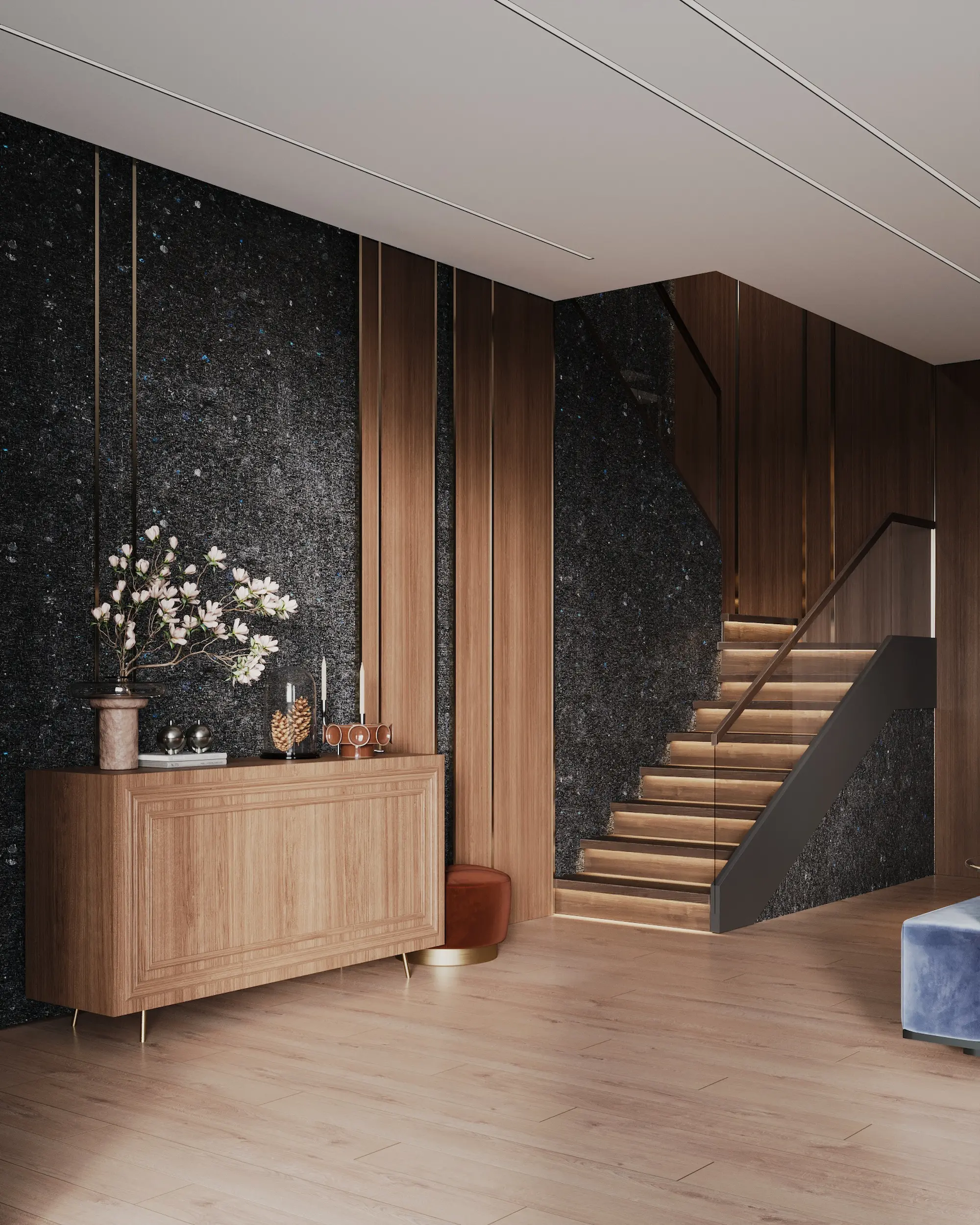
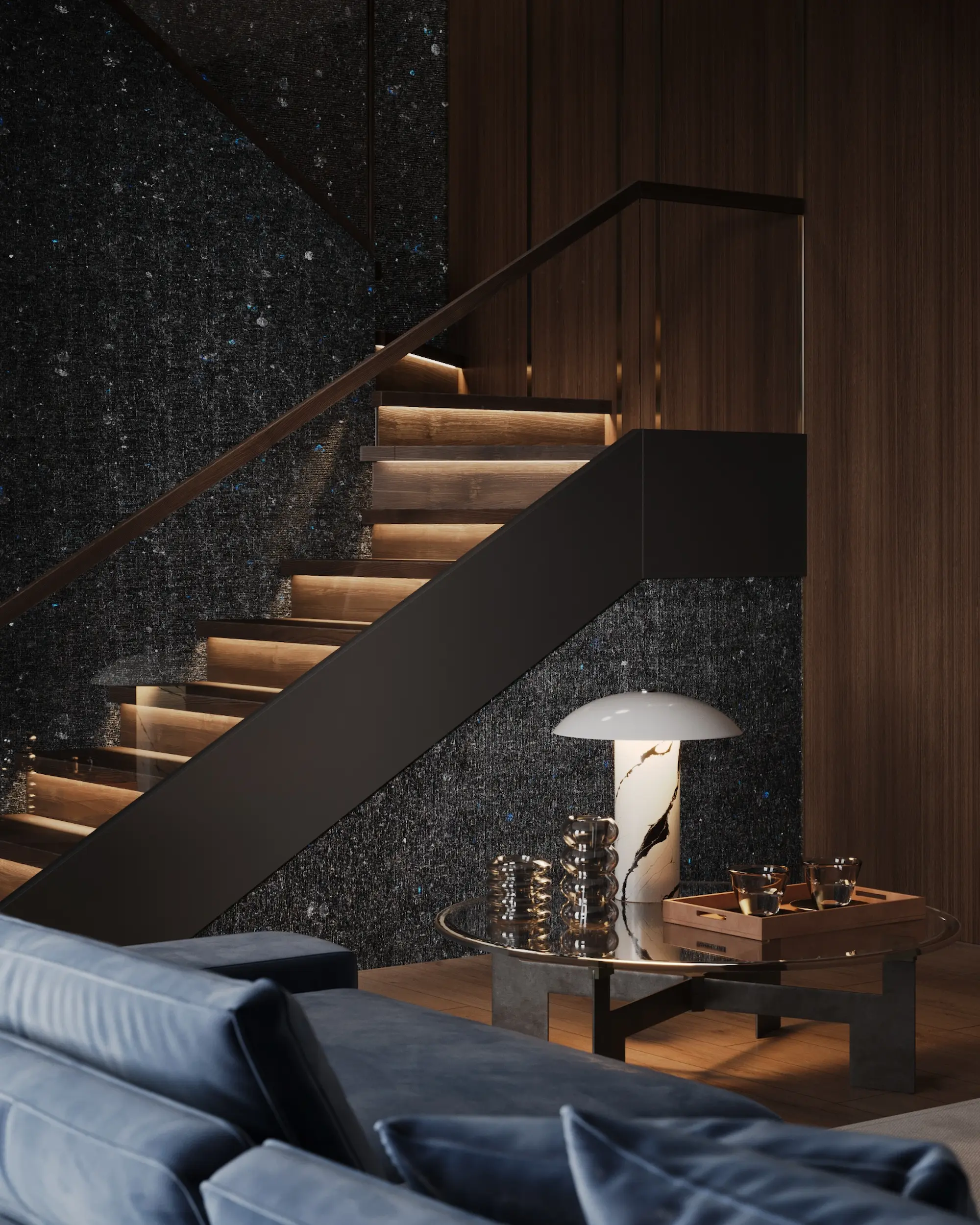
Minimalism Where Material Takes the Lead
A minimalist interior does not have to feel cold, empty, or overly restrained. Its strength is not in the number of objects, but in the precision of every decision: line, light, proportion, texture, and the material that defines the character of the space.
In this kind of interior, décor moves into the background. The space begins to be read through surfaces, their depth, natural weight, and interaction with light. There is no need for excessive accents when the material itself has enough strength.
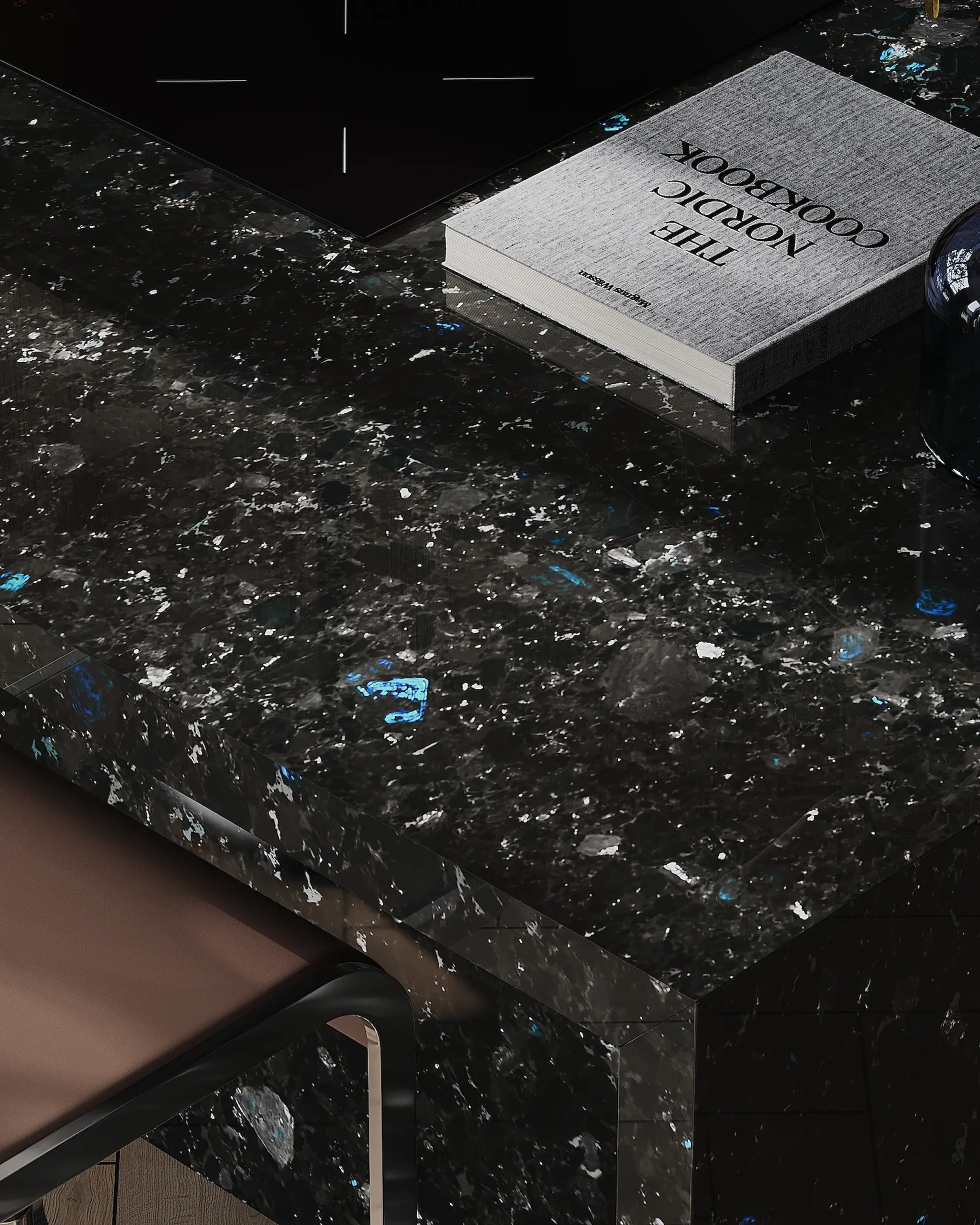
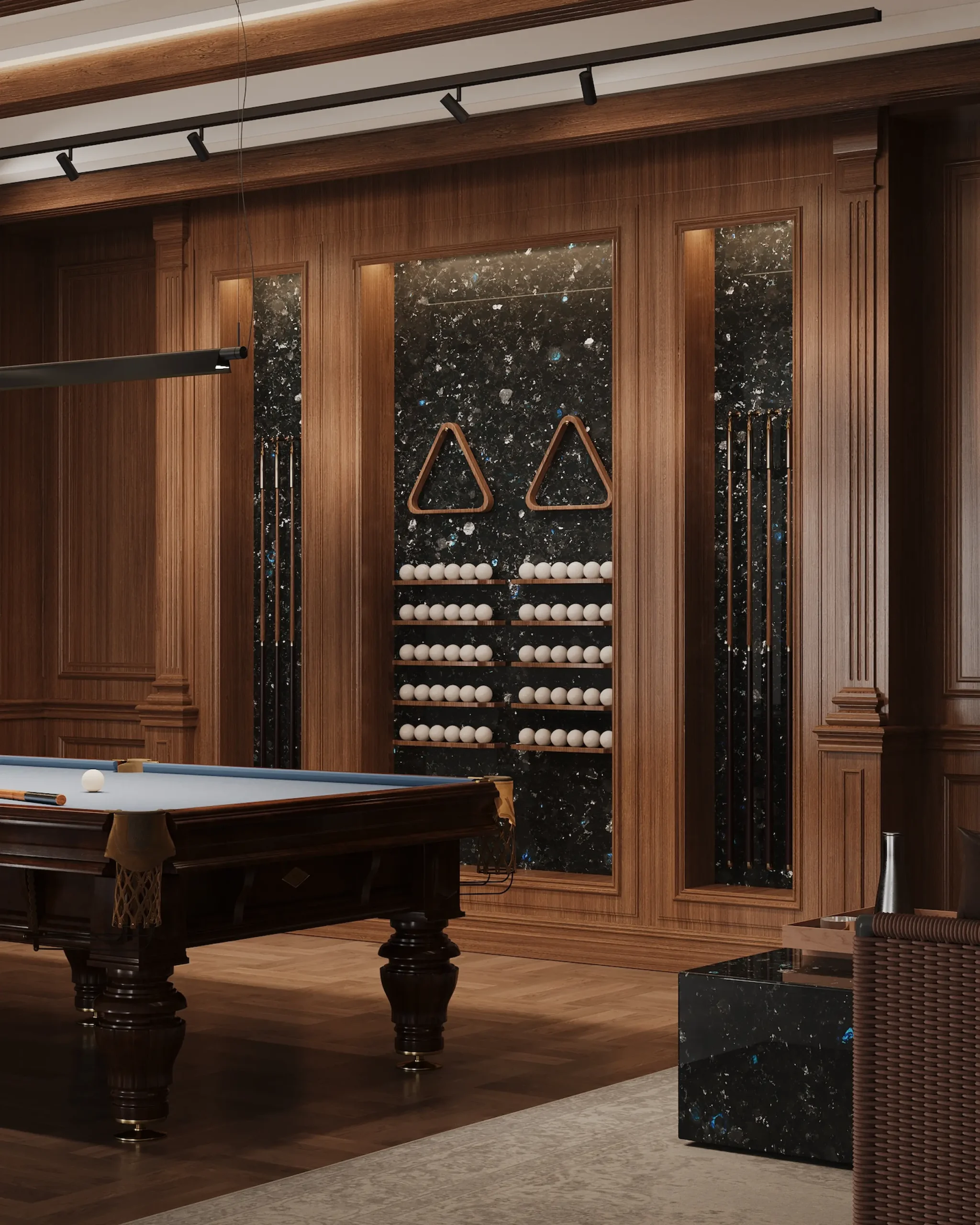
Golovinski Labradorite works especially well within this architectural logic. Its deep graphite base, natural crystalline structure, and delicate blue iridescence make it possible to create an interior where black stone does not feel heavy or excessive. It forms an atmosphere of calm presence — restrained, deep, and material.
In a minimalist space, labradorite does not compete with décor. It becomes the main carrier of mood.
When Surface Depth Replaces Decor
In a minimalist interior, any unnecessary detail quickly becomes visible. That is why materials have special importance here. If a surface looks flat or artificial, the space can lose depth and become too empty.
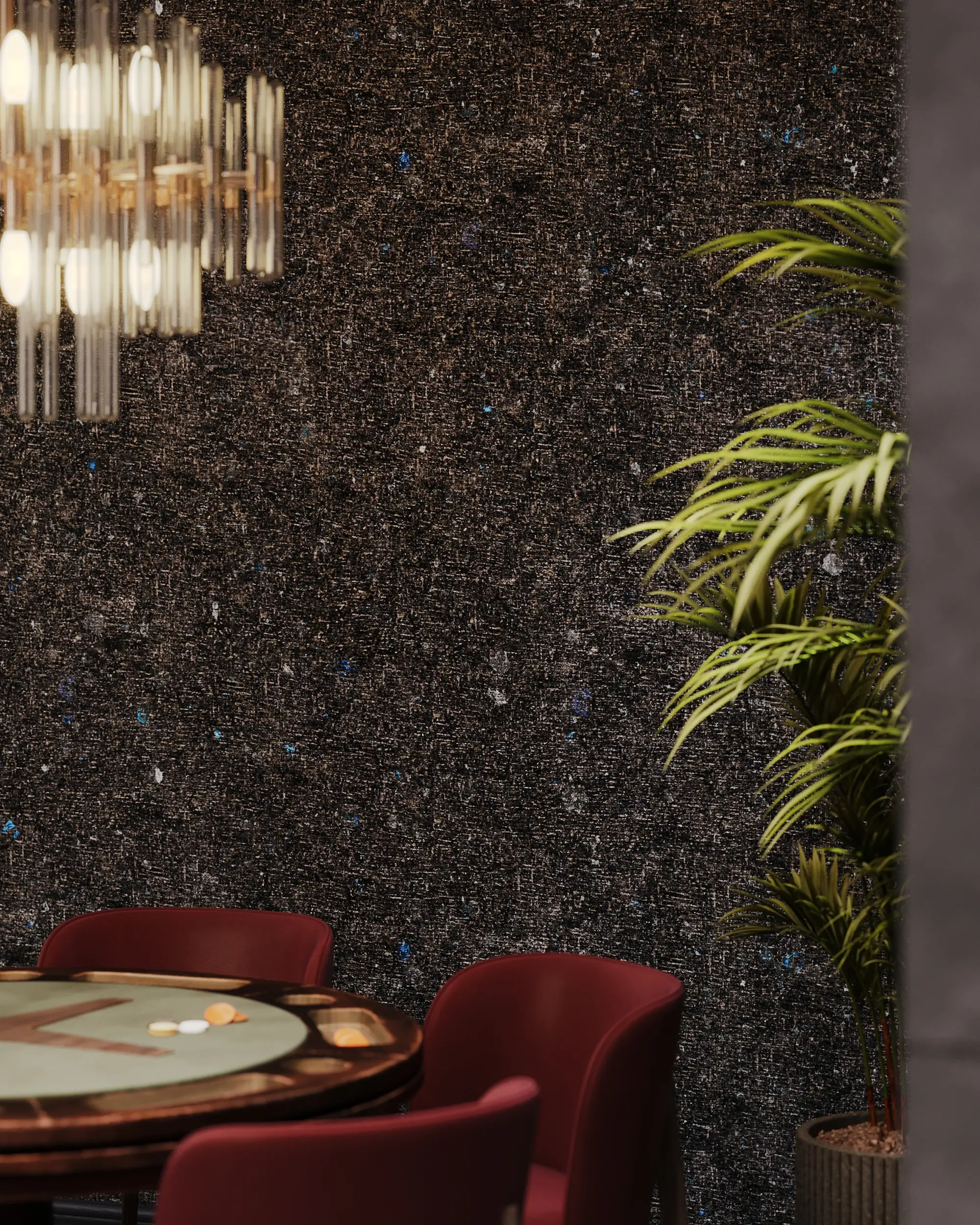
Natural stone works differently. It does not need a large number of additional elements, because it already has its own internal structure. Its beauty is not applied on top and is not created by a repeated pattern. It is born within the material itself — in its density, crystals, light transitions, and the natural uniqueness of the surface.
In this context, Golovinski Labradorite feels especially appropriate. It does not create visual noise, but it also does not leave the space empty. Its surface is restrained, yet within this restraint there is depth that changes depending on light, scale, and viewing angle.
This is why, in a minimalist interior, labradorite can replace décor not literally, but in a much more subtle way — through the feeling of materiality.
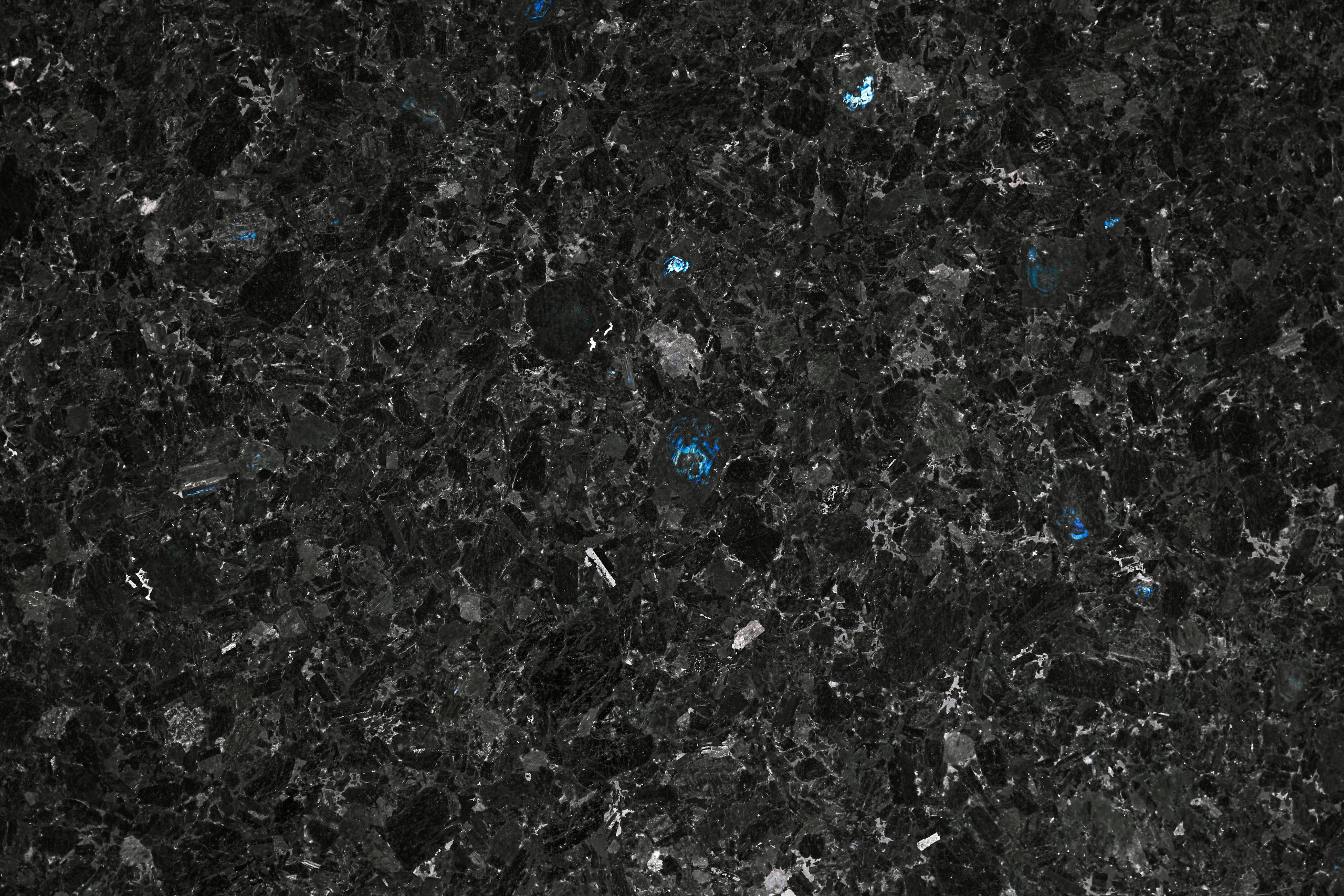
Black Stone Without the Feeling of Darkness
Dark material in a minimalist interior requires very precise use. If the surface looks flat, it can weigh down the space. But when black stone has natural depth, it works in a completely different way.
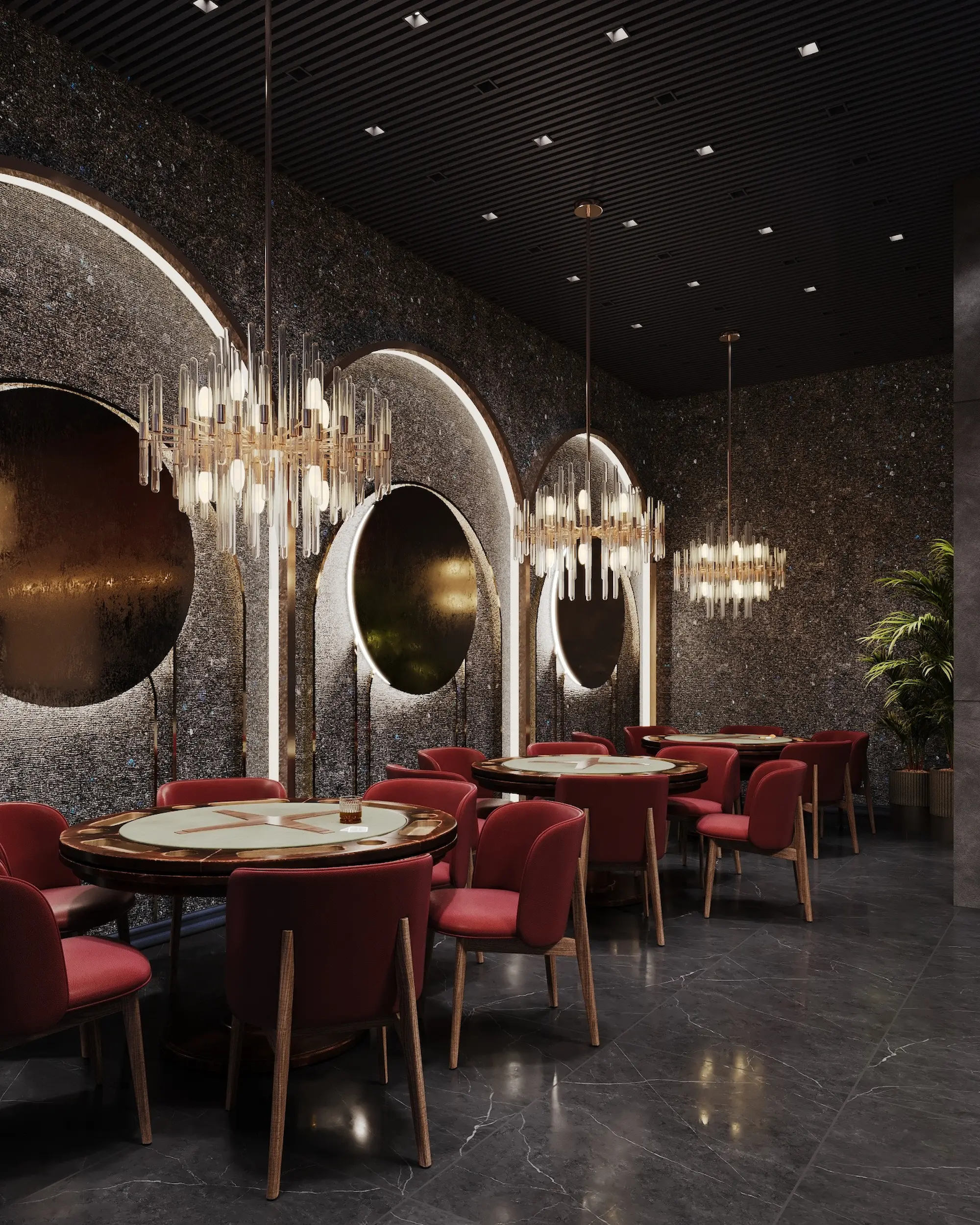
Golovinski Labradorite is not perceived as a solid black plane. Its graphite base has internal complexity, while its crystalline structure creates the feeling of a living surface. Light does not simply remain on the material — it enhances its depth, reveals delicate iridescence, and makes the stone feel more layered.
Because of this, a dark interior does not become closed or heavy. On the contrary, it gains a sense of calm, air, and architectural clarity. The stone adds depth to the space without taking light away from it.
This quality makes labradorite a powerful material for minimalist interiors: it allows dark surfaces to be used without creating the feeling of darkness.
A Large Surface as a Quiet Architectural Presence
In minimalism, it is important that material does not divide the space into unnecessary fragments. Large surfaces should be read as cohesive, calm, and architectural. This is why the format of the stone matters no less than its color or structure.
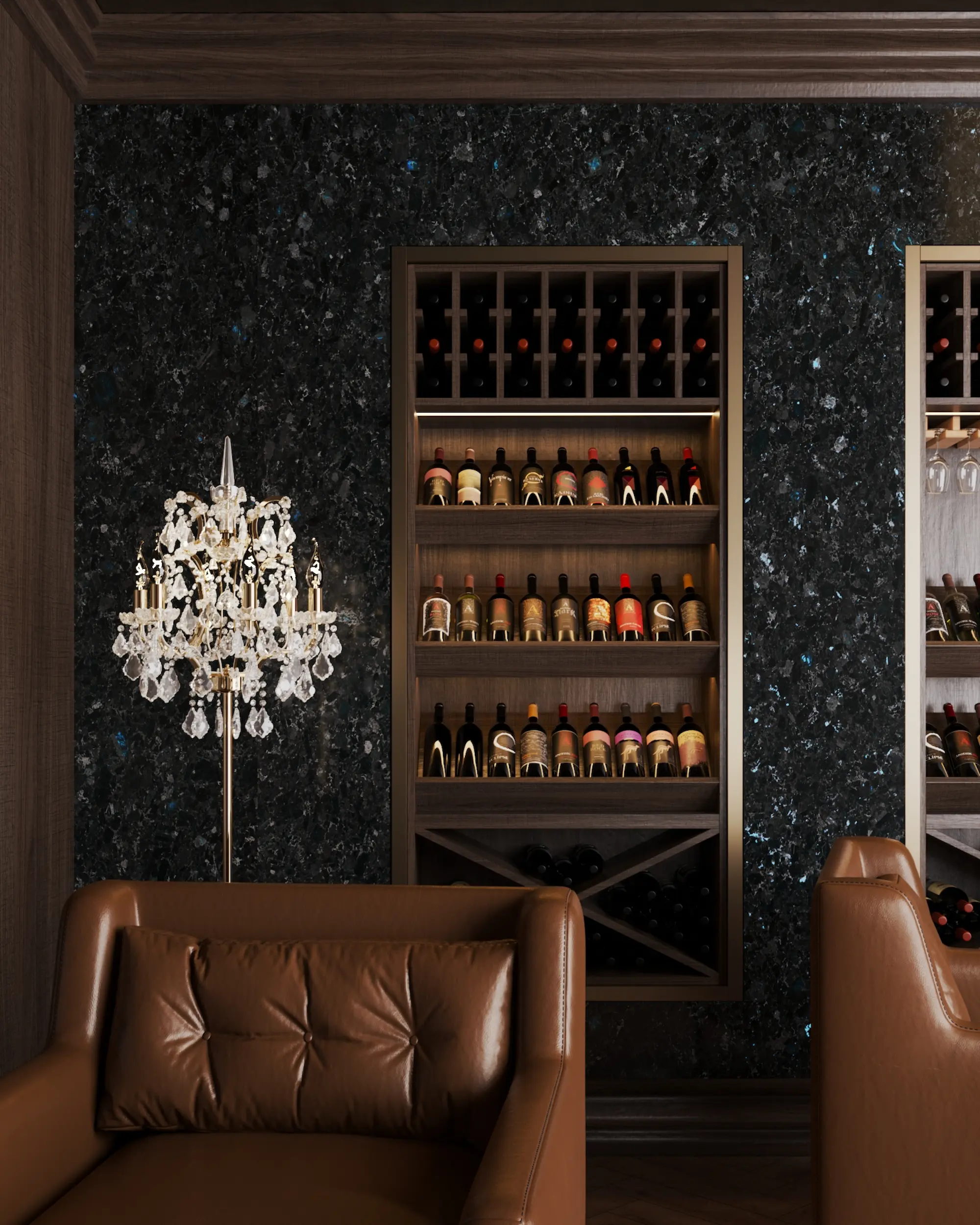
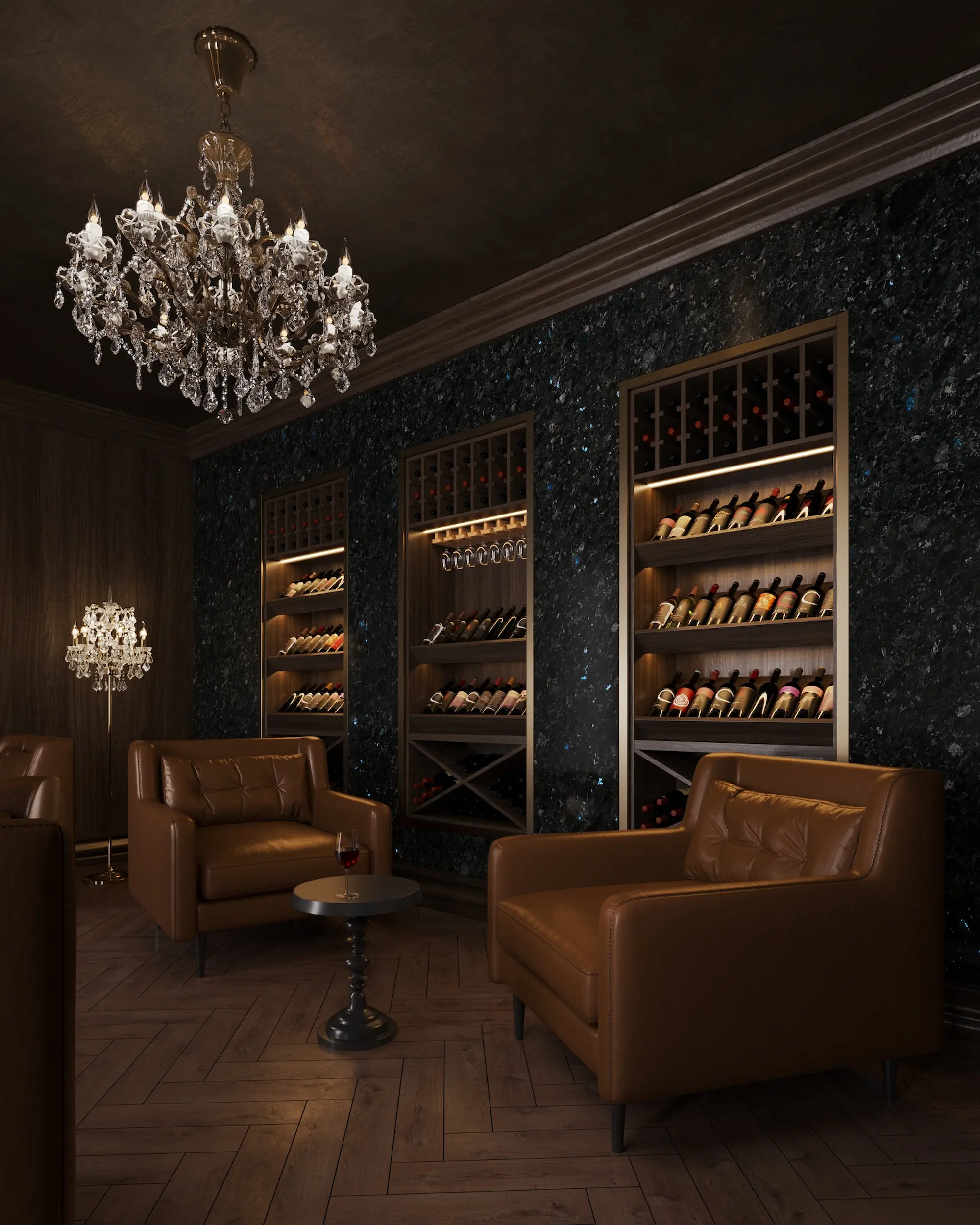
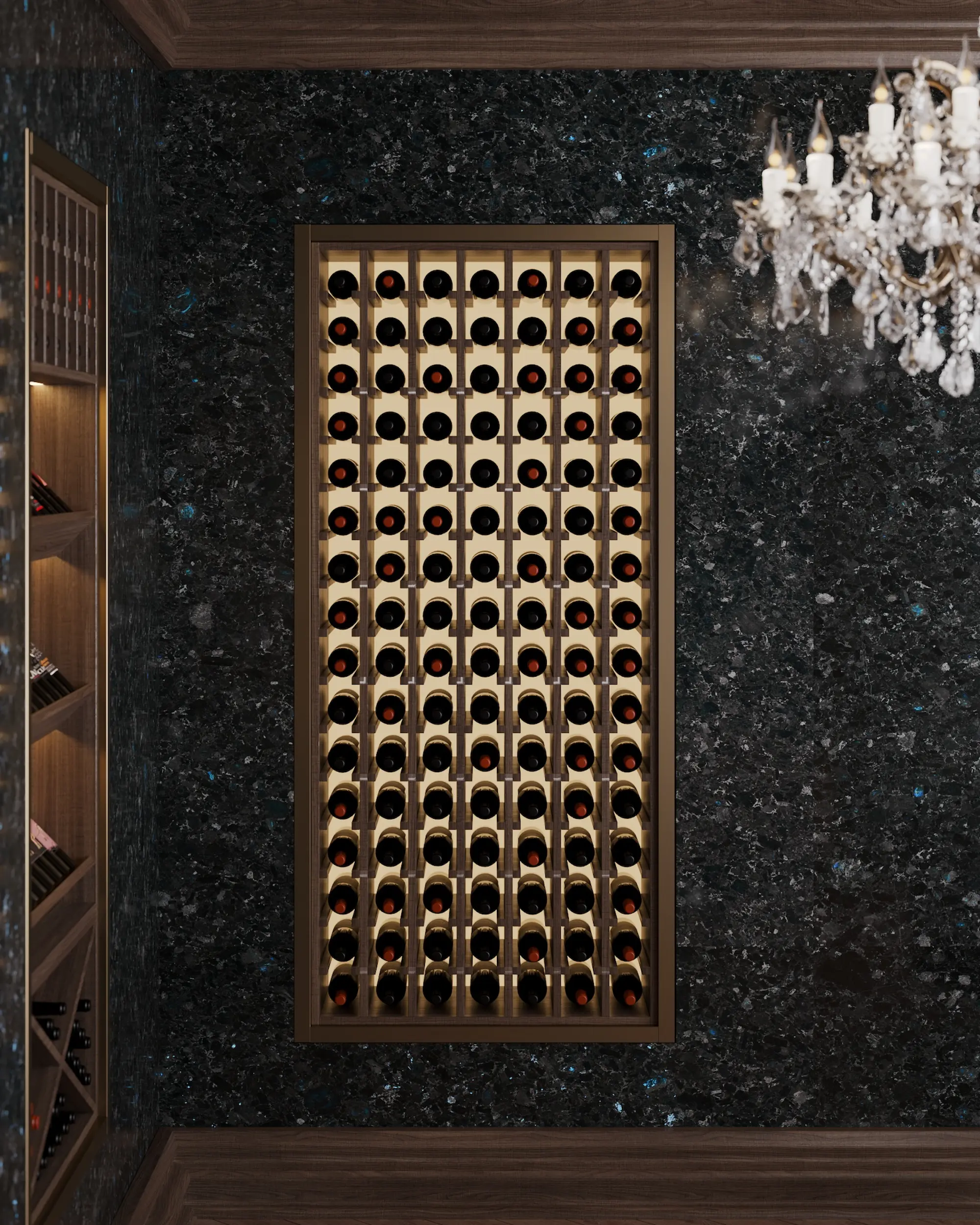
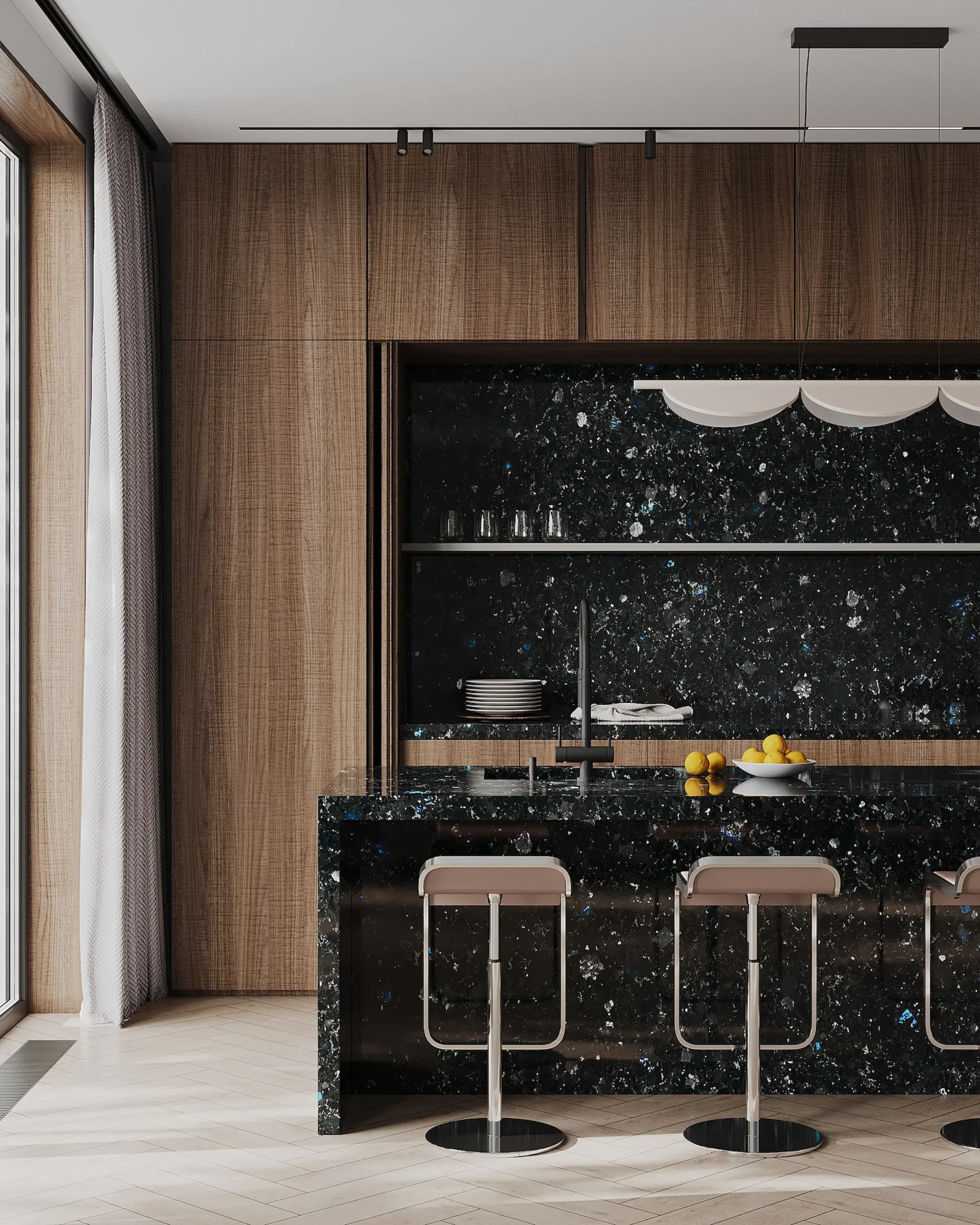
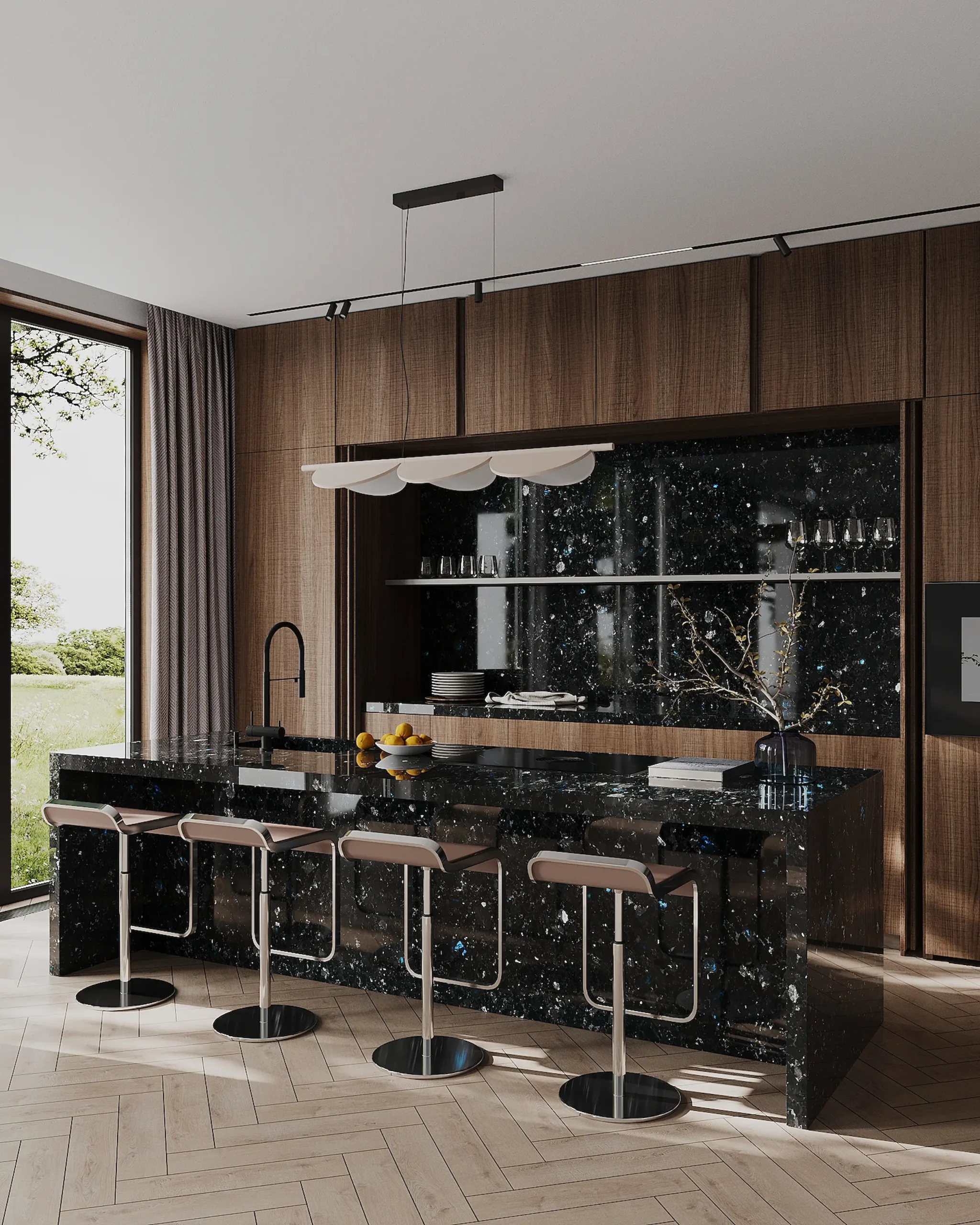
Across a large surface, labradorite does not look like a decorative insert, but like part of the architecture. It can shape a wall panel, fireplace area, kitchen island, bathroom, SPA space, or entrance area. In each of these scenarios, the stone works not through excessive expressiveness, but through scale, depth, and surface continuity.
A minimal number of seams allows the natural structure of Golovinski Labradorite to be perceived more calmly. The surface does not break into separate parts, but creates one unified material plane. In such a solution, the stone becomes neither a background nor an accent for the sake of an accent, but a quiet architectural presence.
This is especially important in interiors where status is not demonstrated directly, but felt through the quality of the material.
Light as Part of the Minimalist Composition
In a minimalist interior, light often works just as importantly as form or material. It does not simply illuminate the space; it sets its rhythm, reveals textures, and changes the feeling of surfaces.
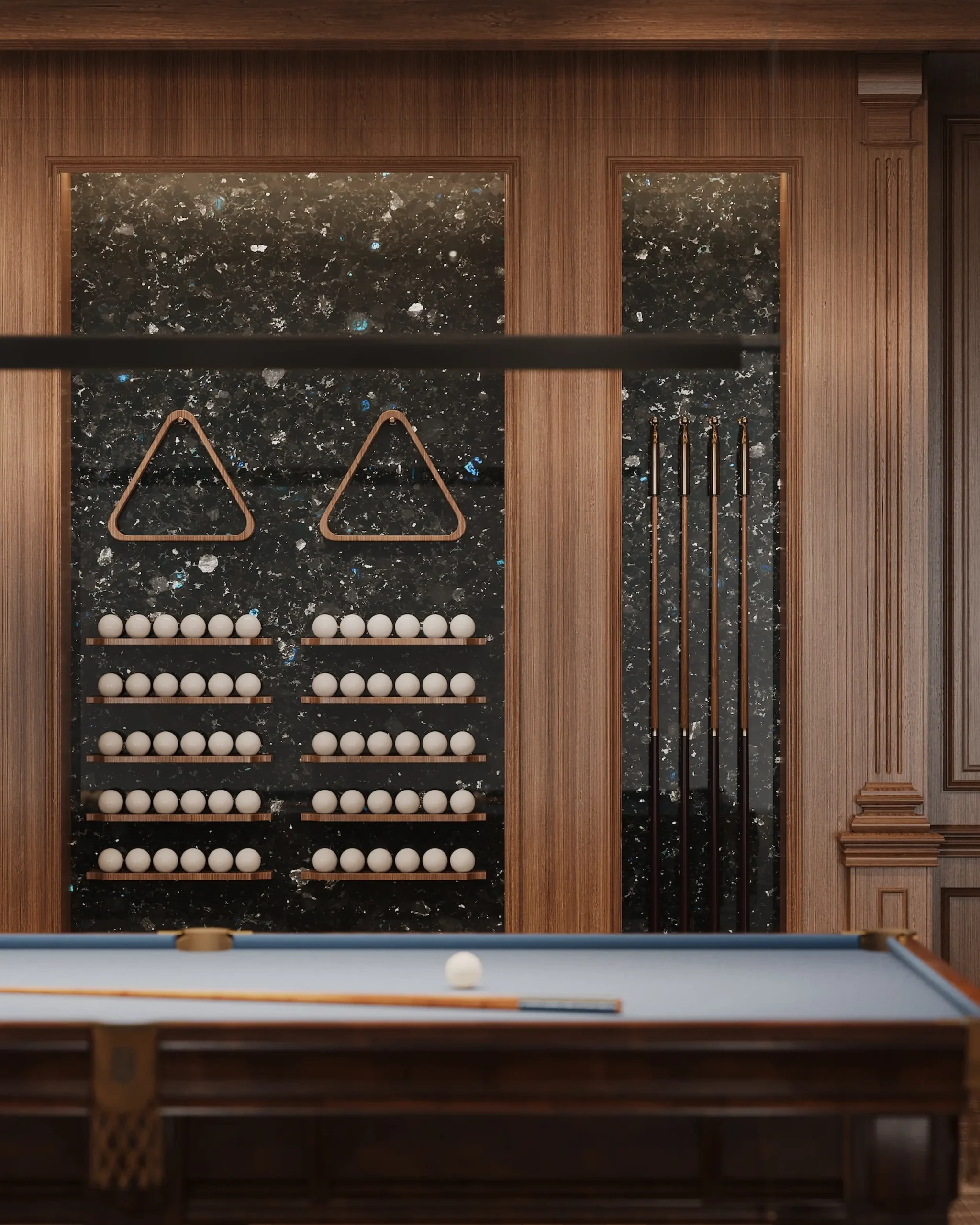
For labradorite, light has particular importance. In daylight, the stone reads as restrained and graphite-toned, with the feeling of a dense natural structure. Under warm architectural lighting, its surface becomes deeper, softer, and more shimmering. Natural iridescence does not look like a decorative effect — it only enhances the character of the material.
In a minimalist space, this works very subtly. The stone does not need bright accents or complex décor. It is enough to support it with the right lighting scheme, clean lines, and materials that do not compete with it.
In such an environment, Golovinski Labradorite does not simply reflect light. It seems to receive it into its structure and return a deeper, calmer mood to the space.
Paired with Wood, Metal, Glass, and Textile
A minimalist interior is rarely built around one material alone. Its atmosphere appears through the interaction of surfaces: stone, wood, metal, glass, textile, water, and light. These materials should not compete with one another, but create a shared language of space.
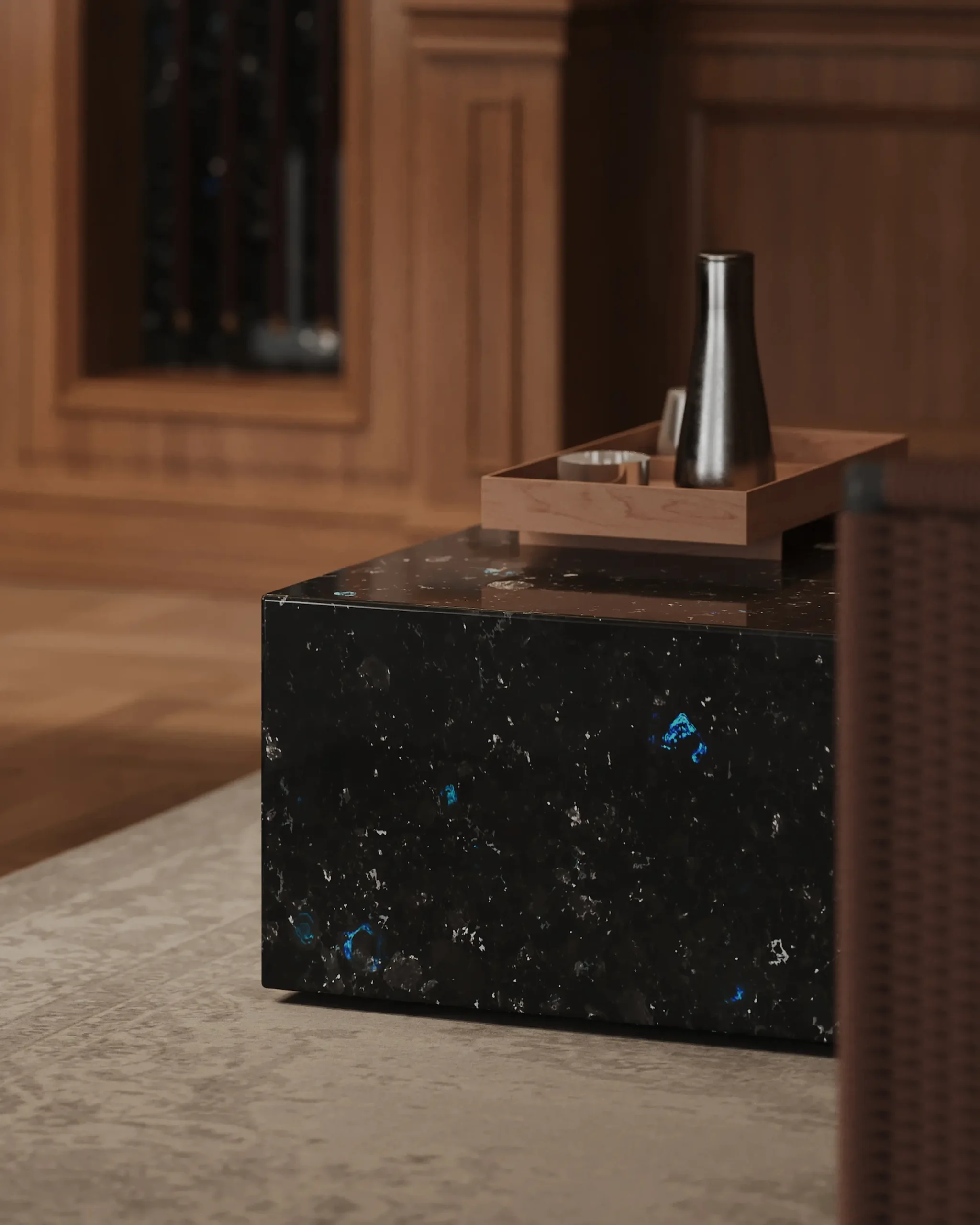
Labradorite works well in these combinations. Next to wood, its graphite base feels warmer and softer. Beside glass, the stone feels deeper and more restrained. Paired with metal, it gains a more architectural and composed character. Next to soft textile, it does not feel cold, but calm and tactile.
This is the strength of natural black stone in minimalism. It does not close the space into darkness, but gathers different materials around itself, creating a sense of continuity.
Golovinski Labradorite does not need complex decorative support. It only needs to be properly integrated into the material composition of the interior.
Status Without Demonstration
A minimalist interior is especially sensitive to the quality of materials. It is difficult to hide randomness or cheap imitation here, because every plane remains open to the eye. The space is not overloaded with details, so the material has to speak for itself.
Golovinski Labradorite creates a sense of status without excessive demonstration. It does not work through loud shine or an active pattern. Its presence is read through depth, natural structure, scale, and restrained iridescence.
In such an interior, the stone does not try to be the main decorative gesture. It forms a more subtle feeling — confidence, calmness, material weight, and architectural clarity.
This is the kind of premium quality that does not need unnecessary explanation. It is felt in the silence of the surface, in the density of the stone, and in the way light passes through its structure and changes the mood of the space.
When Material Speaks Louder Than Décor
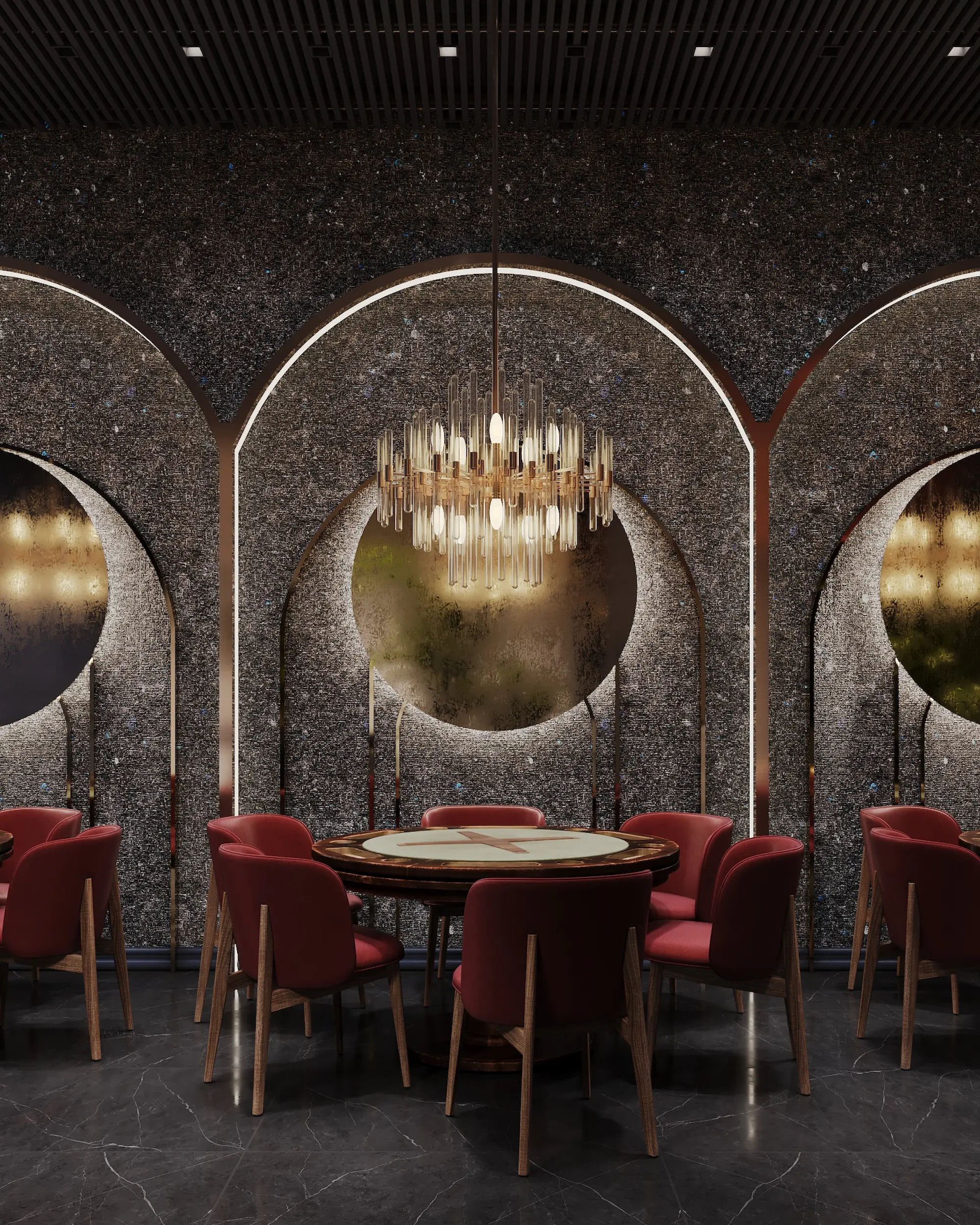
A minimalist interior does not forgive accidental materials. When unnecessary décor is removed, the surfaces themselves begin to shape the emotion of the space. They become the main carriers of depth, silence, status, and architectural continuity.
Golovinski Labradorite works in this environment as a material, not as an ornament. Its strength is not in filling the space with an effect, but in giving it depth, calm, and the feeling of true natural mass.
Labradorite in a minimalist interior speaks more quietly than décor, but far more deeply. It does not add unnecessary details. It changes the atmosphere of the space itself.
That is why, in interiors where purity, scale, and material precision matter, Golovinski Labradorite can become the main architectural accent — without any unnecessary decoration.