You might be interesting:

Large-Format Labradorite: When Stone Becomes an Architectural Surface
10 min | 26.05.2026Large-Format Labradorite: When Stone Becomes an Architectural Surface
When the scale of a surface changes the perception of material, and natural stone begins to work as part of the architecture itself


Large Format as a Language of Architecture
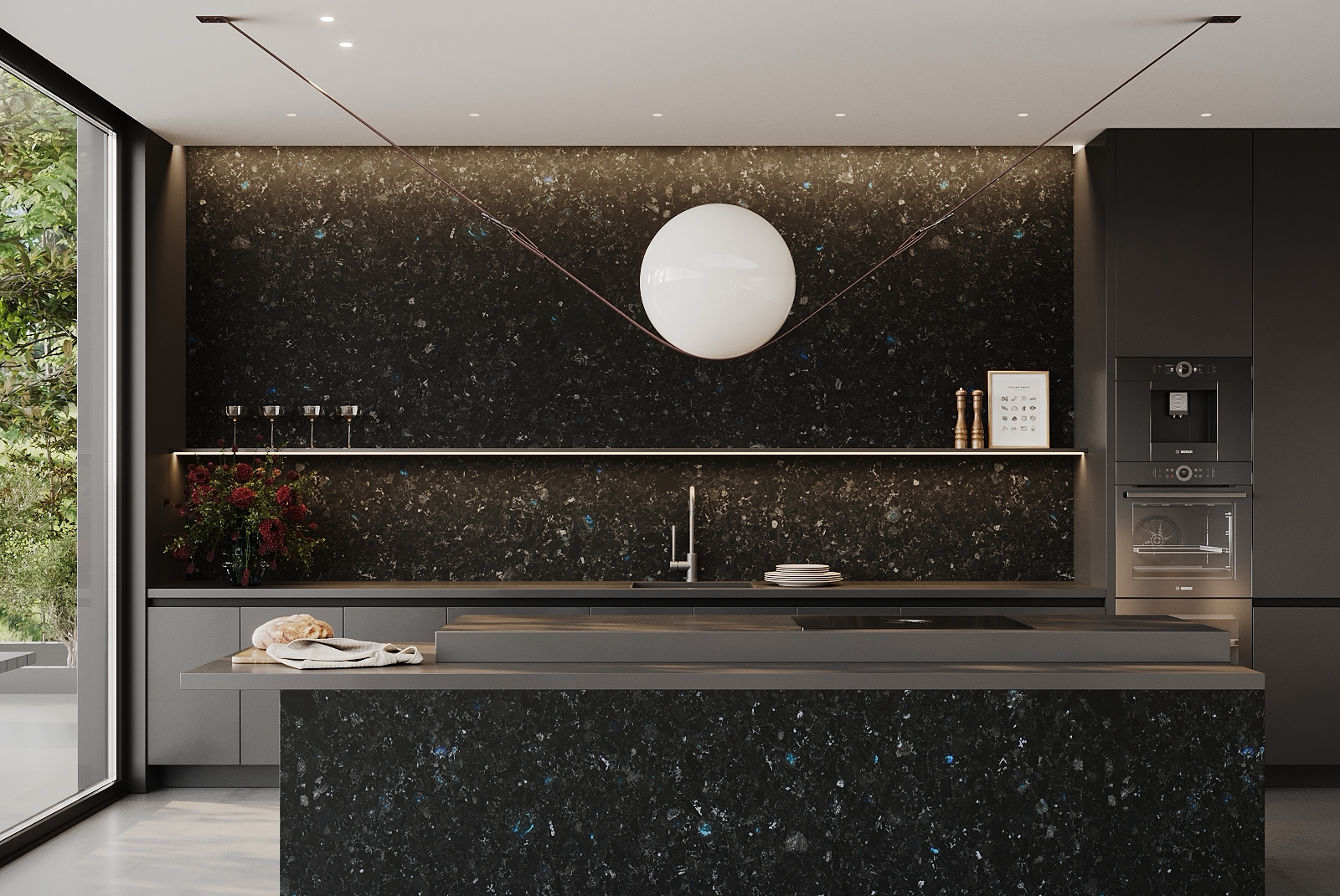
Large-format labradorite is perceived differently than stone used in smaller fragments. When the surface is not divided by many seams, the material begins to read as more cohesive, deeper, and far more architectural.
At this scale, stone is no longer perceived simply as cladding. It forms a surface that holds light, sets the rhythm of the space, and reveals the natural structure of the material without visual fragmentation. The eye no longer reads separate fragments — it perceives the stone as a cohesive material atmosphere.
Golovinski Labradorite reveals itself especially expressively in large formats thanks to its deep graphite base, natural crystalline structure, and delicate blue iridescence. Across a large surface, these qualities are perceived not as separate details, but as one unified material depth.
This is when labradorite begins to work not as decorative stone, but as an architectural surface — restrained, monumental, and alive in its interaction with light.
Scale as Part of Architectural Perception
Large-format stone changes not only the appearance of an interior, but also the feeling of the space itself. When the material unfolds across a large surface, the eye does not stop at seams, joints, or the smaller rhythm of cladding. It perceives the surface as a unified architectural element.
This is where the particular strength of natural stone becomes visible. A large surface does not need active decoration to feel expressive. It is already filled by the structure of the material itself — depth, crystallinity, natural variation, and light that moves differently across the surface throughout the day.
Large-format labradorite allows a space to feel calmer and more elevated. The stone does not break into separate parts; it creates a sense of material presence that cannot be achieved with small-format cladding or artificial repeated texture.
Across large planes, Golovinski Labradorite feels not like a background, but like the architectural foundation of the space.

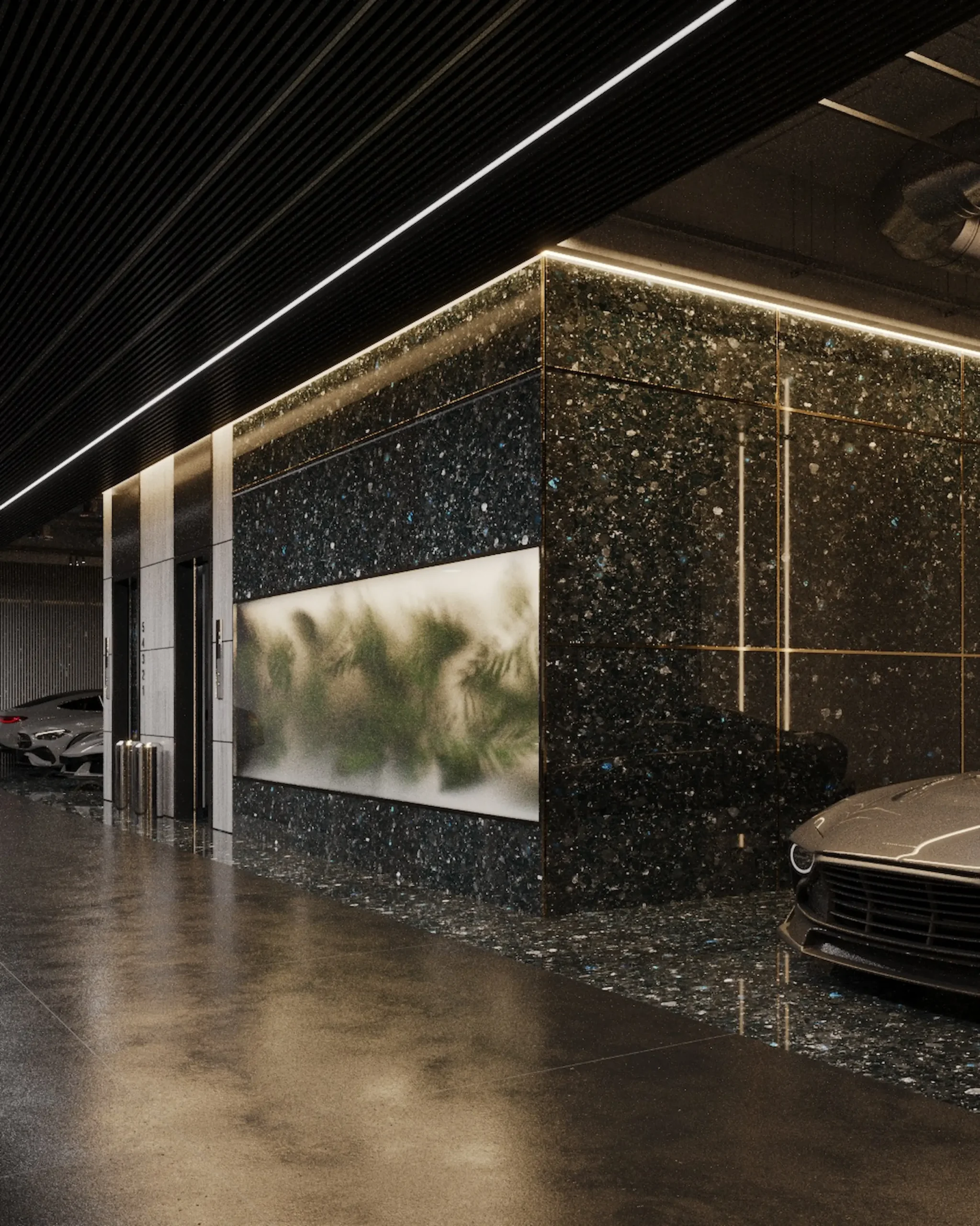
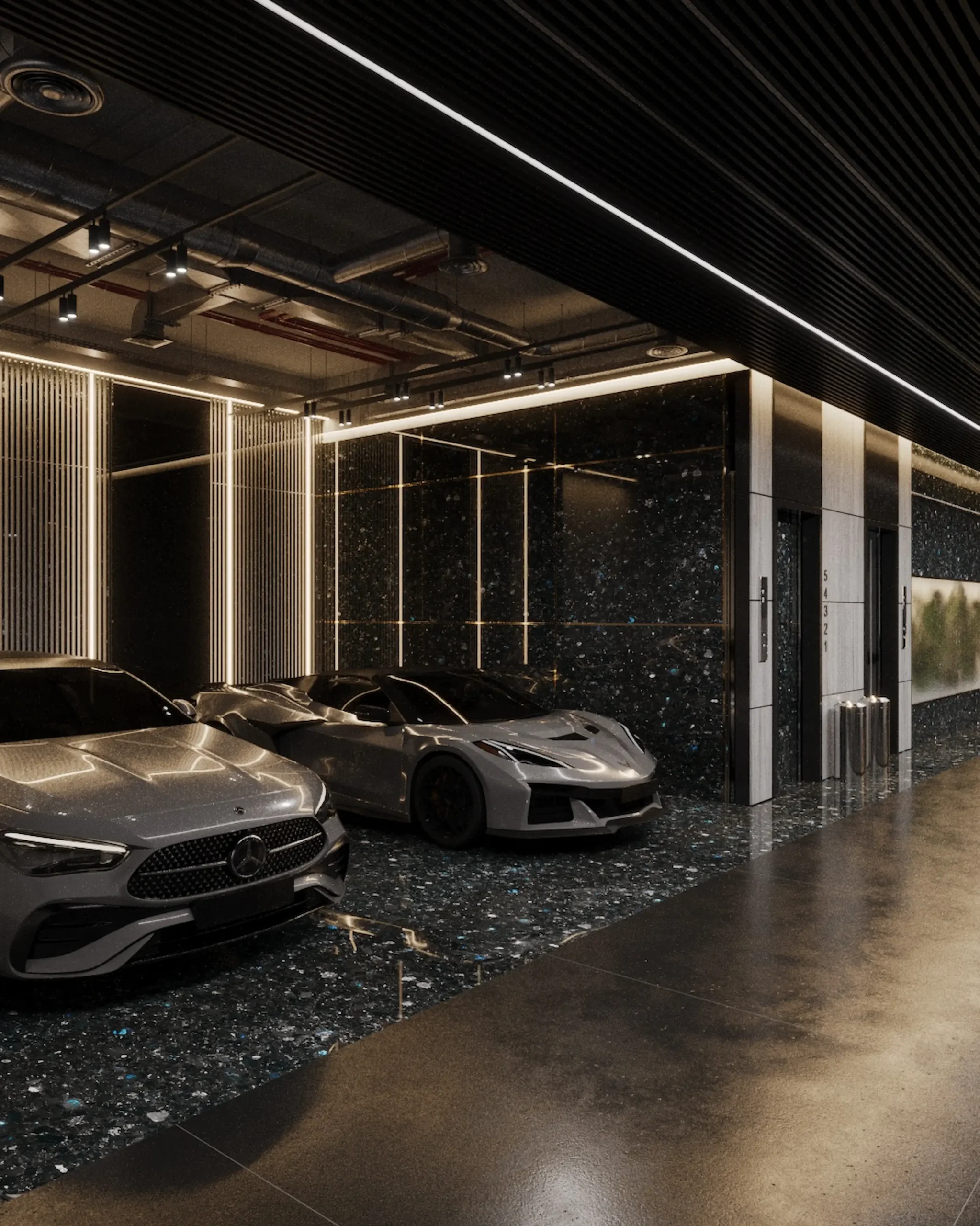
When Stone Stops Being a Detail
A smaller format often forces the material to work as a decorative element. Stone appears in fragments: a separate wall, part of the floor, the area around a fireplace, or a detail of a kitchen island. In such solutions, the material may be beautiful, but it does not always have enough presence to shape the full feeling of a space.
Large format changes this logic. The surface begins to work not as an insert, but as part of the architecture. It unifies the plane, defines the scale, and allows the material to reveal itself without unnecessary visual noise.
For labradorite, this is especially important. Its structure is not built around a single active pattern. It is composed of a deep graphite base, crystals, reflections, and delicate iridescence. On a small fragment, these qualities may be perceived only partially. Across a large surface, they begin to work together.
This is how stone moves from the role of a decorative material into the role of an architectural surface.
Surface Continuity and Minimal Seams
In large-format stone, what matters is not only the size of the material, but also the feeling of continuity. The less the surface is divided by joints, the calmer and more refined it feels within an interior.
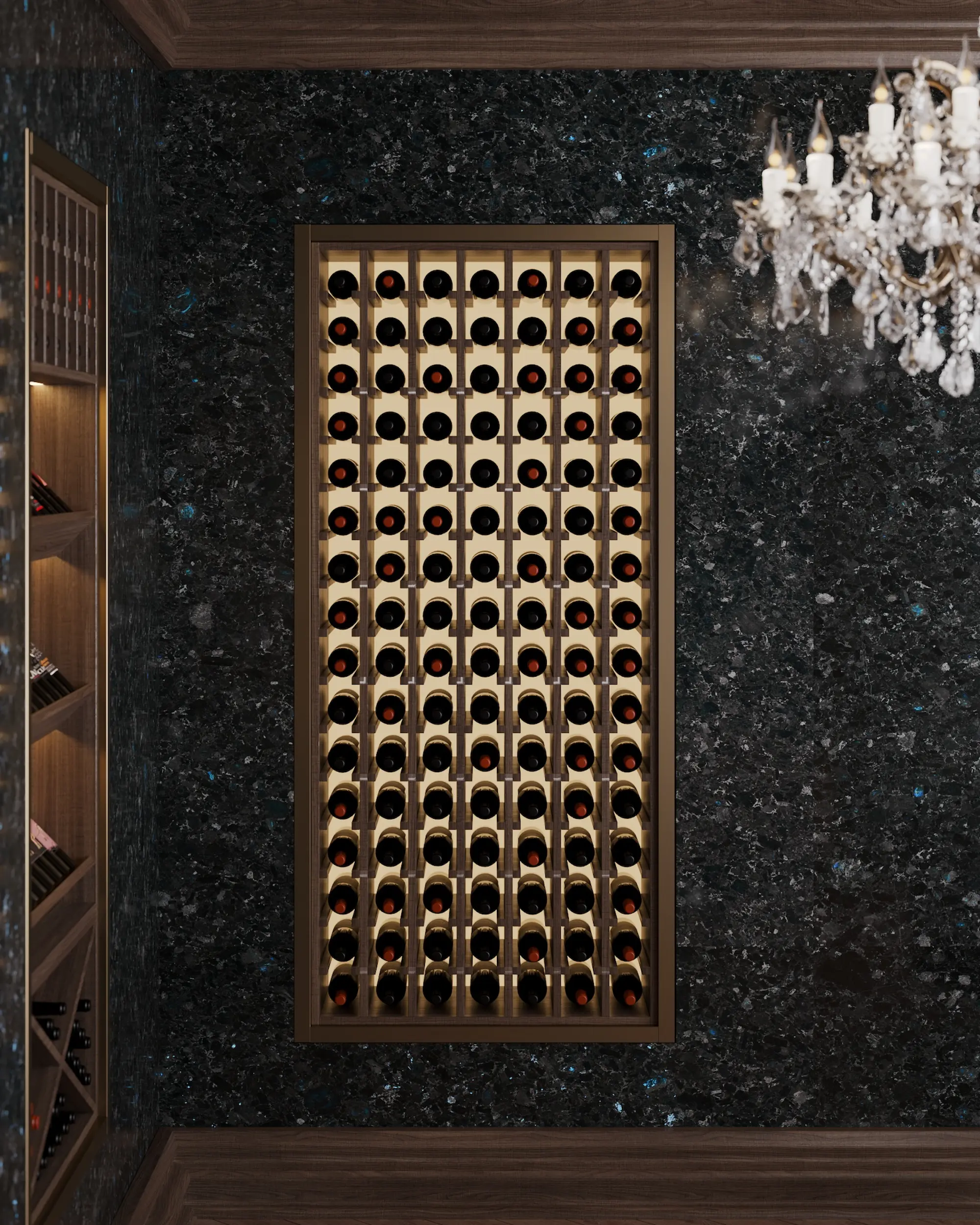
A minimal number of seams allows labradorite to preserve the continuity of its natural structure. The graphite base is not interrupted by unnecessary lines, while the crystalline depth of the material is perceived as one unified field.
When the surface remains almost uninterrupted, a different kind of material silence appears within the space. Labradorite does not fragment the architecture into parts. Instead, it gathers it into one calm surface, where light, structure, and scale work together.
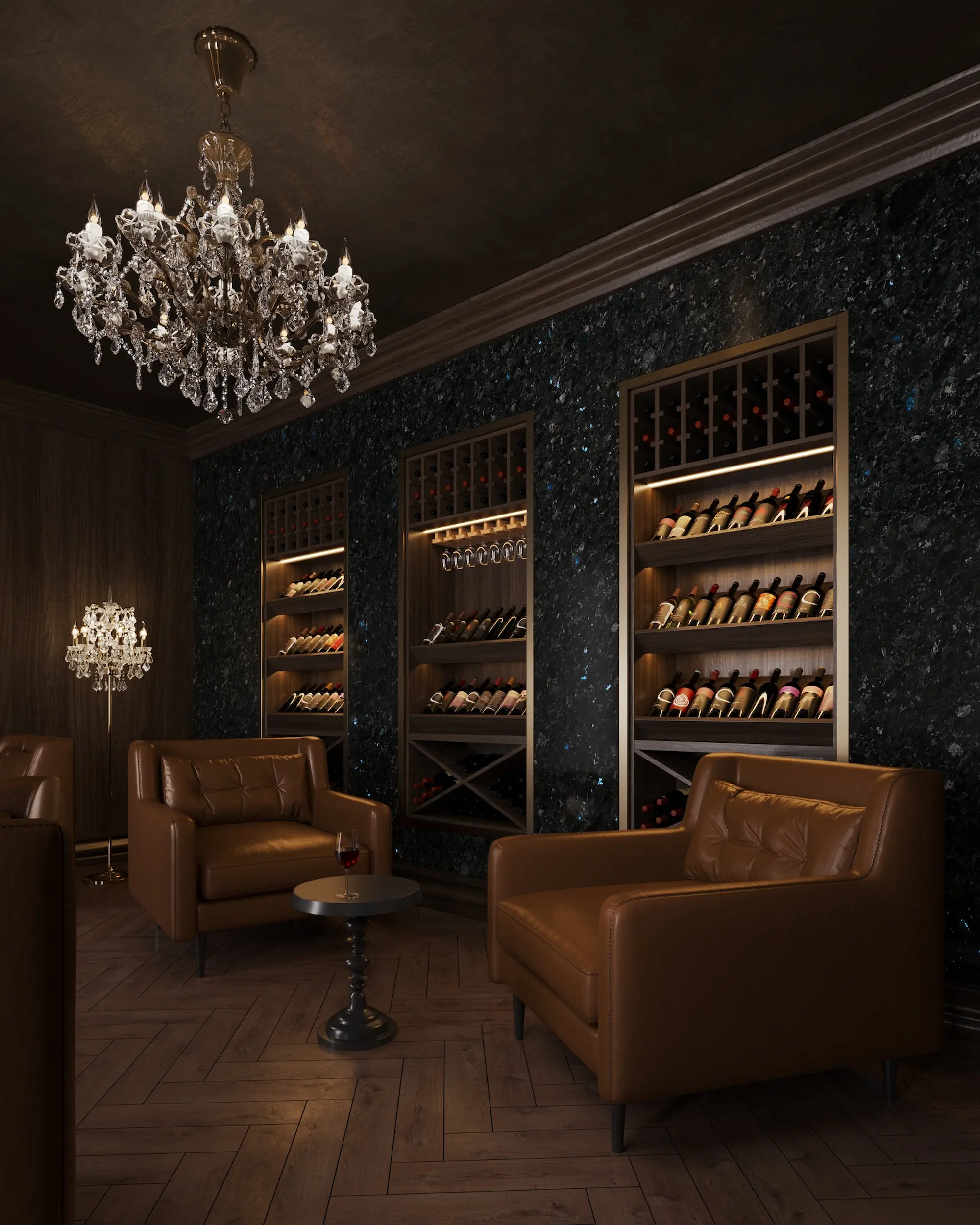
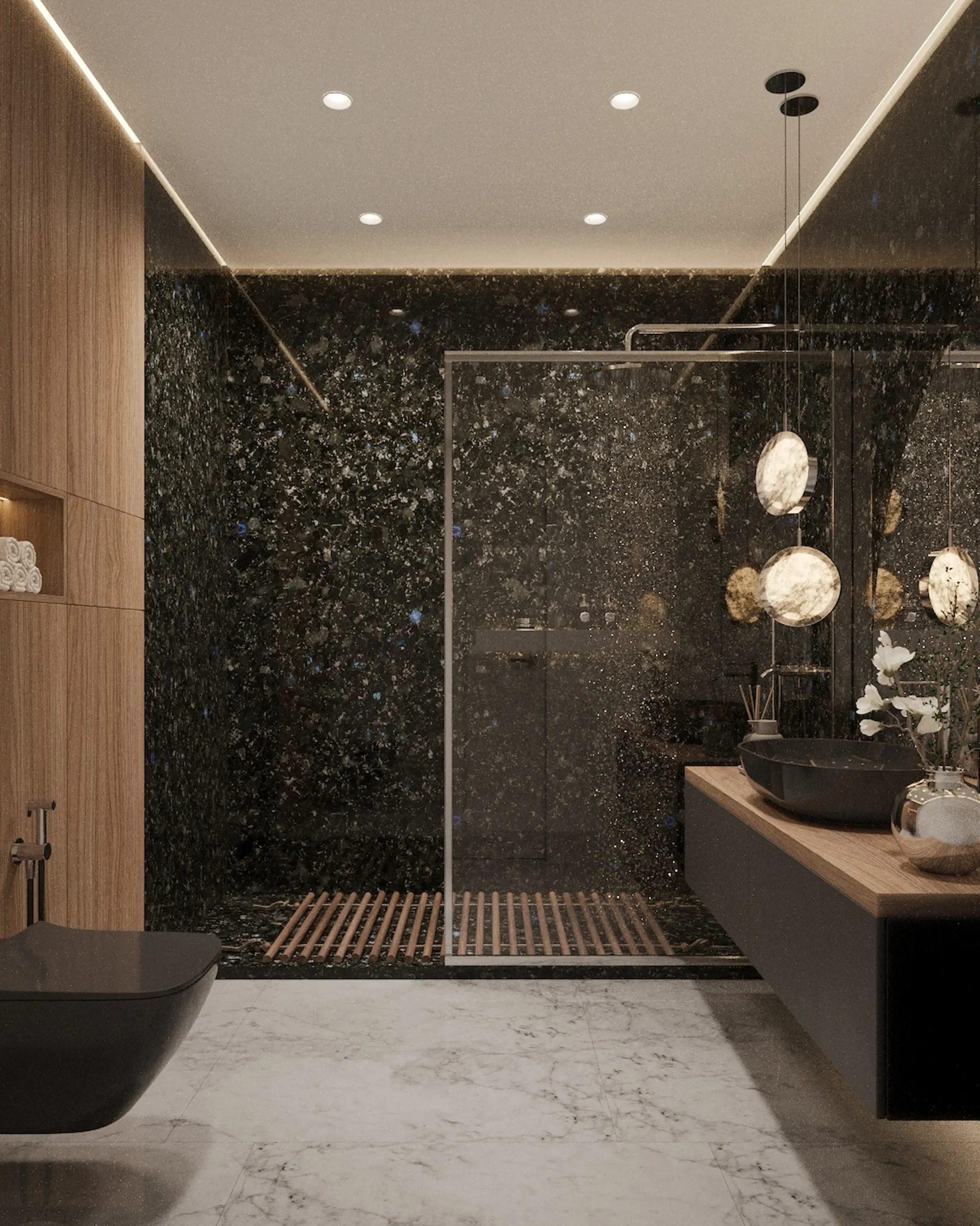
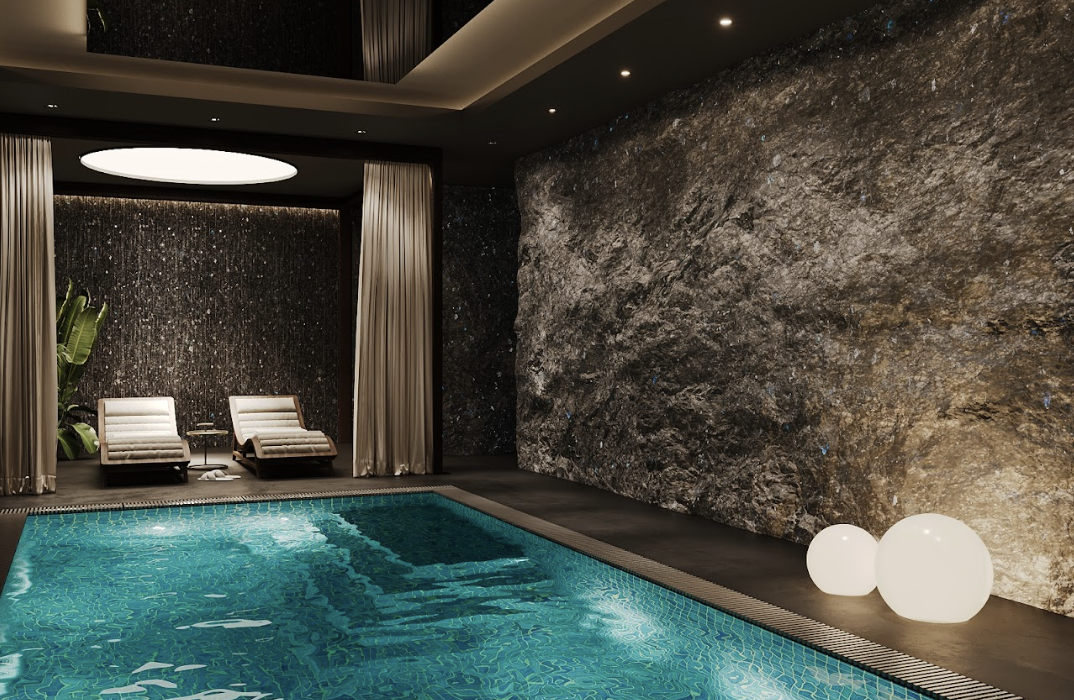
This is especially noticeable in wall panels, fireplace areas, large kitchen islands, SPA spaces, bathrooms, terraces, and entrance areas. In these zones, stone does not work as a separate finishing detail, but as a large material plane that gives the space scale, depth, and a sense of architectural integrity.
In such solutions, the stone does not compete with the space. It gathers it into one calm, deep, and material composition.
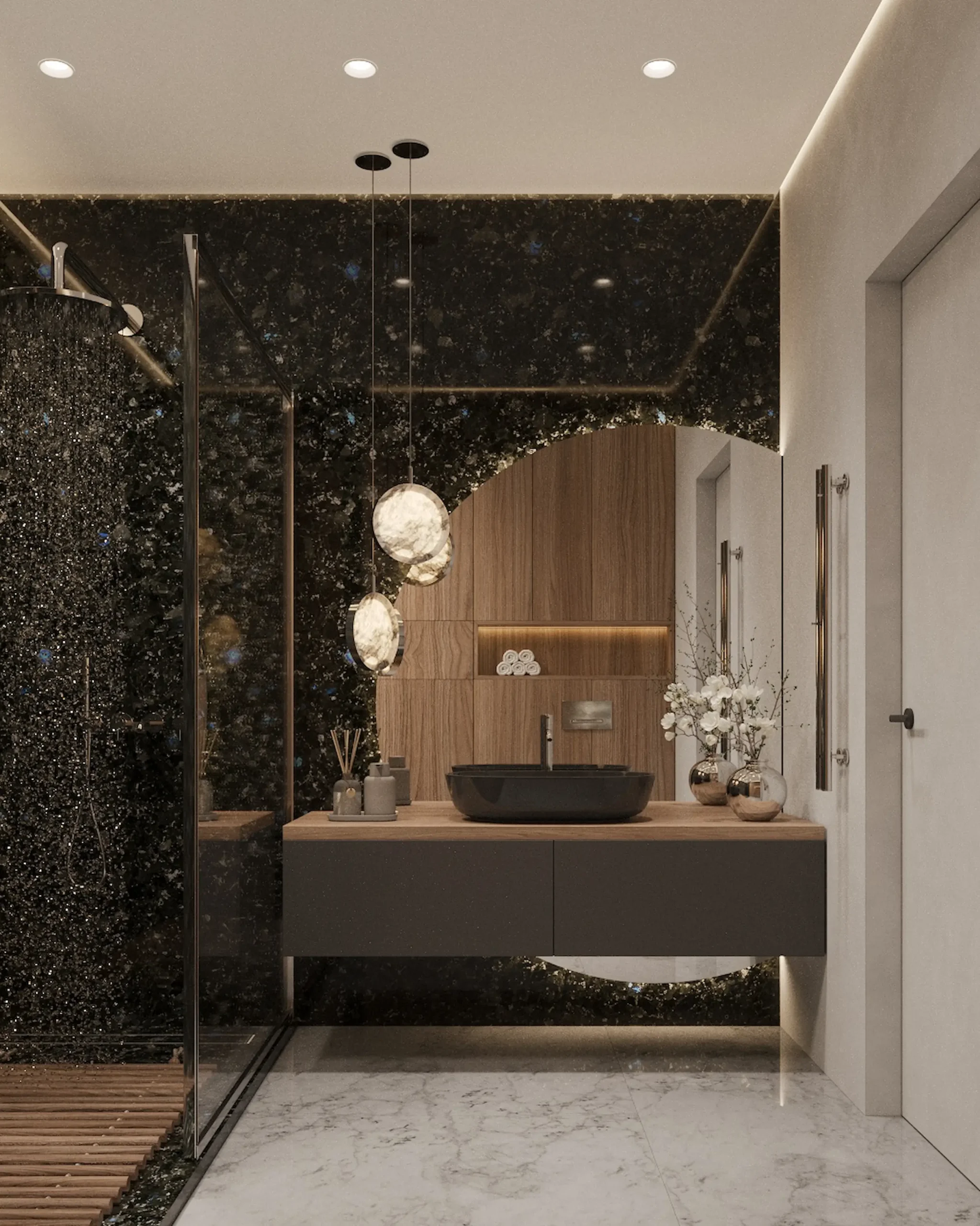
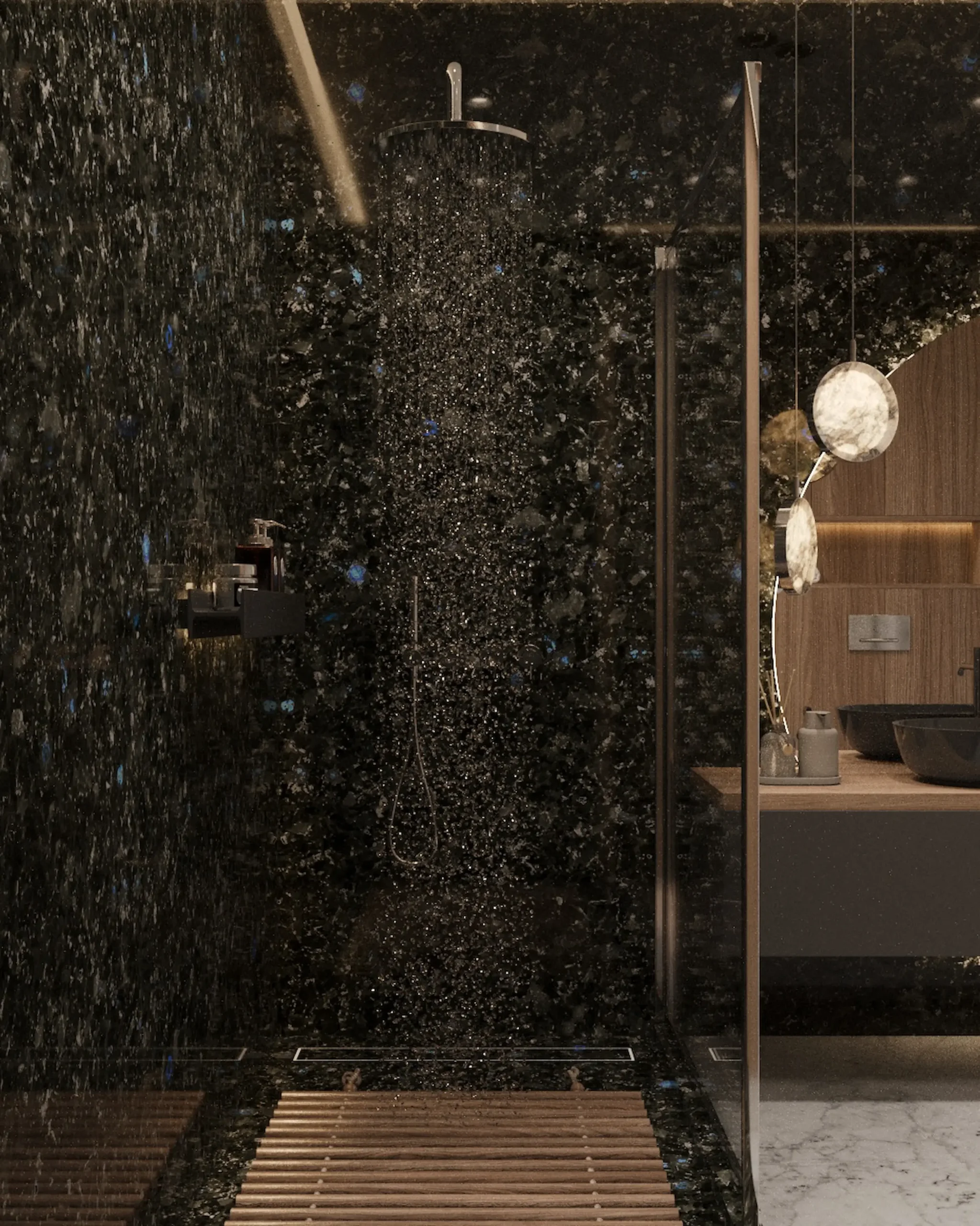
Light, Iridescence, and Large Format
Labradorite changes with light. In daylight, it appears restrained and graphite-toned, with the feeling of a dense natural surface. Under warm architectural lighting, the natural iridescence becomes more pronounced, and the structure of the stone begins to feel deeper.
Across a large surface, this interaction with light becomes much stronger. Iridescence does not look like a separate effect or an accidental reflection. It becomes part of the overall perception of the material.
Light seems to pass through the surface, enhancing the crystalline structure and inner layered depth of the stone. As a result, Golovinski Labradorite does not look flat, even in a dark interior. Its depth is revealed gradually — through reflections, viewing angle, scale, and the atmosphere of the space.
Large format allows this depth not to break apart into small fragments. The stone is perceived as one cohesive, living surface.
Large-Format Labradorite in Interiors
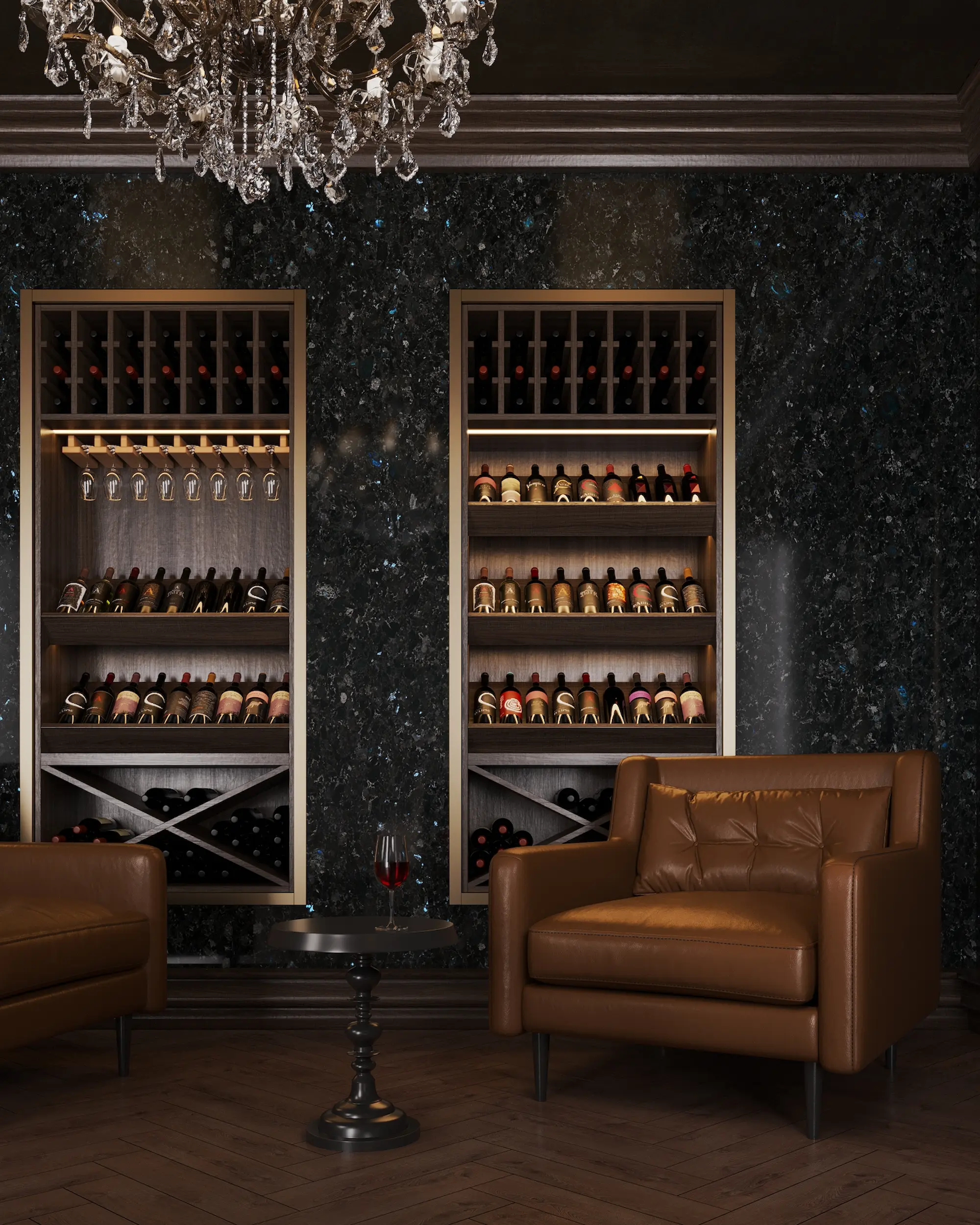
In interiors, large format works where the material needs to create a feeling of calm strength. These can be large wall surfaces in living rooms, fireplace areas, kitchen islands, bathrooms, SPA zones, lounge spaces, or private offices.
In such spaces, labradorite does not need excessive decoration around it. It is enough to support it with light, clean geometry, and materials that do not compete with the stone: wood, metal, glass, water, or soft textile surfaces.
Large format allows Golovinski Labradorite to feel restrained, yet highly expressive. The stone does not demand attention loudly. It shapes the depth of the environment, creates a sense of status, and leaves the space calm.
This is its strength in private interiors: the material becomes not an accent for the sake of an accent, but part of the overall architectural mood.
Facades and Exterior Architecture
In exterior architecture, large format has a different, but no less important role. Large stone planes allow a facade to feel more cohesive, restrained, and monumental.
On a facade, labradorite works through mass, depth of color, and natural interaction with light. At different times of day, the surface may appear more graphite-toned, softer, or deeper through reflections and the changing angle of light.
Across large planes, the facade does not feel fragmented. Stone creates a sense of architectural stability, while the natural structure of the material gives the building character without the need for excessive decoration.
For private residences, entrance areas, terraces, commercial spaces, and representative facades, this is especially important: the material needs to work not only up close, but also from a distance, shaping the first impression of the architecture.

A Material That Forms a Plane
Large format changes the role of stone itself. It is no longer perceived as a separate material added to an interior or facade. It becomes a plane through which the space gains character.
Large-format Golovinski Labradorite combines the density of natural black stone, graphite depth, natural iridescence, and the ability to change with light. Because of this, the stone works not only visually, but atmospherically.
It adds silence, scale, and material confidence to a space. It does not overload the architecture, does not require excessive decoration, and does not reduce itself to an impressive surface effect.
When labradorite unfolds in large format, the stone stops being a separate material within the space. It becomes an architectural surface — deep, cohesive, and naturally monumental, with the calm strength that only natural stone can give.