
You might be interesting:

Labradorite and Evening Light: How Stone Changes After Sunset
10 min | 22.05.2026Labradorite and Evening Light: How Stone Changes After Sunset
When architecture begins to be perceived through the depth of light, reflections, and the natural layered character of the material


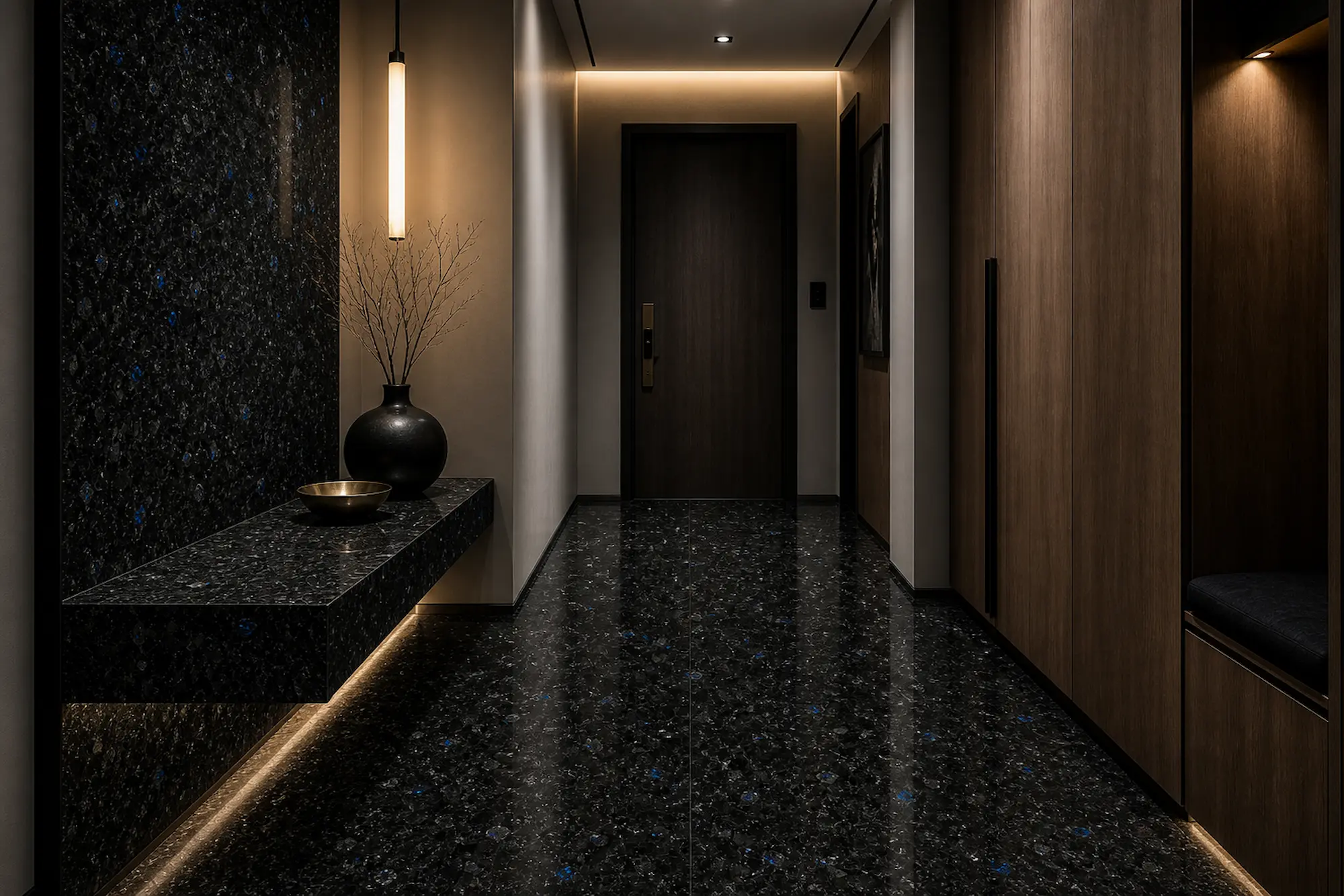
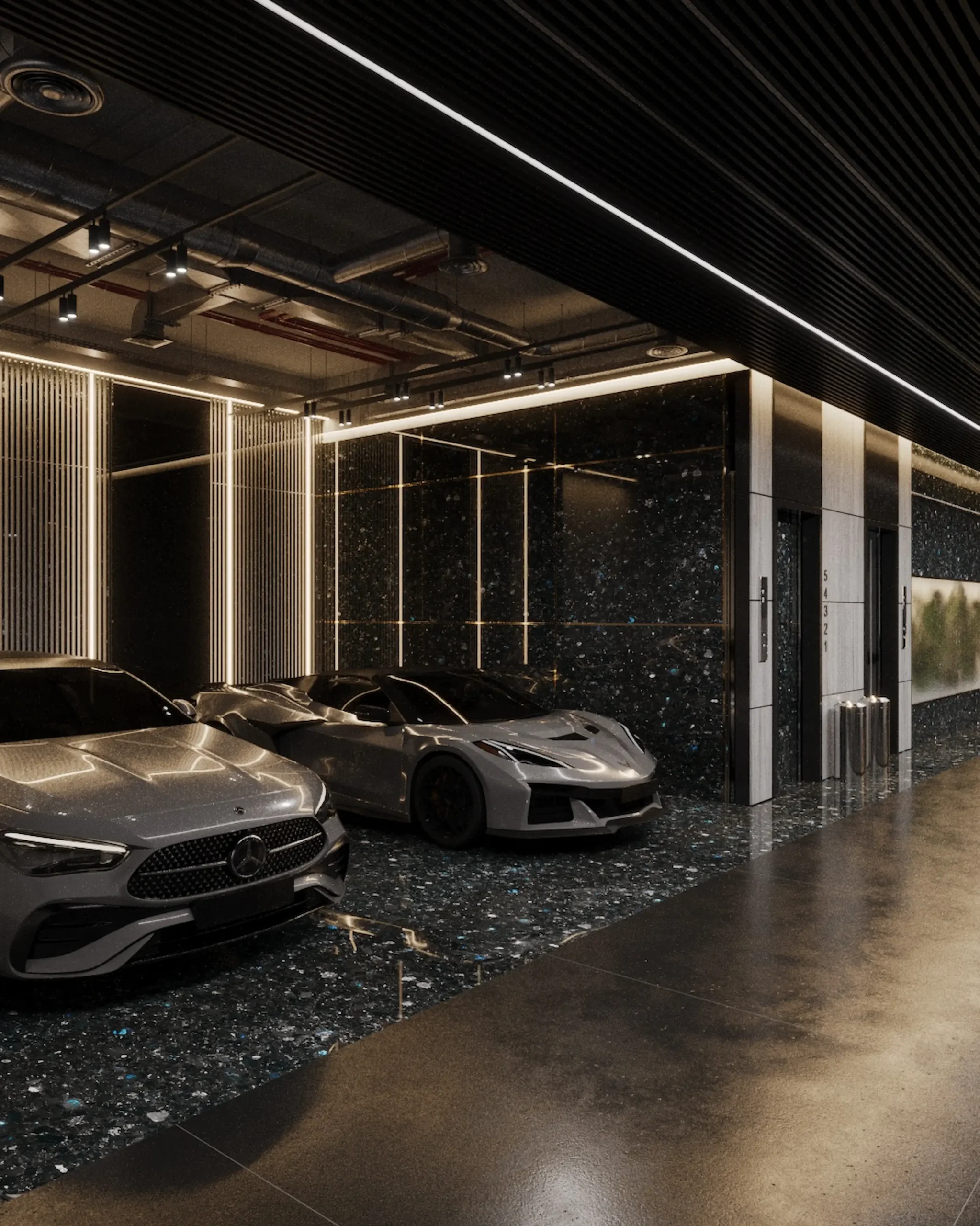
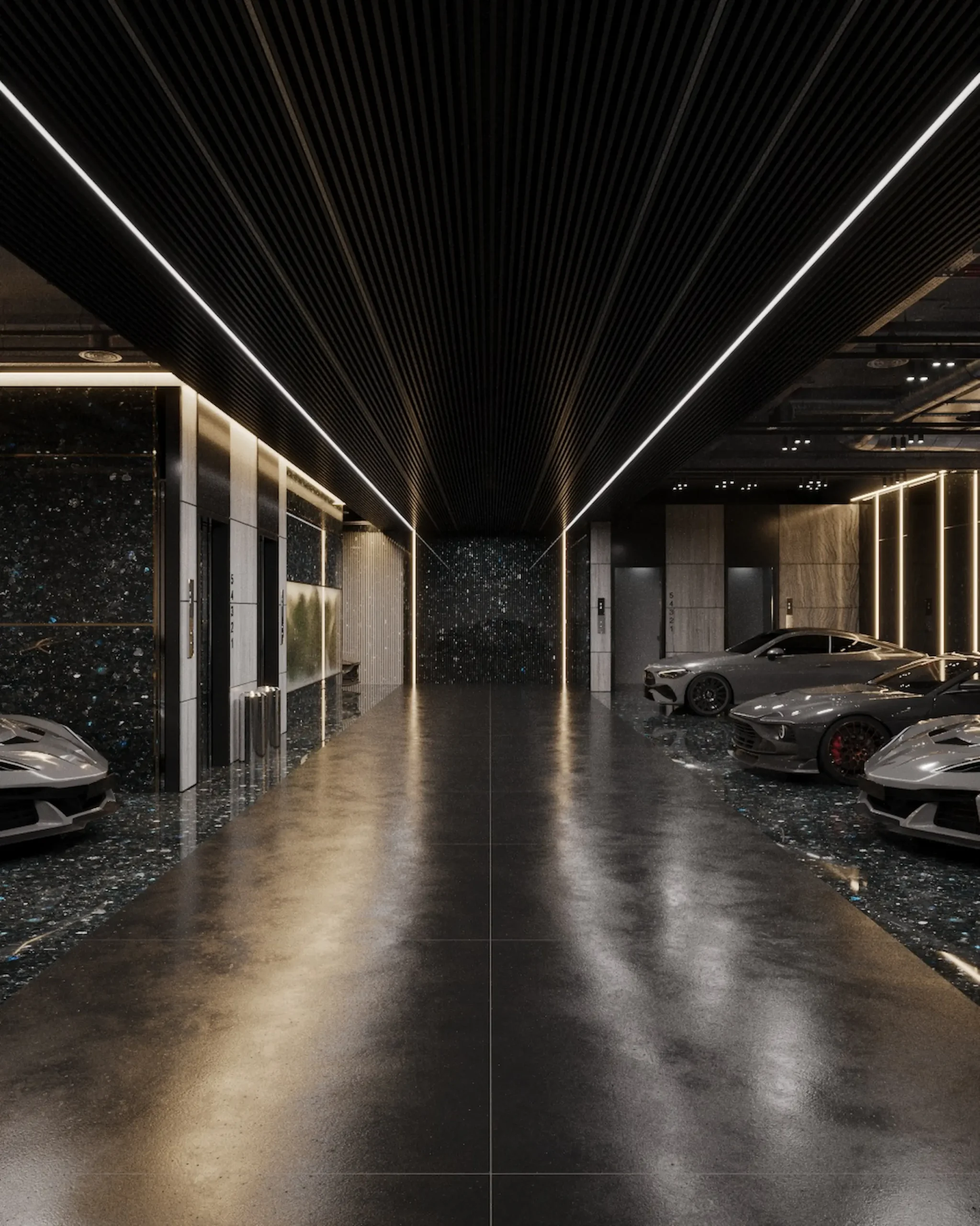
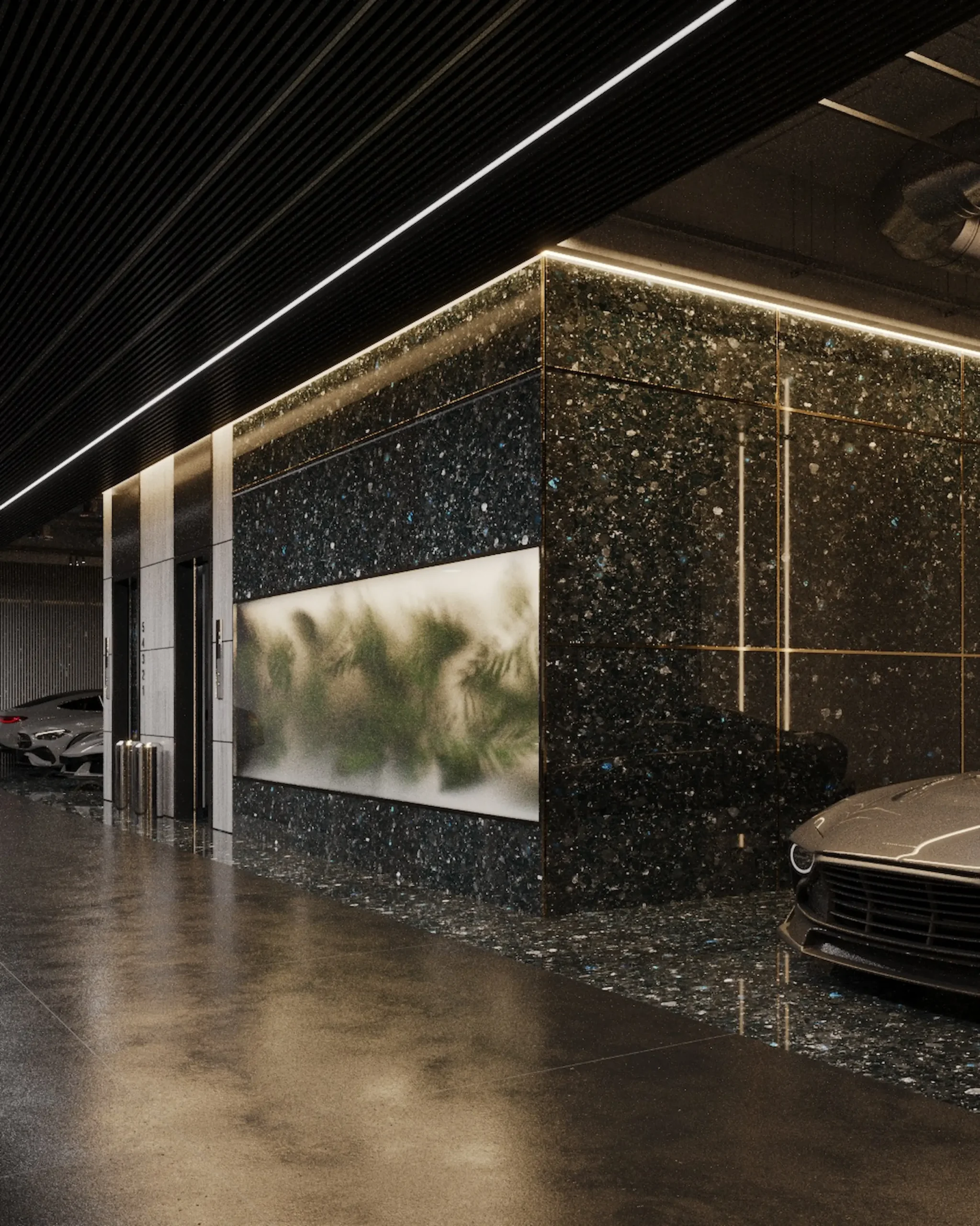
Labradorite in evening lighting
Labradorite interacts with light differently throughout the day. In natural daylight, the stone appears restrained and monolithic, shaping architecture through the density of its surface and its deep graphite structure.
As controlled architectural lighting enters the space, the material begins to reveal itself with much greater depth. The surface interacts more softly with reflections, while the natural iridescence delicately emerges through light, viewing angles, and the atmosphere of the environment itself.
Labradorite in evening lighting does not change the character of a space abruptly. The stone gradually reveals a new depth of materiality, through which the architecture begins to feel more atmospheric, warmer, and more dimensional.
Light as Part of Architecture
In architecture, lighting is increasingly becoming more than a purely functional element of space. Light begins to shape the atmosphere of the interior itself and interact with materials as part of a unified composition.
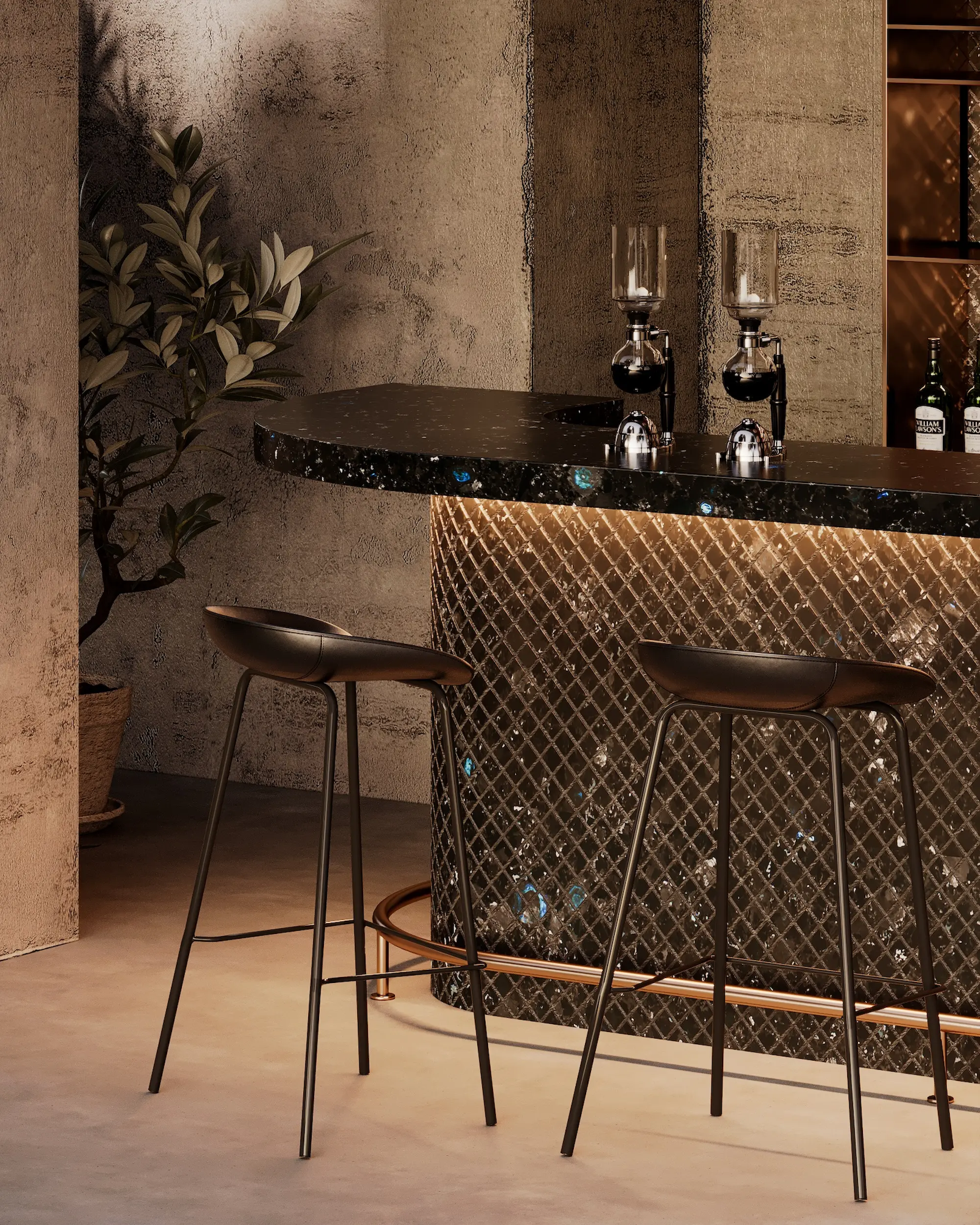
Warm directional lighting allows the structure of the stone to be perceived more deeply — the layered nature of the surface, the natural density of the material, and the delicate blue iridescence that gradually appears within reflections.
At the same time, the graphite foundation of the labradorite remains restrained and cohesive. The stone does not overwhelm the space with strong contrasts; instead, it adds depth and a calm rhythm to the environment.
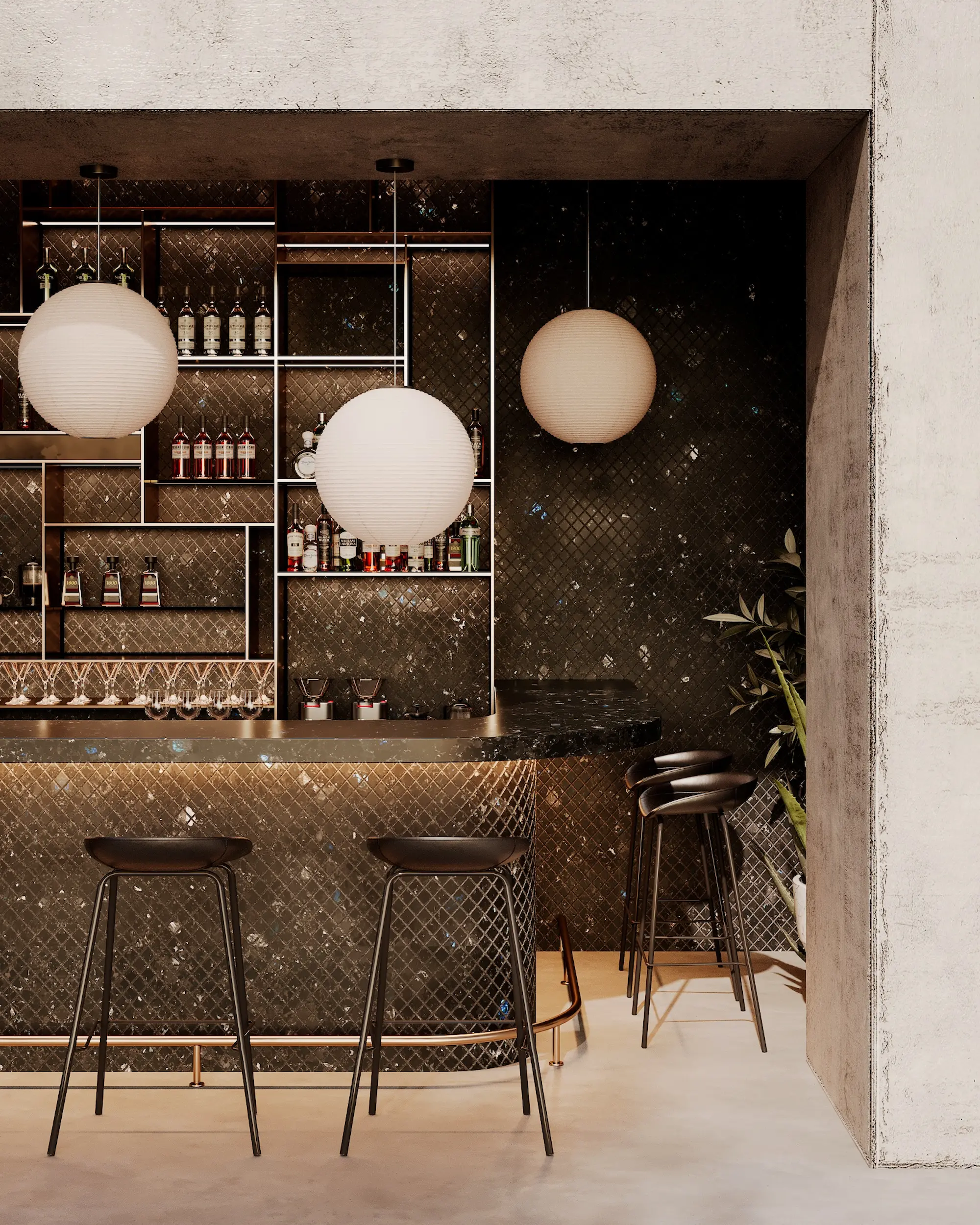
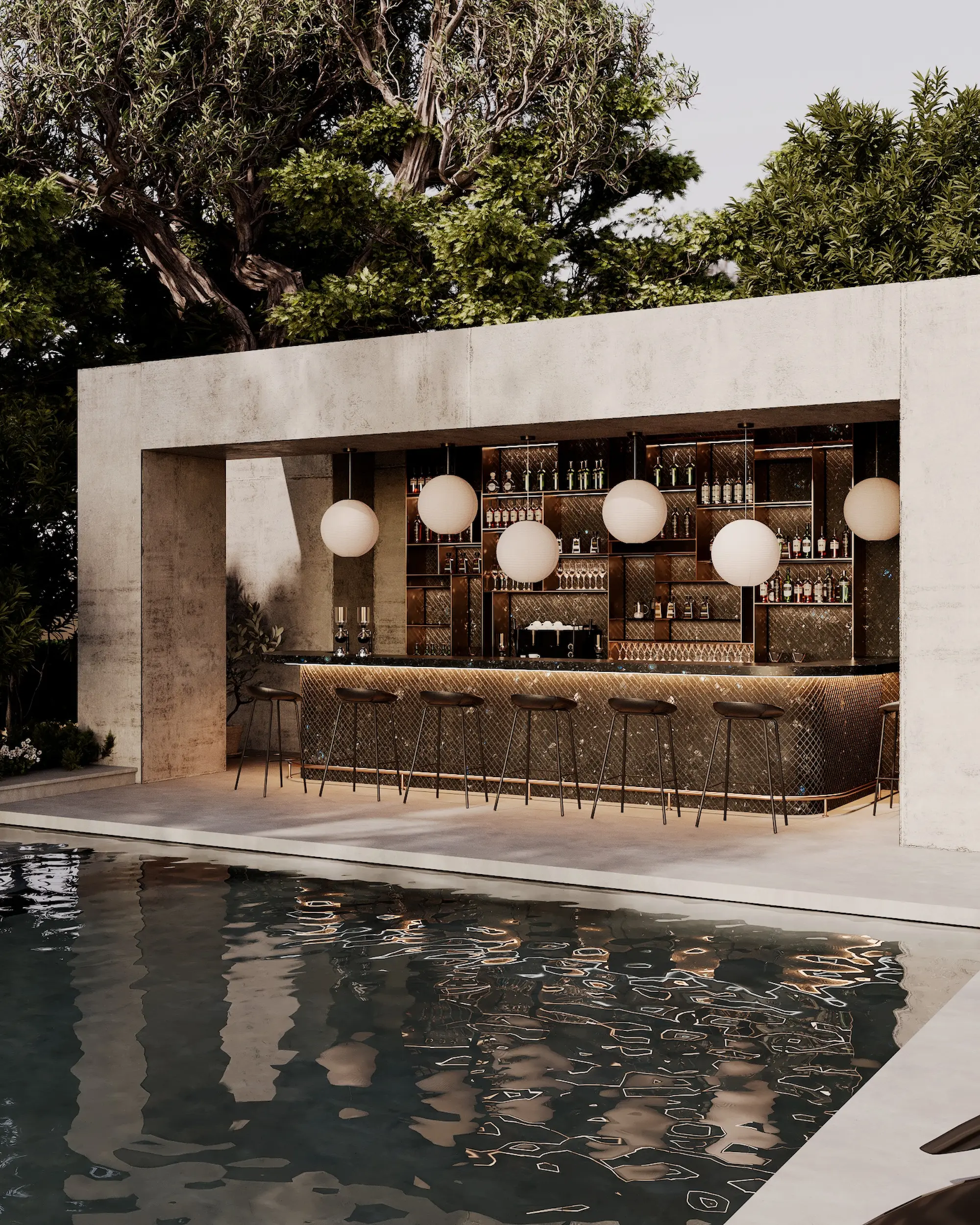
In evening lighting, the surface begins to interact not only with light itself, but also with the atmosphere of the space — reflections of glass, water, metal, and surrounding materials.
How Surface Finish Changes the Interaction with Light
In an evening environment, light begins to interact much more deeply with the surface of the stone, and the finish itself defines the character of this perception.
Polished labradorite works through the depth of reflections and natural iridescence, gradually revealing the layered structure of the stone under warm architectural lighting. The surface responds to light in a soft and living way, changing the depth of color depending on the viewing angle and the atmosphere of the space itself.
SILK creates a calmer and more tactile perception of the material. Light diffuses more softly across the surface, leaving a warm and restrained architectural feeling without active reflections.
PLUVIUM, LUNA, CUBORUM, and DIAMANTE interact differently with side lighting and shadows. The texture of the surface makes light feel more layered, allowing the stone to change the character of the space depending on the lighting scenario.
Within a single interior, different finishes allow the atmosphere of the architecture to gradually shift — from deep reflections and delicate iridescence to a calmer, more tactile, and natural perception of the surface.
Evening Atmosphere and the Depth of Space
After sunset, architecture begins to feel different. The environment becomes quieter, the light softer and more controlled, while materials begin to shape atmosphere much more strongly than during the day.
Golovinski Labradorite works especially organically in such environments because of its ability to interact with light without excessive contrast or decorative intensity. The stone gradually reveals the depth of its surface, allowing the space to remain calm and cohesive in perception.
This becomes especially noticeable in spaces where light works in layers — evening interiors, lounge areas, SPA spaces, private residences, and facade architecture.
The surface of the labradorite never feels static. Depending on lighting, viewing angle, and surrounding materials, the space continuously changes its depth and character of perception.
Architecture That Lives Together with Light
Architecture is increasingly shaped around atmosphere and the interaction between materials and light. Space begins to work through the depth of surfaces, tactility, and the emotional perception of the environment.
Golovinski Labradorite interacts with light differently throughout the entire day, but warm evening lighting allows the natural layered depth of the material to become much more visible.
In the evening environment, the surface of the stone begins to interact more softly with reflections, while the natural iridescence gradually ignites within them, gently transforming the perception of the space itself. Architecture begins to feel more atmospheric, deeper, and significantly more alive through the interaction of light and material.