
You might be interesting:

Dark Interiors Without the Feeling of Darkness: The Role of Natural Stone
10 min | 22.05.2026Dark Interiors Without the Feeling of Darkness: The Role of Natural Stone
When black stone shapes the atmosphere of a space through material depth, light, and a natural sense of calm.


Dark interior with natural black stone
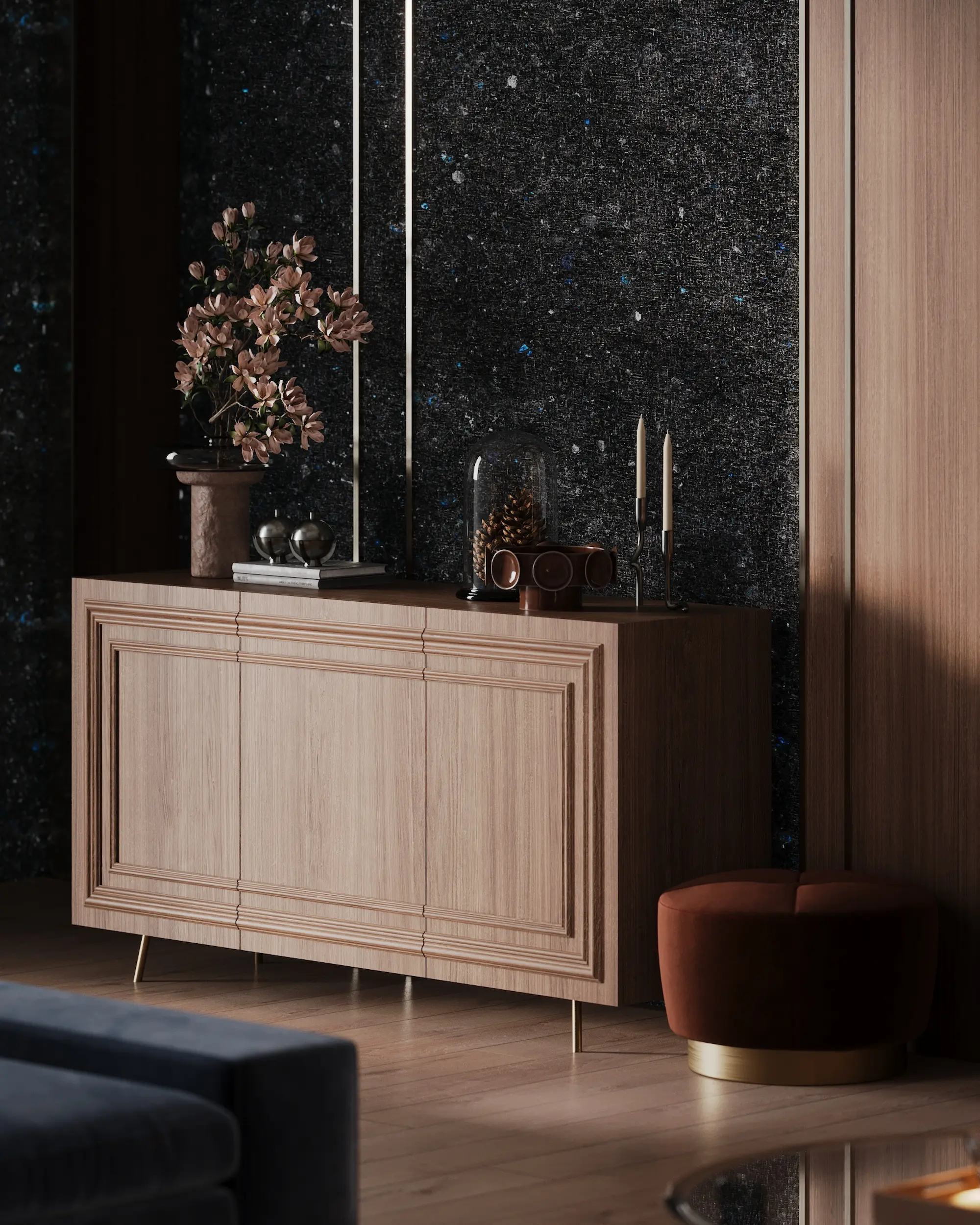
Dark interiors are increasingly being built around atmosphere, light, and the materiality of space itself. In such environments, black stone becomes more than simply a dark surface. Architecture begins to be perceived through the depth of the material, the quietness of reflections, and the delicate interaction between light and the natural structure of the stone.
Natural black stone in these interiors feels significantly deeper and more monumental than composite or artificial dark surfaces. Labradorite does not create the impression of flat darkness or a visually “dead” black color. The surface of the stone constantly changes in perception through its crystalline structure, natural iridescence, and layered material depth.
Golovinski Labradorite reveals itself especially naturally in dark interiors thanks to its dense graphite structure, which softly interacts with light and leaves a feeling of depth, calmness, and natural materiality within the space.
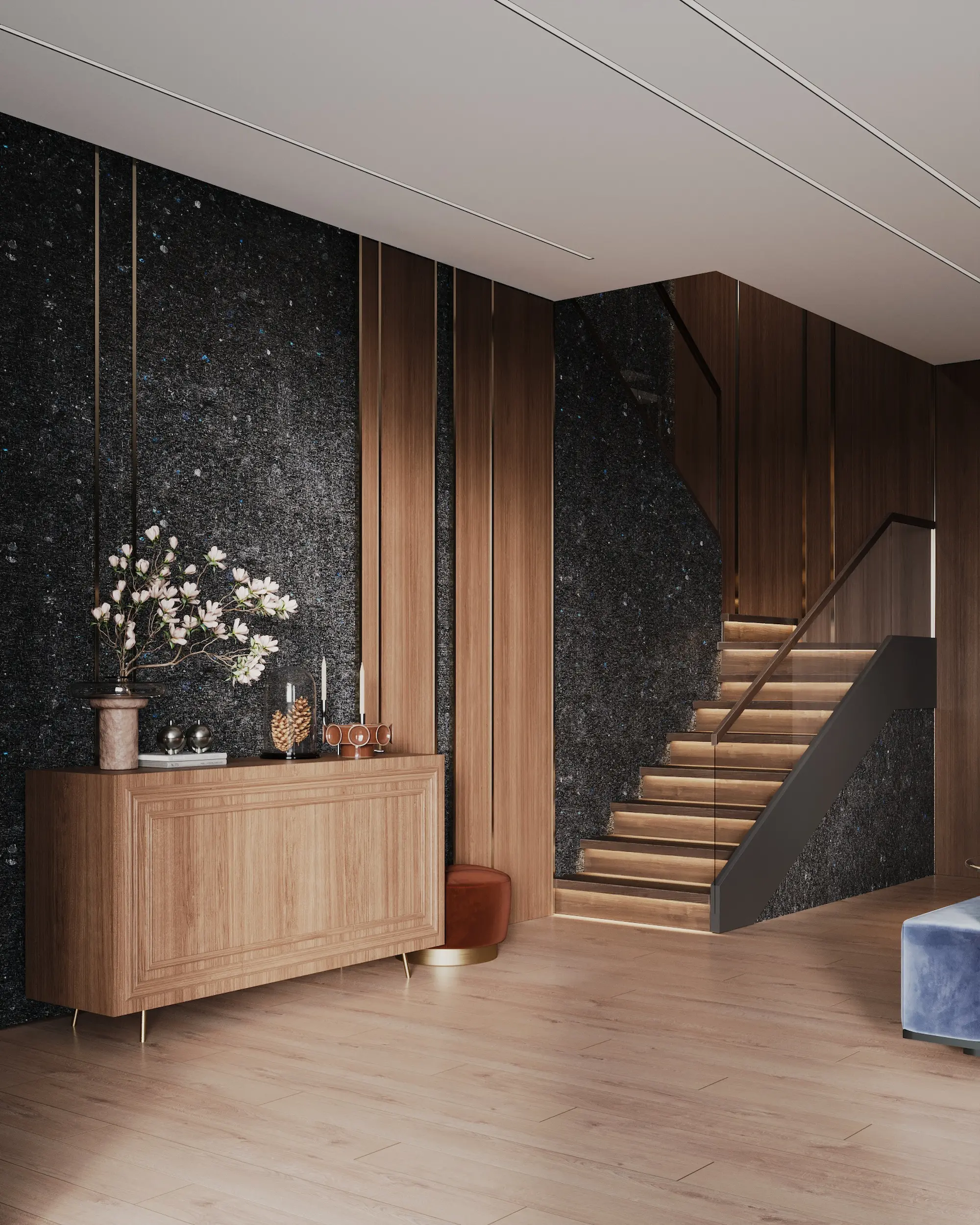
A dark interior no longer feels heavy. The architecture becomes quieter, more cohesive, and far more atmospheric through the interaction of light and black stone.
A Dark Space That Still Feels Deep and Open
The perception of a dark interior is shaped not by the amount of dark surfaces, but by the way the material behaves within the space and how light moves through the atmosphere of the interior.
Labradorite never feels flat or static. The surface of the stone continuously changes the depth of color and the character of reflections through its natural crystal structure and delicate iridescence, which appears differently depending on the lighting environment.
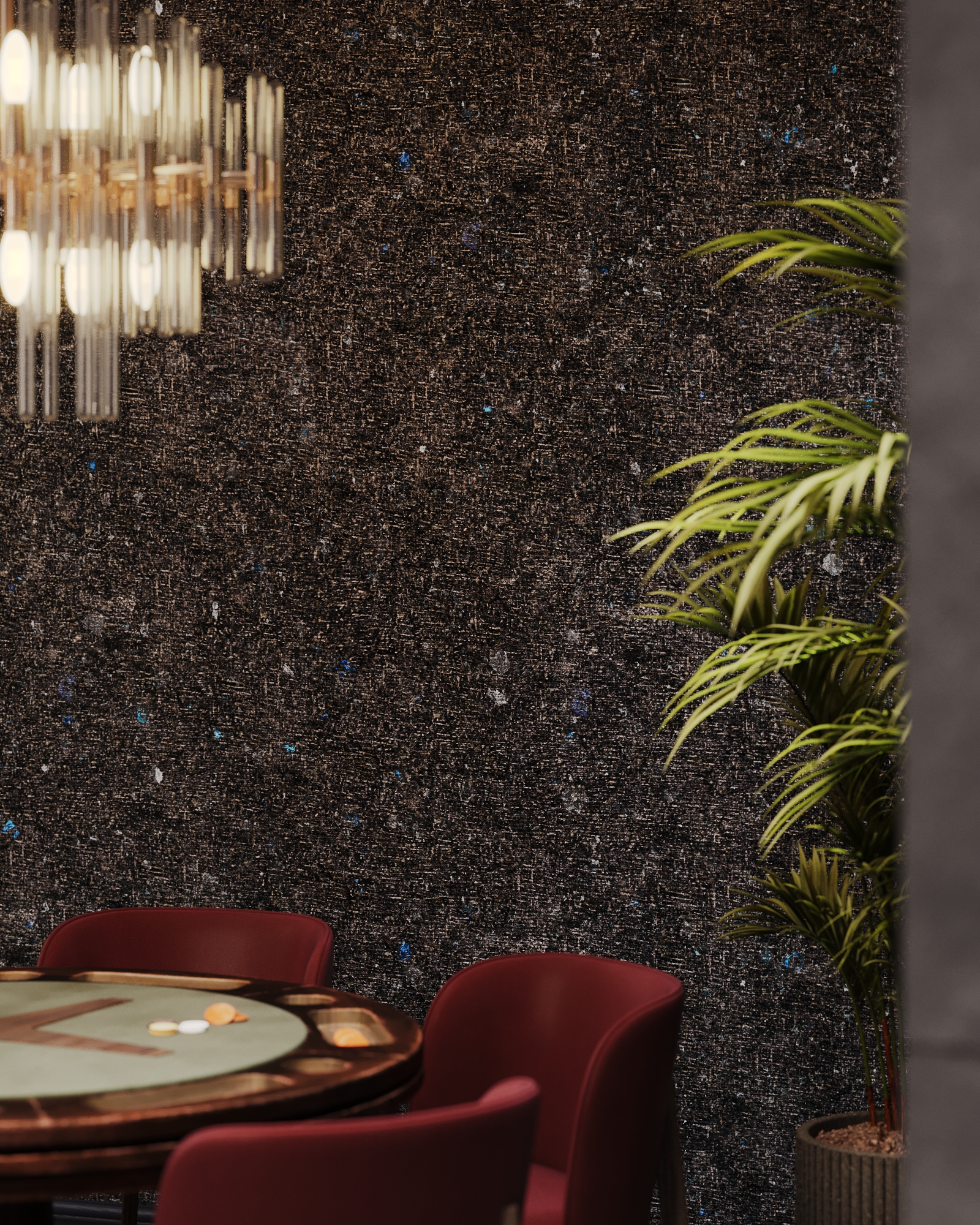
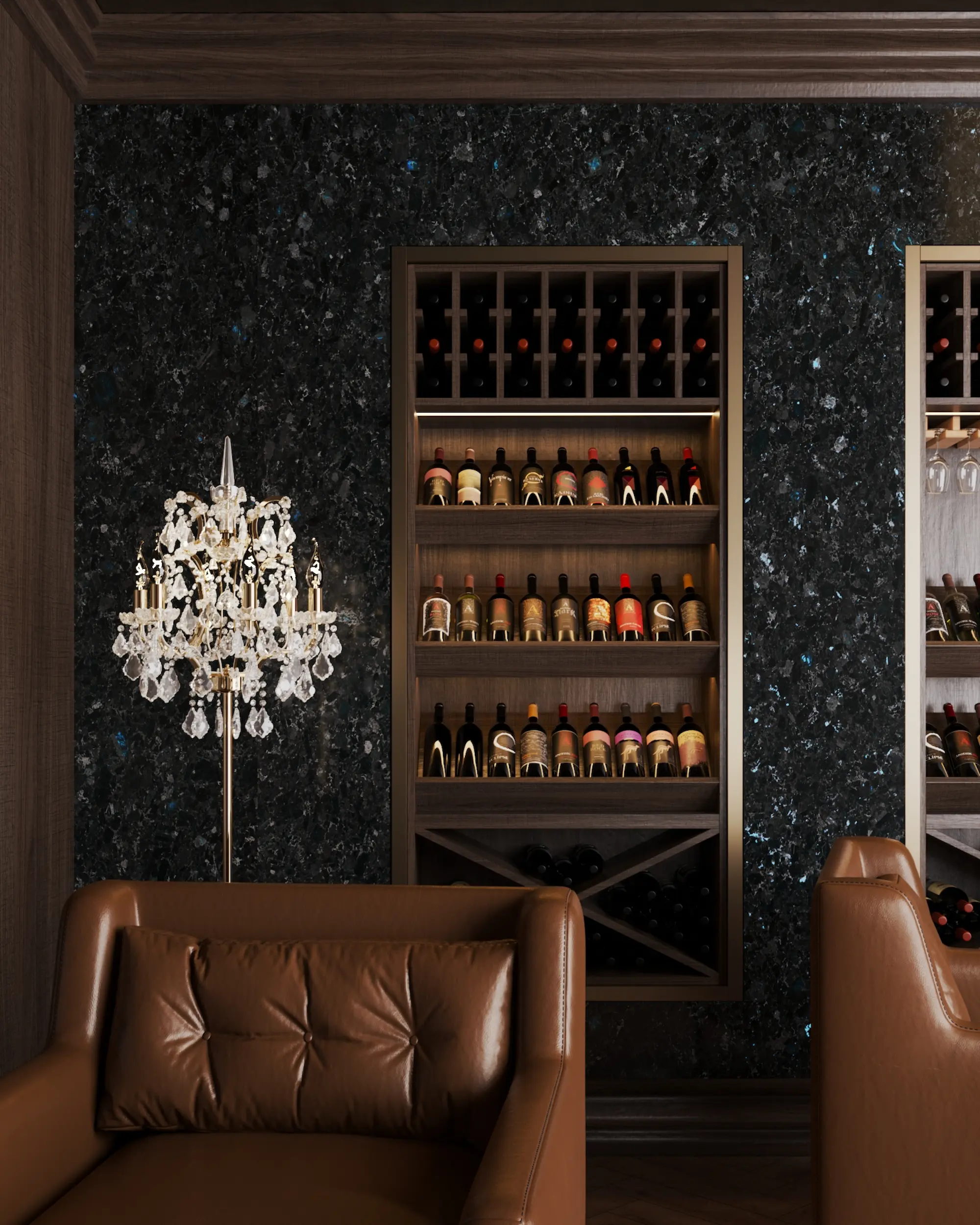
In daylight, Golovinski Labradorite looks restrained and cohesive. Warm architectural lighting only enhances the natural depth of the surface, allowing the dark interior to feel softer, calmer, and more atmospheric.
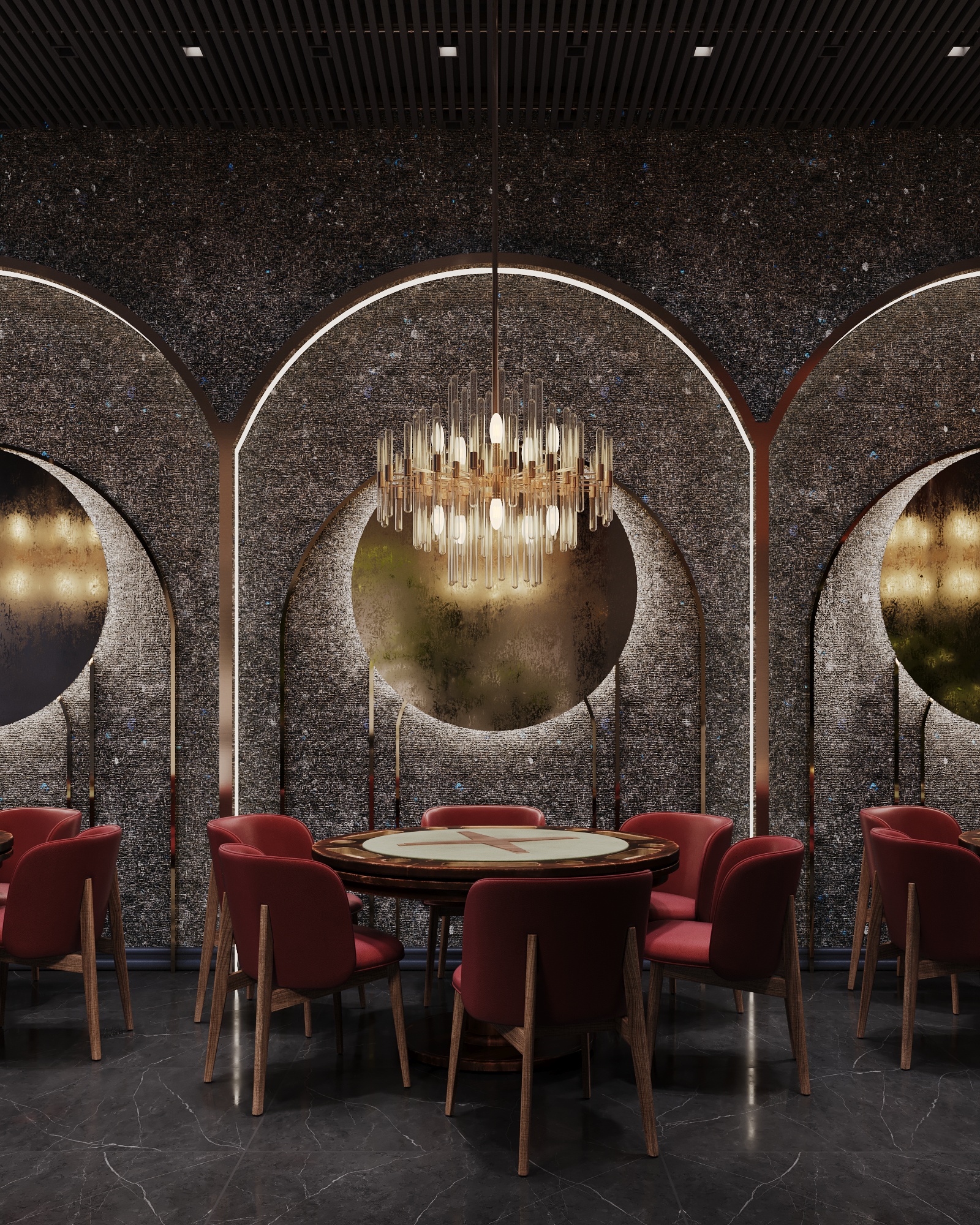
Black stone does not absorb the surrounding space. On the contrary, large-format labradorite surfaces leave a feeling of openness, quietness, and inner calm that is almost impossible to achieve with artificial or composite materials.
Light, Reflections, and the Atmosphere of a Dark Interior
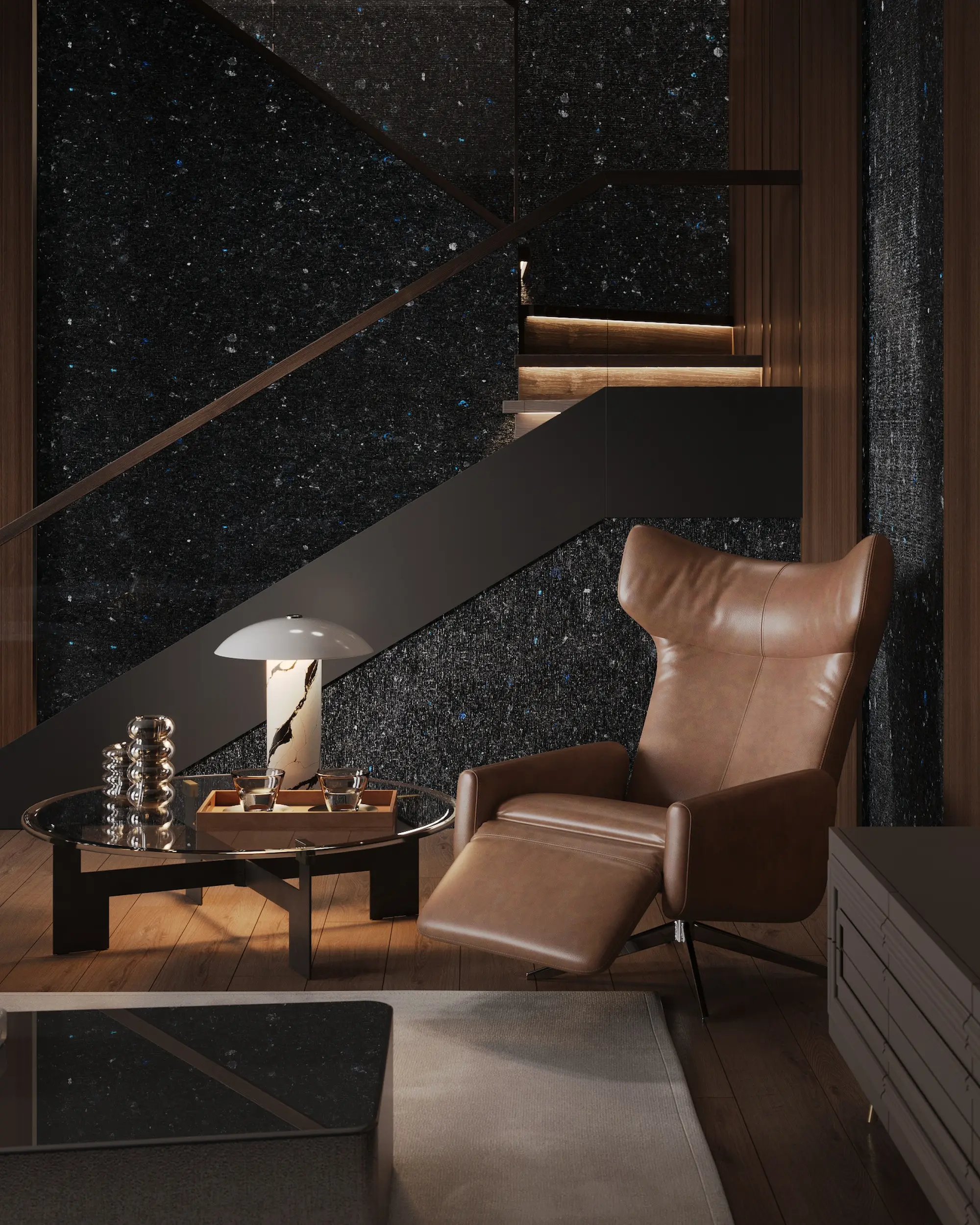
In dark interiors, light begins to behave more delicately. Reflections become deeper, shadows softer, and the atmosphere of the space gradually forms through the interaction between material and lighting.
Polished labradorite visually expands the space through its mirror-like depth and almost appears illuminated from within. Deep reflections and natural iridescence bring lightness into dark interiors, allowing architecture to remain open and filled with light even within large dark surfaces.
SILK creates a more restrained and calm perception of space. Light interacts with the surface more softly, leaving behind a warm and quiet atmosphere without aggressive reflectivity.
PLUVIUM, LUNA, CUBORUM, and DIAMANTE fill the interior with the natural materiality of stone and a tactile interaction with space. The textured surface absorbs light more deeply, leaving a restrained and delicate iridescence that makes dark interiors feel alive, layered, and naturally atmospheric.
Within a single interior, different finishes allow the atmosphere to gradually shift — from deep reflections and openness to a quieter, calmer, and more tactile perception of space.
Materiality Instead of Decorative Excess
Dark interiors lose their depth when the space becomes overloaded with decoration and visual noise. Natural black stone works in a far more restrained and delicate way. Labradorite does not create aggressive contrast or artificial drama. Atmosphere is shaped through material depth, light, and the natural texture of the surface itself.
Golovinski Labradorite especially pairs organically with:
— warm wood
— glass
— metal
— soft architectural lighting
— large monolithic surfaces
These materials do not compete with one another. The interior remains calm, deep, and cohesive, while black stone becomes part of the atmosphere itself.
Large Surfaces and Material Continuity
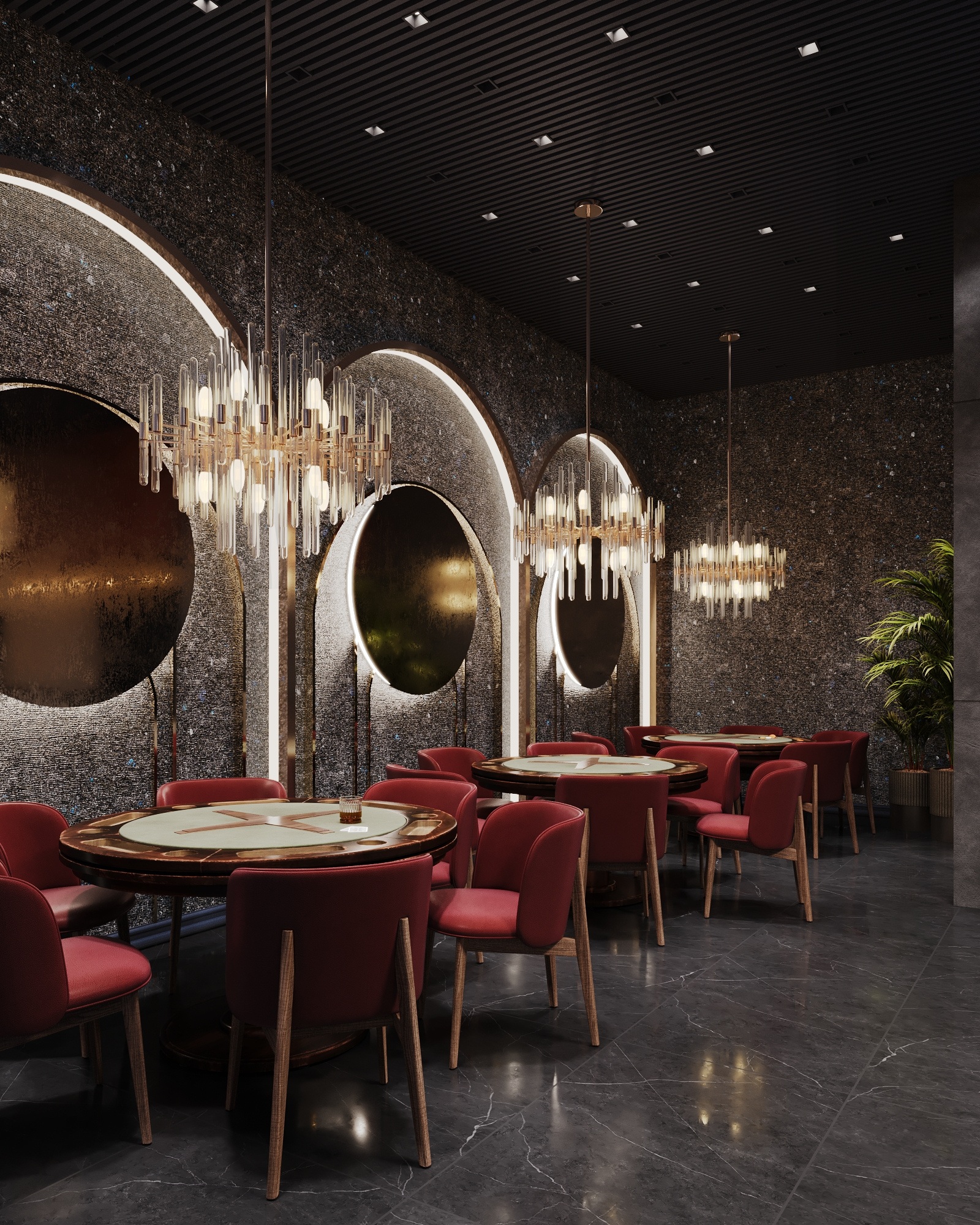
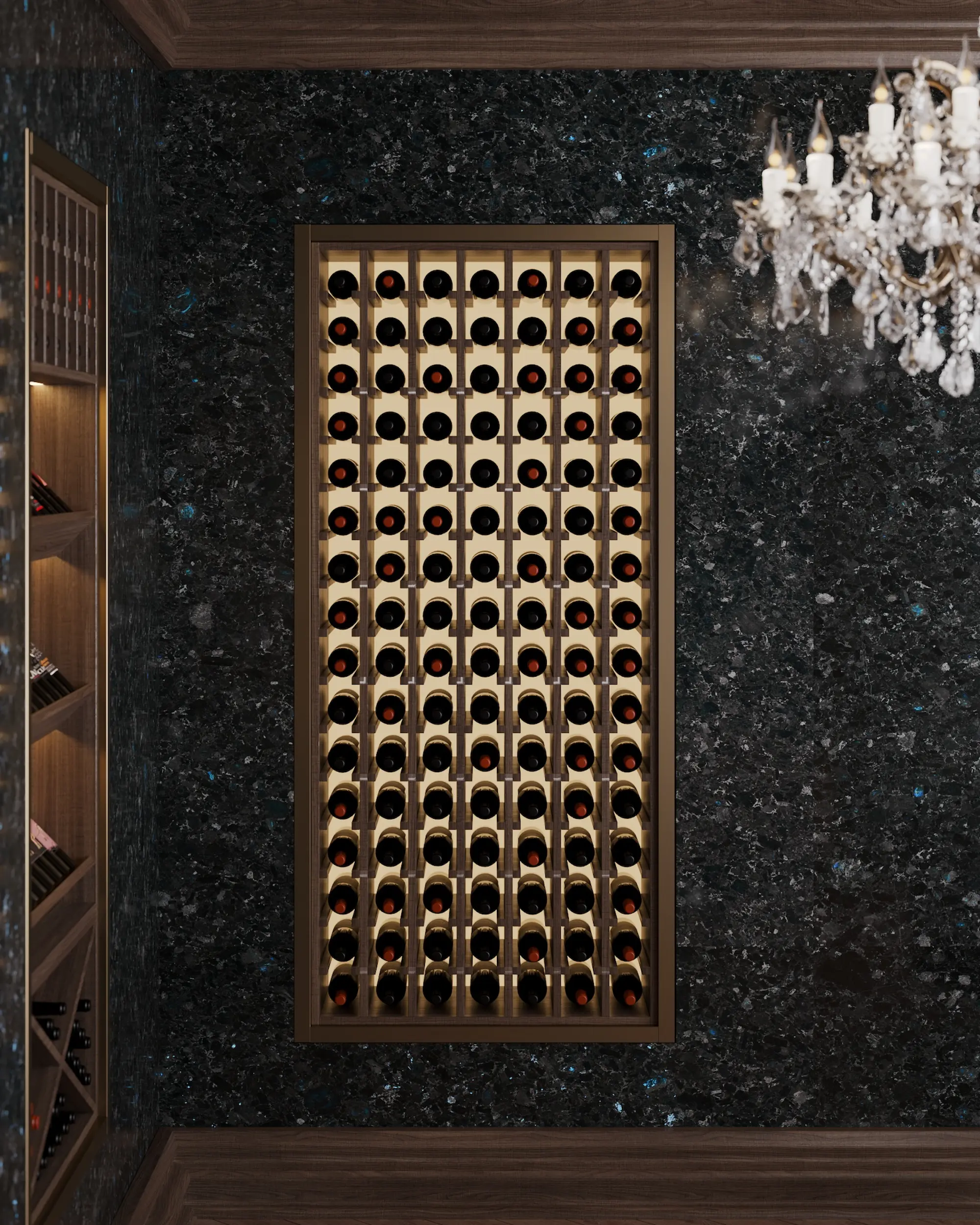
Dark interiors reveal themselves much more naturally through large, uninterrupted surfaces. It is within these large-scale planes that the structure of labradorite and its natural iridescence become most visible and immersive.
A minimal number of seams allows black stone to feel cleaner and calmer within the space, while the surface itself begins to function as a single architectural plane.
Large-format surfaces reveal the layered depth of the material especially clearly — the crystalline structure, the soft interaction with light, and the delicate natural iridescence that gradually changes the atmosphere of the space throughout the day.
Light does not stop at the surface of the stone. It seems to dissolve into the structure of the labradorite itself, enhancing the feeling of depth, silence, and inner calm within the interior.
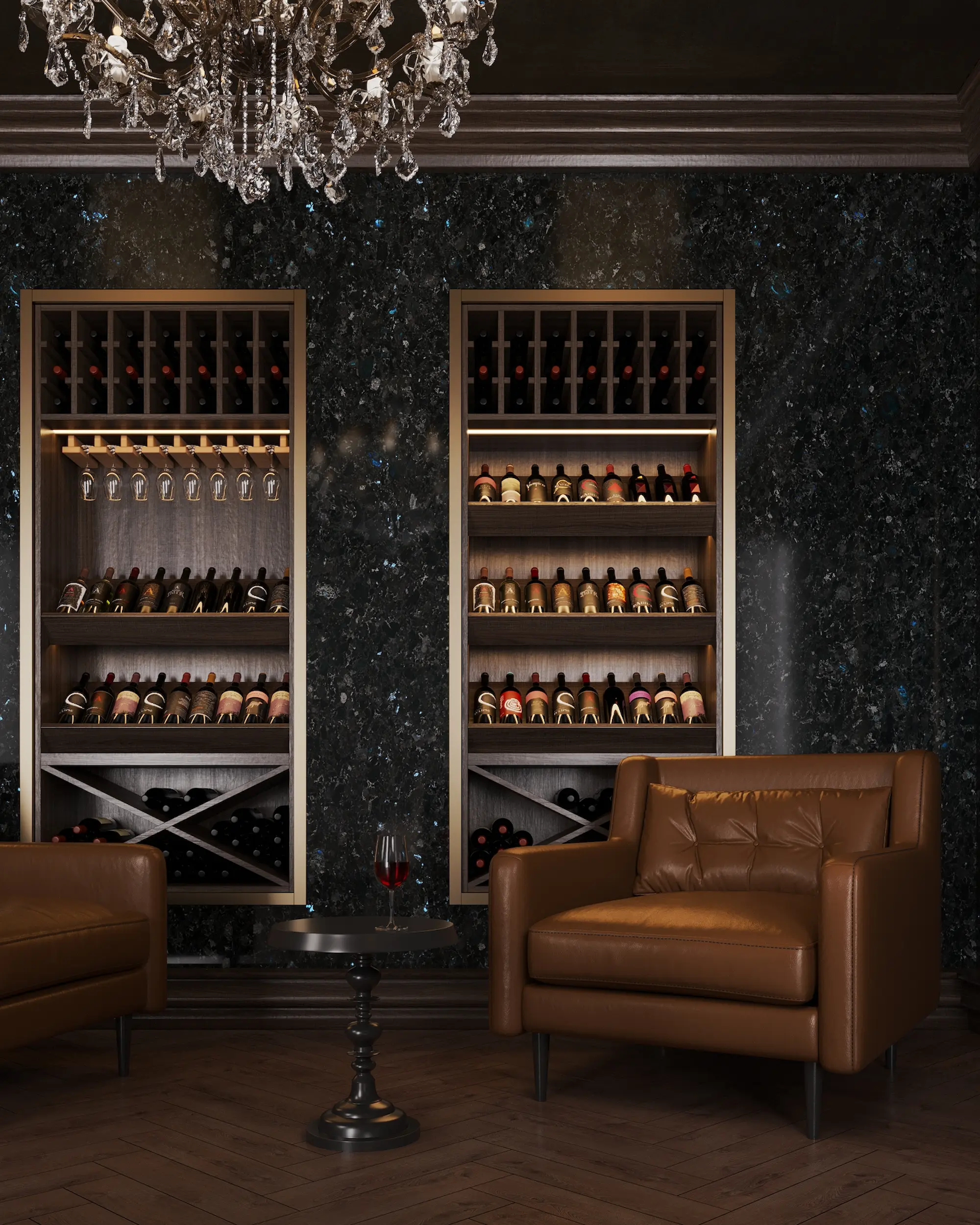
A Space Where Black Stone Becomes Part of the Atmosphere
A dark interior does not create the feeling of darkness when the material interacts correctly with light and the atmosphere of the space itself.
Golovinski Labradorite combines the depth of natural black stone, layered structure, and delicate natural iridescence, allowing interiors to feel warm, alive, and atmospheric across different lighting scenarios.
Light does not fight against dark surfaces. Instead, it gradually enhances the depth of the stone, while natural iridescence softly changes the emotional perception of the interior, leaving behind a sense of silence, status, and inner calm within the architecture.
In such interiors, black stone becomes more than simply a material. It becomes part of the atmosphere itself — restrained, deep, and naturally monumental.