You might be interesting:

Black Marble or Labradorite: How Material Changes the Feeling of an Interior
10 min | 26.05.2026Black Marble or Labradorite: How Material Changes the Feeling of an Interior
When the choice of material defines not only the color of a space, but also its depth, status, and atmosphere


When the choice of dark stone determines not only the color, but also the atmosphere of the interior
But in an interior, black marble and labradorite work in different ways: one is often perceived through decorative pattern, while the other works through depth, light, and natural iridescence.
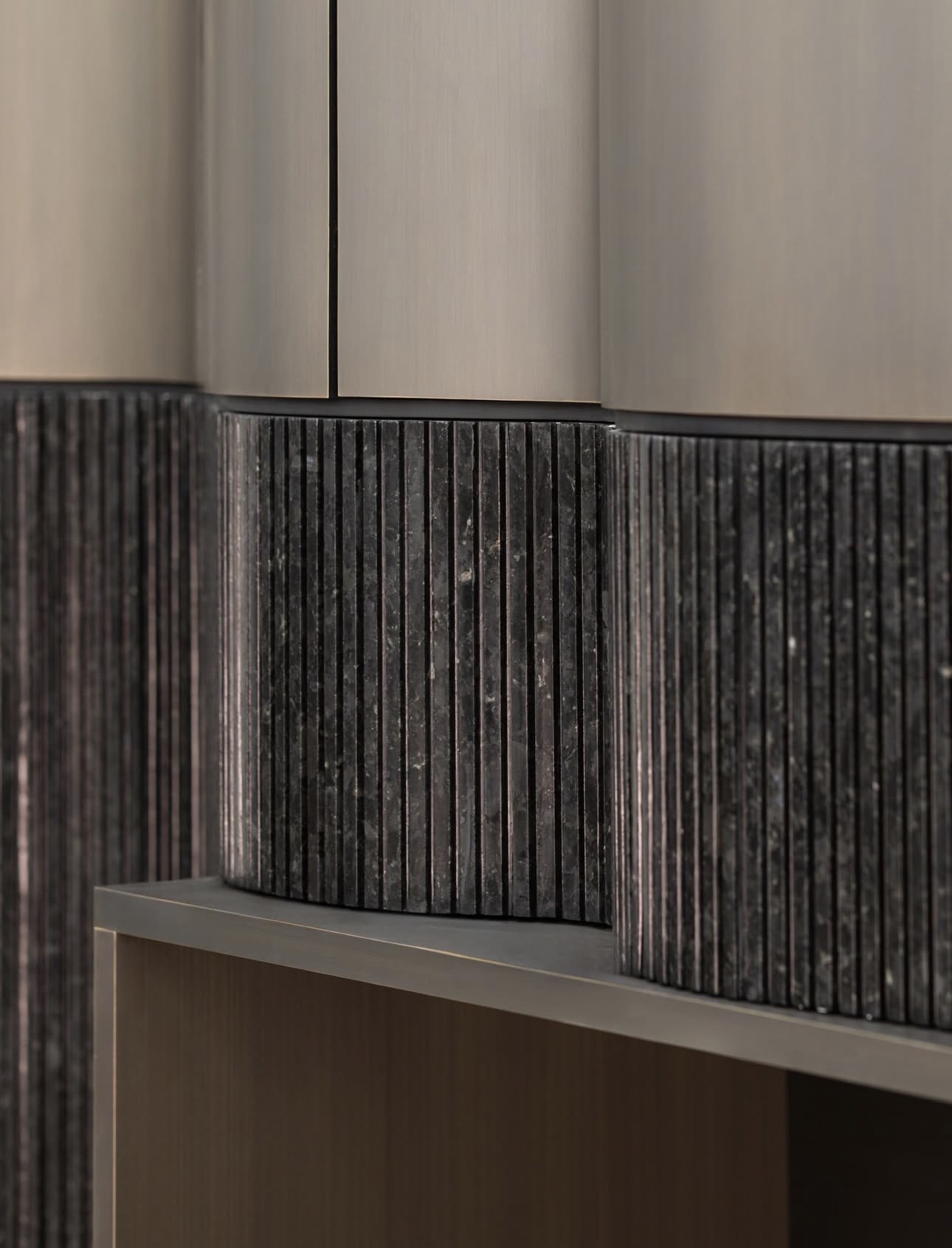
Marble is usually perceived through expressive veining, contrast, and the classic aesthetics of natural stone. Labradorite creates a different feeling — more restrained, more monumental, and deeper. Its surface is not built around an active pattern. It works through a graphite base, natural crystalline structure, light, and delicate iridescence.
In this context, Golovinski Labradorite should not be perceived as a direct replacement for black marble. It is a natural black stone with a different architectural logic. It does not imitate the decorative character of marble. It creates its own atmosphere — deeper, calmer, and significantly more material in the way the space is felt.
Black Marble as a Decorative Classic
Black marble is often chosen for its recognizable aesthetic. A dark base, active veining, and natural pattern create a strong visual effect that works well in spaces with a classic or decorative mood.
This material quickly draws attention. It can become an accent in a bathroom, fireplace area, kitchen island, or wall panel. In many interiors, black marble is perceived as a symbol of traditional luxury — expressive, noticeable, and built on contrast.
However, this decorative quality is not always suitable for architecture where silence, scale, and spatial integrity are important. An active pattern can begin to dominate the interior, especially across large surfaces.
Where a space needs to feel calm, deep, and cohesive, labradorite opens a different scenario of perception — not through the contrast of veins, but through a graphite base, light, and the natural layered depth of the material.
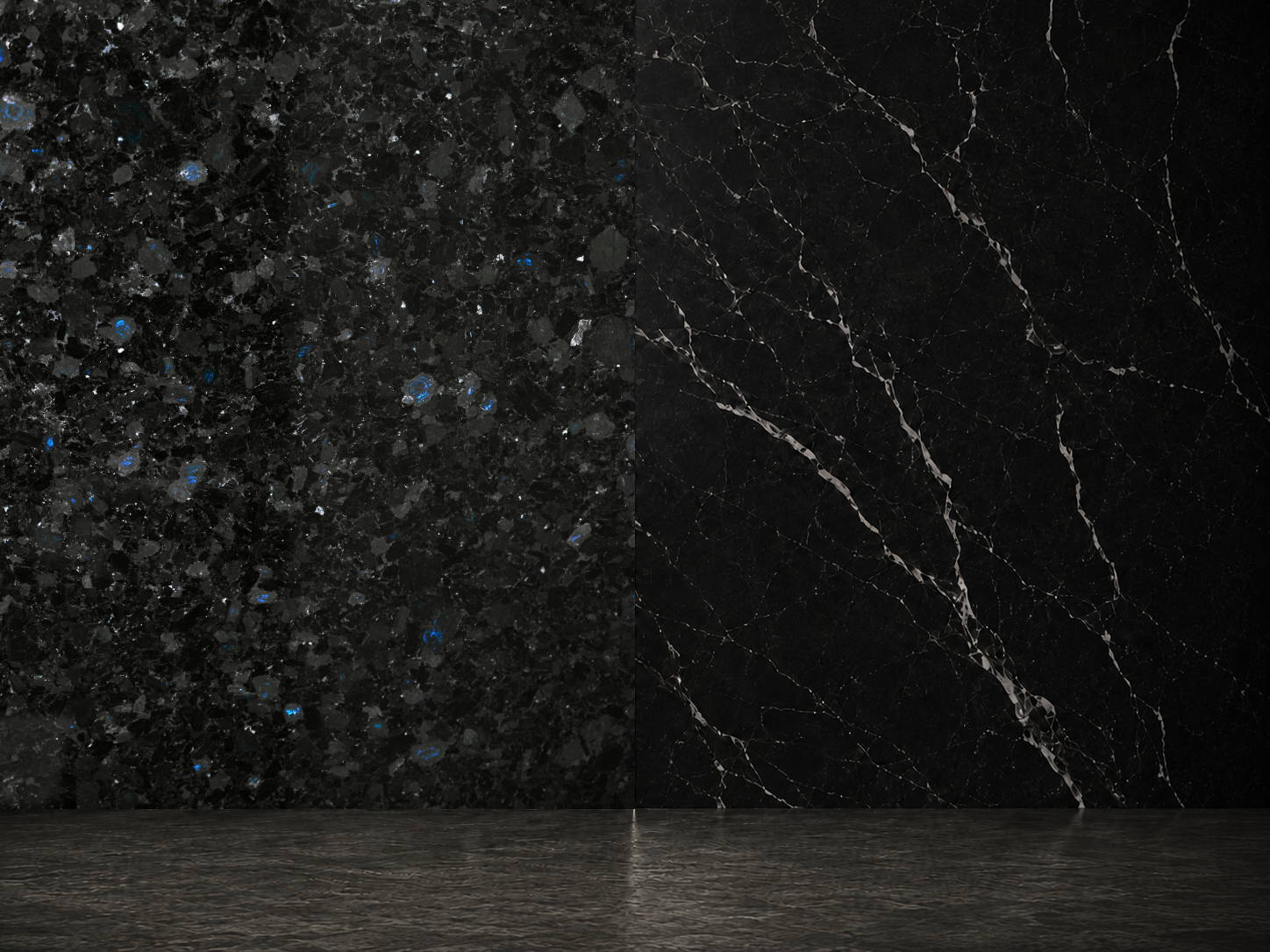
Labradorite as Depth, Not Decorative Pattern
Labradorite does not work only through color. Its strength lies in surface depth, natural structure, and the ability to interact with light in different ways.
Unlike black marble, labradorite does not look like a surface built around an active pattern. Its graphite base has a density and internal complexity that cannot be fully replicated by artificial or composite materials. The surface of the stone constantly changes depending on lighting, viewing angle, and the atmosphere of the space itself.
Labradorite has not only a different visual nature, but also a different feeling of material density. Compared with marble, it is perceived as harder, more massive, and more durable in everyday use. This natural density adds a feeling of stability to the interior — the stone does not look like a decorative surface, but like a material capable of remaining part of the architecture for years.
Golovinski Labradorite adds not just a dark accent to the interior, but a feeling of material presence. The stone feels restrained, but not empty. Deep, but not heavy. Monumental, but without excessive drama.
This is the key difference between labradorite and black marble: it does not try to decorate the space with an active pattern. It shapes atmosphere through natural mass, light, and the inner depth of the material.
How Material Changes the Feeling of an Interior
The choice between black marble and labradorite is not only a question of name or color. It is a choice between different ways of perceiving an interior.
Black marble is more often read as a decorative gesture. It brings movement, contrast, and expressive veining into a space. This material can be very striking, but its presence is almost always noticeable and active.
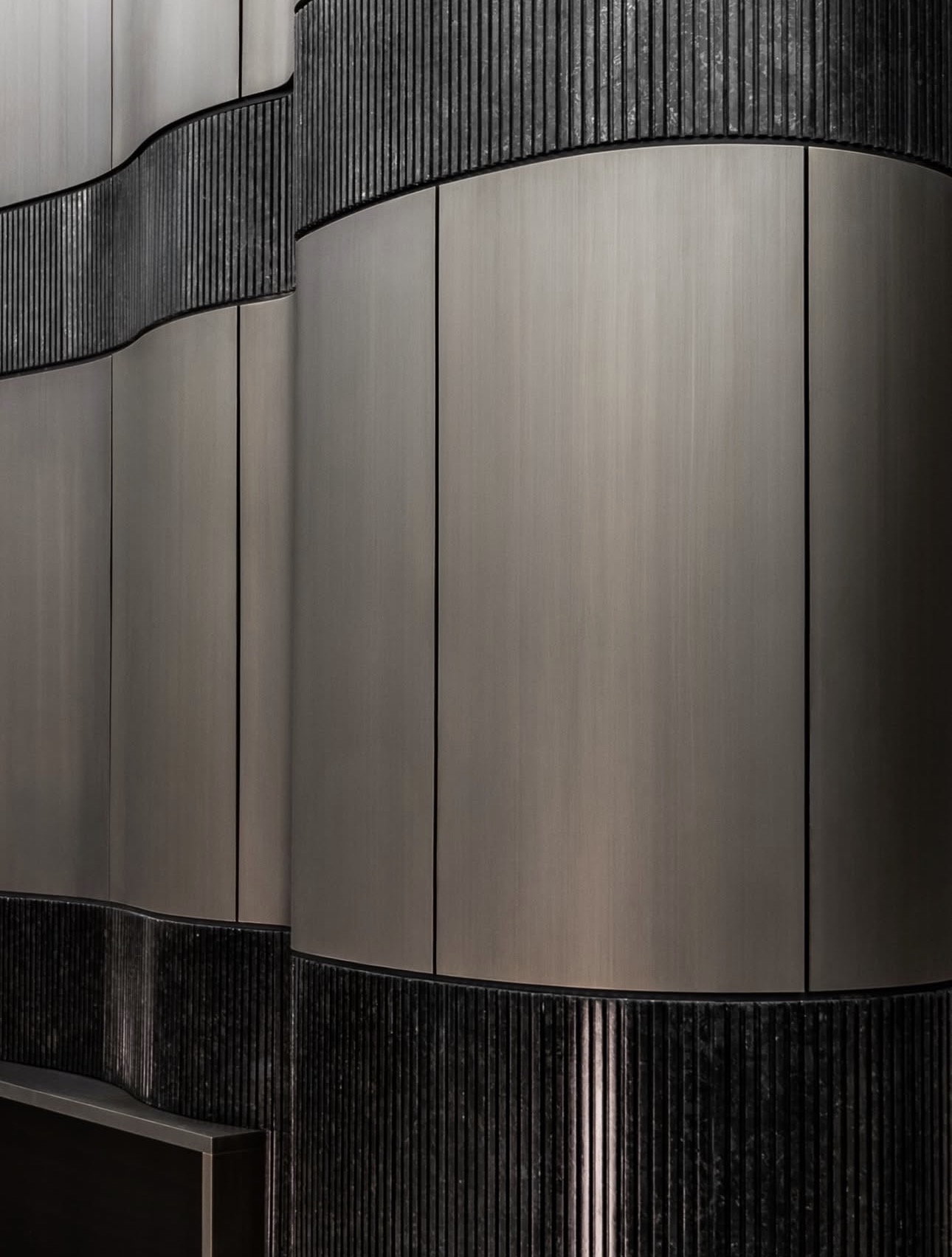
Labradorite works differently. It does not create visual noise. Its surface is deep, restrained, and naturally layered. Across large planes, the stone begins to be perceived as an architectural surface rather than a separate decorative element.
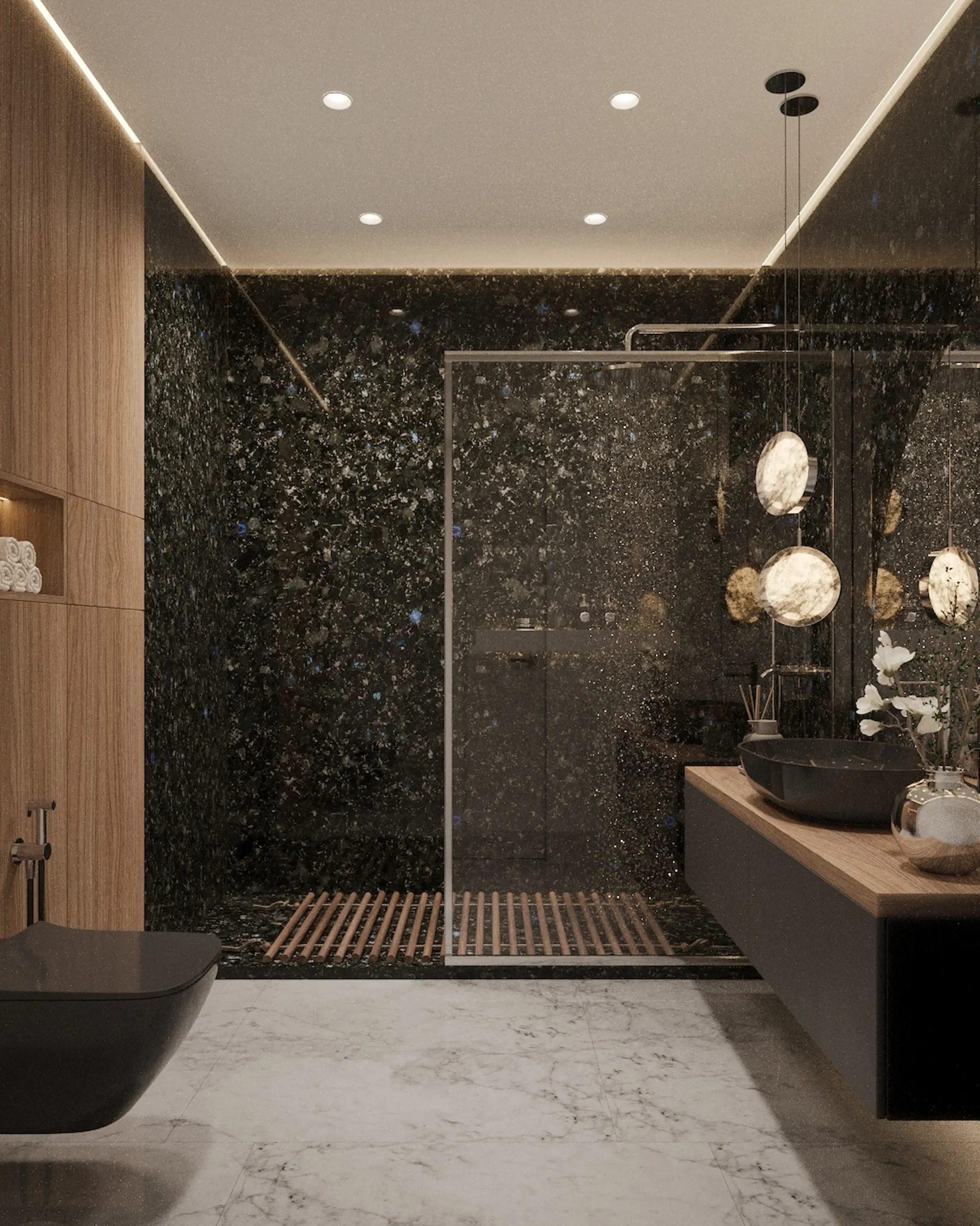
This is especially important for interiors that require an atmosphere of calm status: private residences, lounge areas, bathrooms, SPA spaces, fireplace zones, kitchen islands, and entrance areas.
In such spaces, Golovinski Labradorite does not simply complement the design. It sets the tone for the entire environment through depth, light, and natural materiality.
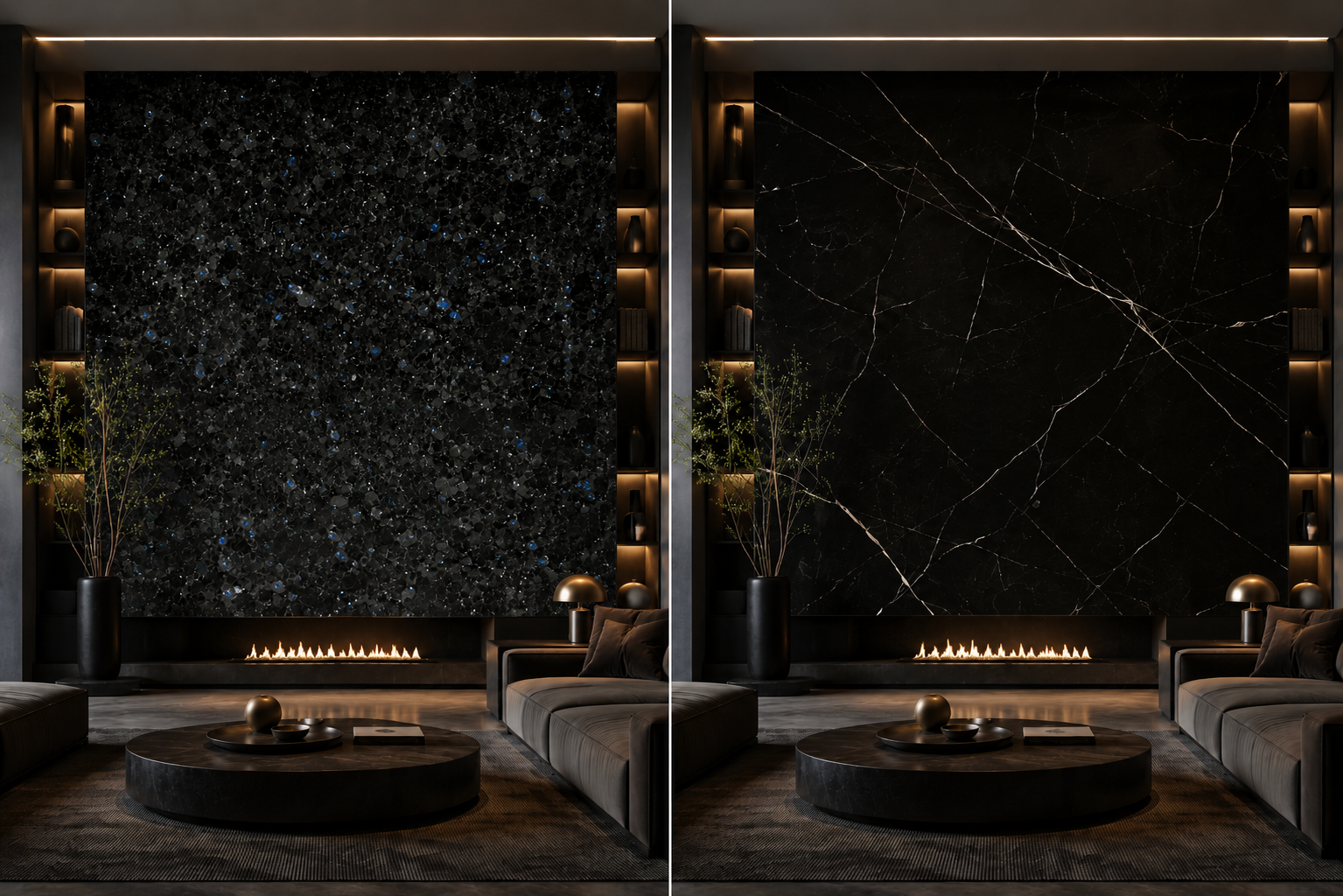
Light, Iridescence, and Natural Structure
Light is one of the main factors through which black marble and labradorite are perceived differently.
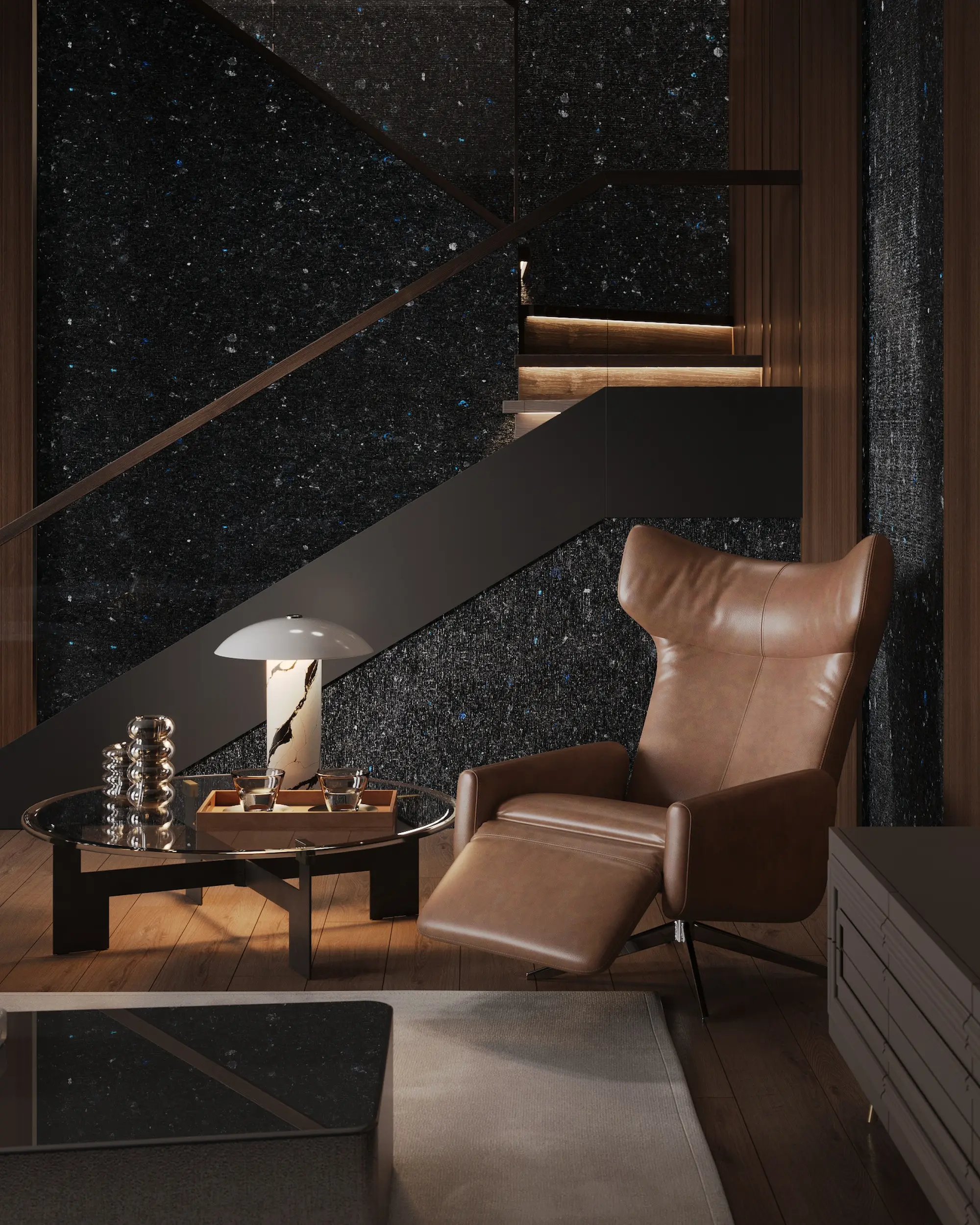
Marble usually works through the pattern of its surface. Labradorite works through structural depth and natural iridescence. In daylight, Golovinski Labradorite appears restrained and graphite-toned, with the feeling of a dense natural surface. Under warm architectural lighting, the natural iridescence is enhanced, and the stone begins to feel deeper and more alive.
Marble more often keeps light on the surface, revealing the contrast of veins and the decorative character of its pattern. Labradorite works with light more deeply: it seems to sink into the structure of the stone, enhancing the graphite base, natural iridescence, and inner layered depth of the material. This is why Golovinski Labradorite in a space feels not simply dark, but deep, alive, and far more architectural in perception.
This is not decorative shine and not an artificial effect. Iridescence comes from the structure of the material itself, which means every stone surface has its own character. On large surfaces, this quality becomes especially noticeable: light does not simply fall onto the stone; it seems to enter its depth, revealing the layered structure within.
As a result, labradorite can remain restrained while still creating the feeling of a complex, living surface.

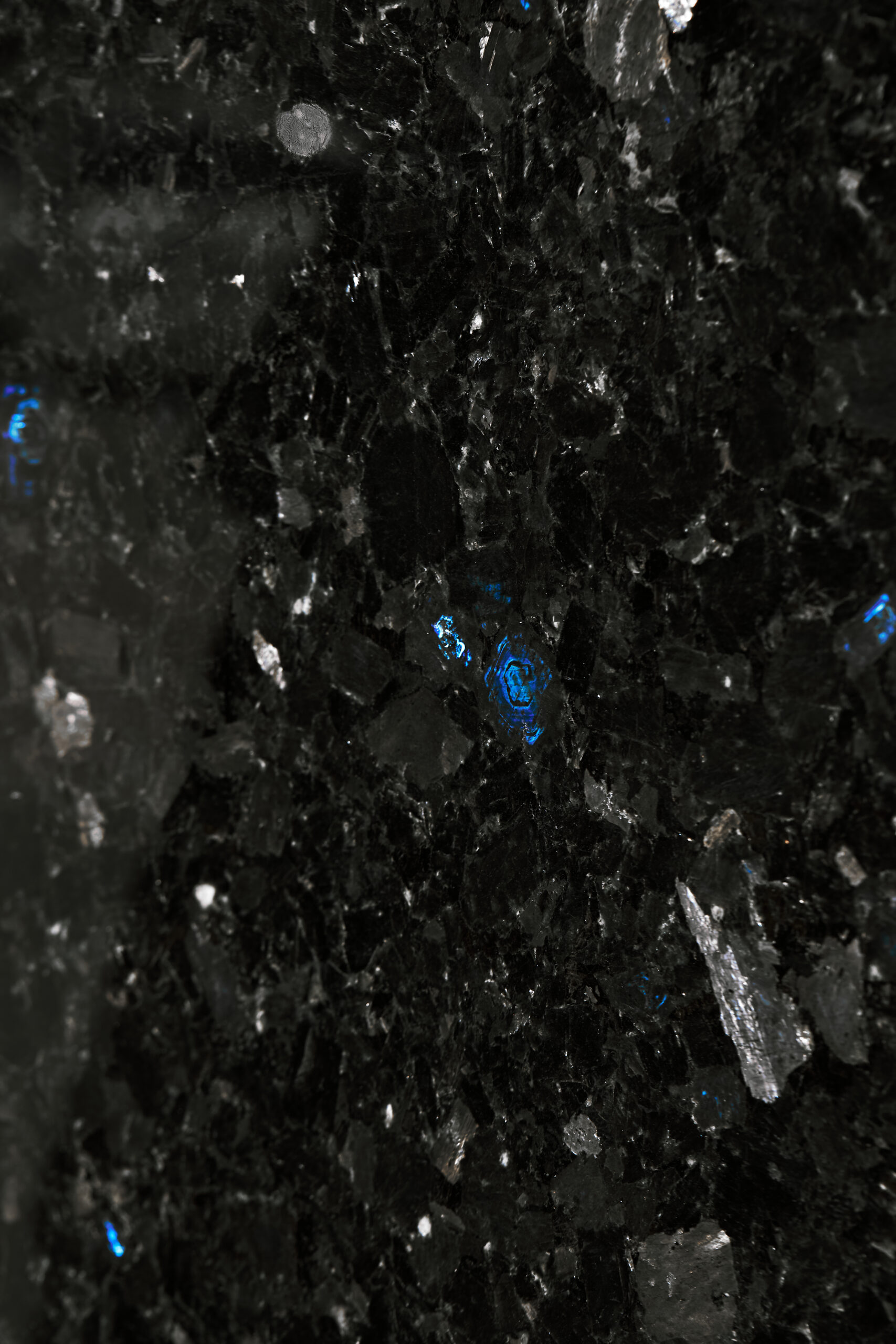
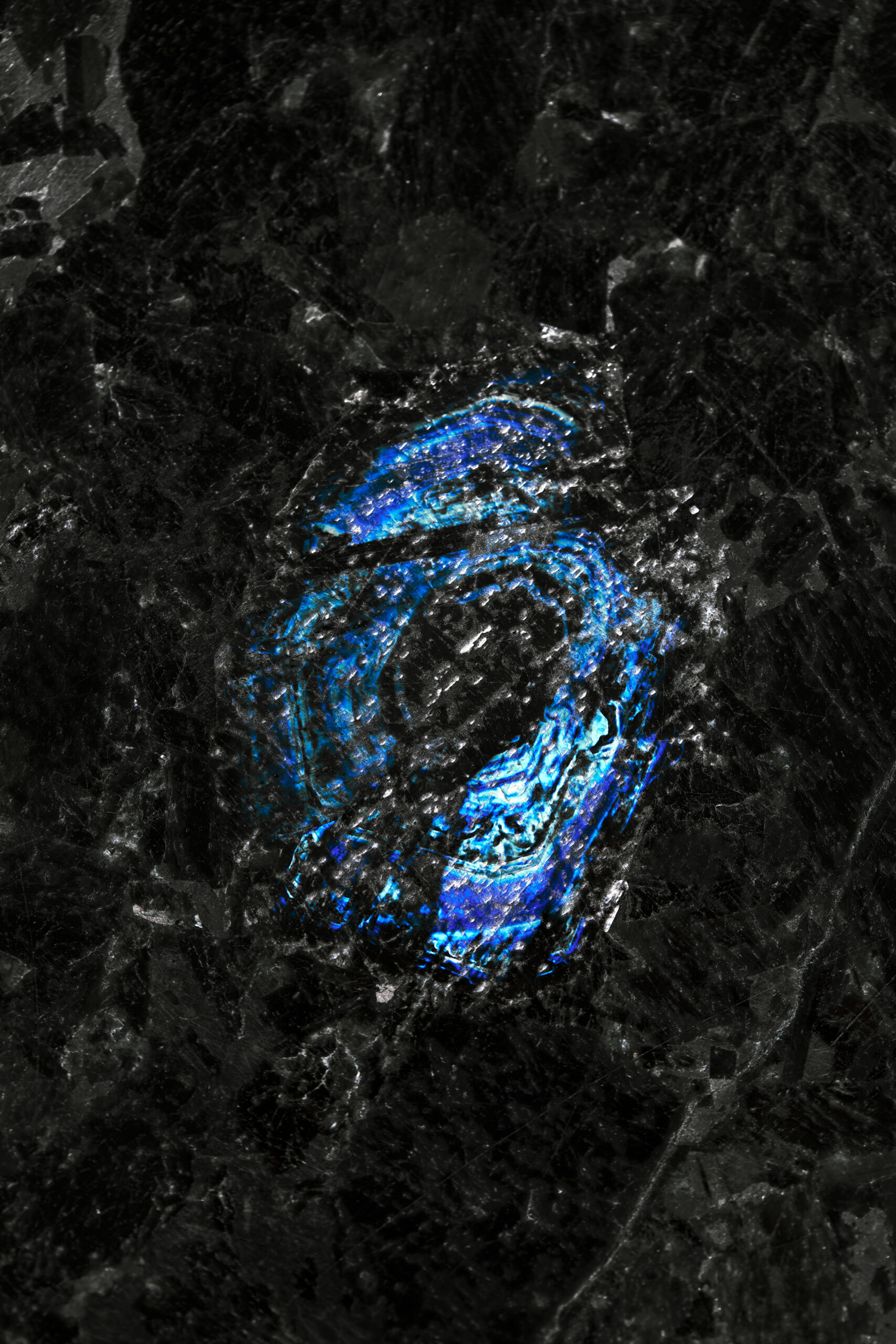
Why Golovinski Labradorite Does Not Look Like a Marble Substitute
Golovinski Labradorite should not be perceived as an alternative to black marble in the sense of “the same thing, but different.” It is a material with a different architectural logic.
Marble often builds a space through pattern. Labradorite builds it through depth.
Marble can create a decorative center of composition. Labradorite more often shapes the atmosphere of the interior itself.
A marble surface can feel more classic or accent-driven. Labradorite, with its graphite structure, feels more restrained, more monumental, and closer to an architectural plane.
This is its value for private interiors where the material needs to look expensive without excessive demonstration. Labradorite does not need an active pattern to be noticeable. Its status is read through scale, depth, natural structure, and interaction with light.
Where Labradorite Works Best
Labradorite reveals itself especially well where the material needs to be not just an accent, but part of the architecture.
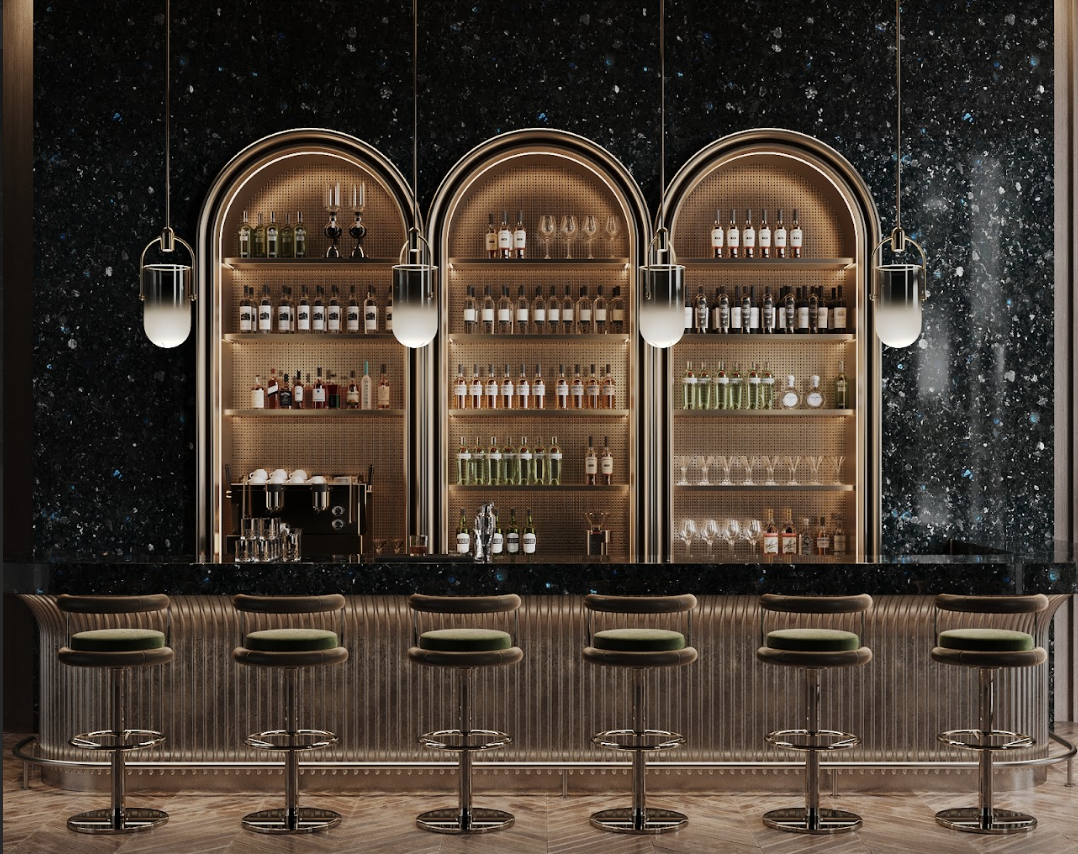
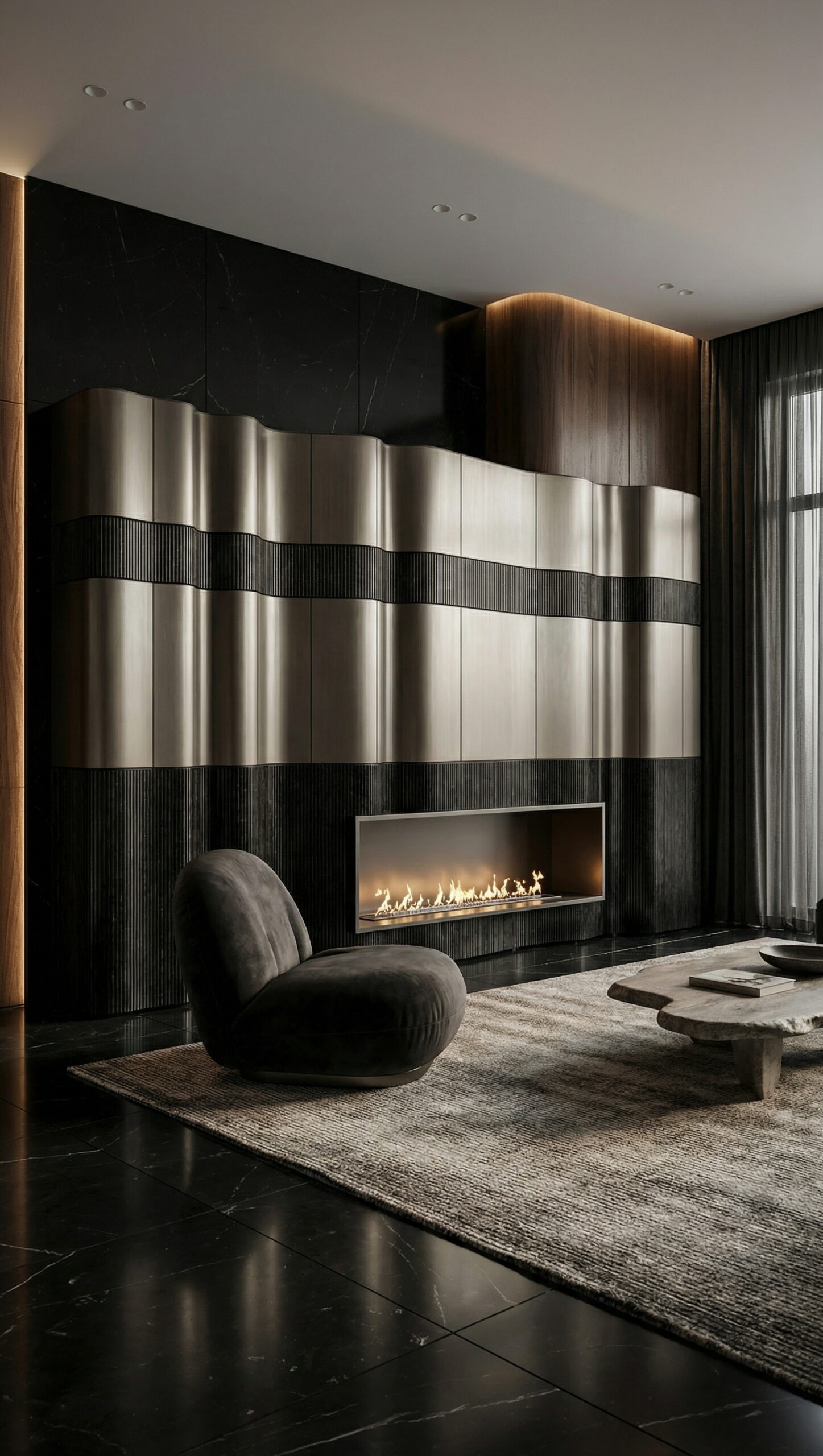
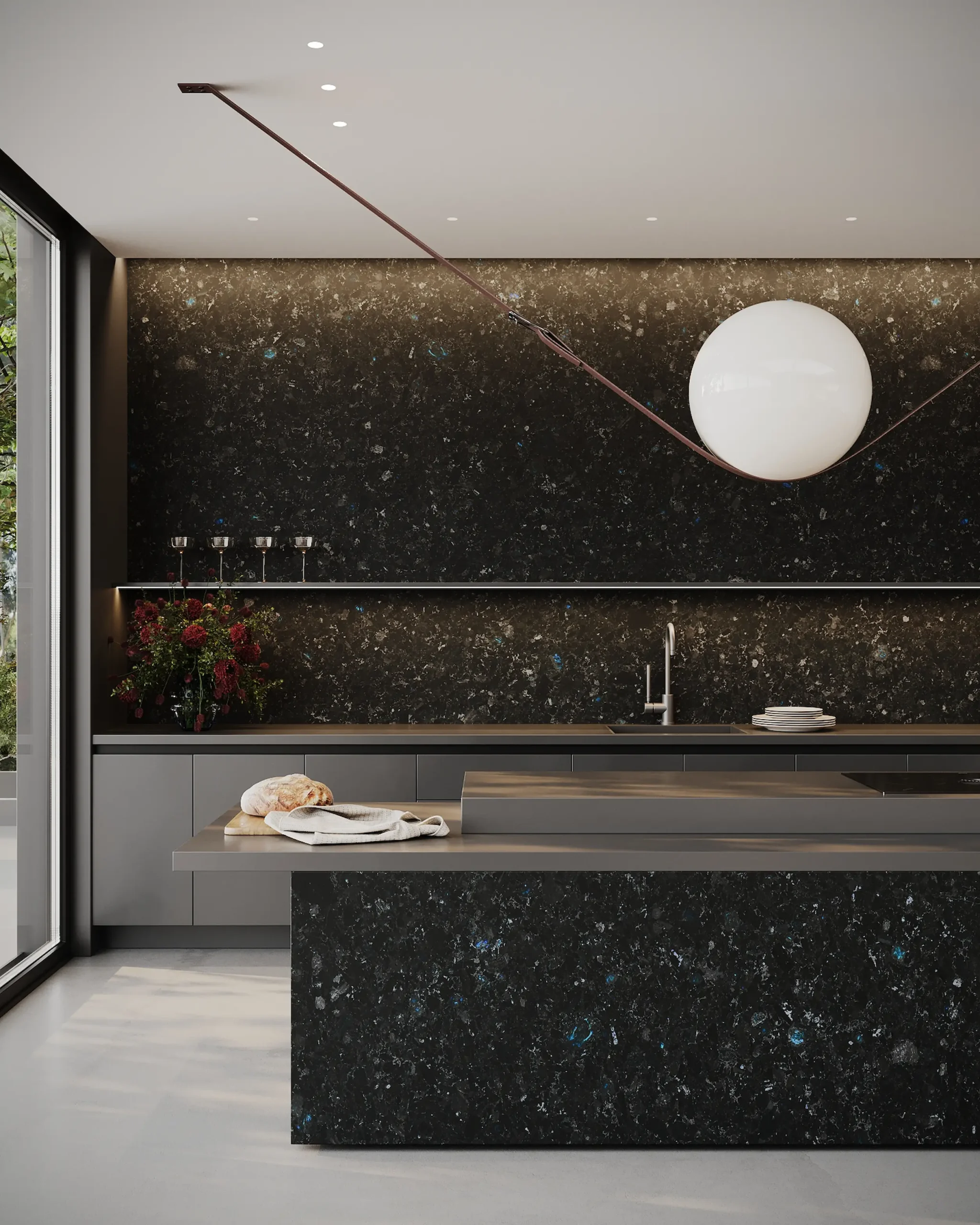
In a living room, Golovinski Labradorite can shape a fireplace area or a large wall surface, adding depth and calm monumentality to the space. In a kitchen, labradorite works as a material for an island or work surface, where both visual strength and the feeling of natural mass are important. In a bathroom or SPA area, the stone connects with light, water, and the tactility of surfaces, creating a deeper atmosphere.
In large formats, labradorite feels especially cohesive. A minimal number of seams allows the surface to be perceived as one continuous material plane, while natural iridescence reveals itself more softly and deeply.
Where black marble can work as a decorative accent, Golovinski Labradorite works as an architectural foundation of the space.
Not Just Color, But the Feeling of Material
Black marble and labradorite may seem close in color, but they create different feelings within an interior.
Marble speaks through decoration, contrast, and classic expressiveness. Labradorite speaks through depth, light, monumentality, and natural materiality.
Golovinski Labradorite does not make a space louder. It makes it deeper. The surface of the stone holds light, changes throughout the day, and leaves a sense of calm status inside the interior.
In this choice, what matters is not only how the material looks in a photo. What matters more is how it changes the atmosphere of a space when it becomes part of the architecture.