
You might be interesting:

Why Black Stone Returned to Contemporary Architecture
10 min | 18.05.2026Why Black Stone Returned to Contemporary Architecture
depth, light and new aesthetics of space


Black stone as the language of architecture
Natural black stone has once again become part of architecture where depth, light, and atmosphere define the space.
Just a few years ago, interiors were dominated by light minimalistic spaces, neutral textures, and almost sterile surfaces.
Today, architecture is gradually shifting in a different direction.
More and more projects are returning to deep dark materials that shape not only the interior itself, but the character of the entire environment.
Black stone has once again become part of a new architectural aesthetic.
Not because of excessive luxury or decorative expression.
Because of depth, materiality, and the way it interacts with light.
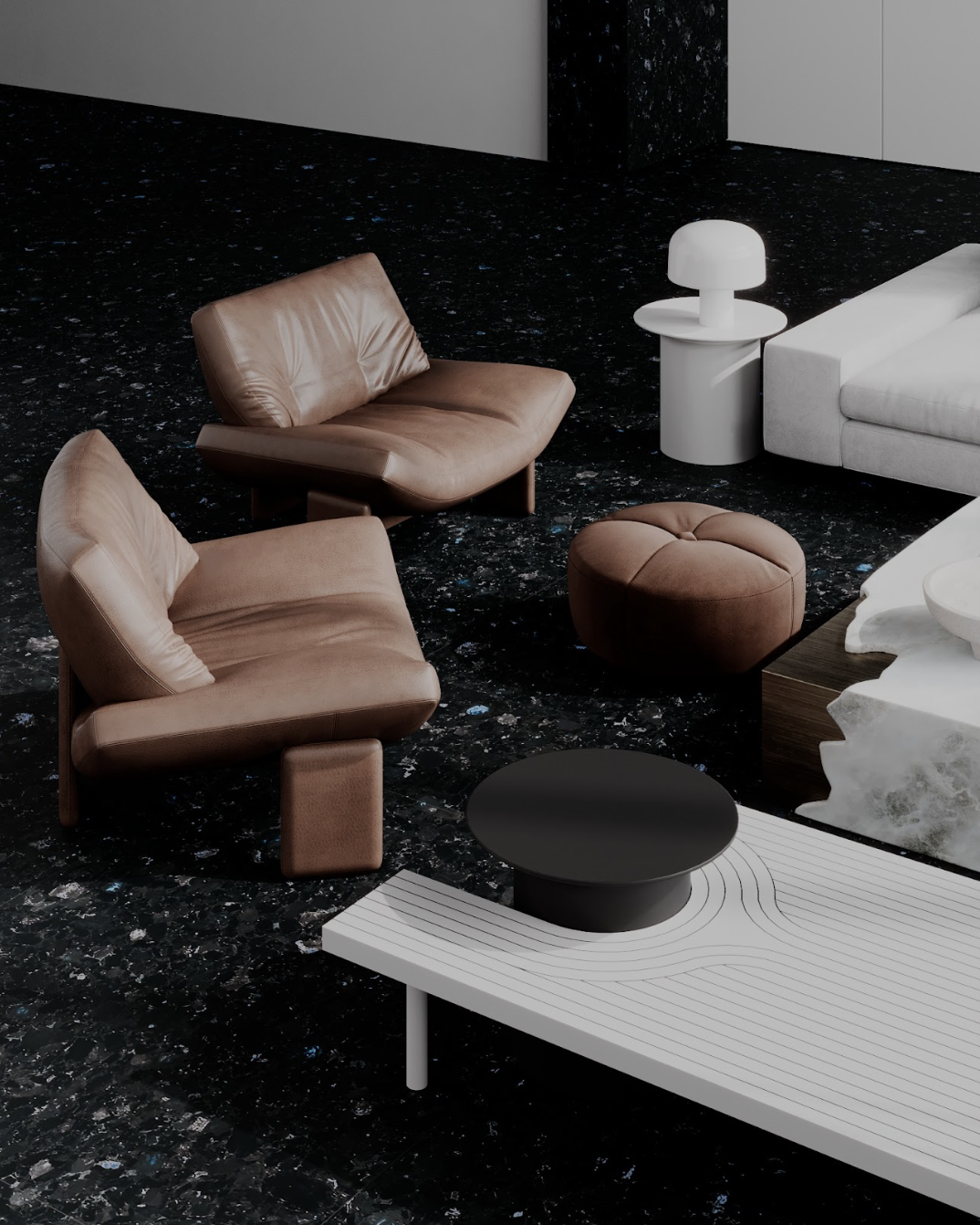
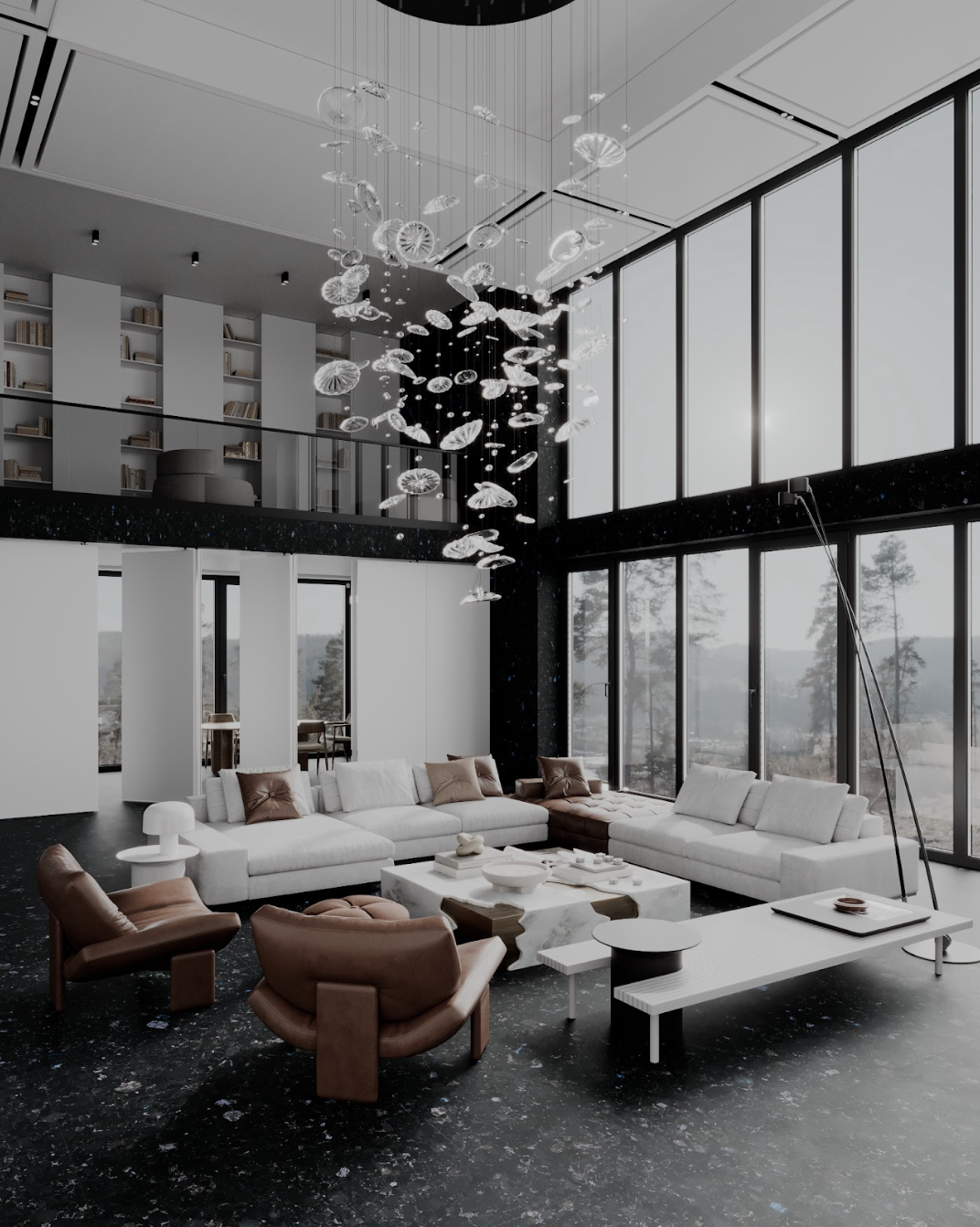
Golovinski Labradorite reveals itself especially well within this type of architecture.
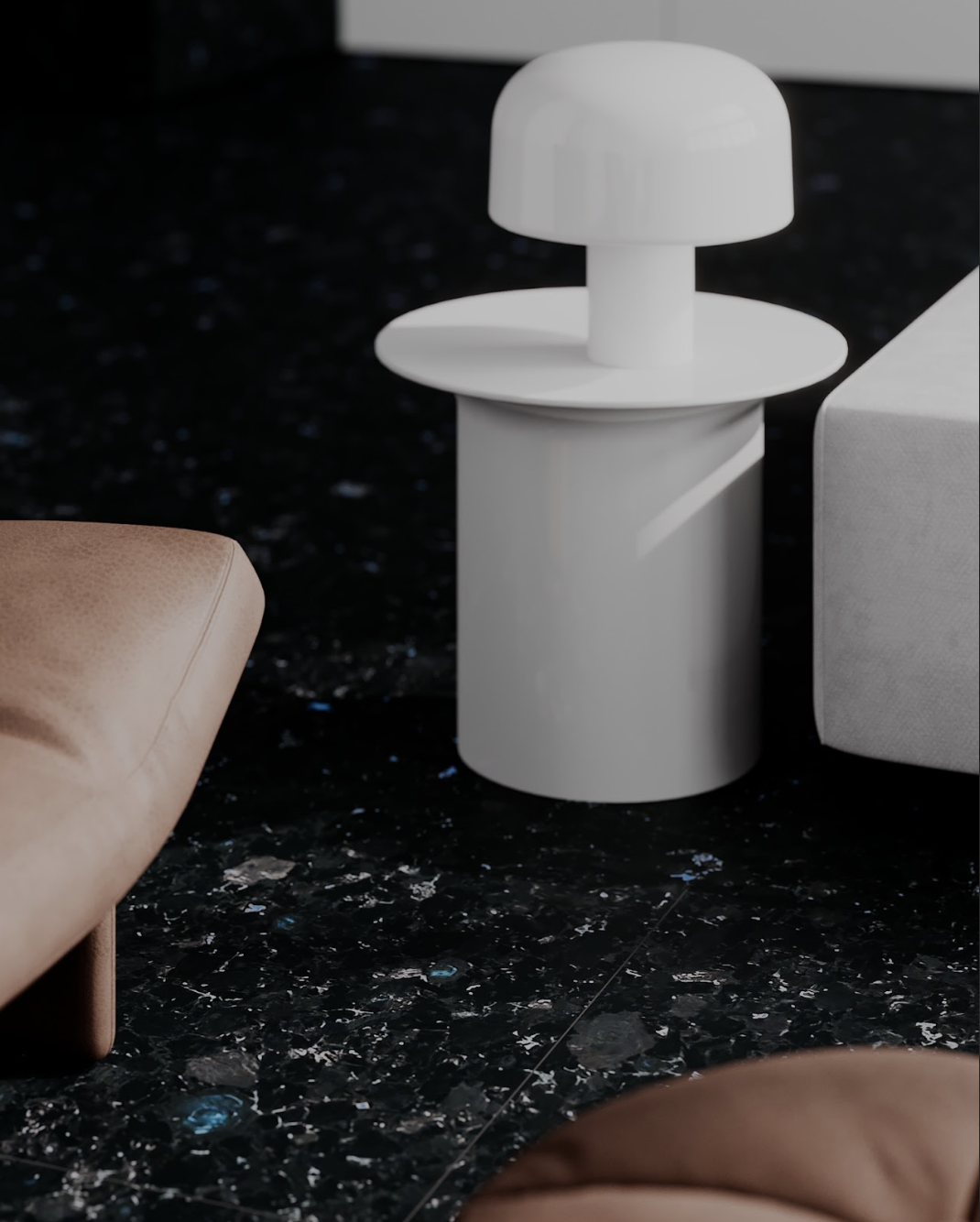
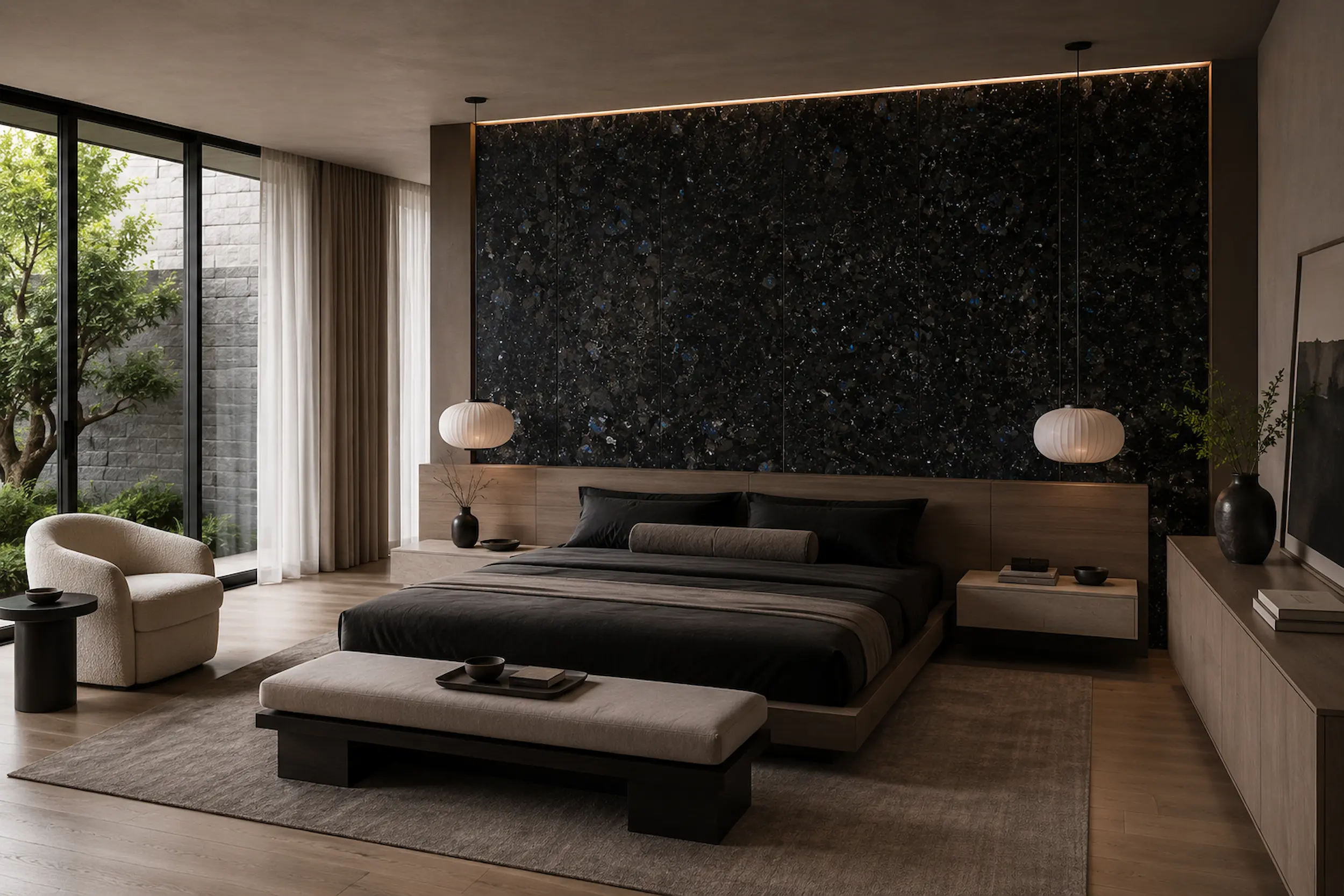
The graphite structure of the stone appears calm and monolithic during the day, while under warm lighting the surface begins to delicately reveal its natural blue iridescence.
The material never overloads the interior.
It shapes the atmosphere around it.
A New Aesthetic of Dark Materials
Premium architecture is becoming less focused on demonstrative luxury.
Materials that create atmosphere through texture, light, and natural surface depth are taking center stage.
Dark natural textures have returned to contemporary interiors.
Today, black stone is increasingly integrated into:
— private residences
— premium apartments
— boutique hotels
— wellness and SPA spaces
— contemporary lounge areas
— high-end commercial interiors
Within these environments, dark stone does not make architecture feel heavy.
Instead, it adds depth, visual calmness, and a sense of cohesion.
This becomes especially expressive in large monolithic surfaces, where the stone feels like part of the architecture itself rather than a separate decorative element.
Why Architects Are Choosing Black Stone Again
Architecture is returning to materials with natural depth.
Many artificial surfaces may appear impressive at first glance.
But very few create a true sense of material presence.
Natural labradorite works differently.
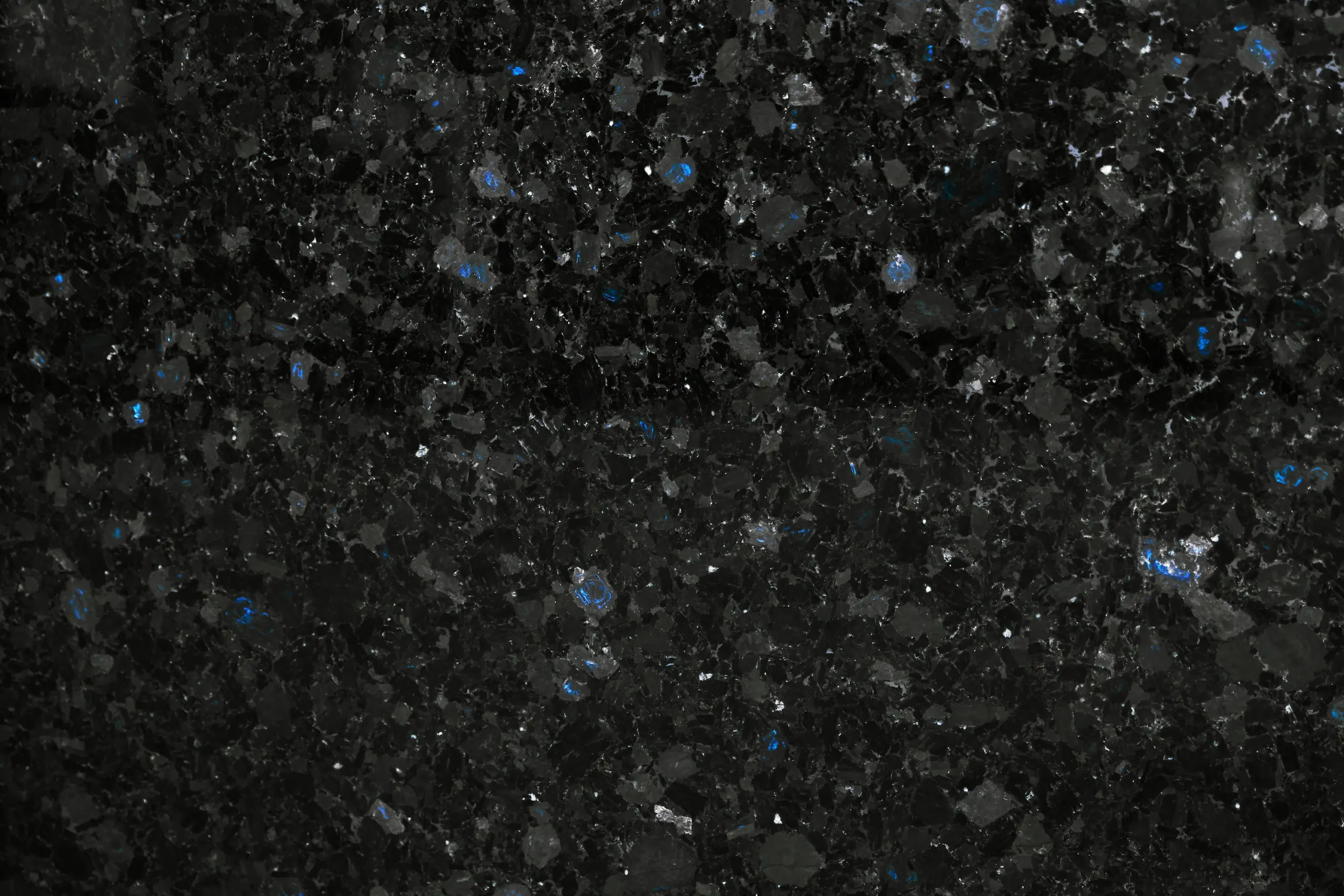
Its dense crystalline structure, natural mass, and complex interaction with light create a depth that is difficult to reproduce with artificial materials.
The polished finish works with reflections far more deeply than decorative or composite surfaces.
Light does not remain on the surface.
It feels as if it interacts with the internal structure of the stone itself.
Black stone creates a sense of scale even within restrained minimalist interiors.
Not through brightness.
Through density, rhythm, and the quiet strength of the material.
Monumentality and Scale
Large-format natural stone has become one of the defining tools of contemporary premium architecture.
The minimal number of seams allows architects to create clean monolithic surfaces that visually expand interiors and make architecture feel more cohesive.
Golovinski Labradorite looks especially expressive in:
— accent walls
— kitchen islands
— bathroom architecture
— fireplace areas
— lounge interiors
— elevator halls
Across large surfaces, the graphite structure appears restrained and refined.
Natural labradorescence reveals itself delicately only under certain lighting angles.
The polished surface adds depth to the interior and creates a complex play of reflections that makes architecture feel more spacious and monumental.
The stone does not dominate the space.
It holds it together.
Light and Surface Depth
One of the defining characteristics of labradorite is its ability to change depending on the lighting.
In daylight, the stone appears restrained and monolithic.
Under evening lighting, the surface reveals much greater depth — natural blue iridescence and a complex play of reflections begin to appear.
Labradorite performs especially well in interiors where lighting becomes part of the architectural composition itself.
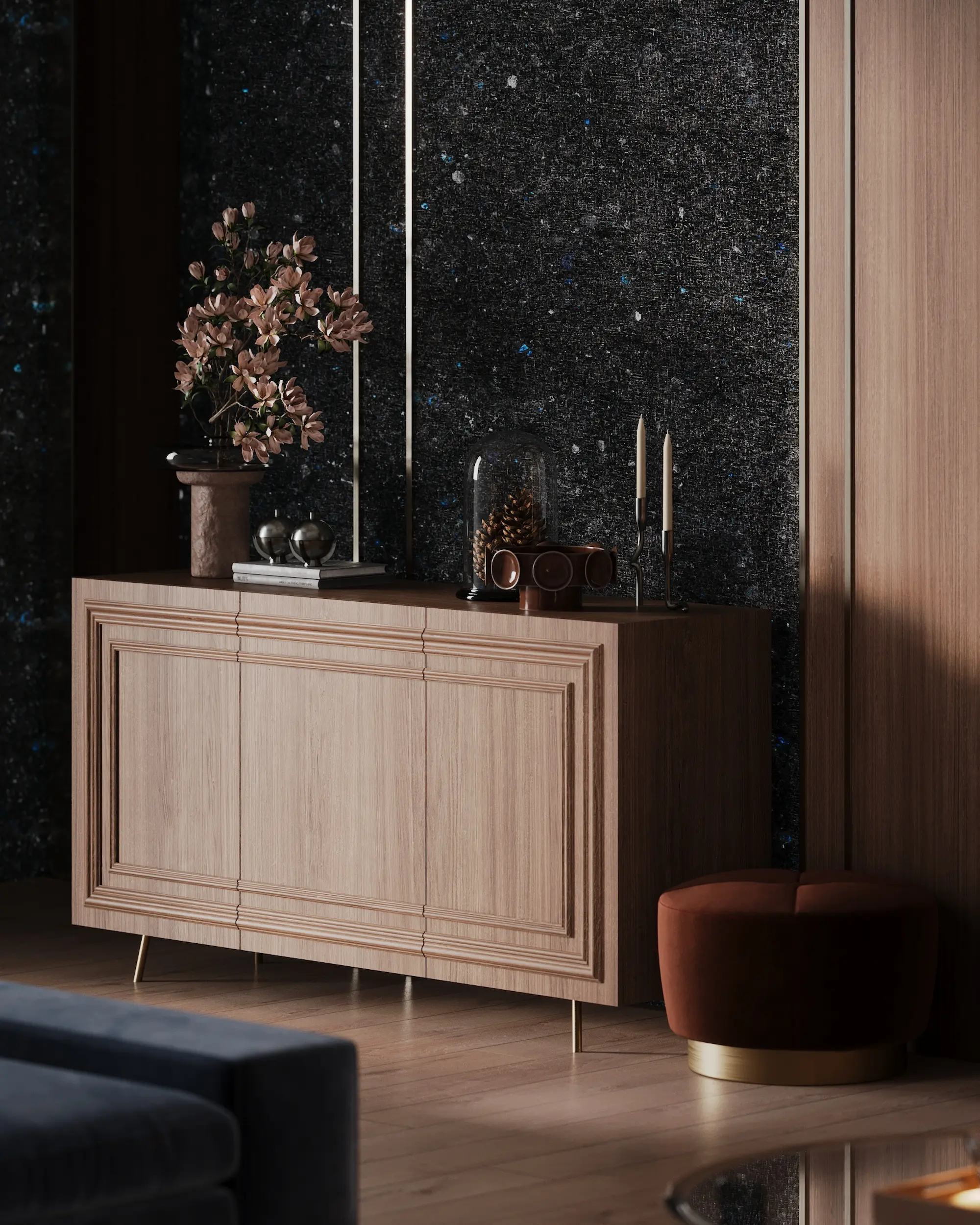
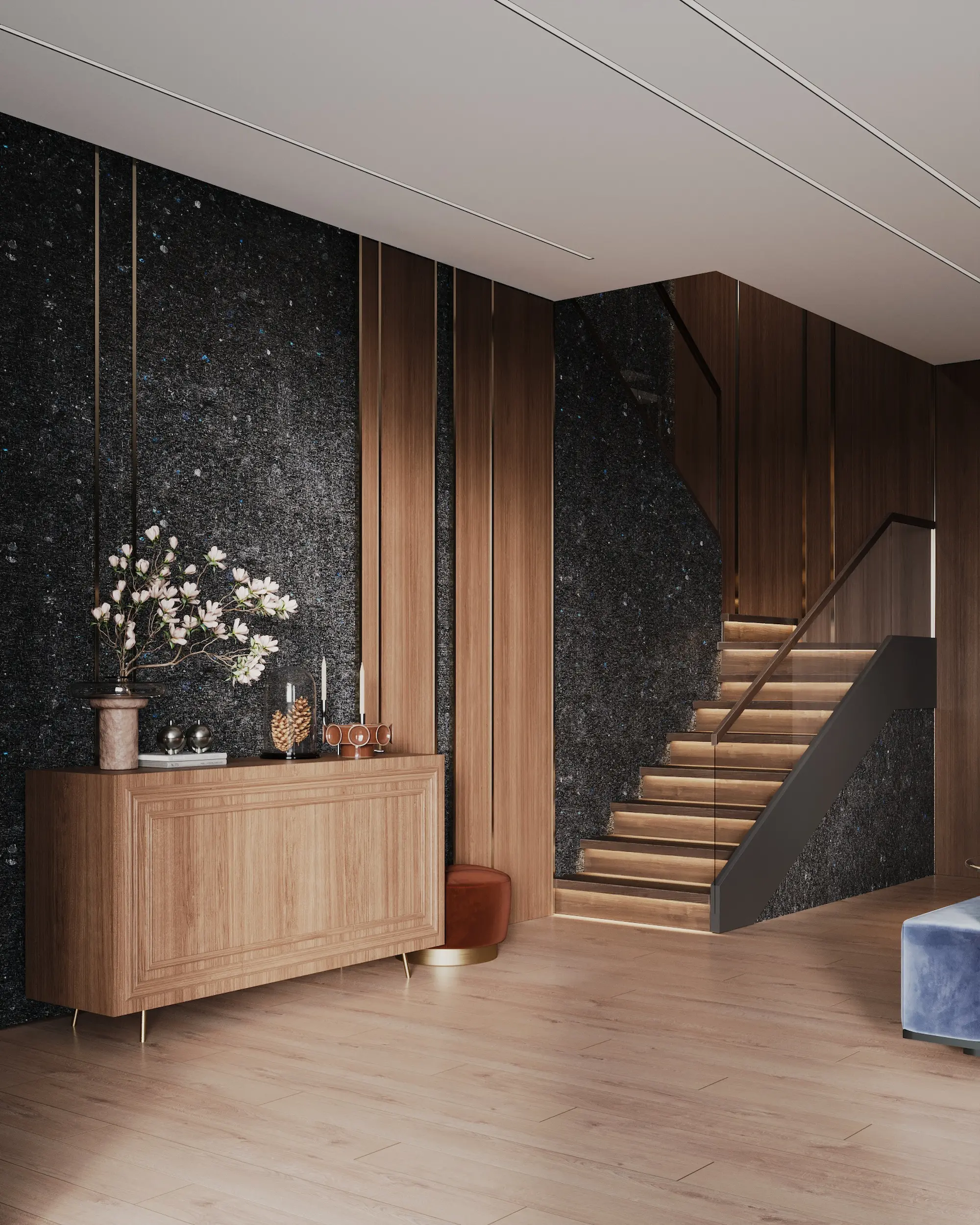
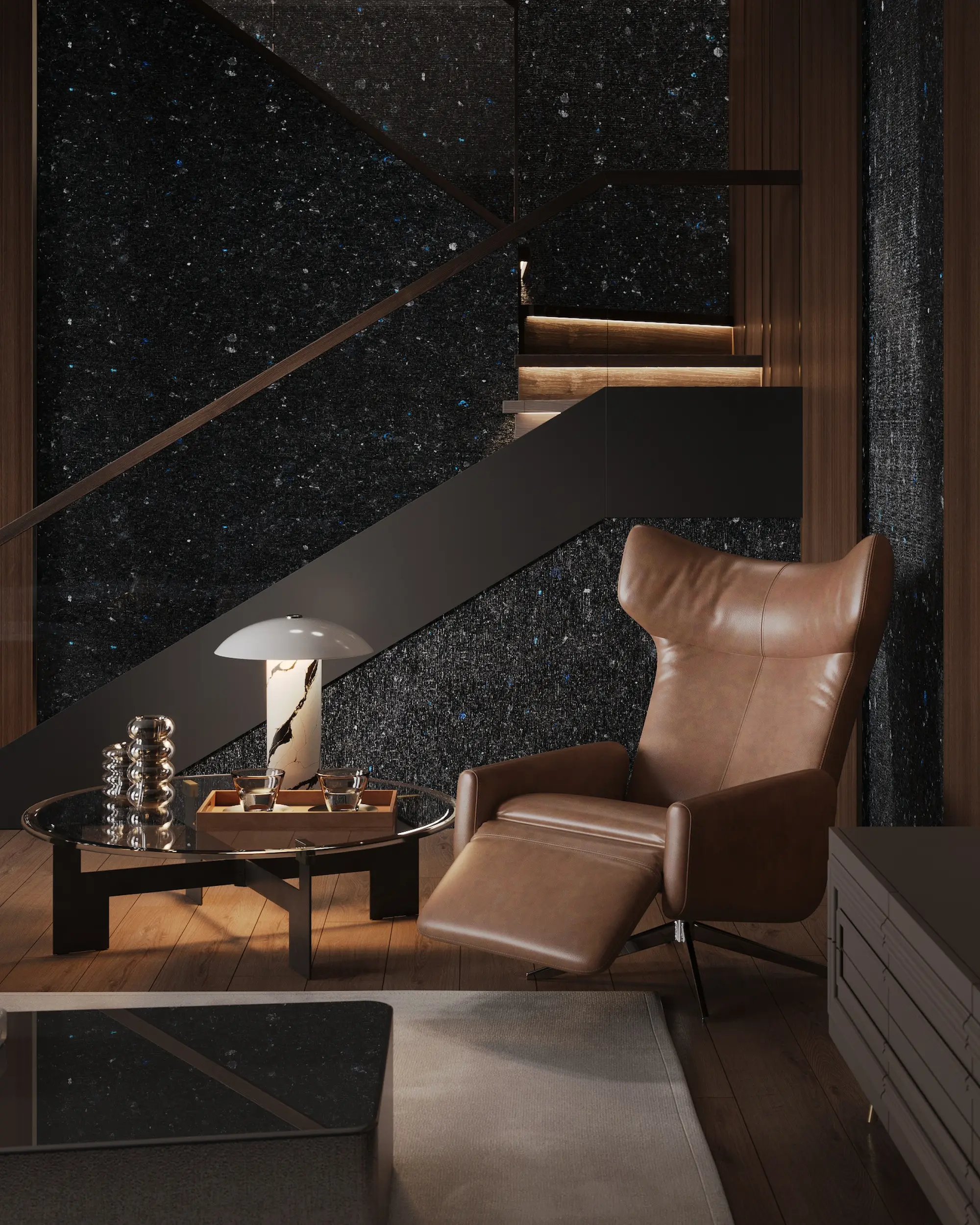
Black stone works best when combined with:
— warm contour lighting
— brass
— dark metal
— natural wood
— architectural concrete
— matte textures
This environment allows the stone to appear as natural, deep, and refined as possible.
Black Stone as the New Architectural Classic
Architecture increasingly values depth and materiality over visual excess.
The focus shifts toward:
— atmosphere
— scale
— texture
— tactility
— natural light
— interaction between material and space
Black stone has returned to premium interiors once again.
Golovinski Labradorite works within these spaces not as a decorative accent, but as part of the architecture itself.
The stone creates rhythm within the interior, holds the surrounding space together, and brings a sense of calm monumentality.
In contemporary architecture, black stone is no longer a contrast element.
It has become the foundation of atmosphere — a material that shapes depth, rhythm, and spatial perception.
Natural labradorite has once again taken a central place in premium architecture.