
You might be interesting:

Architecture of Silence: How Natural Stone Shapes the Atmosphere of Space
10 min | 19.05.2026Architecture of Silence: How Natural Stone Shapes the Atmosphere of Space
When light, scale, and the natural depth of the material define the character of the interior


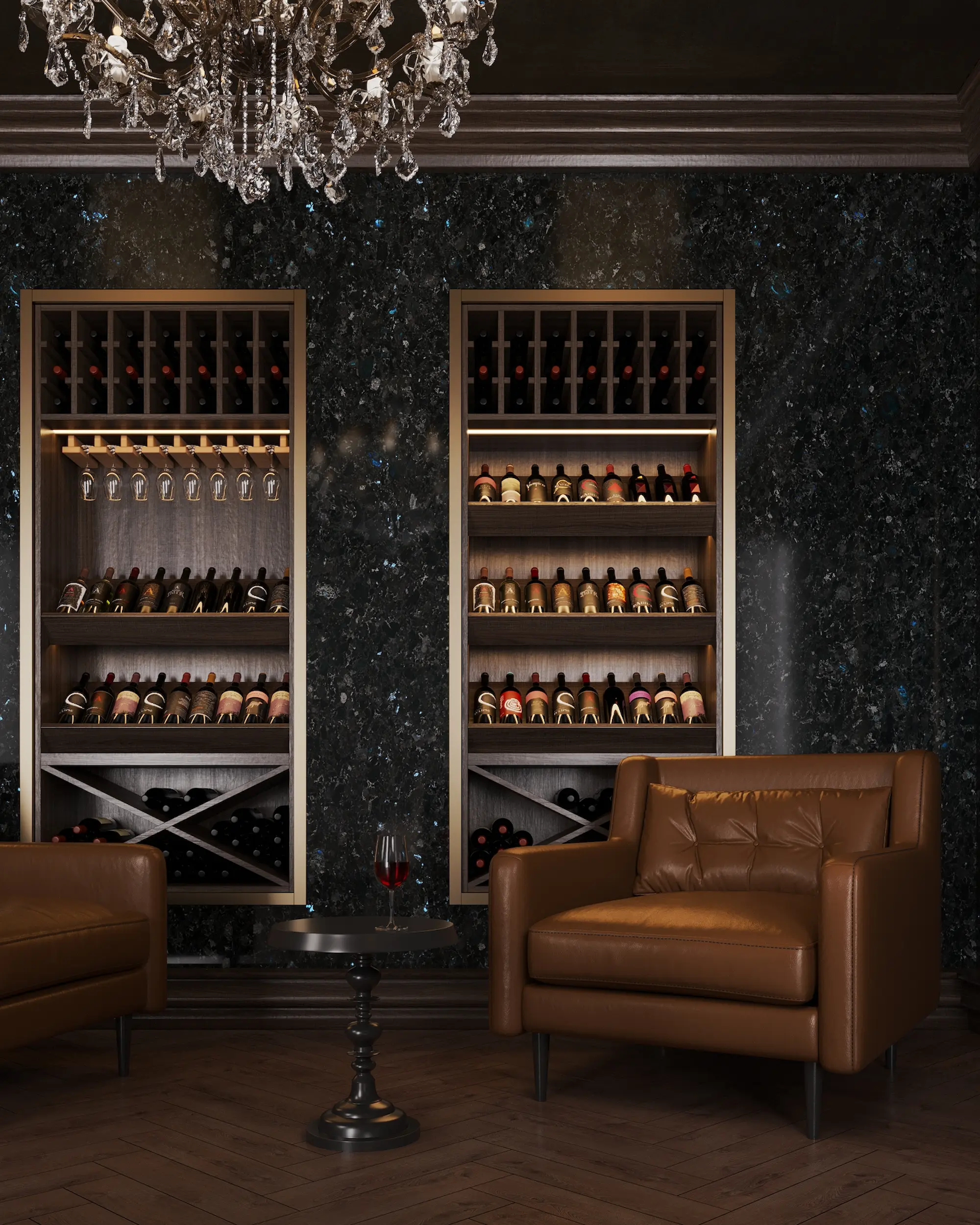
Architecture of Silence
Architecture of silence is not created through decoration, but through the feeling a space leaves behind. Light, scale, and materials have gradually become more important than objects, while natural stone has become part of a new architectural aesthetic.
Contemporary interiors are increasingly moving away from visual noise and excessive decoration. Architecture is becoming more restrained, deeper, and cleaner in its forms. Materials that do not overload the environment but instead shape its character through texture, light, and natural materiality are taking center stage.
Within this type of architecture, natural stone is no longer perceived as a decorative element. It becomes part of the composition itself, holding the space together and giving it rhythm.
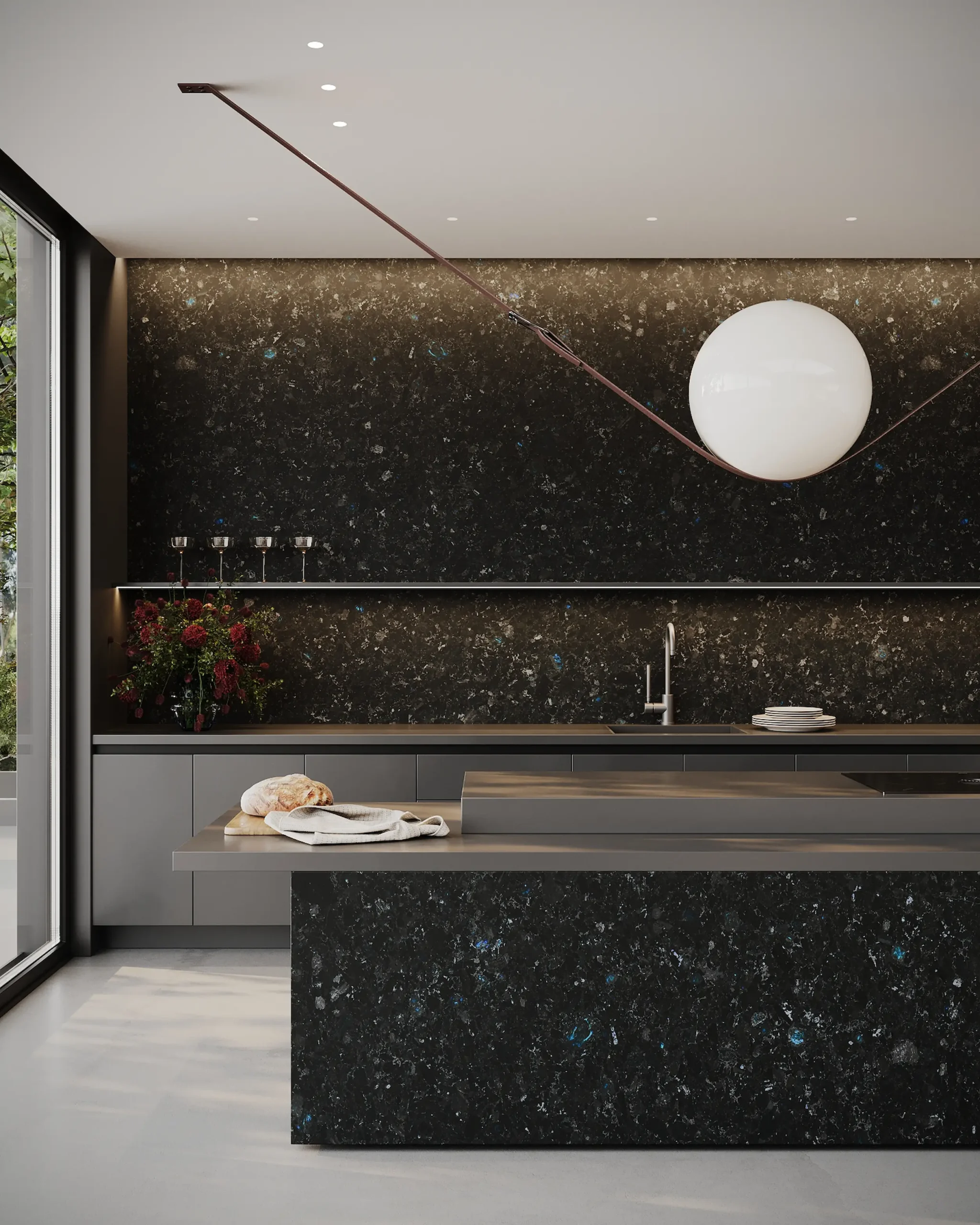
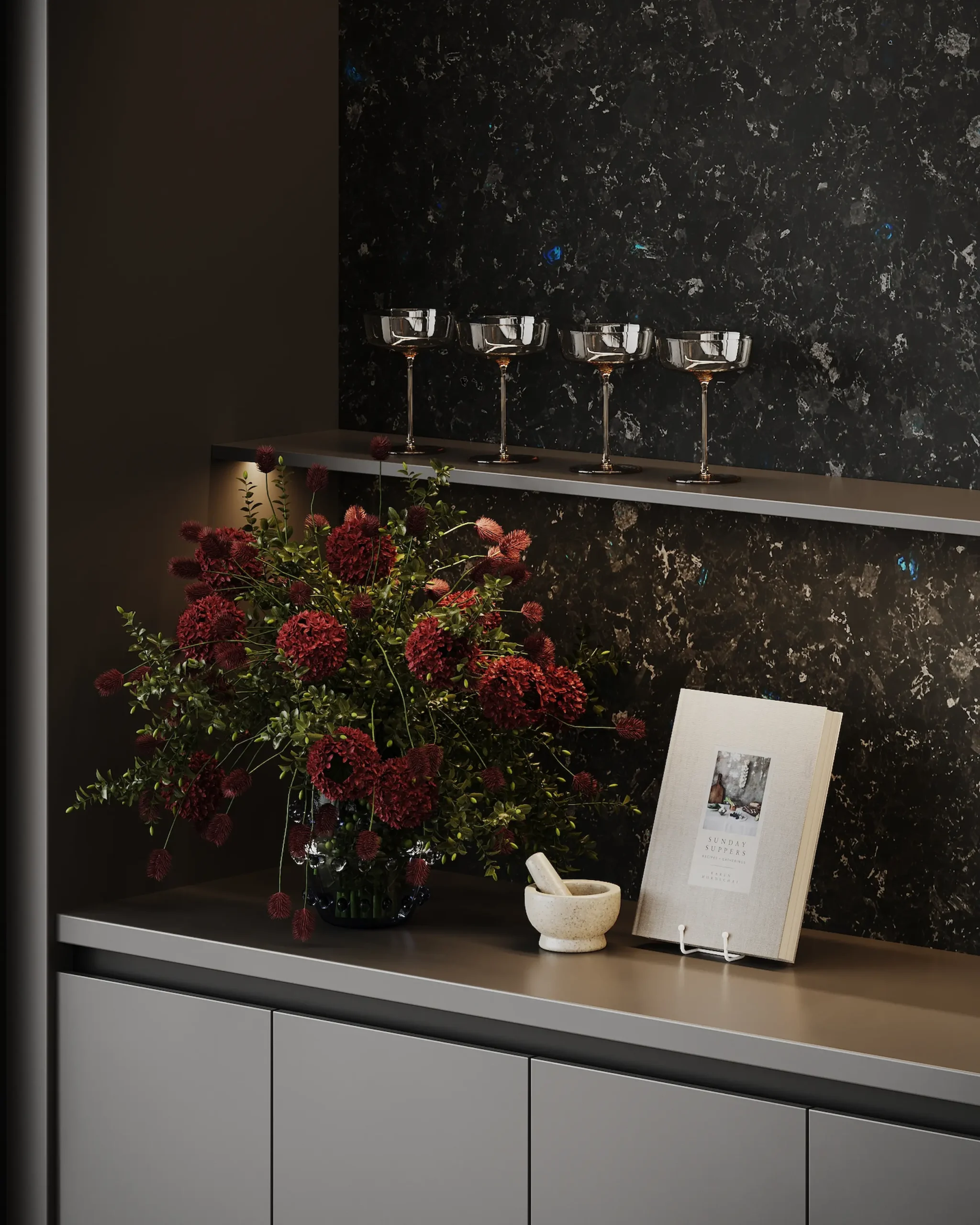
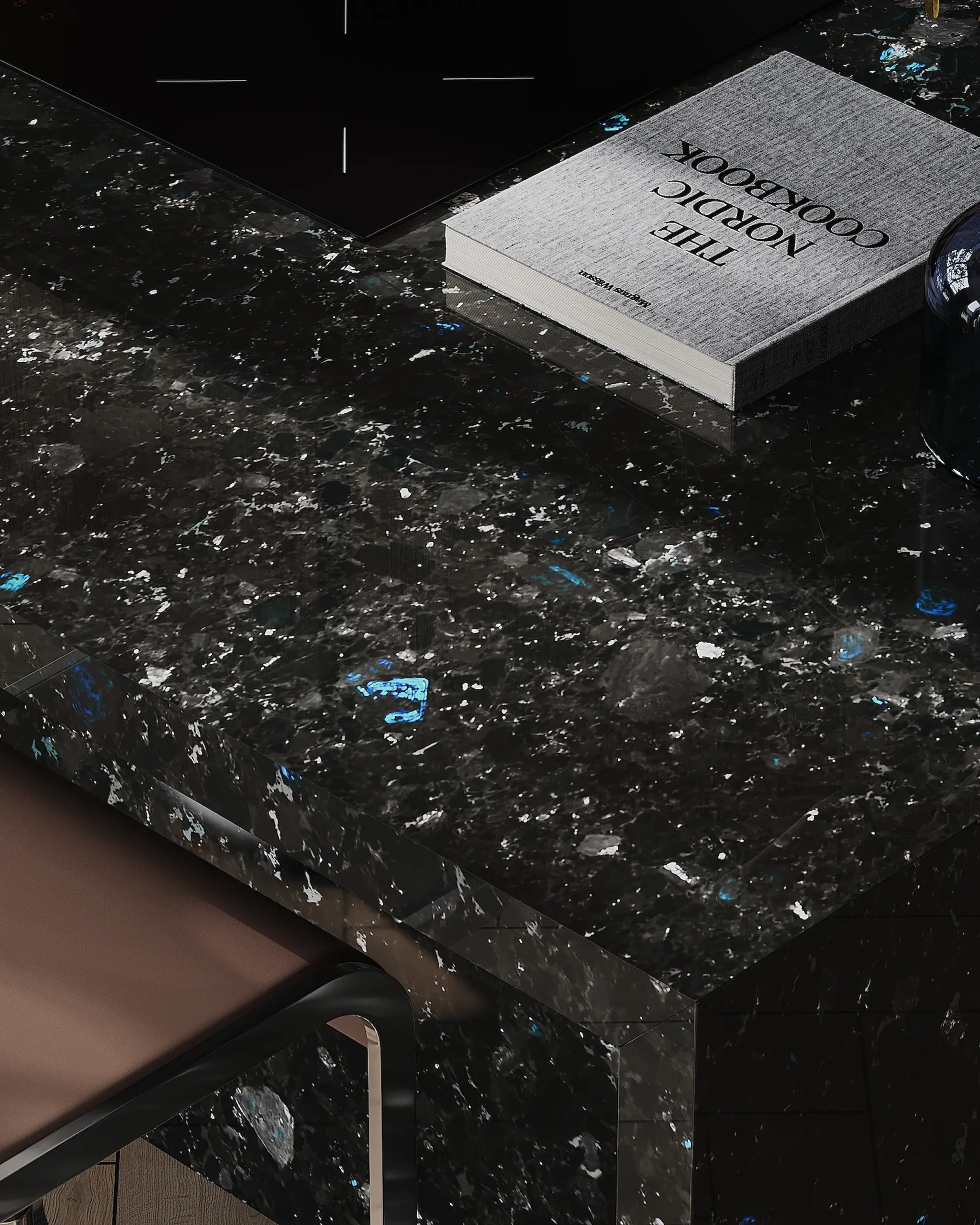
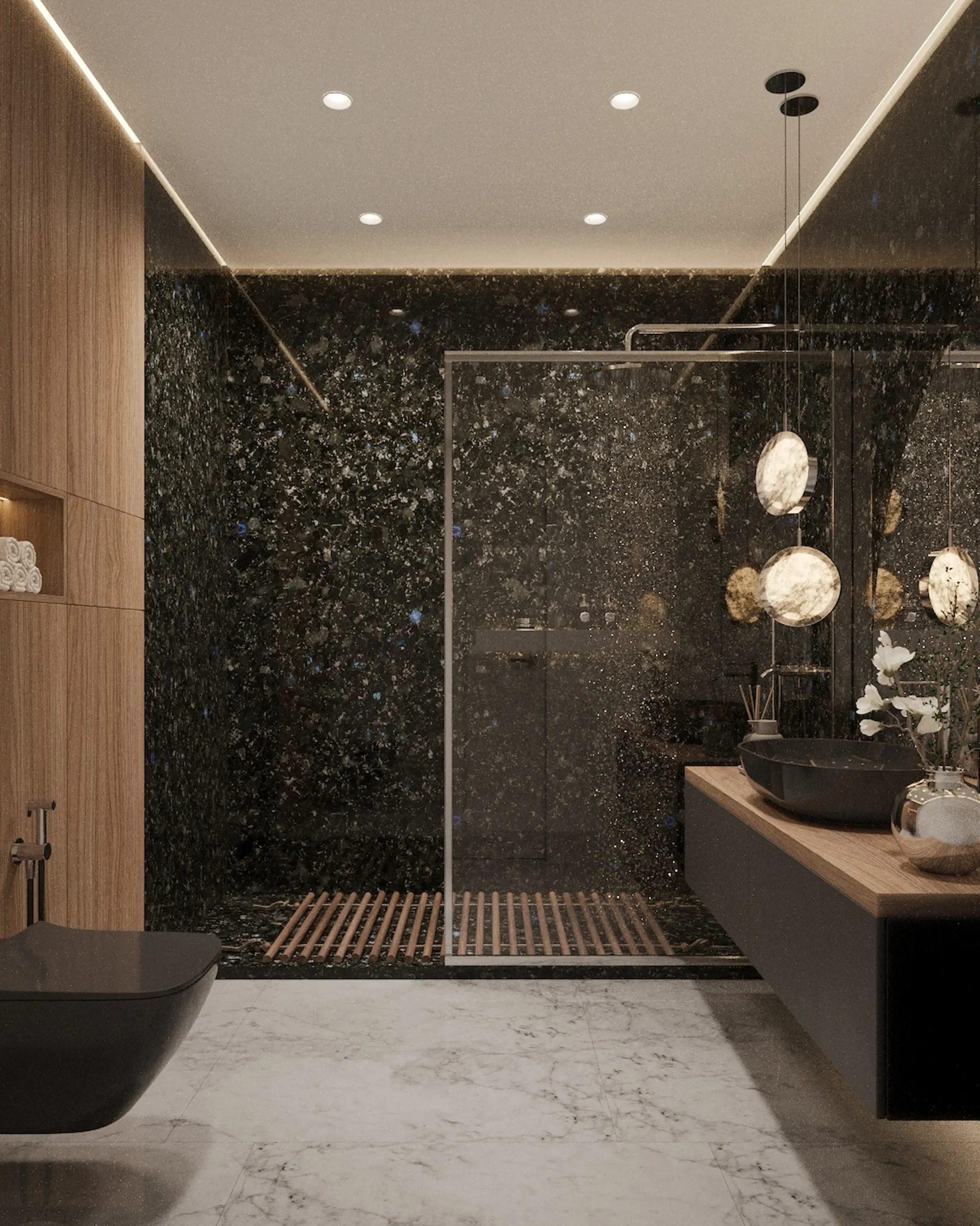
Golovinski Labradorite reveals itself especially well in environments where scale, monumentality, and the calm interaction of materials become essential. The deep graphite structure of the stone appears restrained during the day, while under warm lighting the surface delicately reveals natural blue iridescence and the layered depth of its texture.
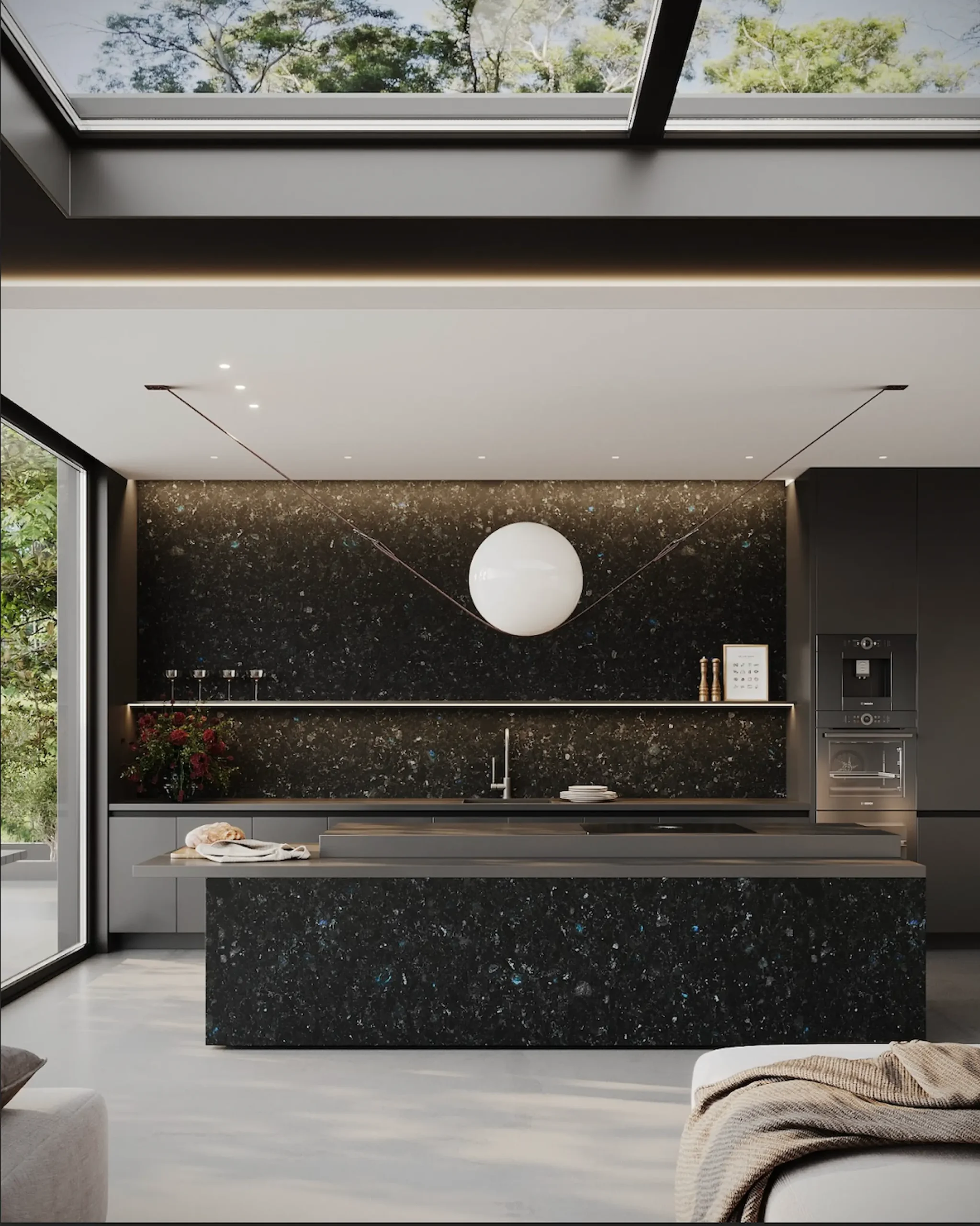
The interior is perceived not through contrast, but through atmosphere — an environment where light, surface depth, and monolithic composition work together as a unified architectural experience.
A Space Where Material Creates Rhythm
Today, architecture is less interested in impressing through complex forms or an abundance of textures. Proportions, light, and a sense of inner calmness created by the space itself have become far more important.
Natural stone integrates organically into this environment because of its inherent integrity. Golovinski Labradorite does not visually overload the interior. Instead, it adds depth to the composition and creates a sense of stability that decorative materials rarely achieve.
Across large surfaces, the stone appears monolithic and calm, creating clean architectural geometry without visual noise. The surface works softly and deeply, allowing light to interact delicately with the material’s structure.
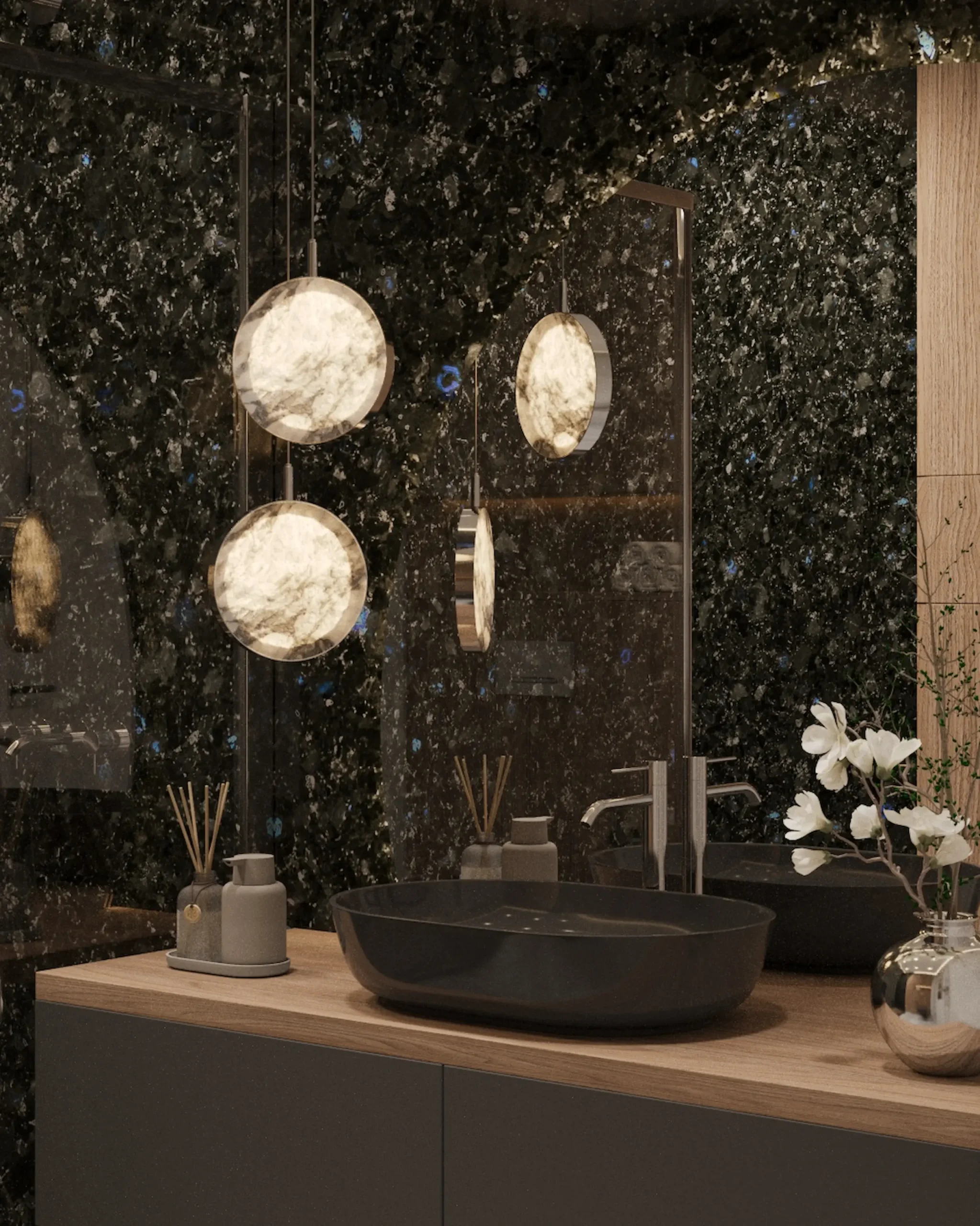
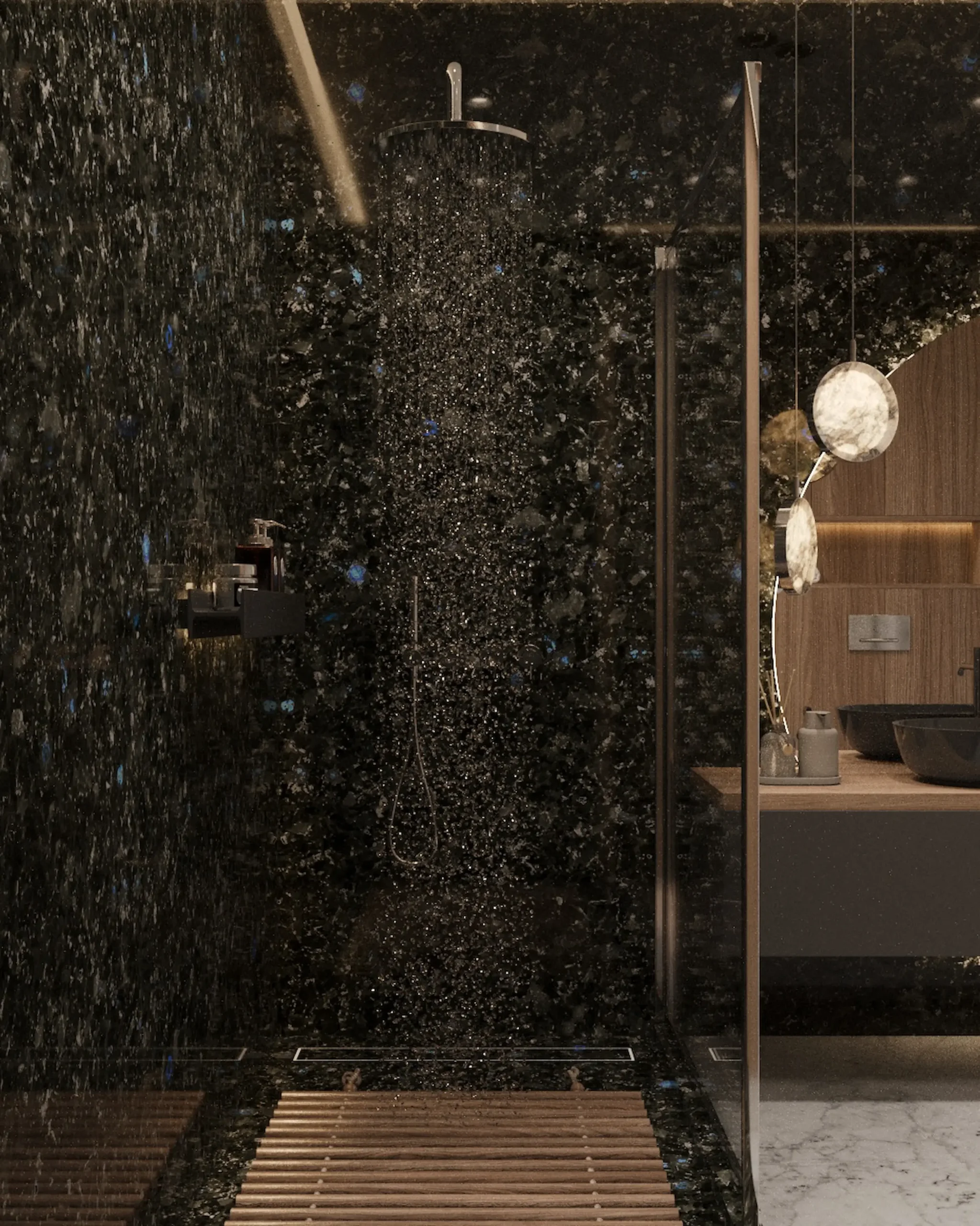
This becomes especially expressive in private residences, lounge spaces, wellness areas, gallery interiors, and bathroom architecture, where the atmosphere is built not around objects, but around the feeling of space itself.
These interiors do not attempt to capture attention instantly. They gradually immerse you in a sense of silence, scale, and inner depth.
Light That Reveals the Structure of the Stone
Golovinski Labradorite constantly changes together with light. This is why the stone works so naturally in contemporary architecture, where lighting has long become part of the spatial composition itself.
In daylight, the surface appears restrained and cohesive. Evening lighting reveals an entirely different depth — delicate blue iridescence, a complex play of reflections, and the natural layering of the stone’s structure.
The polished finish interacts with light far more deeply than most decorative or composite surfaces. Reflections never feel superficial. Light seems to move into the structure of the stone itself, emphasizing the material’s natural density and depth.
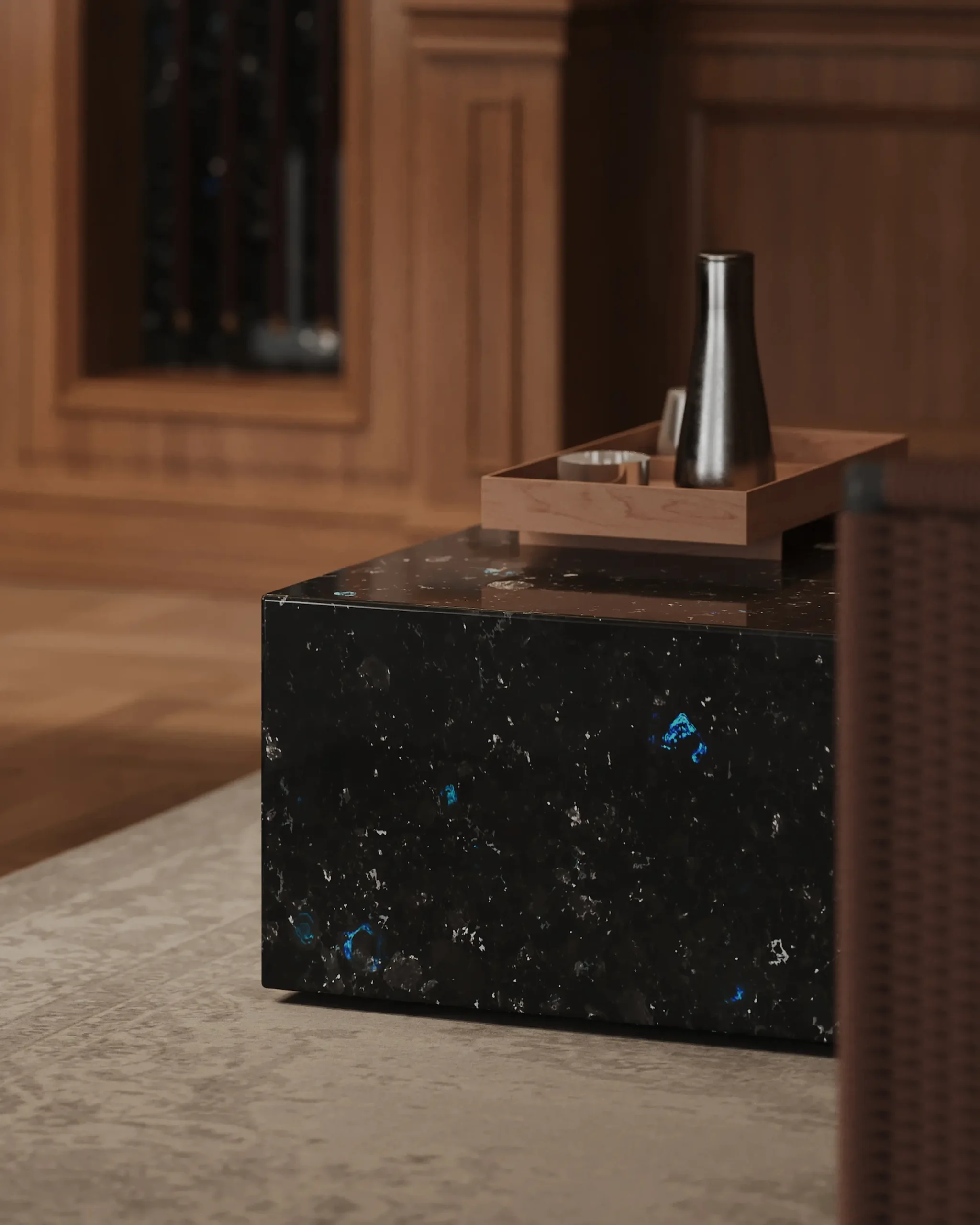
Labradorite combines especially well with warm contour lighting, natural wood, dark metal, brass, and architectural concrete. Within this environment, the stone feels calm, deep, and natural, without requiring excessive decoration.

Monumentality as the New Luxury
Contemporary architecture increasingly perceives luxury through spatial purity and the integrity of materials. Large monolithic surfaces create a sense of scale and inner calmness far more effectively than excessive decoration or complex detailing.
Large-format natural stone has become part of this new architectural language. A minimal number of seams allows interiors to feel more cohesive and architecturally clean.
Golovinski Labradorite works especially well in wall panels, kitchen islands, fireplace areas, elevator halls, and bathroom architecture, where the monolithic quality of the surface begins to define the character of the entire environment.
The graphite structure of the stone gives rhythm and depth to the composition without creating aggressive contrast. Interiors feel calmer, more spacious, and significantly more cohesive.
The polished surface adds depth to the architecture, while the natural structure of the material creates a sense of stability and inner strength.
A Material Felt Even Before Touch
Contemporary interiors increasingly work not only through visual perception. Spaces begin to interact through tactility, material density, and physical presence.
Natural stone possesses a natural mass and depth that can be felt even without direct contact. This materiality creates a sense of stability and inner architectural strength.
Golovinski Labradorite works in a restrained yet deeply expressive way. The stone does not require complex decorative solutions, because its natural structure already creates enough visual depth for interiors to feel complete and cohesive.
Even across large surfaces, the material remains calm and balanced, maintaining harmony between monumentality, light, and texture.
Architecture That Does Not Need Excess
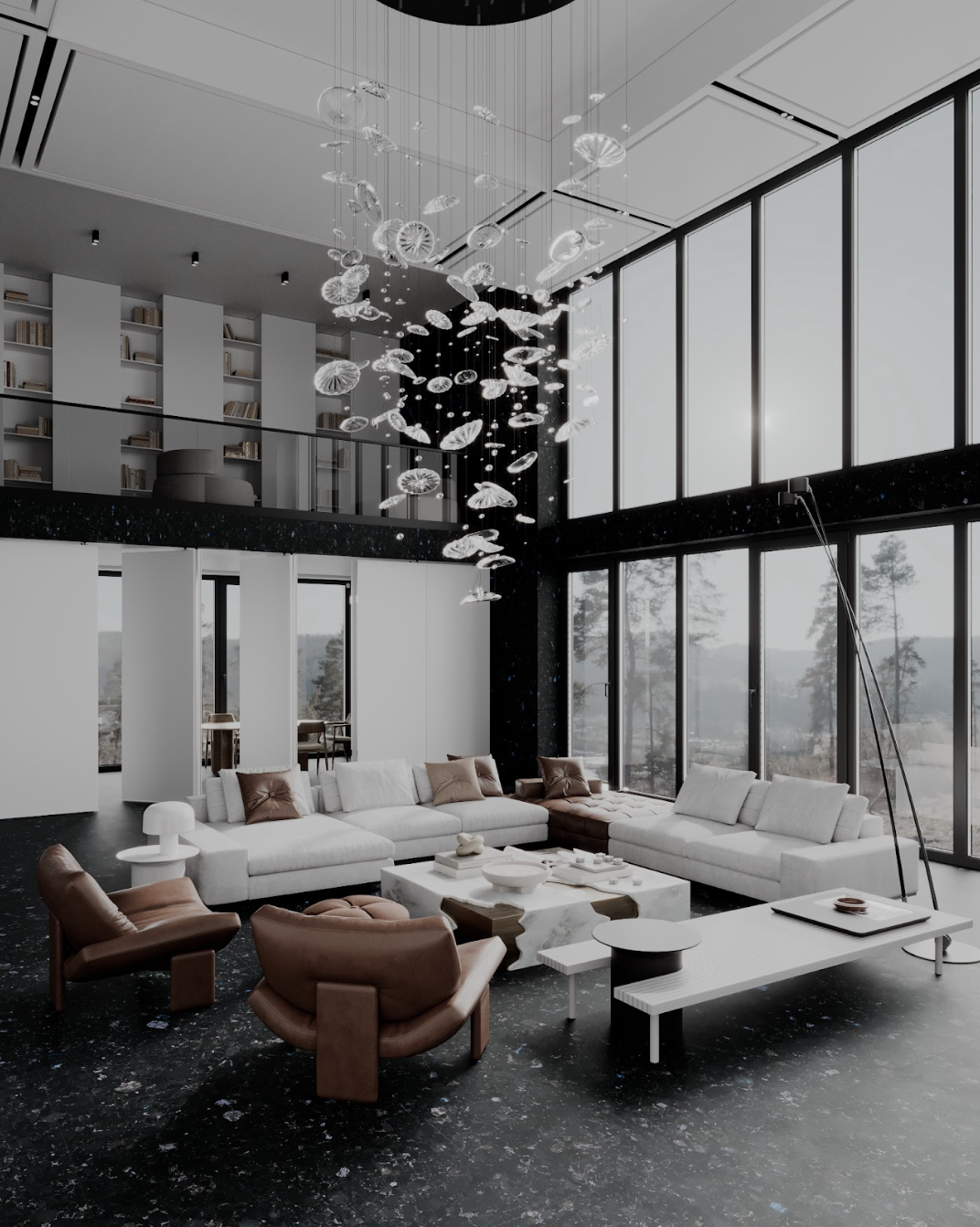
Today, architecture is increasingly moving away from demonstrative luxury. Spaces become cleaner, materials more honest, and atmosphere more important than decoration.
The focus shifts toward light, scale, proportions, texture, and the natural interaction between materials.
Golovinski Labradorite works within these interiors as part of the architecture itself — a material that shapes rhythm, holds light, and creates depth without excessive decorative expression.
In these environments, architecture of silence is created not through decoration, but through light, scale, and the natural strength of the material.
It emerges through light, scale, and the natural strength of the material.
Q&A
Why does natural stone create a unique atmosphere in interiors?
Natural stone has a deep structure, density, and complex interaction with light. Large monolithic surfaces create a sense of calmness, scale, and cohesion without visual noise.
How is labradorite different from decorative or composite materials?
Golovinski Labradorite has a natural crystalline structure and layered surface depth that is difficult to reproduce with artificial materials. The polished finish interacts delicately with light, creating natural reflections and depth.
In which spaces does labradorite work best?
The stone reveals itself especially well in private residences, lounge interiors, wellness spaces, bathrooms, fireplace areas, and contemporary gallery-inspired environments.
What lighting works best for labradorite?
Labradorite works best with warm contour or side lighting that emphasizes the depth of the structure, natural iridescence, and layered character of the surface.