You might be interesting:

How Technology Reveals the Natural Depth of Golovinski Labradorite
10 min | 04.06.2026How Technology Reveals the Natural Depth of Golovinski Labradorite
When modern processing does not change the nature of stone, but helps reveal its true structure, light, and character


Natural Depth That Requires Precision
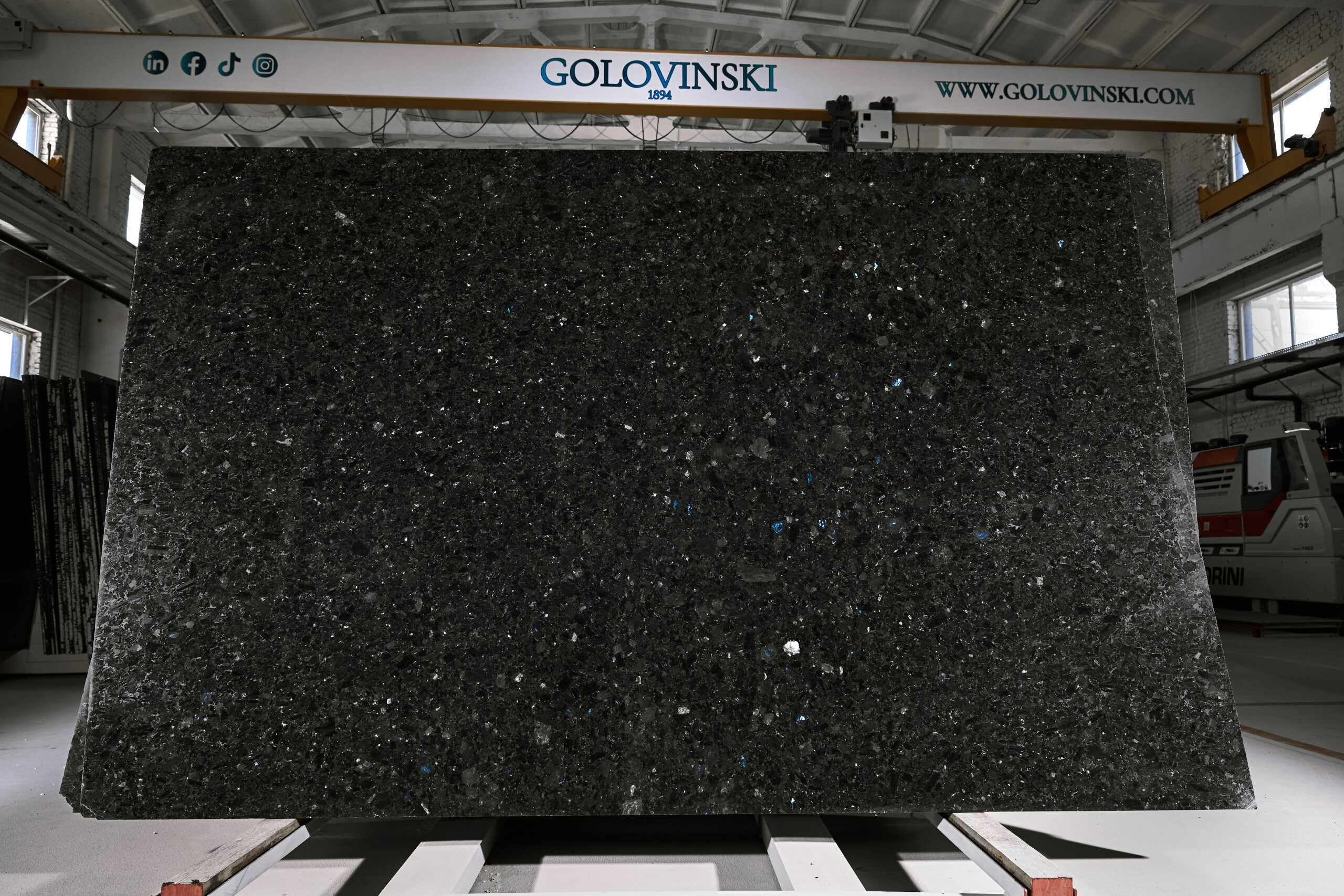
Golovinski Labradorite has its own strength even before any processing. Natural stone already contains a deep graphite base, dense crystalline structure, mineral complexity, and delicate iridescence that does not appear on the surface, but comes from the very structure of the material.
But for this natural depth to become visible in architecture, the stone must go through a path of precise production revealing. Technology does not create beauty artificially here. It helps open what already exists inside the material: structure, color, light transitions, surface depth, and the character of each slab.
This is the difference between a simply quarried stone and an architectural material. Nature forms the foundation. Production helps this foundation speak clearly, cohesively, and convincingly in space.
For Golovinski Labradorite, technological precision is important not as a separate demonstration of process, but as a way to preserve the natural character of the stone and prepare it to work in an interior, on a facade, or across a large architectural surface.Technology Does Not Create the Stone — It Reveals It
In natural stone, beauty is not applied on top. It cannot be printed, painted, or repeated in series. It already exists inside the material — in its mineral structure, density, color transitions, and natural optical properties.
Stone processing works with this natural foundation delicately. Its purpose is not to change the stone beyond recognition, but to make its structure available for architecture. Through precise surface revealing, the material begins to show depth that may remain hidden in its untreated state.
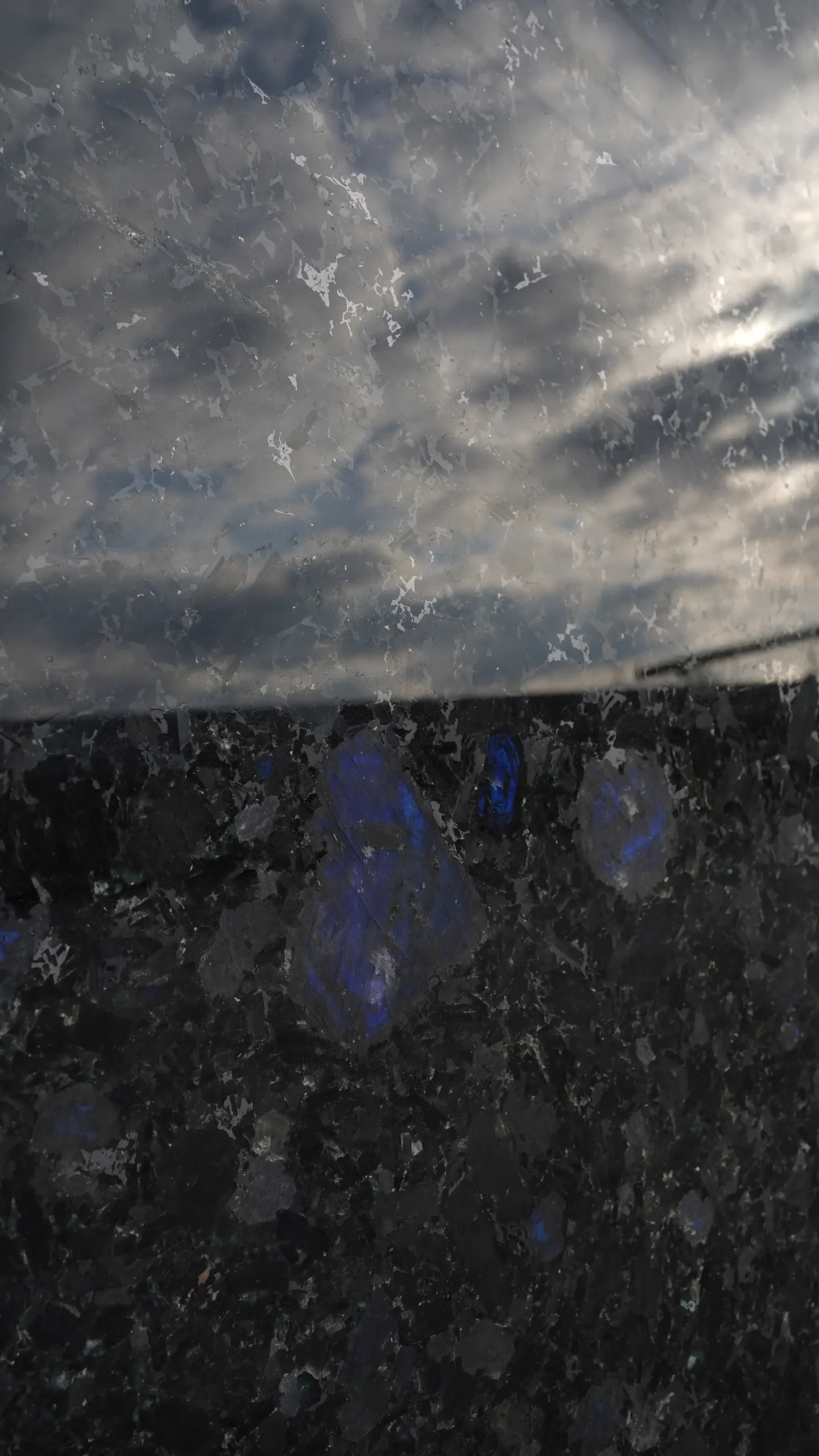
In the case of labradorite, this is especially important. Its visual strength is not based on an active pattern or decorative veins. It is born in the deep graphite mass, crystalline structure, and subtle iridescence. When the surface is properly prepared, the stone does not look flat or closed. It begins to work with light.
That is why high-quality processing for Golovinski Labradorite is not about excessive effect. It is about precision that allows the material to remain itself.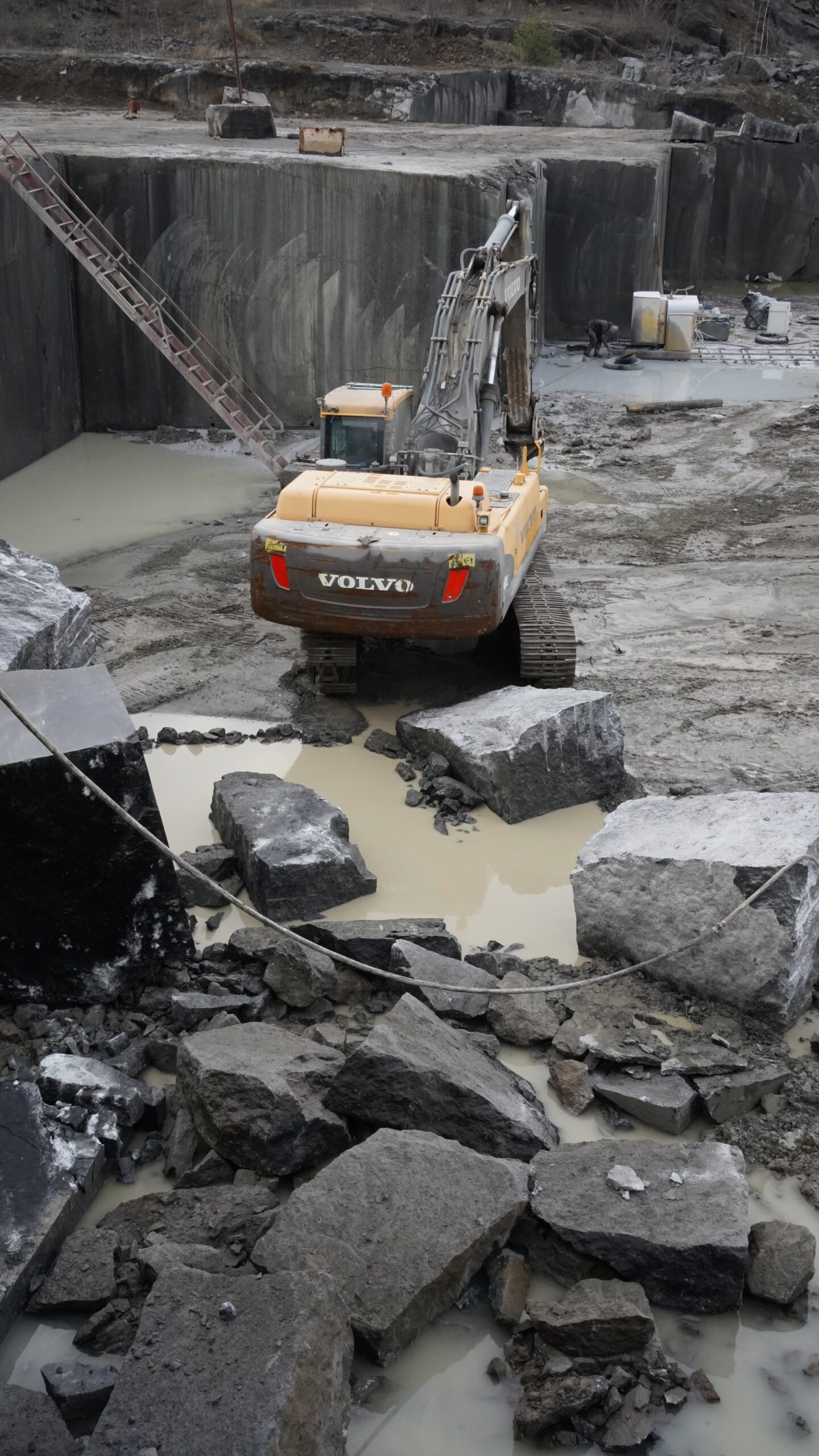
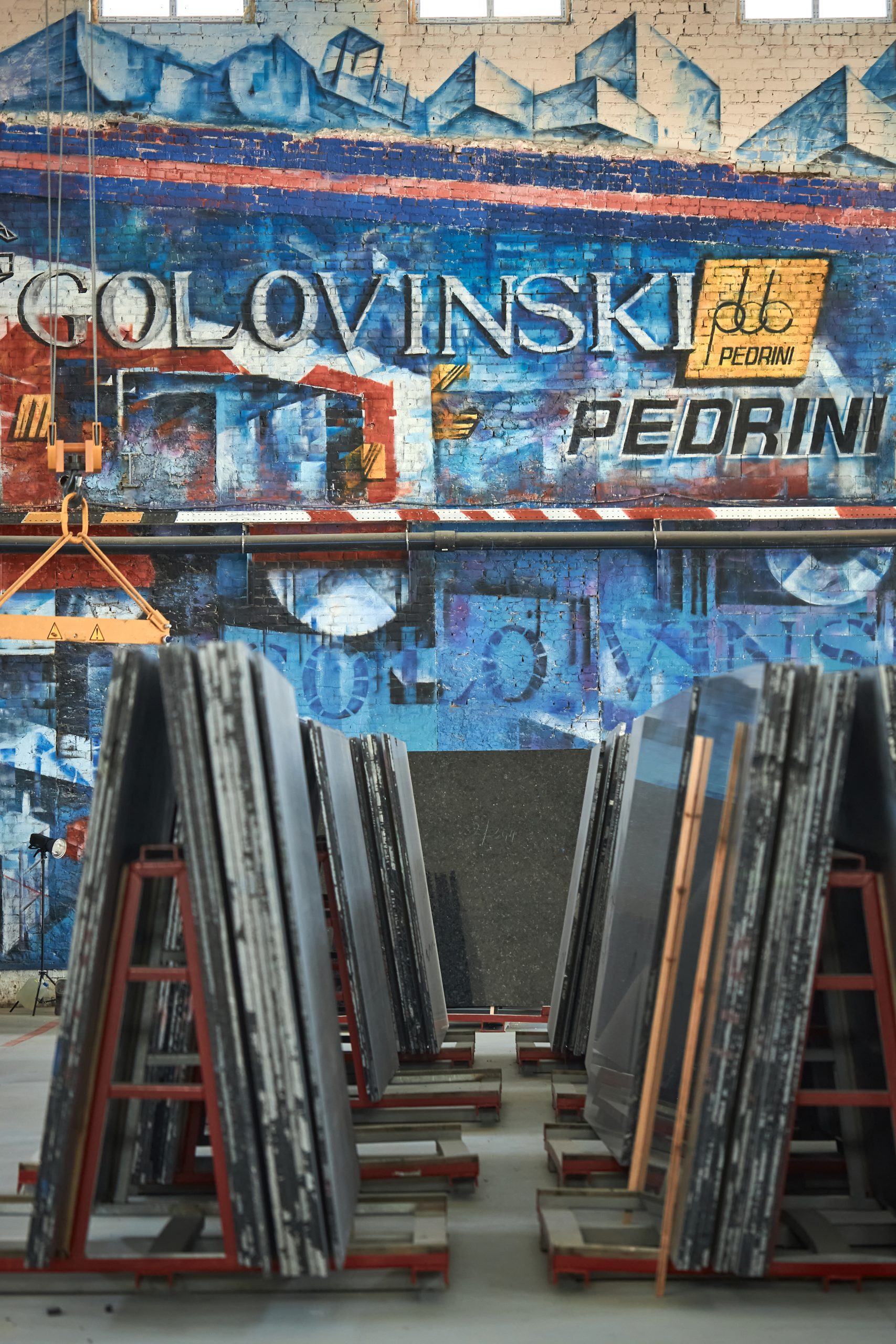
From Block to Slab: A Change in the Scale of Perception
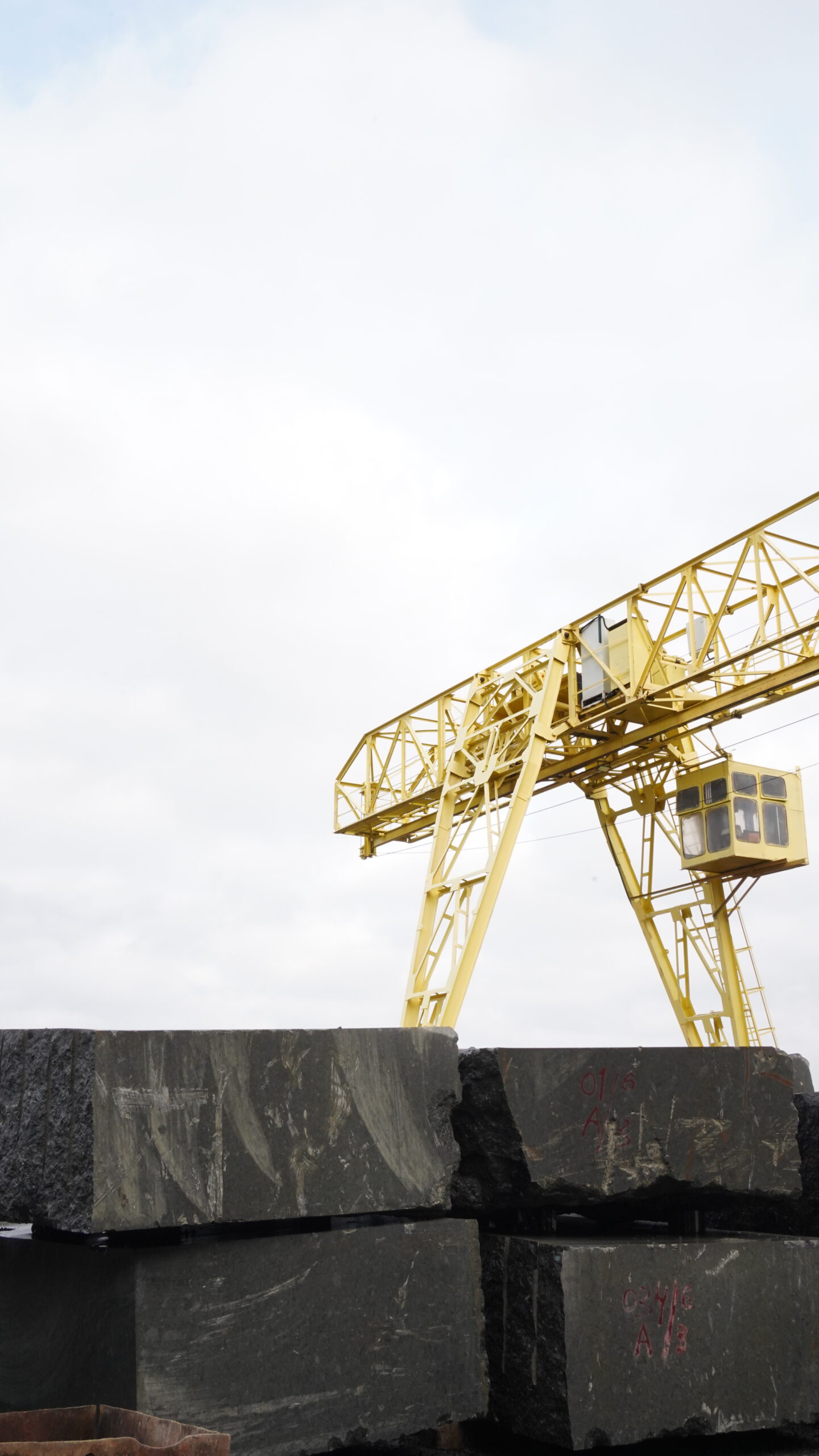
While the stone exists as a natural block, its architectural potential is hidden inside. It already contains structure, density, depth, and the future character of the surface, but they are not yet fully readable.
When the block becomes a slab, the scale of perception changes. The stone opens its plane. What was once mass becomes surface. What was once internal structure begins to work visually: through the graphite base, crystalline transitions, natural rhythm, and delicate light accents.
At this stage, it is especially important to preserve the character of the stone. A slab should show not a random fragment, but a cohesive natural language of the material. In large format, Golovinski Labradorite reveals itself not as a black plane, but as a deep natural stone with an internal structure.
That is why a slab is not simply the result of cutting. It is the moment when the stone begins to move from its natural state into architecture.The Final Surface as the Language of the Material
The surface of stone determines how we perceive it in architecture. The same Golovinski Labradorite can appear deeper, softer, calmer, more tactile, or more textured depending on the finish.
POLISHED reveals the stone through mirror-like gloss, the depth of the graphite base, and maximum labradorescence. In this surface, light works most actively: it enhances the crystalline structure, opens the natural iridescence, and makes the stone feel more saturated and layered.
LEATHERED has a different character. It is a tactile matte surface with a natural grain-like feel. It does not remove the expressiveness of the stone, but makes it calmer, more physically perceptible, and closer to the natural texture of the material. This finish works well where not only depth of color matters, but also contact with the surface.
SILK and BRUSHED reveal a more restrained, softer side of the stone. SILK creates an ultra-smooth surface with a gentle sheen, while BRUSHED gives a velvety texture with a subtle linear movement. In these finishes, labradorite feels less mirror-like, but preserves its depth, density, and delicate play of light.
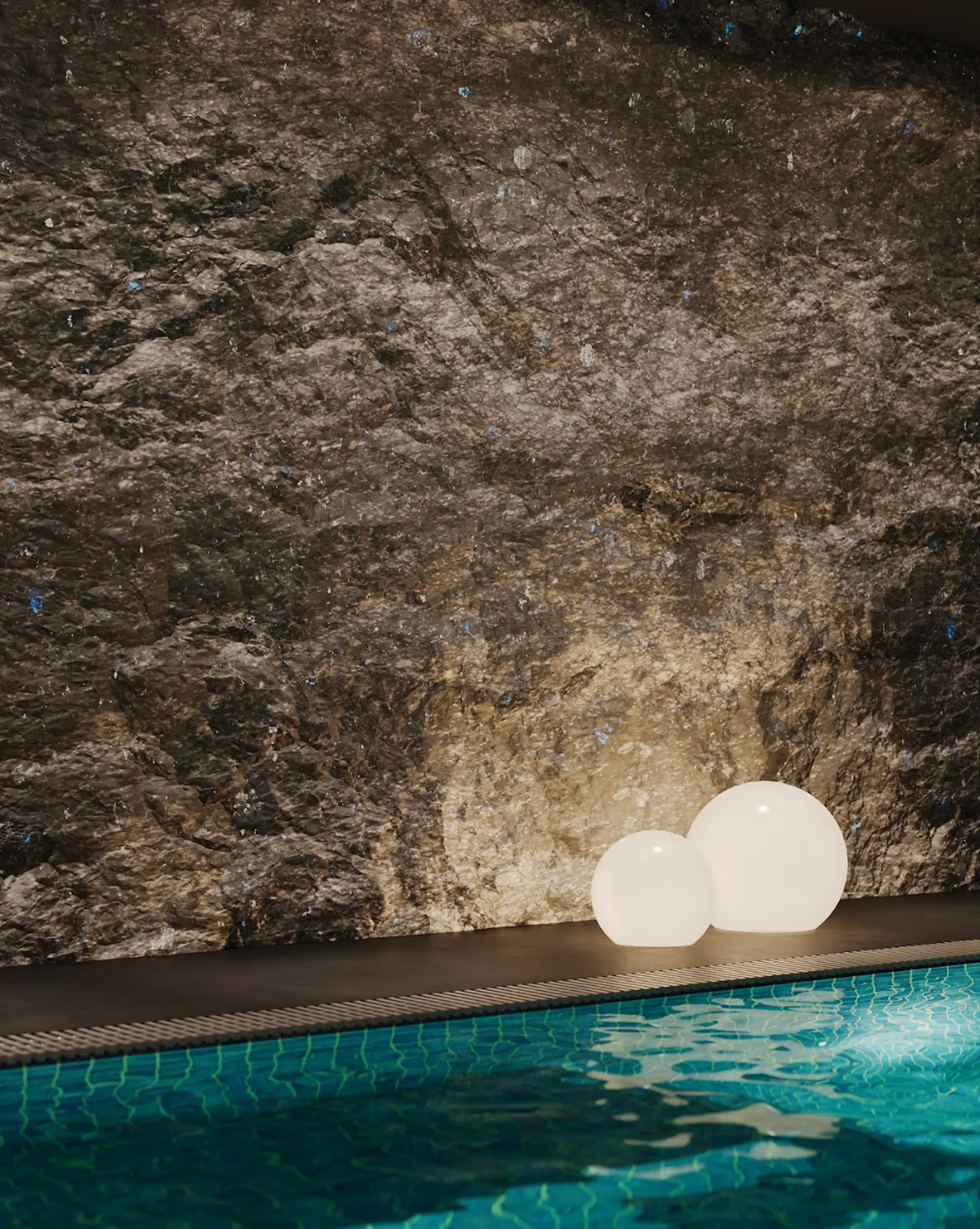
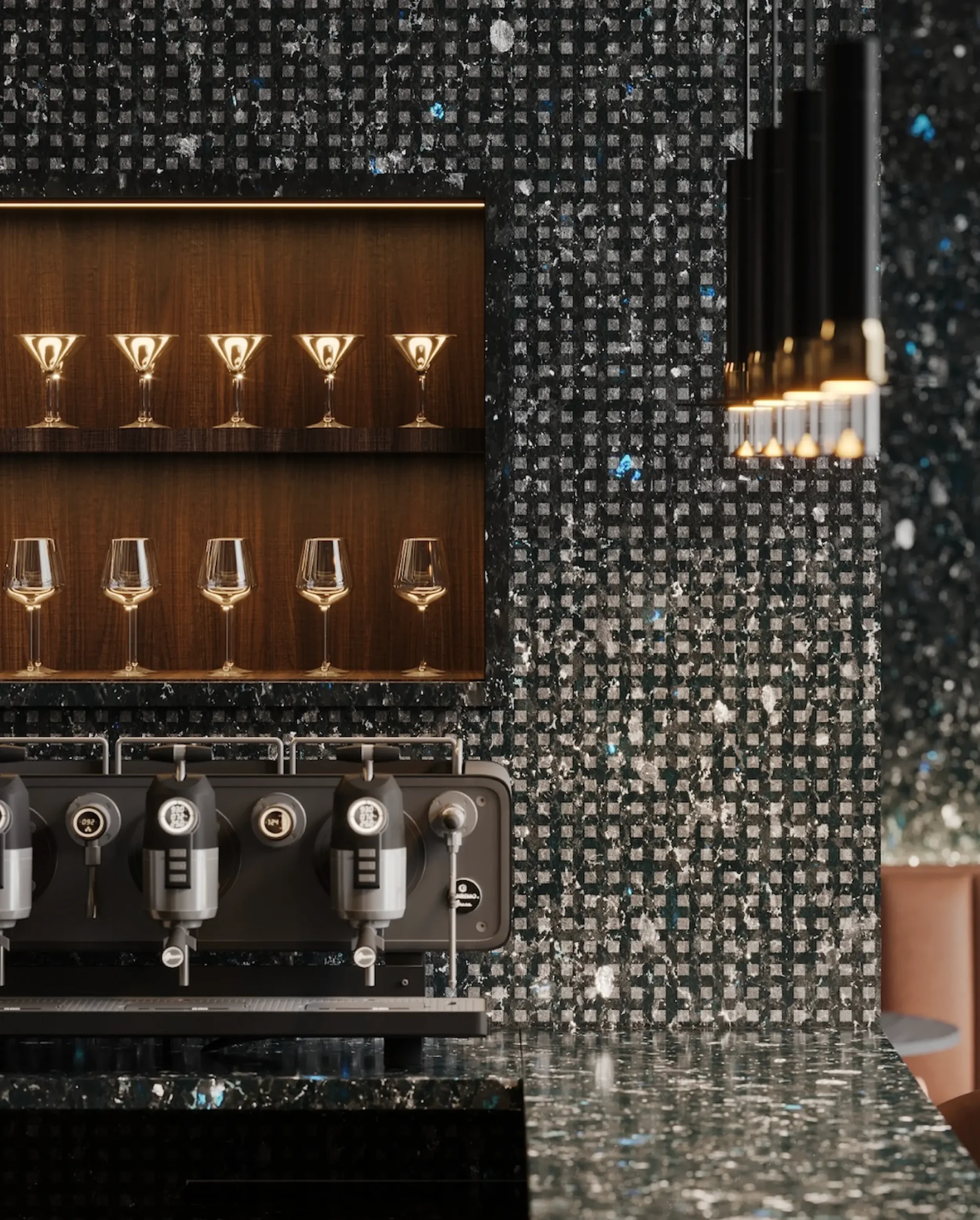
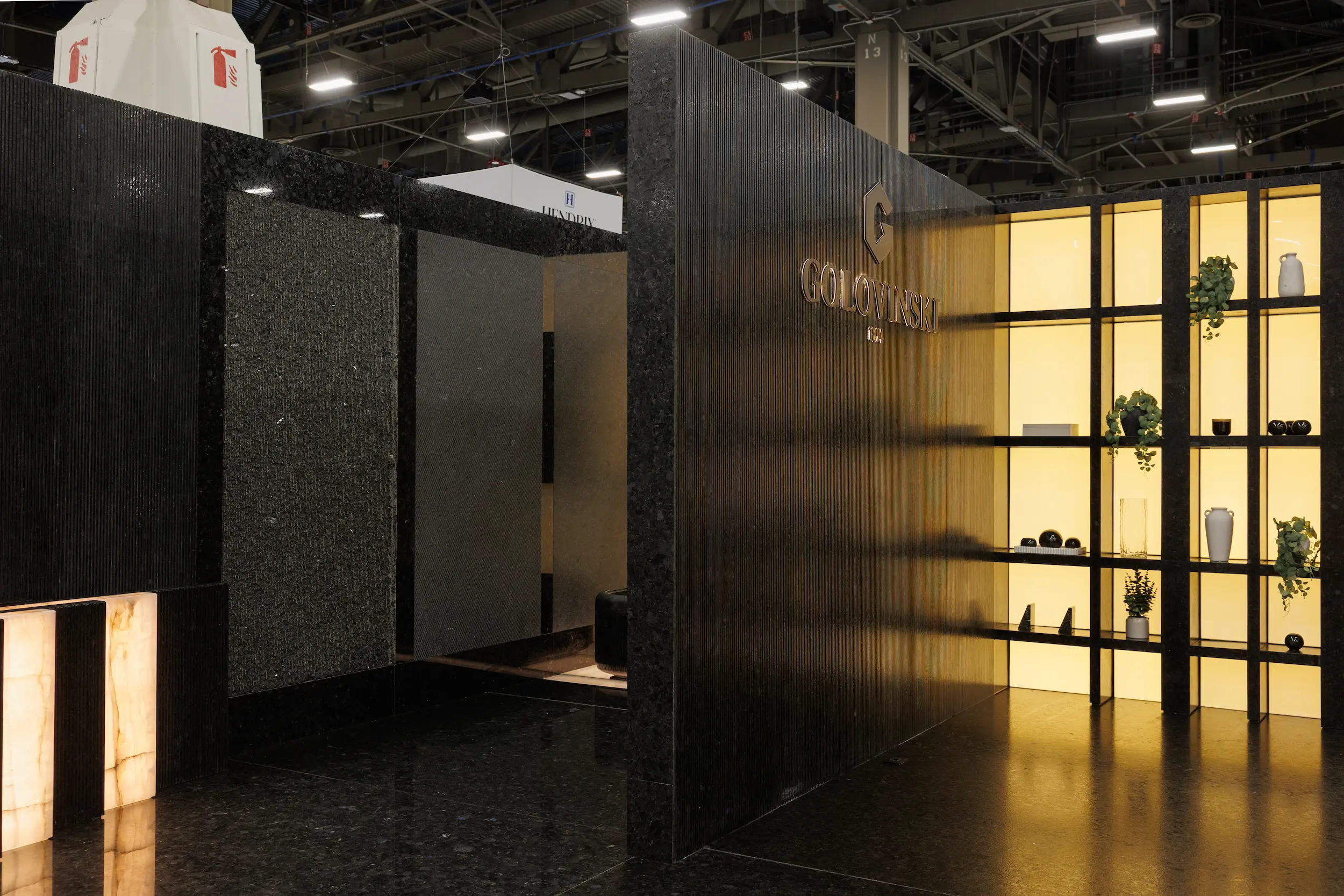
Textured finishes have a separate architectural role: DIAMANTE, PLUVIUM, CORRUGATO, CUBORUM, LANAE, LUNA, STRIATUS, XYLON. They work not only through color and depth, but through shadow, rhythm, touch, and surface graphics. DIAMANTE forms a raised diamond-like structure, PLUVIUM and CORRUGATO work with rhythmic grooves, CUBORUM creates a geometric micro-grid, LUNA gives a softly cratered surface, STRIATUS creates a parallel linear relief, LANAE adds a delicate linear movement, and XYLON brings a tactile linear texture with a warmer feeling.
This is why a finish is not just a technical option of processing. It is a way to define how Golovinski Labradorite will speak in architecture: deeply and richly, softly and restrainedly, or texturally and tactilely.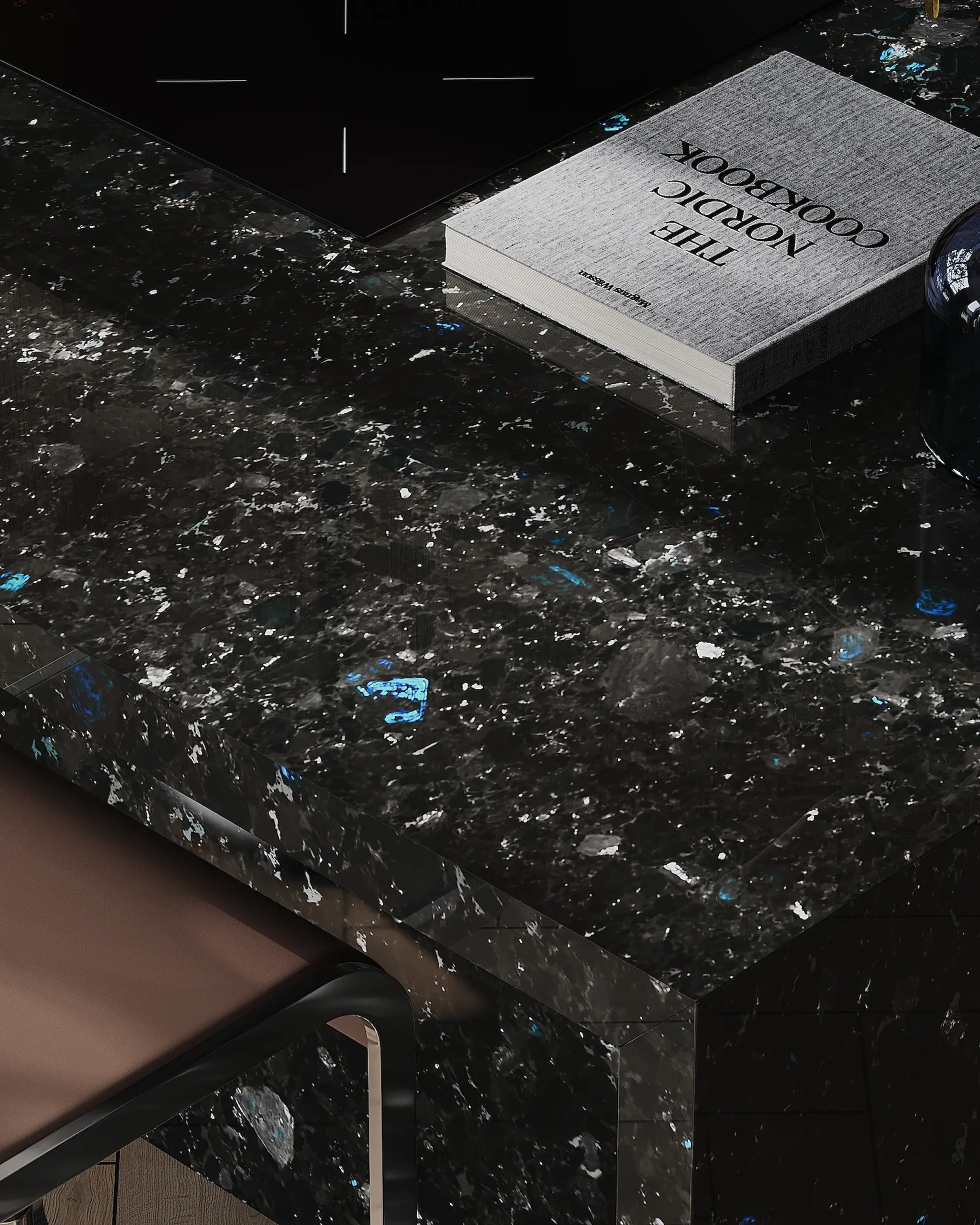
Light as a Test of Surface Quality
Natural stone reveals itself best in interaction with light. Light shows whether the surface has depth, whether the structure of the material is readable, and whether the stone looks flat or alive.
For Golovinski Labradorite, this is especially important. Its natural iridescence does not lie on the surface as a decorative effect. It appears through the crystalline structure of the stone, so it depends on the viewing angle, lighting, and the character of the final surface.
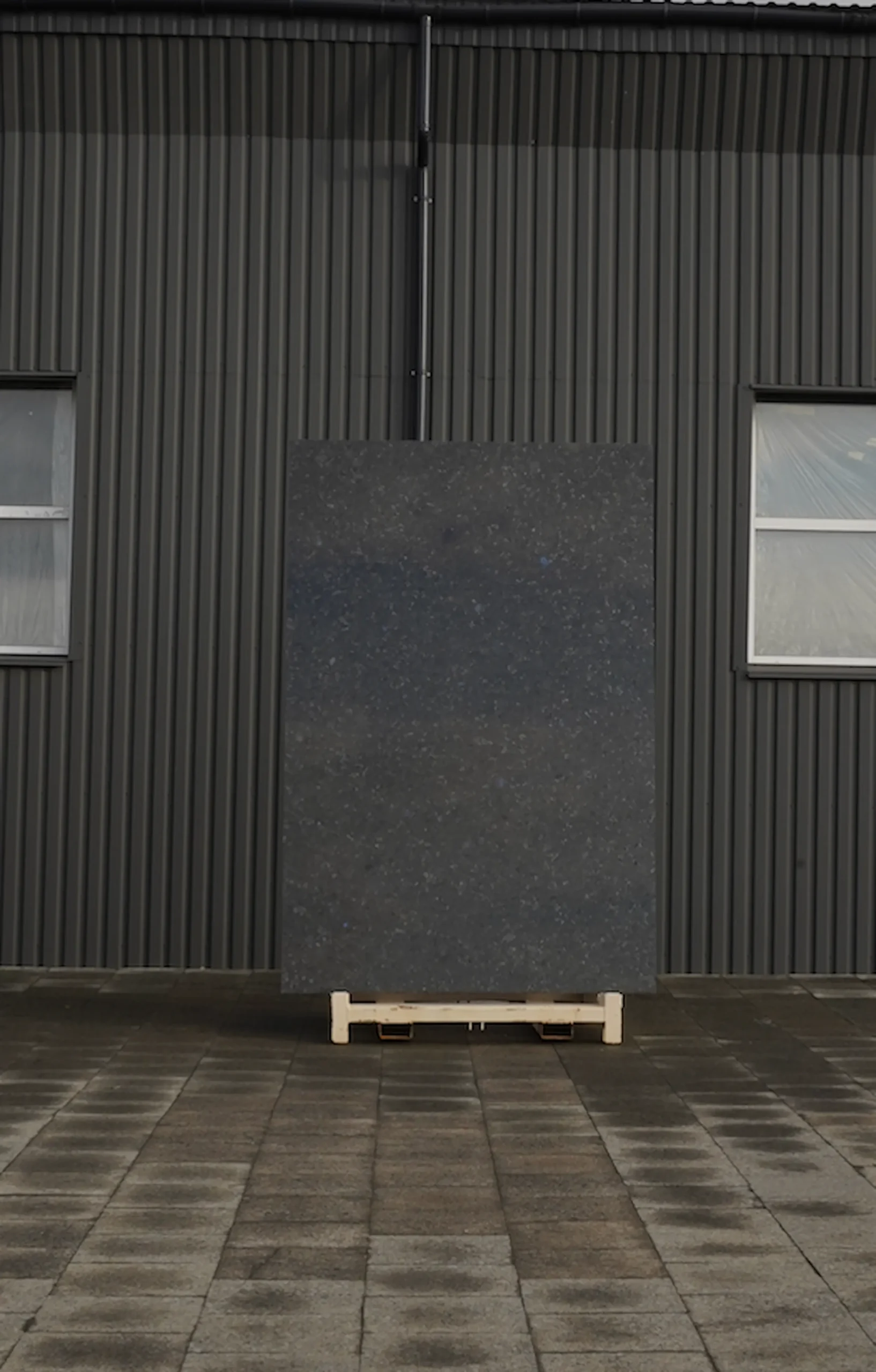
In daylight, labradorite can look restrained, graphite-toned, and almost quiet. In warm architectural lighting, its surface becomes deeper, softer, and sometimes more shimmering. Side light can emphasize texture, relief, or subtle surface transitions.
Processing technology should help this interaction become clean. When the surface is properly prepared, light does not simply slide across the stone. It opens its structure, strengthens its depth, and makes the material feel alive in space.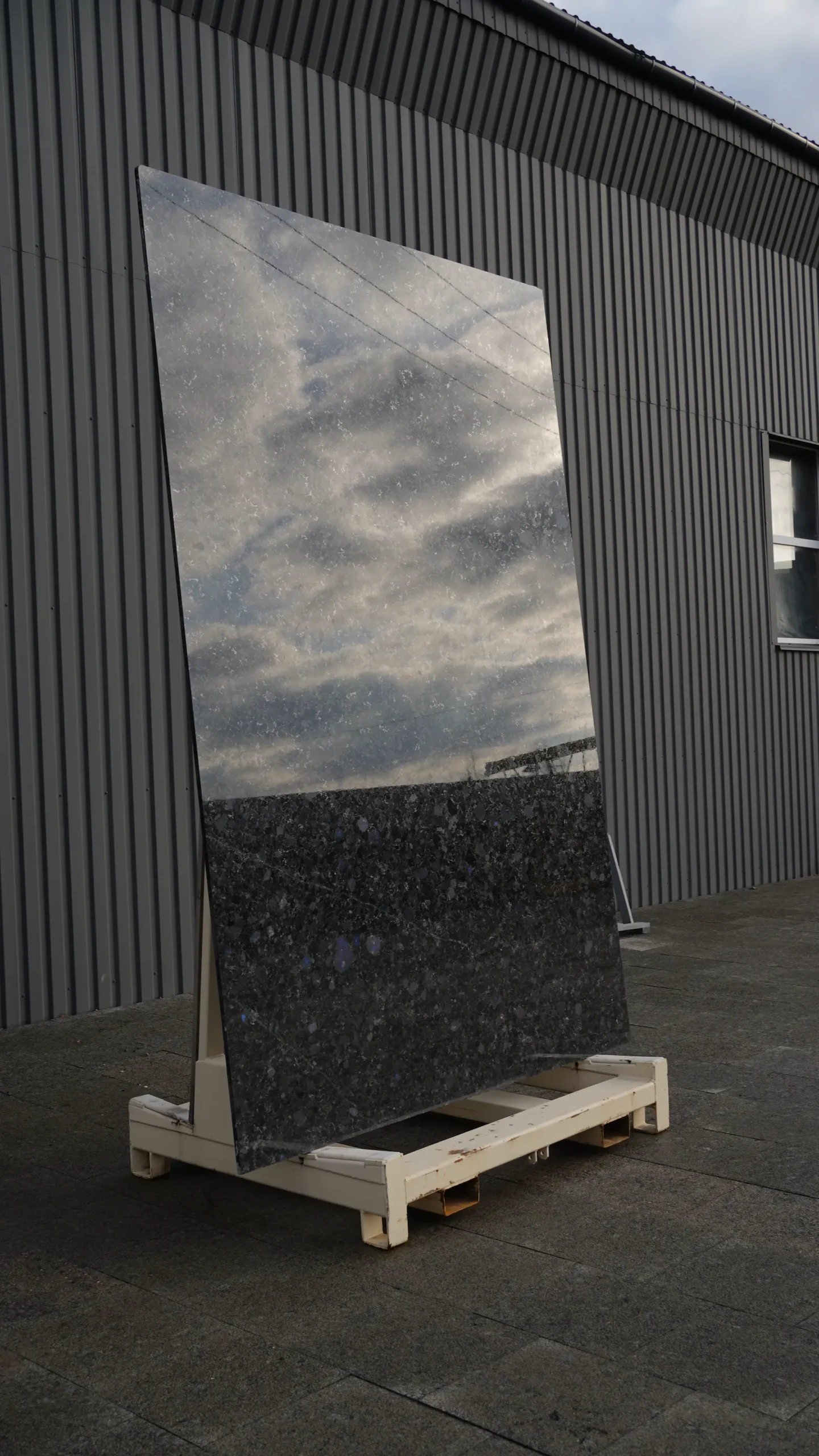
Precision That Enhances Natural Character
When working with natural stone, it is important to combine two things: the natural complexity of the material and the precision of the architectural result. The stone must remain alive in its structure, while also being prepared to work confidently across large surfaces, details, interiors, or facades.
Golovinski Labradorite is valued precisely for this combination. Its natural graphite base, crystalline structure, and delicate iridescence are not lost during processing. On the contrary, precise surface preparation helps these qualities appear cleaner, calmer, and more architectural.
Here, naturalness does not mean randomness, and precision does not mean artificiality. A well-prepared natural stone preserves its own character, but does not look raw or uncontrolled. It has a cohesive surface, a clear format, careful processing, and at the same time the natural depth that cannot be recreated by an artificial material.
This is the balance in which Golovinski Labradorite reveals itself as an architectural material: not “perfectly sterile,” but precise; not artificially decorative, but composed; not random in character, but natural and professionally prepared for space.Production Precision and Architectural Trust
For an architect, designer, or client, it is important to see not only beauty in stone, but also predictability of result. A slab should not only be impressive on its own. It has to work in a real space: across a large surface, in combination with other materials, in specific light, and within a defined architectural scenario.
This is why production precision creates trust in the material. It allows the future surface to be planned more clearly, the character of the finish to be understood, and the way the stone will behave in an interior or on a facade to be evaluated.
In Golovinski Labradorite, this trust is especially important because the material has a strong natural character. It does not need to be “controlled into submission,” but properly prepared. When the natural depth of the stone is combined with precise processing, the slab becomes not just a beautiful plate, but a complete architectural surface.
In this way, technology does not work separately from aesthetics. It becomes part of how stone is perceived in space.
When Technology Serves the Nature of Stone
In natural stone, the most valuable qualities are its origin, structure, and uniqueness. But it is technology that allows these qualities to move into architecture: to become a wall, facade, floor, fireplace plane, kitchen island, or interior detail.
Golovinski Labradorite does not need artificial enhancement. Its strength already exists inside the material. The role of processing is to reveal this strength, preserve it, and allow it to work in space.
When this happens, the stone stops being perceived simply as a dark or polished surface. Light reveals its depth, the plane shows its natural structure, and the material itself preserves its character even in a very restrained architectural environment.
That is why technology for Golovinski Labradorite is not about replacing nature. It is about revealing it with precision.