
You might be interesting:

Labradorite in Private Architecture: How One Material Connects Interior and Facade
10 min | 01.06.2026Labradorite in Private Architecture: How One Material Connects Interior and Facade
When natural stone forms not a separate surface, but a cohesive material language of the home


A Unified Material Language of Private Architecture
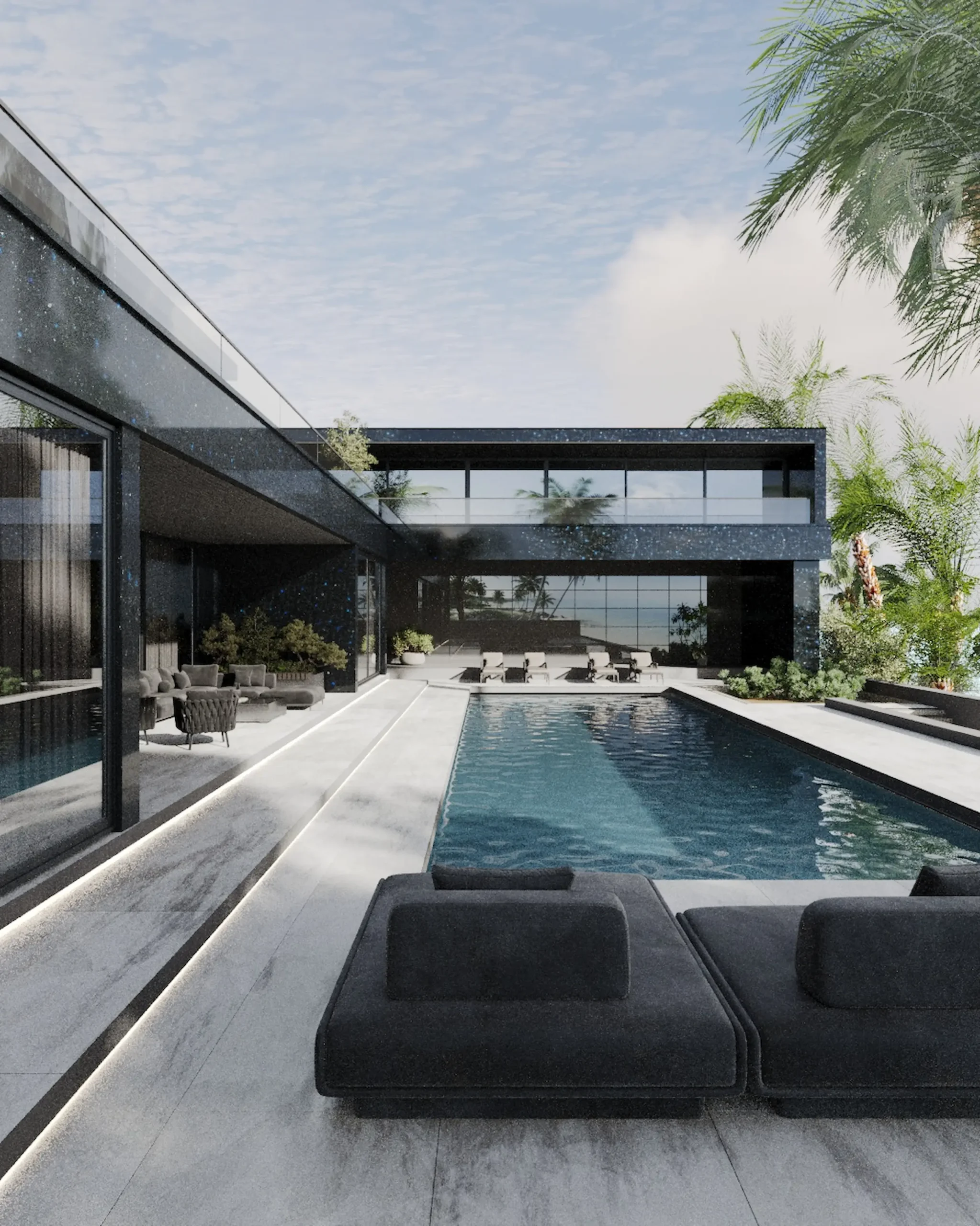
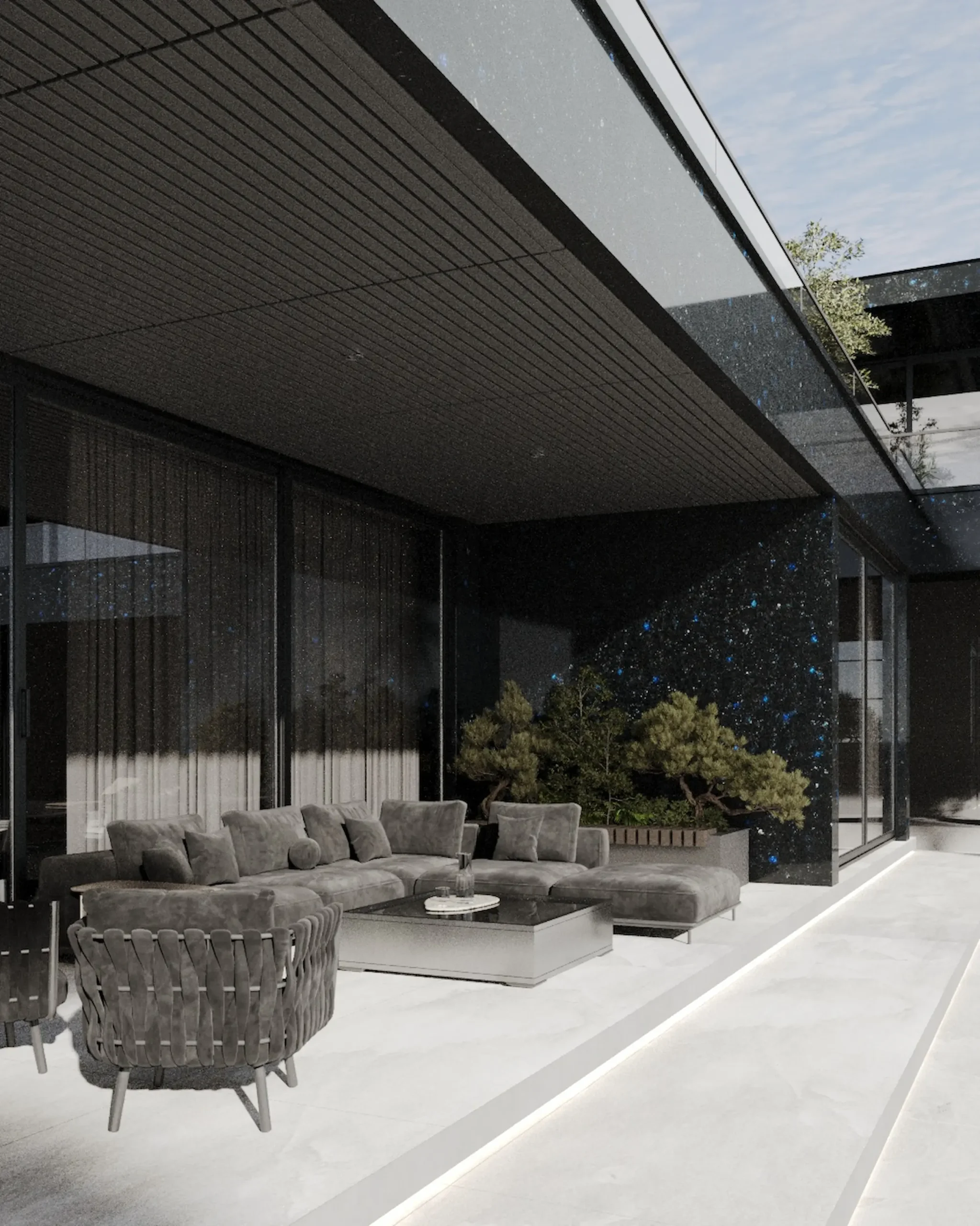
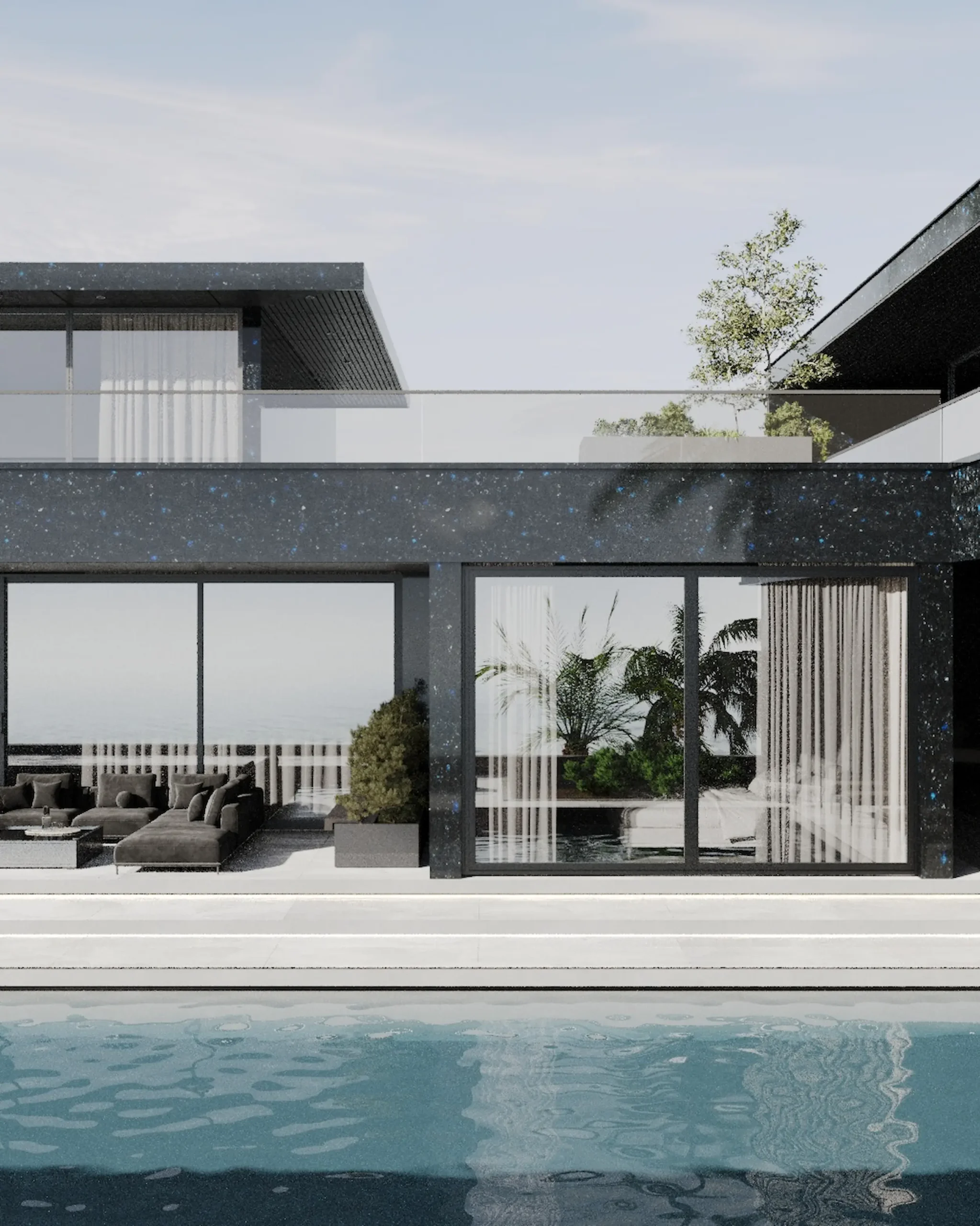
Labradorite in private architecture works best when the stone is perceived not as a separate decorative accent, but as a material that creates a shared language between the facade, the interior, and the overall feeling of the home.
Private architecture is perceived not only through the form of the house, the amount of glazing, or the spatial layout. Its character is often born in the materials that move through the entire project — from facade to interior, from the entrance area to private zones, from the first impression to the everyday feeling of home.
When one material works both outside and inside, the architecture begins to feel more cohesive. The space does not break into separate decorative decisions. It gains a shared material foundation that connects facade, interior, light, proportions, and atmosphere.
Labradorite works especially well in private architecture within this logic. Its deep graphite base, natural crystalline structure, and delicate iridescence allow the stone to be used not as a separate accent, but as a material that shapes the character of the house as a whole.
In this context, Golovinski Labradorite is perceived as a natural black stone with a strong architectural presence. It can connect exterior planes with interior spaces, creating a feeling of calm monumentality, depth, and material continuity.
Facade and Interior as a Continuation of One Another
In many private houses, the facade and interior exist as two separate worlds. From the outside, the architecture may look restrained and monumental, while inside it may be built around a completely different material logic. But when a shared material appears between them, the house begins to feel like one architectural story.
Natural stone works especially well in this transition. It has enough depth, weight, and natural strength to hold the facade. At the same time, in the interior, it can appear much softer — through light, scale, surface finish, and combination with wood, glass, metal, or textile.
Labradorite makes it possible to create this connection without excessive decoration. On the facade, it adds depth, restraint, and a sense of stability to the house. Inside the space, the same stone reveals itself more subtly: through light transitions, natural iridescence, surface texture, and closer human contact with the material.
In this way, the facade does not remain only an outer shell, and the interior does not feel separated from the architecture of the house. One material forms a shared rhythm between the exterior and interior space.
The Entrance Area as the First Point of Material Impression
In private architecture, the entrance area has special importance. It sets the tone for the house before a person even enters: scale, material quality, and the character of the space are already felt from the outside.
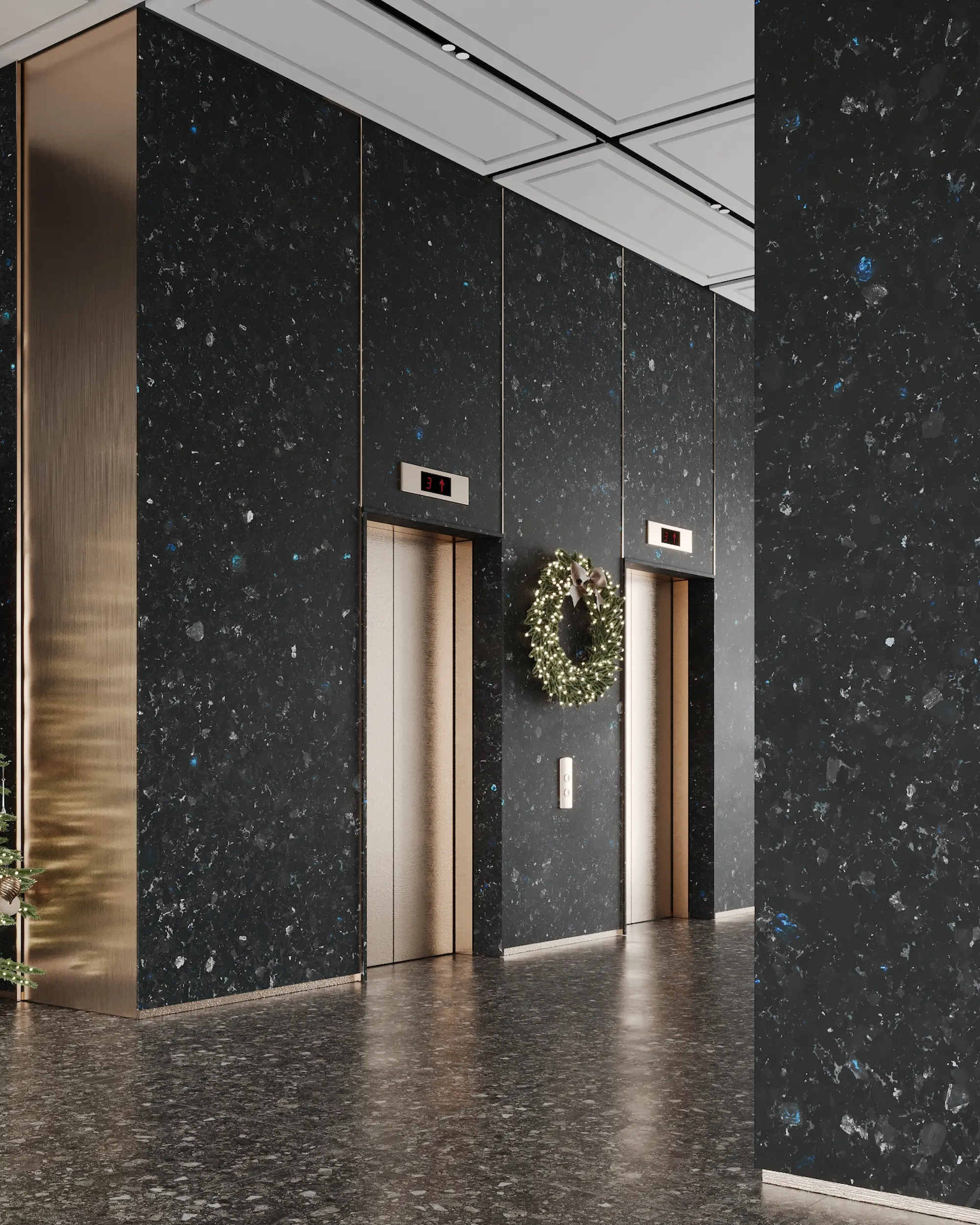
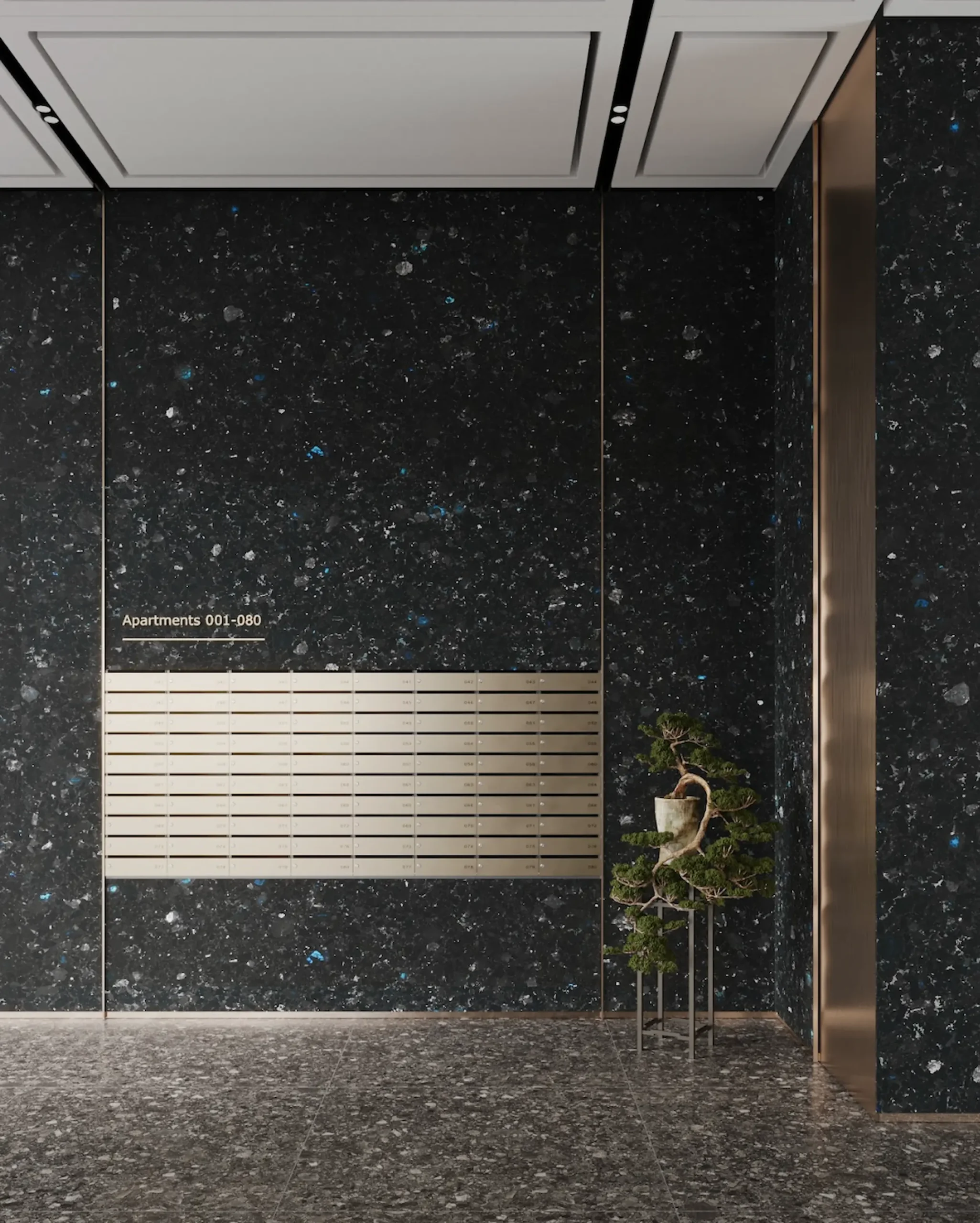
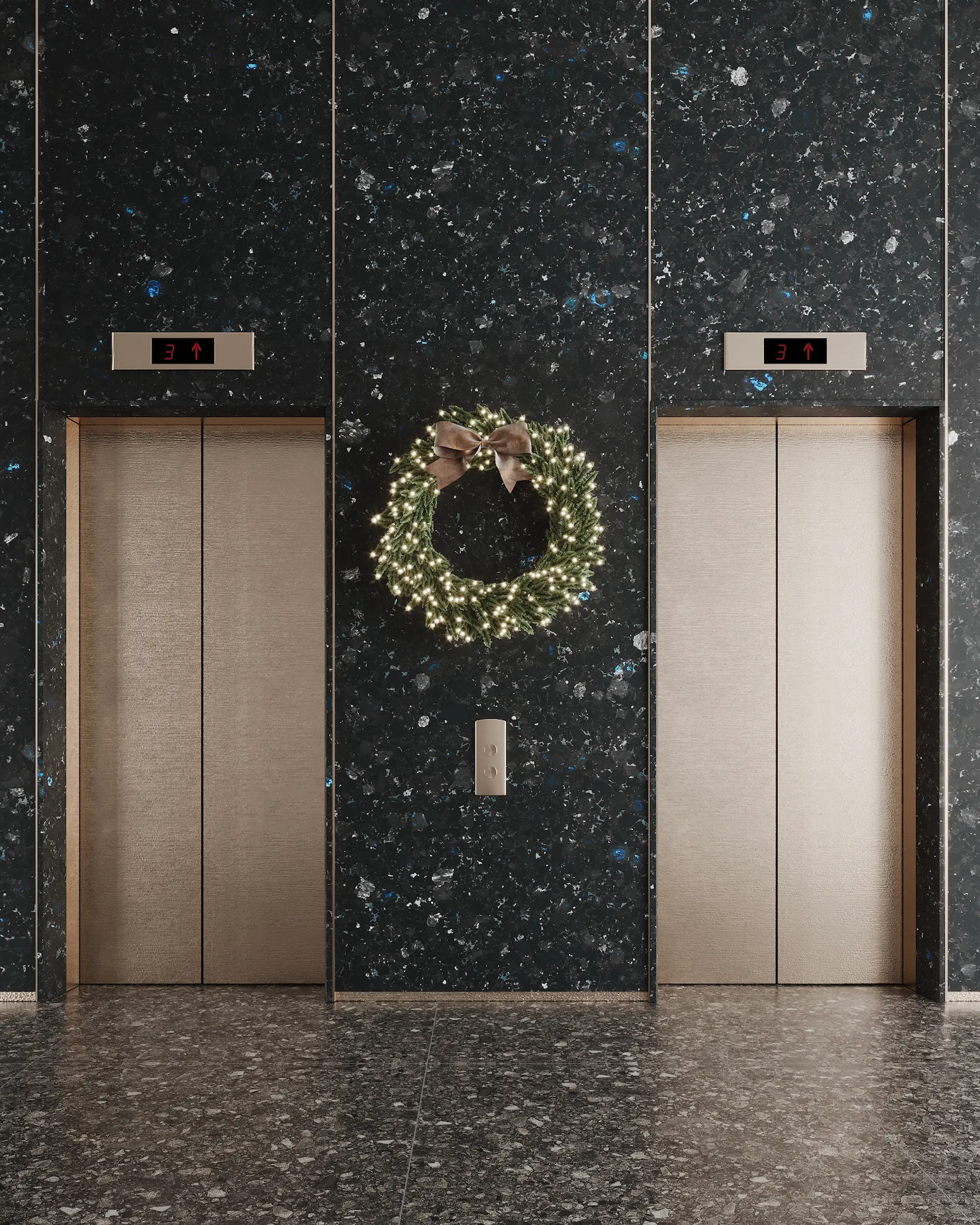
Labradorite in the entrance area works not through a loud decorative effect, but through depth and material confidence. A dark graphite surface can feel restrained, yet highly expressive. It creates a sense of privacy, stability, and status without unnecessary demonstration.
The solution becomes especially strong when the stone from the entrance area continues into the interior: into the hall, wall panels, staircase area, fireplace zone, or a large surface in the living room. Then the first impression does not stop at the threshold. It moves inside the house and continues to unfold in a different light, scale, and atmosphere.
In such a scenario, Golovinski Labradorite works as a material of transition — between exterior architecture and interior space, between the facade and life inside the home.
An Interior Where Stone Does Not Look Like a Separate Accent
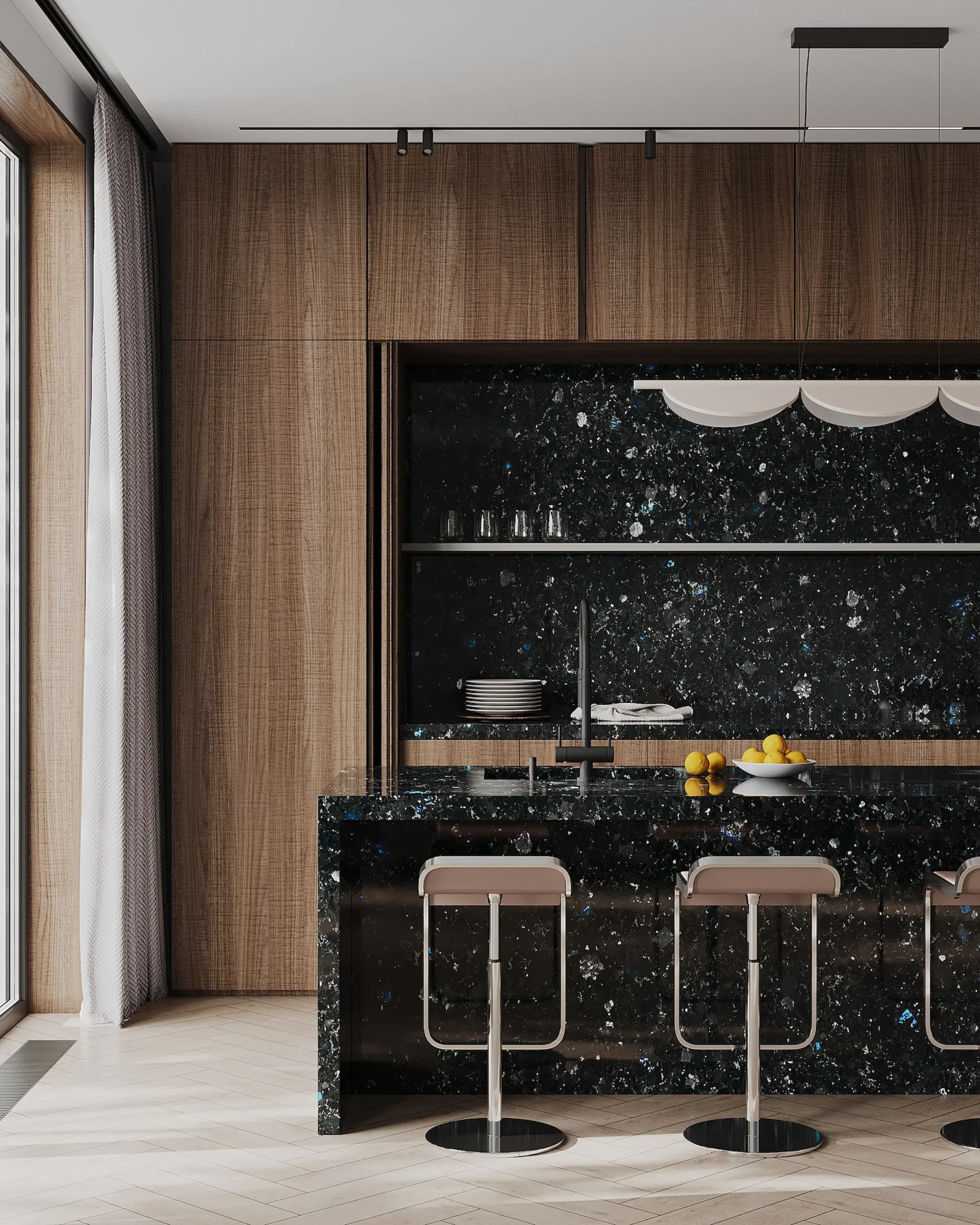
When natural stone is used only as a decorative fragment, it is often read separately from the architecture. It may be a beautiful wall, fireplace area, or kitchen island, but the material remains a local accent.
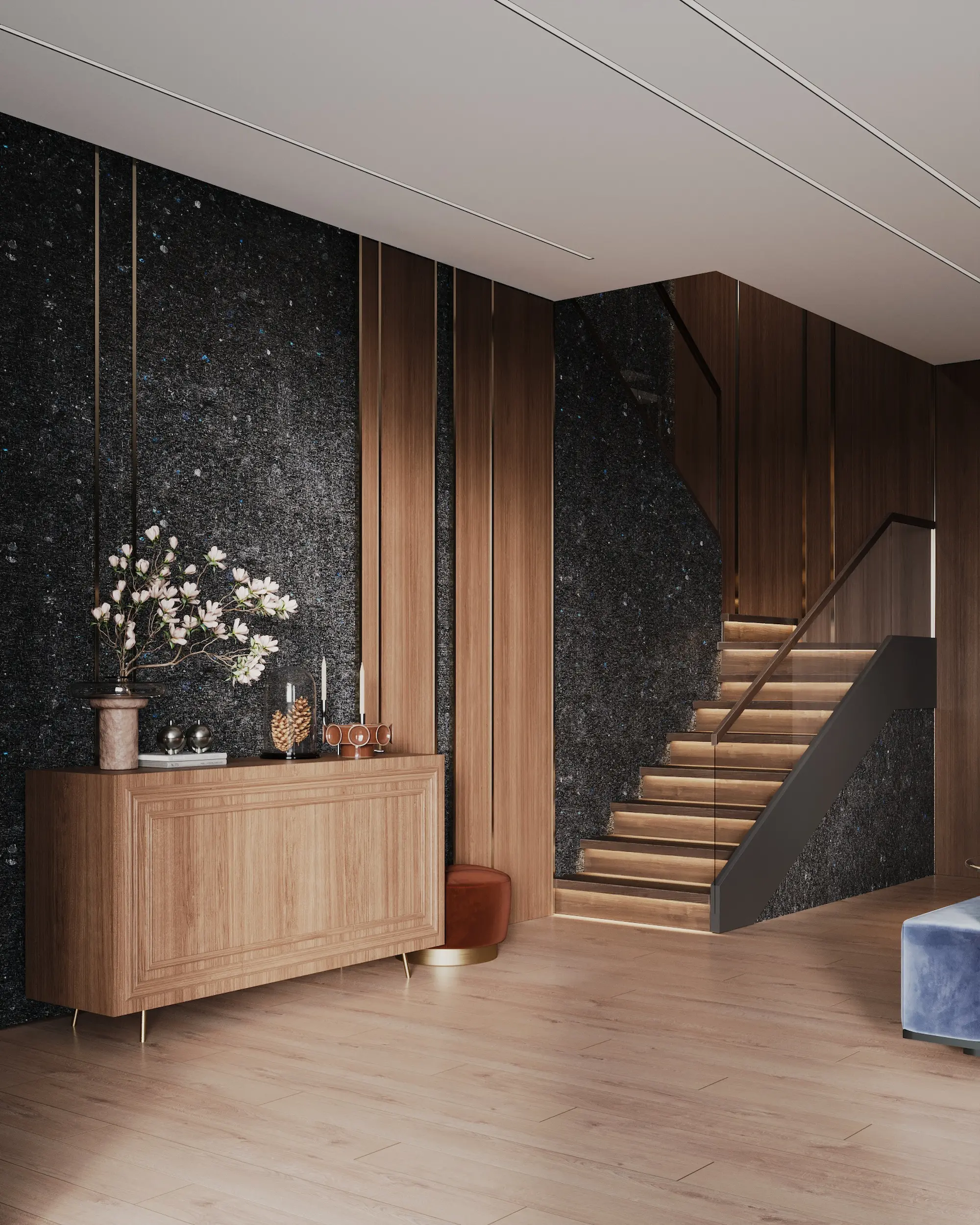
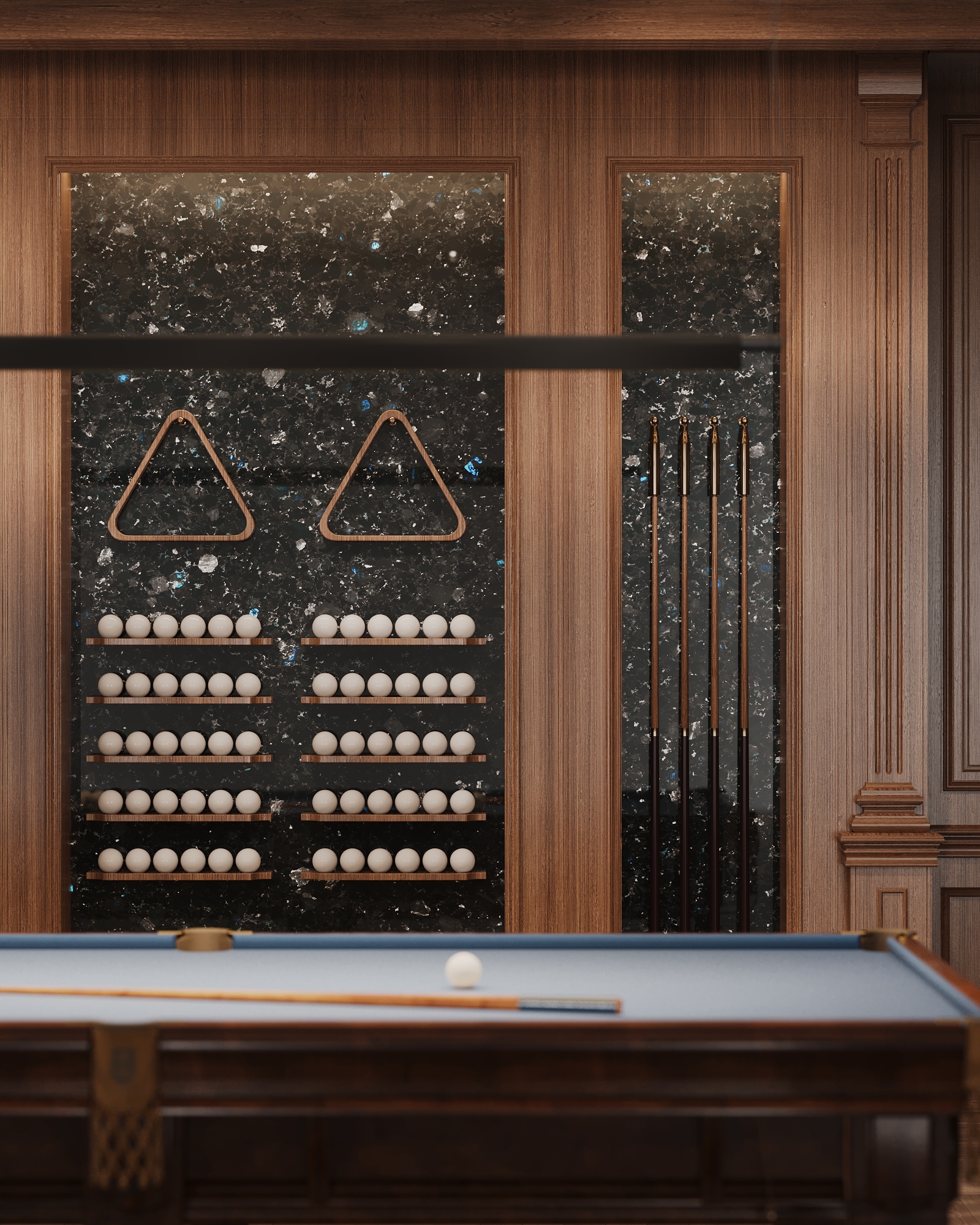
A different logic appears when the stone is repeated in different zones of the house — not aggressively, but as a shared material thread. Labradorite can appear outside and inside, across large surfaces and in details, in open spaces and private zones. In each place, it can work differently while preserving the overall material language of the home.
In a polished finish, the stone interacts more strongly with light, revealing the depth of the graphite base and delicate iridescence. In more restrained or textured finishes, it feels more tactile, natural, and calm. Because of this, one material does not have to repeat itself literally; it can create different moods within one architectural concept.
This is important for private architecture, where a space should not only be impressive, but also alive, deep, and cohesive in everyday perception.
Large Surfaces as the Basis of Continuity
For labradorite to work as a material that connects interior and facade, the scale of the surface becomes important. Across large planes, the stone is read not as a fragment of finishing, but as an architectural surface.
A minimal number of seams allows the natural structure of the stone to be perceived more calmly. The graphite base is not broken by unnecessary lines, and the crystalline depth of the material opens more cohesively. This is especially important where the surface is meant to work not as a decorative insert, but as part of the architecture.
In large format, Golovinski Labradorite does not need excessive decoration around it. It is enough to support it with clean geometry, light, and materials that do not compete with the stone. Then it forms not a separate detail, but an overall architectural mood.
It is on large surfaces that the difference between natural stone and a surface that merely imitates its image becomes especially clear. Labradorite does not look flat or repetitive. Its depth is born in the structure of the material itself — both in the interior and on the facade.
Technical Strength as Part of Architectural Continuity
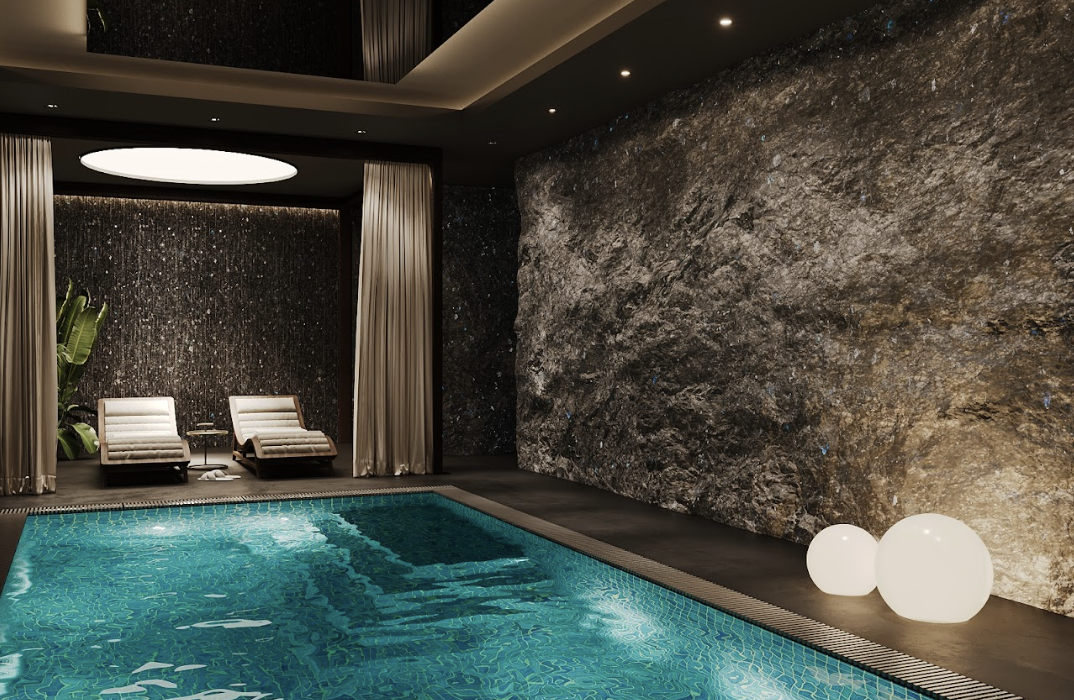
When one material is used both outside and inside a house, it must be convincing not only visually. For private architecture, it is important that the stone can withstand different scenarios of use: temperature changes, humidity, exterior conditions, active everyday load, and close contact in interior spaces.
Labradorite has natural density and strength, which allow it to work not only as a beautiful surface, but as a full architectural material. Low water absorption, resistance to temperature changes, and the possibility of selecting a finish for a specific use scenario allow the stone to be applied within one architectural concept without losing practicality.
This is an important advantage of Golovinski Labradorite: it allows the home to maintain a shared material language not only at the level of aesthetics, but also at the level of function. The stone can shape atmosphere inside the space while remaining a durable material for exterior architecture.
Light as a Connection Between Exterior and Interior Space
Light works differently with stone on the facade and in the interior. Outside, labradorite changes under daylight, shadow, weather, and the angle of the sun. Inside, it is influenced by warm architectural lighting, glass, wood, water, textile, and the closeness of the human body to the surface.
This ability to change makes natural black stone a living material in private architecture. It does not remain the same in every scenario. On the facade, it may appear more restrained and graphite-toned. Inside the space, it can feel deeper, warmer, and more shimmering thanks to soft architectural light, the closeness of surrounding materials, and a different scale of perception.
For labradorite, light has special importance. Its natural crystalline structure allows iridescence to arise not as a surface effect, but from the depth of the material itself. The stone does not simply receive light on its surface. It seems to let light pass through its own structure, returning to the space a feeling of depth and inner movement.
In private architecture, this creates a subtle connection between facade and interior: the same material changes depending on the environment, while preserving its recognizable character.
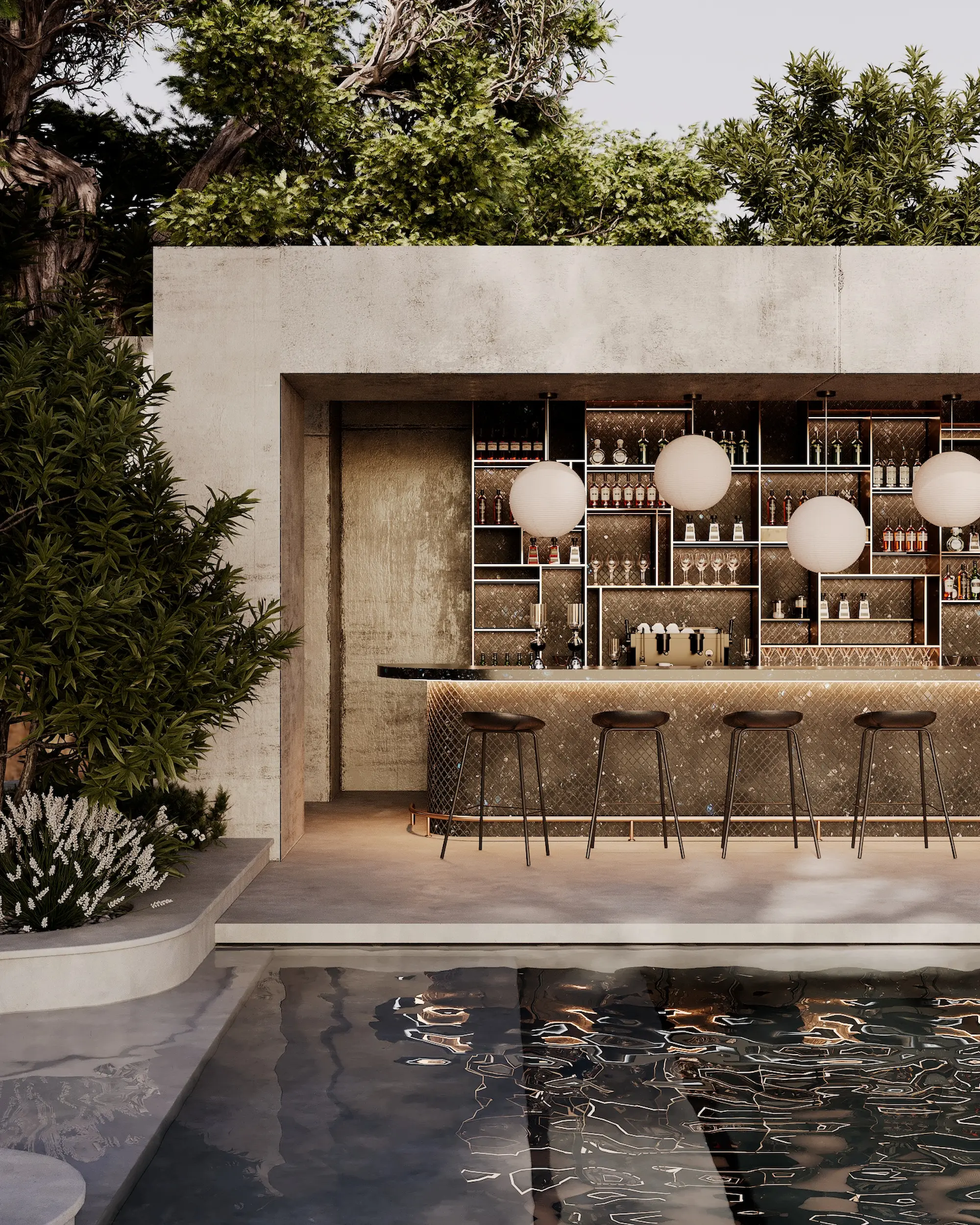
A Private Home as a Space of One Material Feeling
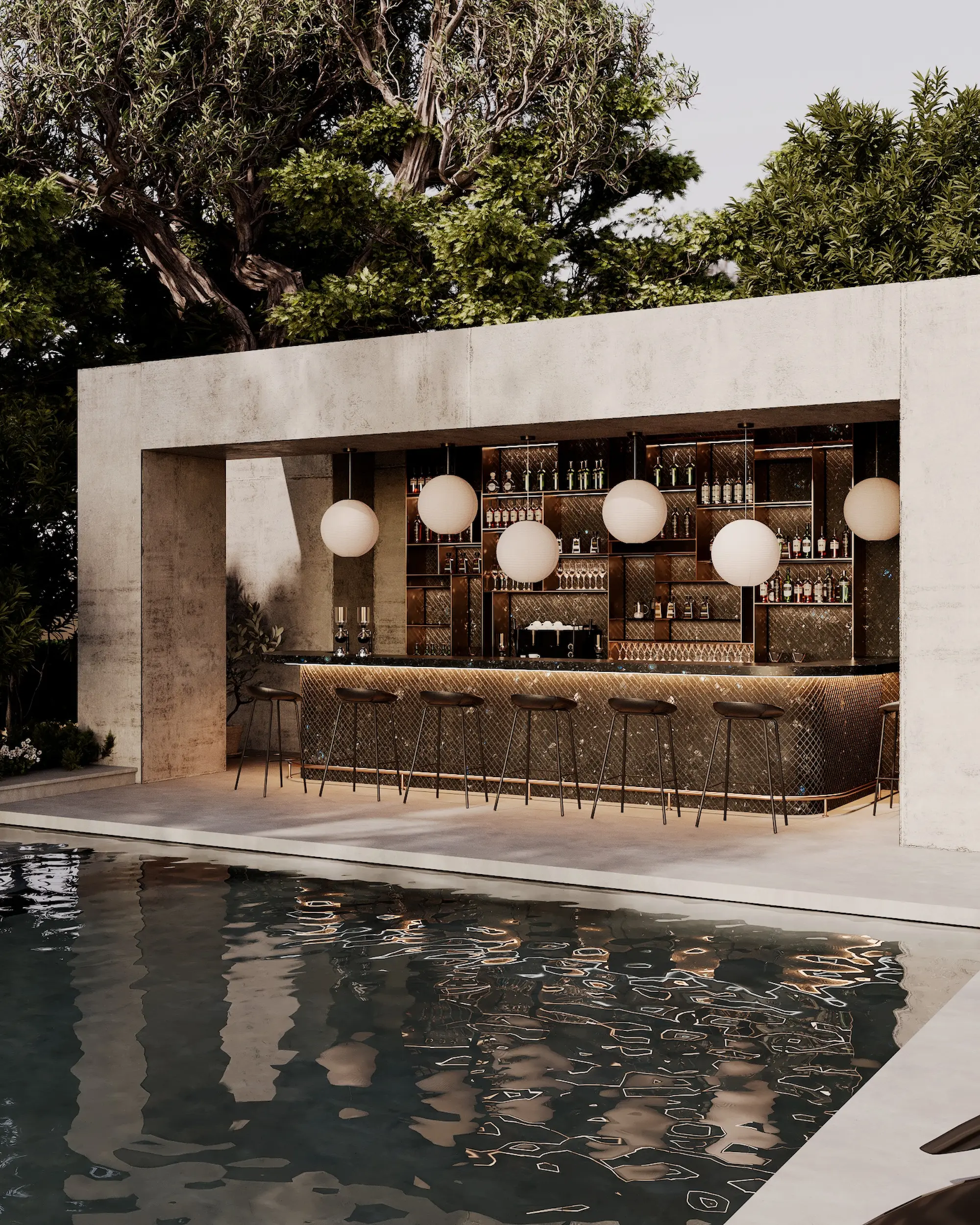
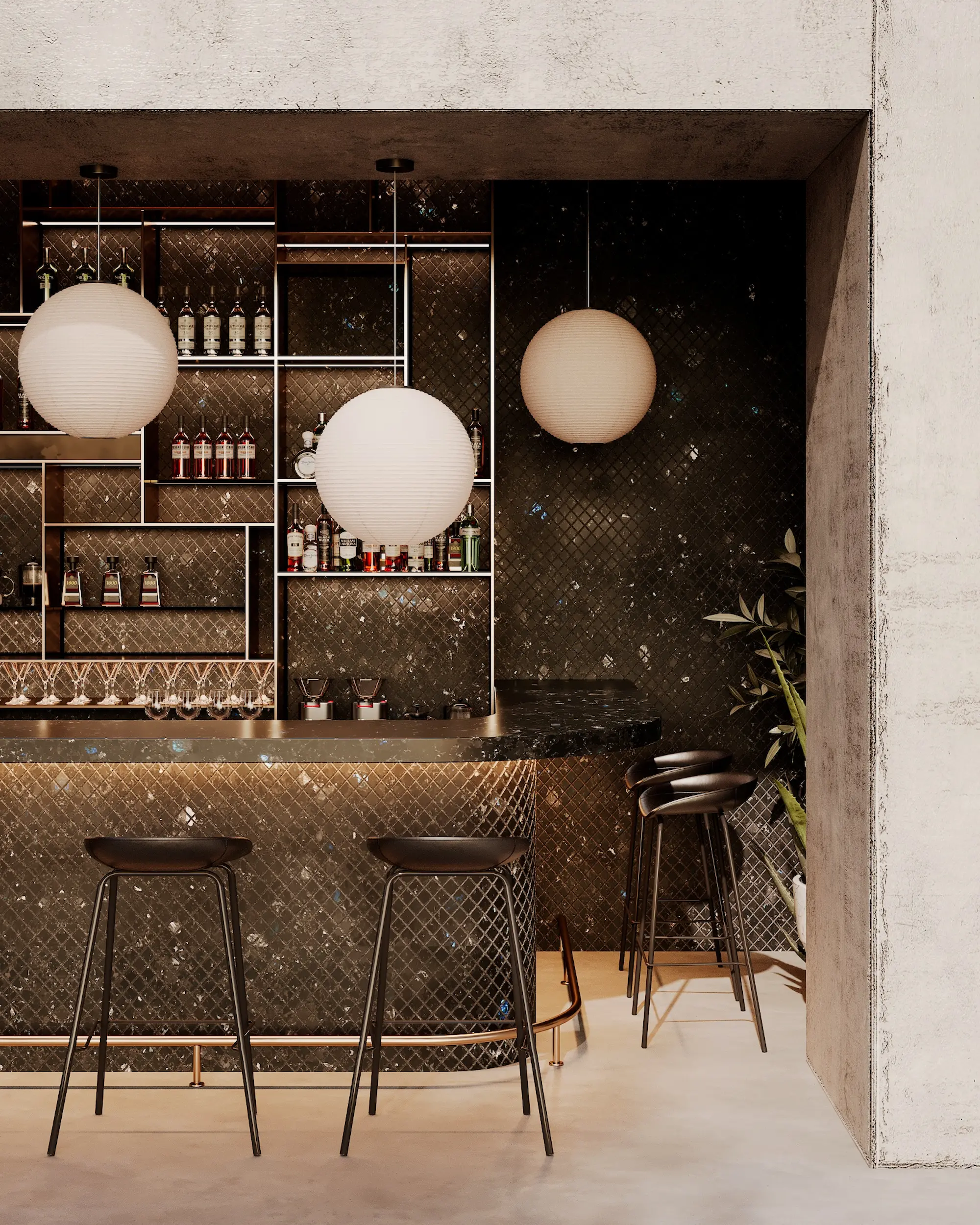
In a private house, what matters is not only the beauty of separate zones, but also how they are perceived together. Entrance, facade, hall, living room, kitchen, bathroom, SPA zone, terrace — all of these are parts of one space that should feel cohesive.
Labradorite makes it possible to create this continuity through material repetition without monotony. The stone can be present in different zones, yet each time reveal itself differently — through scale, light, finish, viewing angle, and combination with other materials.
This is its important advantage for private architecture. It does not force the whole house to look the same. On the contrary, Golovinski Labradorite allows different spaces to be connected by a shared depth, while giving each zone its own character.
In this way, natural stone becomes not simply a material for facade or interior. It becomes a way to create one feeling of home — calm, deep, architectural, and strongly material.
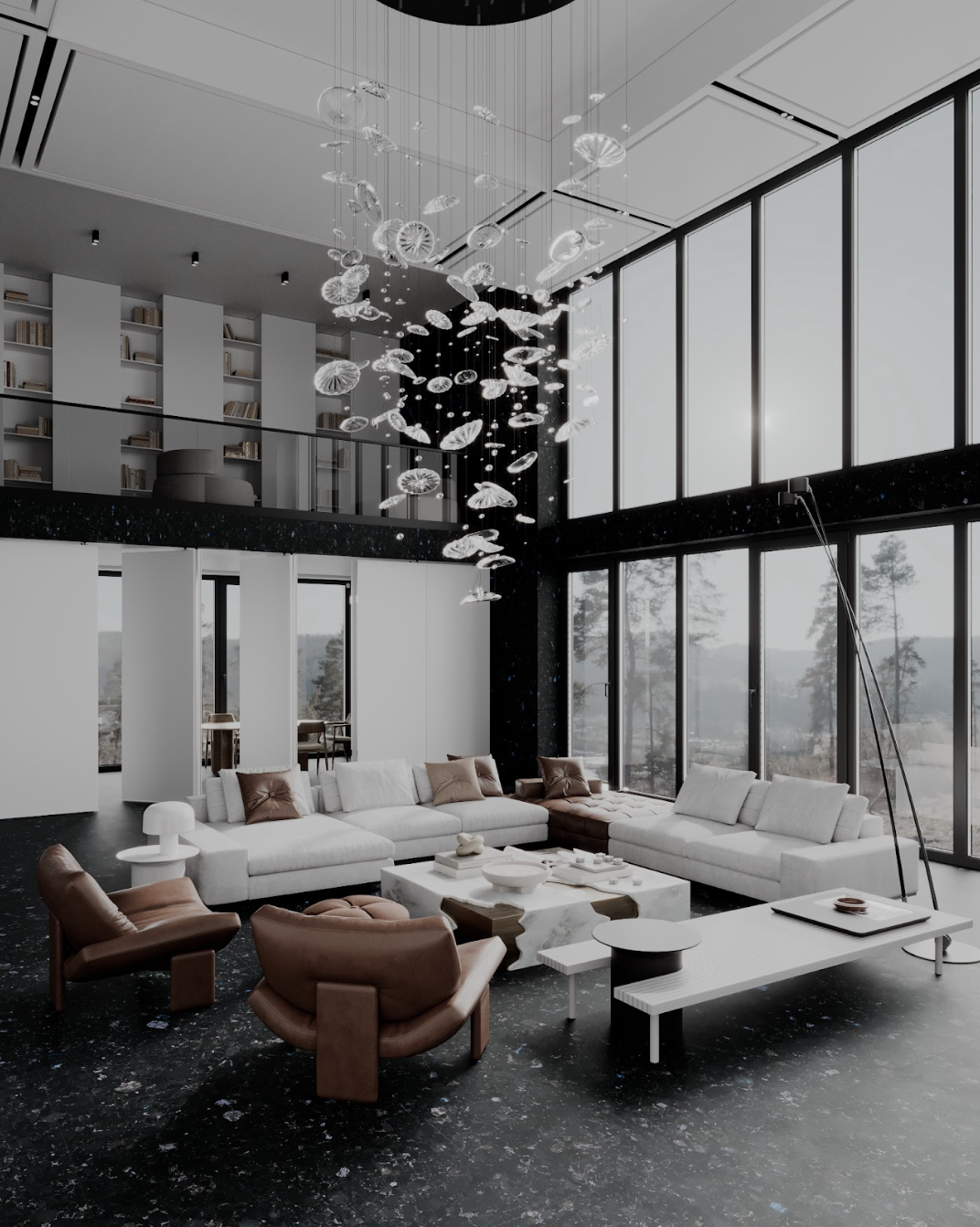
When One Material Shapes the Character of Architecture
Labradorite works most powerfully in private architecture when it is not perceived as a separate decorative element. Its strength lies in its ability to move through the space, connect facade and interior, change with light, and remain recognizable in different scenarios.
Golovinski Labradorite creates a feeling of continuity without direct repetition. On the facade, it adds depth and monumentality to the house. In the interior — calm, materiality, and subtle iridescence. Across large surfaces — scale. In details — density and natural complexity.
One material can shape not only a surface, but the character of architecture. When labradorite connects exterior and interior space, the house begins to feel cohesive — not as a set of separate decisions, but as a thoughtfully composed material environment.
This is the strength of natural stone in private architecture: it does not simply finish a home. It creates its depth, rhythm, and sense of presence.