
You might be interesting:

Black Stone Bedroom: Between Minimalism and Luxury
10 min | 08.05.2026Black Stone Bedroom: Between Minimalism and Luxury
A space where the depth of natural stone shapes an atmosphere of silence, light, and privacy


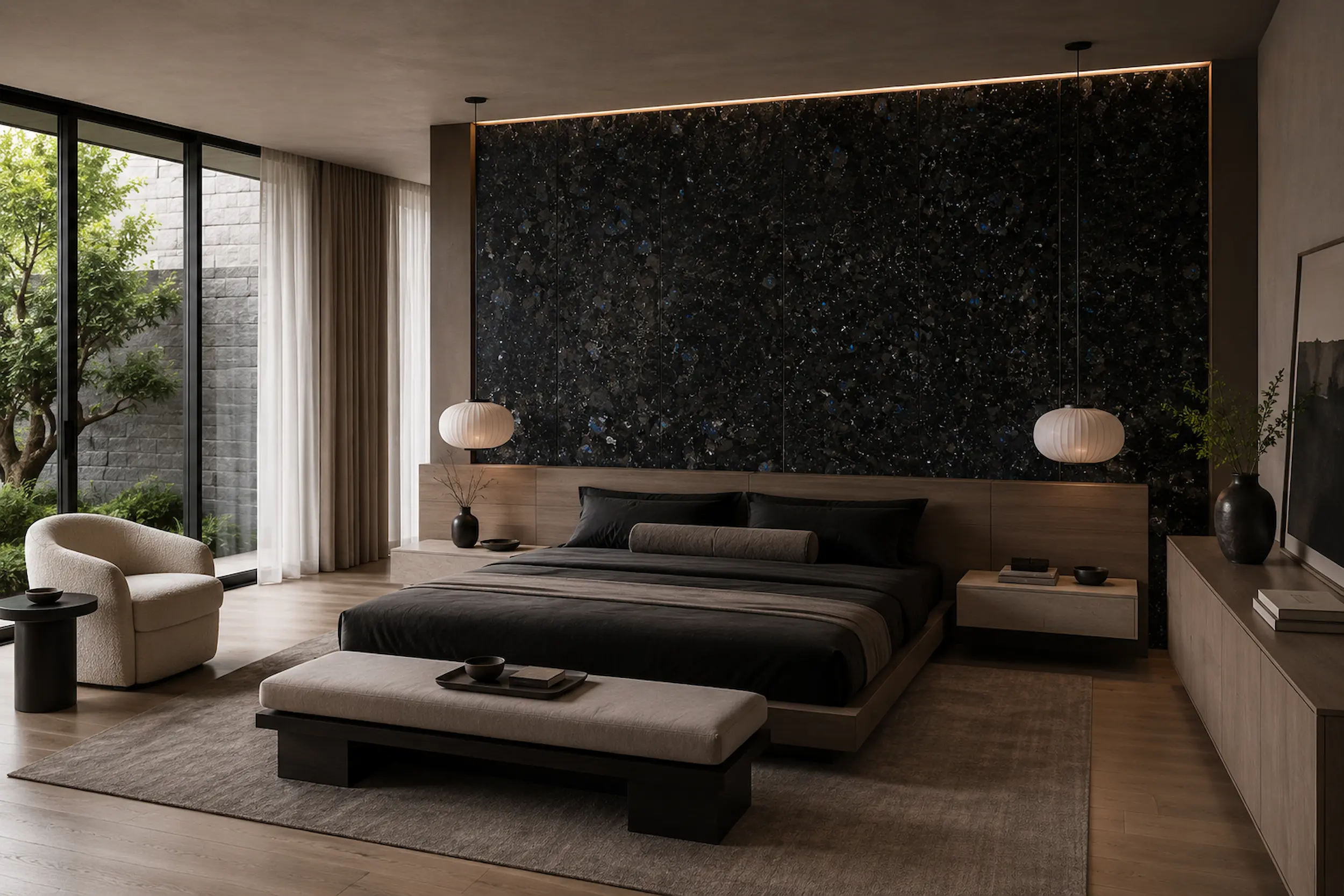
A space where dark stone works not as decoration, but as atmosphere
The bedroom is a space where materials are perceived differently.
Here, it is not about demonstration, but about depth, silence, and a sense of stability. This is why black stone in the bedroom is increasingly used not as a contrasting accent, but as the architectural foundation of the space.
Labradorite works precisely in this way.
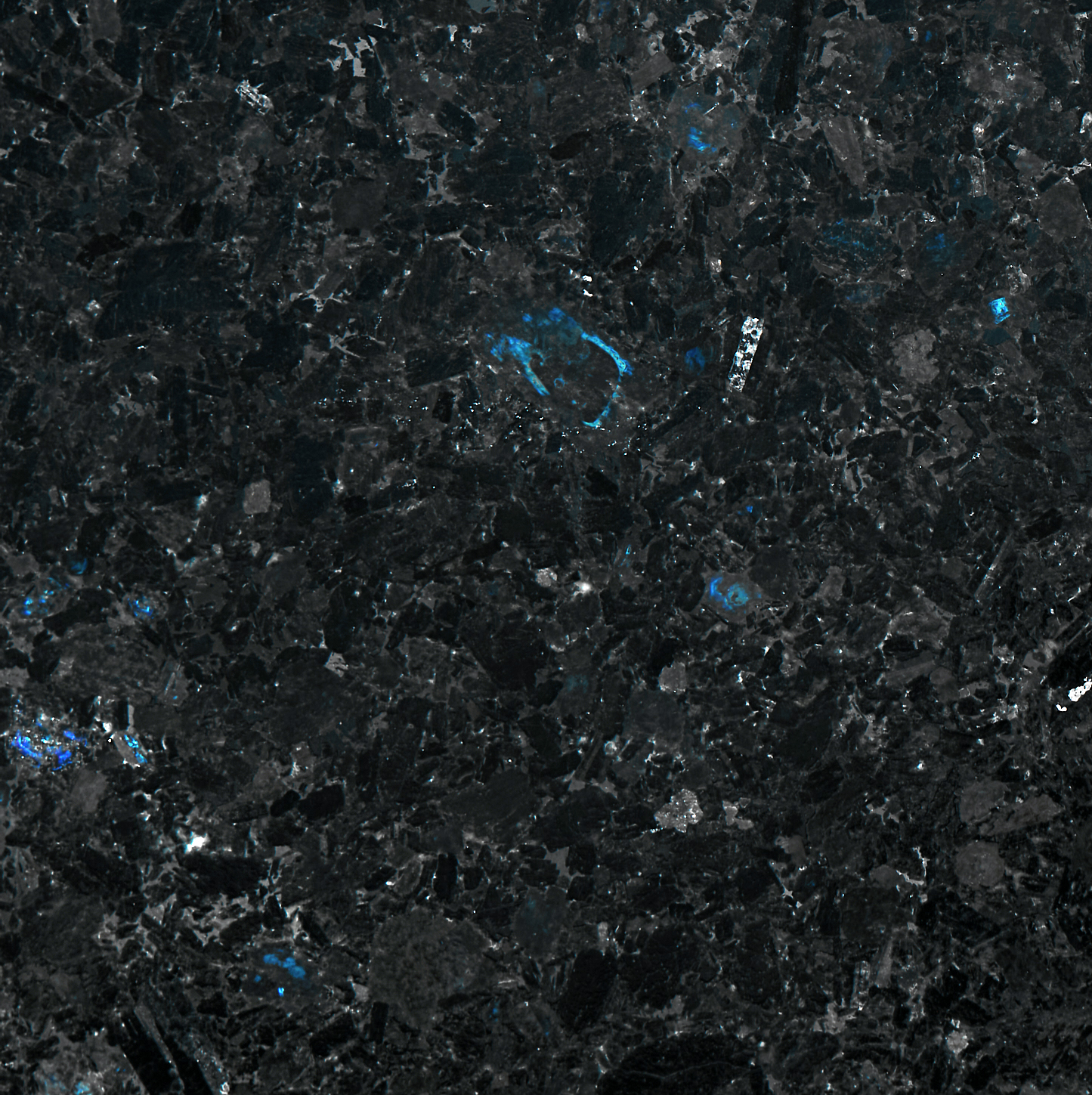
Its deep graphite-dark base, dense crystalline structure, and natural blue iridescence create a living surface that changes depending on light, time of day, and viewing angle.
In bedrooms, this is perceived especially subtly.
The stone does not overload the interior — it creates concentration, depth, and a calm visual rhythm.
This is why labradorite is increasingly appearing in private residences, luxury apartments, and premium hospitality projects where architecture is built not on the number of details, but on the quality of materials.
Headboard wall — the main architectural surface
In the bedroom, the main architectural plane is almost always the wall behind the bed.
This is where black stone becomes most expressive.
Labradorite allows the creation of a surface that feels monolithic during the day and begins to “come alive” in the evening through the soft interaction of light with the crystal structure.
Unlike decorative panels or overly active textures, natural stone does not create visual noise.
It works through material depth.
In large-format slabs, the surface feels cohesive and architecturally clean — without unnecessary visual fragmentation.
This is why black stone in the headboard area often becomes not decoration, but the central compositional element of the interior.
Bookmatch vs single slab
A bookmatched pair of slabs creates a mirrored composition of the stone’s natural pattern.
In labradorite, this effect appears especially deep: the dense graphite structure holds the surface together, while natural labradorescence reveals itself only when the angle of light changes.
This approach transforms the wall behind the bed into the central architectural element of the bedroom.
A single slab works differently.
It feels more restrained, monolithic, and minimalistic. This solution is often used in contemporary interiors where clean geometry and material balance are essential.
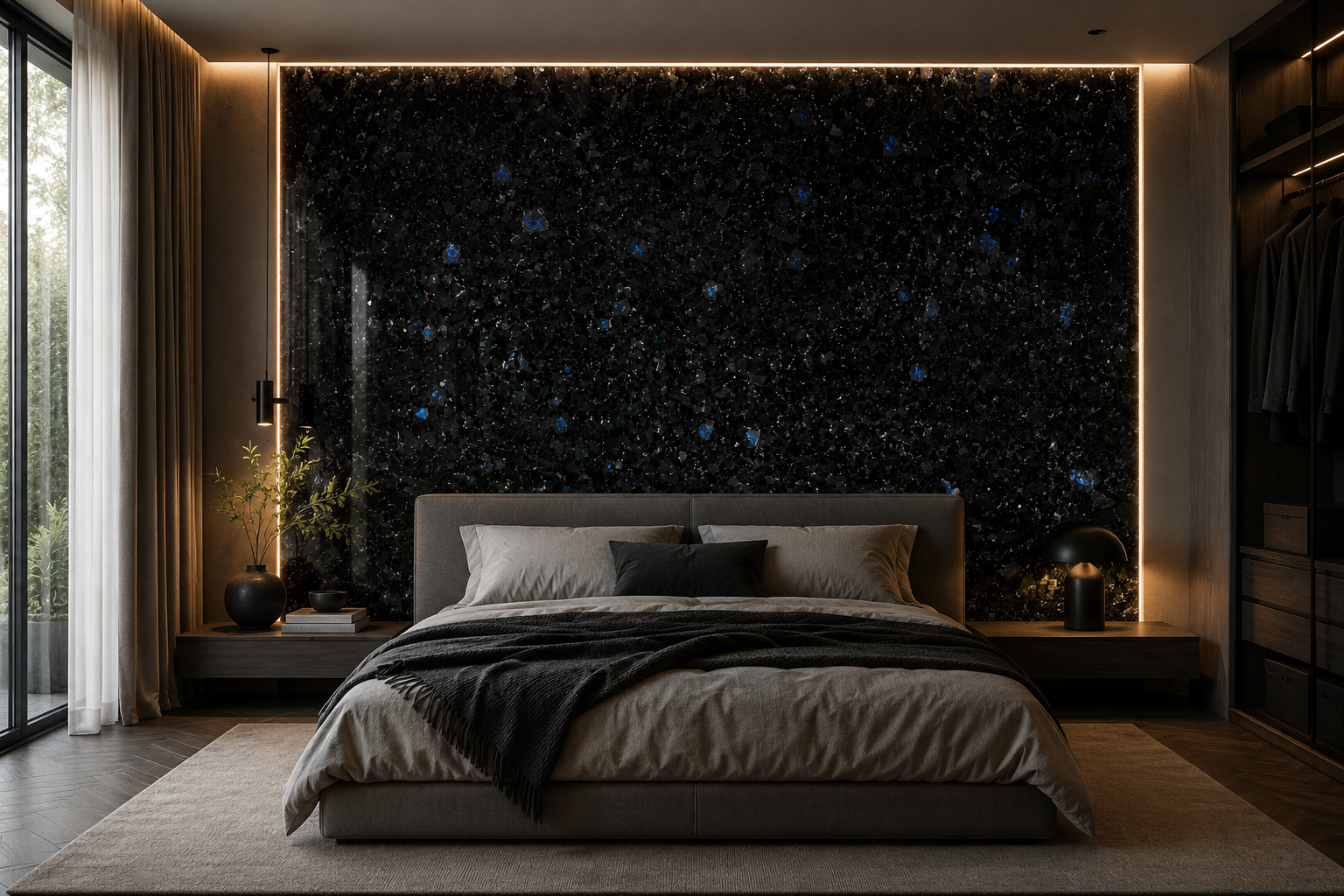
How the finish changes the character of stone in the bedroom
In the bedroom, the finish defines not only the visual effect, but also the atmosphere of the space.
Polished creates the maximum depth of the stone. The surface works with reflection and reveals the natural blue iridescence of labradorite most intensely.
In the bedroom, this finish is most appropriate when the stone is meant to become the primary accent surface — for example, in the headboard zone or on a large wall behind the bed.
Under evening lighting, the surface begins interacting with light far more deeply than a typical dark stone.
Silk is a more restrained and architectural option.
It reduces the activity of reflections while preserving the depth of the material, making the perception of the surface softer and calmer.
For bedrooms, this is often the most balanced solution: the stone remains expressive without dominating the interior.
Leather / Brushed finishes add tactility.
Light diffuses more softly, the structure appears more natural, and the material itself feels warmer and more “alive.”
These finishes work especially well in intimate interiors with wood, natural textiles, and warm evening lighting.
In bedroom interiors, stone should remain part of the atmosphere rather than becoming an isolated visual object.
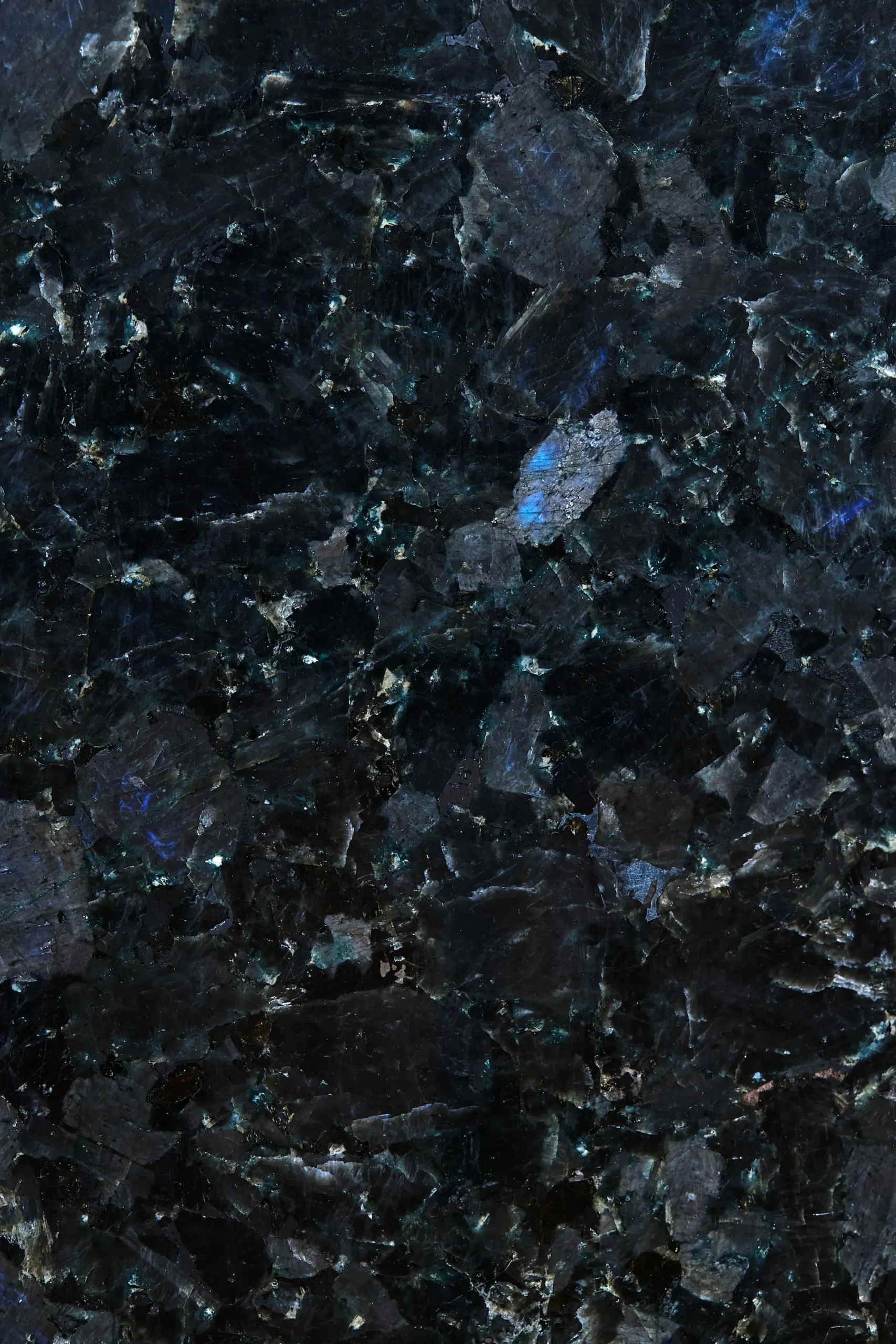
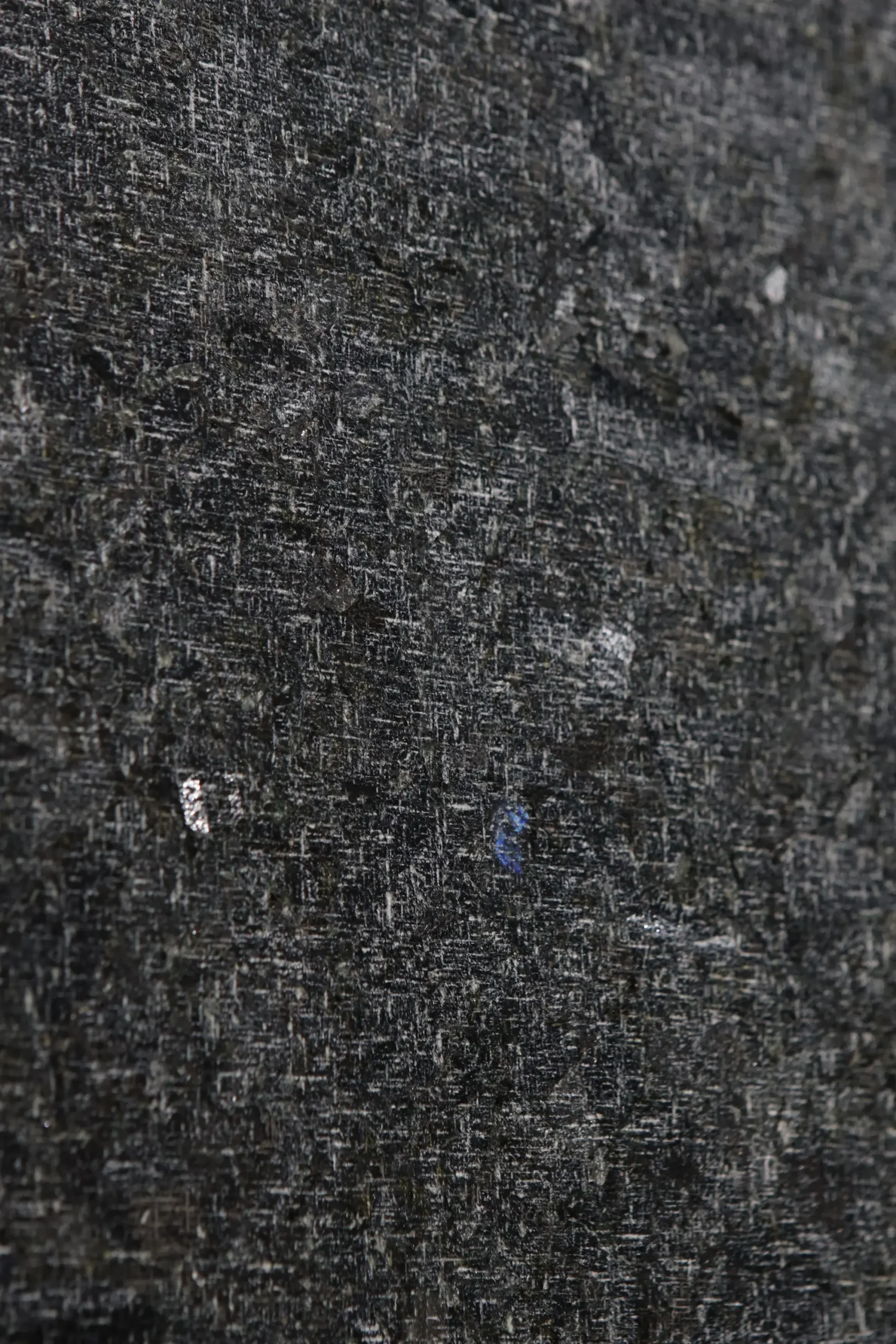
Lighting that reveals the inner shimmer
Labradorite is a material that directly depends on light.
Lighting defines how the surface will be perceived within the interior.
Front lighting makes the stone appear flatter.
Side or accent lighting reveals the depth of the structure and the natural labradorescence.
This is especially important in bedrooms, where the space primarily functions within evening lighting scenarios.
30–45° accent lighting
Labradorite reveals itself best under directional lighting at approximately 30–45°.
This is when the natural blue iridescence begins to work in the deepest and most natural way.
In bedrooms, this is often achieved through:
— concealed LED lighting behind the headboard
— side wall fixtures
— accent ceiling spotlights
— warm evening lighting
Proper lighting allows the stone to feel deep rather than heavy.
The surface begins interacting with the space and changing throughout the day without looking artificial.
Color combinations
Black stone in the bedroom works best when balanced with soft and warm materials.
It is contrast that creates the correct spatial balance.
Black stone + natural linen
Natural linen softens the graphite depth of labradorite.
Light textiles add airiness to the space, while the stone maintains the architectural structure.
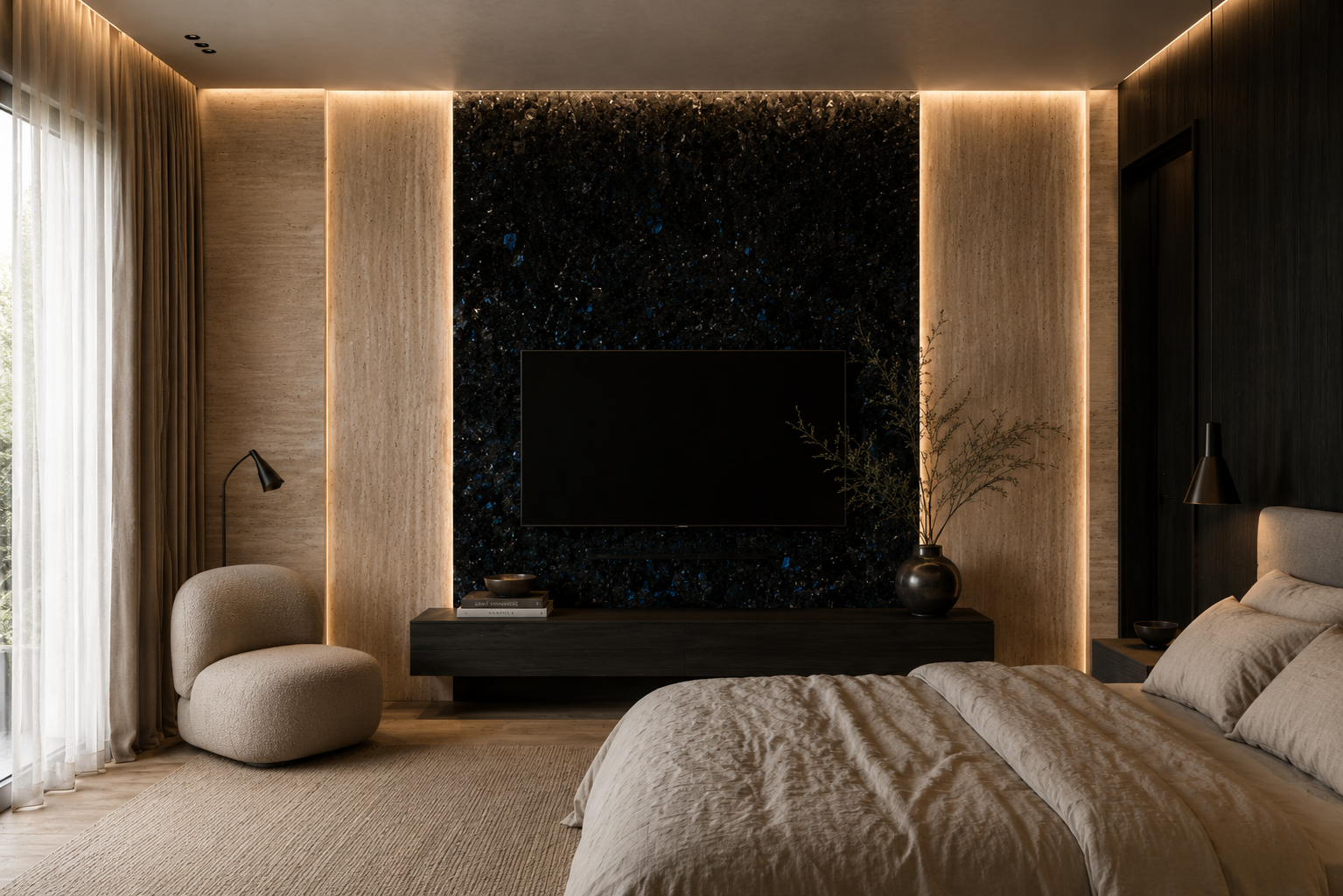
This is one of the most balanced combinations for contemporary minimalist bedrooms.
It works especially well in interiors with soft natural light and a calm material palette.
Black stone + beige travertine
Beige travertine creates a warmer and more monumental context.
Combined with labradorite, the space feels deeper, more refined, and more architecturally cohesive.
This combination works particularly well in large master bedroom interiors with natural lighting and generous spatial openness between materials.
Labradorite in the relaxation space
Golovinski Labradorite is used in private residences, luxury apartments, and premium hospitality projects as a material for:
— headboard walls
— accent walls
— flooring
— integrated furniture surfaces
— bathrooms connected to bedroom spaces
Large-format slabs allow the creation of cohesive monolithic surfaces without visual fragmentation.
This is why black stone in the bedroom works not as an isolated decorative element, but as part of the architecture of the space itself.
The material does not overload the interior — it creates a depth that remains timeless regardless of trends or stylistic direction.