
You might be interesting:

Wine Cellar in Labradorite
10 min | 04.03.2026Wine Cellar in Labradorite
Premium Interior Space


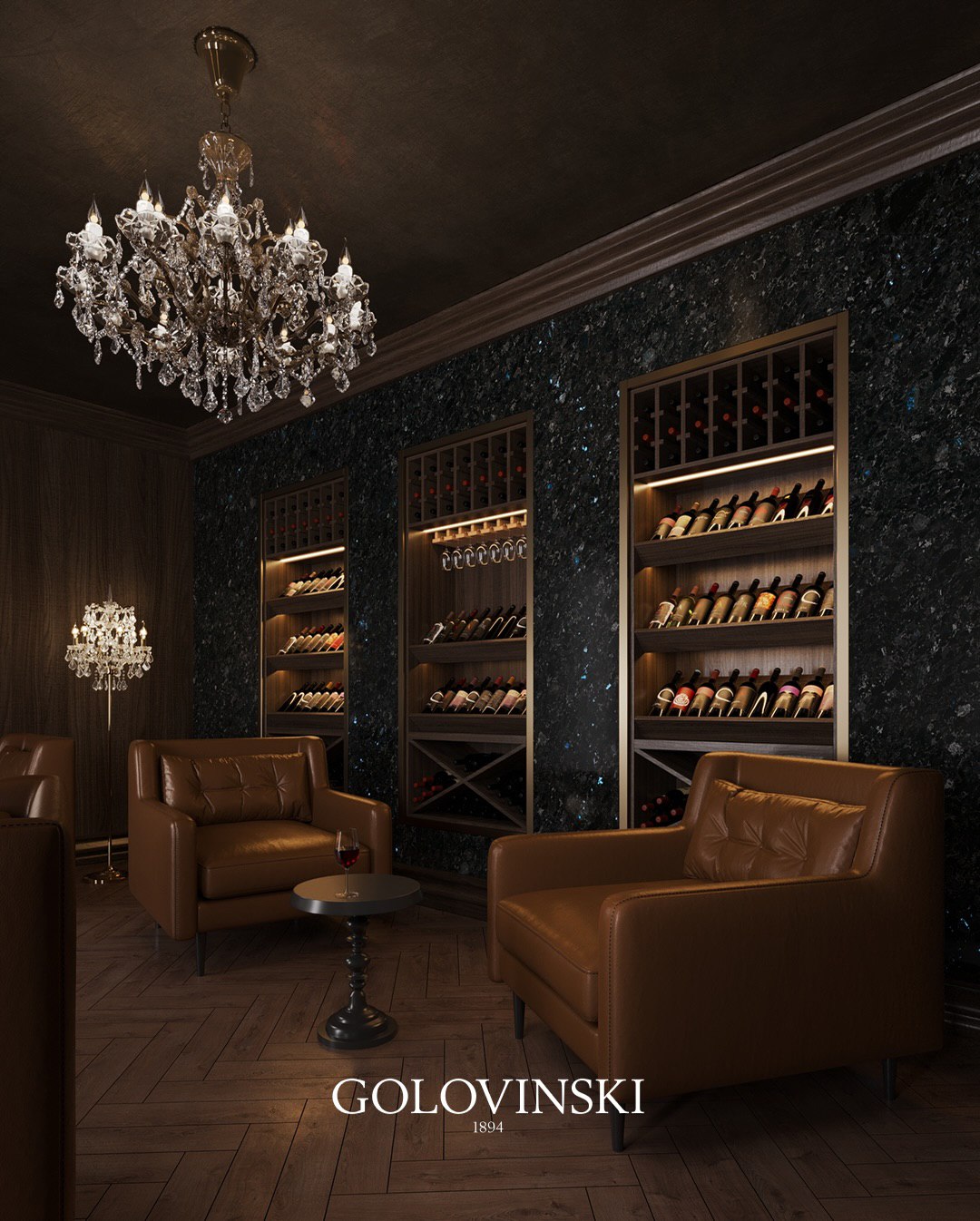
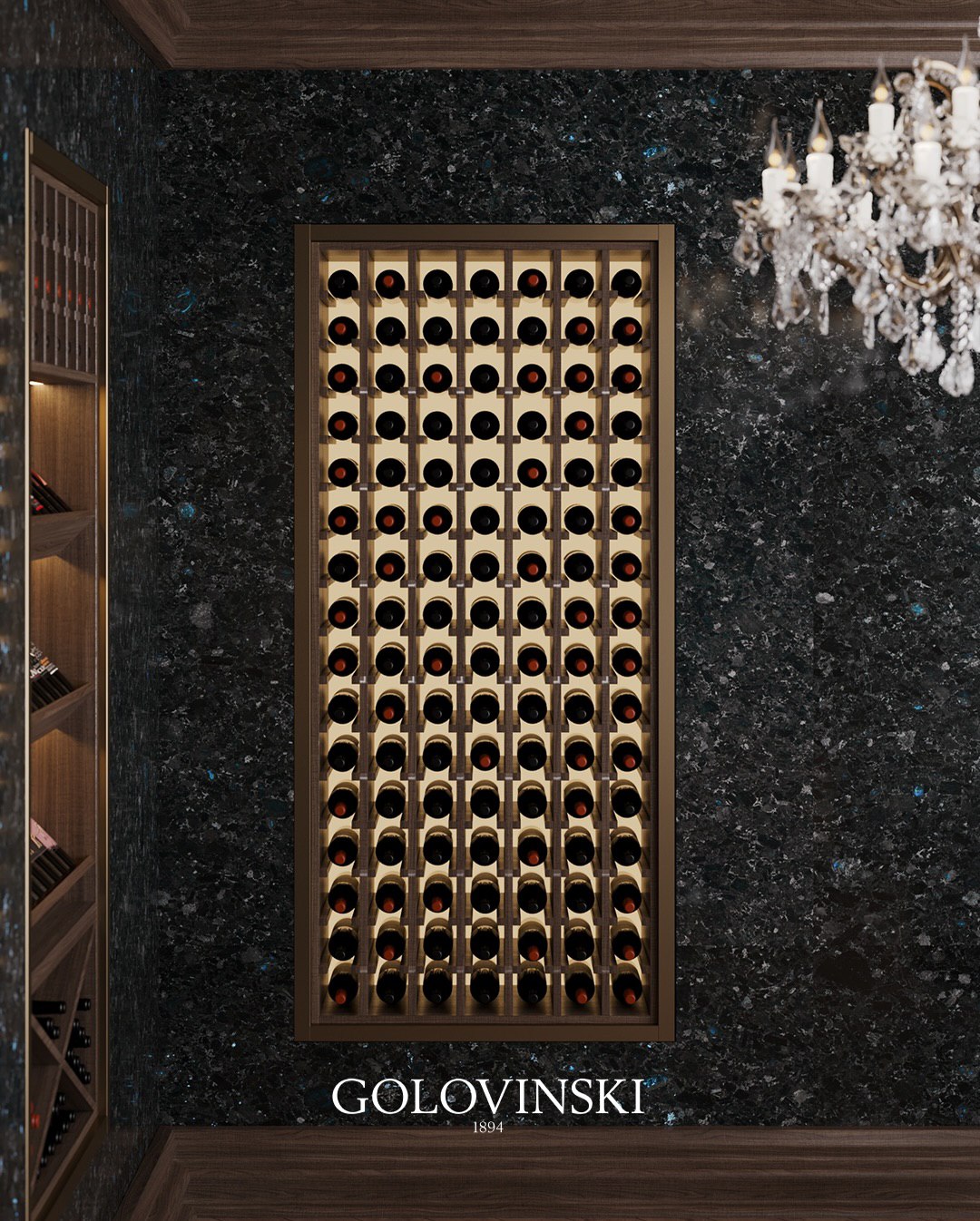
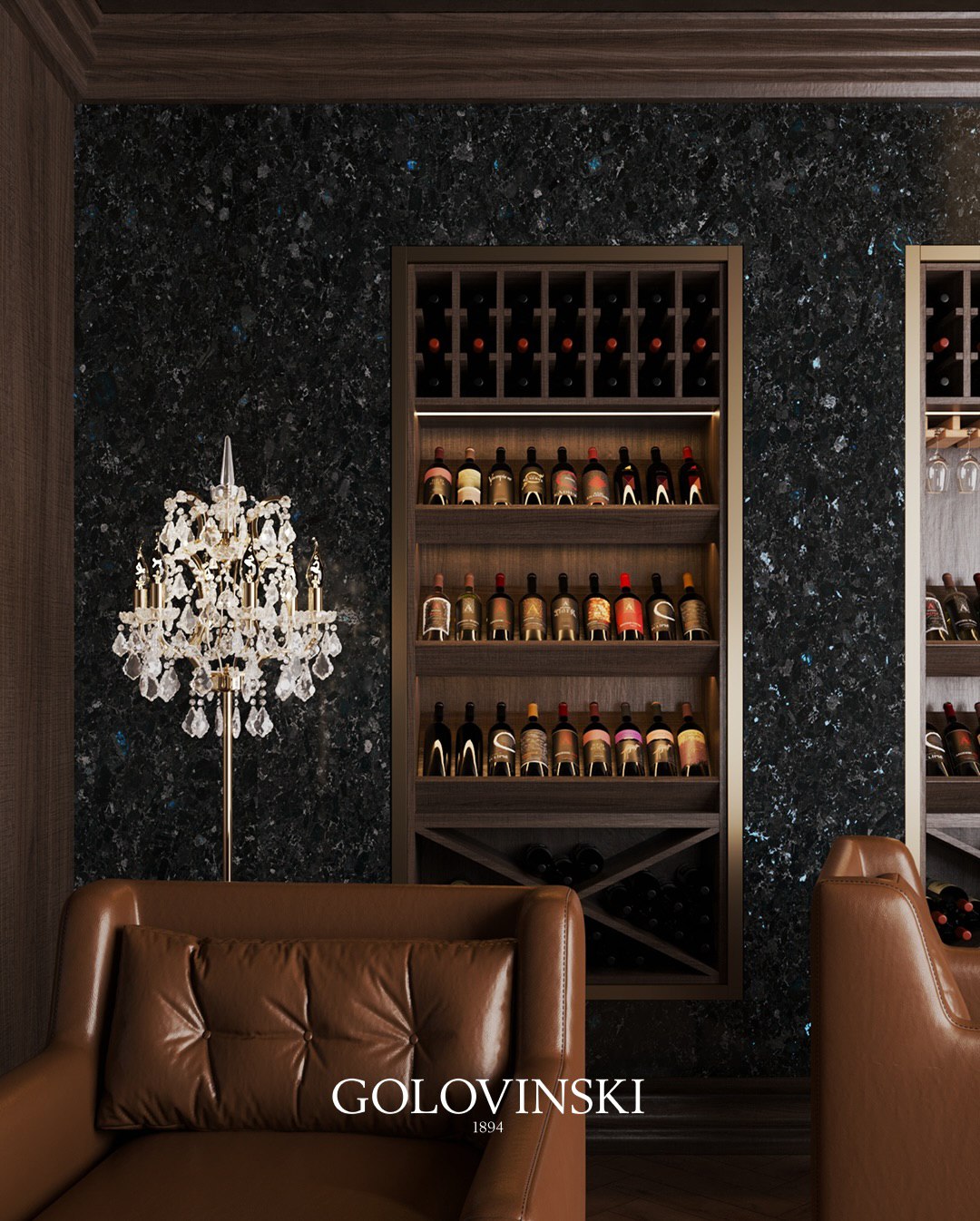
A wine cellar is more than a storage space. In premium architecture it becomes part of the atmosphere, a place where materials, light and design create a unique experience.
Natural stone is increasingly used in luxury interiors because it combines aesthetics, durability and timeless character. Among these materials, labradorite occupies a special place.
Golovinski labradorite with its deep graphite-gray base and subtle blue iridescence creates a sophisticated visual effect that perfectly fits wine cellars, tasting rooms and private collections.
Why Labradorite Works Perfectly for a Wine Cellar
Wine cellars require materials that combine durability with visual depth. Natural stone provides stability and a premium appearance that improves with time.
Labradorite is particularly suitable for interior spaces where lighting plays an important role. Its crystalline structure reflects light softly, revealing delicate blue iridescence depending on the viewing angle.
This effect creates a unique atmosphere that complements wooden wine racks, leather furniture and warm ambient lighting typically found in wine cellar interiors.
For architects and interior designers, labradorite offers a rare balance between natural elegance and modern architectural expression.
Atmosphere and Material Character
The atmosphere of a wine cellar is defined by textures and materials. Natural stone surfaces create depth and structure, helping the interior feel authentic and timeless.
Golovinski labradorite is known for its dense crystalline structure and deep graphite color. Unlike highly reflective decorative stones, it produces a calm, sophisticated appearance that works well with subdued lighting.
When used for walls, decorative panels or accent surfaces, labradorite transforms a wine cellar into a refined architectural space.
The natural variation of the stone ensures that every interior project remains unique.
Premium Interior Applications
A labradorite wine cellar can include multiple design solutions depending on the architectural concept.
Natural stone can be used for:
• feature walls
• decorative panels
• tasting tables
• bar counters
• flooring accents
Large-format slabs allow designers to create continuous surfaces with minimal joints, emphasizing the natural structure of the stone.
Combined with wood, metal and glass, labradorite forms a balanced composition that reflects modern luxury interior design.
Natural Stone in Luxury Interior Design
In contemporary architecture, natural materials are increasingly valued for their authenticity and longevity.
Premium interiors often rely on materials that age well and maintain their visual impact over decades. Natural stone fits this philosophy perfectly.
Labradorite stands out because it offers both durability and a distinctive visual character. The subtle blue iridescence makes it instantly recognizable while remaining elegant and restrained.
For wine cellars and private tasting rooms, this balance of texture, depth and color makes labradorite a compelling architectural material.
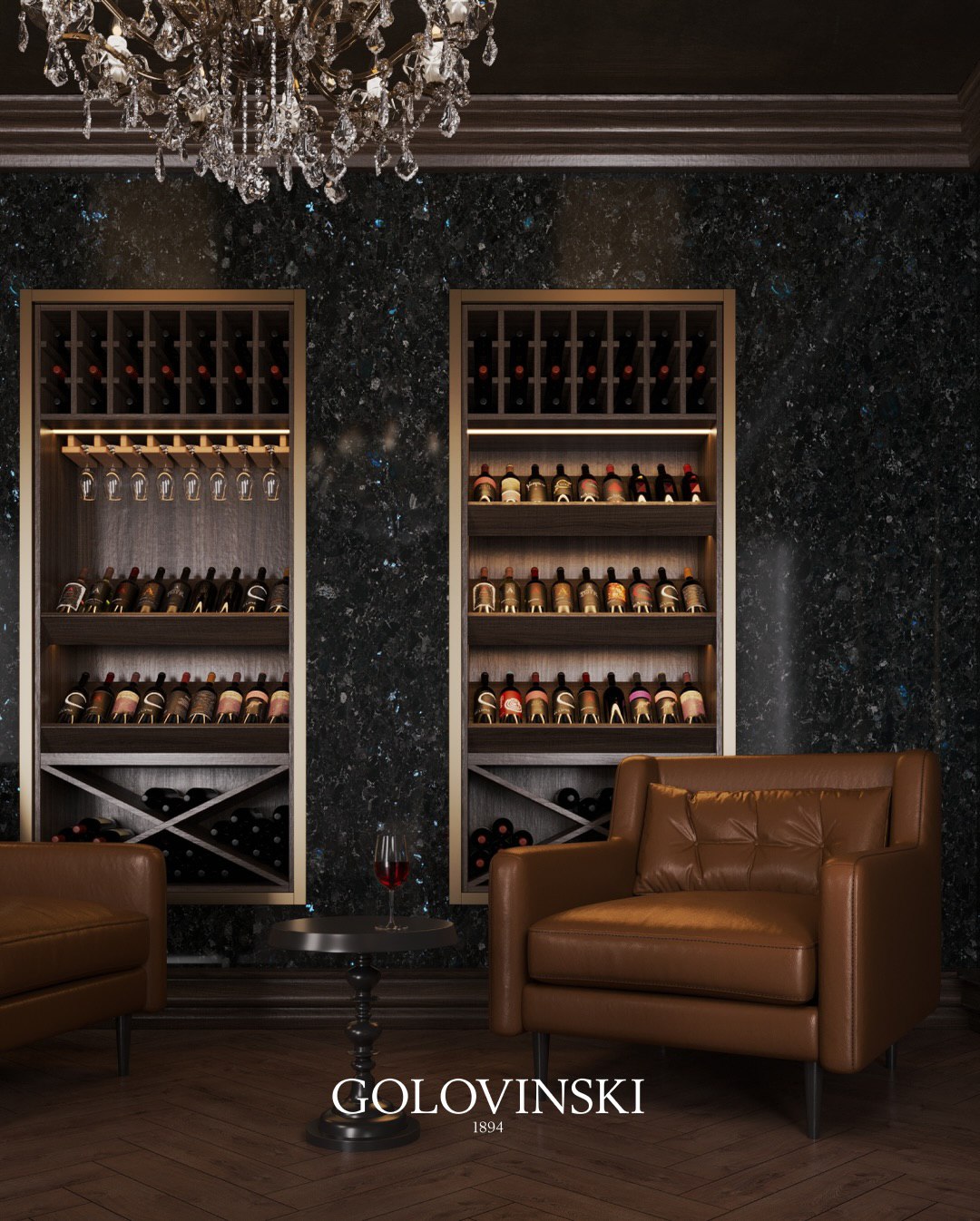
Golovinski Labradorite
Golovinski labradorite comes from a Ukrainian deposit known for producing stone with a deep graphite base and characteristic blue iridescence.
The material is processed using modern equipment to produce large-format slabs suitable for architectural and interior applications.
These slabs are used by architects and designers in projects ranging from private residences to commercial interiors.
The natural structure of Golovinski labradorite allows designers to create premium spaces that emphasize authenticity and material quality.
Wine Cellars as Architectural Spaces
In modern residential architecture, wine cellars are no longer hidden storage rooms. They increasingly become part of the interior concept and reflect the lifestyle of the homeowner.
Architects often integrate wine cellars into living spaces, creating dedicated areas for wine tasting, private collections and social gatherings. In such environments, materials play a critical role in shaping the atmosphere.
Natural stone is frequently chosen for these spaces because it conveys authenticity and permanence. Labradorite enhances this effect with its deep graphite tone and subtle blue iridescence, creating a refined and memorable interior.
When combined with carefully designed lighting and natural materials such as wood and leather, a labradorite wine cellar becomes a distinctive architectural element rather than simply a storage space.
This approach transforms the wine cellar into a premium interior environment that reflects both design sophistication and appreciation for wine culture.
A wine cellar designed with labradorite is more than a functional storage space. It becomes an architectural interior where natural stone defines the character of the environment.
Golovinski labradorite offers designers and architects a material capable of transforming wine storage into a premium interior experience.
Its deep color, crystalline structure and subtle blue iridescence create a distinctive atmosphere that perfectly complements the culture of wine.