
You might be interesting:

Black Stone Outdoors: Frost Resistance and Durability of Labradorite
10 min | 29.04.2026Black Stone Outdoors: Frost Resistance and Durability of Labradorite
Lighting and labradorescence


A Material That Works With Climate
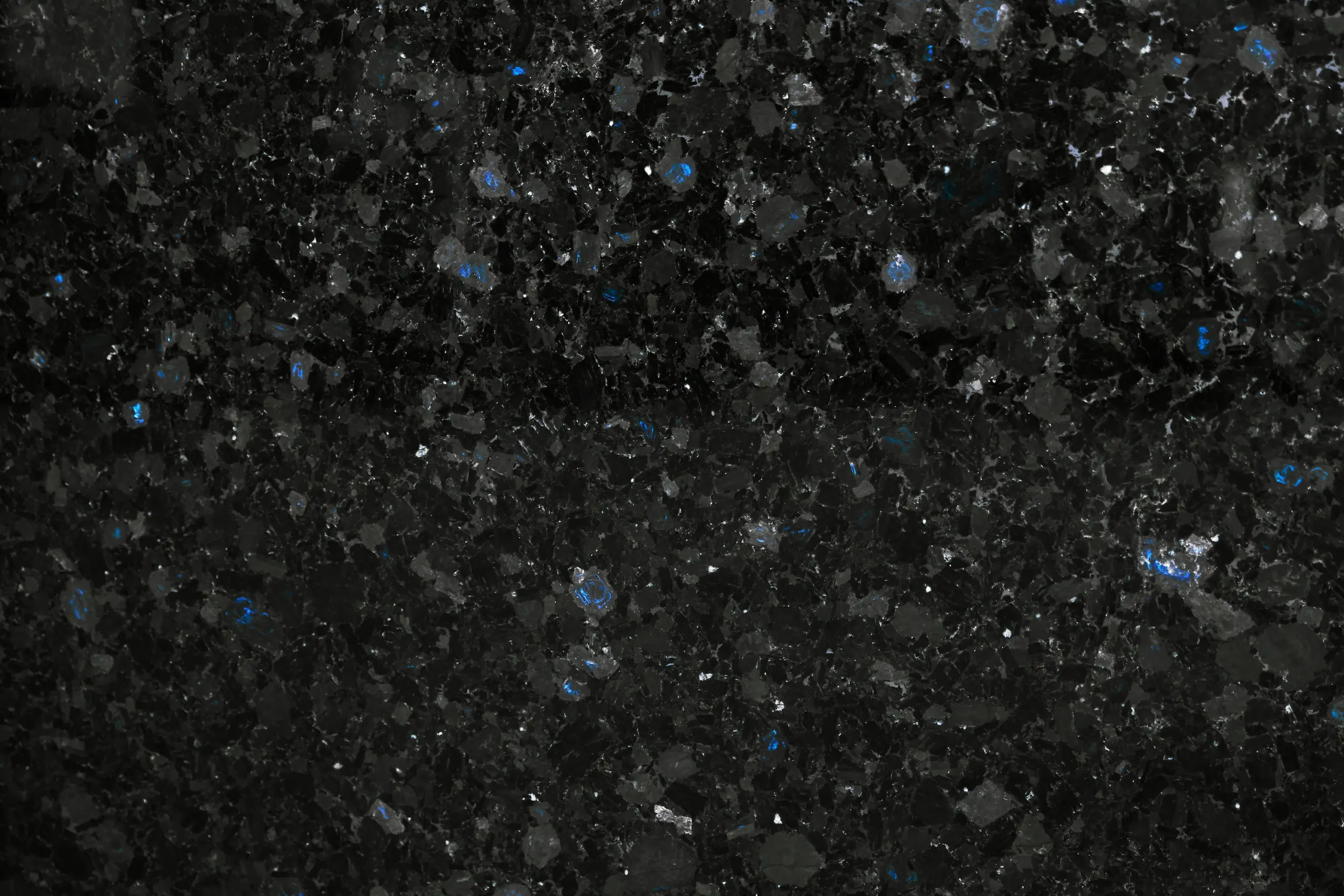
Frost Resistance as Performance, Not a Number
Frost resistance is often treated as a technical figure, but in practice, it defines long-term durability.
Freeze–Thaw Cycles
Stone constantly undergoes these cycles: temperatures rise above zero during the day and drop below freezing at night. Moisture enters the material, freezes, and expands. In porous materials, this process accumulates and leads to microcracks. Over time, surfaces lose precision and begin to degrade. With labradorite, this scenario does not occur. Its dense structure prevents moisture penetration, allowing the material to remain stable even in demanding climates.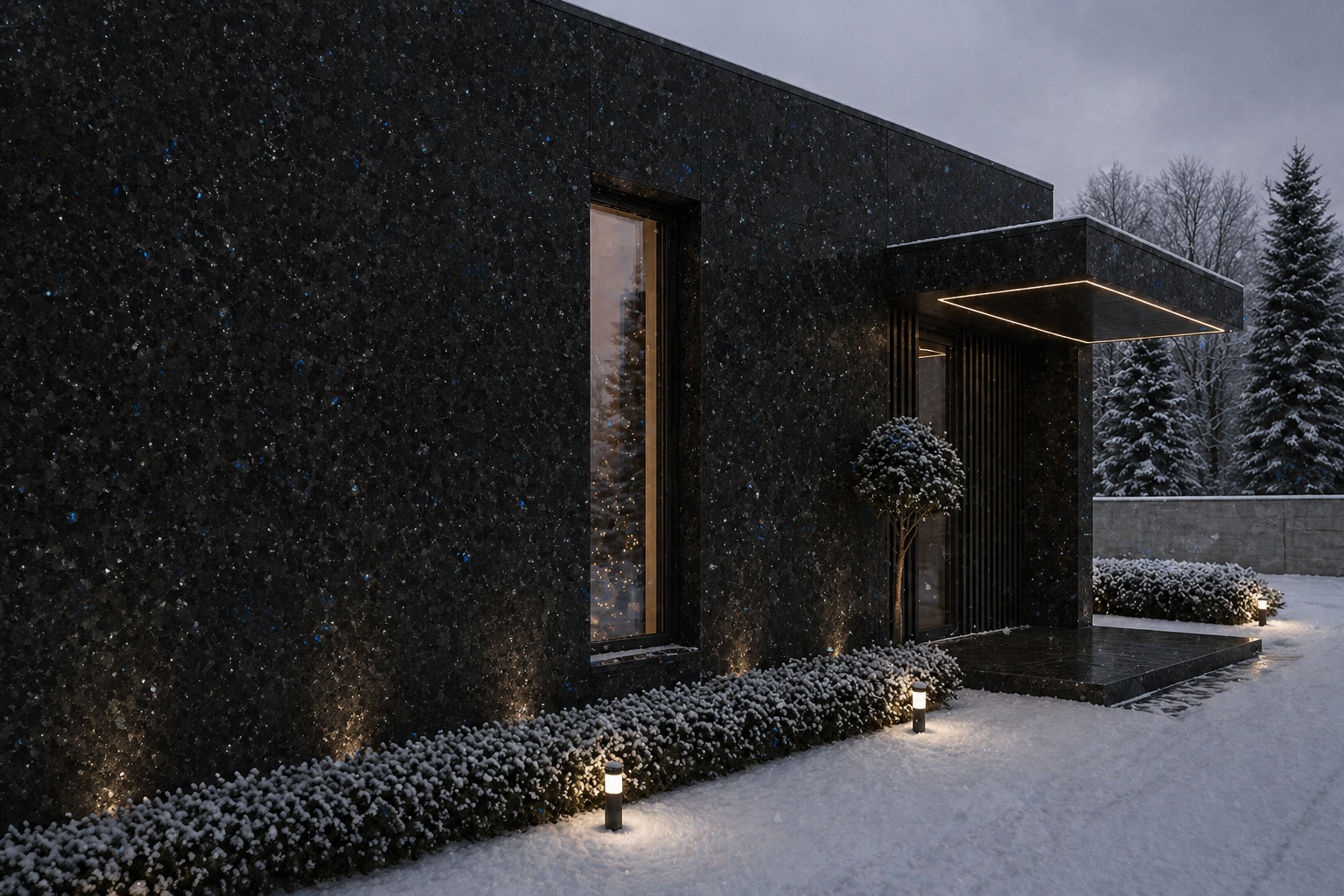
Water Absorption and Its Real Impact
What Happens Inside the Material
When water penetrates the structure, it expands as it freezes, creating internal pressure that gradually damages the material. This is the primary cause of long-term deterioration in many exterior materials.Why Labradorite Performs Differently
Labradorite has extremely low water absorption. Moisture does not accumulate within the structure, which eliminates the primary cause of freeze-related damage. This allows the material to maintain its stability regardless of seasonal changes.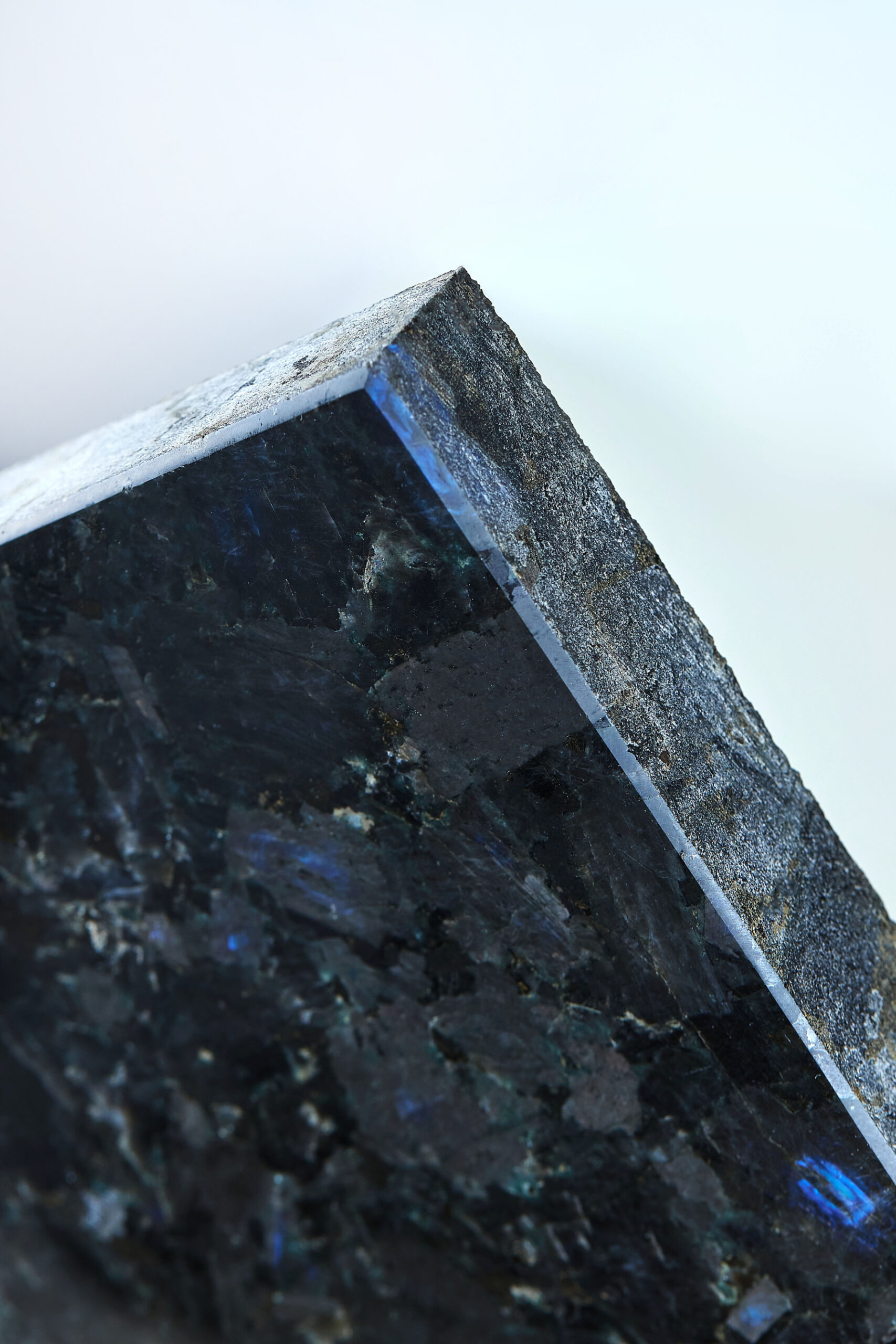
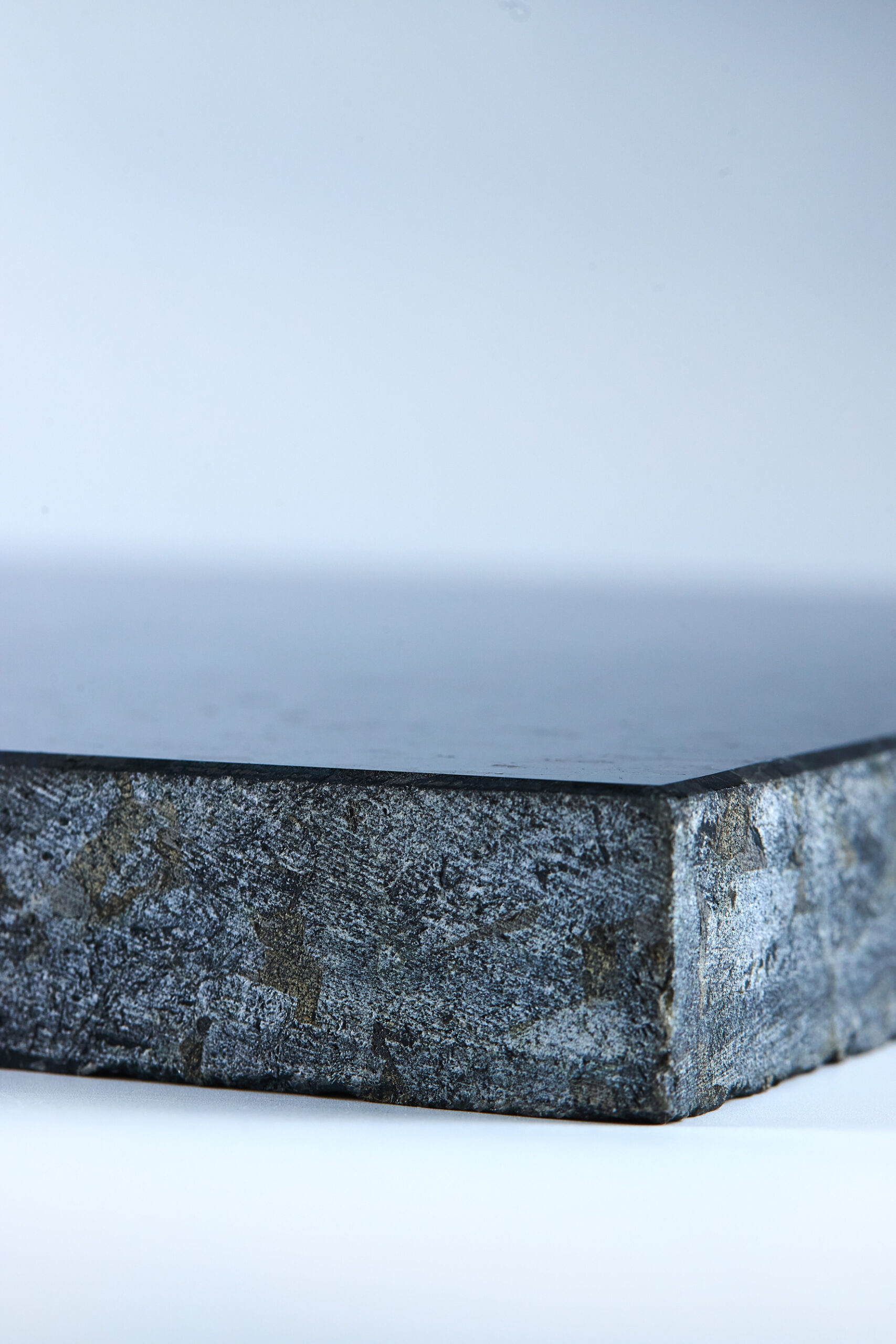
Surface as a Functional Element
Thermal Treatment
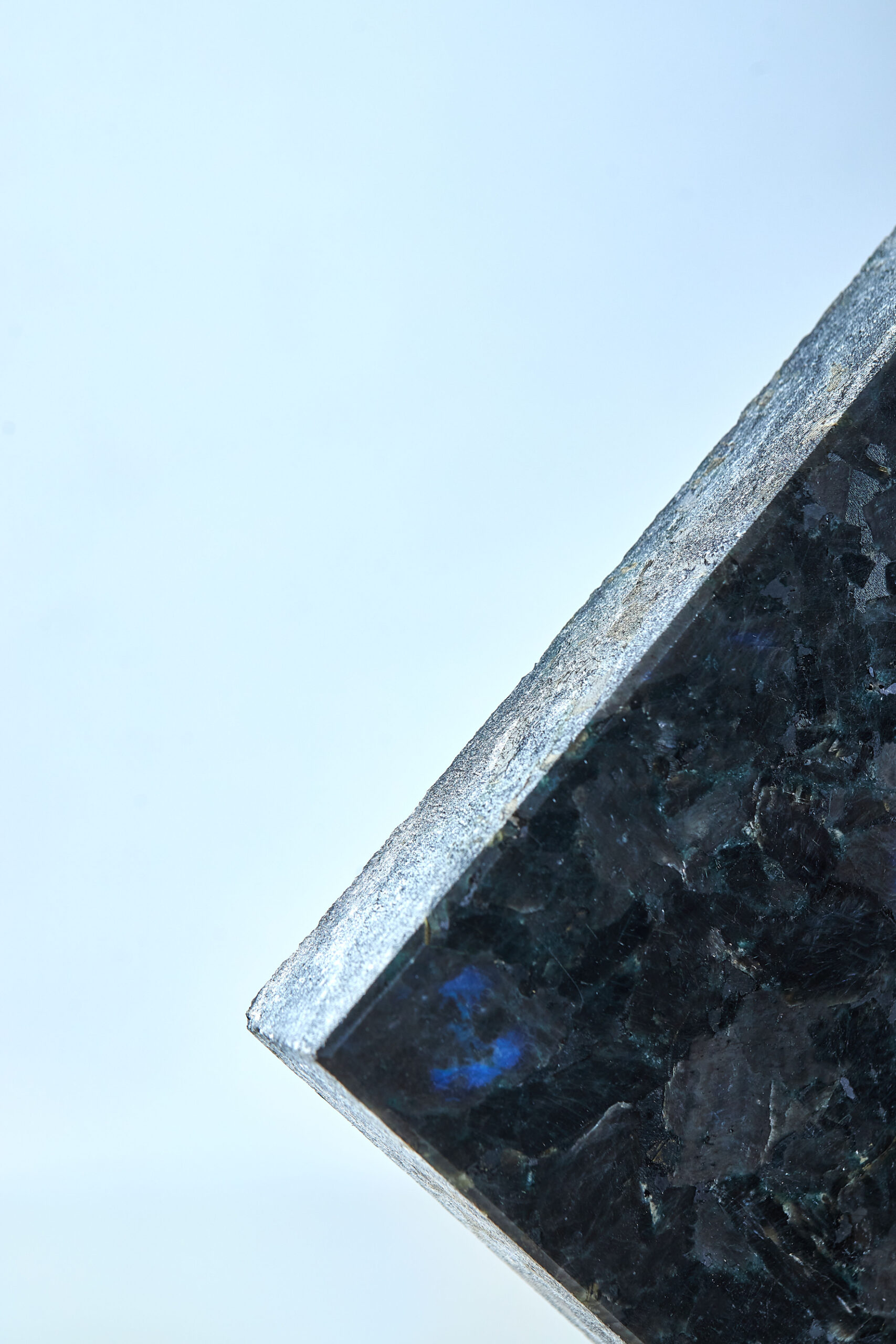
Thermal finishing creates a micro-textured surface that improves grip. This is not a decorative effect, but a functional property. Even in wet or icy conditions, the surface remains stable and safe. At the same time, the material retains its natural depth and does not appear artificial.Material Comparison in Outdoor Conditions
Natural Stone vs Engineered Materials
Engineered materials may perform consistently in the short term, but their structure depends on production methods and installation systems. Natural stone behaves differently. Its structure is formed geologically and remains stable over time, offering a more predictable long-term result.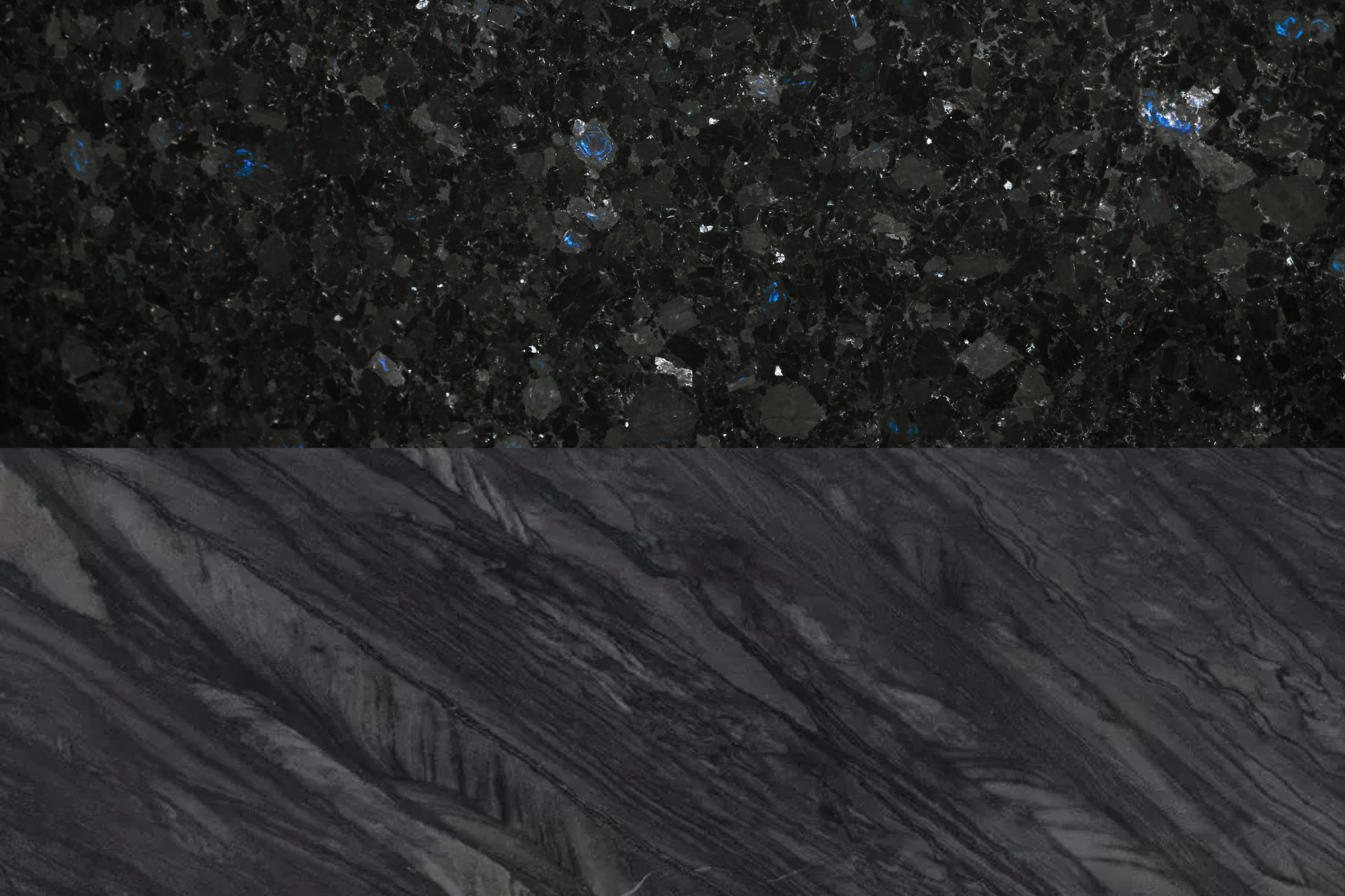
Installation as Part of the System
What Determines Performance
- type of facade system
- expansion joints
- fixing methods
- slab geometry control
Installation defines how the material responds to loads and whether internal stress is introduced.
Real-World Application
FAQ
Is black stone suitable for outdoor use?
Yes, but only if the material has sufficient density and low water absorption. These properties define its long-term performance.
Why does stone crack in winter?
The main cause is moisture entering the material and freezing. Expansion creates internal pressure that leads to structural damage.
Does the material require maintenance?
When properly selected and installed, the stone does not require regular restoration. Basic surface cleaning is sufficient.
Which matters more: frost resistance or water absorption?
These parameters work together. Water absorption determines whether moisture enters the material, while frost resistance defines how it reacts to freezing.
How the Material Behaves Over Time
Over time, exterior materials are constantly exposed to environmental factors: UV radiation, moisture, frost, and mechanical stress. It is under these conditions that the real difference between decorative solutions and natural stone becomes evident.
Black stone for outdoor use must not only withstand short-term loads but also maintain stability over years. In the case of labradorite, this is ensured by its dense crystalline structure, which does not degrade under repeated temperature cycles.
Unlike porous or layered materials, labradorite does not lose its geometry or alter its surface over time. Its texture remains stable, and the deep graphite base does not fade under sunlight.
Another important factor is that the material does not require regular restoration or surface renewal. With proper installation, black stone maintains its properties for decades even in demanding климат conditions.
This long-term stability is what makes labradorite not just a cladding material, but a durable architectural solution.