
You might be interesting:

Labradorite Slab Sizes: 3×2m, Custom Formats and Bookmatching
10 min | 01.05.2026Labradorite Slab Sizes: 3×2m, Custom Formats and Bookmatching
How slab format defines spatial continuity and scale


Labradorite Slab Size as an Architectural Tool
Labradorite slab sizes defines not only processing technology, but also how the material is perceived in space. When working with natural stone, format directly affects surface scale, the number of joints, and the overall integrity of the architectural solution.
Smaller formats create a fragmented structure — the surface is divided into separate elements, forming a visible rhythm of seams. In large formats, this effect disappears: the stone works as a continuous plane, without visual “fragmentation” or unnecessary noise. That is why large-format slabs are used in projects where monolithic appearance, scale, and clean geometry are essential.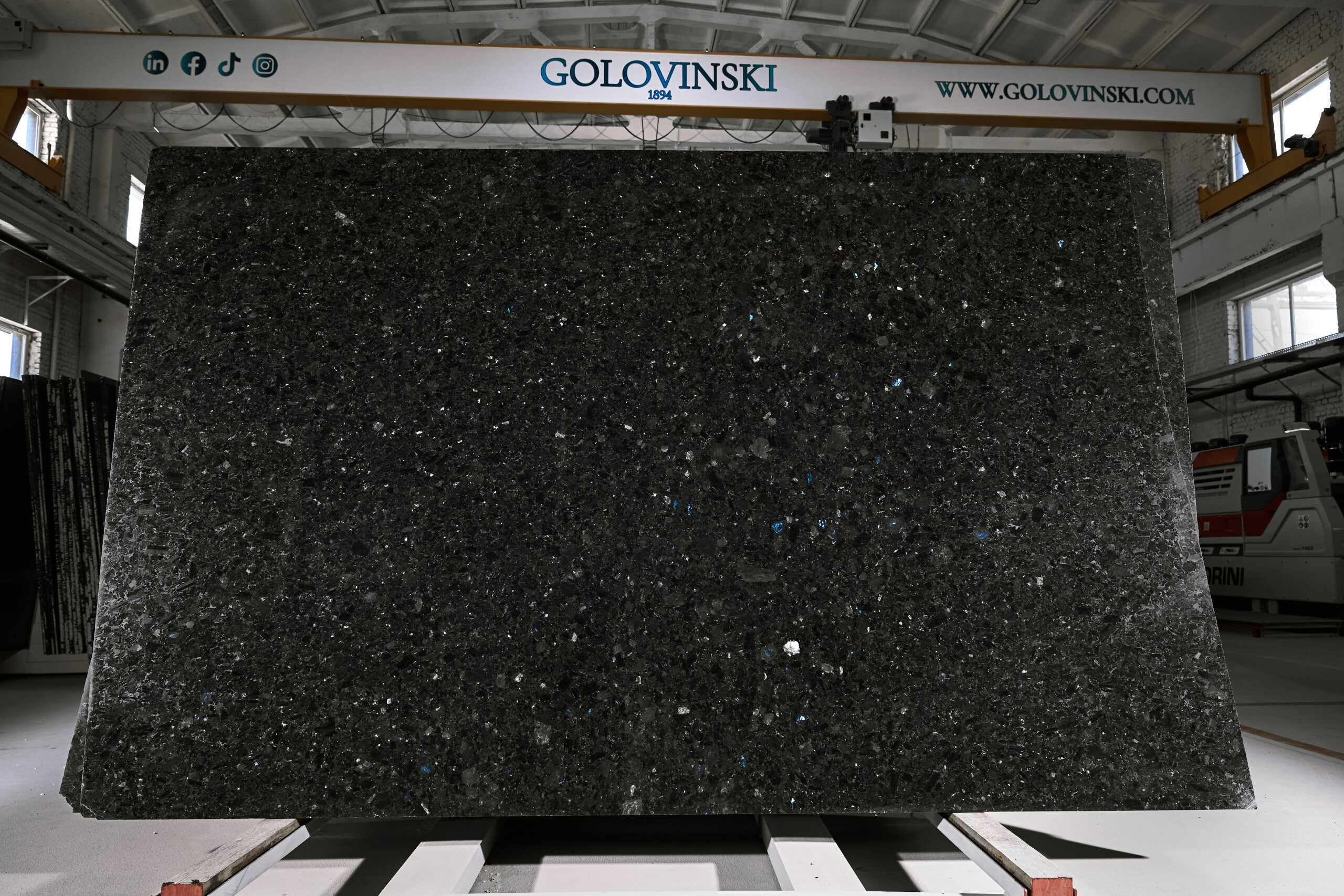
Standard Format 3×2 m
Fewer Seams — Greater Continuity
Large-format slabs allow covering significant surfaces without excessive joints. This fundamentally changes how the surface is perceived.
Instead of a grid of tiles, a single continuous plane is formed, where attention shifts to the material itself rather than the seams.
This is critical for:
- facades and architectural envelopes
- large-format interior panels
- flooring in spacious environments
Architectural Effect of Large Format
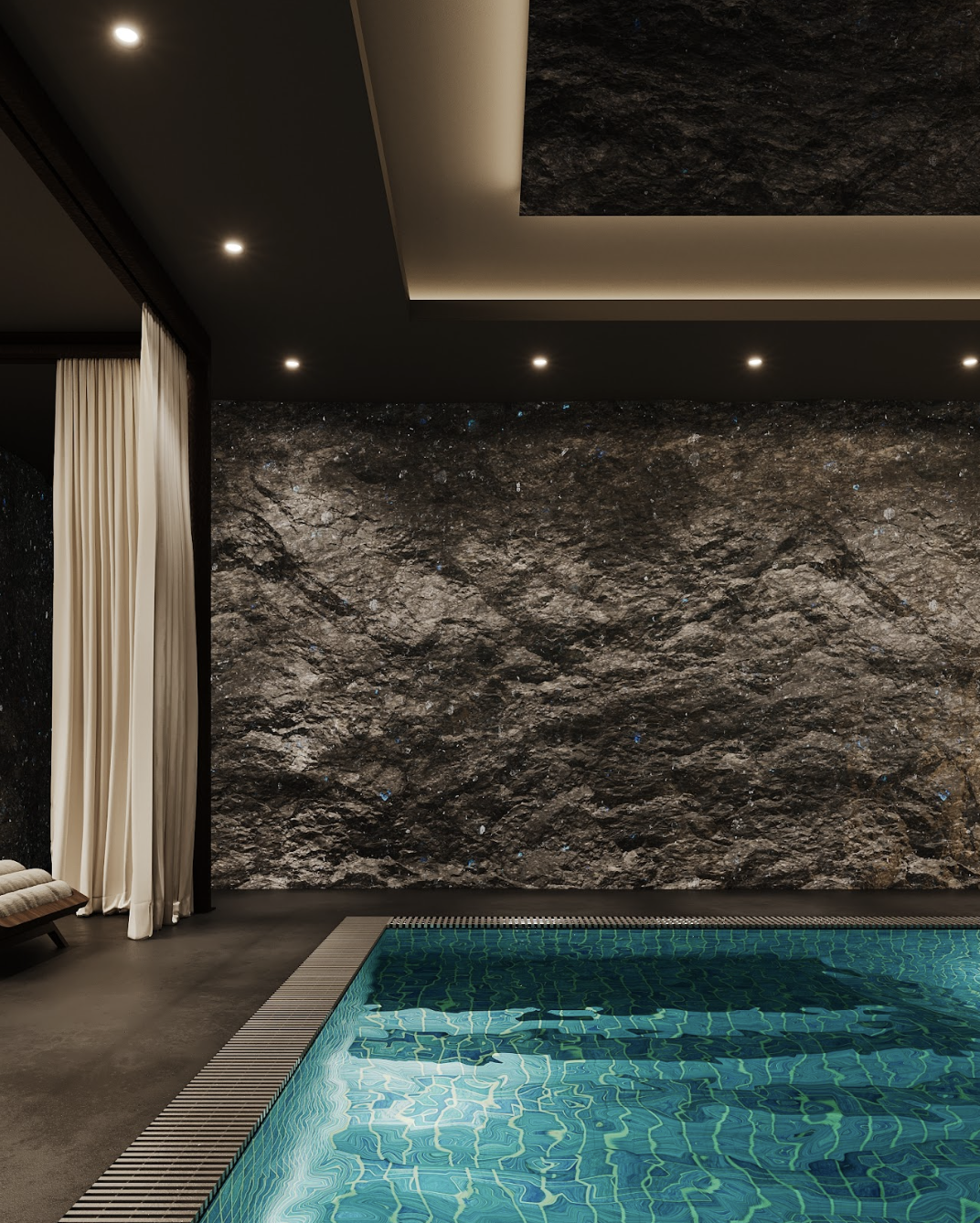
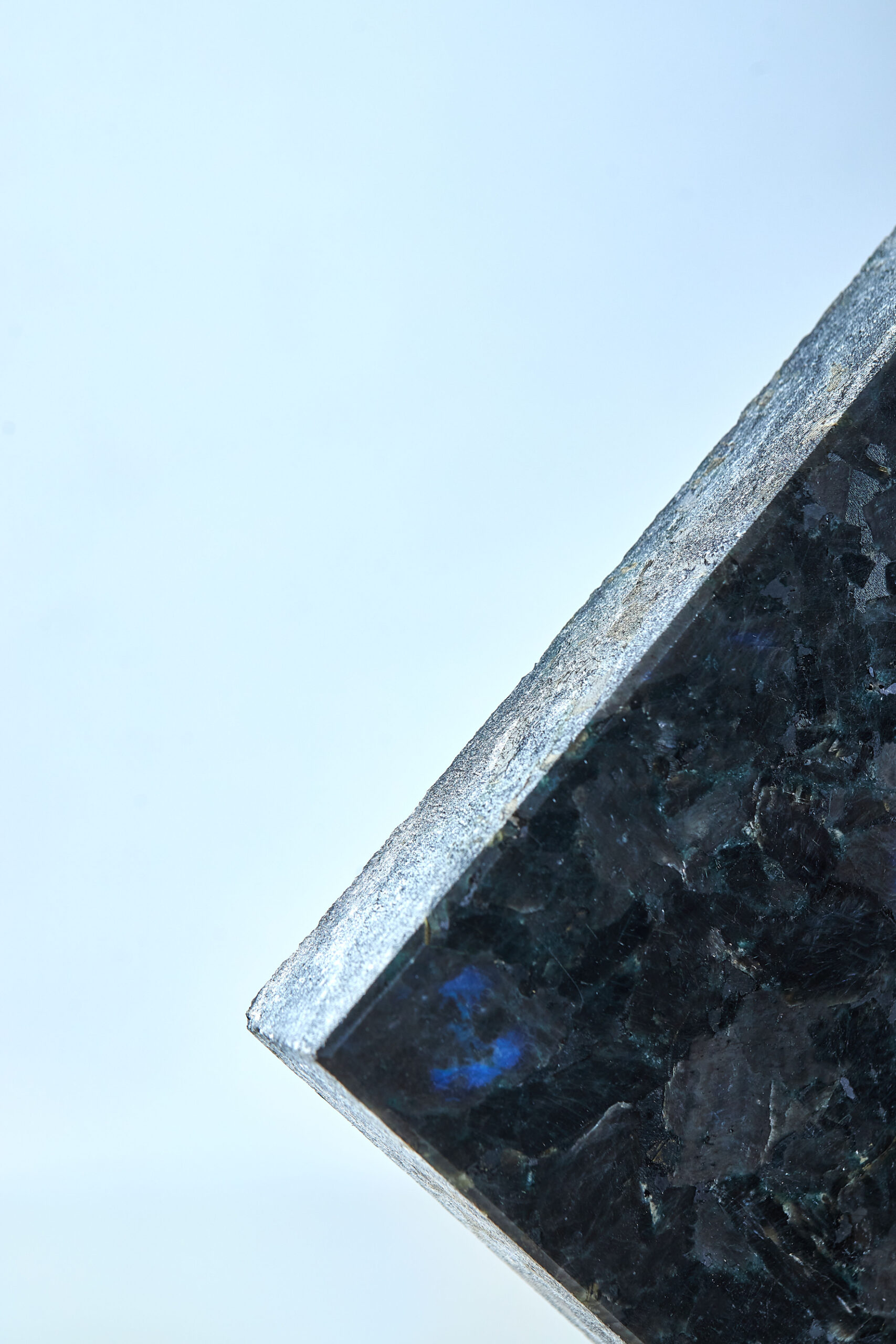
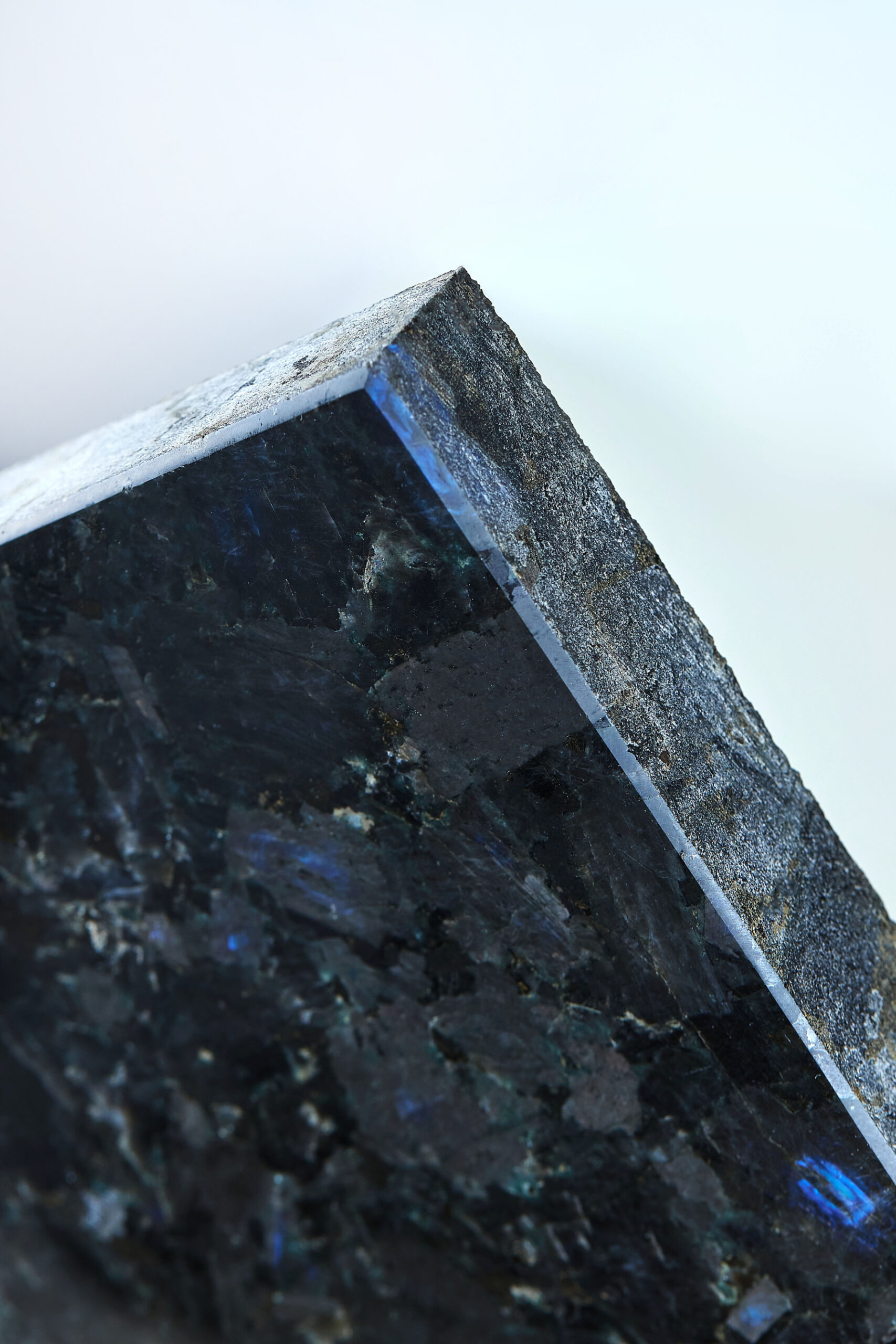
In large format, labradorite works differently. Its deep graphite base and natural crystalline structure are revealed as a continuous surface.
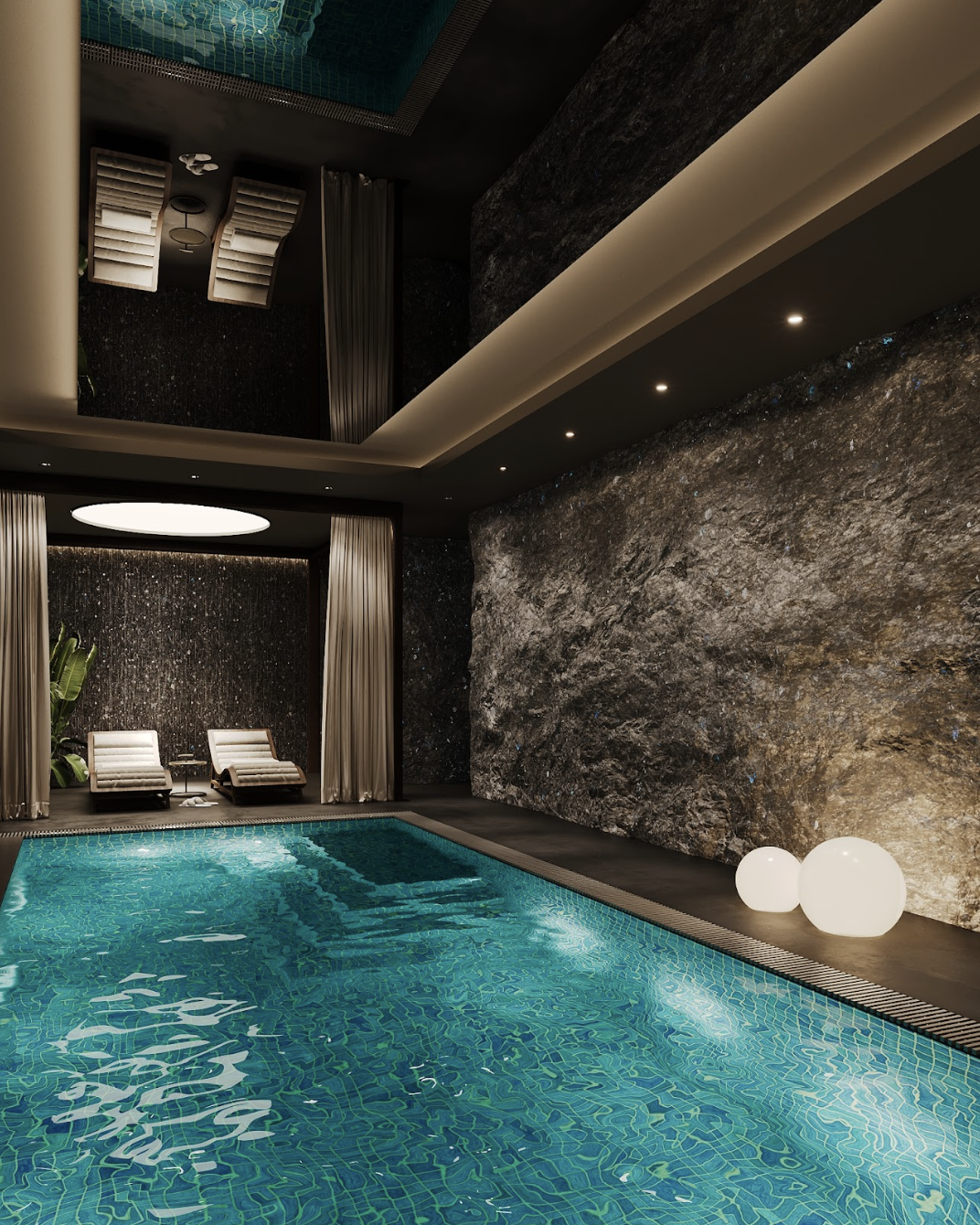
This allows the material to define the space on its own — through texture, depth, and interaction with light.
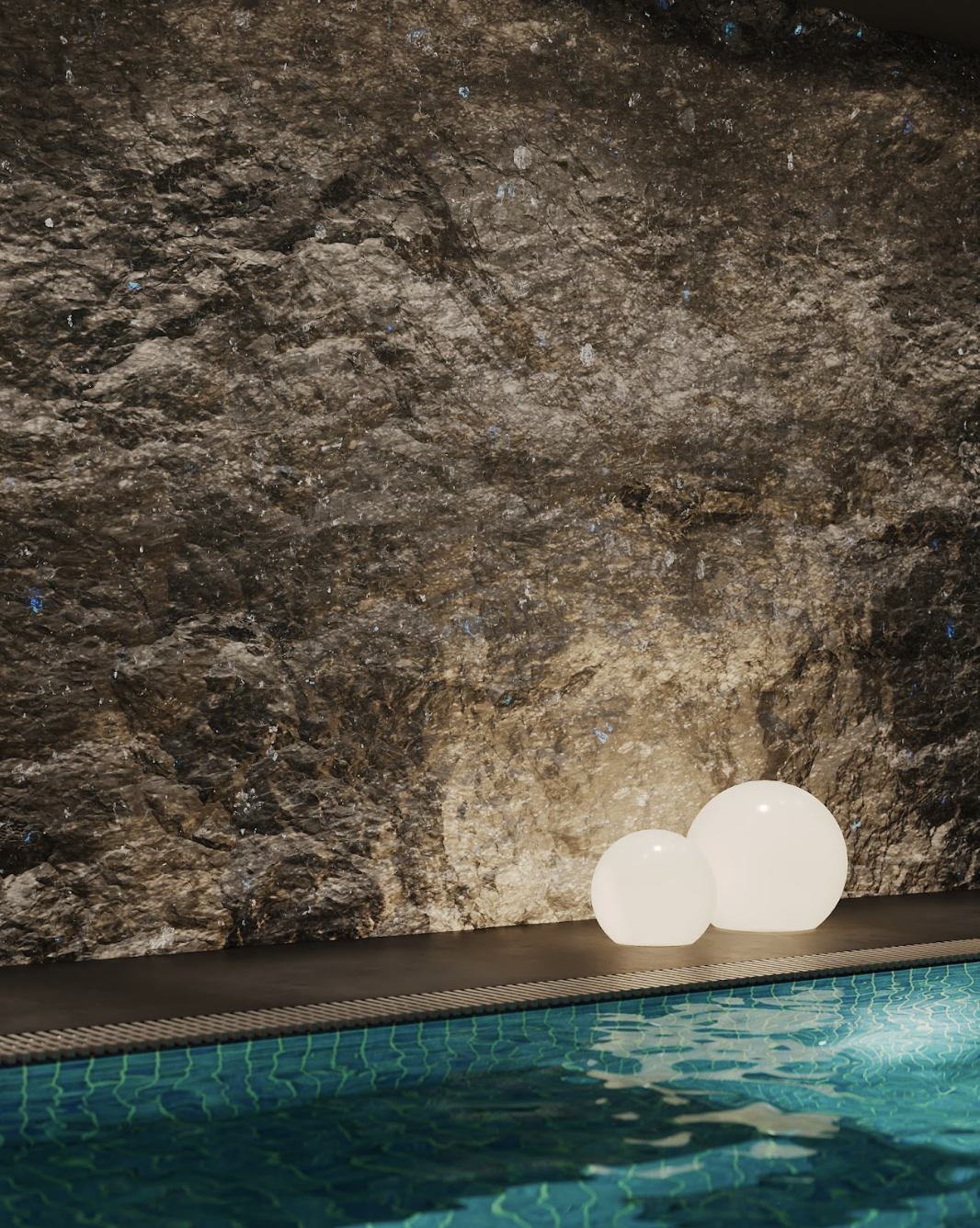
This becomes especially visible under side or accent lighting, where iridescence appears across large uninterrupted surfaces.
Custom Sizes and Project-Specific Production
Golovinski offers custom slab production tailored to specific projects — taking into account spatial geometry, installation requirements, and design intent.
Such solutions are used when:
- precise alignment with architectural geometry is required
- minimizing seams is critical
- continuity of the stone pattern must be preserved
- the project requires unique formats or large surfaces
In these cases, format becomes a design tool rather than just a production parameter.
Bookmatch: Mirror Symmetry of Stone
Minimum Two Slabs from One Block
To achieve a precise effect, slabs must be cut from the same stone block. This ensures continuity of structure and symmetry of the pattern. In labradorite, this effect gains an additional dimension — light. Iridescence does not simply repeat but creates a dynamic interaction across both surfaces.Where Bookmatch is Used
- feature walls
- fireplaces
- lobbies and public spaces
- high-end residential interiors
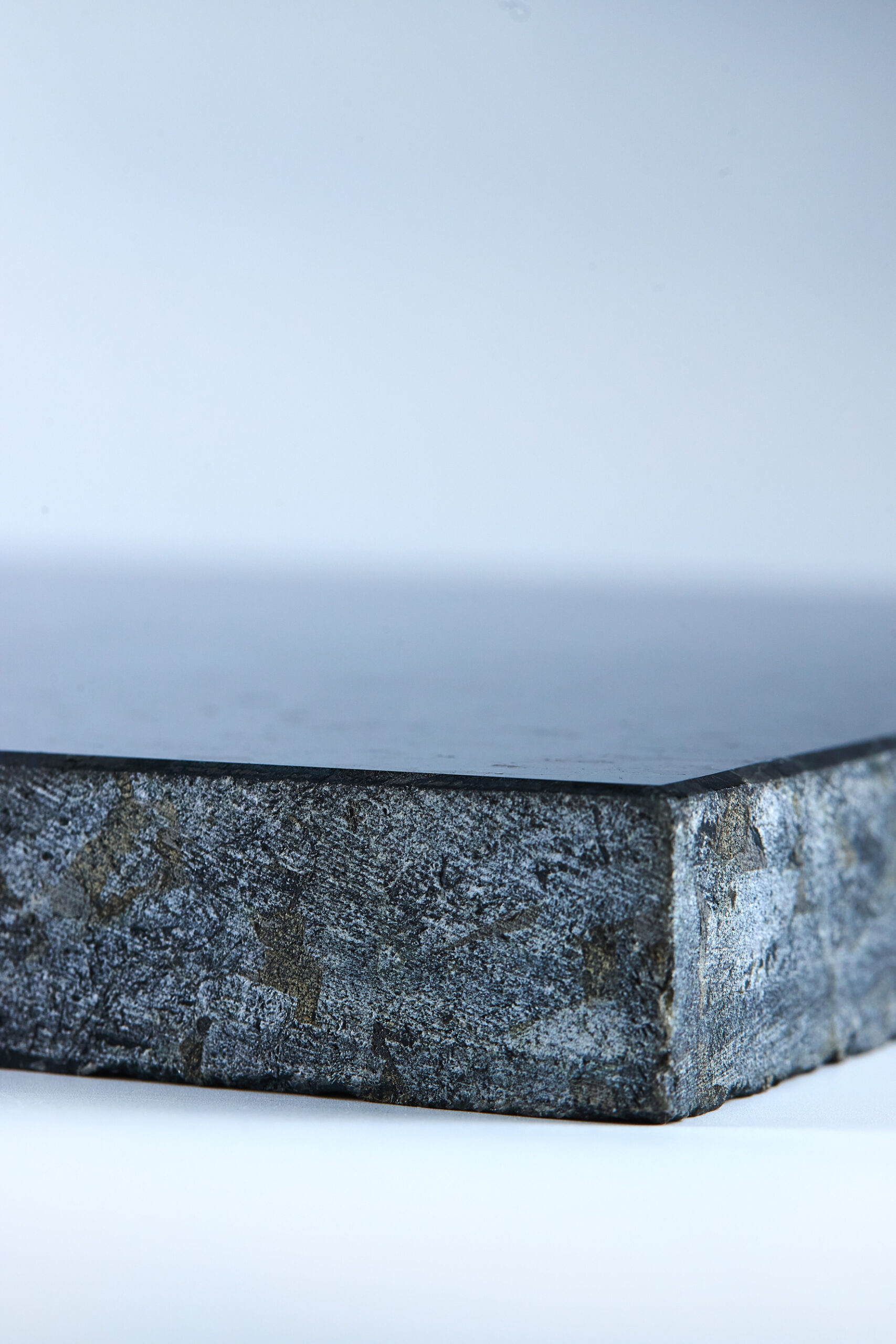
Thickness: 20 / 30 mm
Functional Applications
- 20 mm — wall panels, decorative elements, interiors
- 30 mm — flooring, kitchens, load-bearing interior applications
Thickness selection depends on load, installation method, and the role of the material in the project.
Logistics of Large-Format Slabs
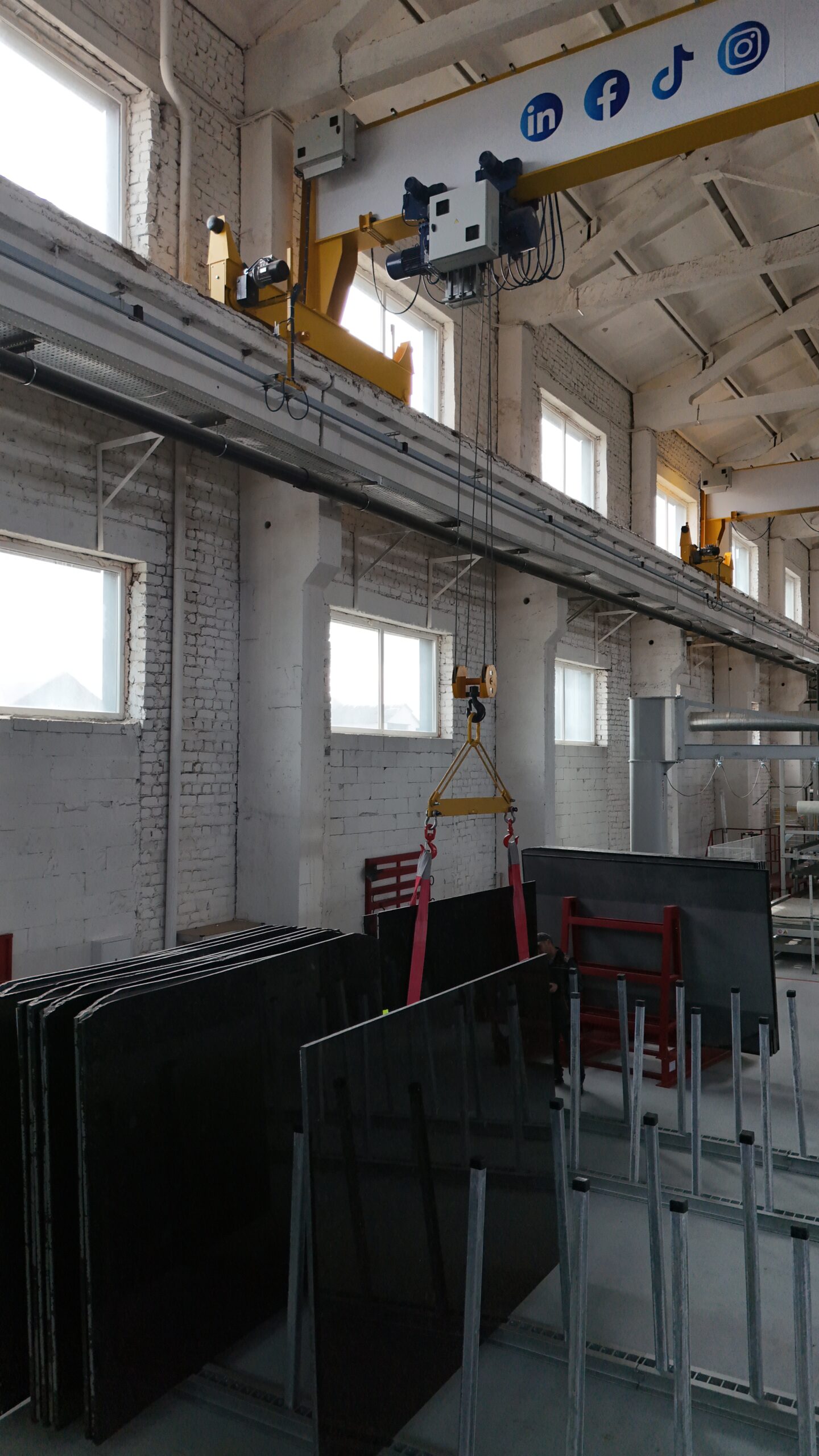
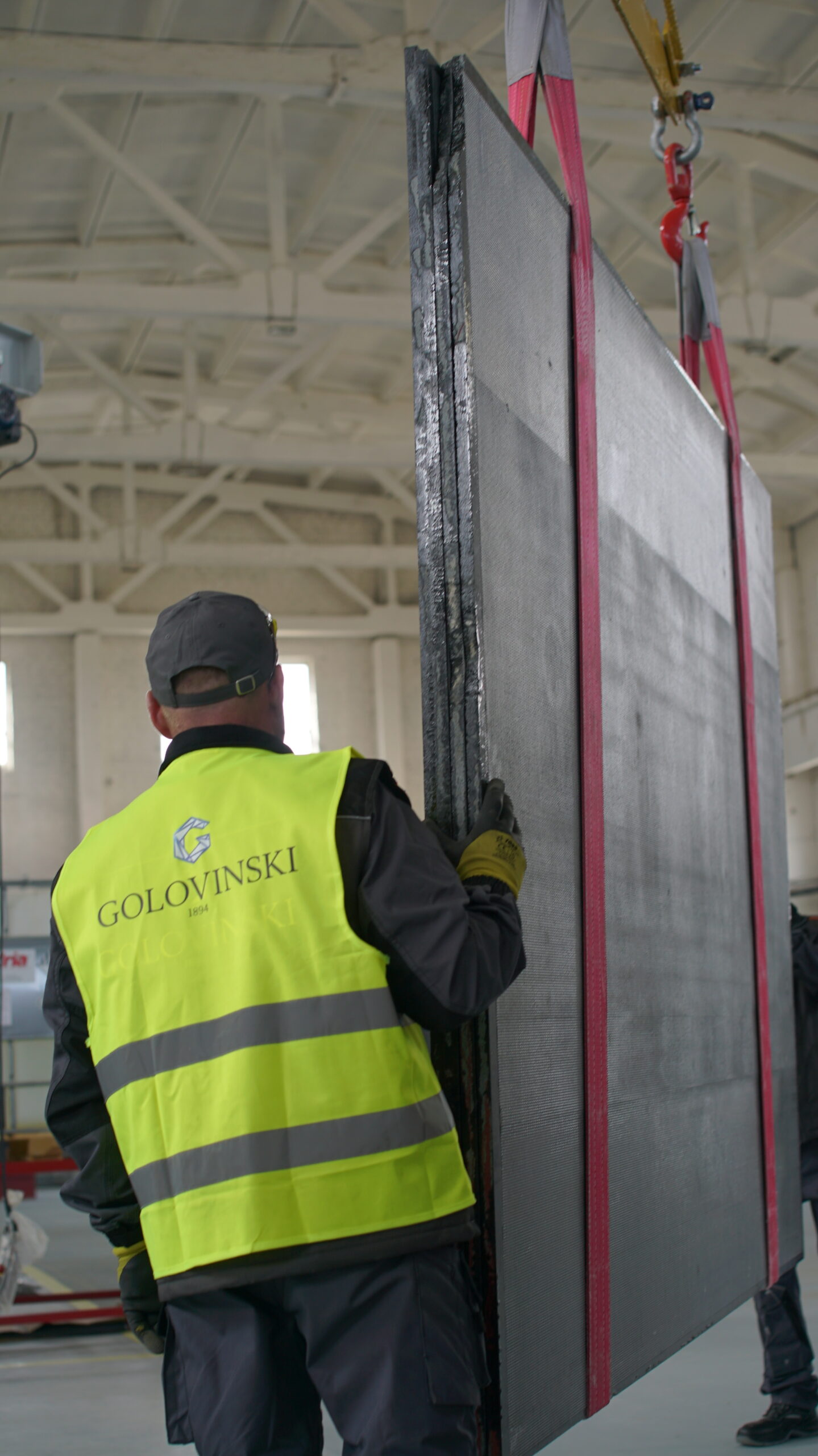
Slabs measuring 3×2 m require a specialized approach at every stage — from packaging to installation. Large-format stone functions as a single structural element, so any mistakes during transportation can affect the final result.
Transport Control
Slabs are secured within specialized frames that ensure stability during transport and protect the material from mechanical stress and deformation.
This is particularly important in international logistics, where the material passes through multiple handling stages.
Golovinski Approach
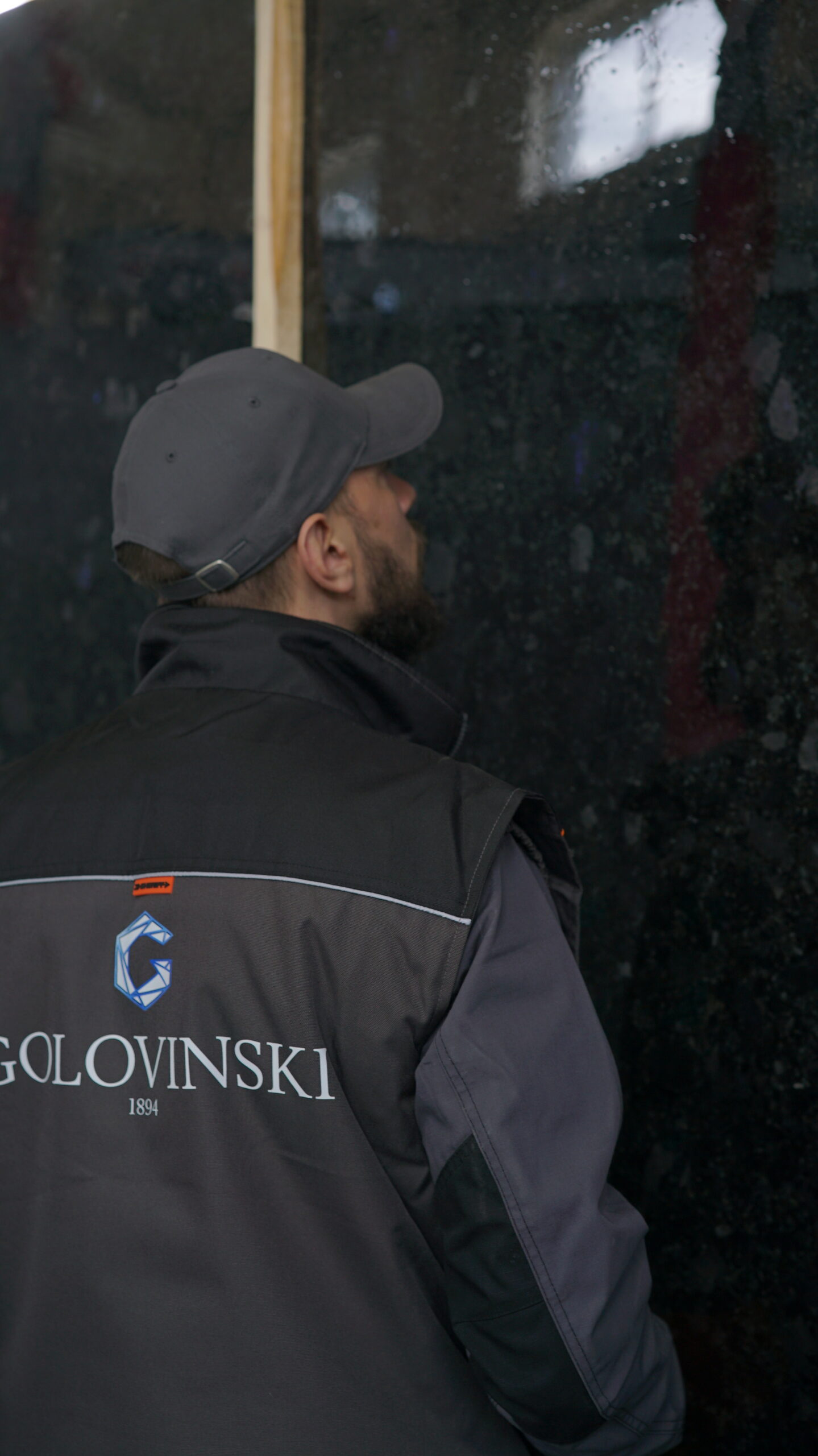
Golovinski places special emphasis on packaging and transportation of large-format slabs. Each shipment is prepared with consideration of route, delivery method, and on-site installation requirements.
As a result, the material arrives on site in the same condition as it left production — without loss of geometry, structure, or surface quality.
Speed and Project Synchronization
Beyond transport safety, delivery speed is equally important. Optimized logistics allows synchronization with construction timelines.
This reduces downtime on site and enables large-format stone to function as a predictable architectural element rather than a risk factor.
How Size Affects Spatial Perception
Smaller formats create rhythm and fragmentation. Large formats create calm, continuous surfaces without visual noise.
That is why large-format labradorite is used in projects where scale, depth, and visual integrity are essential.