
You might be interesting:

Labradorite in the Bathroom: Sinks, Bathtubs and Stone Cladding
10 min | 06.03.2026Labradorite in the Bathroom: Sinks, Bathtubs and Stone Cladding
Natural stone in a premium bathroom interior


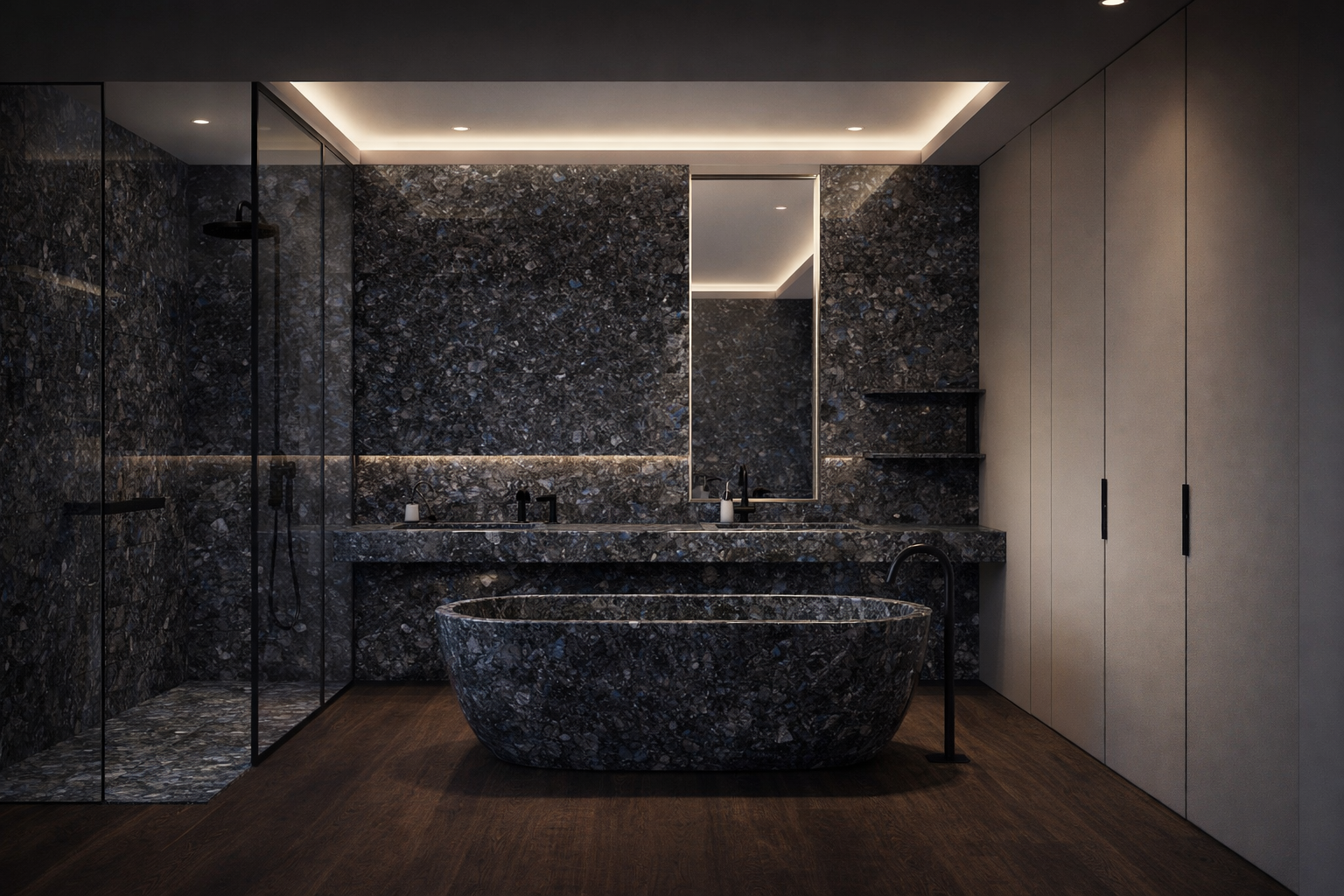
Labradorite bathroom interiors are becoming increasingly popular in modern architecture and premium interior design. Natural stone surfaces add depth, texture and a strong material character to the space, making them ideal for contemporary bathroom interiors.
Natural stone has long been associated with premium interiors. In modern architecture, materials with strong texture and natural depth are often used to create spaces that feel both refined and authentic.
One of the materials that is increasingly used in contemporary interiors is labradorite. Thanks to its deep graphite base and characteristic blue iridescence, this stone creates expressive surfaces that work particularly well in bathrooms.
Large-format slabs allow designers to introduce natural stone as a key architectural element of the space.
Labradorite in Bathroom Interiors
Modern bathroom interiors increasingly combine natural materials with minimalist forms. Stone surfaces, wood, glass and metal create balanced compositions that feel calm, architectural and timeless.
Labradorite fits naturally into this concept. Its dense crystalline structure and deep graphite-grey base create a surface that appears visually rich without becoming overly decorative.
In interior design, labradorite is often used for:
• accent walls
• countertops and sinks
• stone bathtubs
• decorative architectural surfaces
Large slabs allow designers to create continuous stone surfaces with minimal joints, which emphasizes the natural structure of the material.
Light interacting with the crystalline structure of labradorite reveals the depth of the stone and its subtle blue iridescence, giving the surface a distinctive material presence.
Stone bathtubs as a central design element
Another element of a premium interior can be a stone bathtub. Bathtubs made from natural stone create a strong visual presence and add a sense of material depth to the space.
In the case of labradorite, a bathtub can be produced:
- • from a monolithic stone block
- • as stone cladding over a structural base
- • in combination with other materials
Such solutions are often used in interiors where the bathtub becomes the central element of the composition.
The combination of stone with wood, metal and natural textures allows designers to create interiors that feel both natural and architectural.


Labradorite Sinks in Bathroom Design
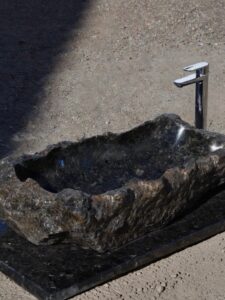
Natural aesthetics of labradorite
One of the main reasons labradorite is used in bathroom interiors is its natural aesthetic.
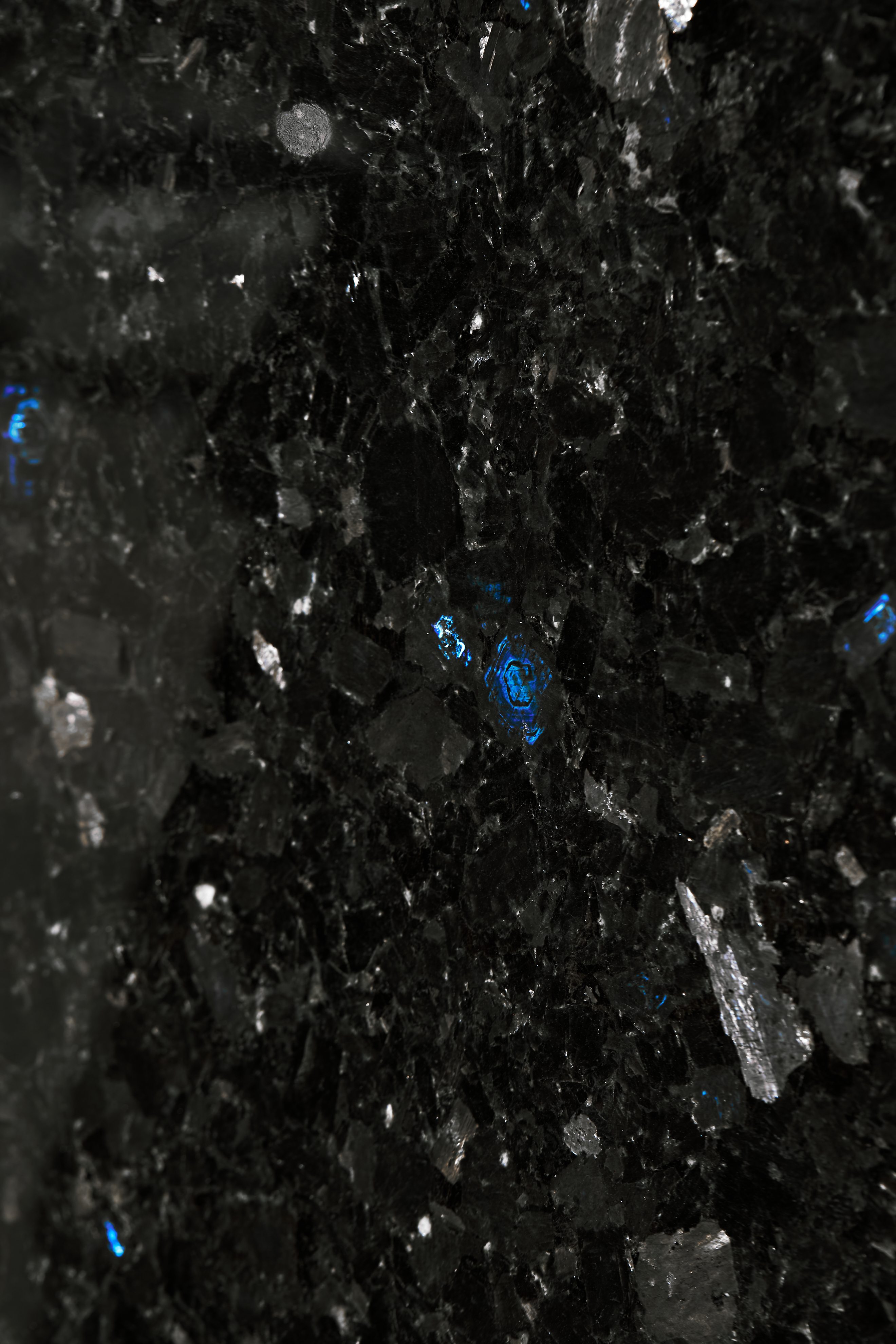
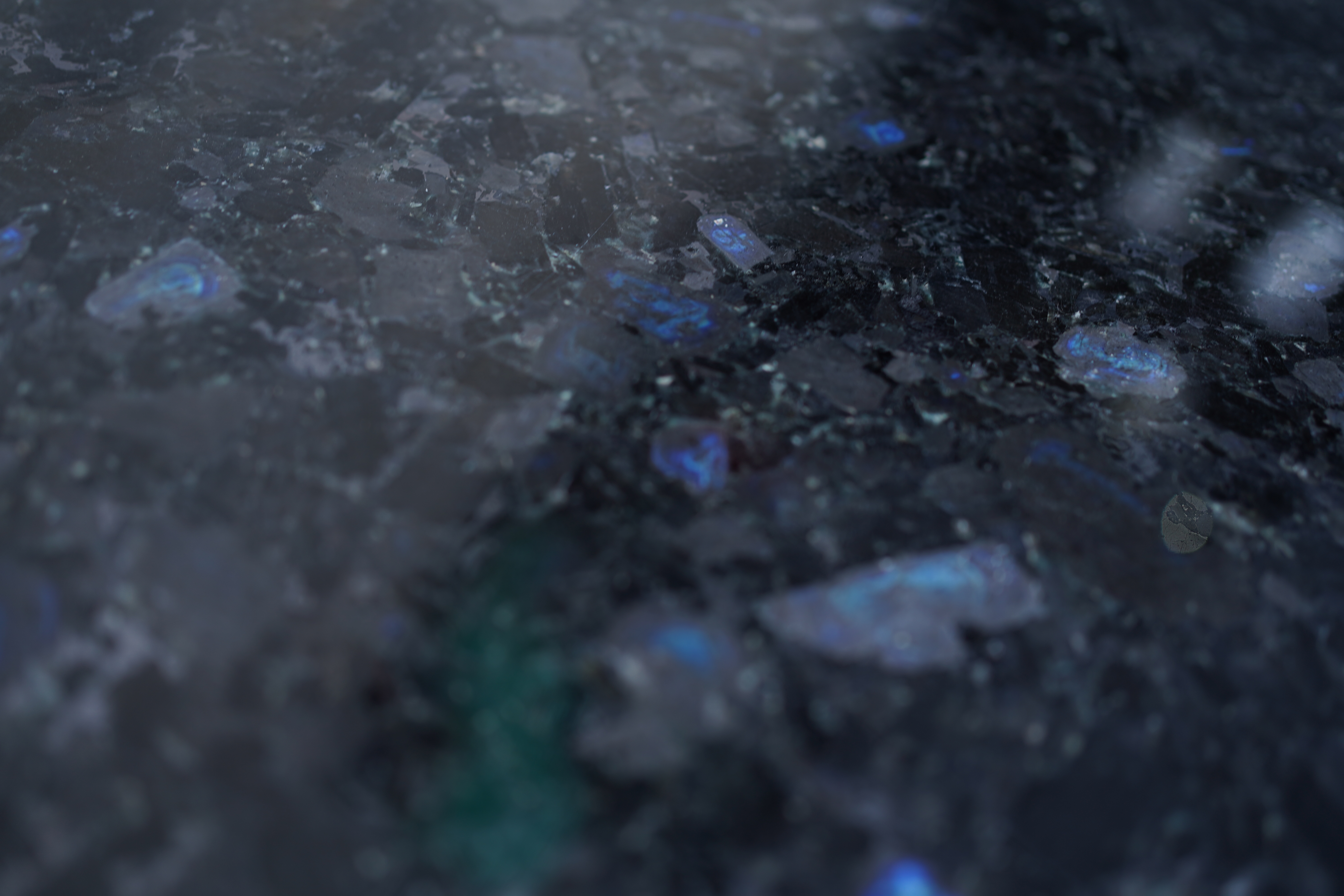
The deep graphite base of the stone combined with rare blue iridescence creates a surface that appears almost alive. Depending on the angle of light, the stone reveals its texture and characteristic blue flashes in different ways.
This dynamic visual effect makes labradorite particularly suitable for spaces where materials play a key role in shaping the atmosphere of the interior.
Materials with such depth and natural texture are frequently used in premium interiors where authenticity and architectural expression are essential.
Durability and suitability for bathrooms
Labradorite is also valued for its durability in humid environments. Natural stone has a dense crystalline structure and is well suited for use in bathrooms when the surface is properly finished and professionally installed.
The polished surface of the stone not only enhances the depth of color but also reveals the natural structure of the crystals. Because of this, labradorite appears different depending on the lighting conditions: in daylight the stone shows its natural texture, while under artificial lighting the characteristic blue iridescence becomes more visible.
In contemporary projects, labradorite is often used as an accent material for walls, countertops, sinks or decorative architectural elements. Such applications allow designers to create interiors where natural stone becomes the main aesthetic focus of the space.