
You might be interesting:

Black Labradorite for the Kitchen — Luxury Without Compromise
10 min | 07.02.2026Black Labradorite for the Kitchen — Luxury Without Compromise
A stone that combines aesthetics and durability


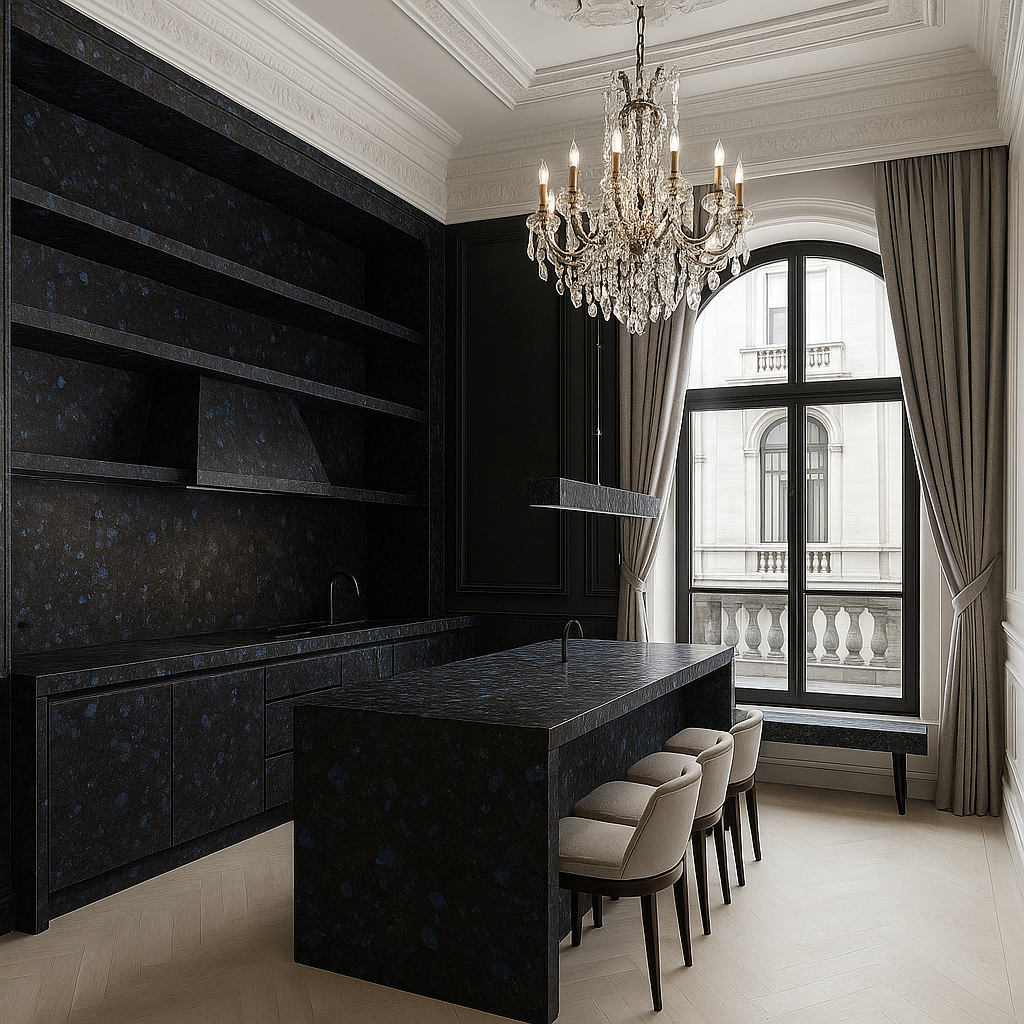
Black Labradorite for the Kitchen — Luxury Without Compromise
Dreaming of a black stone kitchen that looks truly premium and still works perfectly in everyday life? Then black labradorite is exactly the material worth your attention. Often called “black marble” in everyday language, labradorite is in fact much stronger, more practical, and visually far more expressive — especially when we talk about Volga Blue.
This is a stone that combines deep black color, durability, and a unique blue glow that appears in the light. It doesn’t just decorate a kitchen — it gives it character.
Why dark stone in the kitchen is always a good idea
A dark stone kitchen is about confidence and style. Black surfaces instantly make the space more architectural, calm, and balanced. They highlight wood, metal, and light-colored cabinetry, creating contrast without visual noise.
But there’s a catch: not every dark stone is suitable for a kitchen.
A good black stone countertop must:
-
look elegant even after years of use
-
handle daily cooking, spills, and cleaning
-
resist stains and acids
-
stay timeless, not trendy
This is exactly where labradorite stands out.
What is labradorite, really?
Labradorite is a natural stone formed deep in the earth. Unlike marble, it does not react aggressively to acids like lemon juice, wine, or tomatoes. That makes it far more suitable for kitchen use.
What makes labradorite special is its natural blue shimmer. On a black background, flashes of blue appear when light hits the surface at an angle. This effect cannot be copied by artificial materials.
Volga Blue labradorite is especially valued for:
-
deep, rich black color
-
strong blue reflections
-
stable structure and high density
That’s why it’s widely used in premium kitchens around the world.
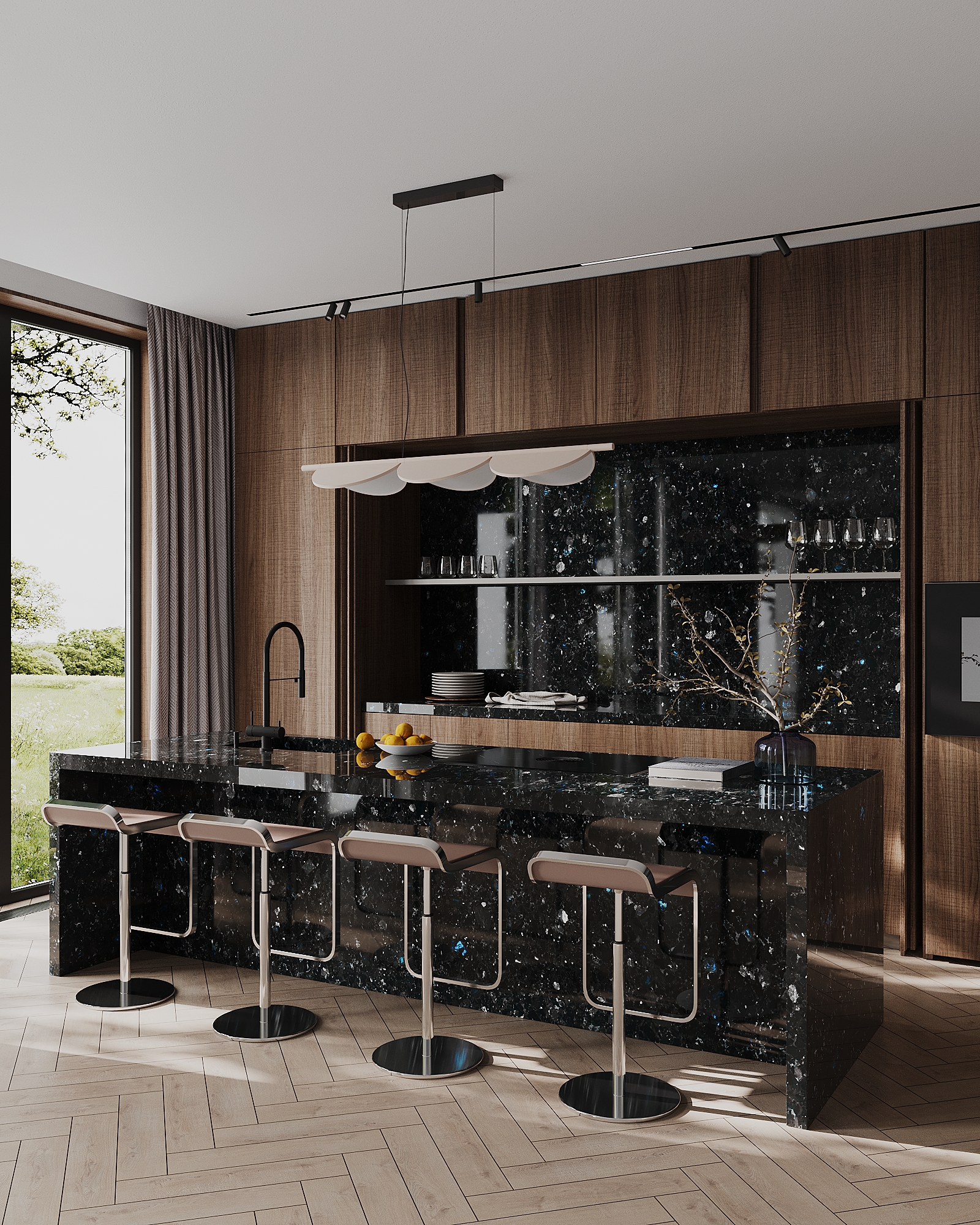


Volga Blue: from quarry to kitchen
Volga Blue labradorite is extracted from natural deposits in Ukraine. The stone is carefully quarried, cut into large slabs, polished, and prepared specifically for architectural and interior use.
What matters for a kitchen is not only the stone itself, but how it is processed:
-
large-format slabs mean fewer seams
-
precise cutting ensures perfect edges
-
high-quality polishing reveals depth and shine
Large slabs allow countertops and islands to look monolithic — calm, clean, and expensive.
Labradorite in the kitchen: practical benefits
Resistant to everyday kitchen challenges
Labradorite handles daily cooking very well. Spilled wine, coffee, oil, or sauces don’t easily soak into the surface. With basic care, the stone keeps its appearance for years.
Comfortable to use
It’s strong enough for daily work, but still feels warm and natural compared to artificial materials. It doesn’t feel “plastic” or flat.
Easy care
No complicated routines. Mild soap, water, and a soft cloth are enough. You don’t need special chemicals to keep it looking good.
Stable and durable
Labradorite doesn’t fear heat from hot cookware (though trivets are always recommended) and handles mechanical use better than marble.
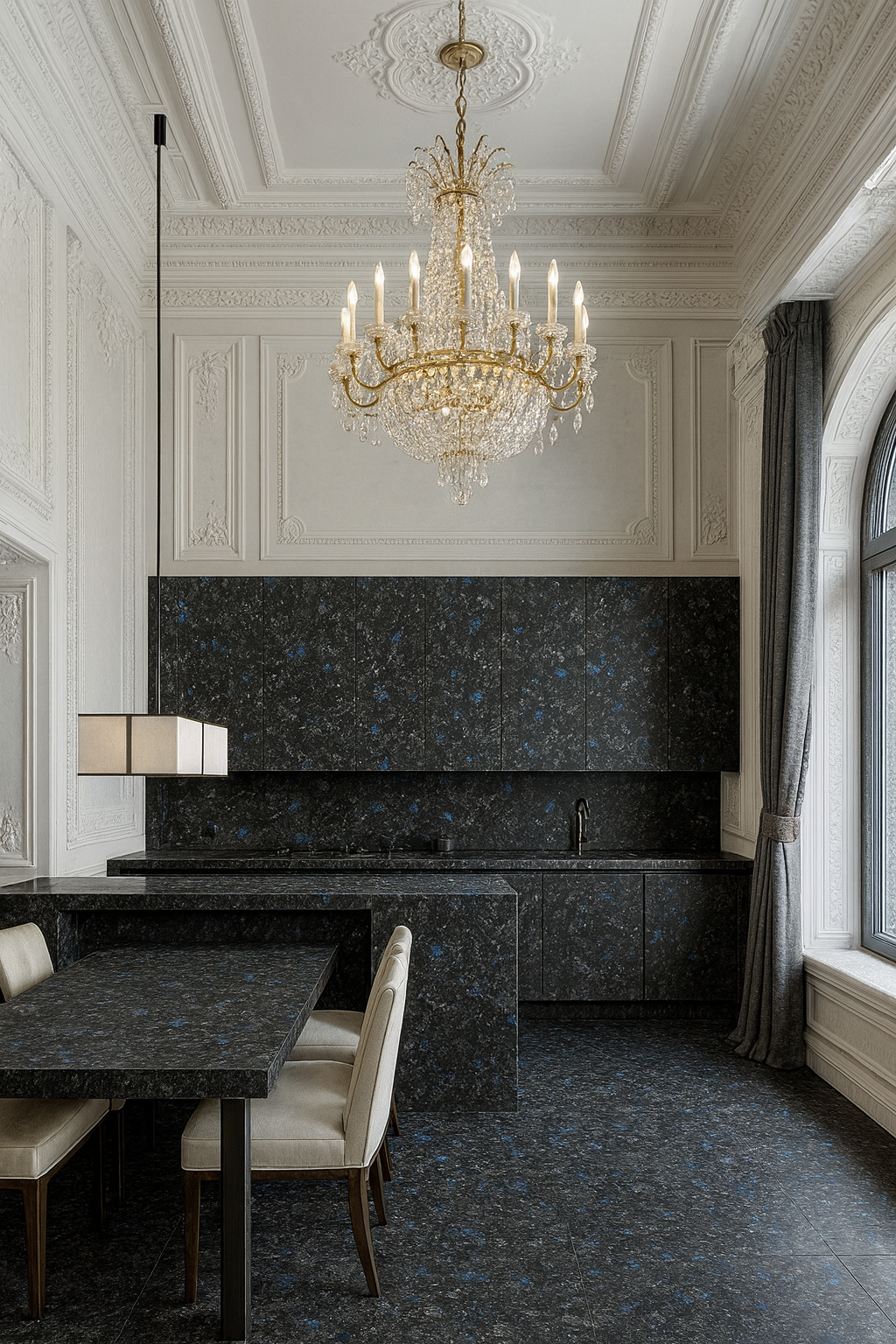
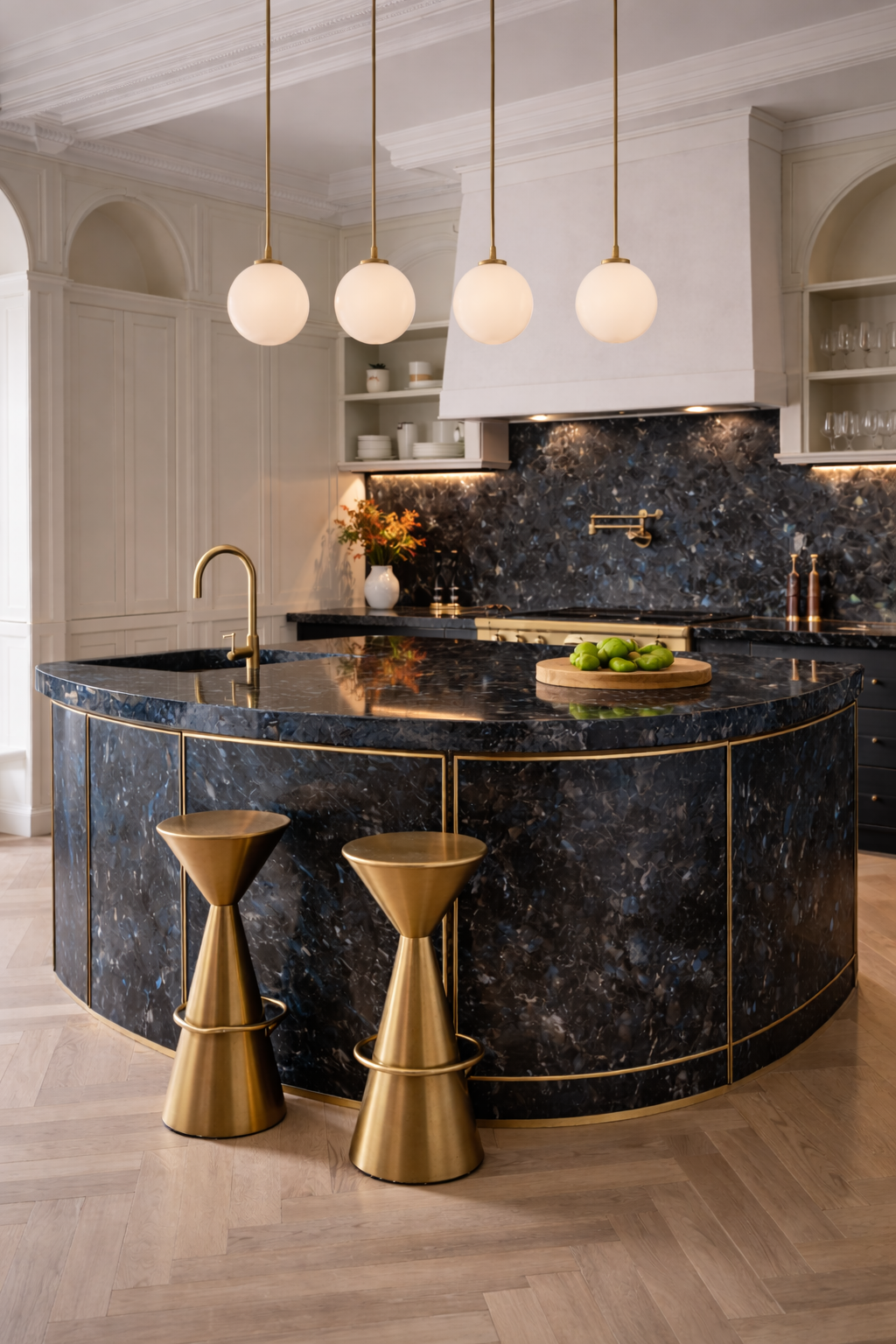
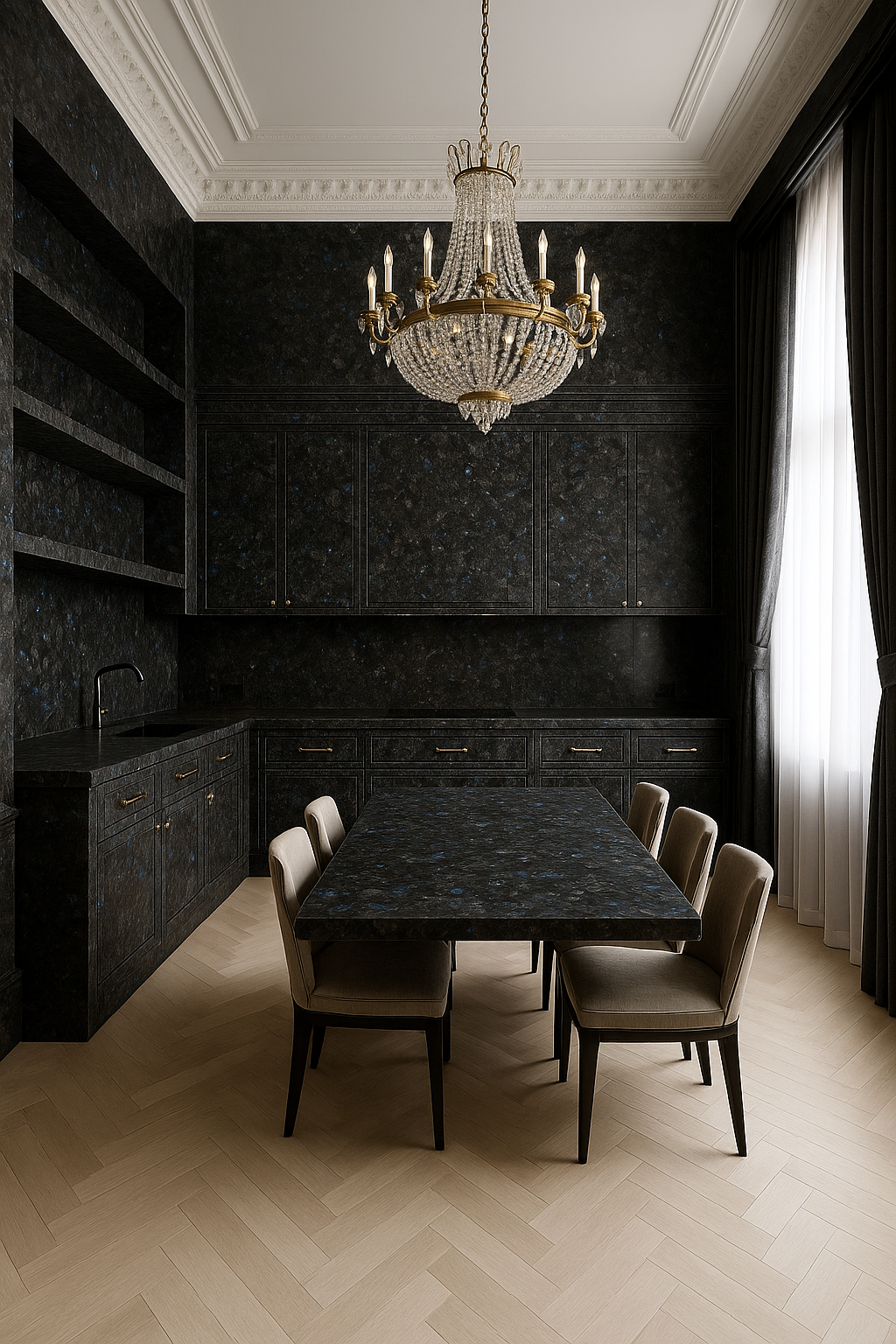
How black labradorite looks in kitchen design
-
Black labradorite works beautifully in different styles:
1. Light kitchen + black countertop
White, beige, or light gray cabinets paired with a black stone countertop create a clean, timeless look.
2. Wood + dark stone
Natural wood and Volga Blue are a perfect match. The stone adds depth, the wood adds warmth.
3. Kitchen island as a centerpiece
A black labradorite island instantly becomes the visual focus of the kitchen — especially with waterfall edges.
4. Backsplash in the same stone
Using the same stone for the countertop and backsplash creates a solid, architectural feel.
5. Black-on-black interiors
Matte black cabinets combined with polished labradorite look bold, elegant, and very modern.
Lighting is key: properly placed light reveals the blue shimmer and makes the stone come alive.
Finish, thickness, and edges — small details that matter
Finish
-
Polished — glossy, dramatic, shows the blue glow best
-
Honed (matte) — calmer, more minimal, very architectural
Thickness
Thicker stone looks solid and luxurious. Thinner slabs look modern and light. Both options work — it’s about the desired mood.
Edge profile
Straight, minimal edges emphasize modern design. Soft bevels add elegance and refinement.
These choices define how premium your kitchen will feel.
Care tips: simple and realistic
-
Wipe spills soon after they happen
-
Use neutral cleaning products
-
Avoid aggressive acids or abrasive cleaners
-
Use cutting boards and trivets
That’s it. No complicated maintenance, no stress.
Is black labradorite worth it?
If you want a premium kitchen countertop that:
-
looks luxurious
-
works well every day
-
doesn’t require constant worry
-
ages beautifully
Then labradorite, especially Volga Blue, is one of the best choices you can make.
It’s not just a dark stone for the kitchen — it’s a material with character, depth, and presence. A real example of luxury without compromise.