
You might be interesting:

Labradorite Fireplace Surround: Statement Interior Element
10 min | 09.03.2026Labradorite Fireplace Surround: Statement Interior Element
How natural Golovinski labradorite shapes the atmosphere of a modern interior and becomes the central element of the fireplace zone


Labradorite Fireplace: An Accent Element of Interior Design
A labradorite fireplace made of natural stone has always been a symbol of warmth, architectural expression, and interior status. In modern interior projects, the fireplace is increasingly viewed not only as a functional element but also as the central accent of a space.
One of the materials that allows the creation of a truly expressive fireplace is labradorite. Thanks to its deep graphite-grey base and characteristic blue iridescence, this stone creates a surface with natural depth and a complex texture.
This is why labradorite is often used in premium interiors where materials play a key role in shaping the atmosphere of a space.
Labradorite as a Material for Fireplaces
Natural stone has long been used for fireplace cladding due to its durability and expressive texture. Labradorite has a dense crystalline structure that allows it to be used in various architectural solutions.
A labradorite fireplace can become the key element of an interior, around which the entire spatial composition is built.
In modern projects, a labradorite fireplace can be implemented:
• as cladding for a fireplace portal structure
• in the form of large-format stone panels
• as a monolithic stone fireplace portal
• in combination with metal, wood, or glass
An Architectural Accent in a Modern Interior
In contemporary interior architecture, the fireplace is increasingly used as an accent surface. Large slabs of natural stone allow the creation of monolithic planes with a minimal number of joints.
Labradorite works particularly well in such solutions due to its deep graphite structure. The fireplace zone gains a strong material depth and becomes the focal point of the space.
Depending on lighting conditions, the stone reveals its texture in different ways. The natural blue iridescence of the crystals creates the effect of a living surface, adding dynamics and character to the interior.
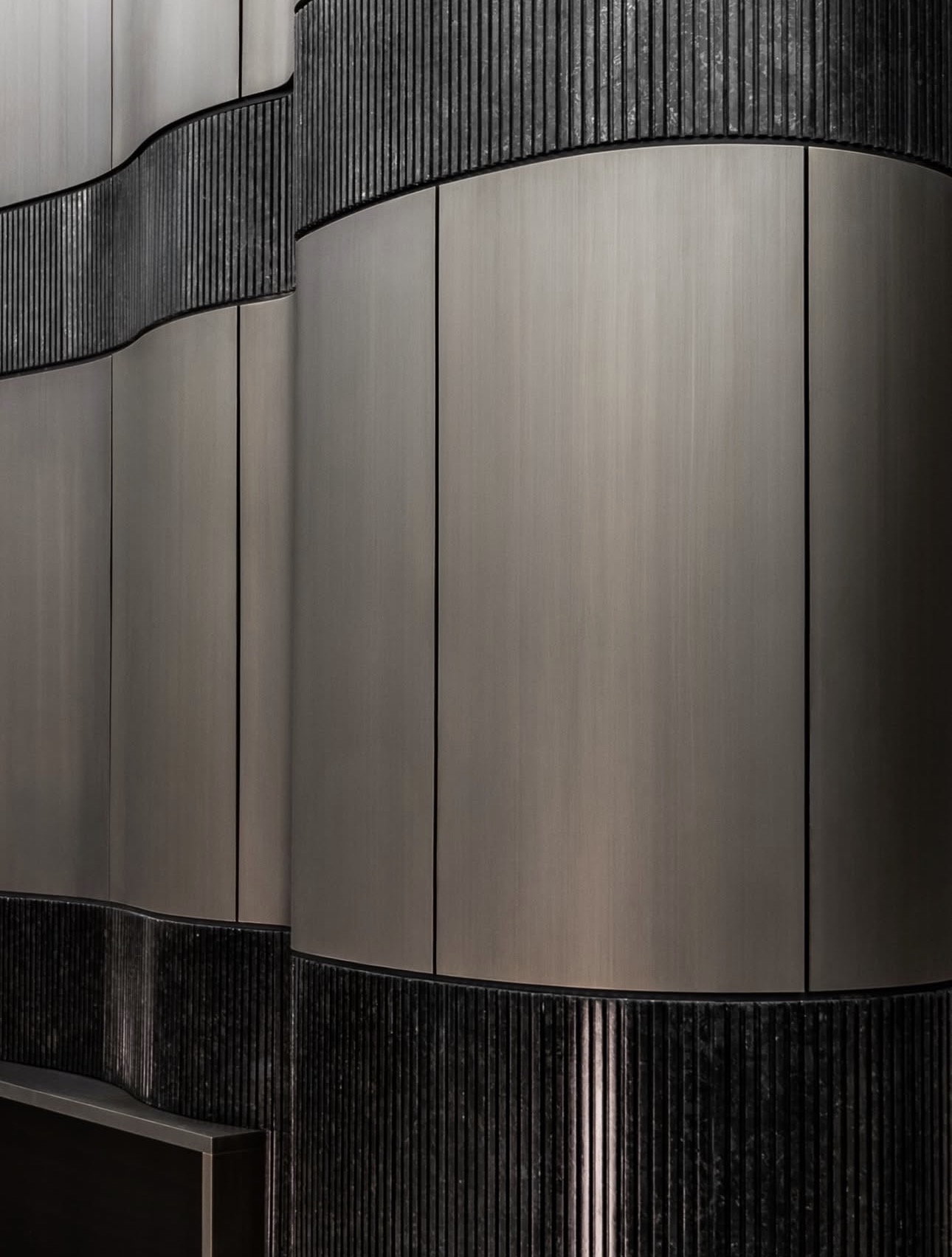
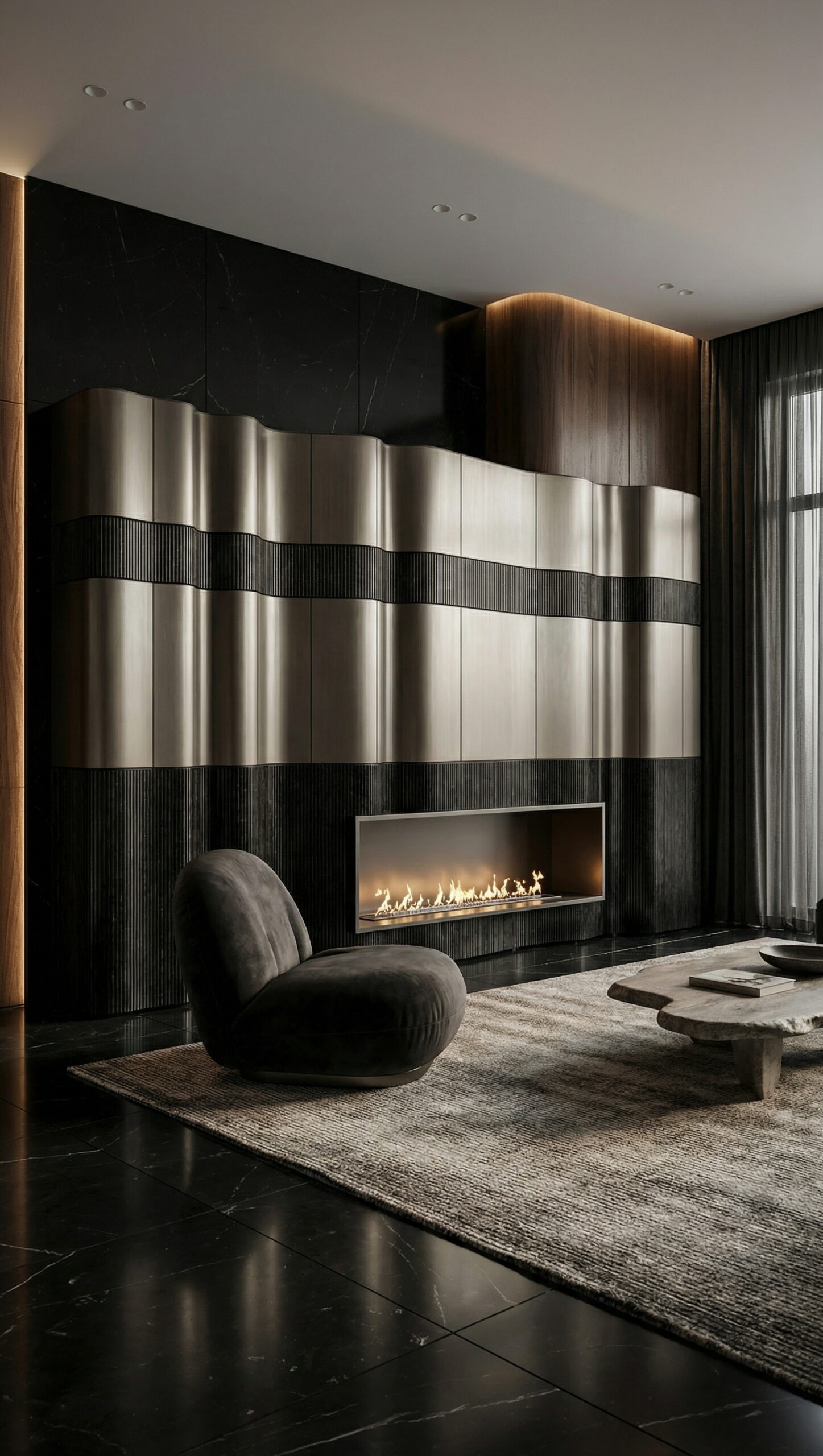
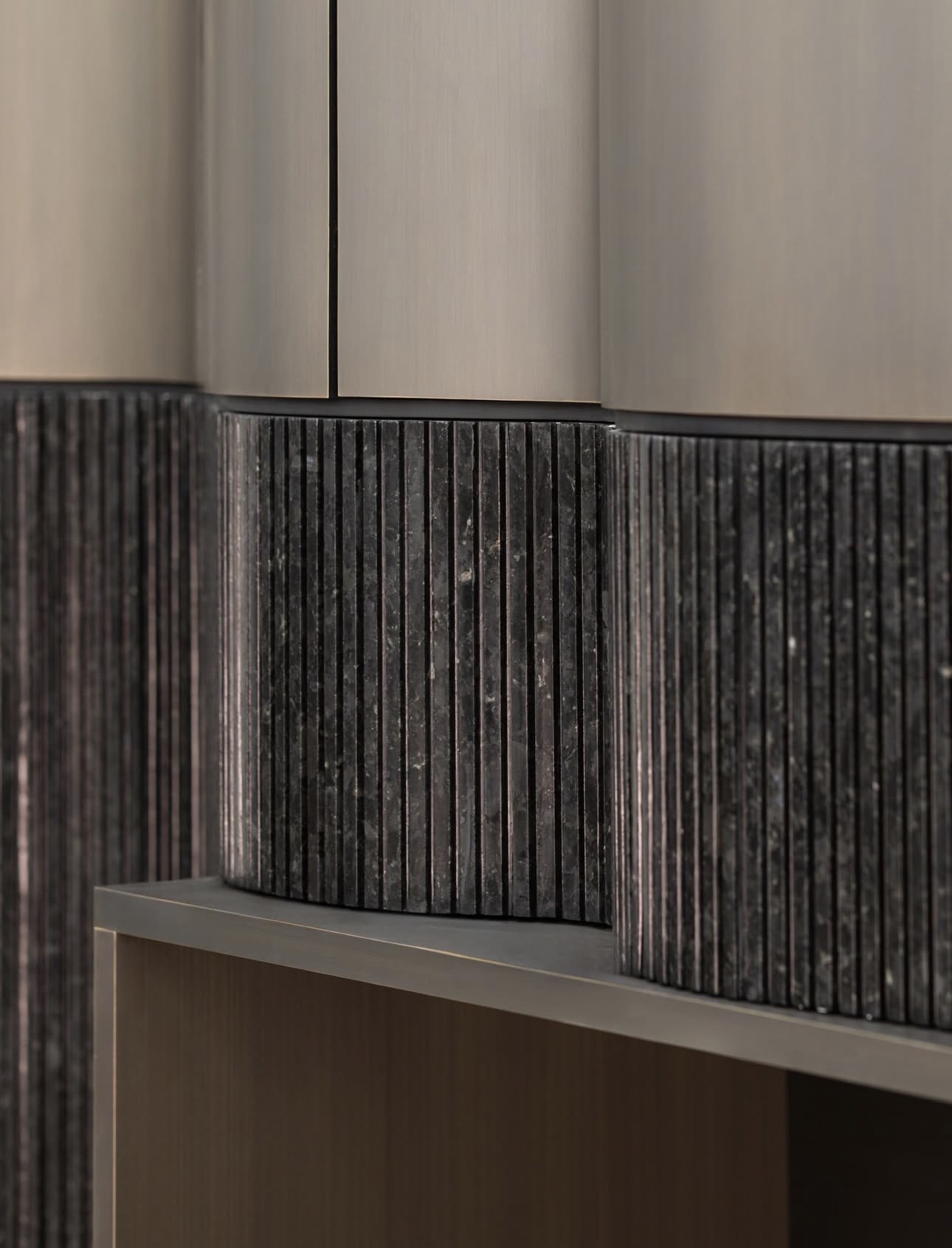
Material Combinations in the Fireplace Zone
A labradorite fireplace combines well with other natural materials that are commonly used in modern interiors.
Among the most common combinations are:
• labradorite fireplace with wooden panels
• labradorite fireplace with metal structures
• labradorite fireplace with concrete or plaster surfaces
• labradorite fireplace with minimalist glass elements
Such combinations allow designers to create interiors that look both modern, natural, and architecturally balanced.
Labradorite Fireplace as an Architectural Accent
In modern interior projects, labradorite is often used not only because of its aesthetics but also because of its ability to create a strong material contrast within a space.
When combined with light surfaces — wood, plaster, or light-colored stone — the deep graphite color of labradorite becomes the compositional center of the interior.
This approach allows natural stone to be used as a precise architectural accent rather than merely a decorative material.
Labradorite Fireplace in a Living Room Space
In modern interiors, the fireplace is increasingly considered the central element of the living room composition. The overall structure of the space is often built around the fireplace zone — including the arrangement of furniture, lighting, and decorative elements.
The use of natural stone helps emphasize the architectural character of this area. Labradorite, thanks to its deep graphite structure, creates an expressive surface that attracts attention while maintaining a restrained and elegant aesthetic.
In large spaces, a labradorite fireplace can be designed as a vertical stone panel that extends from floor to ceiling. This approach allows the creation of a continuous stone surface that shapes the overall character of the interior.
Large Slabs in Fireplace Portals
One of the key advantages of labradorite is the ability to use large stone slabs. Large-format slabs make it possible to create fireplace portals with a minimal number of joints, which emphasizes the natural structure of the material.
As a result, the fireplace appears more monolithic and architecturally cohesive. The surface of the stone is perceived as a single textured plane, where the natural pattern of labradorite becomes the main decorative element.
Such solutions are often used in modern interiors where natural stone acts not only as a finishing material but as a full architectural element of the space. Natural labradorite also works well in large interior spaces where it is important to combine the expressive texture of stone with the architectural restraint of contemporary design.
Labradorite Fireplace in Modern Interiors
A labradorite fireplace combines the natural beauty of stone with the architectural expression of contemporary interiors. Thanks to its deep texture, dense structure, and characteristic blue iridescence, this material creates expressive fireplace portals and accent surfaces.
In modern projects, a labradorite fireplace becomes not only a source of warmth but also a key compositional element of the interior that emphasizes the status and individuality of the space.