
You might be interesting:

Black Stone or Wood: Combining Two Materials in One Space
10 min | 06.05.2026Black Stone or Wood: Combining Two Materials in One Space
A space where the cold depth of stone meets the natural warmth of wood


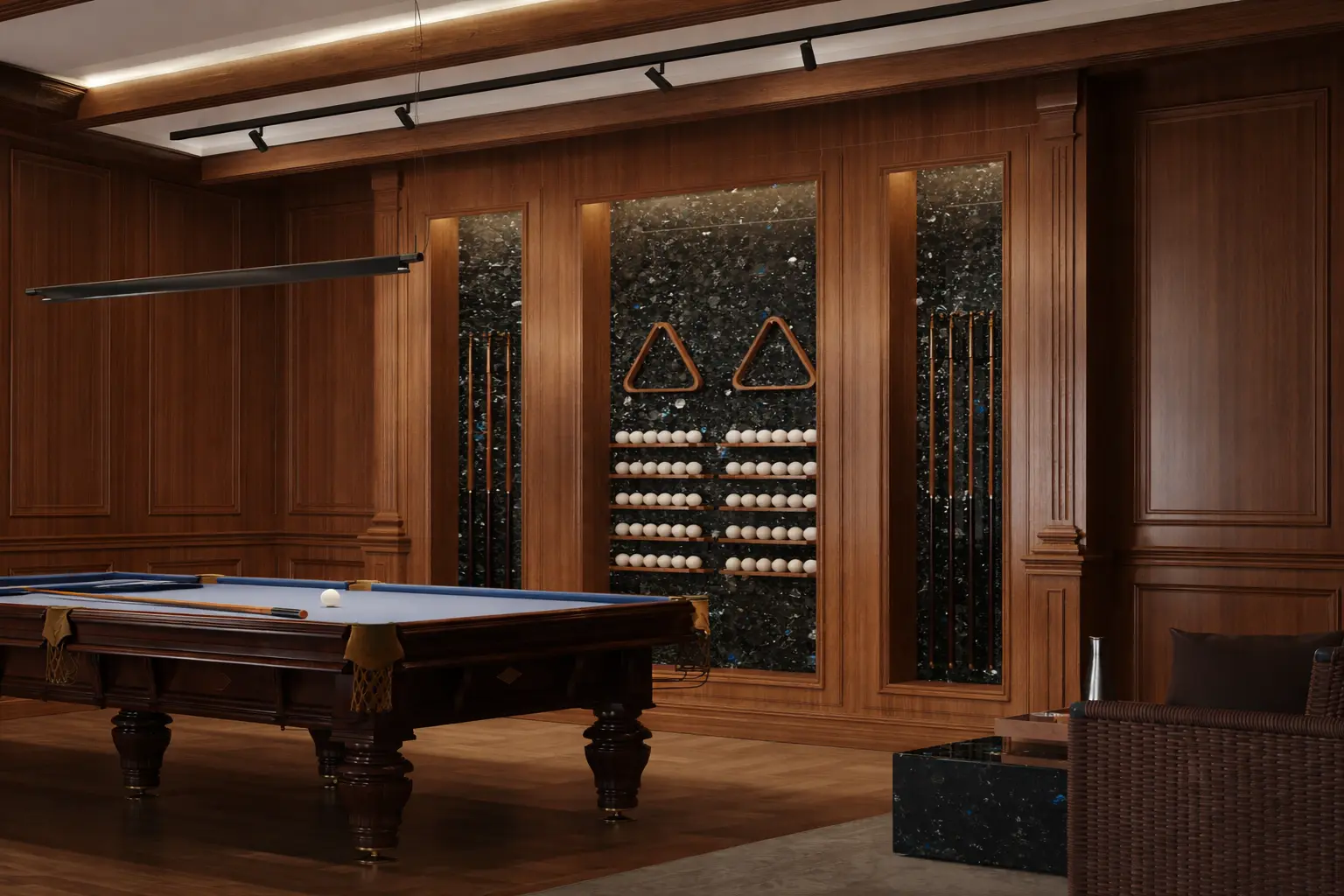
A space built on the balance of warmth and depth
Stone and wood remain one of the few interior combinations that never lose relevance regardless of style or time.
Wood introduces warmth, rhythm, and tactility into the space.
Black stone creates depth, stability, and visual concentration.
This is why labradorite and wood are so often combined in premium architecture: they do not compete with each other but create a controlled contrast.
Golovinski Labradorite, with its deep graphite-grey base and restrained blue iridescence, works not as an aggressive accent but as a material that visually “collects” the space around it.
In this combination, wood stops being just a warm element, and stone stops being just a decorative surface.
Together, they create architectural balance.
The psychology of material contrast
The contrast between stone and wood is perceived naturally.
One material is associated with stability and monumentality.
The other with comfort, warmth, and tactility.
Most premium interiors are built precisely on this contrast.
Labradorite adds depth and visual weight to the interior.
Wood softens this concentration and makes the environment feel more alive.
In the right balance, neither material dominates.
The space feels expensive not because of excessive details, but because of controlled material contrast.
This effect works especially well on large surfaces:
— kitchen islands
— accent walls
— furniture facades
— flooring
— lounge areas
Here, the contrast feels architectural rather than decorative.
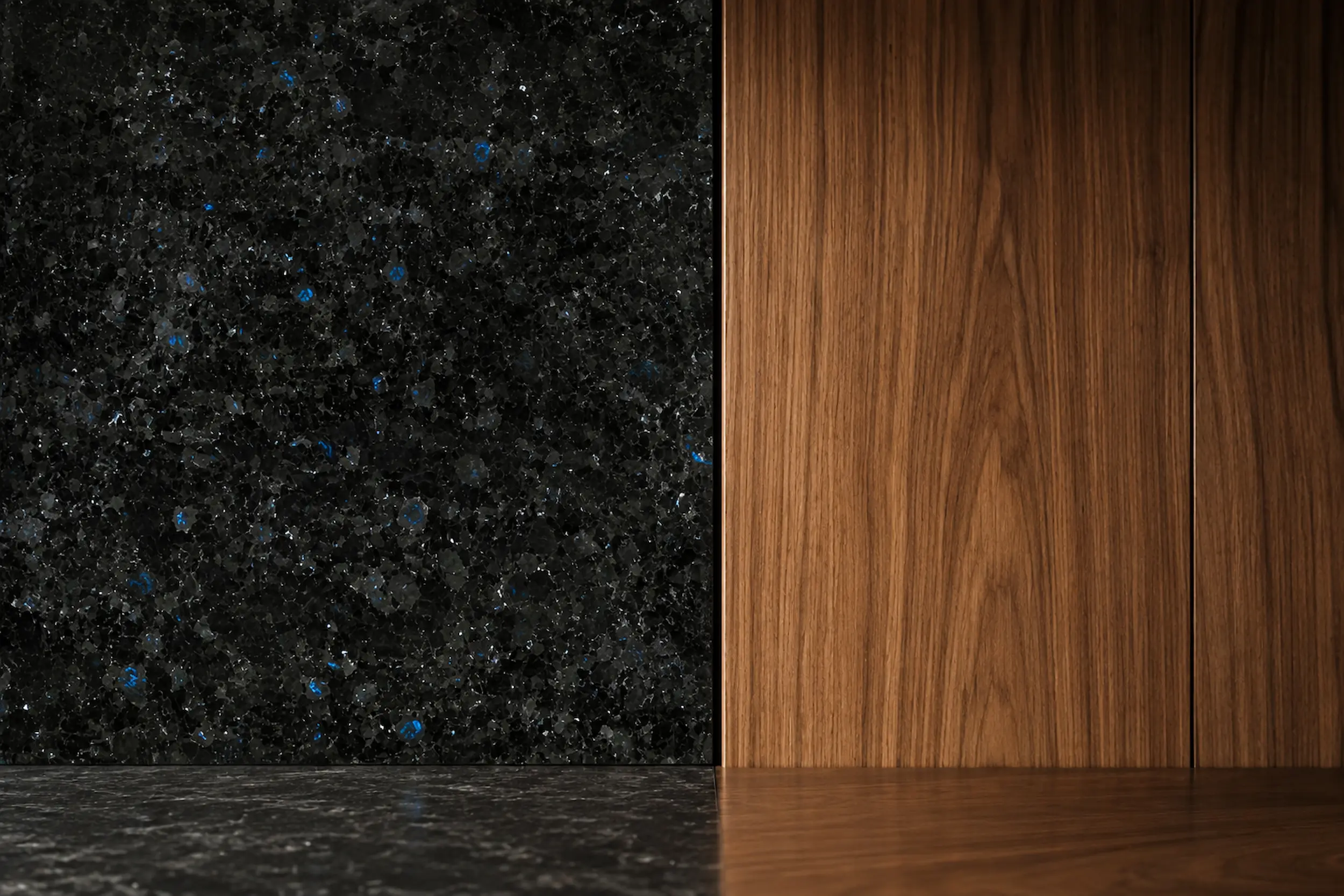
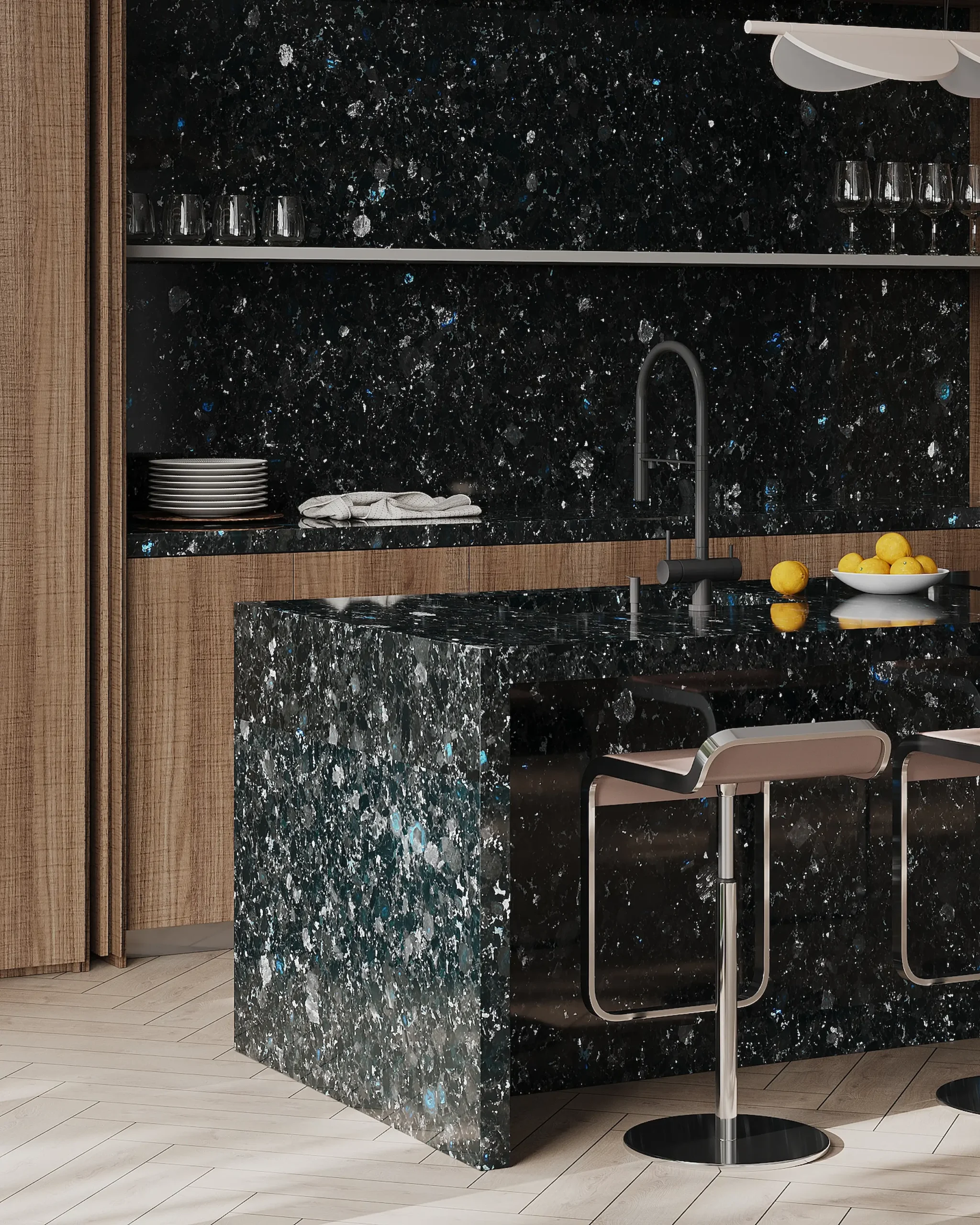
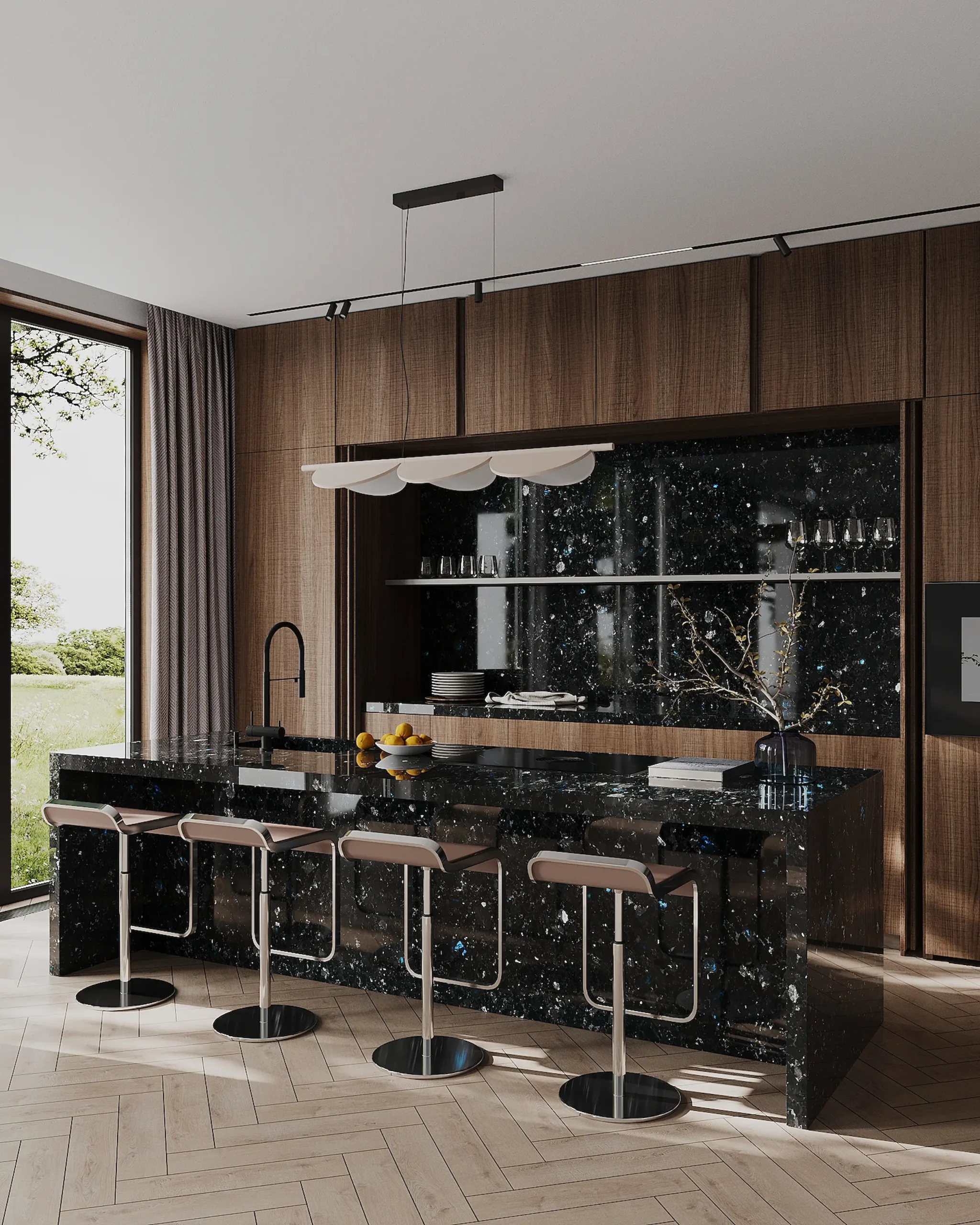
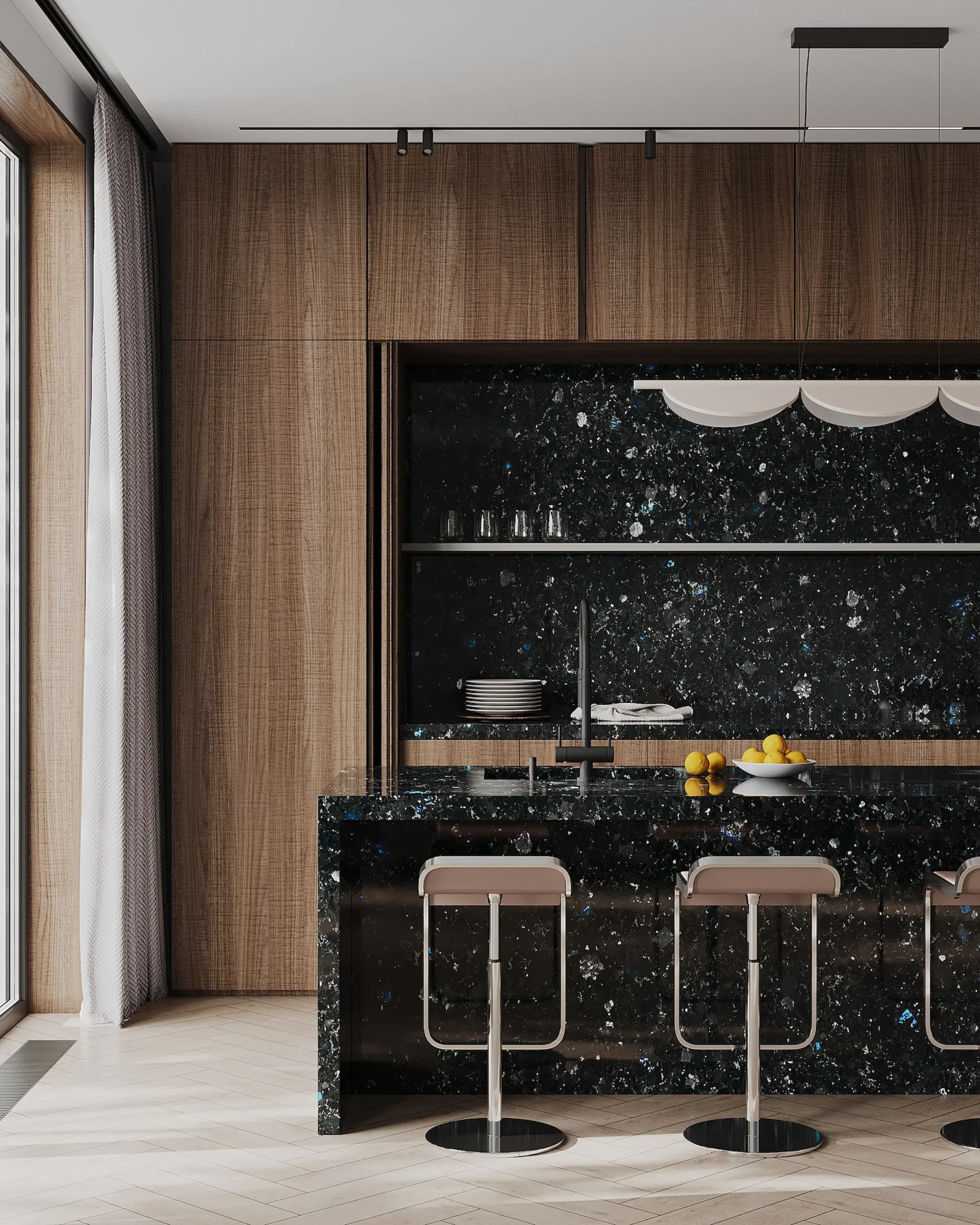
Kitchens: stone island + wood
The kitchen is one of the best spaces for combining black stone and wood.
Labradorite works as a stable compositional center.
Wood creates a warmer and calmer context around it.
Stone is most often used for:
— islands
— countertops
— backsplashes
— vertical inserts
Wood is used for:
— facades
— tall cabinetry
— decorative panels
— dining areas
In this scenario, labradorite does not overload the kitchen even when used on large surfaces.
On the contrary, the deep dark surface creates a sense of visual clarity and composure.
This becomes especially noticeable in large-format slabs, where the structure of the stone reads as a monolithic surface without unnecessary fragmentation.
Bedrooms and lounge spaces
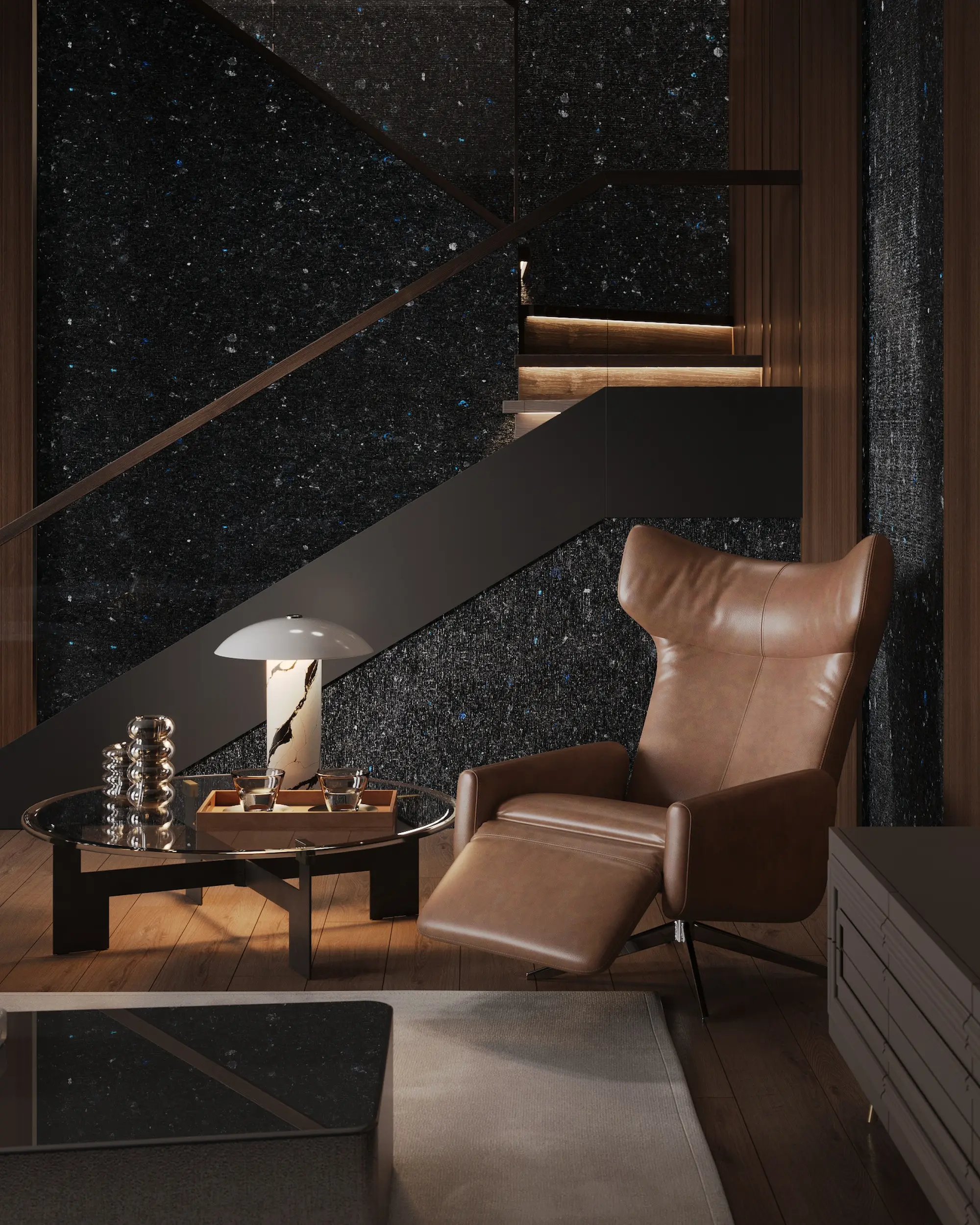
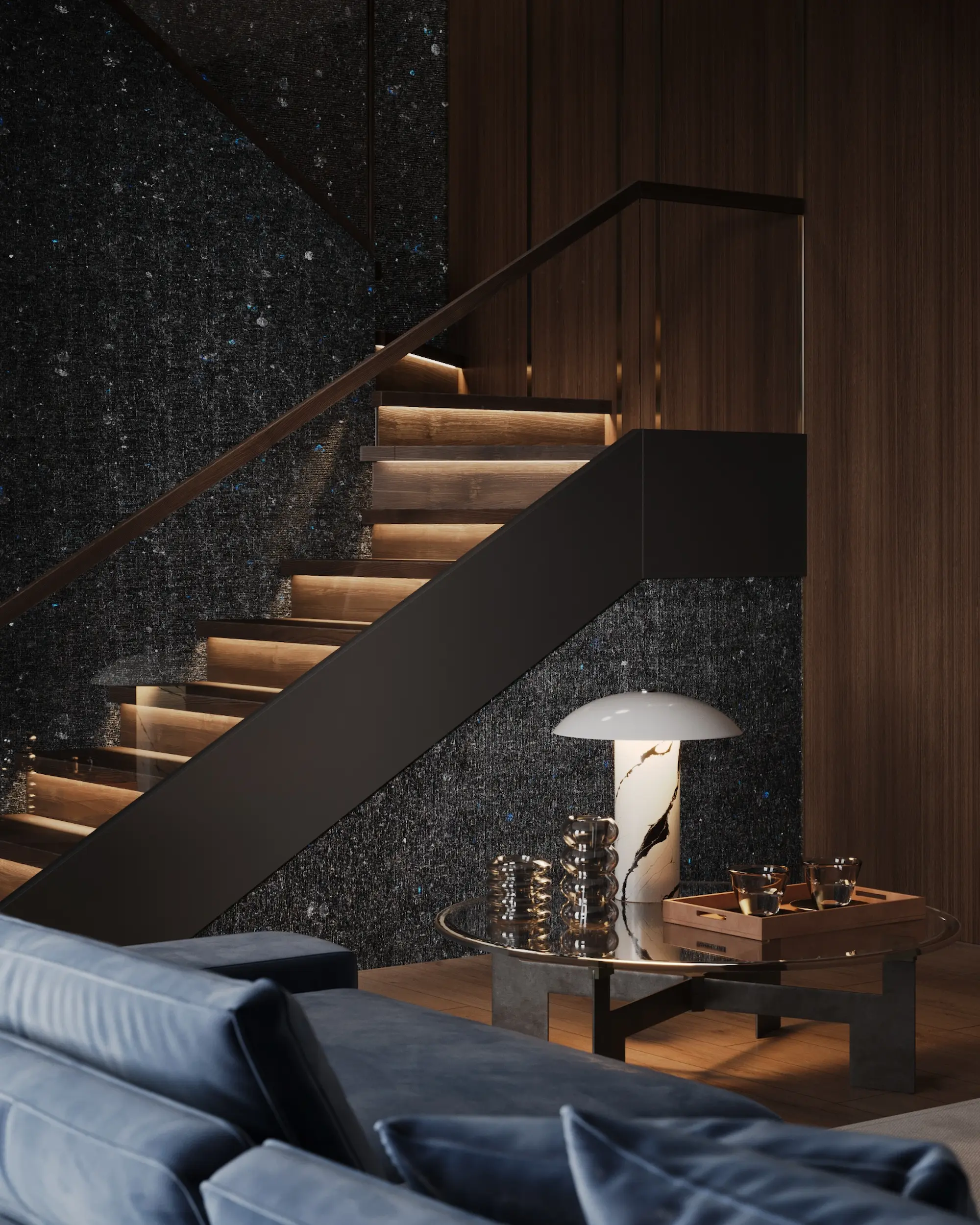
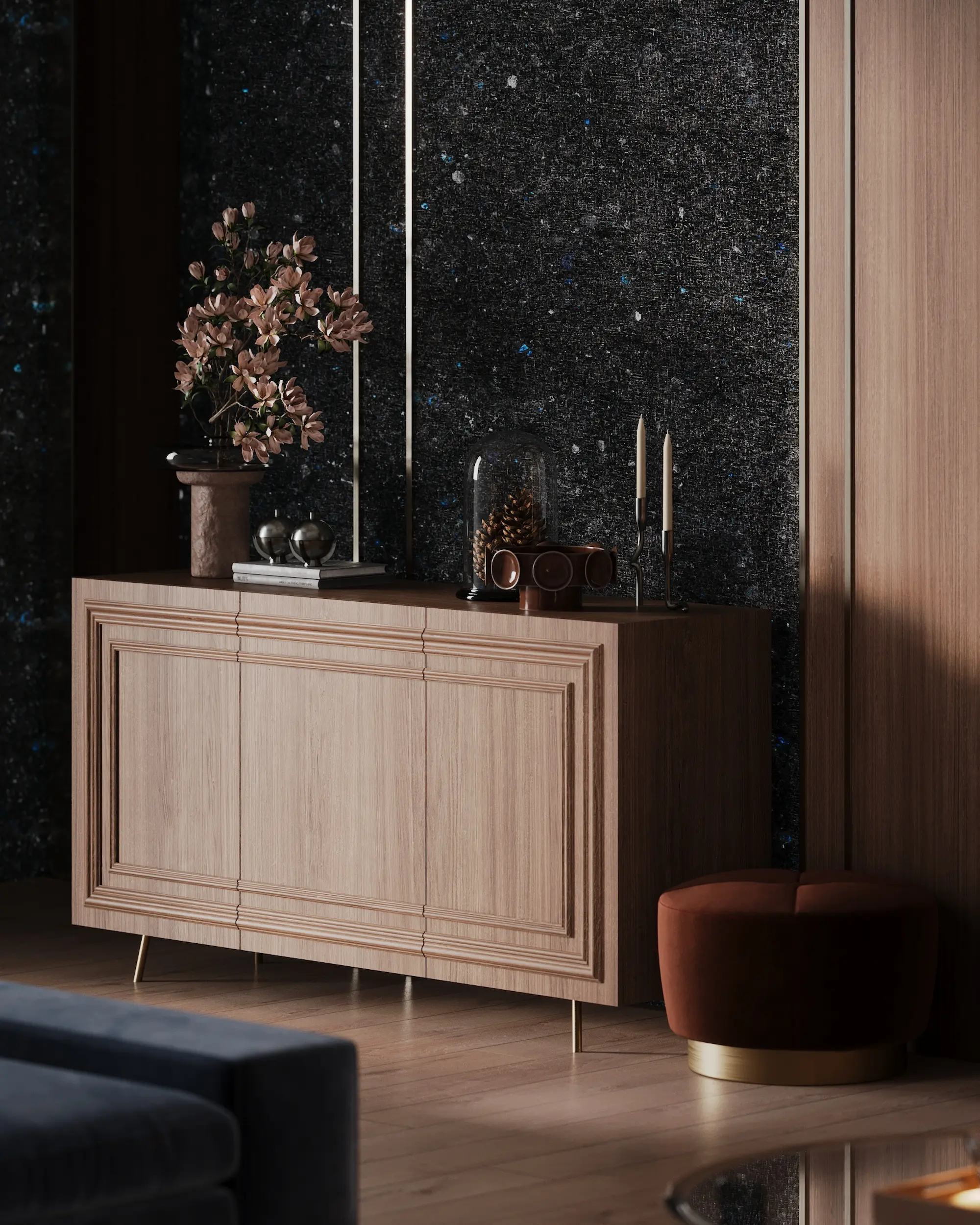
In bedrooms and lounge spaces, wood works emotionally.
It softens the space and adds natural warmth.
Labradorite is used more precisely in these interiors:
— accent walls
— bedside tables
— fireplace zones
— coffee tables
— individual furniture elements
Dark stone in relaxation areas should never dominate.
Its role is to create depth and controlled shadow.
This is why Golovinski Labradorite works especially well in evening lighting: the iridescence appears softly and never looks artificial.
Wood next to it feels warmer, while the entire space becomes more cohesive.
Recommended combinations
Labradorite + oak — timeless balance
Oak introduces stable natural warmth.
Combined with labradorite, the space feels restrained, premium, and architecturally clean.
This is one of the most versatile combinations for:
— kitchens
— living rooms
— private residences
— premium retail spaces
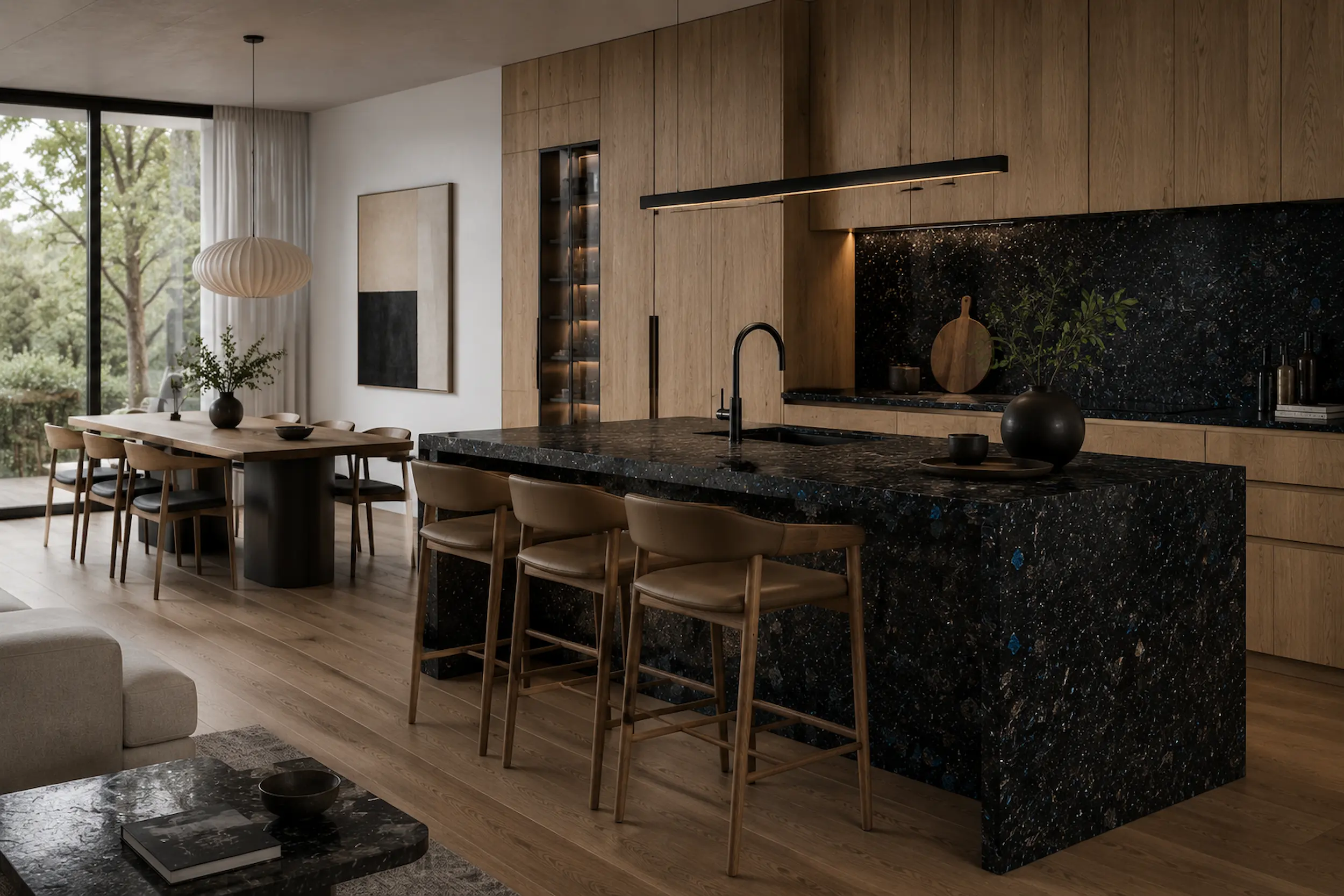
Labradorite + walnut — warmth and depth
Walnut creates a richer and more intimate atmosphere.
The darker wood tone enhances the depth of the stone’s graphite base.
This contrast feels more mature and luxurious.
The combination works especially well in:
— offices
— boutique interiors
— lounge spaces
— luxury apartments
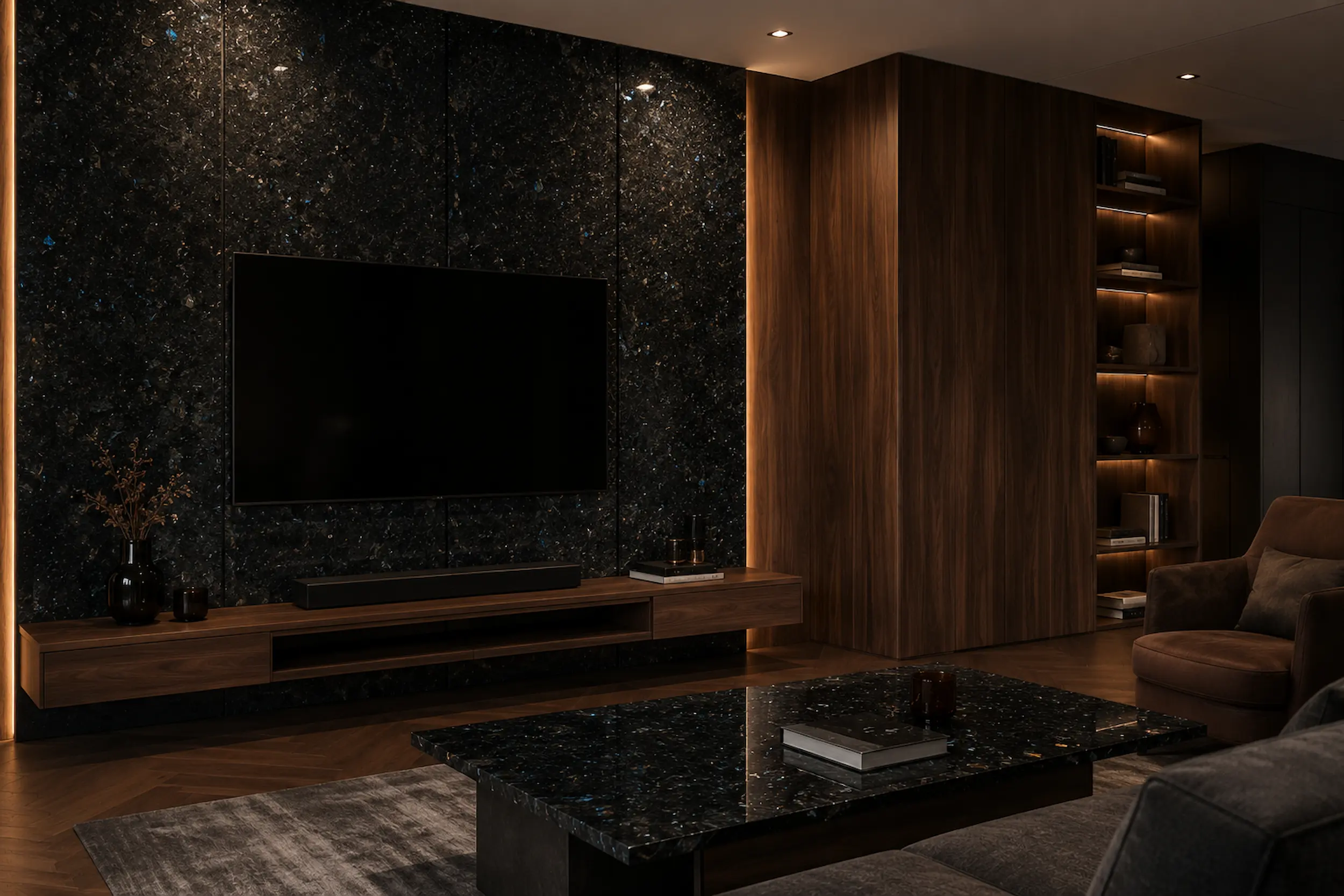
Labradorite + ash wood — minimalism
Light ash wood creates a cleaner and more contemporary context.
In this combination, labradorite becomes the main architectural accent.
This solution is often used in minimalist interiors with abundant light and clean geometry.
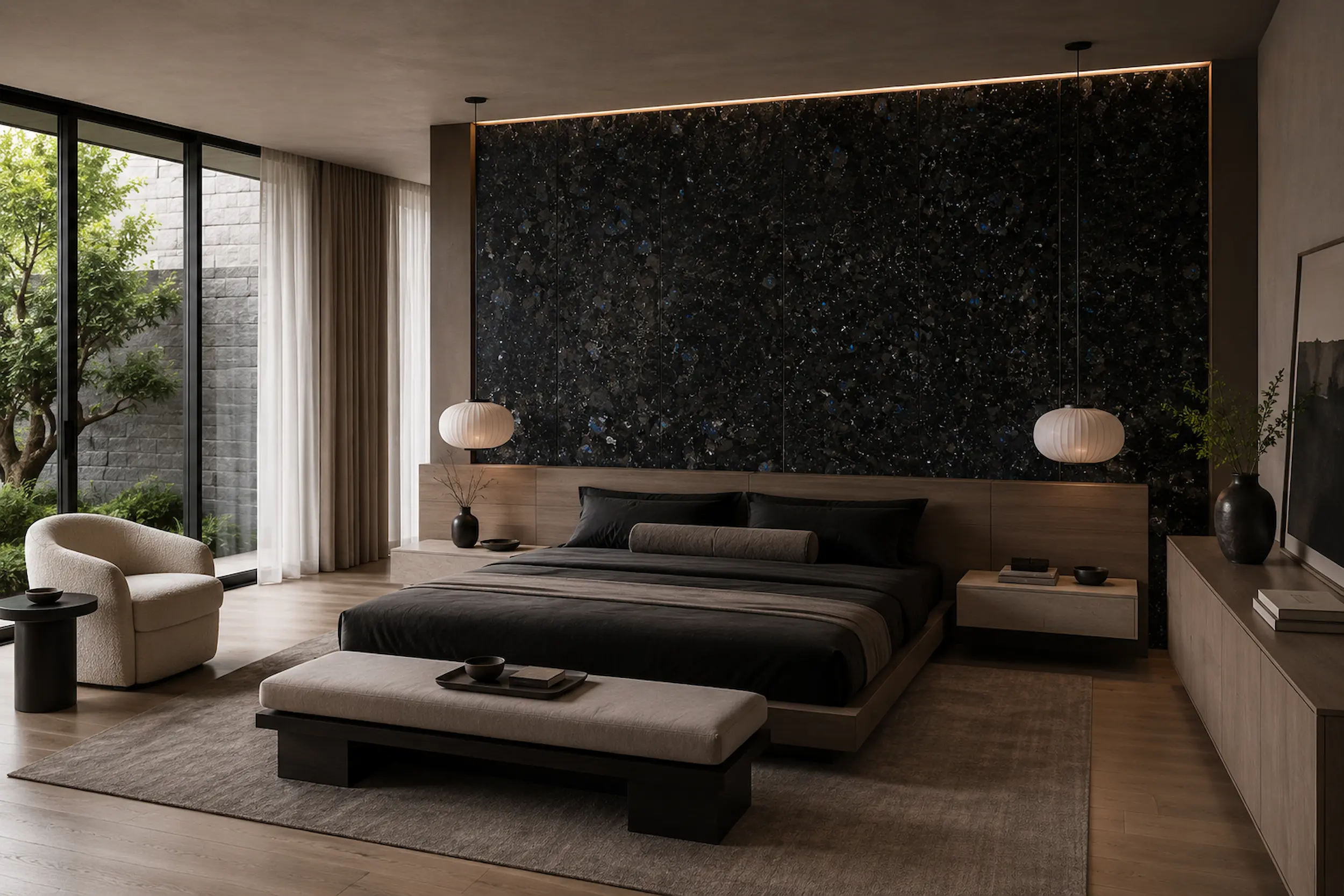
Common mistakes when combining stone and wood
The most common mistake is excessive texture.
If the wood has an overly active grain and the stone has too much visual contrast, the space starts to feel overloaded.
Another mistake is poor lighting.
Cold frontal lighting removes the depth of the stone and makes the wood appear flat.
Labradorite performs best:
— under side lighting
— with warm light temperature
— on large continuous surfaces
It is also important to leave enough “air” between materials.
Contrast works only when the space is not overloaded with details.
Examples in architecture
Today, the combination of wood and black stone is widely used in:
— private residences
— boutique hotels
— premium retail
— executive offices
— luxury apartments
Architects use labradorite not as a decorative feature but as the foundation of the spatial rhythm.
Wood does not compete with the stone.
It softens the space and adds natural warmth.
This balance is what defines the modern premium interior.