
You might be interesting:

Labradorite vs Quartz and Porcelain: Honest Comparison
10 min | 19.02.2026Labradorite vs Quartz and Porcelain: Honest Comparison
What to choose for architecture and interiors: the uniqueness of nature or controlled industrial consistency?


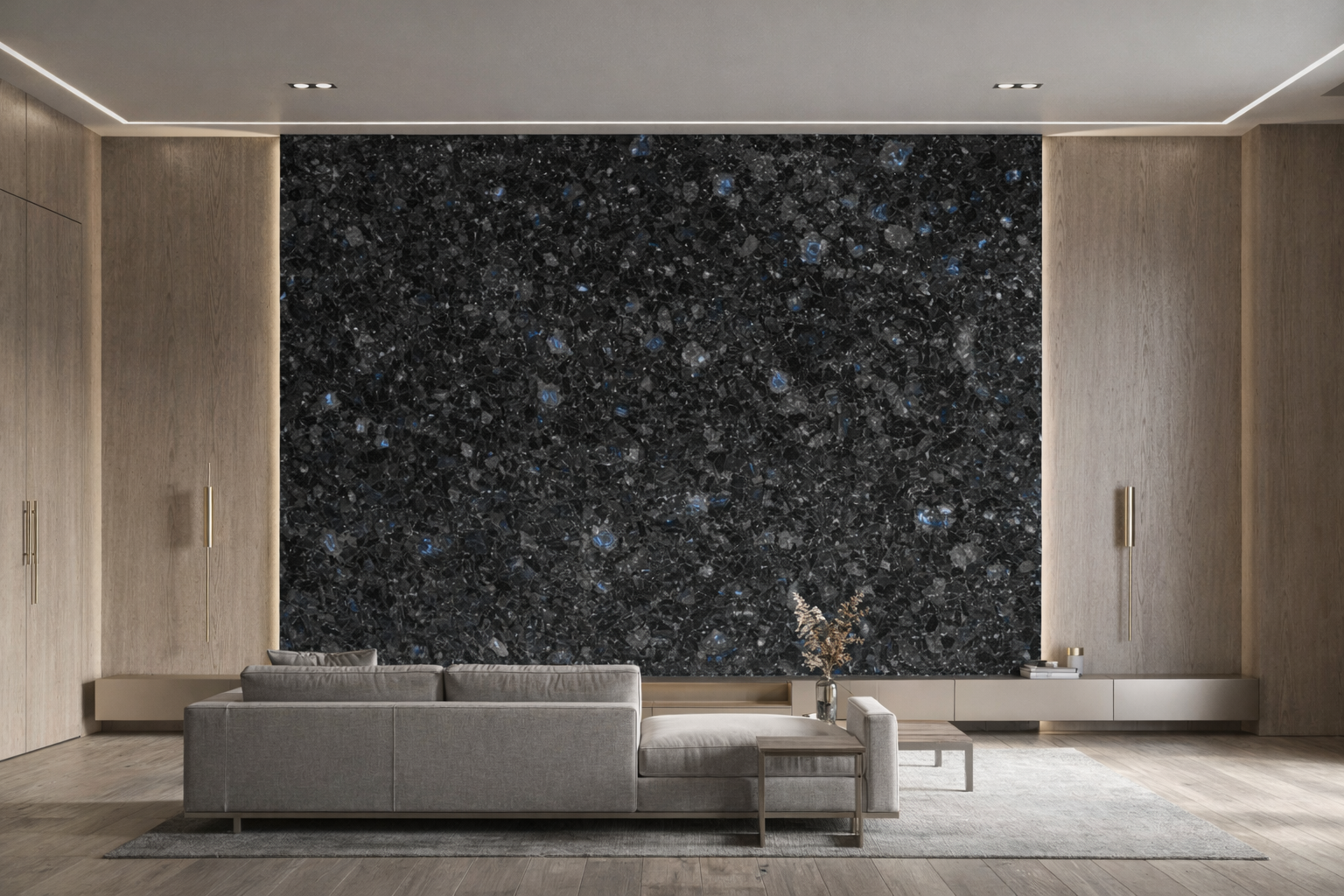
In contemporary architecture and interior design, material selection is more than an aesthetic decision. It is a strategic choice that defines durability, sustainability, and long-term property value. Today, the market actively debates natural stone vs artificial materials — particularly labradorite, engineered quartz, and porcelain surfaces.
This article offers an objective comparison based on key criteria: uniqueness, physical performance, sustainability, and cost of ownership. We explore why, in the segment of premium materials, natural stone — especially Volga Blue labradorite — often stands apart.
Uniqueness vs Serial Production
Every Slab Is Unique
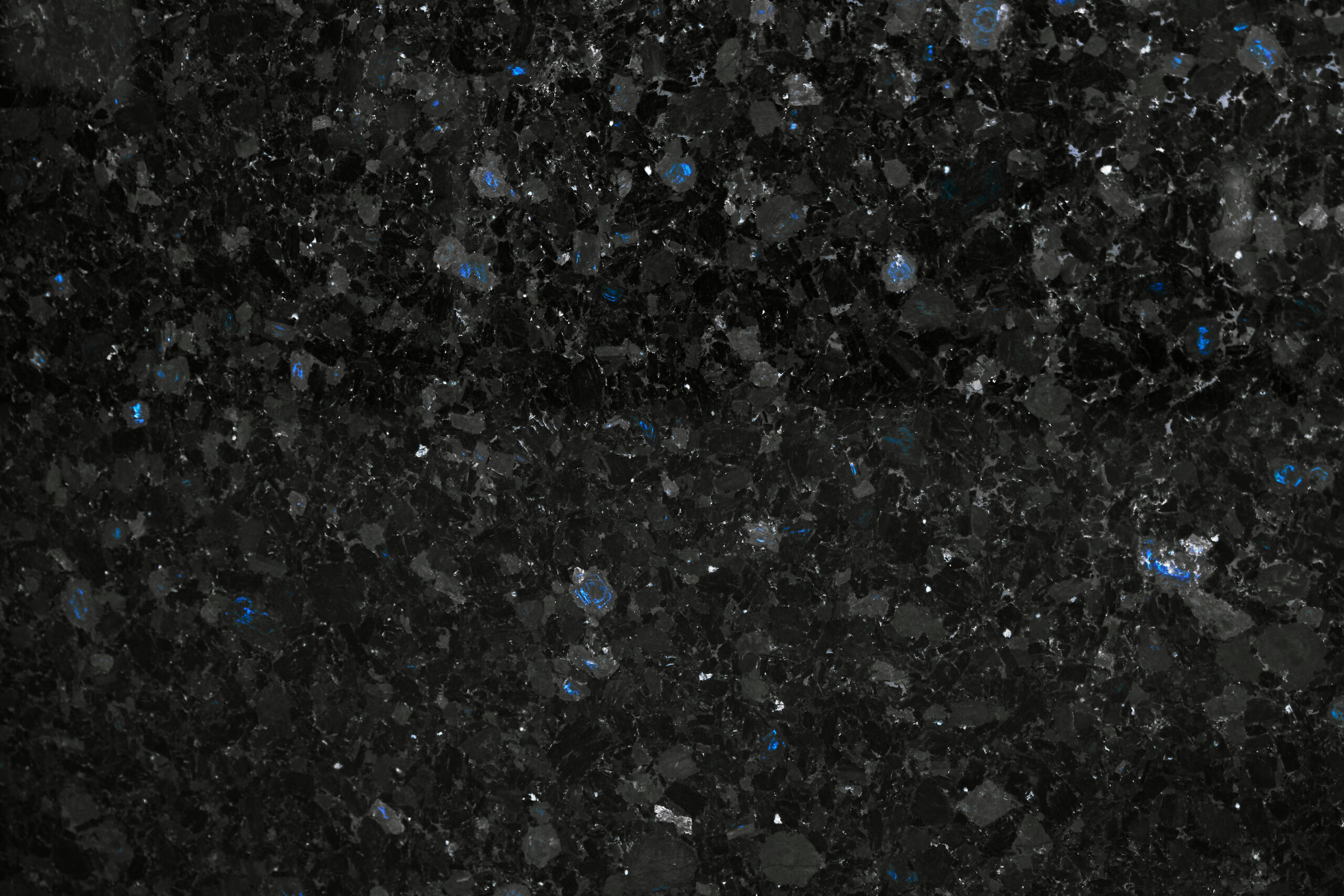
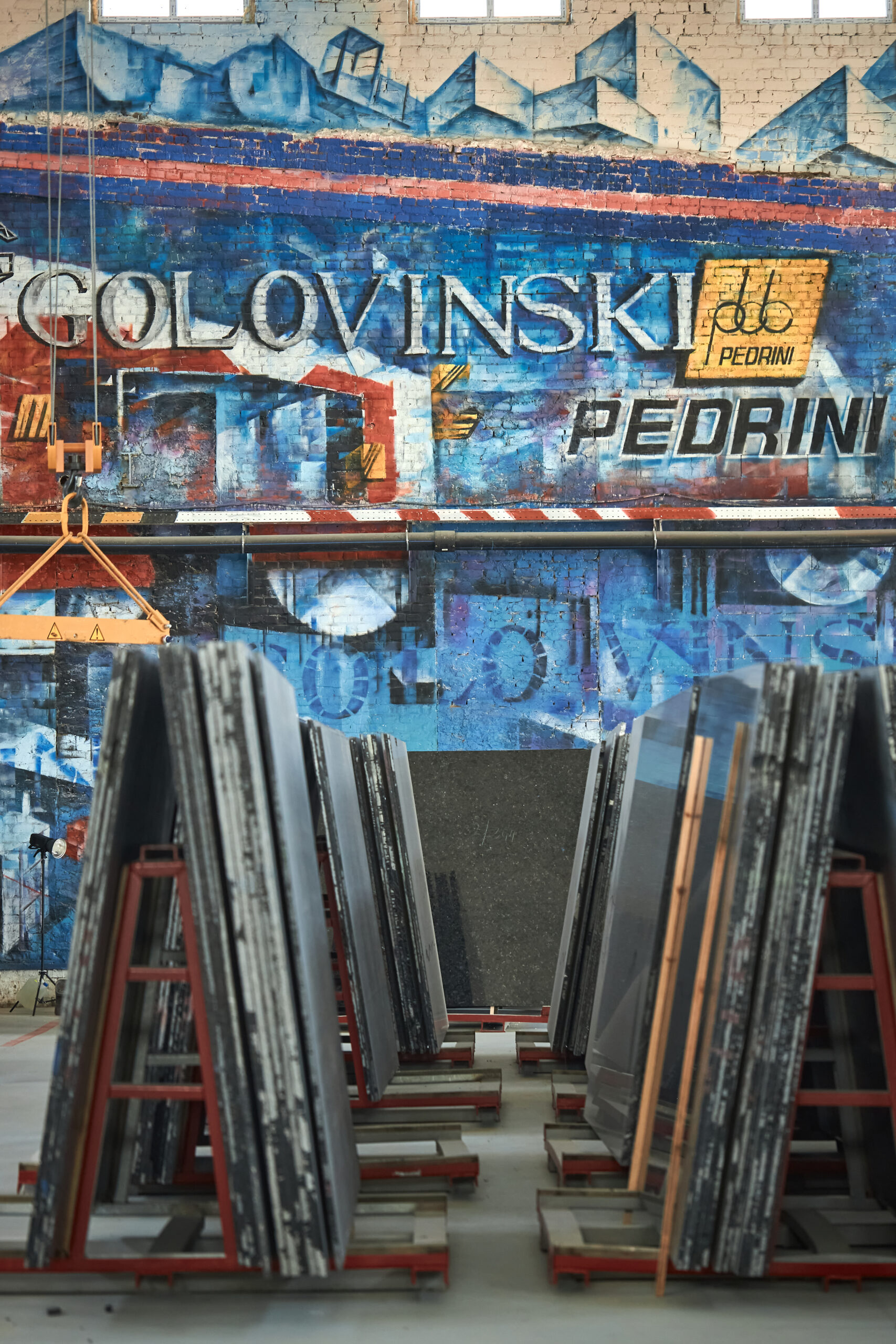
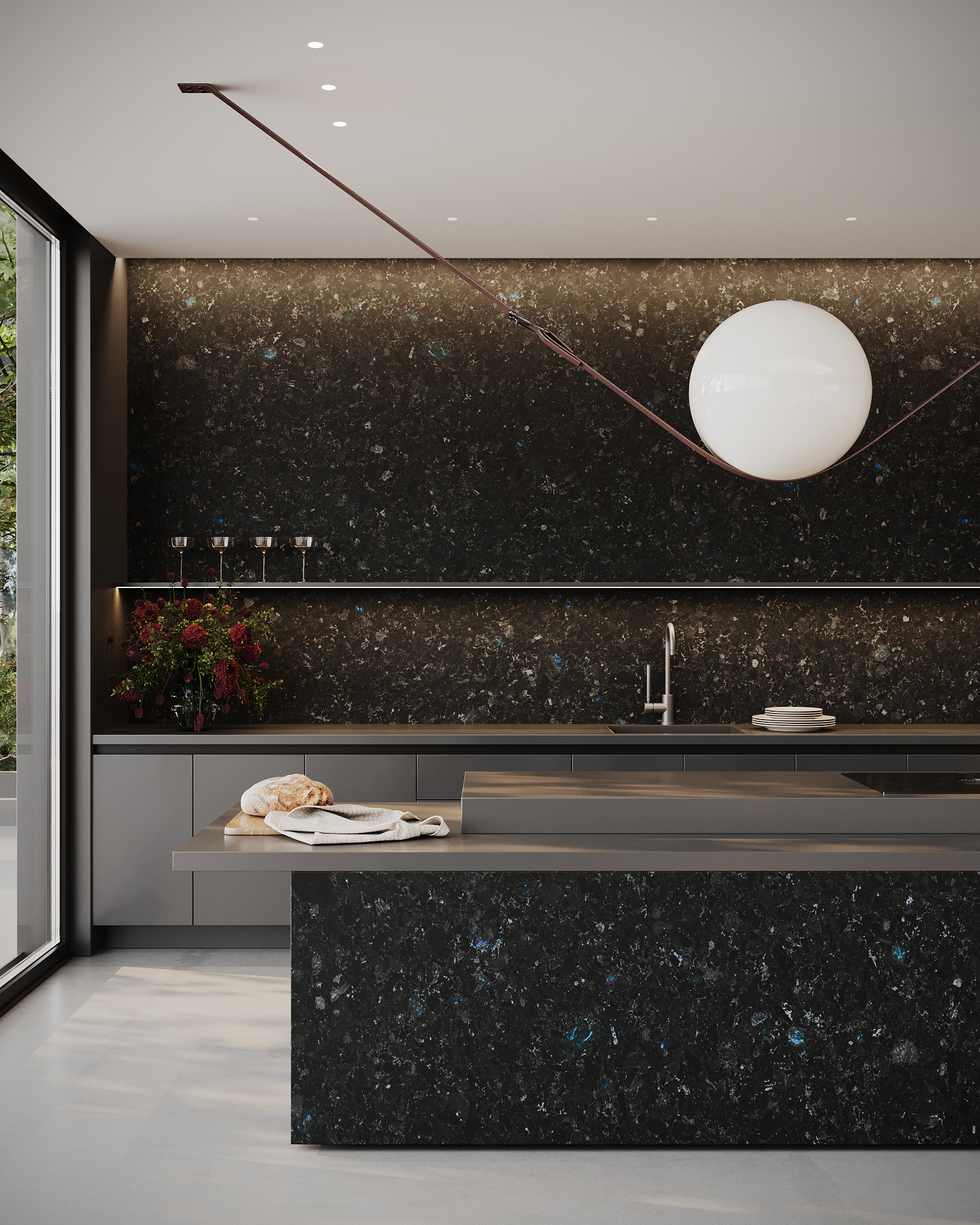
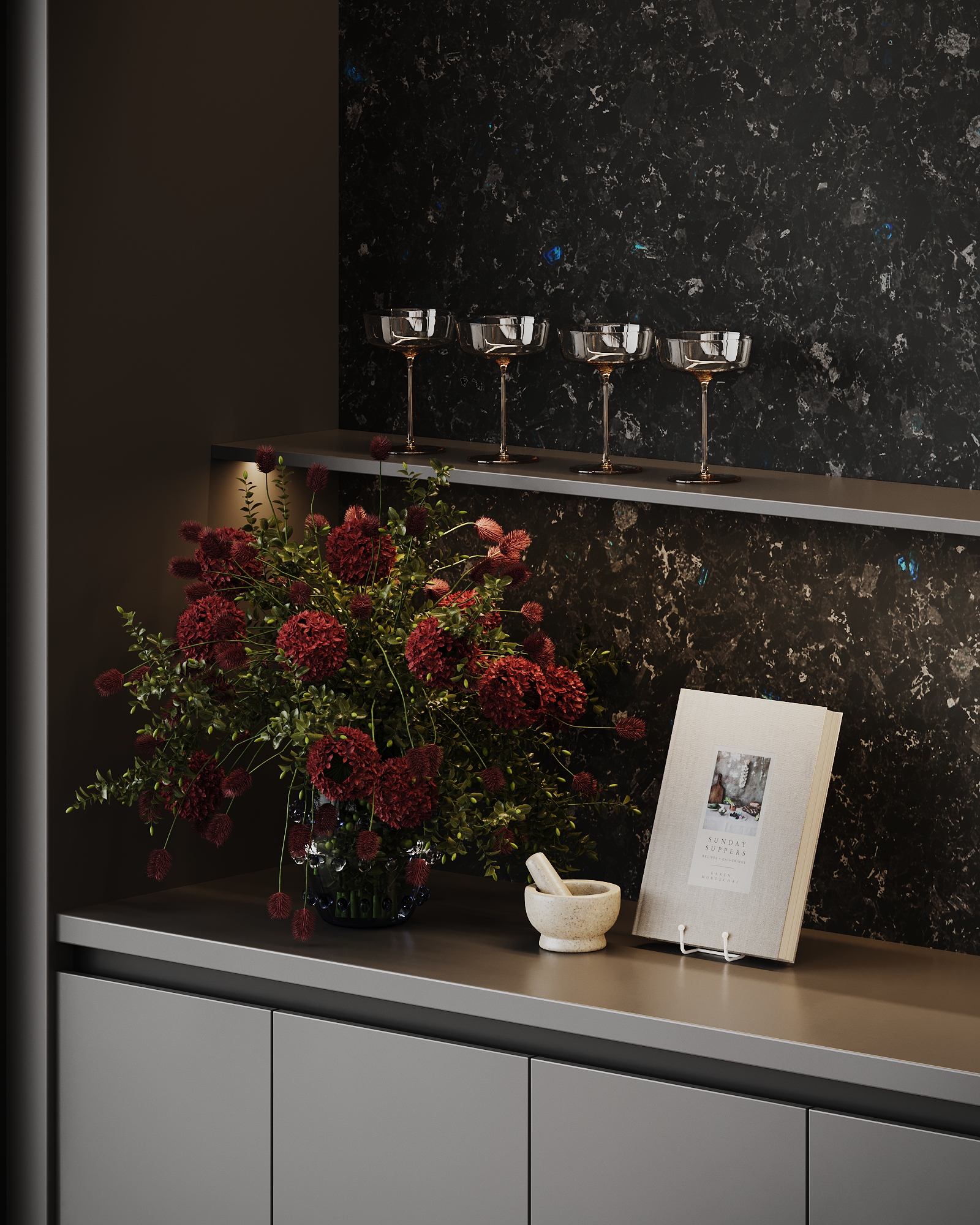
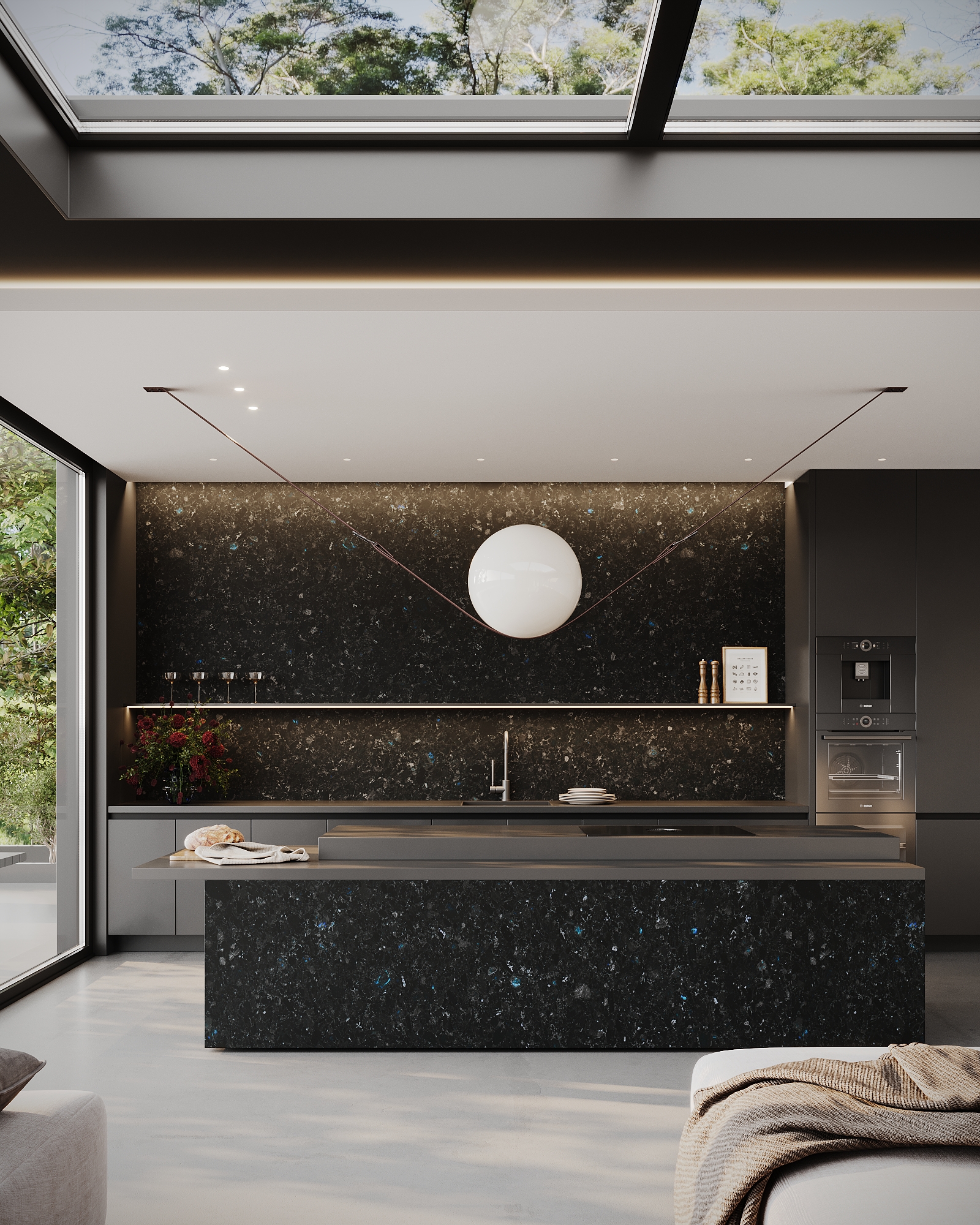
Labradorite is a deep-formed igneous rock known for its dense crystalline structure and labradorescence — a natural optical effect caused by light interference within mineral layers. Volga Blue is characterized by a deep graphite dark gray base with subtle blue iridescence that appears only under directional light.
Each quarried block has its own mineral composition, crystal distribution, and natural pattern. After cutting and polishing, large-format slabs (including 3×2 meters) retain their individuality. No two slabs are identical.
In contrast:
-
Engineered quartz consists of approximately 90–95% crushed quartz combined with polymer resins and pigments. Patterns are industrially designed and repeated across batches.
-
Porcelain surfaces are pressed ceramic materials with digitally printed textures. Even high-end collections replicate stone visually but lack geological authenticity.
When asking labradorite vs quartz, the difference in uniqueness is fundamental. Natural stone delivers non-replicable material identity, while artificial materials provide controlled consistency.
Physical Properties That Define Longevity
Thermal Performance
Labradorite is a dense igneous stone with strong structural stability and high thermal resistance. It:
-
accumulates and retains heat effectively,
-
resists deformation under localized heat,
-
performs well under UV exposure (relevant for façades and sunlit interiors).
Engineered quartz contains polymer binders, which may react to high temperatures or prolonged UV exposure depending on formulation. Porcelain is heat-resistant but thinner formats may lack the same material mass and depth as natural stone slabs.
In projects involving thermal stress or long-term exposure to sunlight, natural stone vs artificial materials often favors structural stability.
Durability
Labradorite features high density and low water absorption. When properly fabricated and installed, it maintains structural integrity and visual depth for decades. In commercial and architectural applications, this longevity becomes a defining advantage.
Engineered quartz:
-
performs well in residential use,
-
resists staining under normal conditions,
-
but has limitations in outdoor environments and high-heat applications.
Porcelain:
-
offers strong compressive resistance,
-
but thin slabs may be vulnerable to edge impact,
-
and the decorative surface layer does not possess the mineral depth of natural stone.
Over a 20–30 year horizon, labradorite maintains both performance and aesthetic presence — a defining characteristic of true premium materials.
Sustainability: Natural vs Synthetic
Natural vs Polymer-Based Materials
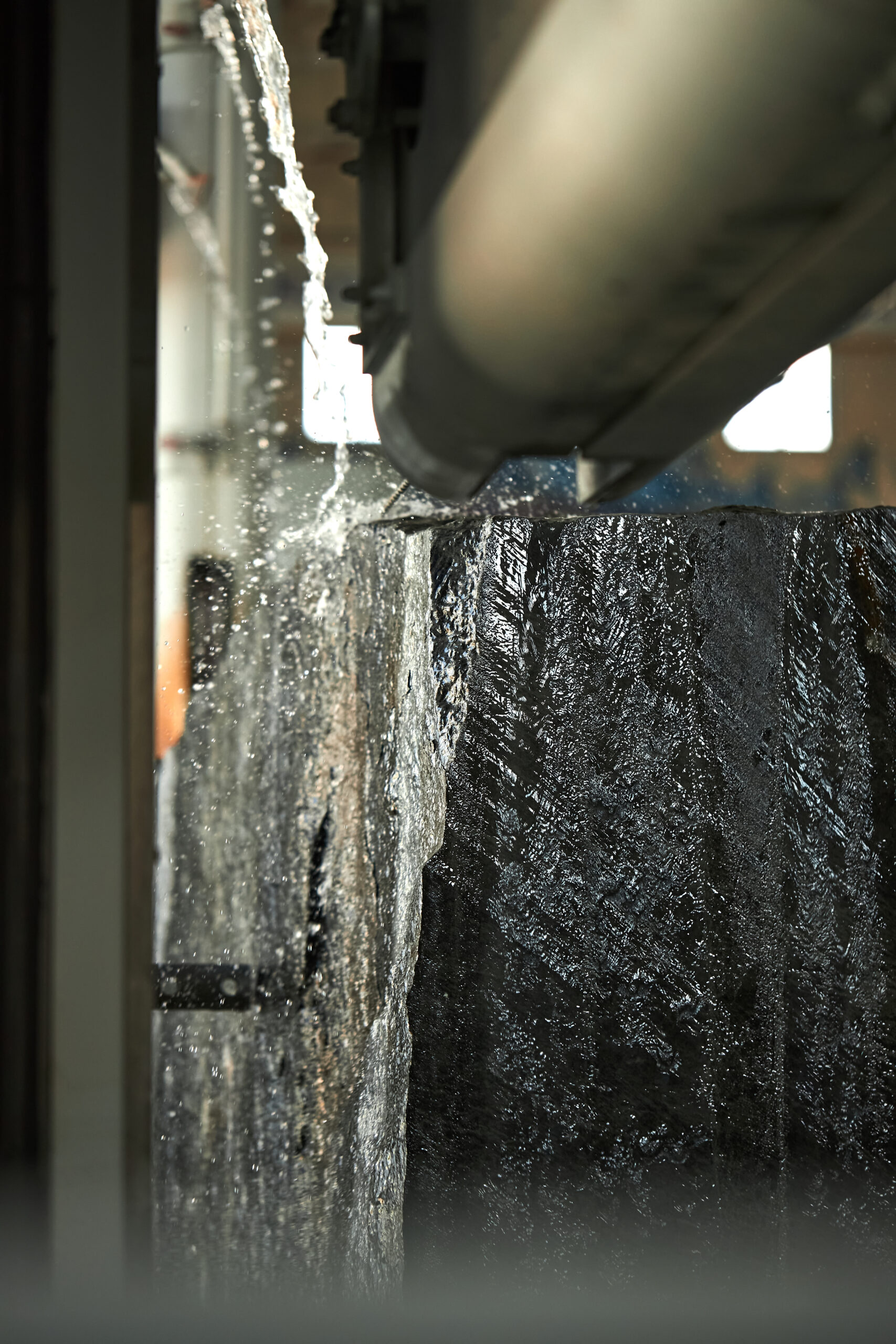
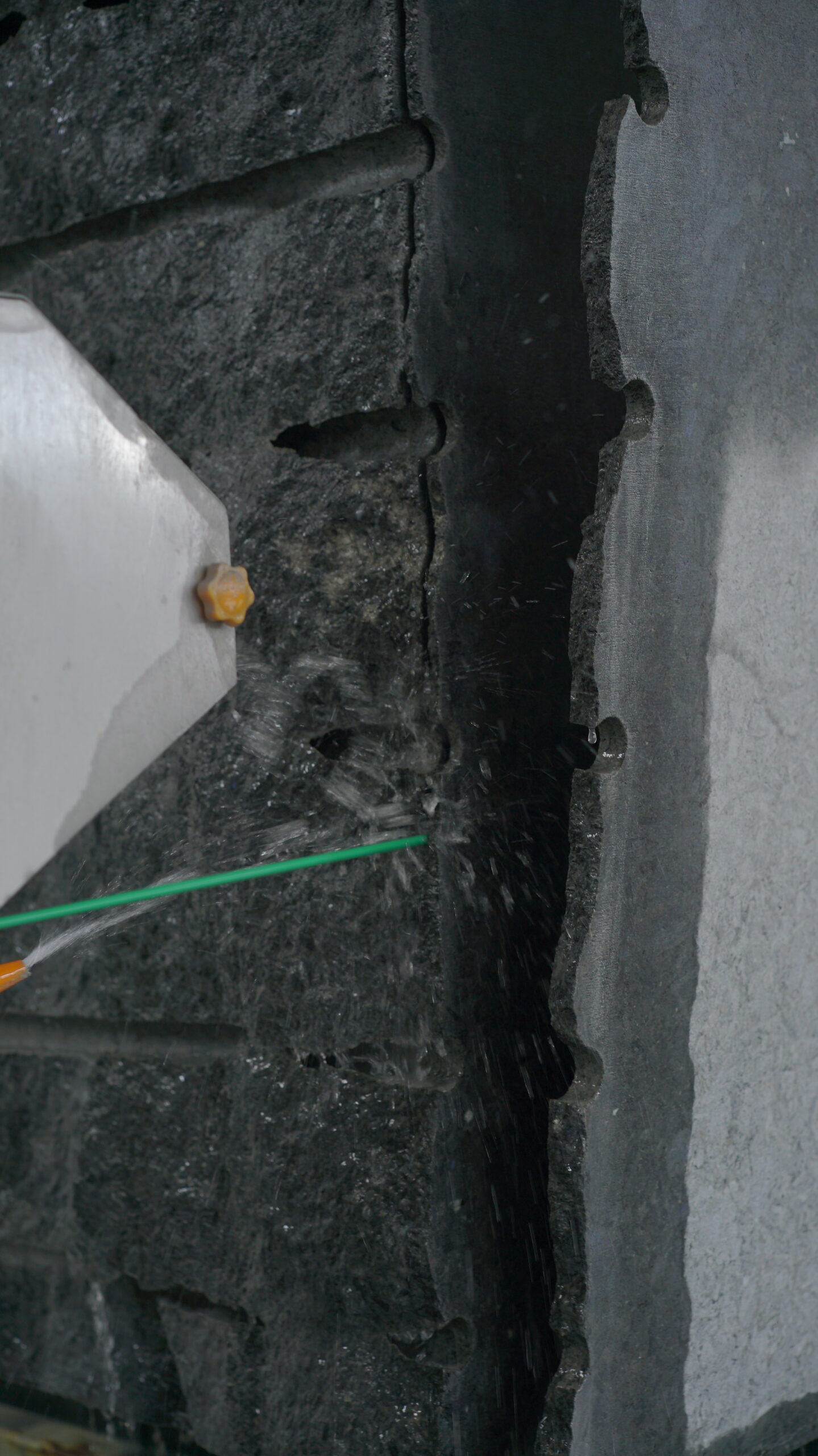
Labradorite is a naturally occurring stone extracted from quarries, cut, and polished through mechanical processes. It contains no polymer resins, no synthetic binders, and emits no volatile compounds.
Engineered quartz includes resins and chemical additives as structural binders. Porcelain production requires extremely high firing temperatures, making it energy-intensive.
From an ESG and sustainable architecture perspective, responsibly quarried natural stone — particularly when sourced regionally — often presents a more balanced environmental profile.
The geological authenticity of natural stone also ensures it remains materially stable over time without degradation of synthetic components.

Cost of Ownership: Beyond Price per Square Meter
Initial material cost is only part of the equation. True evaluation includes:
-
lifespan,
-
maintenance requirements,
-
resistance to aesthetic obsolescence,
-
long-term property value impact.
-
features high structural density and natural resistance to wear;
-
maintains depth of color and mineral texture even after years of intensive use;
-
enhances the status and market liquidity of premium properties.
Engineered quartz:
-
offers predictable performance in residential applications,
-
but has limitations in exterior use,
-
and damaged sections often require full replacement.
Porcelain:
-
may be more accessible in mass-market segments,
-
is replaceable,
-
but does not convey the same architectural presence.
When considering total cost of ownership, natural stone often justifies higher initial investment through durability, prestige, and long-term performance.
Labradorite vs Quartz: When to Choose What?
An honest comparison acknowledges strengths across materials:
-
For large-scale projects with strict budget constraints, porcelain may be practical.
-
For residential kitchens requiring design uniformity, quartz offers predictability.
-
For façades, premium interiors, statement walls, staircases, and architectural islands, labradorite creates depth and authenticity that cannot be replicated.
In high-end real estate, material selection is not only about cost — it defines emotional and architectural impact.
Premium Means Natural
In the debate of natural stone vs artificial materials, the answer depends on project goals. Yet in terms of uniqueness, durability, sustainability, and long-term value, labradorite occupies a distinct category.
It:
-
cannot be replicated,
-
performs over decades,
-
contains no synthetic binders,
-
establishes architectural identity.
In the realm of premium materials, natural stone remains the benchmark.
When the choice is labradorite vs quartz or porcelain, the decision ultimately reflects whether the project seeks industrial consistency — or geological authenticity designed to endure.