You might be interesting:

Volga Blue — Labradorite That Became an Architecture Legend
10 min | 11.02.2026Volga Blue — Labradorite That Became an Architecture Legend
A premium Ukrainian labradorite with unique blue iridescence that defines timeless architecture


Volga Blue — A Legend Among Stones
In architecture, there are materials that do more than serve a function. They define identity, convey status, and shape the character of buildings for decades to come. Volga Blue is one of those rare materials — a Ukrainian labradorite that has become a legend in contemporary architecture.
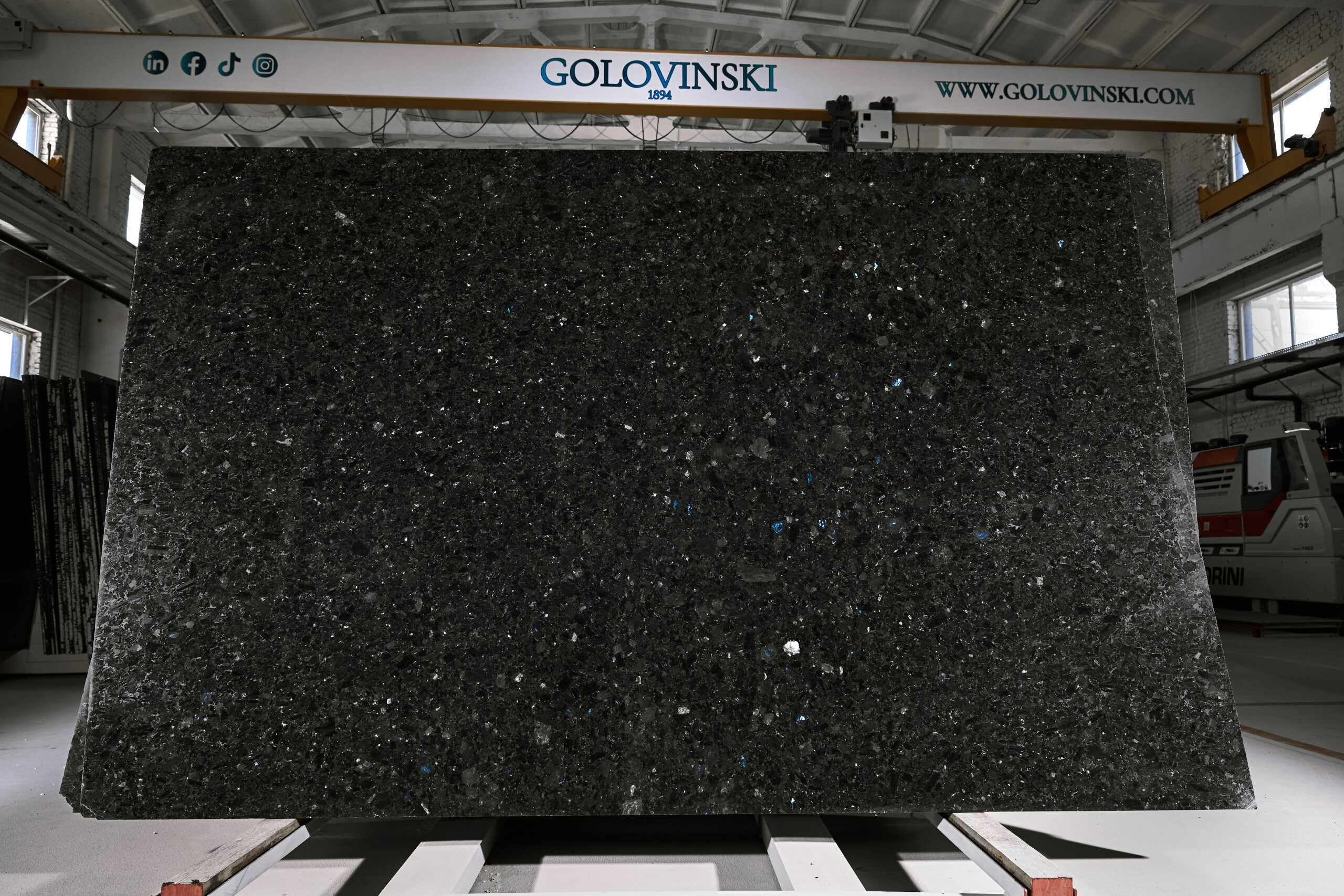
Its deep black base, combined with a distinctive blue iridescence, makes Volga Blue instantly recognizable. This is not a stone chosen for decoration alone. It is selected as an architectural statement — a reflection of ambition, scale, and uncompromising quality.
Today, Volga Blue labradorite is used worldwide in façades, interiors, public spaces, and private residences. Architects choose it not for short-lived trends, but for projects designed to endure.
This article explores the origin of the stone, its unique properties, global recognition, and why Golovinski labradorite has become a benchmark of premium natural stone.
Golovinski labradorite: origin and geology of Volga Blue
The Golovinski Deposit
Volga Blue is quarried in Ukraine at the Golovinski labradorite deposit, one of the largest and most renowned labradorite deposits in the world. This site is famous for producing stone with exceptionally intense blue iridescence — a natural optical phenomenon visible under changing light conditions.
The Golovinski deposit is more than a quarry. It is a geological asset of international importance, reinforcing Ukraine’s position as a source of premium natural stone for global architecture.
What sets Volga Blue apart is its verified and controlled origin. It is not a generic commercial name but a stone with consistent structure, color depth, and visual behavior — qualities essential for architectural applications.
1.8 Billion Years in the Making
Volga Blue is the result of geological processes that began approximately 1.8 billion years ago. Formed deep within the Earth’s crust, the stone developed slowly under immense pressure and heat — a process that defines its durability and visual complexity.
This ancient origin explains its key characteristics:
-
exceptional density
-
high structural strength
-
resistance to climatic stress
-
crystalline structure responsible for blue iridescence
Volga Blue is a material shaped by geological time — a stone that does not age, neither physically nor aesthetically.
The Uniqueness of Volga Blue
Intensity of Blue Iridescence
The defining feature of Volga Blue is its blue labradorescence — a natural shimmer that appears when light interacts with the stone’s internal crystal layers. This is not a surface effect or a result of processing; it is inherent to the stone itself.
Blue labradorite transforms architectural space:
-
restrained and monumental in daylight
-
dynamic and expressive in evening lighting
-
deep and atmospheric under artificial illumination
For this reason, Volga Blue is frequently used in façades, entrance zones, reception areas, and public interiors — spaces where first impressions matter.
Premium Quality
Premium labradorite is not defined by appearance alone. Volga Blue meets the highest technical standards required for demanding architectural projects:
-
high wear resistance
-
low water absorption
-
frost resistance rated F100+
-
long-term color stability
It is suitable for both exterior and interior use, performs reliably in harsh climates, and retains its visual integrity for decades.
Global Recognition
Iconic Projects
Volga Blue has long surpassed regional markets. Today, Golovinski labradorite is specified in projects across Europe, North America, and Asia — from private residences to large-scale public buildings.
It is widely used in:
-
luxury hotels
-
commercial and business centers
-
cultural and memorial architecture
-
high-end residential developments
Architects value Volga Blue for its predictable performance. The stone delivers exactly what is envisioned in the design stage — a critical factor for complex architectural projects.
Why Architects Choose Volga Blue
Volga Blue is not just a material; it is an architectural tool.
Architects choose it because:
-
it is a Ukrainian labradorite with verified provenance
-
it has a strong, recognizable visual identity
-
it combines aesthetics with technical excellence
-
it supports bold, monumental architectural forms
It does not imitate other materials, does not require ornamentation, and does not lose relevance over time. Volga Blue is a stone that becomes architecture itself.
Volga Blue in Interior Design
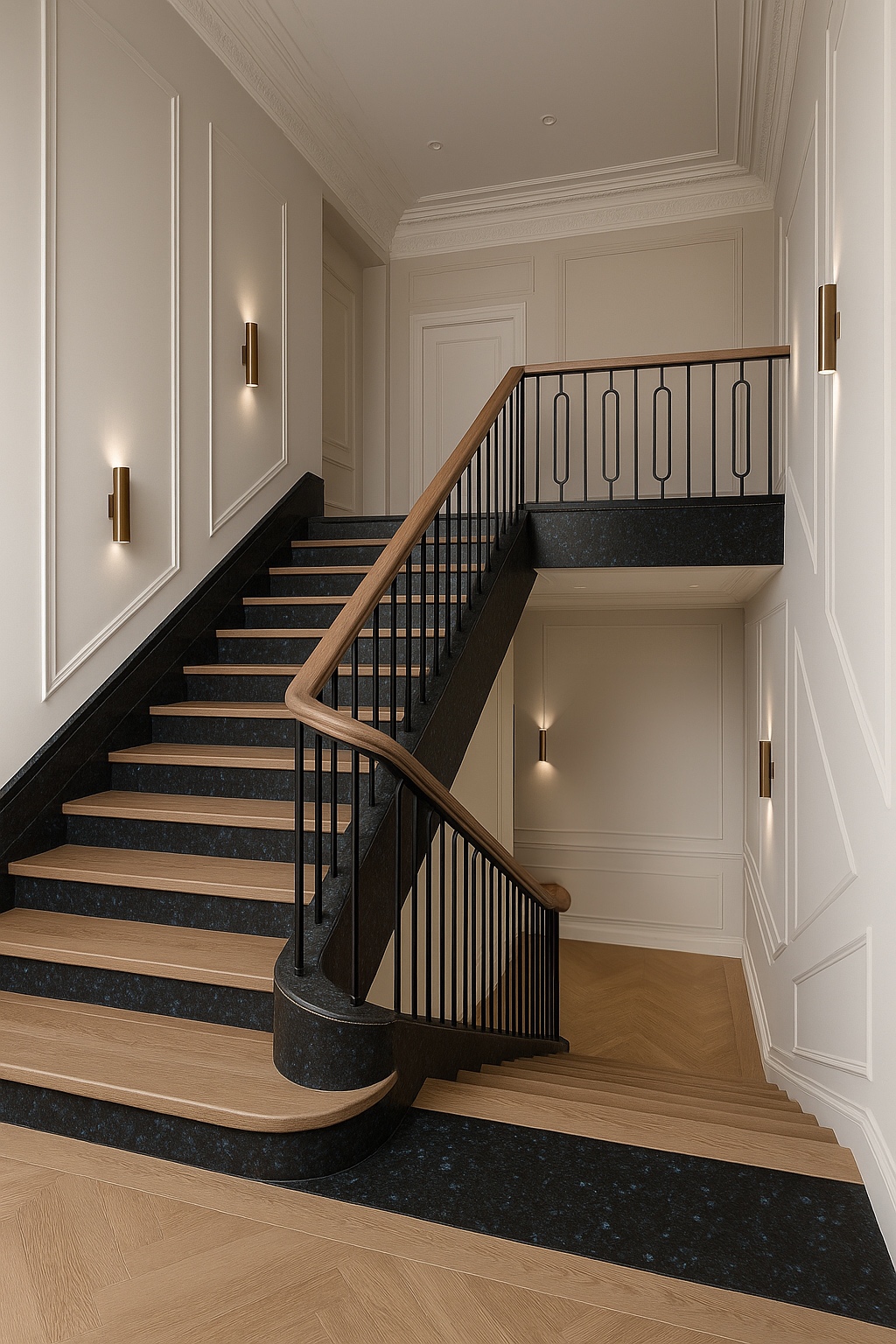
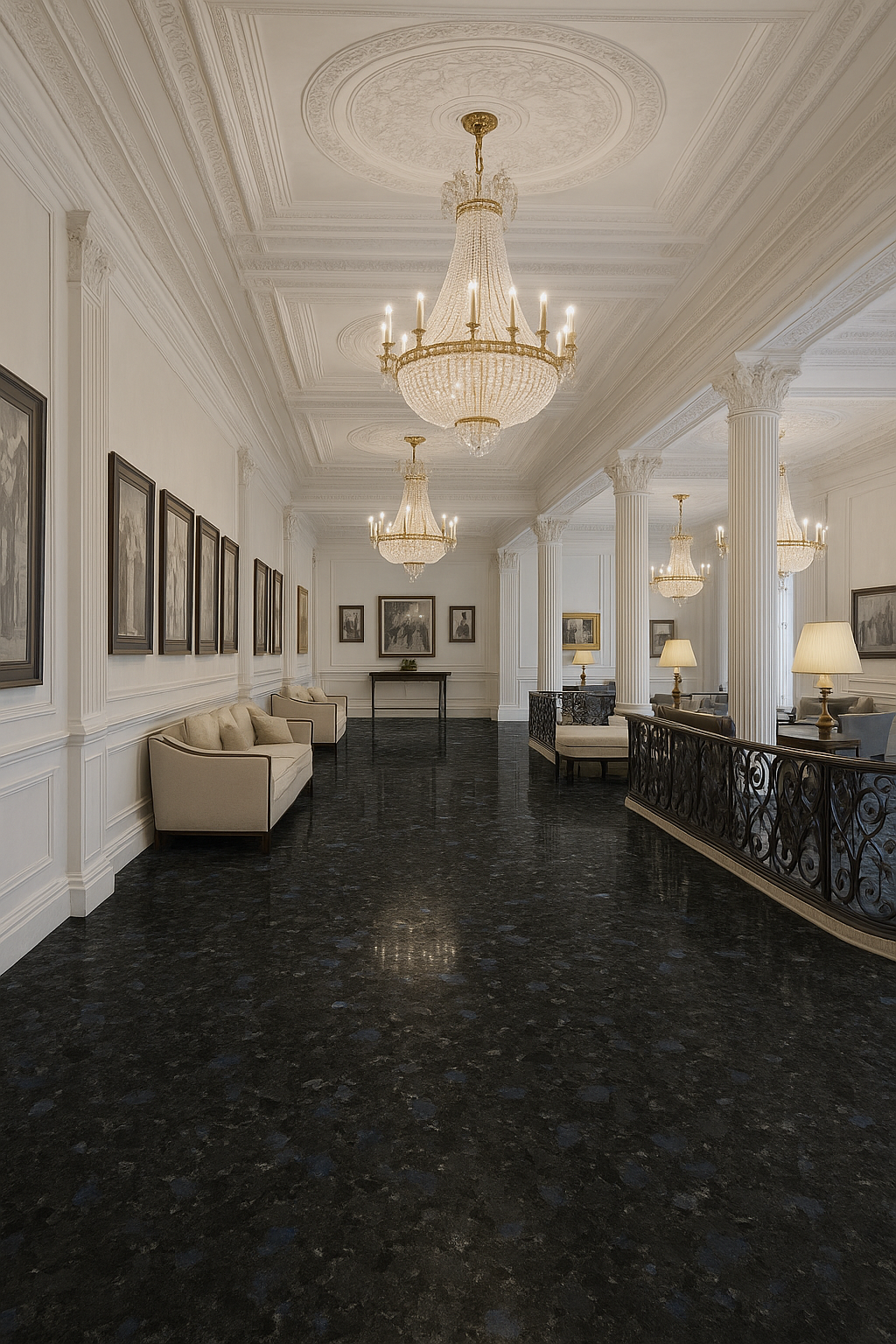
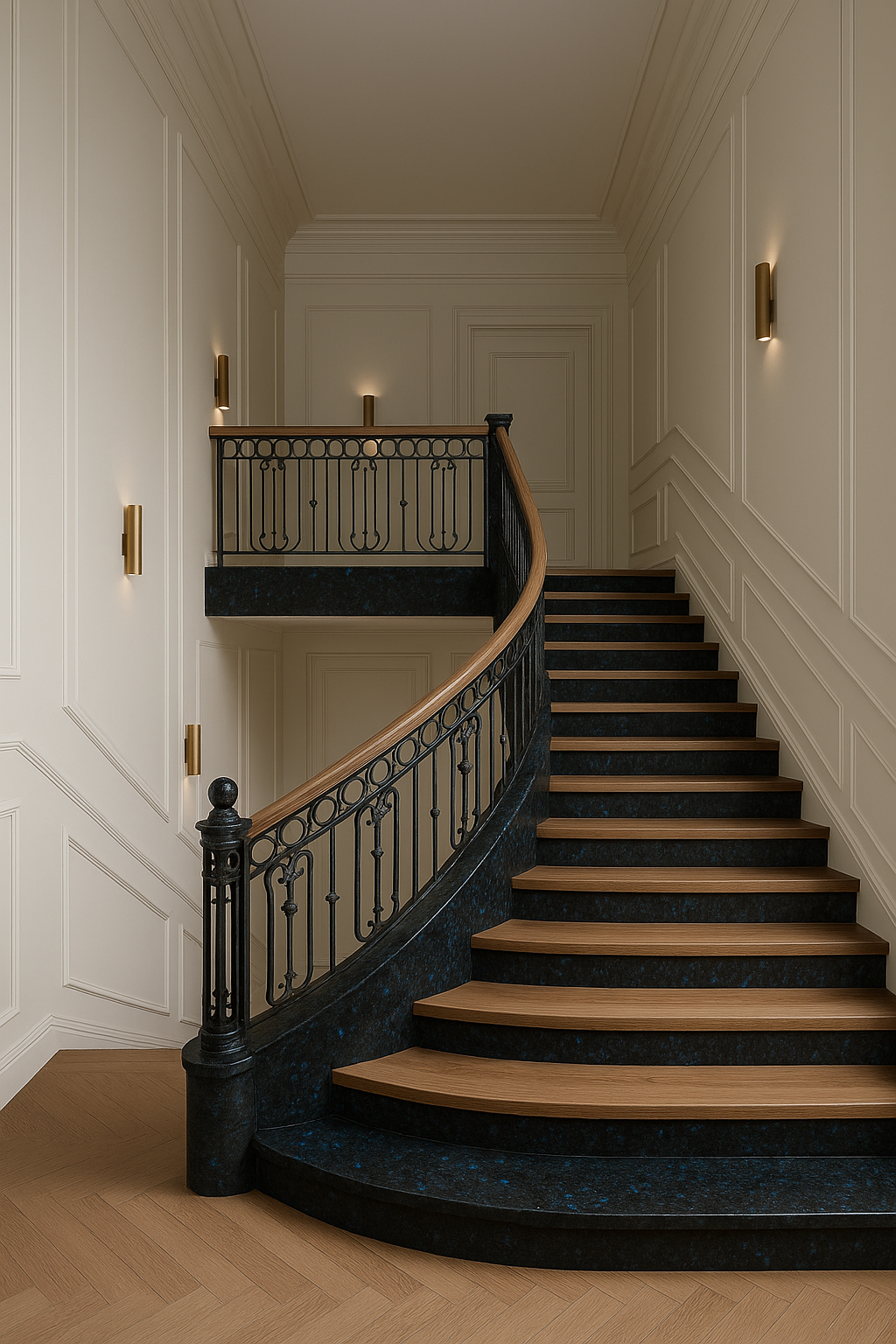
One of the defining strengths of Volga Blue is its ability to create continuity between exterior and interior spaces. This makes it a favored choice for:
-
entrance halls and lobbies
-
reception desks
-
staircases
-
feature walls
-
fireplace surrounds
Blue labradorite reinforces a cohesive architectural narrative, where the exterior identity of a building seamlessly extends into its interior.
Volga Blue is a premium Ukrainian labradorite with unique blue iridescence — a stone that creates architectural legends.
It is not chosen for fashion or short-term impact. It is chosen by those who design with a long-term vision.
Volga Blue transforms buildings into architectural landmarks and spaces into enduring stories — shaped by stone, time, and intention.