
You might be interesting:

Labradorite for Yachts and Private Jets: Premium Stone in Motion
10 min | 13.05.2026Labradorite for Yachts and Private Jets: Premium Stone in Motion
Natural black stone for spaces where status, weight, and flawless detailing matter.


Natural Stone Designed for Spaces in Motion
Yacht and private jet interiors demand far more from materials than traditional residential spaces.
That is why natural stone is used very selectively in marine and aviation architecture.
Labradorite has become one of the few materials capable of combining the monumentality of natural stone with the technical and spatial demands of mobile interiors.
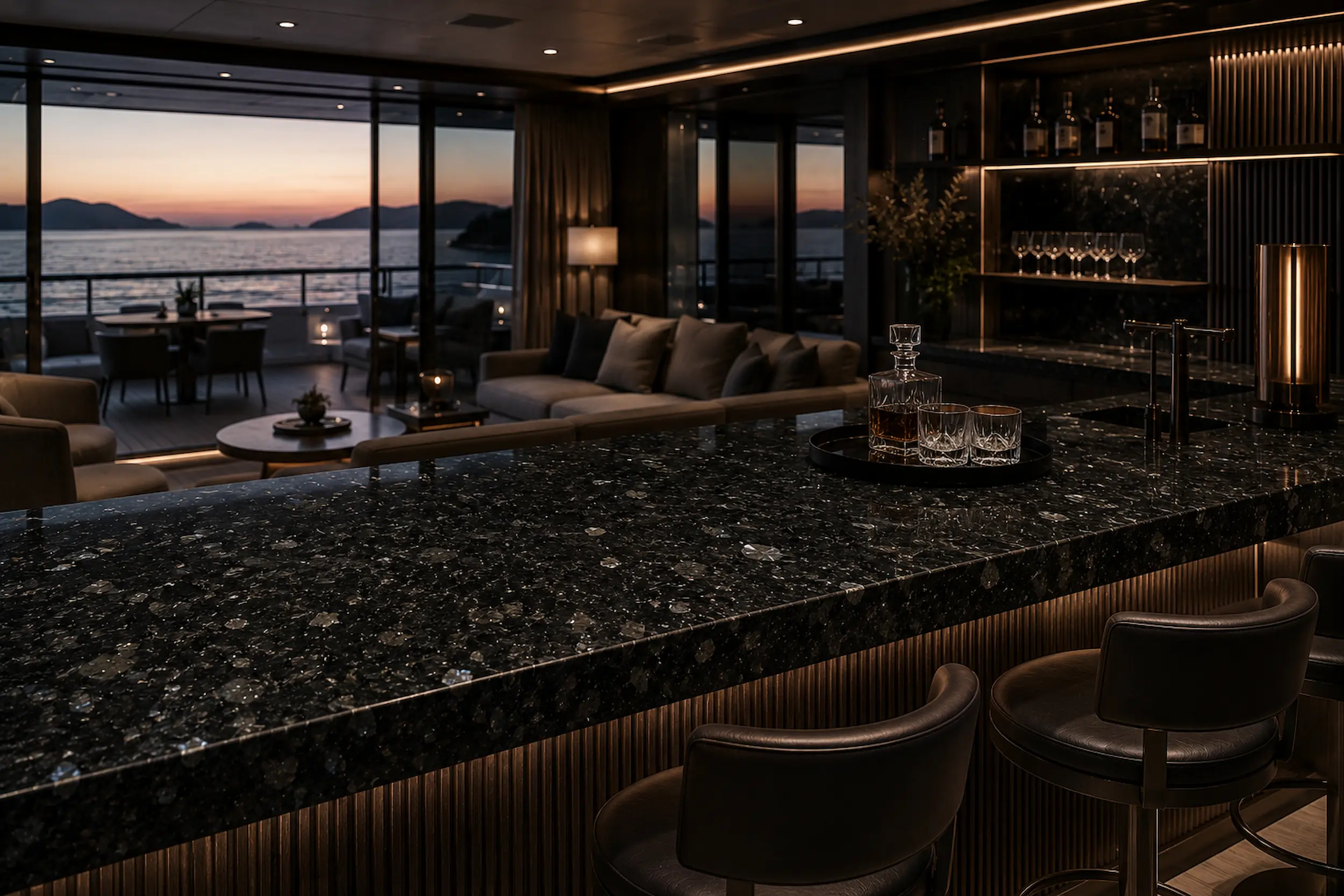
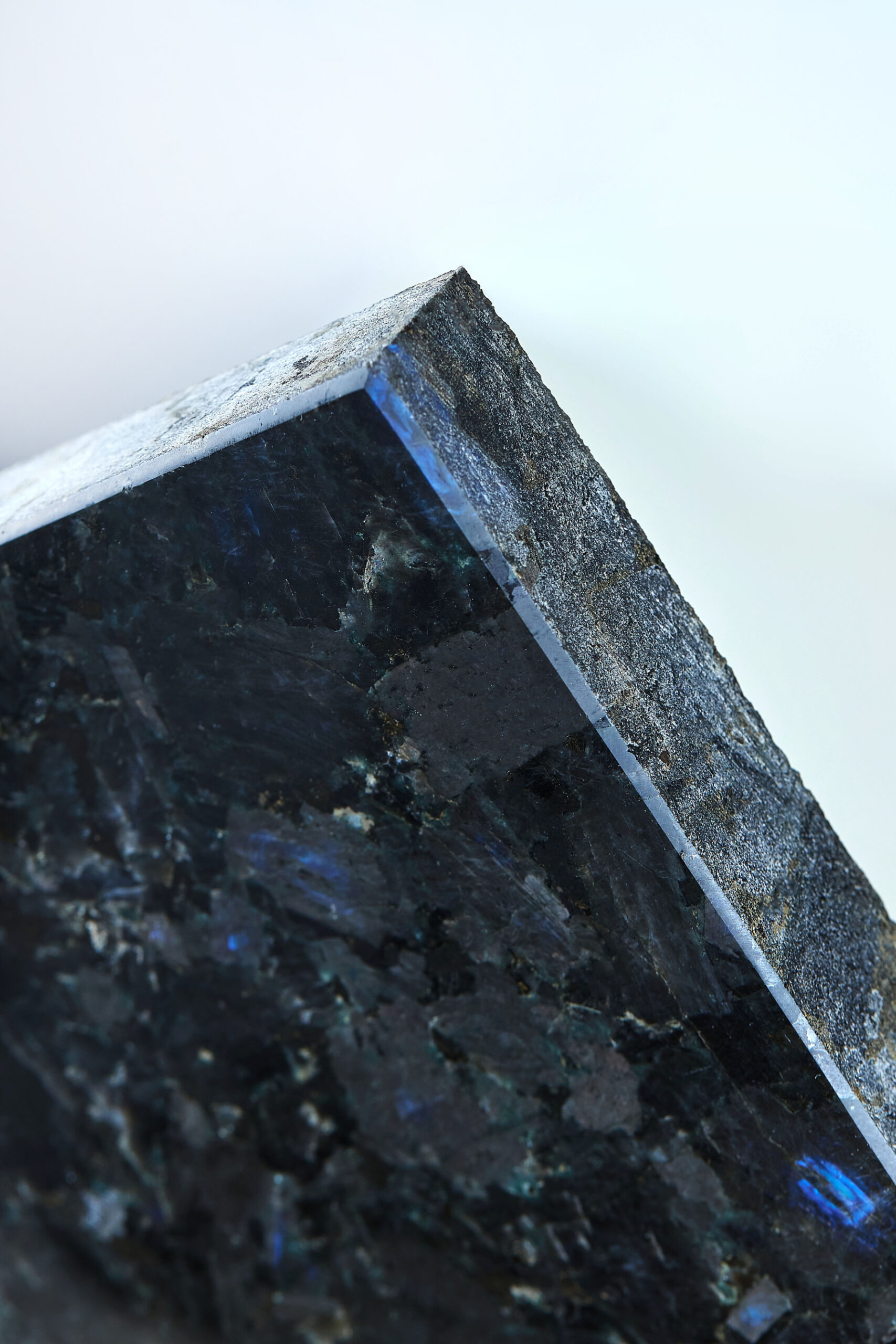
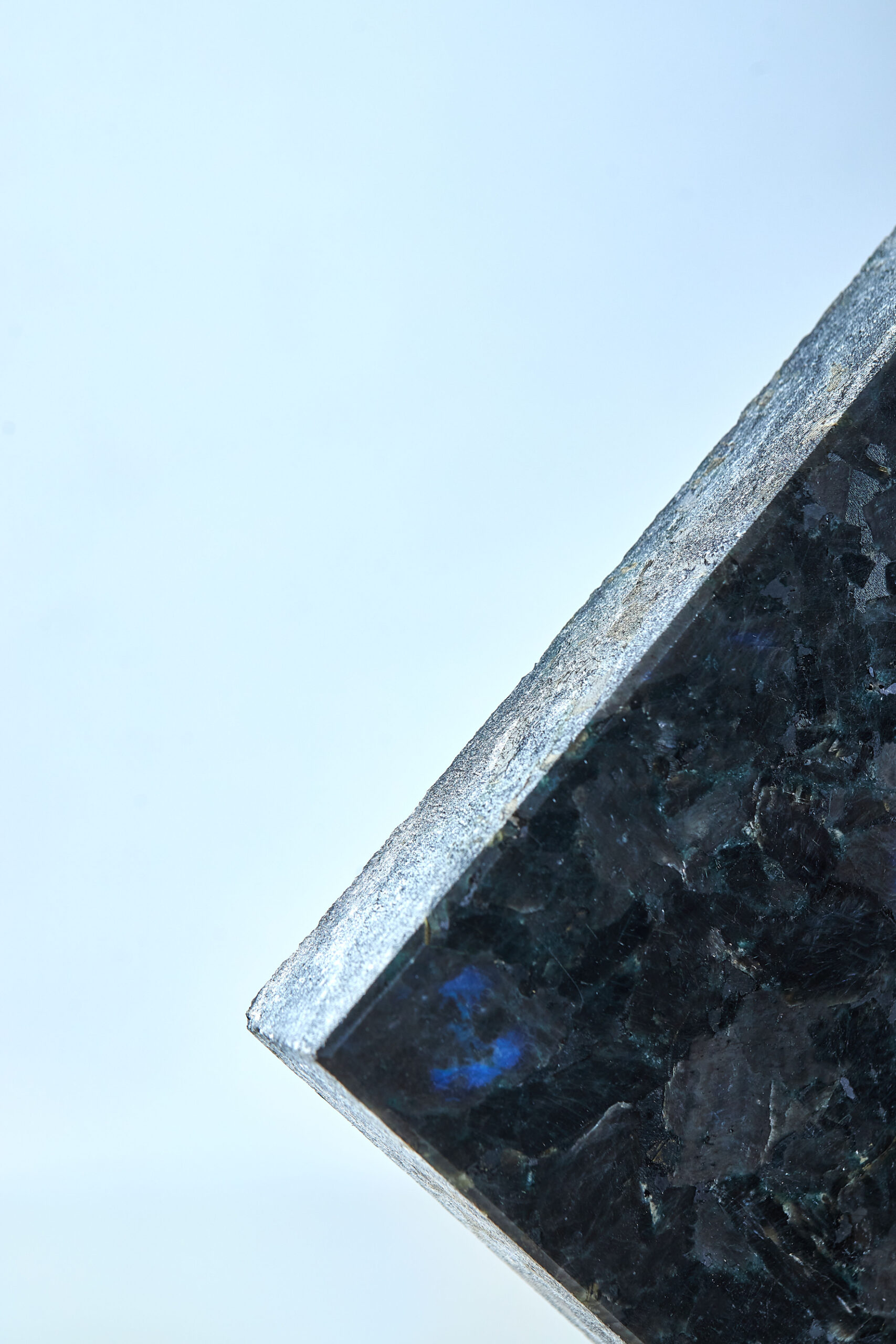
Golovinski Labradorite creates a deep graphite surface with natural blue iridescence that changes depending on light, movement, and viewing angle. In yachts and private aviation, this creates the effect of a “living stone” — a surface that constantly interacts with the surrounding space without visually overwhelming it.
This is why labradorite is increasingly integrated into lounge areas, bars, private cabins, and intimate relaxation spaces aboard yachts and private aircraft.
Why Natural Stone Is Chosen
In premium architecture, natural stone remains more than just a finishing material — it becomes part of the identity of the space itself.
The material works through depth, tactility, and a sense of permanence that cannot be recreated by composite or artificial surfaces.
This becomes especially noticeable inside yachts and private aircraft, where interiors constantly interact with changing daylight, water reflections, evening lighting, and movement.
In these conditions, labradorite reveals itself particularly naturally.
Its graphite structure appears restrained and architecturally clean during the day, while under warm or side lighting the surface begins responding more deeply — subtle natural blue iridescence emerges without feeling artificial or overly decorative.
This interaction between light and stone is what makes labradorite one of the most expressive materials for sophisticated mobile interiors.
Weight vs Aesthetics: 20 mm Slabs
For yachts and private aviation, weight control remains critically important.
That is why natural stone must be integrated carefully — the material should preserve a premium architectural appearance without creating excessive structural load.
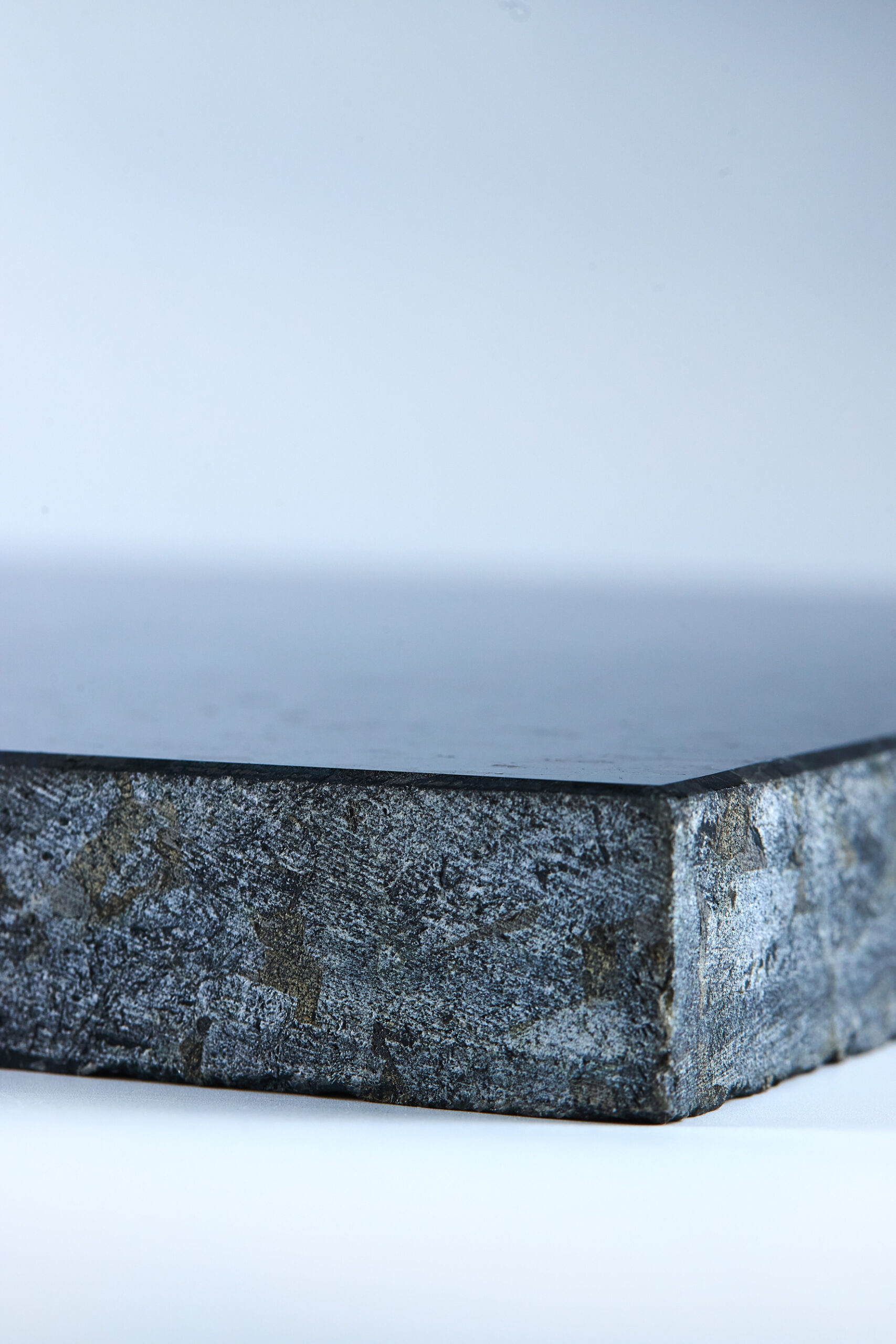
Golovinski uses large-format 20 mm slabs, allowing labradorite to be incorporated into mobile interiors while maintaining the monolithic perception of the surface.
At the same time, the material preserves:
— depth of color
— dense crystalline structure
— natural labradorescence
— the feeling of a continuous stone surface
Unlike decorative panels or many composite alternatives, natural labradorite maintains a true sense of materiality under close interaction and complex lighting conditions.
This is why labradorite is increasingly integrated into premium interiors where material depth, monolithic surfaces, and architectural cohesion are essential.
Resistance to Moisture and Salt
Marine environments create significantly more demanding conditions than conventional interiors.
Constant humidity, salt exposure, temperature fluctuations, and active lighting require stable and durable surfaces.
Labradorite features low water absorption and a dense natural structure, allowing it to perform confidently in:
— bar areas
— cabin interiors
— lounge spaces
— spa zones
— yacht bathrooms
The polished finish additionally enhances the depth of the stone while simplifying maintenance within marine environments.
At the same time, labradorite maintains its architectural clarity even after prolonged interaction with humidity, light, and temperature changes.
Applications on Yachts
In yacht interiors, natural stone is not used excessively — which is precisely why its presence feels even more expressive.
Labradorite is integrated into spaces where the material should create a sense of depth and status without unnecessary decorative overload.
Bar and Galley Areas
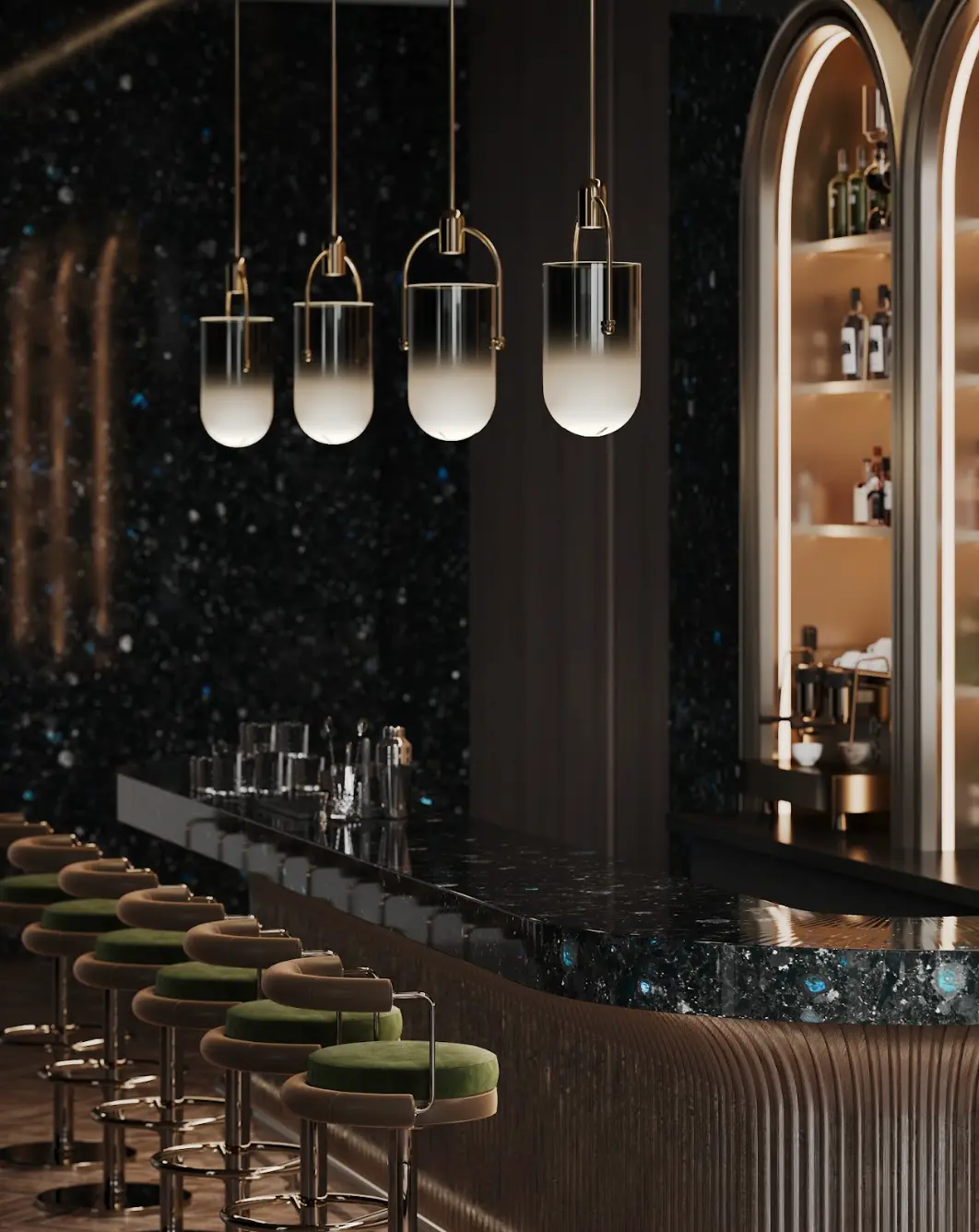
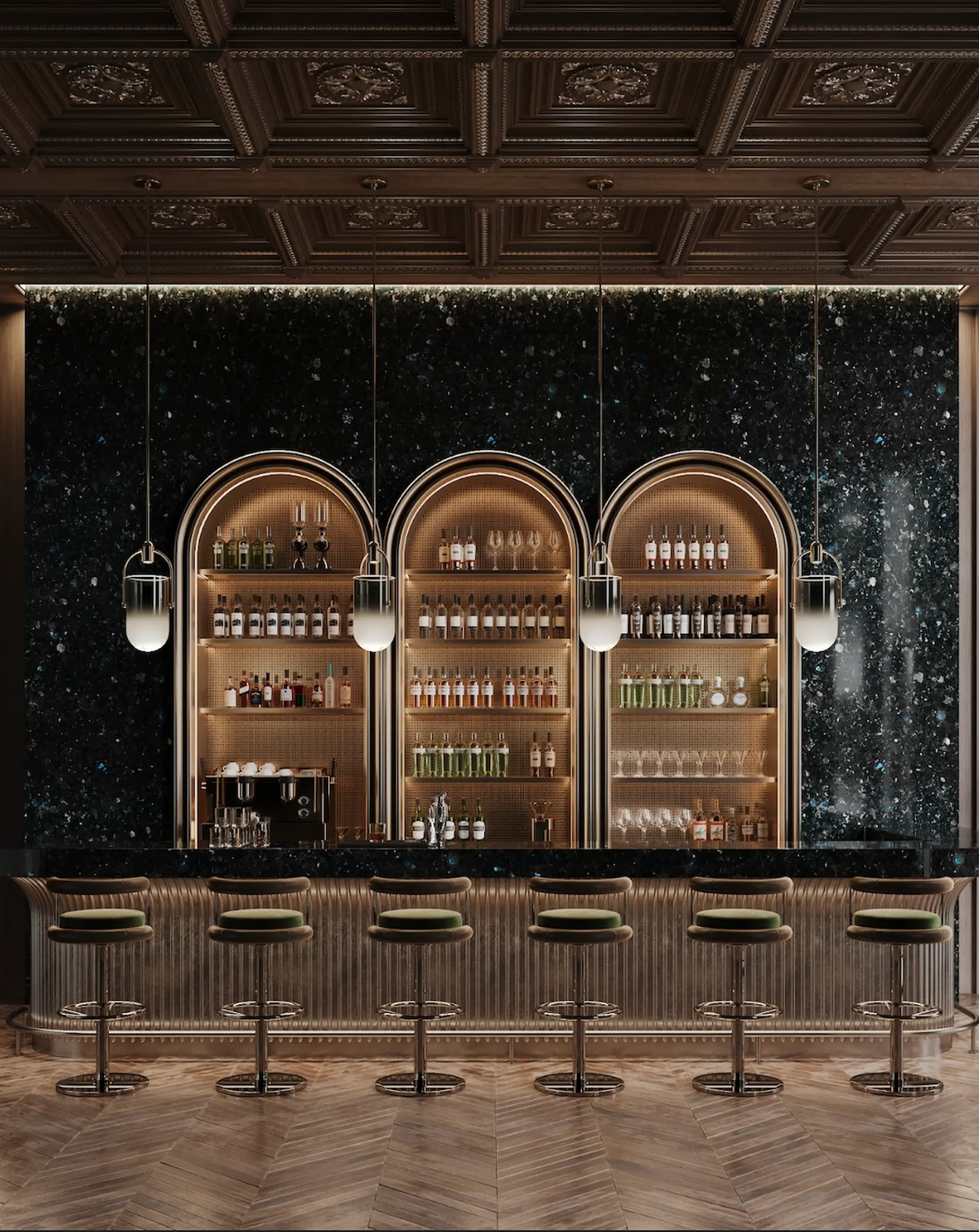
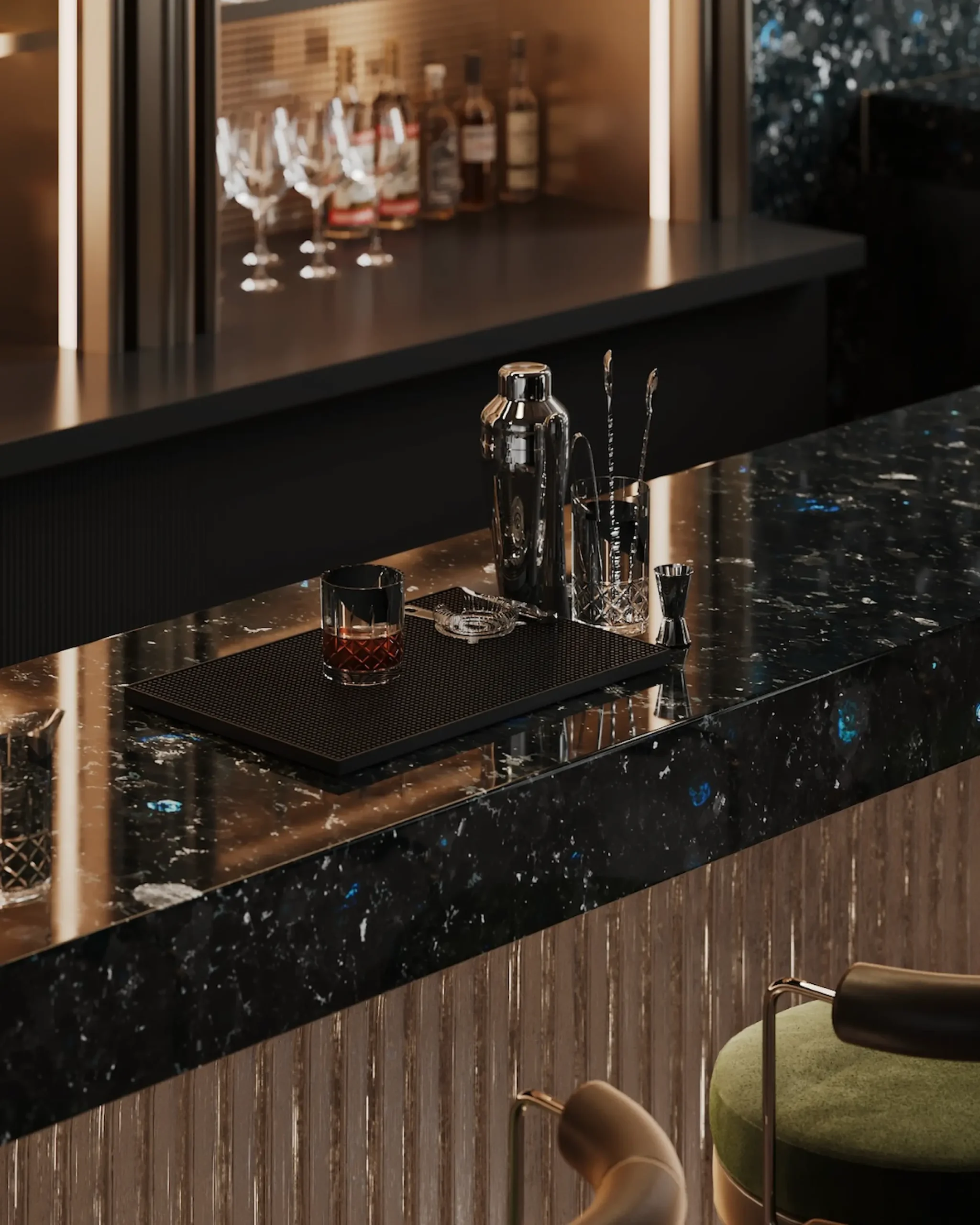
Labradorite performs especially well in bar areas.
Warm lighting reveals natural blue iridescence gradually and fragmentally — the surface changes depending on viewing angle and movement throughout the space.
The material works particularly well alongside:
— dark wood
— brushed metal
— warm LED lighting
— soft textiles
— matte metallic surfaces
Within these interiors, labradorite does not feel decorative — it shapes the atmosphere of the space itself.
Cabins and Lounge Areas
Inside private cabins and lounge spaces, black stone creates a calmer and more intimate atmosphere.
Labradorite is frequently used for:
— feature walls
— furniture surfaces
— decorative architectural planes
— integrated countertops
— lounge area elements
Thanks to large-format slabs, interiors maintain clean geometry and a continuous material flow.
Unlike highly active marble textures, the graphite structure of labradorite appears significantly more restrained and contemporary within premium mobile interiors.
Private Jets: Interior Specifics
In private aviation, natural stone is used more selectively than on yachts — which often makes its presence even more expressive.
Every material undergoes far stricter evaluation here:
— weight control
— dimensional stability
— durability
— surface behavior under complex lighting
— tactile perception
That is why labradorite is integrated only into key architectural zones:
— meeting areas
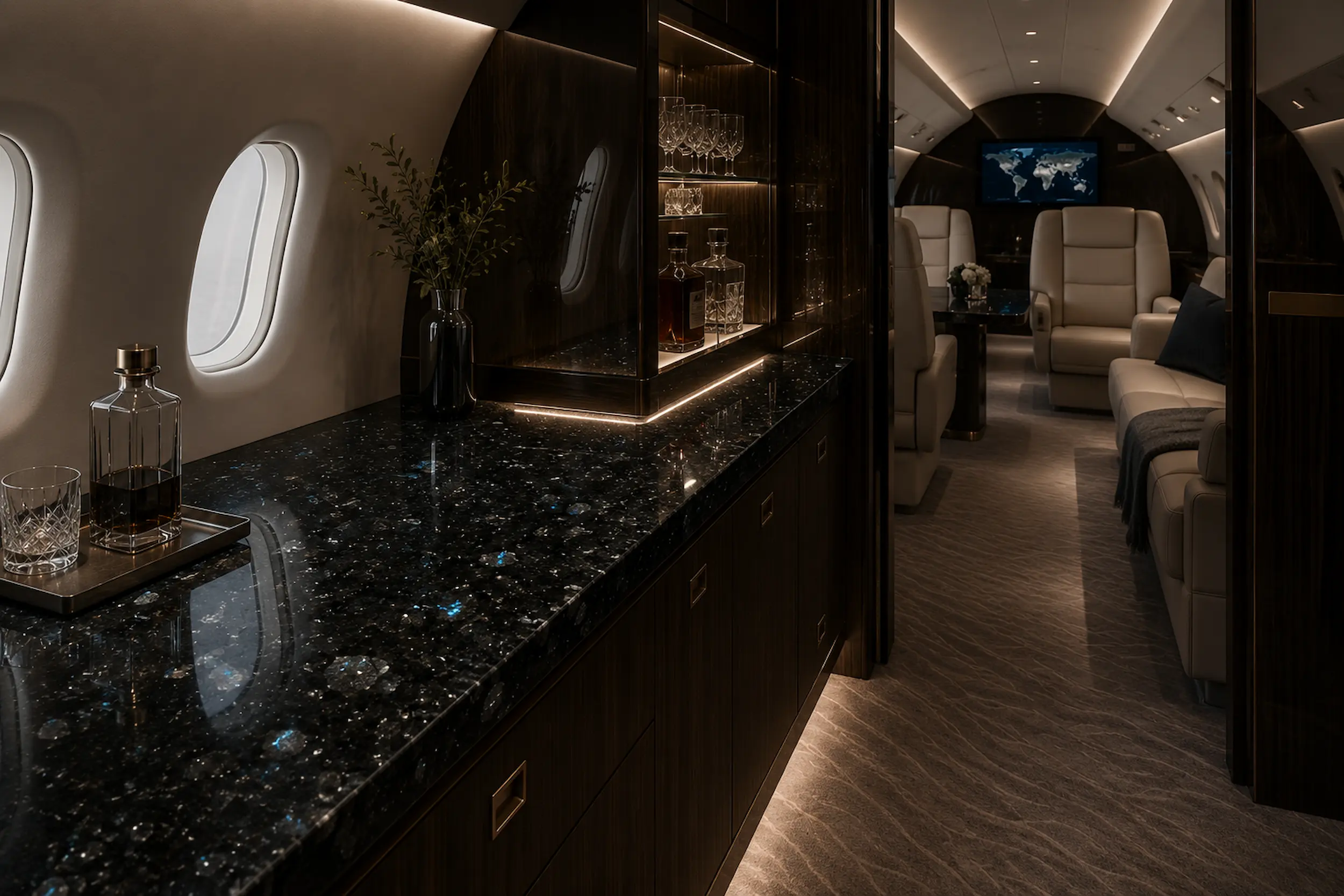
— bar surfaces
— private modules
— wall panels
— intimate lounge spaces
Under the controlled lighting of an aircraft cabin, labradorite performs especially deeply. The surface reacts to light in a far more complex way than standard black stone or glossy composite materials.
As a result, the interior feels more refined, calmer, and architecturally cohesive.
Specifications and Logistics
Golovinski provides a complete production cycle — from quarry extraction to large-format slab manufacturing for international architectural projects.
The material is exported to more than 30 countries worldwide and used in private architecture, premium residential interiors, hospitality projects, commercial spaces, and complex bespoke applications.
International logistics support includes:
— large-format slabs
— individual material selection
— photo and video slab selection
— export packaging
— architect and designer support
Labradorite in yachts and private aviation is not simply natural stone.
It is a material that creates an atmosphere of movement, depth, and premium architectural identity.