
You might be interesting:

Labradorite in Hallway and Entryway: Stone That Sets the Home’s Tone
10 min | 05.05.2026Labradorite in Hallway and Entryway: Stone That Sets the Home’s Tone
The material where spatial perception begins


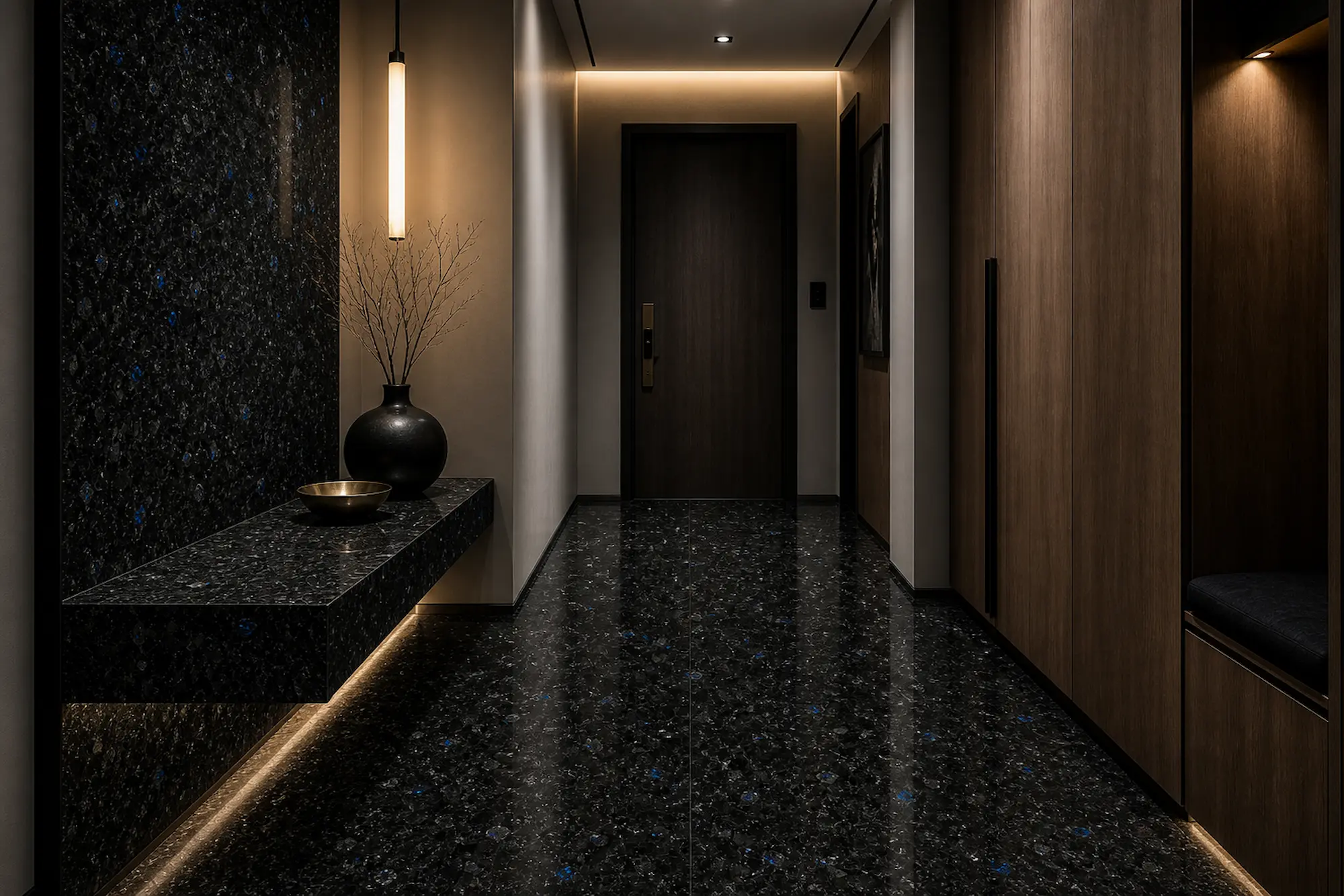
Stone in the hallway as the first impression of space
Stone in hallway design is the first interaction with the space.
The entryway is not a transition — it is a moment of arrival.
This is where the level of the space is immediately understood: through materials, depth, and attention to detail.
Stone in the hallway does not decorate. It defines the first perception of the entire interior.
Labradorite works precisely in this role. A black stone with a deep graphite base and subtle blue iridescence creates concentration rather than contrast.
It does not compete with the space — it organizes it.
Its structure, formed approximately 300 million years ago, is not perceived as a geological fact, but as density. This density is visible in how the material holds its surface, how it absorbs light, and how it remains visually stable under changing conditions.
It is not an element of design.
It is the beginning of architecture.
Accent wall in a narrow space
A narrow hallway does not need more material — it needs depth.
Labradorite changes perception without changing geometry.
The dark surface does not compress the space.
It creates distance.
At the same time, iridescence introduces movement. Light interacts with the structure, shifting depending on the angle and creating a dynamic surface.
The wall becomes active, not static.
This allows the space to feel more complex without adding visual noise.
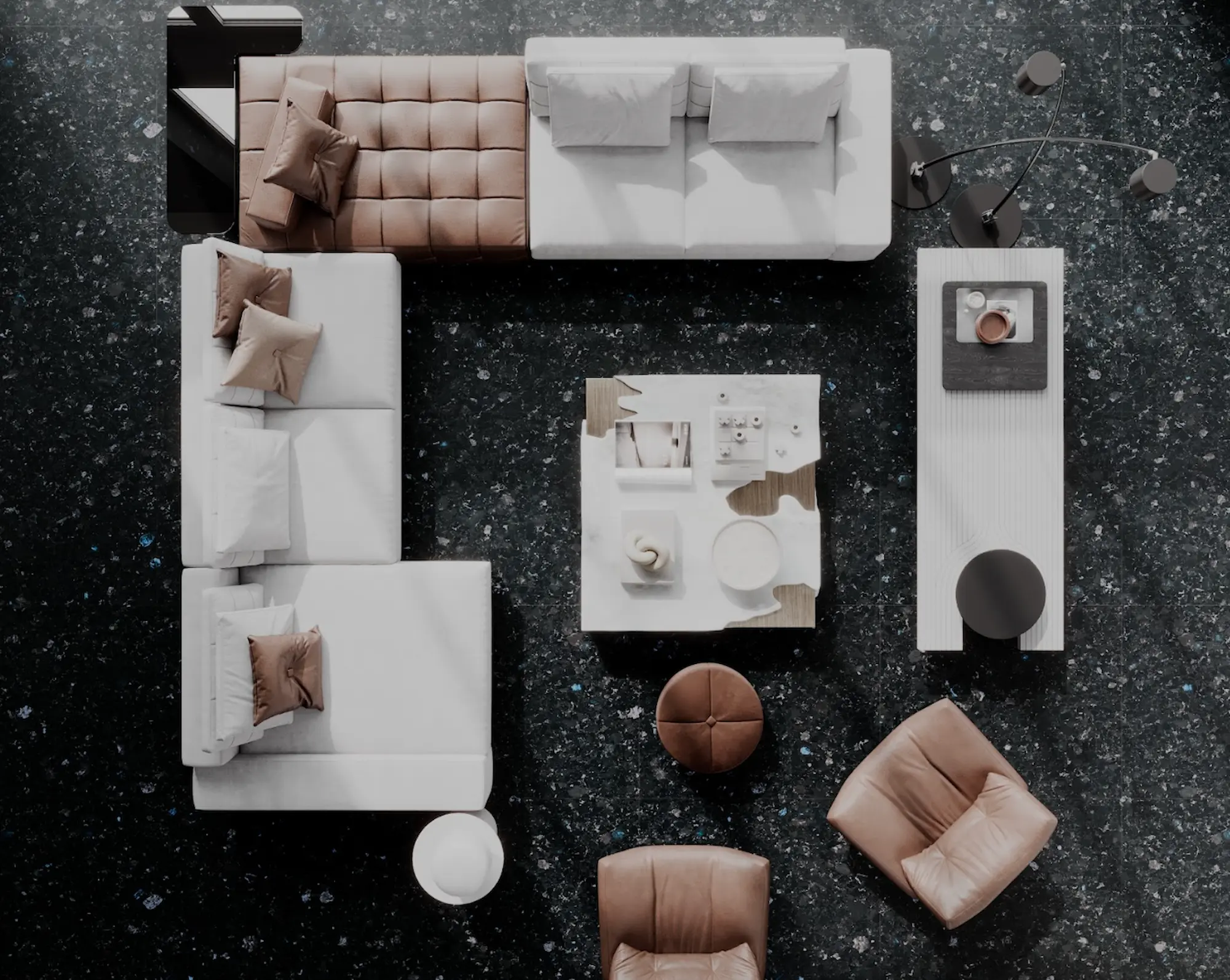
Floor — the first point of contact
The floor is the first interaction with the space.
It is where material is not only seen, but experienced — through movement, load, moisture, and daily use.
In this context, appearance is secondary to behavior.
Labradorite performs as a stable base. Its dense crystalline structure does not absorb water, does not deform, and does not react to temperature fluctuations.
Over time, it does not lose clarity.
It does not “age” visually.
The surface remains composed. Controlled. Consistent.
This is what defines its suitability for high-contact areas like hallways.
Polished vs matte for hallway
Finish does not define how the stone looks — it defines how it behaves.
Polished reveals depth and light. The surface acts as a reflective plane, but not a flat one — light enters the structure and returns through iridescence. This creates spatial depth rather than brightness.The hallway feels larger not because it is lighter, but because it has more visual distance.
 Silk provides a more restrained interpretation of the material. Reflection is minimized, the surface becomes even, and perception stabilizes.
The stone does not draw attention — it holds the space together.
 Leather / Brushed The surface gains micro-relief, light becomes diffused, and the structure reads softer and more physical.
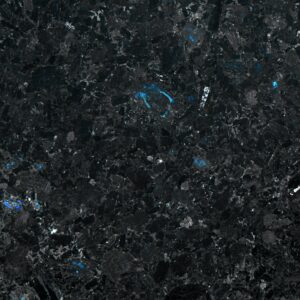
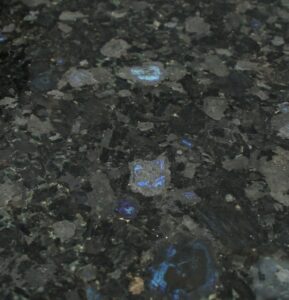
This is no longer just a surface — it is contact with the material.
The choice of finish defines the scenario of the space:
intensity, calm, or balance.
How to avoid overloading a small space
Labradorite is not about quantity.
It is about precision.
In most cases, one surface is enough:
— a floor
— or a wall
Balance is achieved not through repetition, but through composition:
— light
— geometry
— material contrast
The stone remains a focal point because it is not duplicated.
Restraint is what allows it to work.
Color combinations
Black stone + light natural stone
Contrast defines structure. Dark surfaces create depth and visual weight. Light materials create distance and openness. Together, they build a clear architectural hierarchy.Labradorite + wood
Wood introduces warmth and tactility. Labradorite holds form and density. Wood softens the perception and adds a human scale. This combination balances precision with comfort.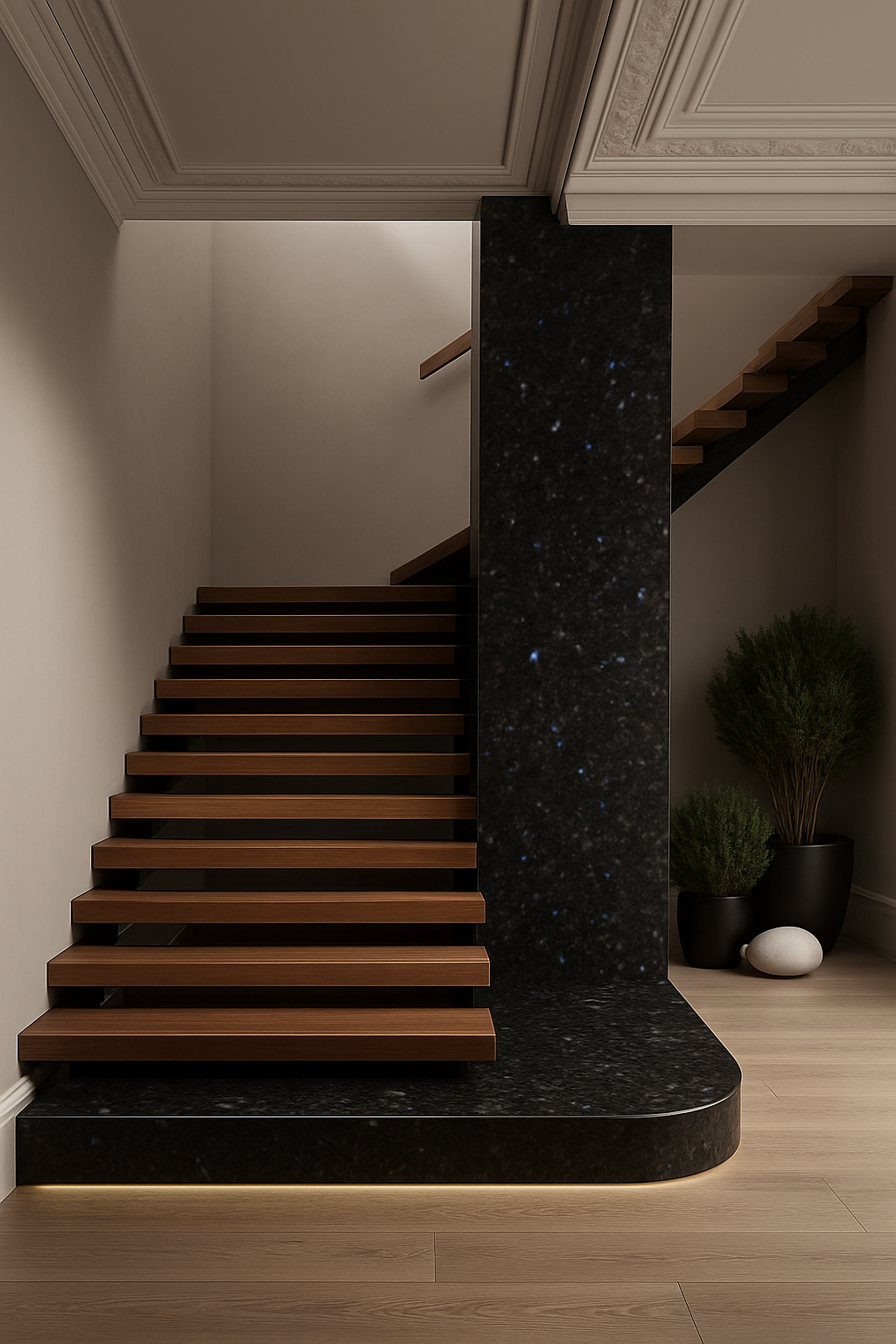
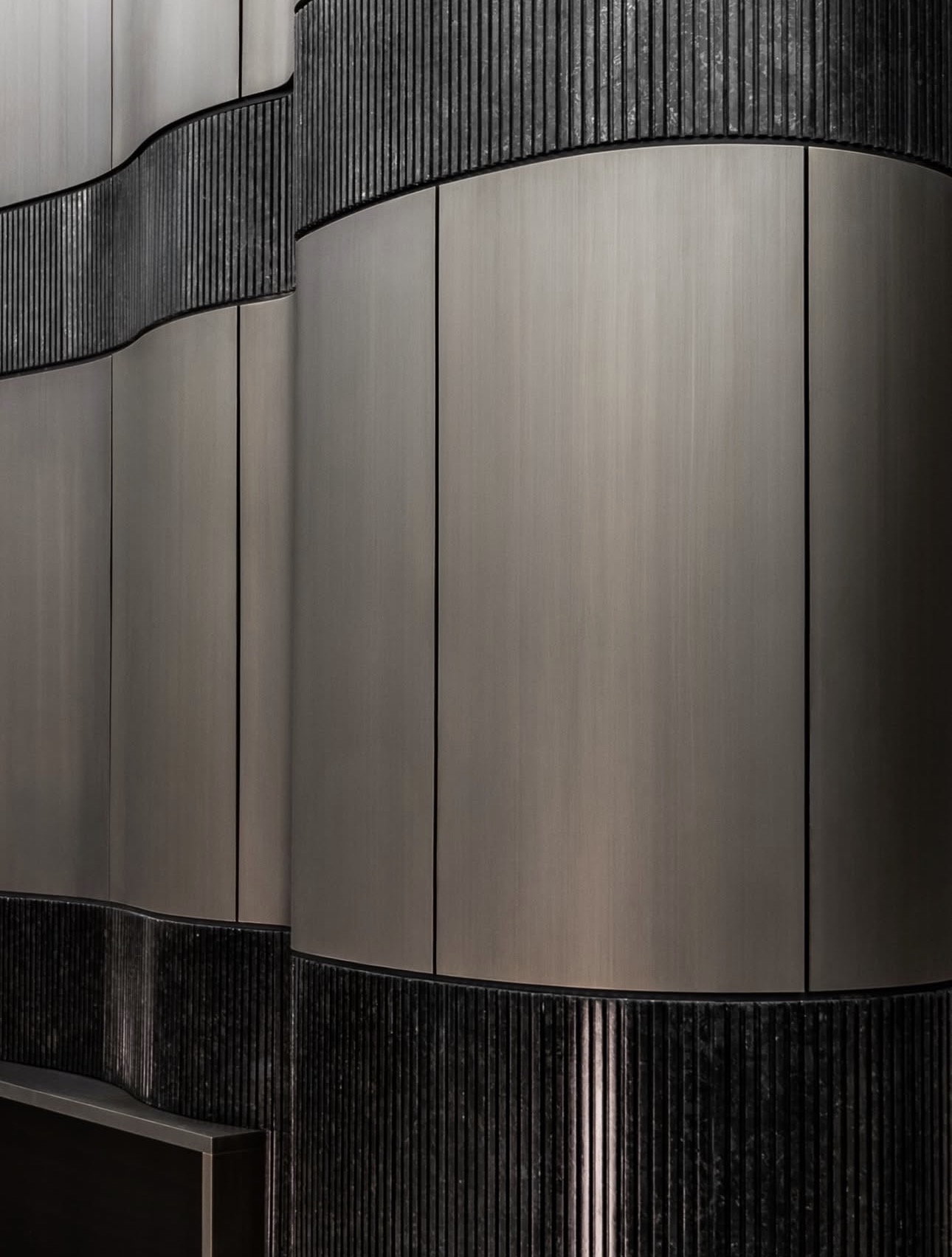
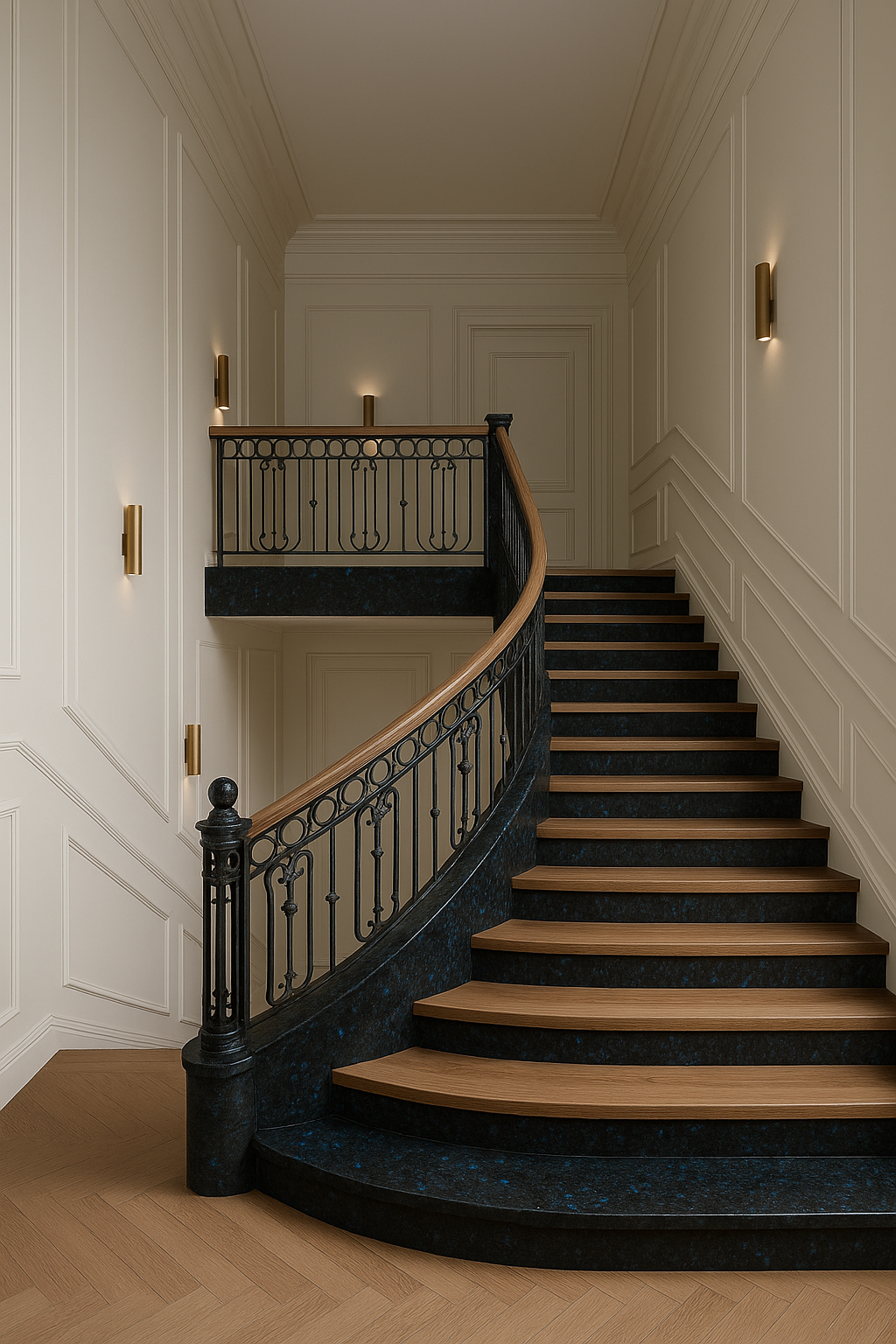
Lighting recommendations
Light does not illuminate labradorite — it reveals it.
Front lighting flattens the surface and removes depth.
Side lighting activates the material:
— it emphasizes texture
— it reveals structure
— it allows iridescence to appear
Iridescence is not uniform.
It emerges under angle and disappears again.
This variability is what makes the material feel alive.
Warm light enhances the graphite base and softens the contrast.
Cold light makes the structure more graphic.
Lighting is not an addition — it is part of the material.
Material as a spatial anchor
The entryway is no longer a technical zone.
It becomes the first architectural statement.
Labradorite is used precisely:
— as a floor
— as an accent wall
— as integrated surfaces
It does not decorate the space.
It defines it from the first step.
This is not a visual gesture.
This is a structural decision that shapes perception over time.
This is not decoration.
This is architecture.