
You might be interesting:

Labradorite Flooring: Black Stone That Holds a Space for Decades
10 min | 23.03.2026Labradorite Flooring: Black Stone That Holds a Space for Decades
Volga Blue in Contemporary Architecture


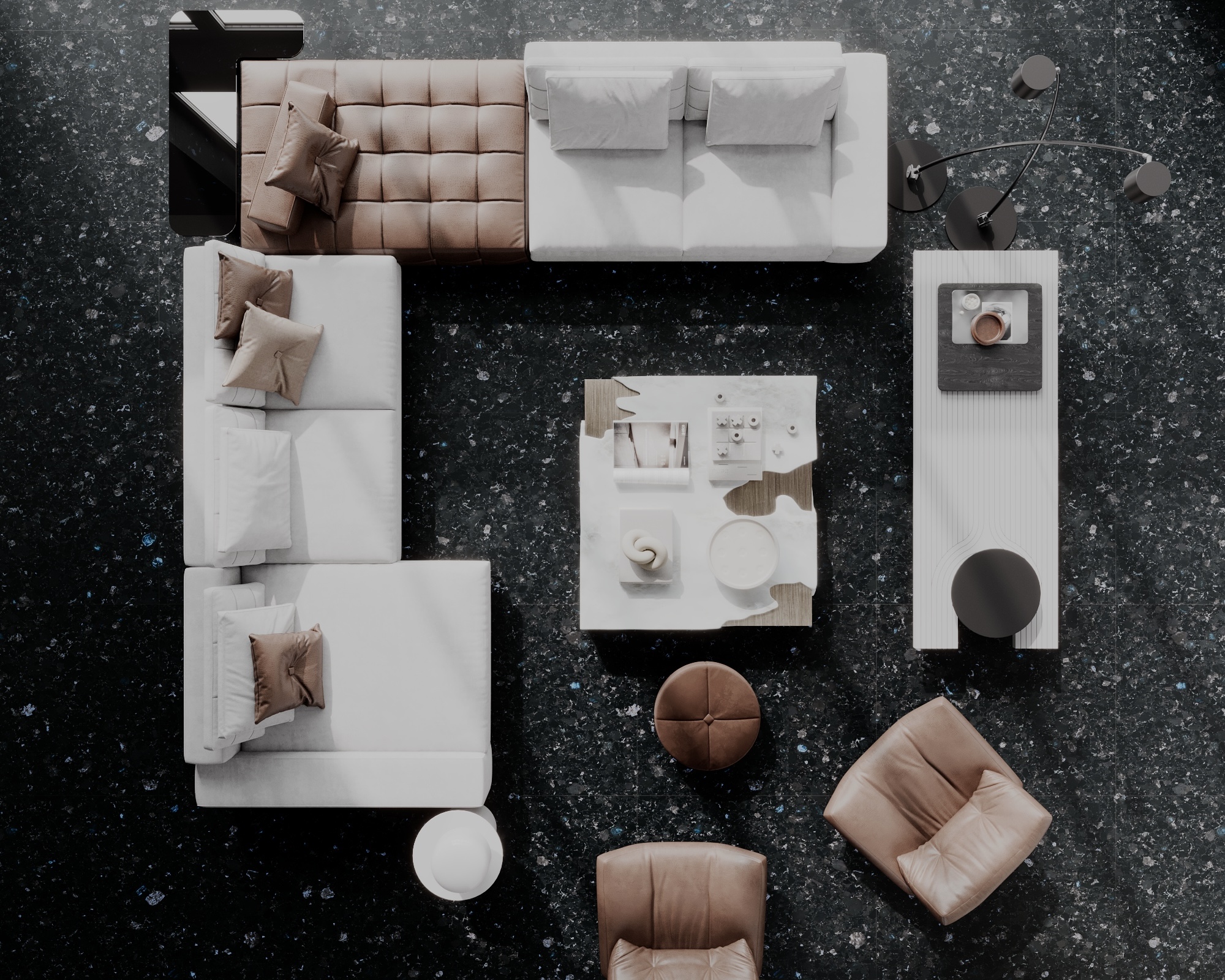
Why Labradorite Flooring Is Chosen in Projects Where Long-Term Aesthetics Matter
Flooring in architecture rarely works as a separate decorative gesture. It does not attract attention as openly as a facade, staircase, or fireplace portal, yet it is the floor that gives a space its sense of cohesion. It determines how volumes are perceived, how light behaves, and how wood, glass, metal, and stone come together.
That is why choosing a flooring material is not only a matter of color or texture. It is the choice of a surface that will interact with the real environment every day while remaining part of the architectural composition. It is in this context that labradorite flooring is increasingly becoming a precise solution for contemporary private homes, hotel lobbies, villa terraces, kitchens, and premium commercial spaces.
When a client searches for black stone flooring, the comparison usually arises between several materials: black marble, dark granite, quartzite, and labradorite. But flooring requires a different standard of evaluation than decorative vertical surfaces. What matters here is not only how the stone looks at the moment of installation, but whether it retains depth, composure, and visual strength after years of use.
That is exactly why labradorite feels especially appropriate. It is black stone with both visual depth and structural confidence. Its natural structure, low water absorption, and solid hardness make it a material not of short-term effect, but of long architectural presence.
Why Black Stone Works So Well on Flooring
The floor is one of the most heavily used surfaces in any project. It takes constant movement, contact with footwear, dust, moisture, furniture, objects, cleaning, and seasonal changes in its immediate environment. That is why not every dark natural stone works equally well in this role.
Labradorite flooring is valued for its balance. It offers a dark, expressive, premium surface, yet it is not defined by decoration alone. Where black marble is often appreciated first for its image, labradorite adds a sense of material reliability. Its presence in space feels calm but strong, without unnecessary display.
In good architecture, this is especially important. The floor should not tire the eye or compete with everything else in the space. It should hold the environment together. That is exactly how labradorite works: not as a random accent, but as a base that gathers the interior or terrace into a unified composition.
Hardness 6.5: A Surface That Preserves Composure
One of the main reasons why labradorite is so well suited for flooring is its hardness of around 6.5 on the Mohs scale. In architecture, this matters not as a dry technical figure, but as a characteristic that affects how long the material preserves visual discipline.
When it comes to flooring in a private home, a hotel lobby, or a commercial space, a client always evaluates not only the initial effect, but also the ability of the surface to remain convincing over time. This is where labradorite flooring holds a strong position: it responds better to the logic of everyday use than many softer dark stones.
Its advantage is not in a loud display of strength, but in the fact that the floor retains its sense of cohesion for longer. The space does not lose architectural quality, and the black stone does not feel like a compromise between beauty and practicality.
Water Absorption <0.1%: Confidence in Everyday Use
For flooring, not only resistance to wear matters, but also the way the material behaves in contact with moisture. That is why water absorption below 0.1% is not a secondary characteristic for labradorite, but a real advantage in everyday use.
This is especially important for kitchen floors, entrance areas, hotel lobbies, villa terraces, and spaces where the surface is constantly exposed to real-life conditions. In such zones, the stone must remain stable, without feeling delicate or requiring excessive caution.
That is why labradorite flooring feels convincing wherever a dark natural stone with a long service life is needed. It not only looks premium, it also responds to the rhythm of everyday life.
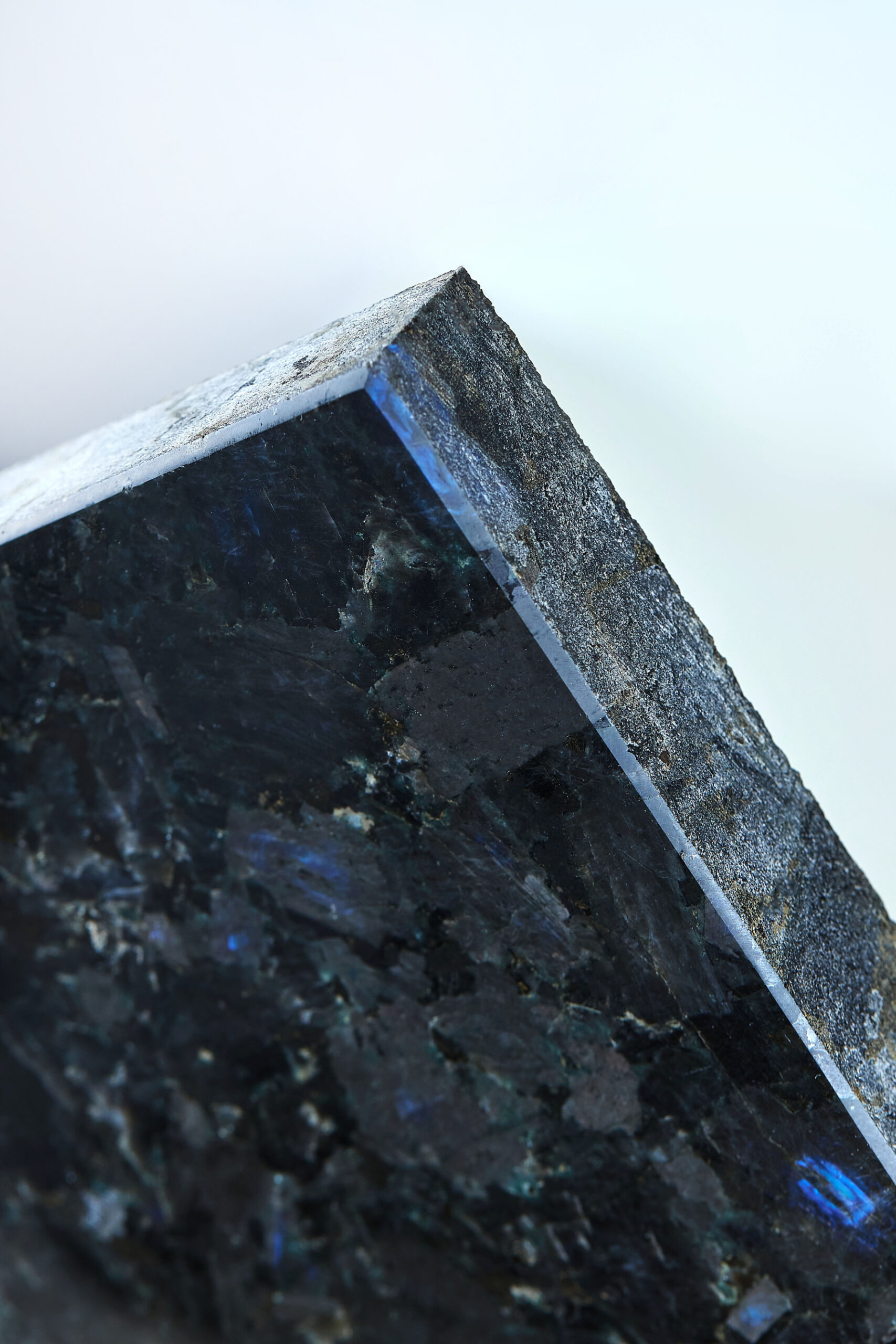
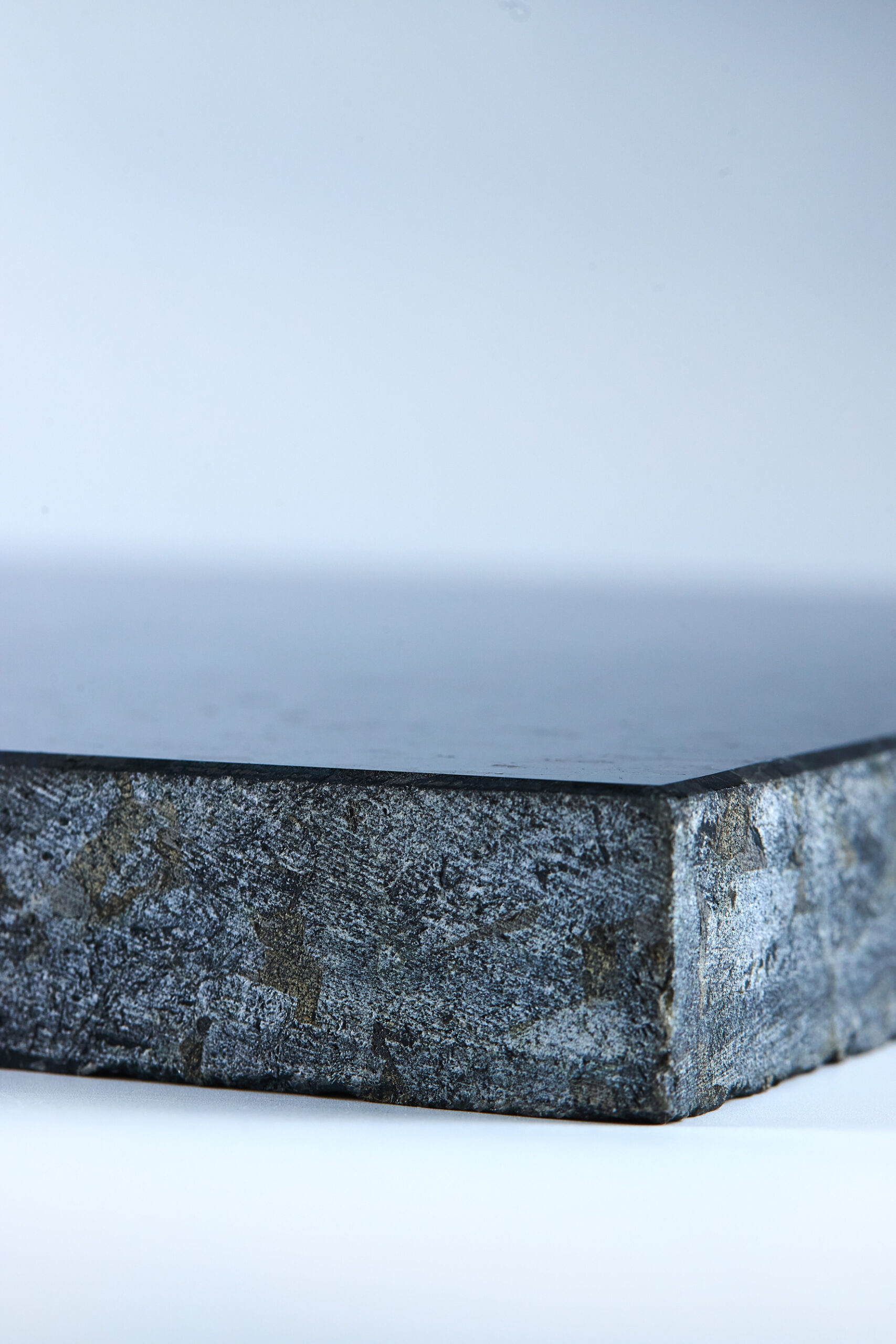
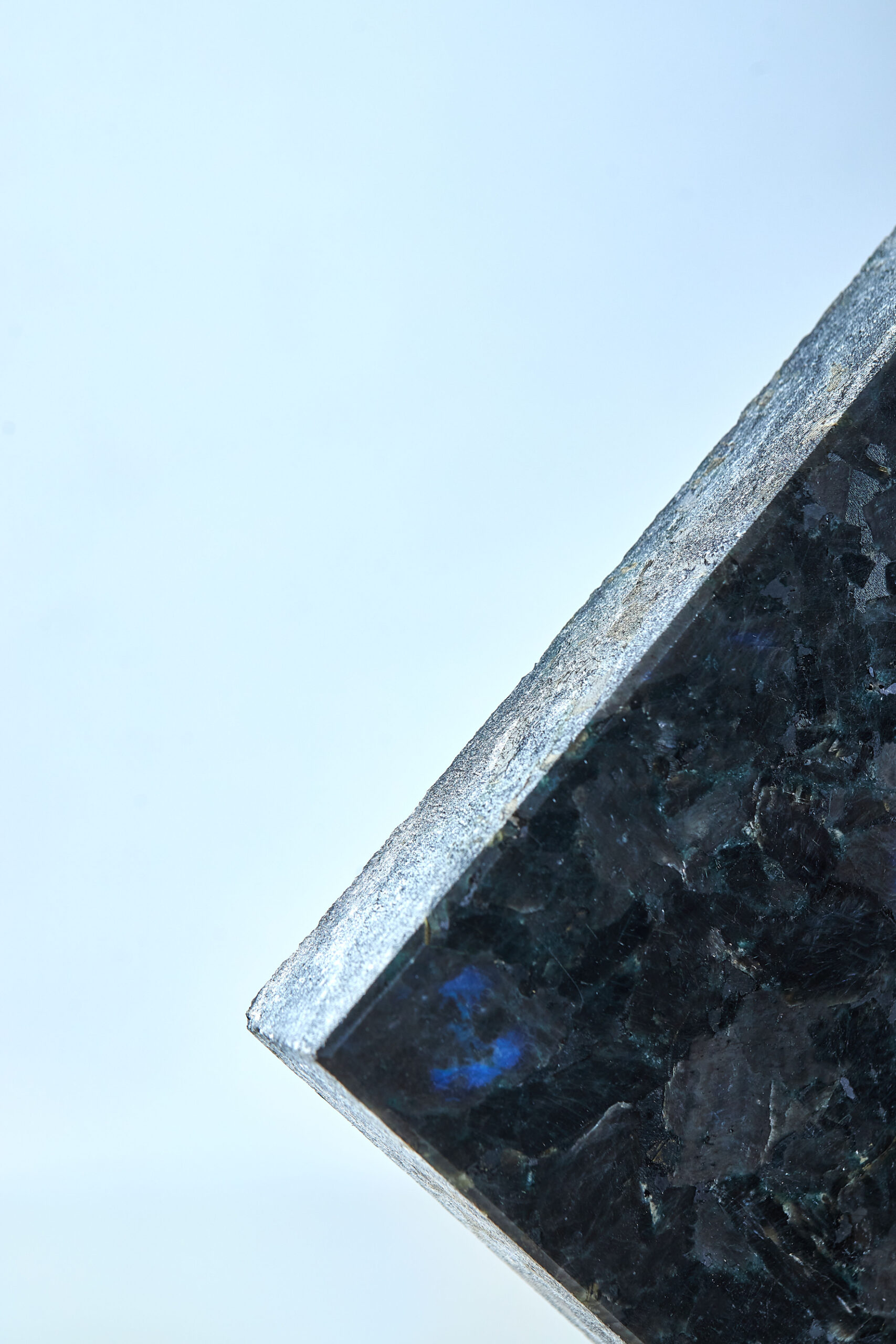
Black Stone That Does Not Lose Relevance
With dark natural stone, it is easy to be captivated by the first impression. This is especially true when the choice is made between categories such as black stone, labradorite, and black marble, and the focus naturally shifts toward gloss, drama, or visual impact.
But flooring belongs to a different category of architectural decision. What matters here is not only how the material looks today, but whether it will remain appropriate after years of use, once the space is fully lived in.
In this sense, labradorite has a very composed character. Its beauty is not built on excess. It rests on depth of tone, dense structure, and natural restraint. That is why black labradorite flooring does not become tiring and does not feel temporary. It preserves relevance not through fashion, but through inner architectural quality.
Labradorite or Black Marble for Flooring
Comparison with black marble almost always arises when the conversation turns to premium dark flooring. Both materials have strong visual potential, but in real use an important difference becomes clear.
Black marble is often chosen for its decorative image. Labradorite flooring is chosen when that image must withstand everyday use without losing its credibility. It contains less fragile decorativeness and more of the feeling of a material that naturally works underfoot.
That is why the search for black stone flooring so often leads to labradorite, especially when speaking of large residential spaces, hotel lobbies, open-plan kitchens, terraces of contemporary villas, and commercial interiors with high traffic.
Where Labradorite Flooring Works Best
The strength of labradorite lies in the fact that it works convincingly in very different environments. It is equally appropriate where quiet materials are needed and where flooring must withstand a large flow of people.
Private Homes and Residences
In private homes, flooring does not only shape the first impression, but also becomes part of the rhythm of everyday life. Here the material must be not only beautiful, but something a space can live with for years.
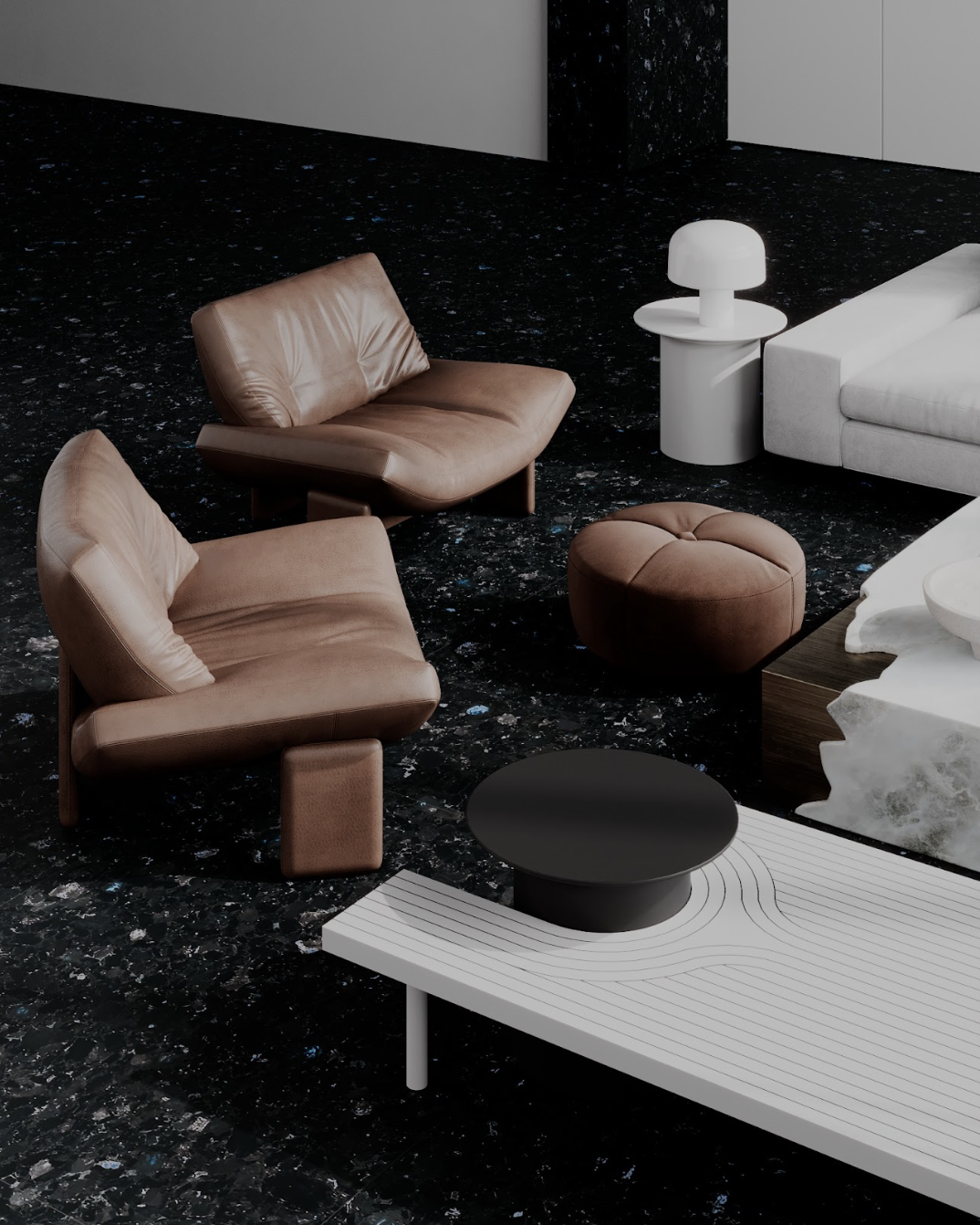
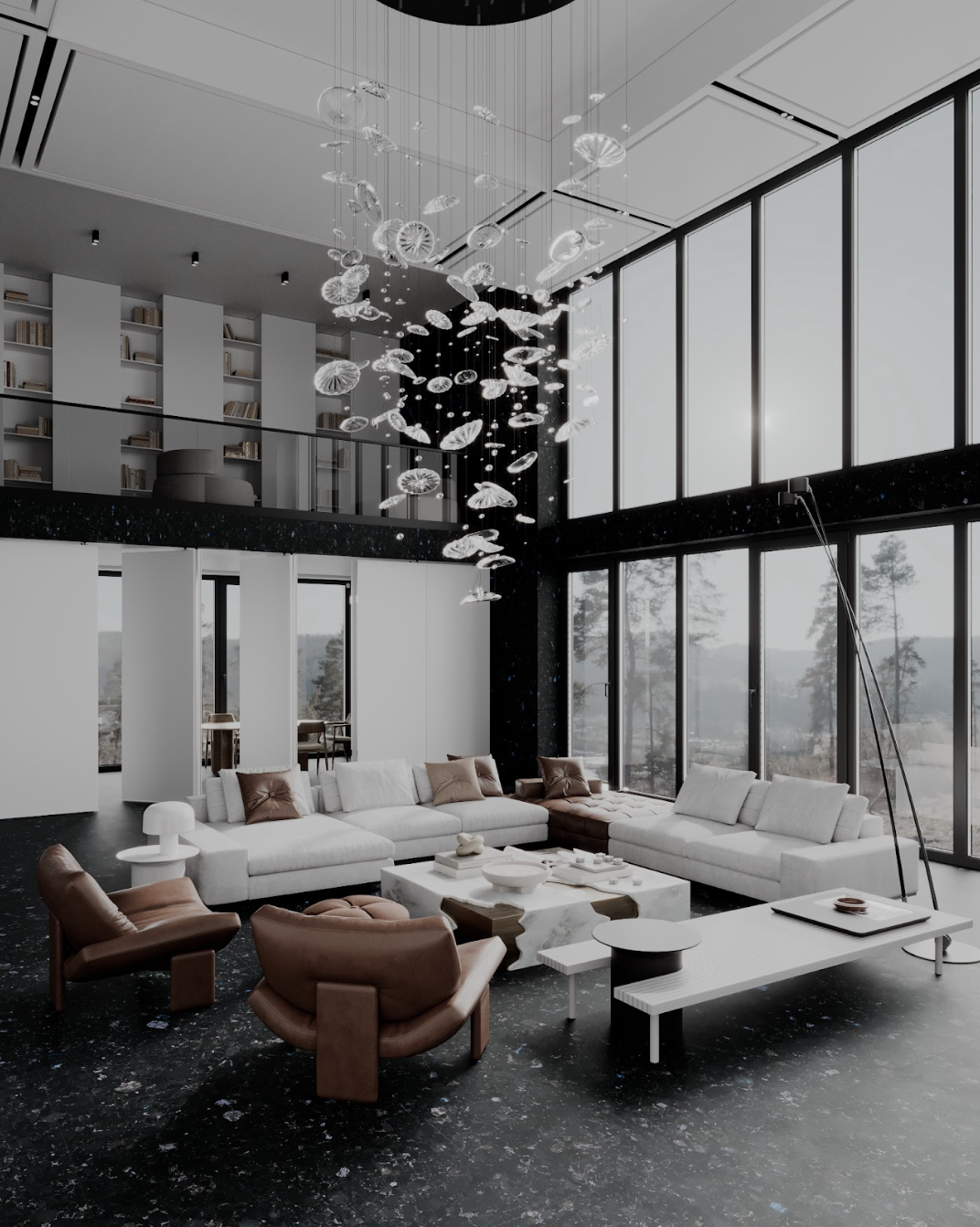
Labradorite works well in contemporary houses and residences where architecture is built on clean planes, large windows, precise lighting, natural wood, mineral surfaces, and a restrained palette. In such an environment, black stone flooring does not weigh the space down, but adds depth, rhythm, and inner composure.
It is especially convincing in living rooms, halls, transition zones, and large open spaces, where the floor should be not just a background, but part of the material architecture.
Hotel Lobbies
In hotel lobbies, the floor is part of the first impression just as much as the reception desk, lighting, or vertical volumes of the space. It gathers the volume, holds the scale, and works as a base for all other elements.
Labradorite flooring is especially appropriate in such spaces because it combines representational value with durability. It looks prestigious, but not excessively decorative. Its dark tone adds depth to the space, while the natural pattern of the stone makes the interior richer in perception.
That is why black labradorite flooring works well in boutique hotels, club spaces, large entrance areas, and premium reception areas where the surface must withstand intense traffic while preserving visual quality.
Kitchen Floors
The kitchen is one of the most realistic tests for any floor. There is moisture, daily movement, cleaning, furniture loads, and constant use without pause.
That is why labradorite flooring in kitchens is a strong solution in projects where a premium dark stone is needed without a sense of excessive delicacy. Thanks to its dense structure and very low water absorption, it responds well to the practical demands of the kitchen space.
Visually, labradorite also works with great precision. It pairs well with wooden fronts, metal, warm light-toned surfaces, large islands, and panoramic glazing. This is one of those cases where practicality and architectural expression do not contradict one another.
Villa Terraces
A villa terrace is a surface that is simultaneously part of architecture and part of the environment. It is in contact with light, seasonality, moisture, air, and the open landscape. That is why the material here must be highly convincing in its natural character.
Labradorite on the terraces of contemporary villas works especially well where architecture is built on large horizontal lines, glazing, a restrained palette, and a strong connection between interior and exterior. In this context, black stone does not feel heavy. On the contrary, it disciplines the space and emphasizes geometry.
That is why labradorite flooring on a terrace is perceived not as decoration, but as part of an integrated architectural system.
Commercial Spaces
In commercial interiors, the floor must withstand traffic, support brand quality, guide movement, and preserve its credibility under constant use.
That is why labradorite flooring is well suited for showrooms, premium stores, galleries, restaurants, club spaces, and office reception areas. It has character, but that character does not interfere with architecture. On the contrary, it creates a calm, strong base for the entire space.
Recommended Finishes for Flooring
A finish determines not only the appearance of the stone, but also the way it is present in space. The same labradorite can speak very differently depending on whether the emphasis is on gloss, depth, matte character, or more restrained tactility.
Polished — Gloss and Depth
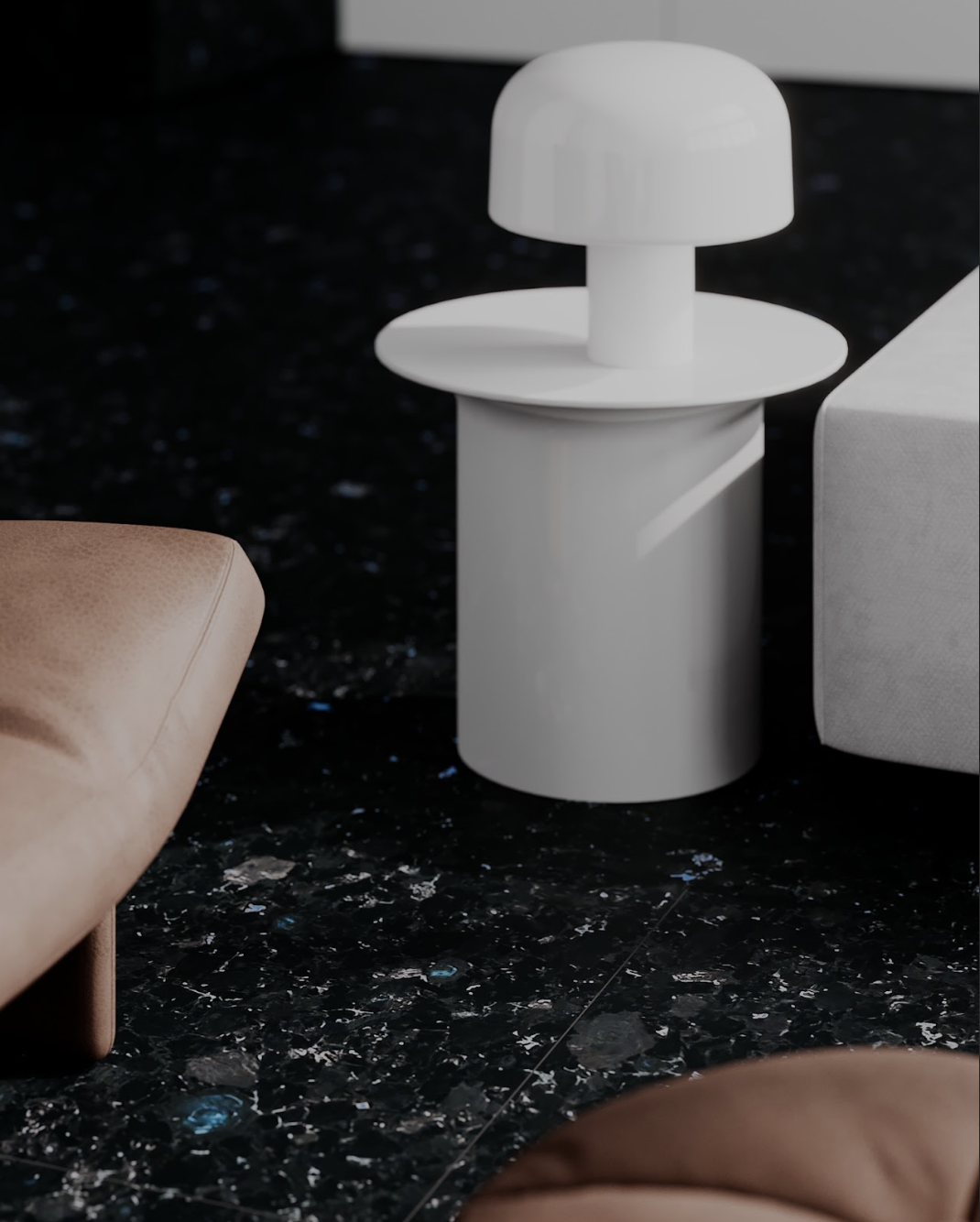
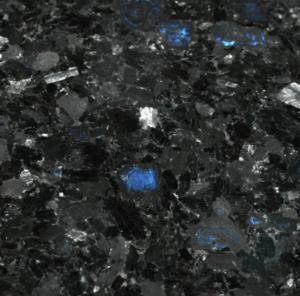
Polished labradorite reveals the stone in its richest form. It is in this finish that the depth of black tone, the natural pattern, and the way light moves across the surface are most clearly expressed.
For flooring, this is especially appropriate in hotel lobbies, large living spaces, representative areas of private homes, and wherever a sense of monolithic presence is important. A polished surface makes the floor part of the architectural image rather than just a functional plane.
SILK — Matte Elegance
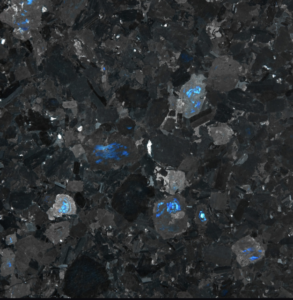
SILK gives the stone a softer and more restrained expression. It preserves the depth of labradorite, but presents it more calmly, without excessive mirror-like reflectivity.
For flooring, this is a strong option in contemporary private homes, kitchens, residences, minimalist villas, and soft luxury spaces where the quietness of materials matters. SILK allows the stone to remain expressive, but not demonstrative, and that is exactly why it works so well over the long term.
Slab Sizes and the Logic of Installation
The quality of stone flooring is determined not only by the material itself, but also by the way it is laid out in space. Slab format, joint direction, relation to room geometry, and the rhythm of installation affect perception no less than the finish.
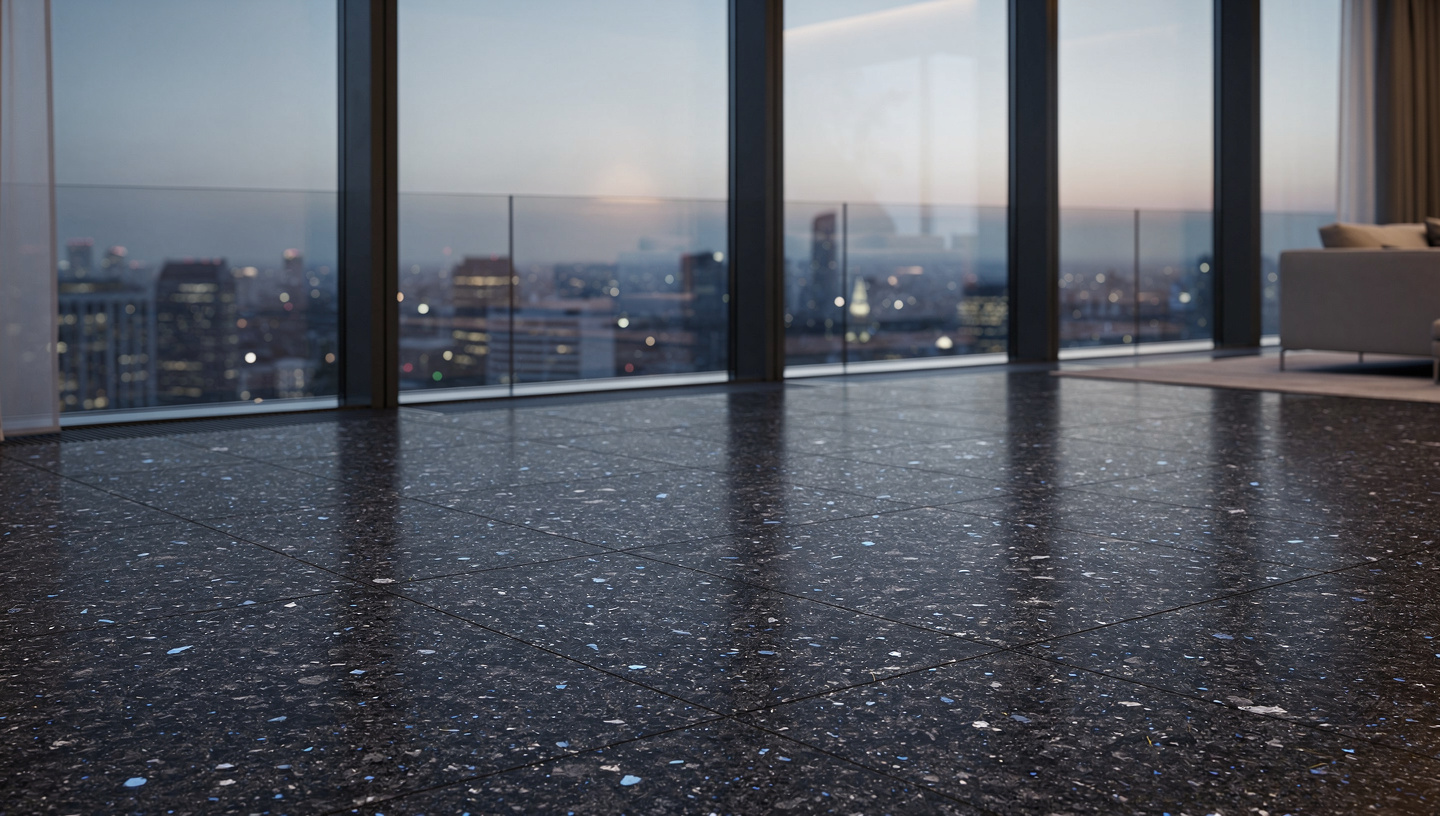
Labradorite works especially convincingly in large formats, where its natural depth can be fully revealed and the surface can remain cohesive. In large living rooms, halls, hotel lobbies, and open terraces, this helps avoid visual fragmentation and makes the floor feel calmer.
For kitchens, corridors, entrance zones, and commercial spaces, it is also important that black stone does not break the environment apart, but gathers it together. That is why labradorite flooring should be considered not as a separate material, but as part of the entire architectural system.
Why Labradorite Flooring Is a Long-Term Choice
Flooring is not a short-term decision. It must remain appropriate both after a few years and much later. That is why the material here must combine not only first impression, but true long-term value.
Labradorite flooring is the choice for those seeking black stone with depth, durability, and restrained premium character. It works well in private homes, hotel lobbies, kitchens, villa terraces, and commercial spaces where the surface must not simply look impressive, but preserve architectural quality over the years.
That is where its main strength lies. Labradorite does not need exaggeration. It simply behaves like a material that naturally belongs in strong, lasting architecture.
FAQ
1
Is labradorite suitable for flooring in private homes?
Yes, labradorite is very well suited for flooring in private homes and residences where durability, the depth of black stone, and restrained architectural aesthetics are important.
2
Can labradorite be used for kitchen floors?
Yes, labradorite is suitable for kitchen flooring thanks to its dense structure, low water absorption, and ability to perform well in everyday use.
3
What is better for flooring: labradorite or black marble?
For flooring, labradorite is often the more practical choice because it responds better to regular wear and preserves a composed architectural appearance for longer.
4
Is labradorite suitable for hotel lobbies and commercial spaces?
Yes, labradorite works well in hotel lobbies, showrooms, galleries, and premium commercial interiors where both durability and material prestige matter.
5
Which finish is best for labradorite flooring?
A polished finish works well in spaces where depth and a more representative appearance are important. SILK is a strong option for more restrained interiors where a softer, matte elegance is preferred.
6
Can labradorite be used on villa terraces?
Yes, labradorite can work very convincingly on contemporary villa terraces, especially in architecture with a strong connection between interior and exterior spaces.