
You might be interesting:

Bookmatch in Stone: The Symmetry of Two Slabs
10 min | 11.03.2026Bookmatch in Stone: The Symmetry of Two Slabs
How bookmatch stone compositions create the symmetry of natural stone


Bookmatch slabs: how to create mirror symmetry in stone
Natural stone in modern interior design is increasingly used not only as a finishing material but also as a central architectural element of space. Its texture, formed by millions of years of geological processes, allows designers to create surfaces that resemble natural artistic compositions.
One of the most striking ways to work with natural stone is bookmatch stone — a technique of arranging stone slabs that creates a mirror symmetry of the natural pattern.
When two sequentially cut bookmatch slabs are placed next to each other, the texture of the stone visually unfolds, forming a symmetrical composition that resembles the pages of an open book. This is where the name of this technique originates.
As a result, the natural pattern of the stone becomes a powerful design element that shapes the atmosphere of the entire interior.
Bookmatch Slabs: How Natural Stone Symmetry Is Created
Bookmatch stone is a method of arranging two adjacent slabs of natural stone in a mirrored orientation.
During the cutting of a stone block, each subsequent slab carries almost the same pattern of mineral structure. When these slabs are placed opposite each other, the natural texture forms a symmetrical composition.
On large stone surfaces, this effect becomes especially expressive. The natural structure of minerals creates a composition that appears both organic and architecturally balanced.
For this reason, natural stone bookmatch is often used in projects where stone is intended to become the main visual element of an interior.
Why Bookmatch Creates Such a Strong Visual Effect
Natural stone has a complex structure formed by geological processes over millions of years. Crystals, mineral inclusions and natural textures create patterns that never repeat.
When these natural patterns are mirrored, they create a visual symmetry that appears naturally harmonious to the human eye.
On large surfaces, bookmatch slabs form compositions that resemble natural paintings or abstract mineral panels.
This is why the bookmatch technique is widely used in modern architecture and premium interior design.
Where Bookmatch Stone Is Used
The bookmatch stone technique allows designers to create surfaces that become the focal point of an entire space.
Most often bookmatch slabs are used in:
• fireplace portals
• accent walls
• reception areas and public interiors
• hotel spaces
• premium residential projects
In such interiors, natural stone works as a large-scale natural panel that defines the character of the space.
Labradorite Bookmatch: Natural Symmetry in Stone
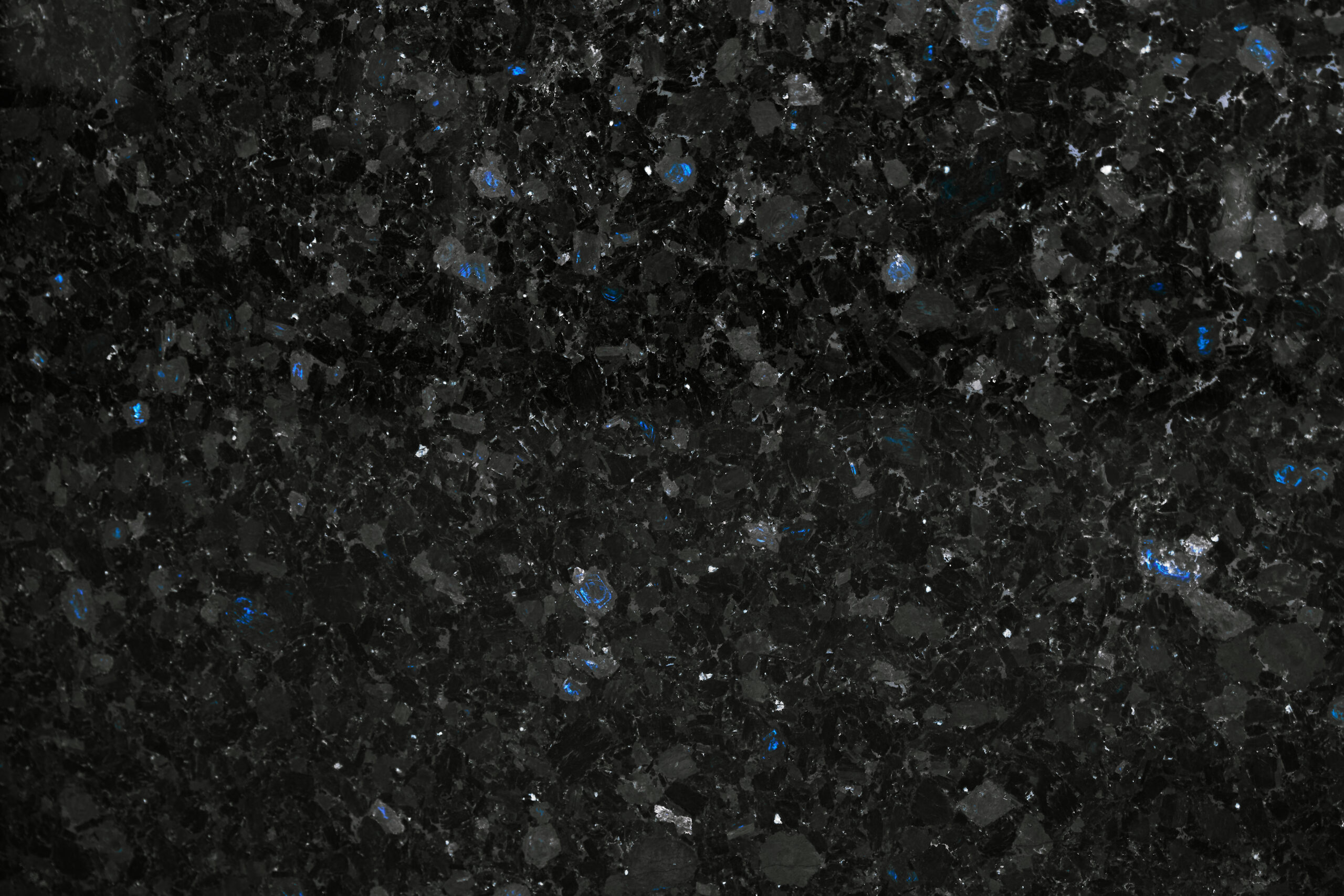
Among different types of natural stone, labradorite is particularly suitable for bookmatch compositions.
The stone features:
• a deep graphite-grey base
• a dense crystalline structure
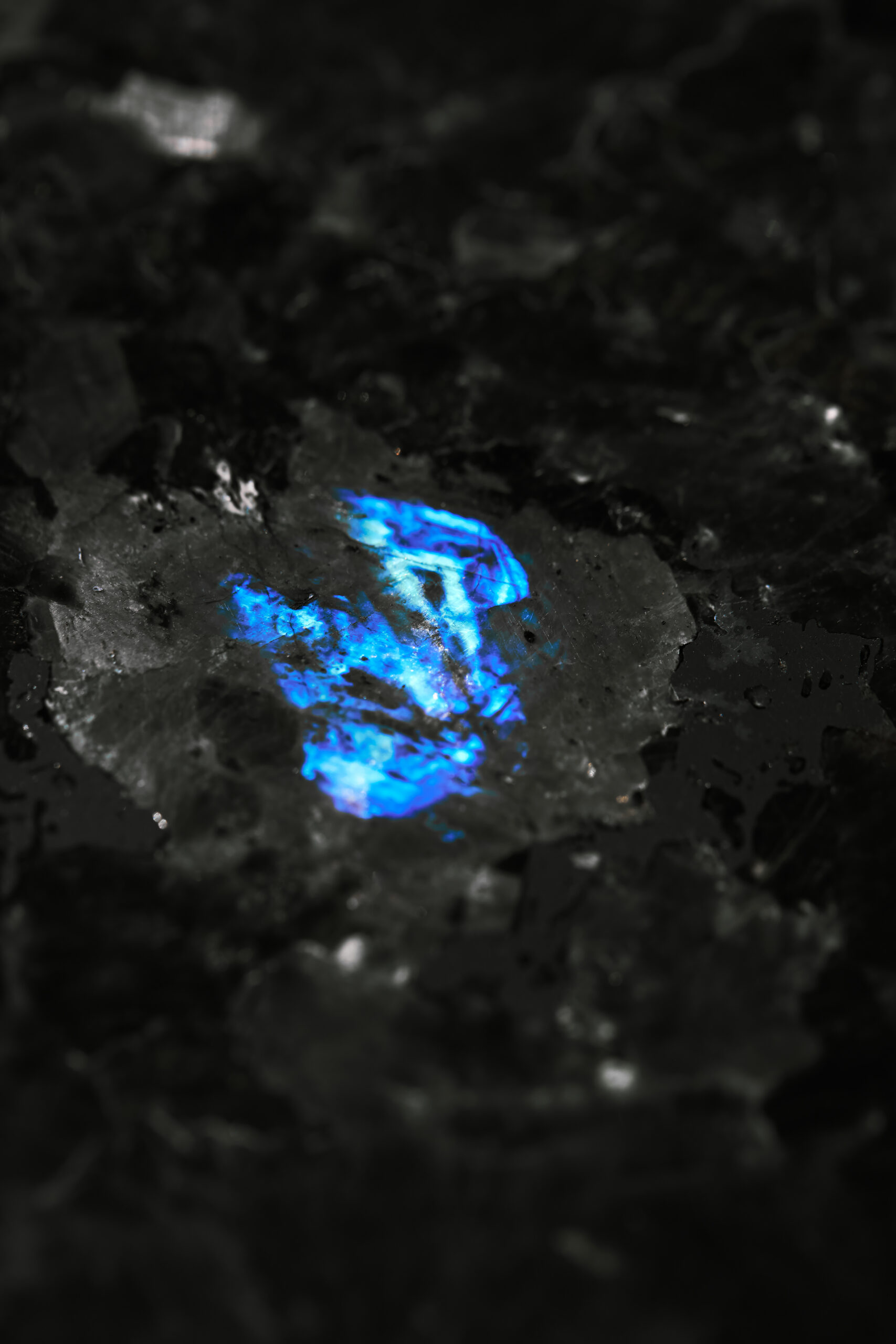
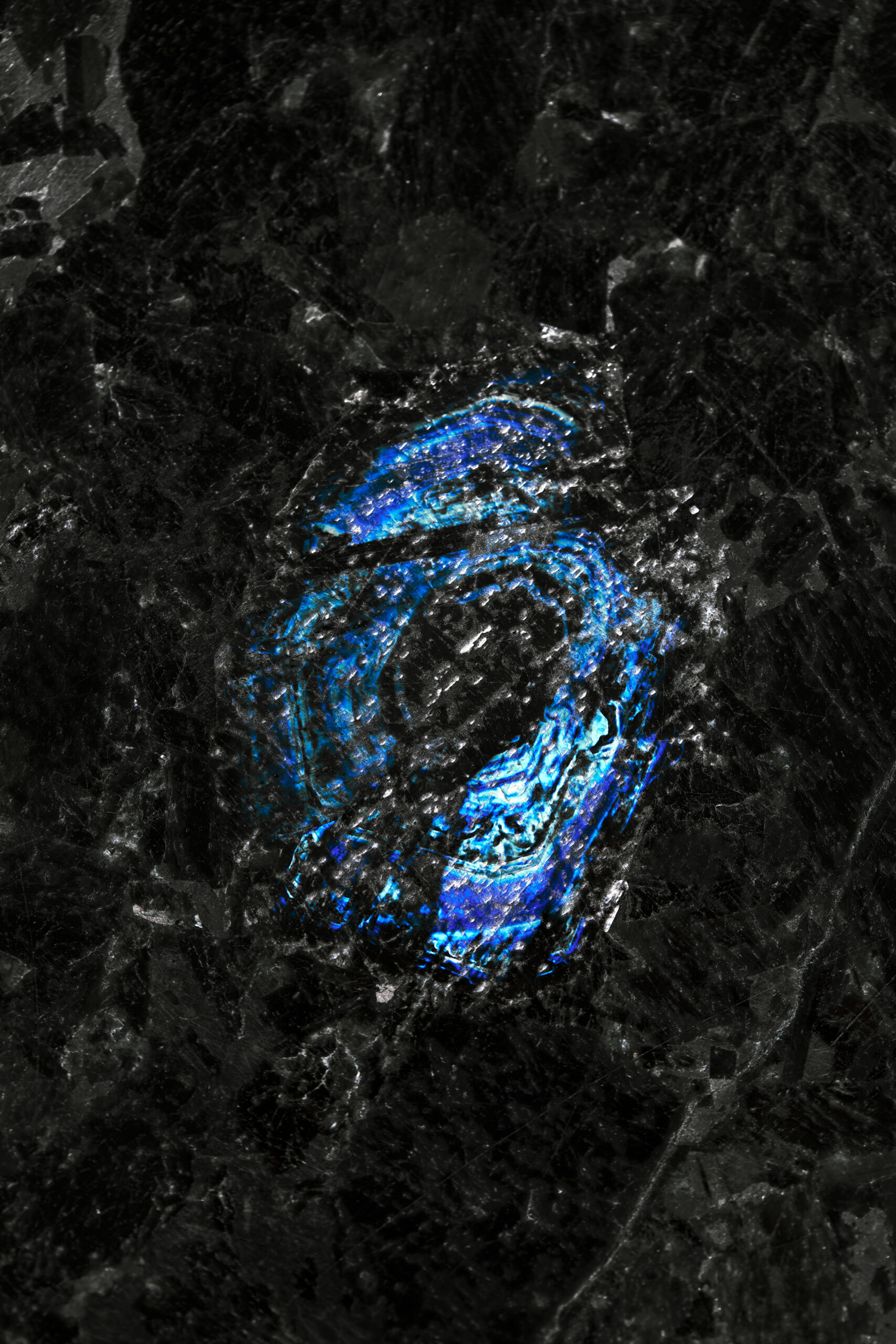
• characteristic blue iridescence
• complex natural mineral patterns
When two slabs are arranged as labradorite bookmatch, the natural mineral structure forms a symmetrical composition with strong visual depth.
Under different lighting conditions, the blue iridescence of the crystals reveals itself in different ways, enhancing the sense of movement within the stone surface.
As a result, the stone appears dynamic and visually alive.

Large Slabs in Bookmatch Compositions
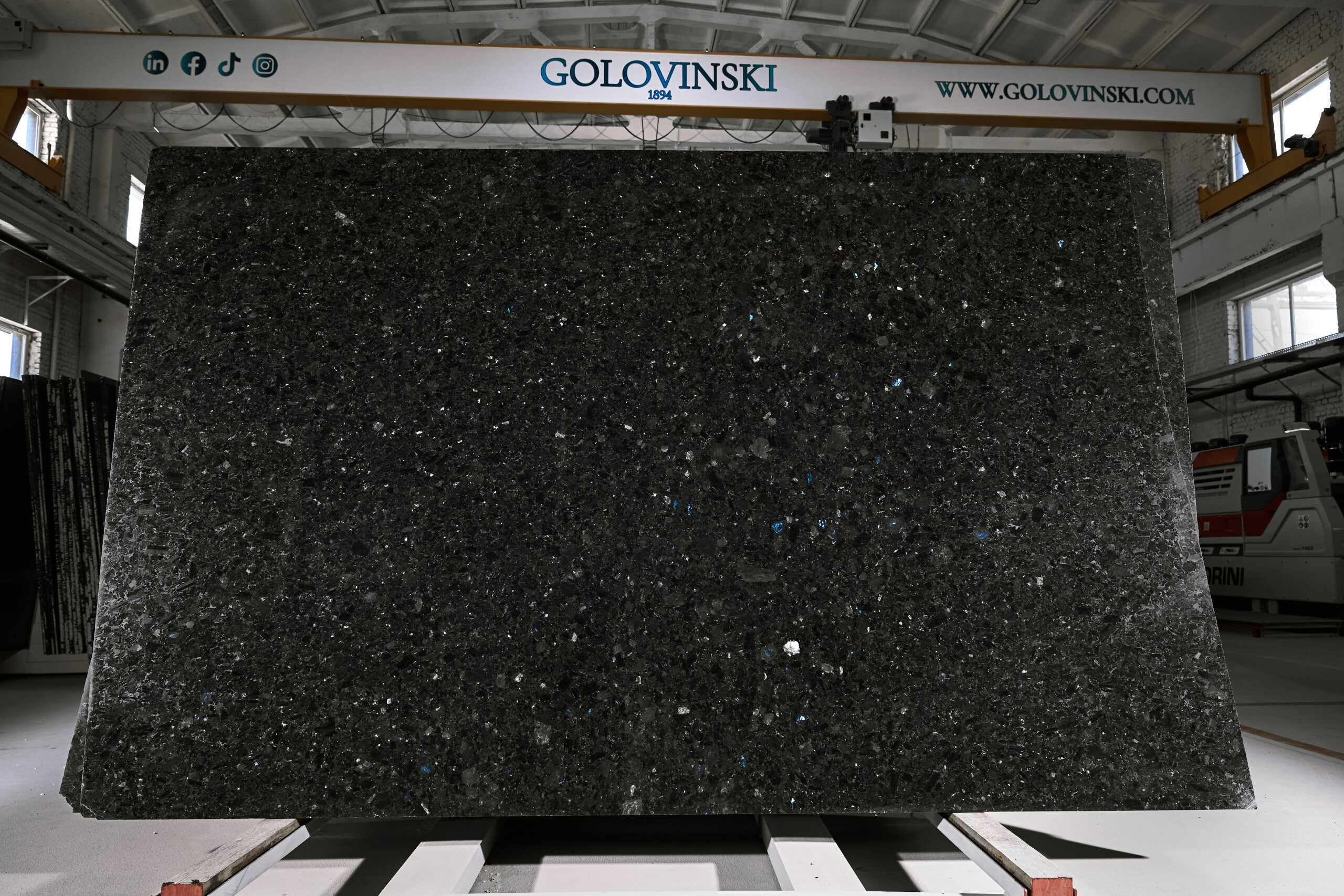
To create the bookmatch slabs effect, large-format stone panels are used.
The larger the surface of the slab, the more expressive the natural pattern becomes. Large slabs allow designers to create monolithic stone surfaces with a minimal number of joints.
Because of this, natural stone bookmatch compositions appear especially clean and visually powerful.
In modern interiors, such compositions often become the main architectural feature of the space.
How Slabs Are Selected for Bookmatch Compositions
Creating a bookmatch stone composition begins at the stage of selecting stone blocks.
During production, a natural stone block is cut into a sequence of large slabs. Each slab has nearly the same mineral pattern but mirrored relative to the previous one.
This natural property makes it possible to create bookmatch slabs that form symmetrical stone compositions.
To achieve the best visual result, specialists pay attention to several important factors:
• the direction of the natural stone pattern
• slab size and format
• depth of mineral structure
• visual continuity between adjacent slabs
The more expressive the natural pattern of the stone, the more dramatic the final natural stone bookmatch composition becomes.
This effect is particularly noticeable in stones with a strong crystalline structure such as labradorite.
In projects where Golovinski labradorite is used, bookmatch compositions help reveal the full depth of the stone structure and create visually striking architectural surfaces.
Bookmatch as an Architectural Design Feature
Bookmatch is more than simply a method of placing stone slabs.
It is a design technique that allows architects and designers to reveal the natural beauty of stone.
The mirrored symmetry of the stone texture creates a natural visual composition formed entirely by geological processes.
For this reason, bookmatch stone is widely used in modern interiors as a powerful architectural accent that enhances the material presence of natural stone.