
You might be interesting:

Natural Stone Lounge Space: How Atmosphere Is Created
10 min | 12.03.2026Natural Stone Lounge Space: How Atmosphere Is Created
Creating atmospheric interiors with natural stone: labradorite in villas, wine cellars, spa spaces and architectural accent walls


In modern interior architecture, materials increasingly become the foundation of spatial composition. It is the material that shapes the atmosphere, depth, and character of an interior. In premium projects, this role is increasingly fulfilled by natural stone in interior design.
Stone creates a completely different perception of space. Its texture has a natural depth formed by geological processes over millions of years. Light interacts with the crystalline structure of the surface in different ways, revealing new shades and details.
That is why a lounge space with natural stone appears calm, monumental, and at the same time contemporary. In such interiors, stone is no longer just a finishing material — it becomes part of the architecture of the space.
A Material That Shapes the Architecture of Space
In premium projects, natural stone in architecture is used not as a decorative element but as a material around which the entire interior composition is built.
Large-format slabs make it possible to create continuous stone surfaces where the natural pattern of minerals becomes the central visual element of the space. This approach forms interiors with strong material depth and calm architectural geometry.
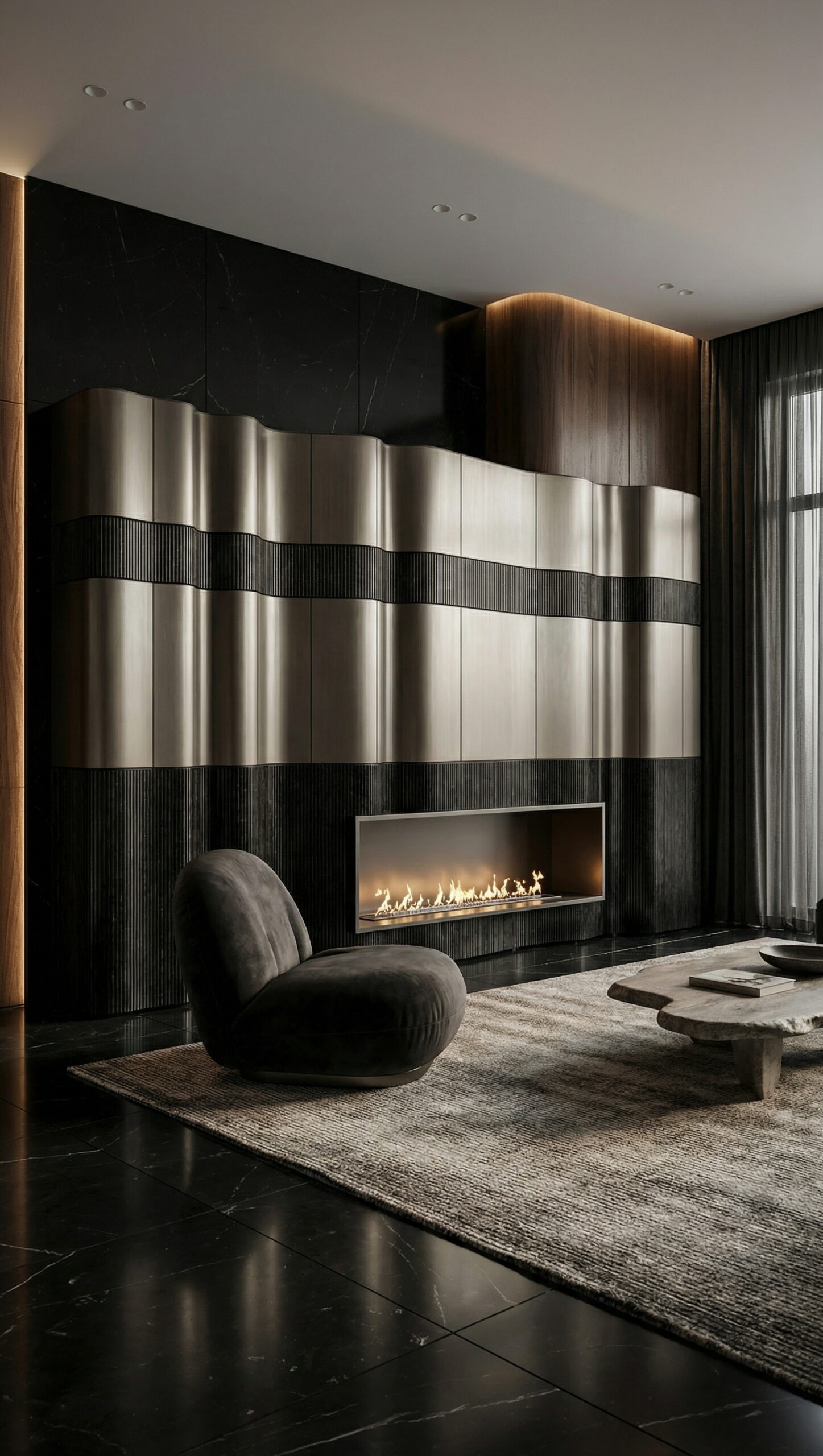
For this reason, stone is often used in lounge areas to create large architectural surfaces such as:
• stone accent walls
• fireplace portals
• bar areas
• decorative panels
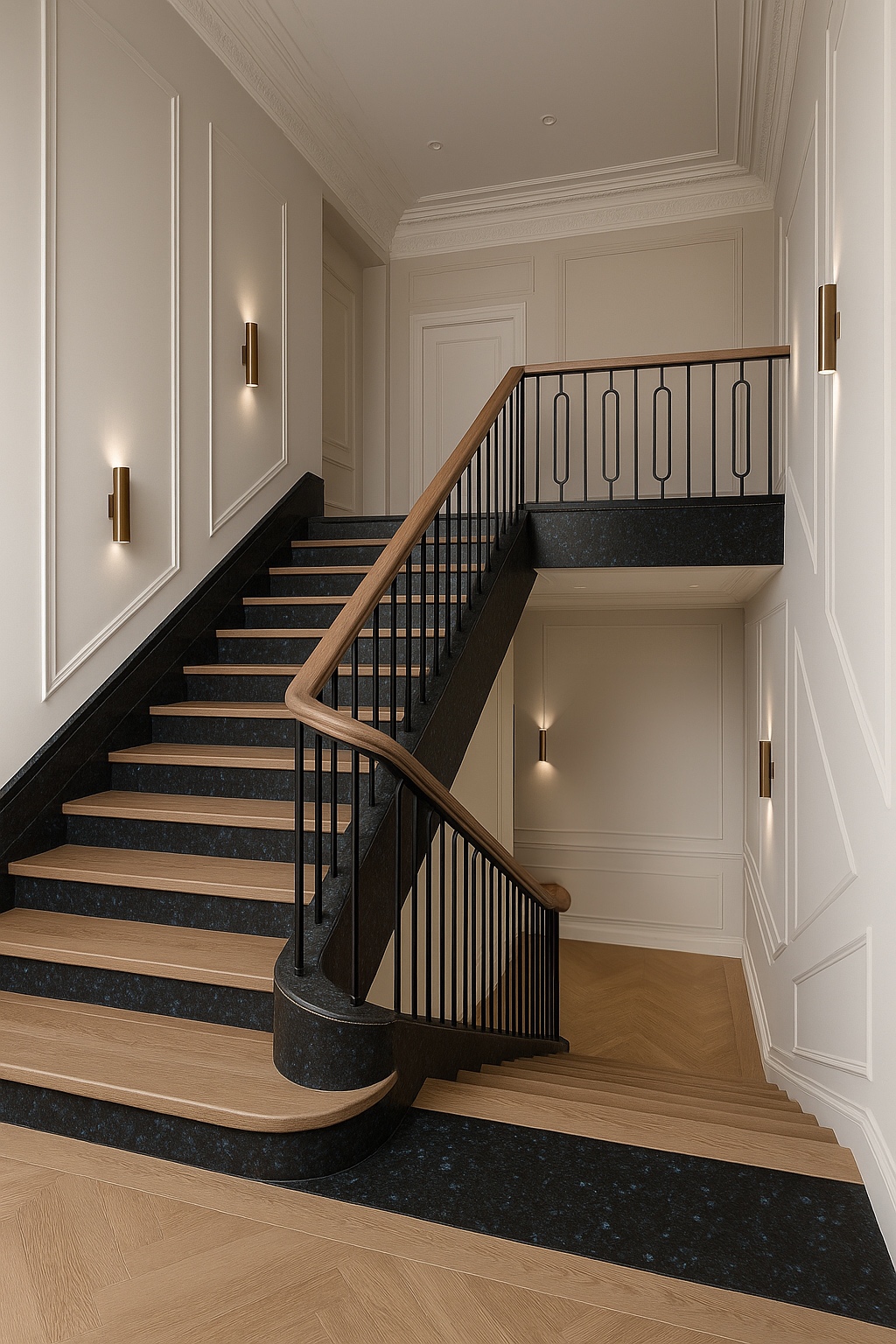
• vertical compositions in stair spaces
In such solutions, stone becomes the focal point around which the entire atmosphere of the interior is formed.
Villas and Private Residences
In contemporary villas, stone is increasingly used to create lounge spaces — areas designed for relaxation, conversation, and privacy.
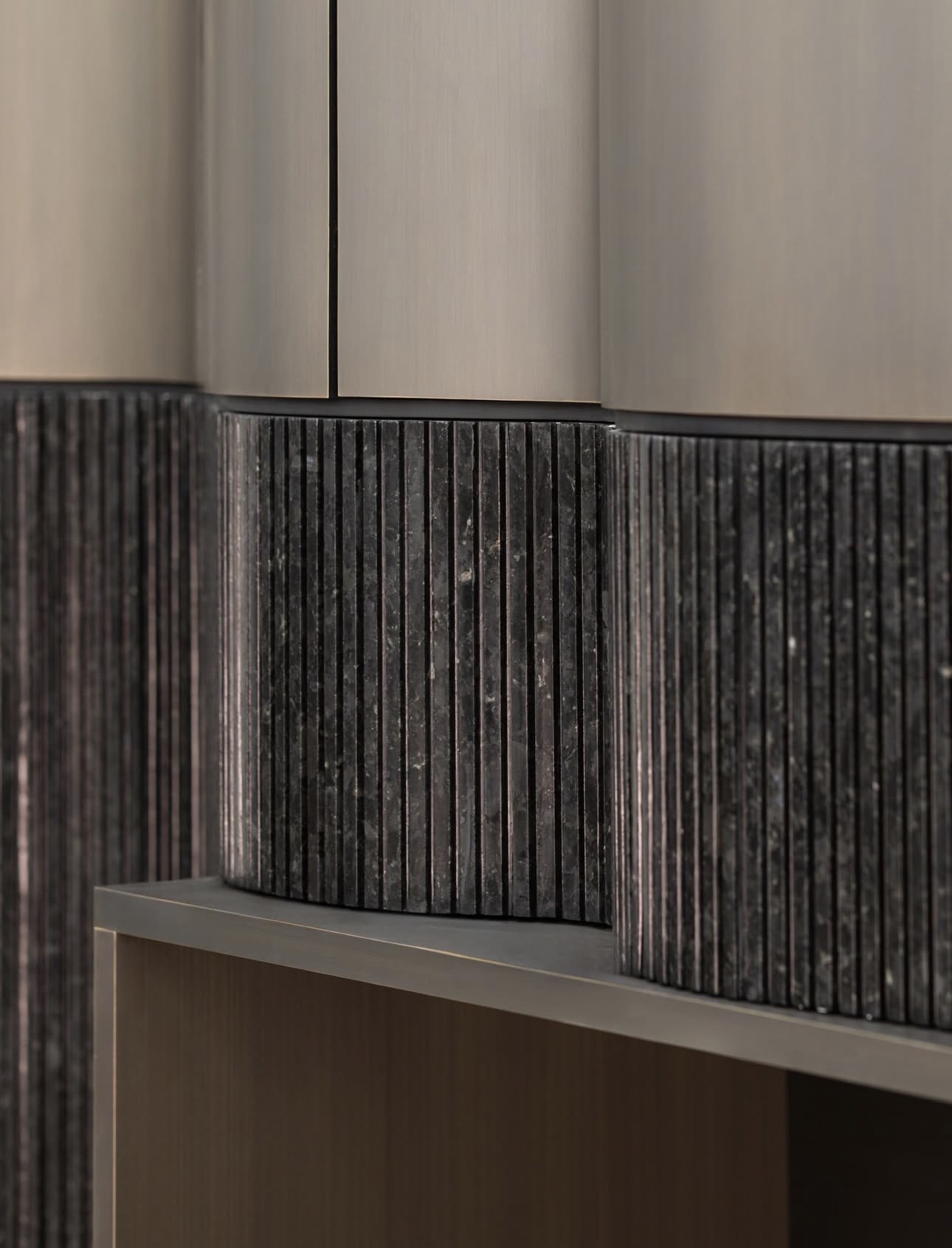
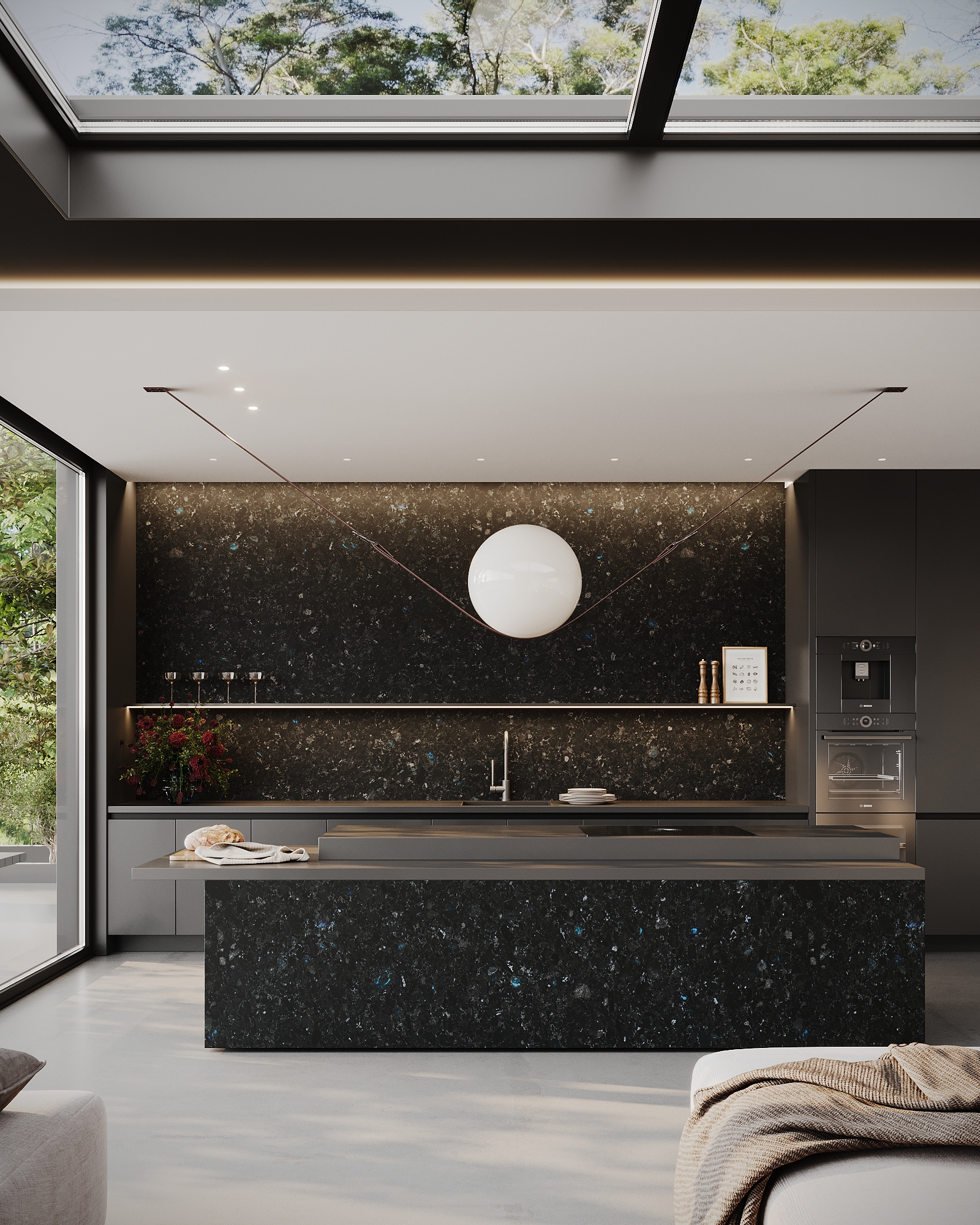
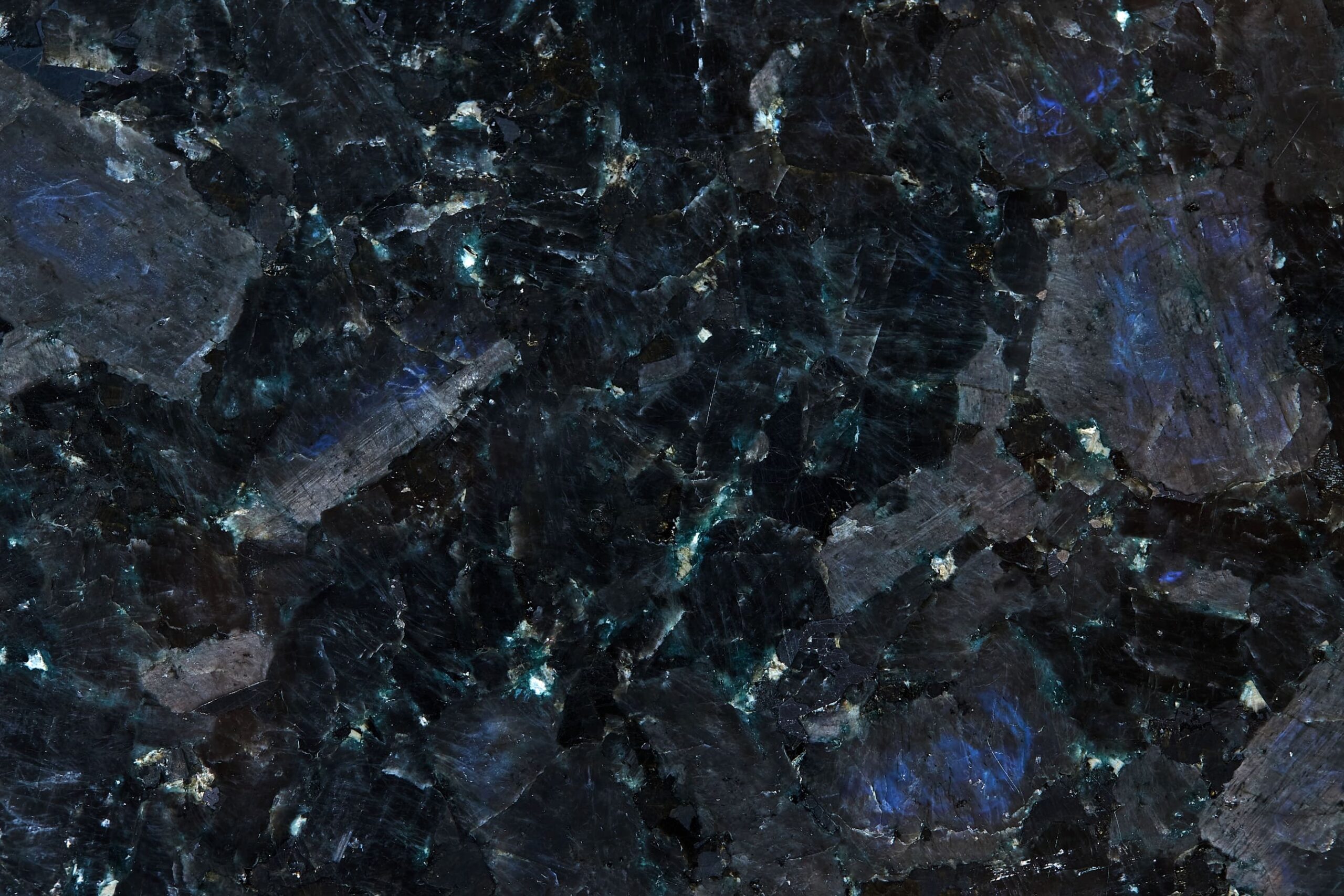
One of the most expressive materials in such projects is Golovinski labradorite. Its deep graphite-grey base and characteristic blue iridescence create a surface with remarkable visual depth.
Depending on lighting conditions, the stone reveals different aspects of its texture. In daylight, the natural structure of minerals becomes visible, while soft artificial lighting reveals the characteristic blue reflections of the crystals.
In private residences, such stone surfaces often shape:
• lounge zones in living rooms
• fireplace areas
• bar interiors
• large architectural feature walls
In these spaces, a stone accent wall often becomes the central element of the interior atmosphere.

Light and Texture of Natural Stone
One of the key reasons why natural stone in interior design appears so expressive is its interaction with light.
The crystalline structure of stone reflects light differently depending on the angle of illumination, the time of day, and the type of lighting used. Because of this, stone surfaces never look exactly the same.
This effect is particularly noticeable with labradorite. Its deep graphite-grey base contains natural feldspar crystals that create the characteristic blue iridescence.
In daylight, the stone appears restrained and monumental, emphasizing the natural mineral structure. Under soft artificial lighting, subtle blue reflections emerge within the crystals, creating the effect of a living surface.
This natural visual dynamic is what makes Golovinski labradorite an especially expressive material for premium interior spaces.
Wine Cellars and Tasting Spaces
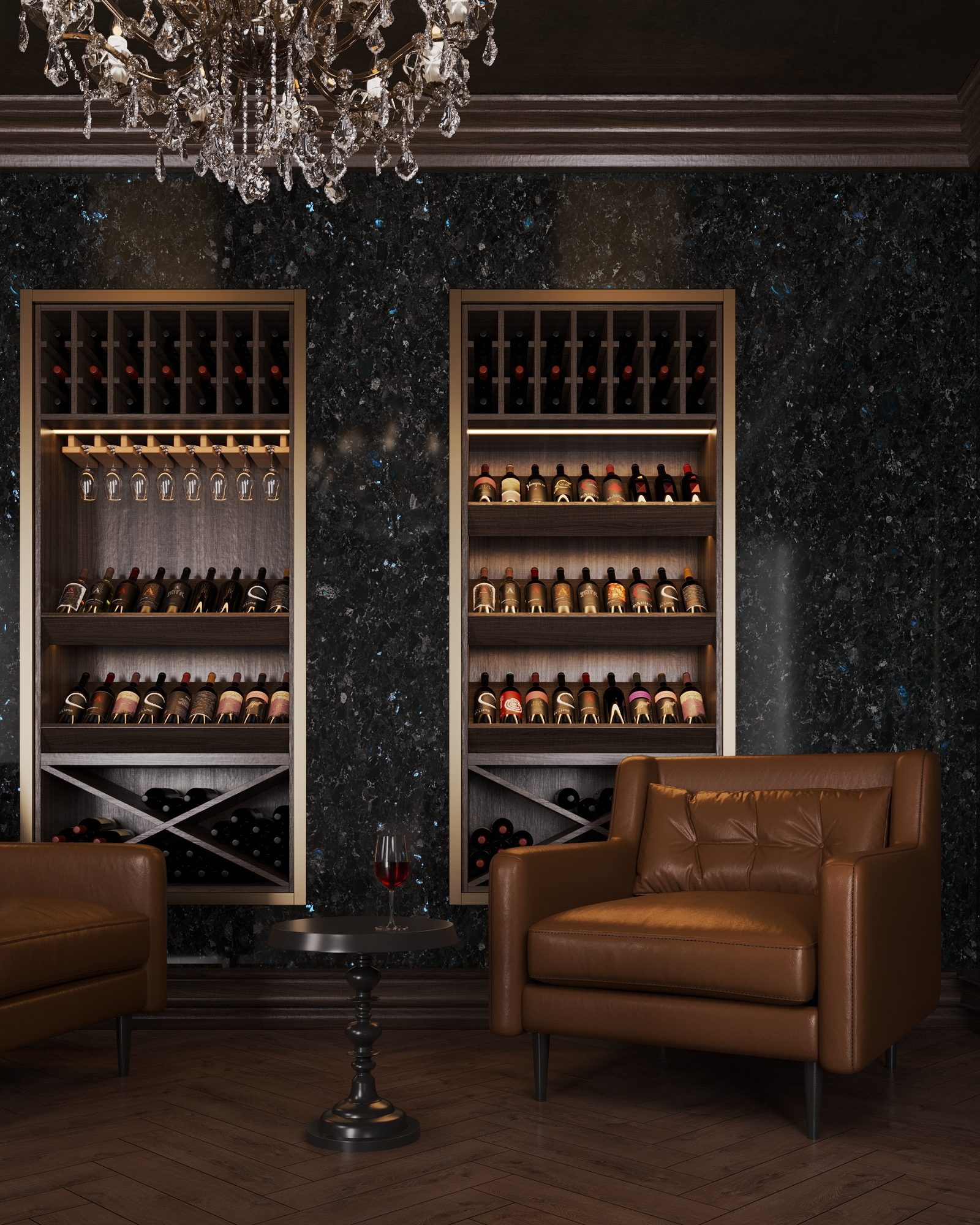
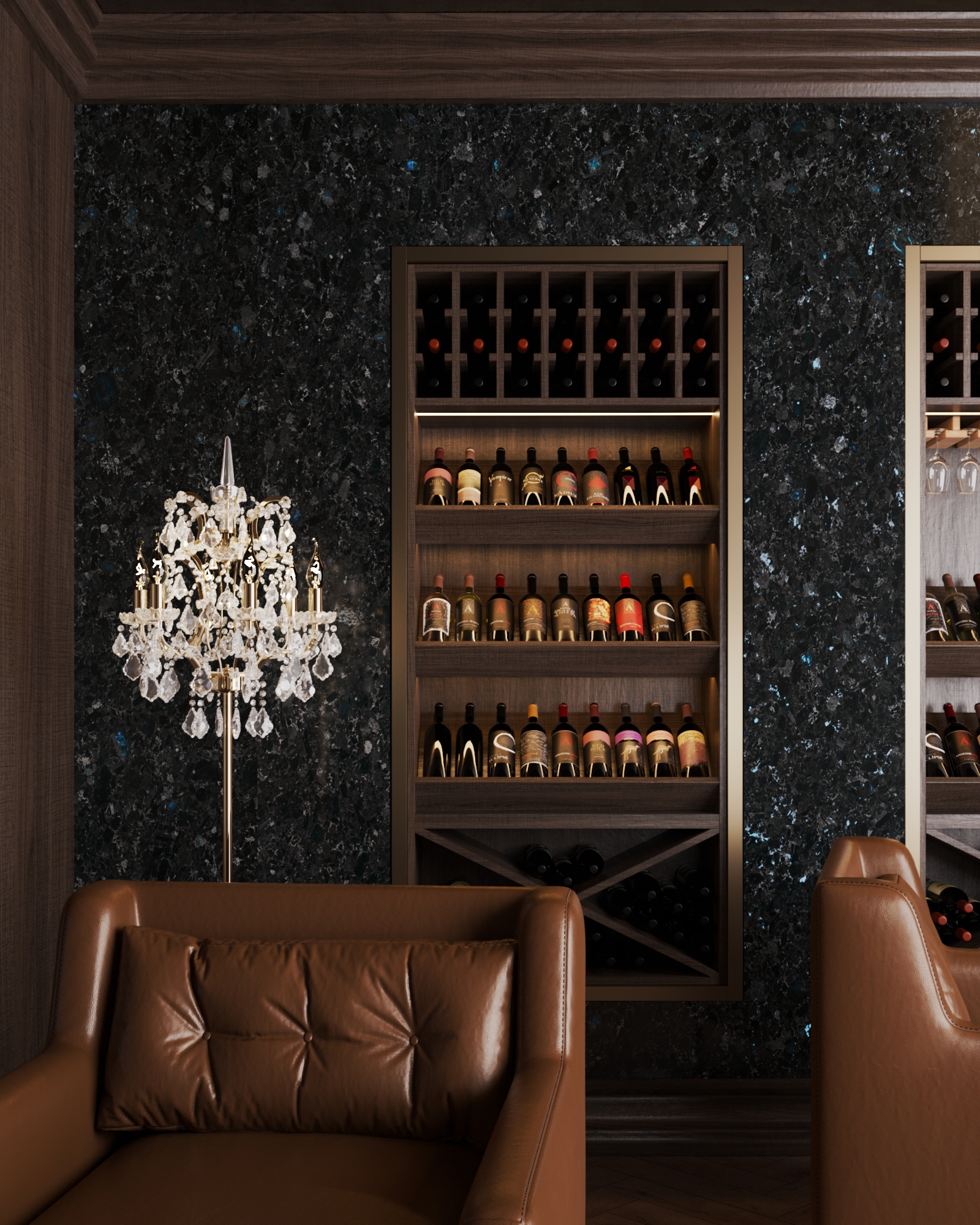
Natural stone works especially well in wine cellars and tasting rooms.
In such interiors, stone surfaces enhance the sense of intimacy, stability, and natural depth. The material harmoniously combines with wood, warm lighting, and darker interior textures.
Stone in wine cellars can form:
• tasting areas
• bar counters
• decorative niches
• large architectural walls
As a result, a natural stone lounge space appears atmospheric and architecturally cohesive.
Bathrooms and Spa Spaces
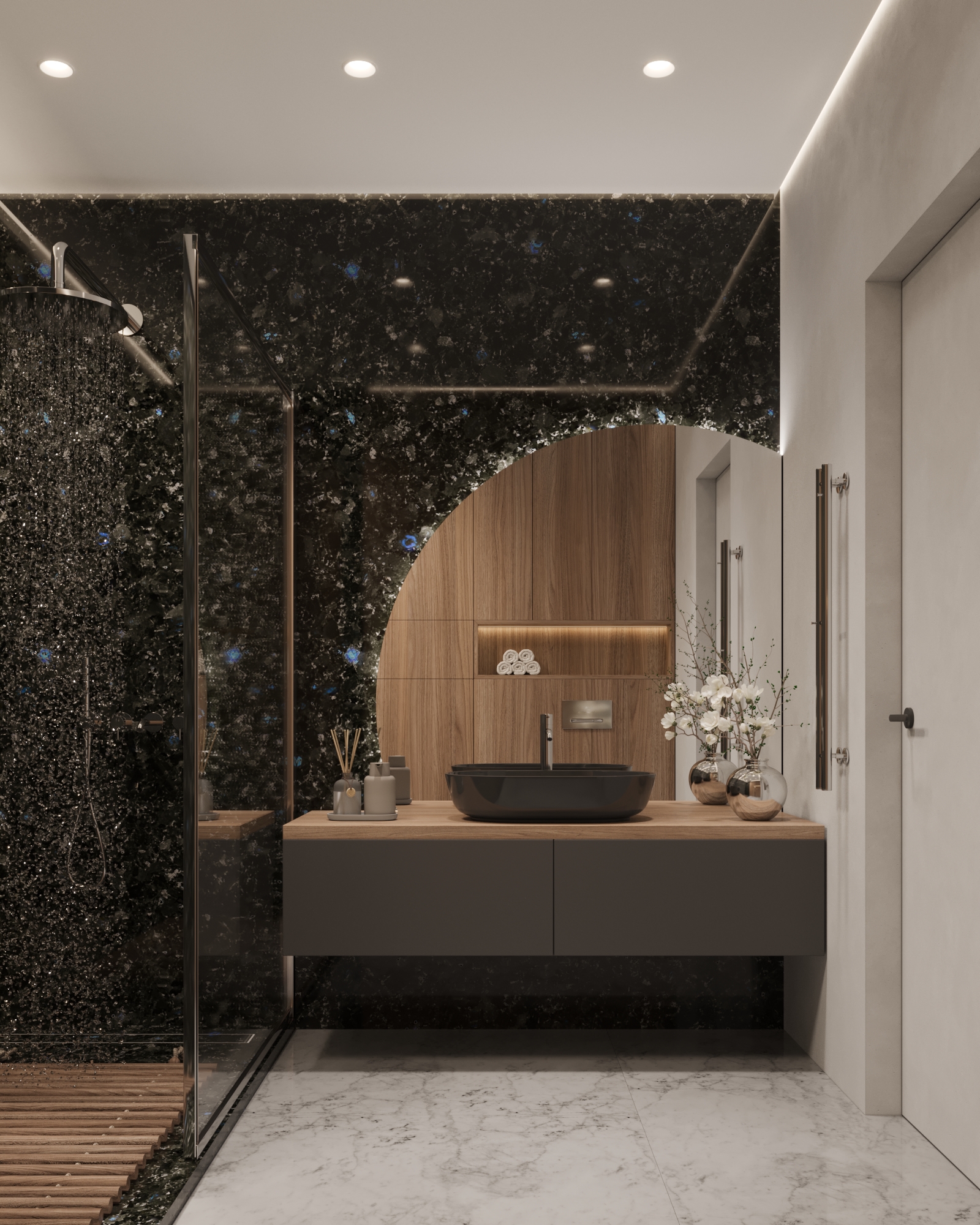
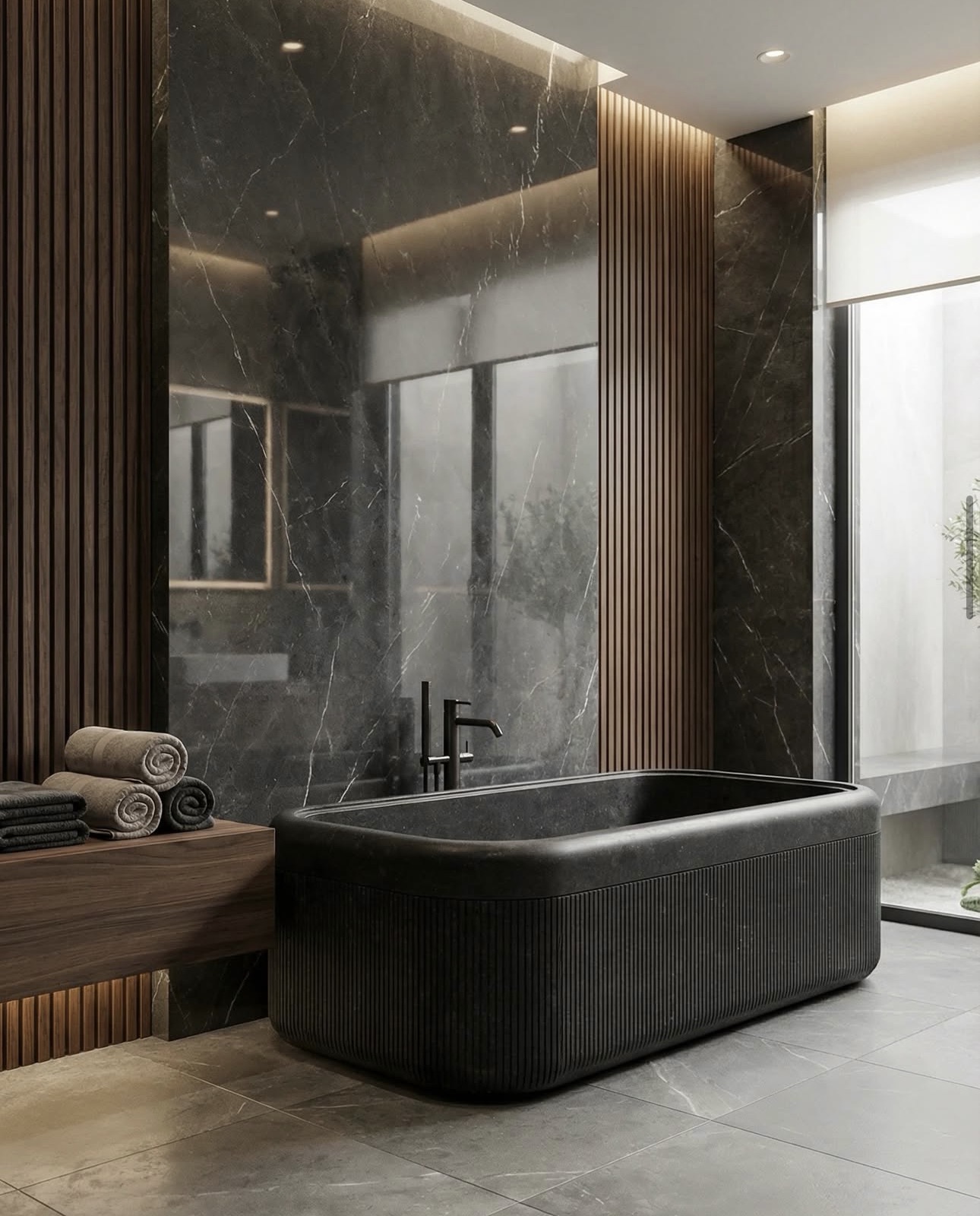
In contemporary projects, natural stone in bathrooms helps create the atmosphere of a private spa.
Stone interacts with water, light, and natural materials within the interior, forming a calm and balanced environment.
Labradorite is particularly effective when used for:
• large stone walls
• shower areas
• stone bathtubs
• decorative panels
Its dense structure and deep texture create surfaces that appear both monumental and natural.
Stair Spaces as Architectural Composition
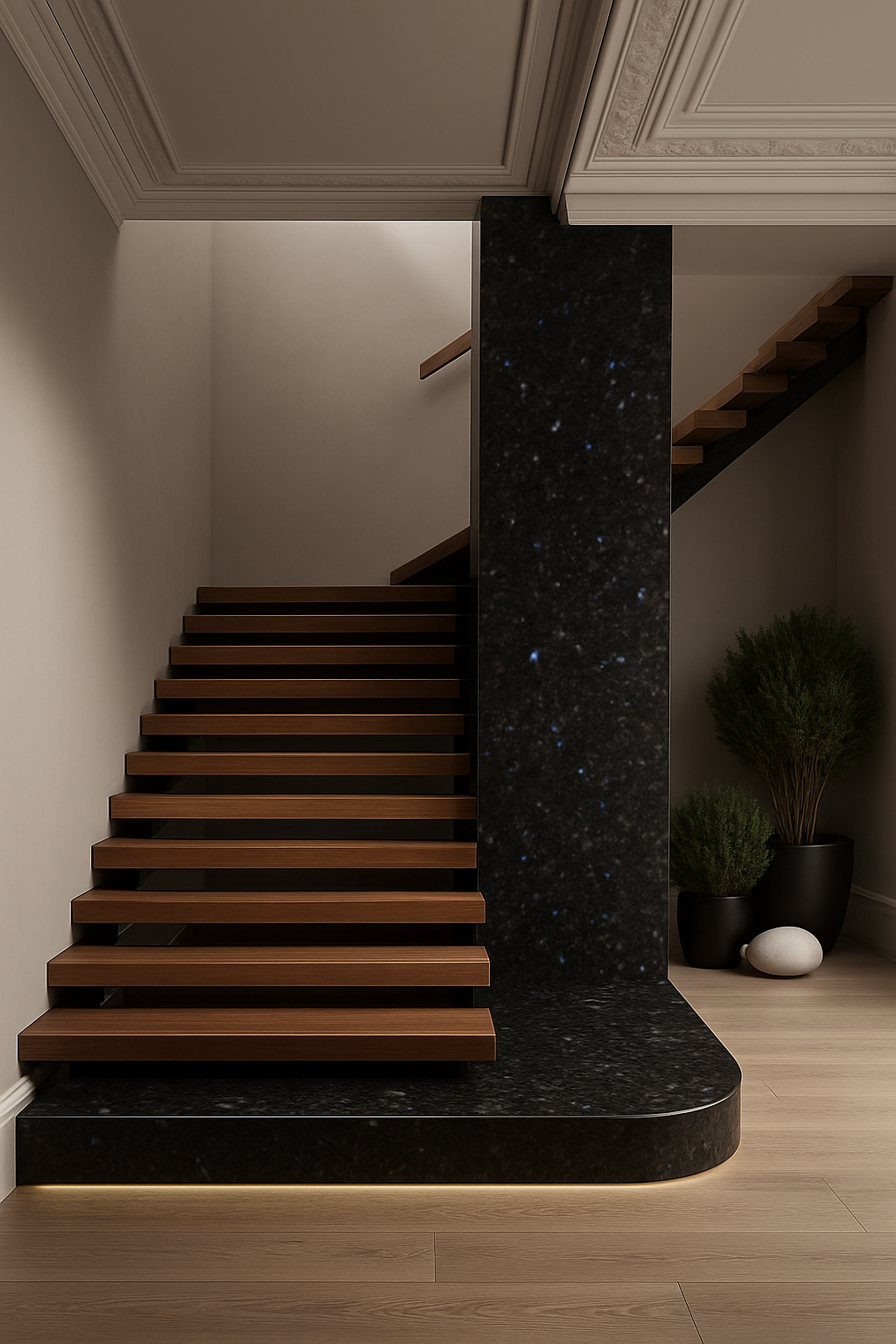
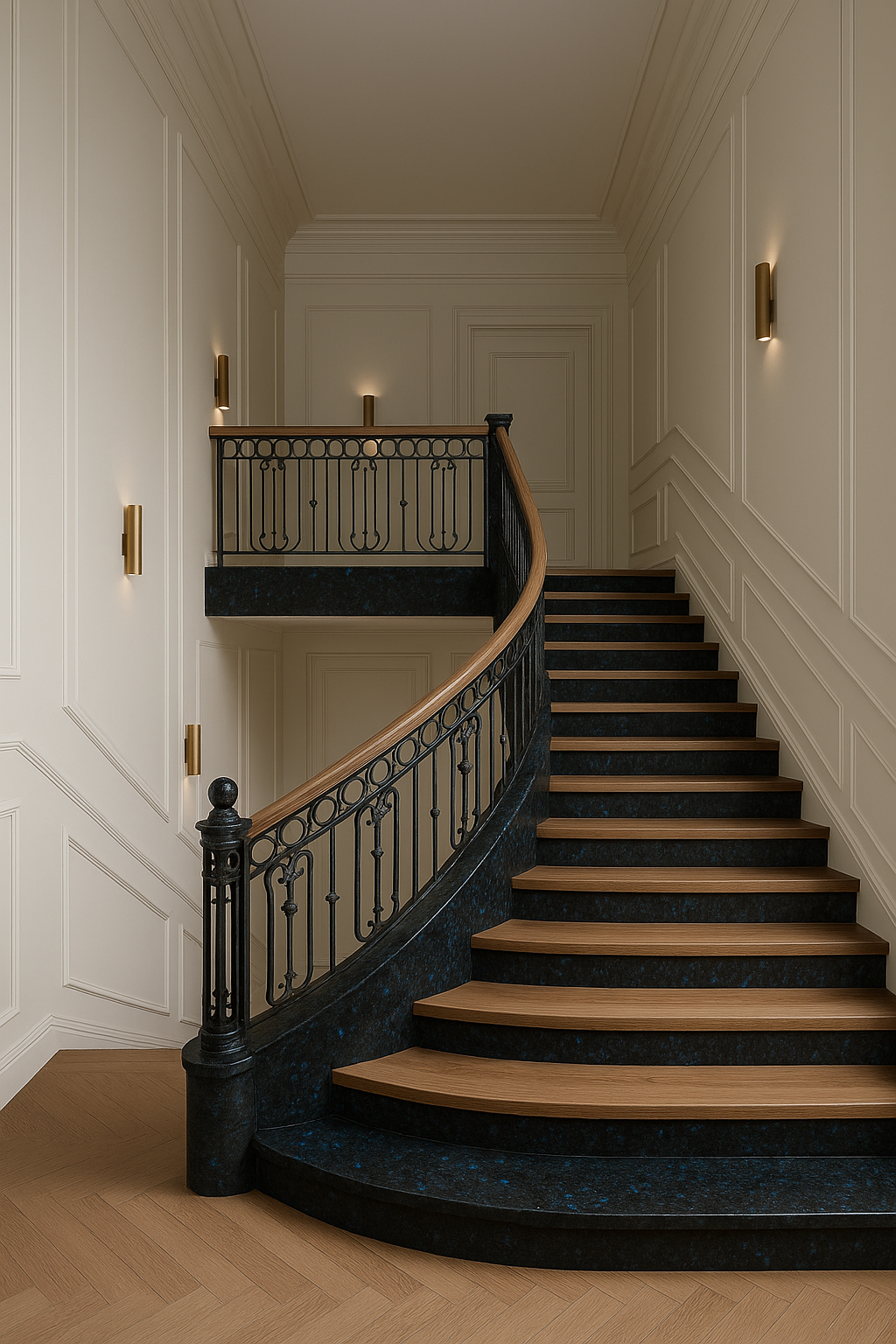
In large interiors, stair spaces increasingly become a key compositional element.
A large stone accent wall along the staircase forms a vertical architectural composition that works across the full height of the space.
In such projects, natural stone in architecture enhances the geometry of the interior and creates a sense of scale. The natural pattern of the stone becomes part of the architectural narrative of the space.
Stone Accent Walls as the Center of Interior Design
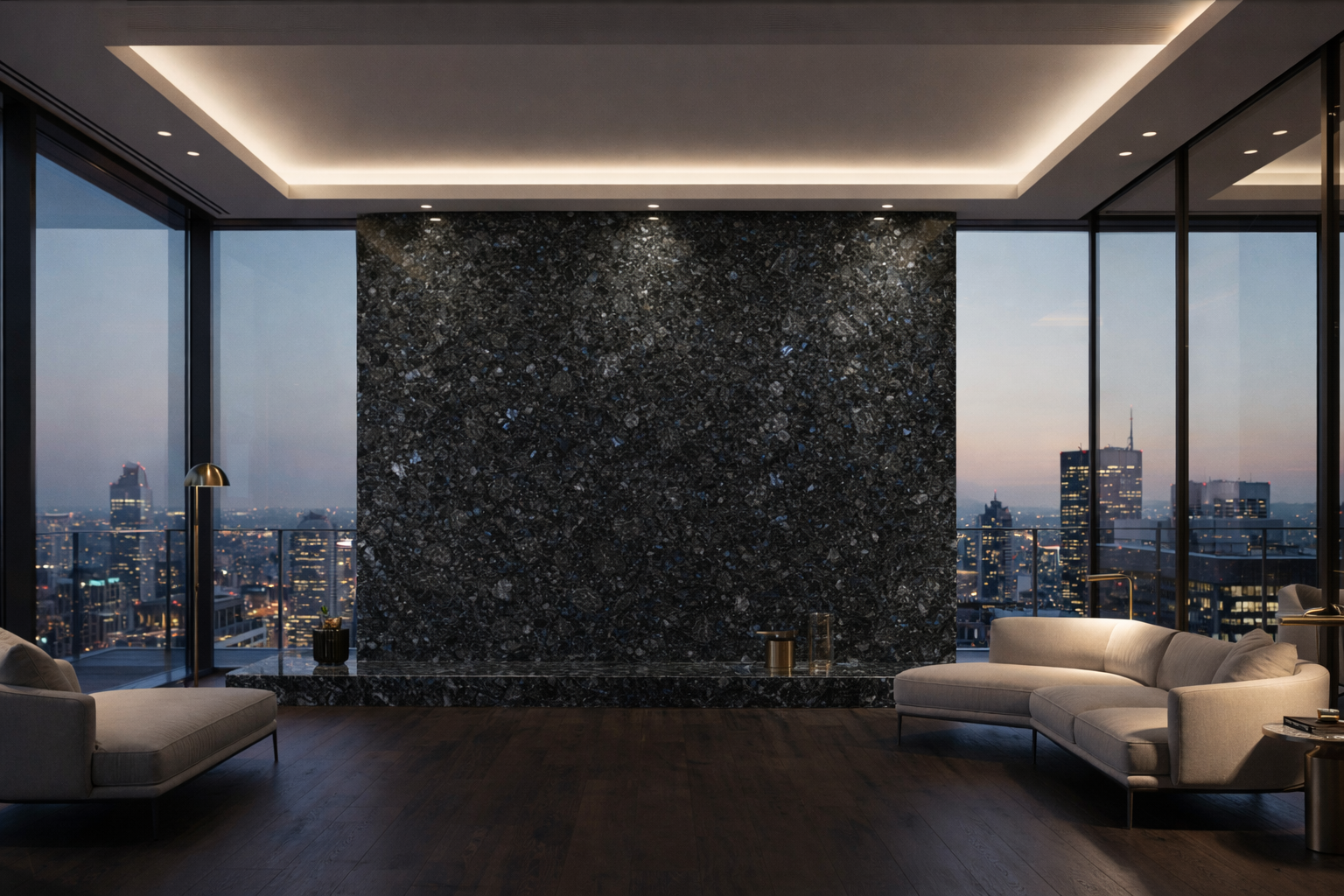
One of the most expressive design techniques in modern interiors is the stone accent wall.
Such a surface creates the focal point of the space and defines the character of the entire interior. The crystalline structure, mineral inclusions, and natural reflections form compositions that cannot be artificially replicated.
For this reason, natural stone in interior design is often chosen for projects where materials must emphasize the premium character and individuality of a space.
Stone That Shapes Atmosphere
The true value of natural stone lies not only in its durability or strength. Its greatest power is the ability to shape atmosphere.
Deep textures, natural mineral geometry, and the interaction with light create interiors that feel calm, elegant, and timeless.
That is why lounge spaces with natural stone are increasingly found in contemporary villas, hotels, and premium residential interiors.
In such projects, stone stops being simply a material.
It becomes the architectural foundation of the space.