
You might be interesting:

Natural Stone Bar
10 min | 17.03.2026Natural Stone Bar
Labradorite in Premium Spatial Architecture


Natural Stone Bar in Premium Interior Architecture
A bar is a point of attraction. A natural stone bar becomes the focal point of a premium interior.
A place where the rhythm of the interior is formed, where light, material, and people meet in a single focal point.
In premium spaces, it is the material that determines how strong this center will feel. That is why black stone is increasingly chosen — specifically, labradorite.
This is a material that does not simply create a surface. It works with depth, light, and atmosphere, shaping a space that requires no additional explanation.
Natural Stone Bar in Interior Architecture
Black stone sets the tone of the interior.
It absorbs the unnecessary and enhances what matters most — light, geometry, and proportions.
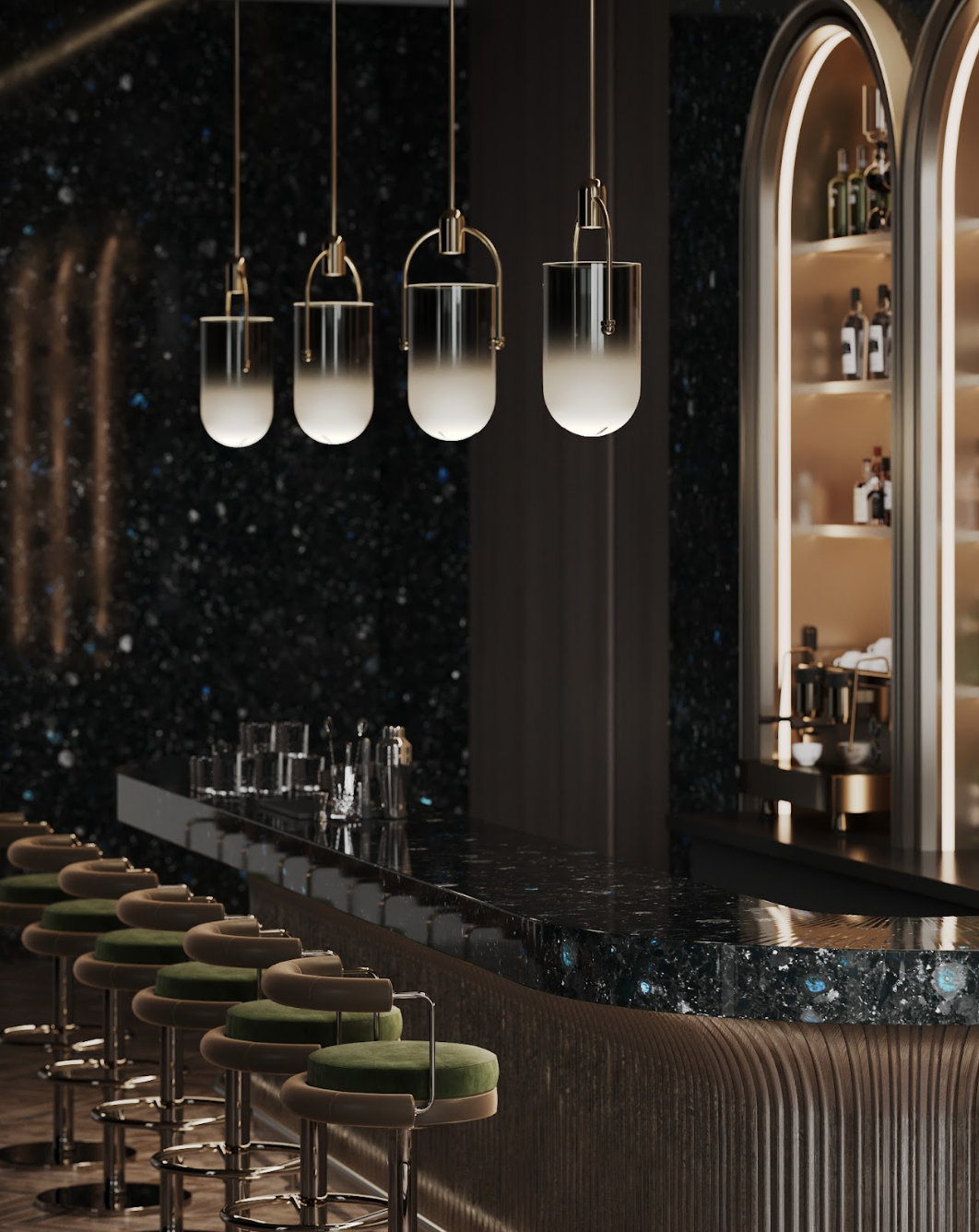
In bar environments, this is especially evident. The stone creates a background against which the entire composition is revealed: glass, metal, wood, and lighting accents.
In this context, labradorite goes beyond conventional black stone. Its surface is not static — it reacts to lighting, changes in depth, and reveals new tones.
A bar made of natural stone integrates seamlessly into architectural composition.
Labradorite: Depth That Interacts with Light
The dark base of labradorite creates a sense of solidity.
Mineral inclusions add complexity and internal volume.
Its behavior changes depending on the finish — from deep reflection to a more restrained, textured expression that allows precise control of the atmosphere without changing the material itself.
As lighting shifts, the surface appears to “move”: cool blue reflections emerge, deep graphite transitions become visible, and subtle highlights appear.
This is a material that does not overload the space, yet always holds attention. The design of a natural stone bar allows the material to define the entire space.
Polished Labradorite: Depth and Reflection
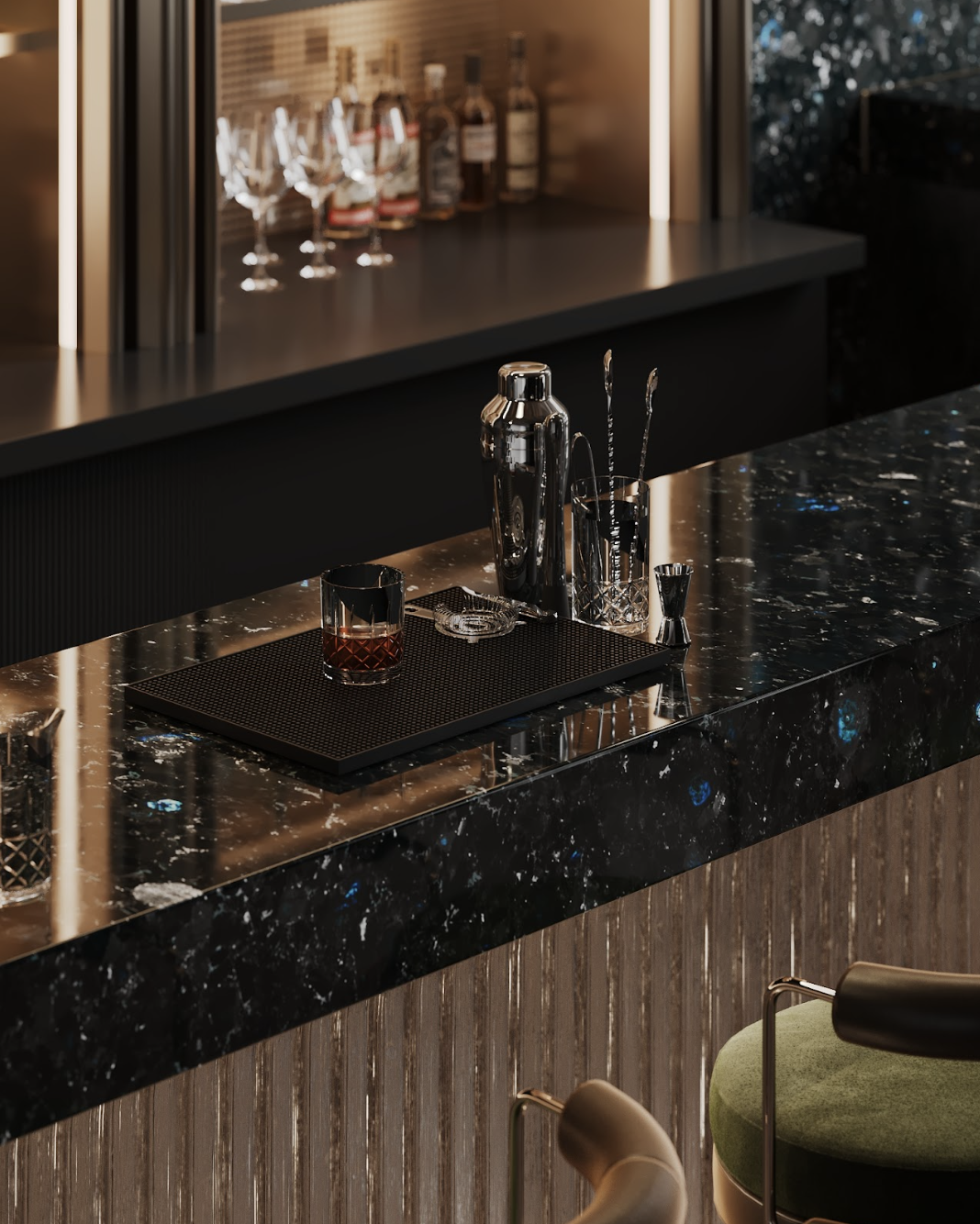
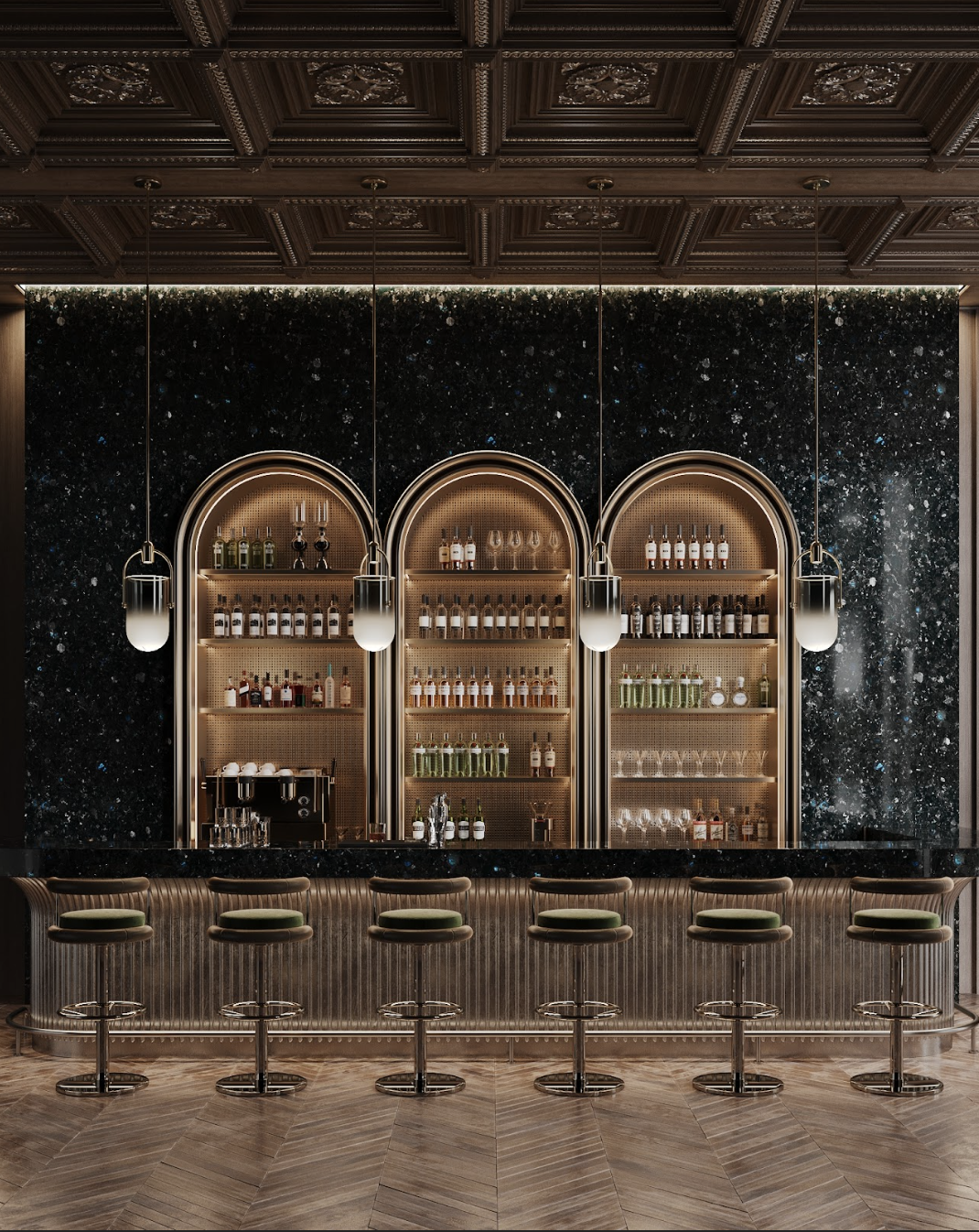
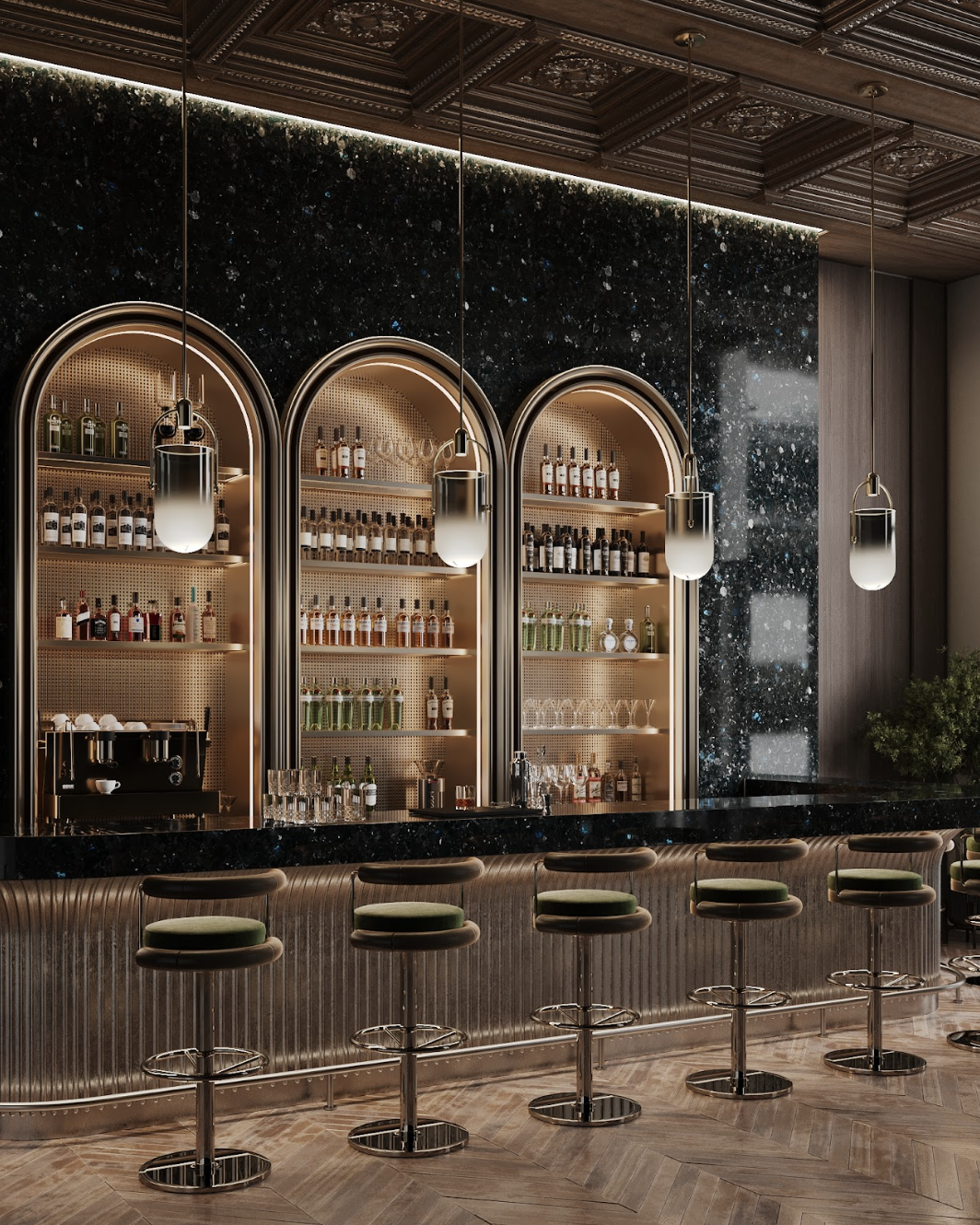
Polished labradorite creates a clean, almost mirror-like surface. The stone reflects light and enhances the architectural composition of the space. A natural stone bar counter enhances both visual depth and material presence.
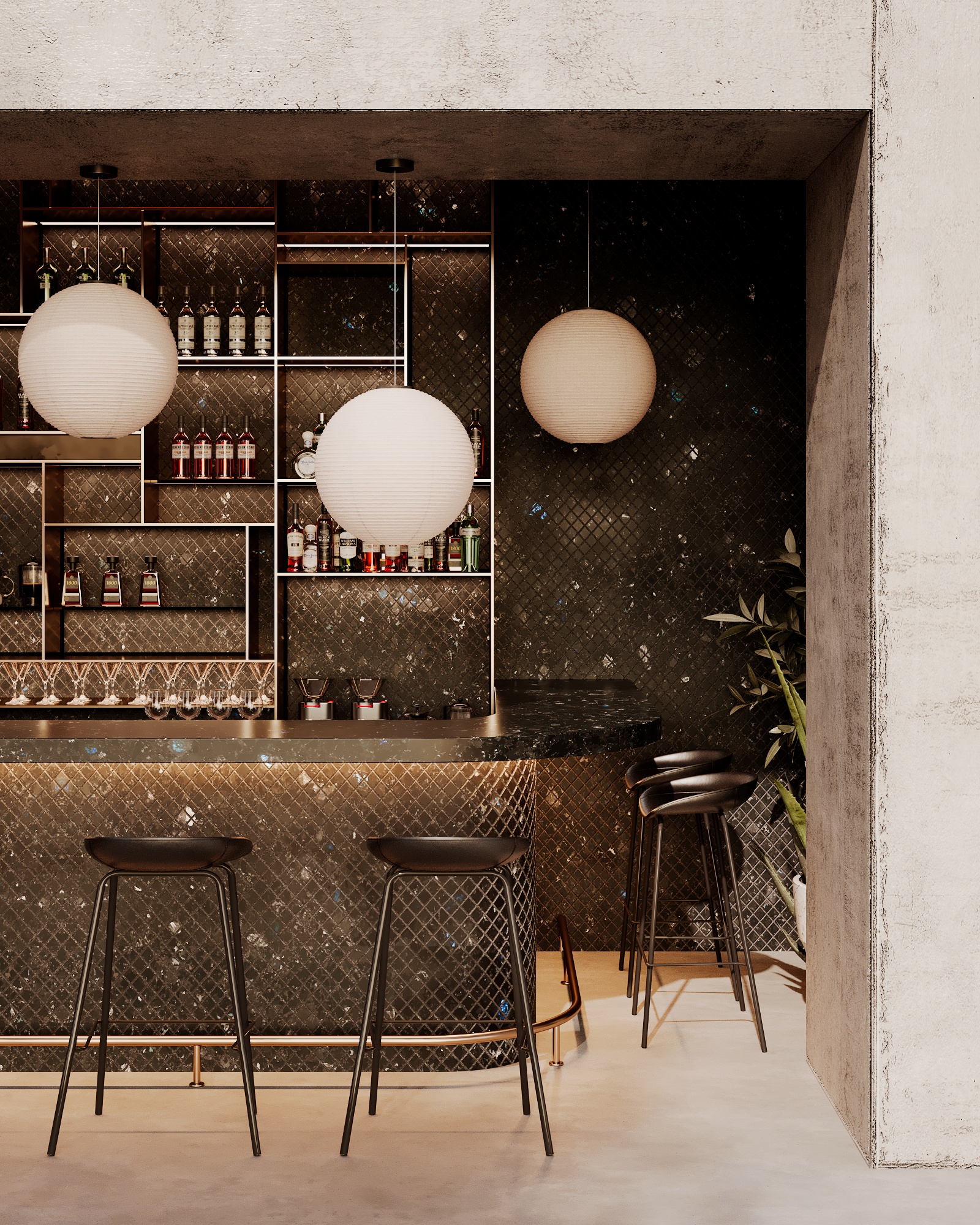
The vertical plane behind the bar appears as a continuous dark mass, integrated with illuminated niches. The symmetry of shelving, warm lighting, and precise geometry creates a sense of balance and control.
A bar counter made of polished labradorite reinforces this effect. Light moves across its surface, revealing the internal structure of the stone — deep blue tones that shift depending on the viewing angle.
This is a solution about precision, rhythm, and visual clarity.
Labradorite CUBORUM: Texture and Tactility
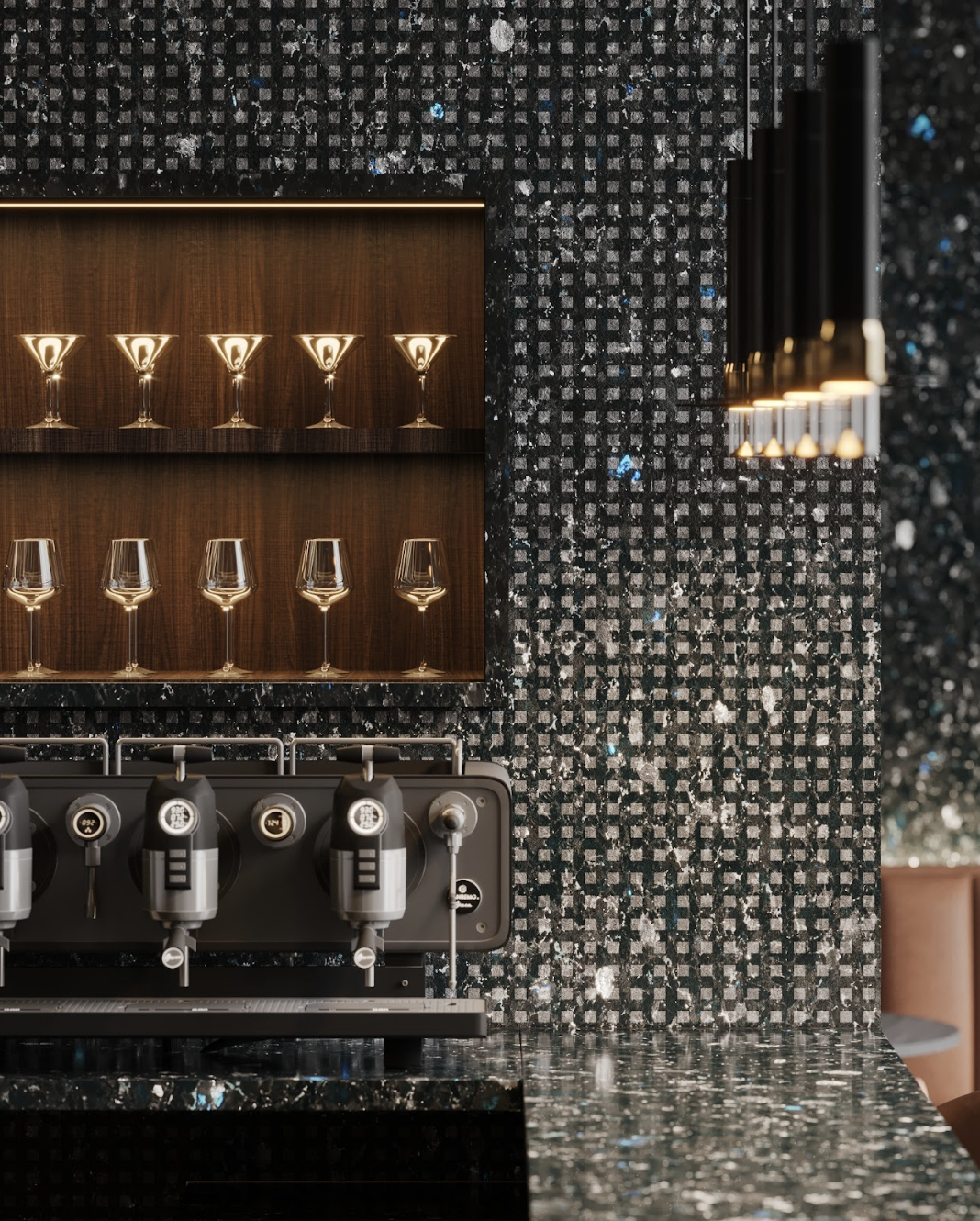
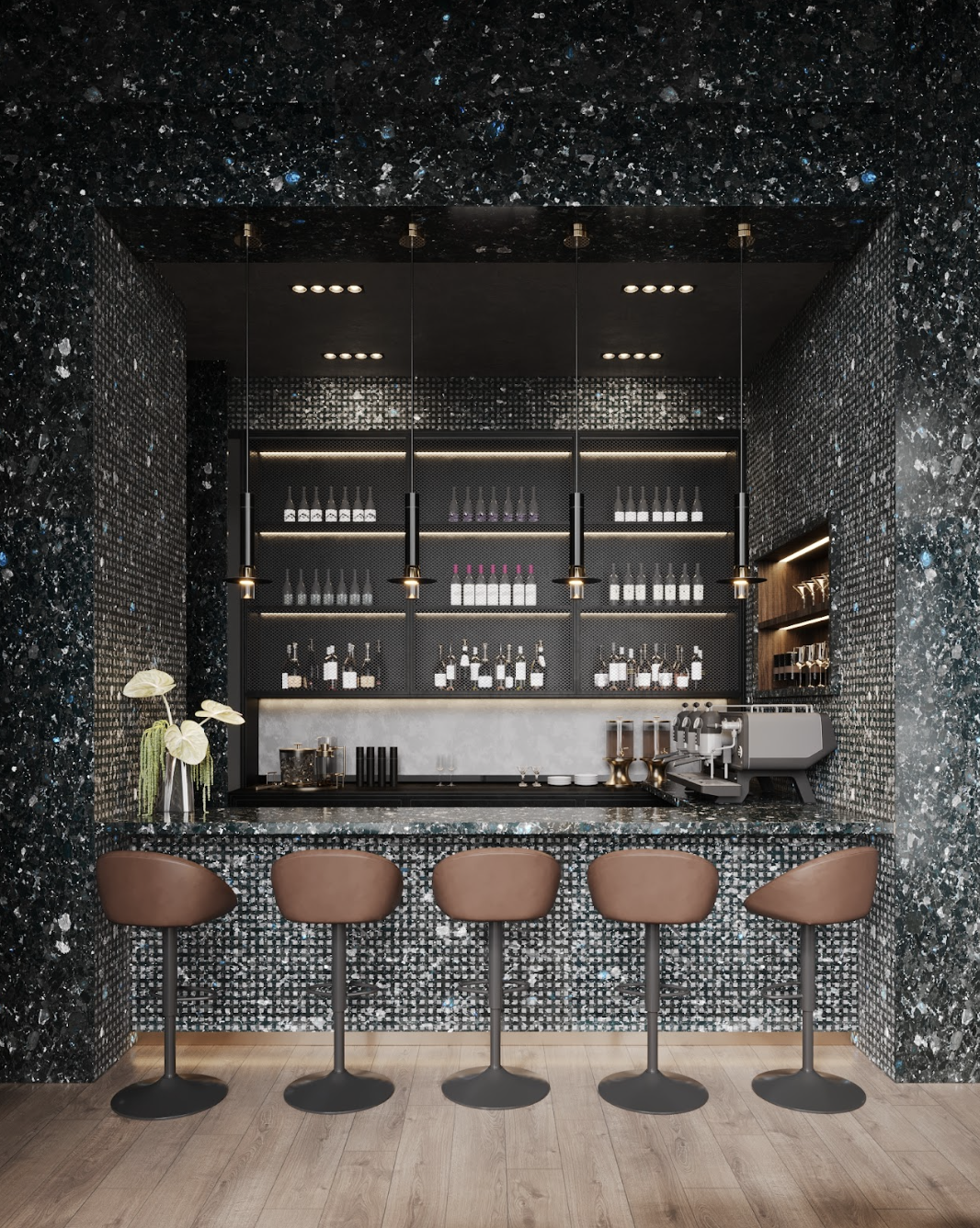
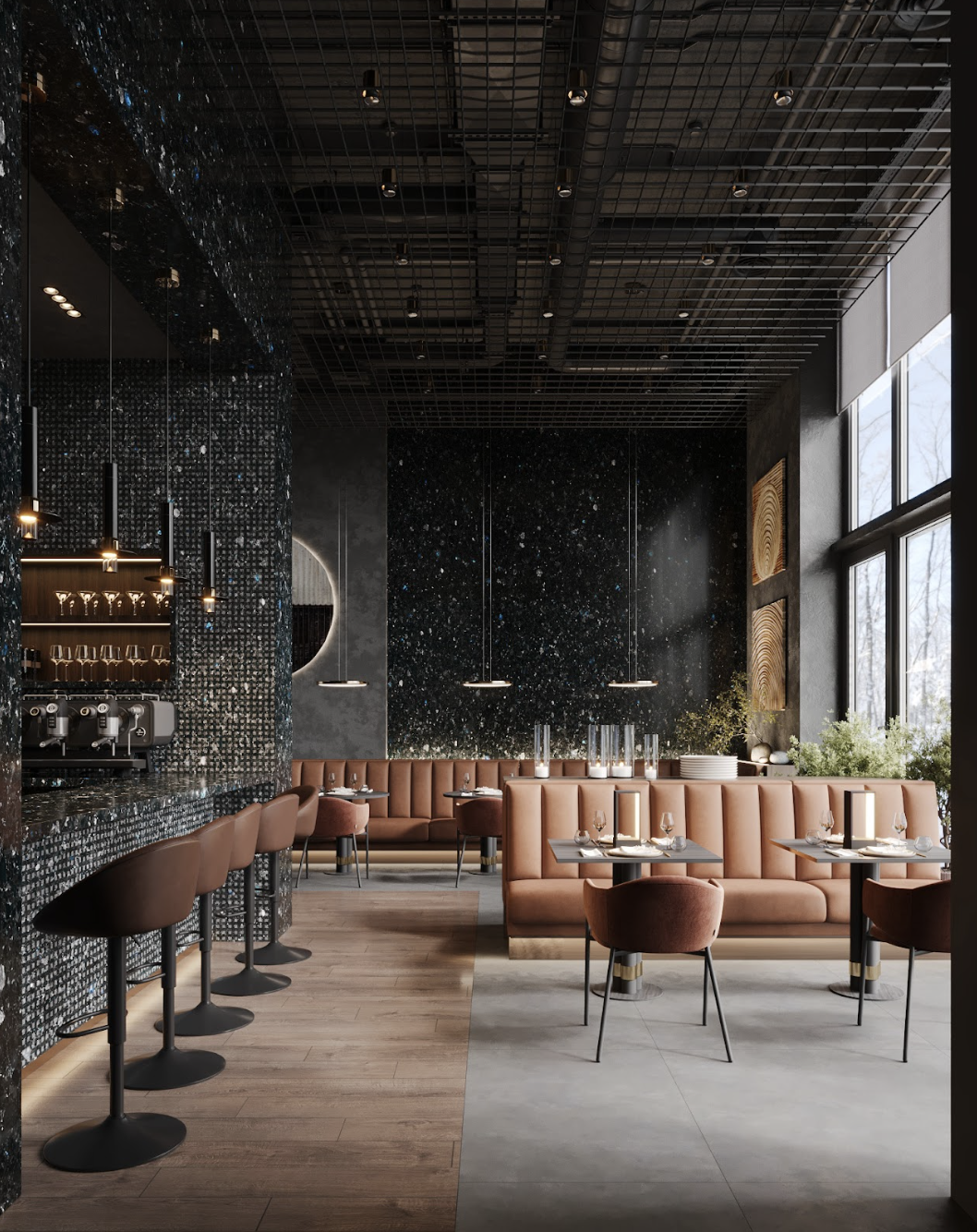
The cuborum finish transforms the perception of the material. Instead of reflection, a textured surface appears, diffusing light and adding depth.
The stone feels denser, more graphic. Fine texture creates a complex light pattern that does not shine, but works through half-tones and subtle nuances.
The bar area becomes more intimate. Light is not reflected but softly diffused across the surface, creating a calm and layered atmosphere.
This approach changes the character of the space — making it more intimate while preserving its expressiveness.
Poolside Bars: Interaction with Space and Light
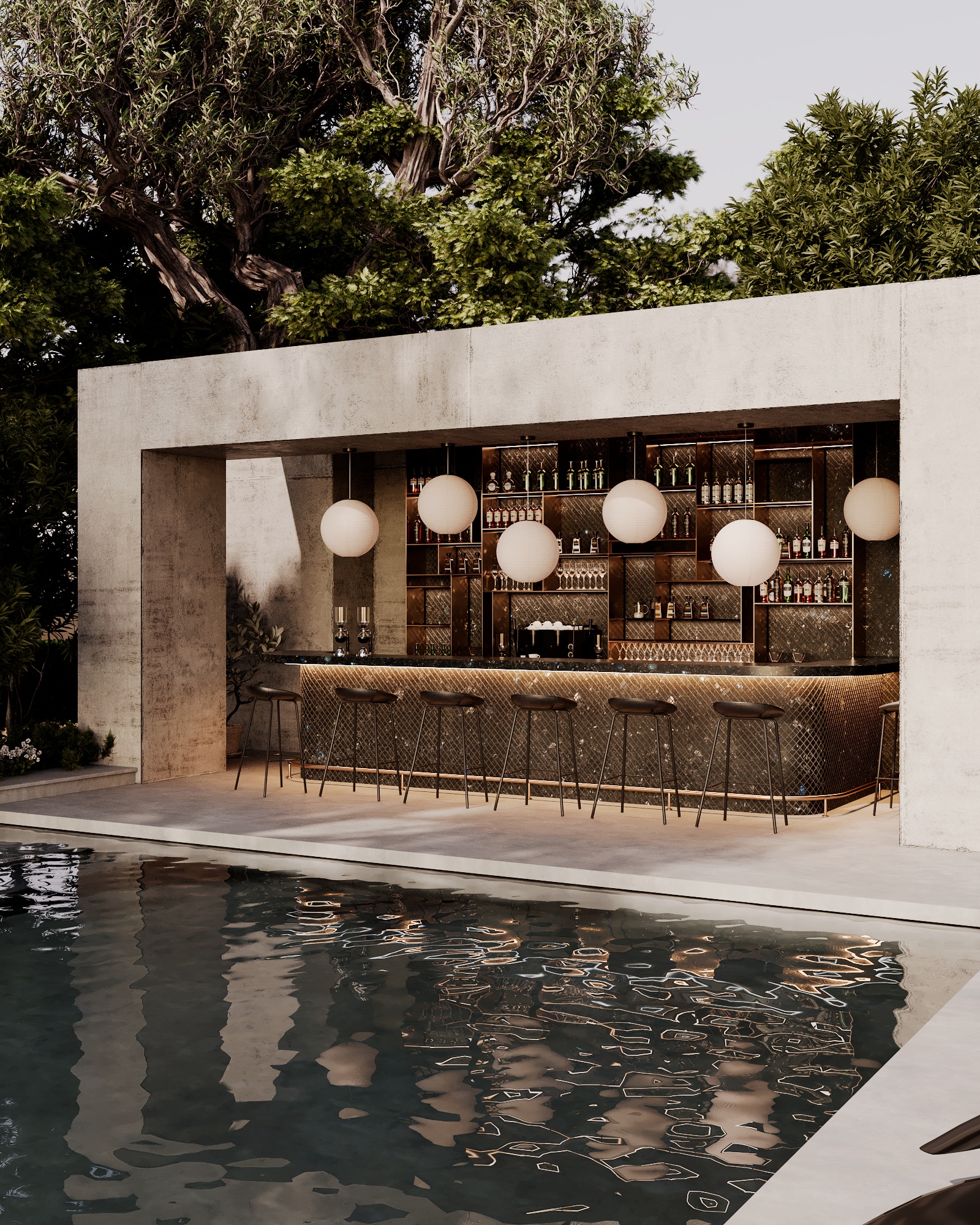
In open environments, labradorite reveals itself through its interaction with natural surroundings.
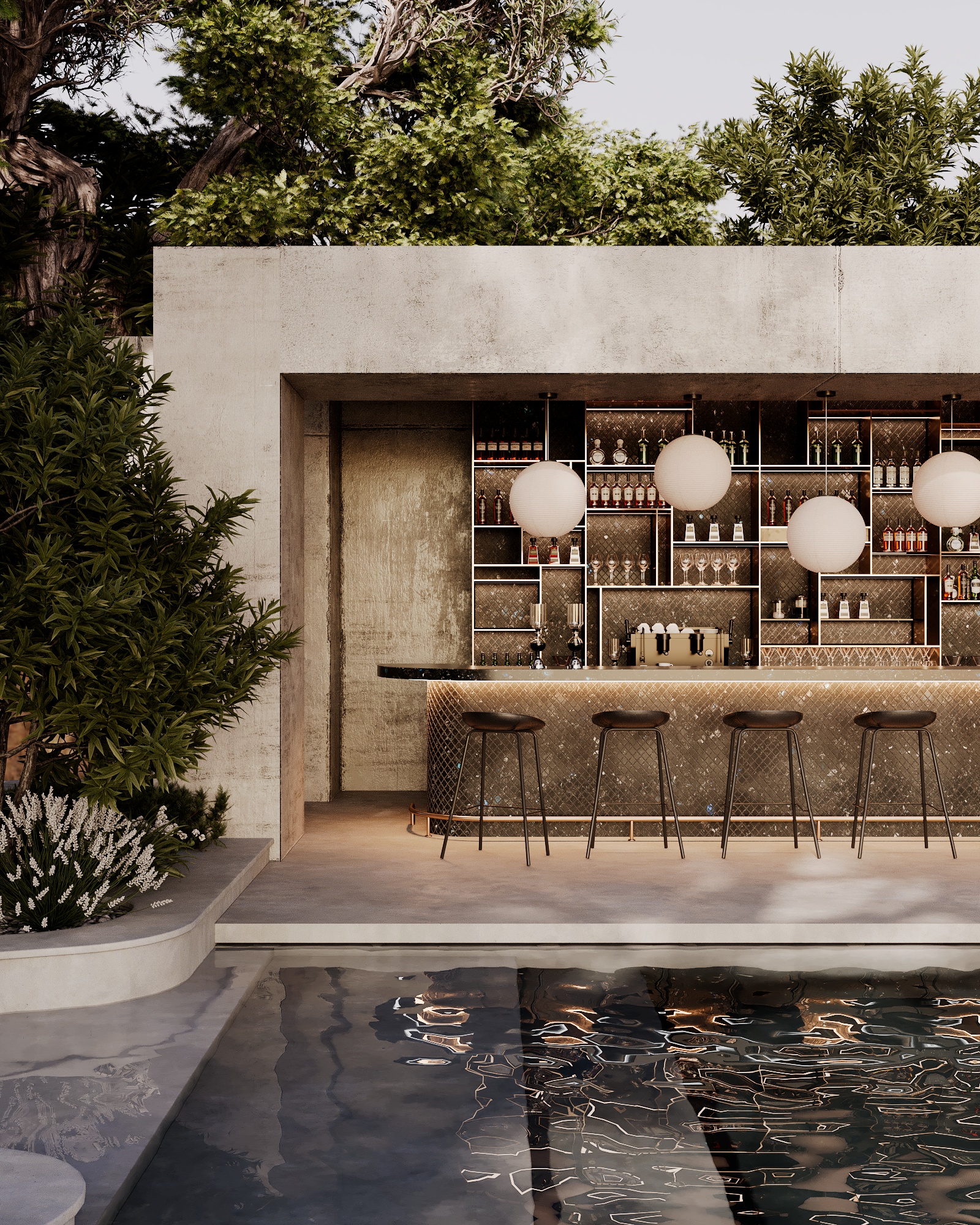
Light concrete, greenery, and water create a calm background against which black stone appears especially deep and refined.
The bar counter feels monolithic, yet not heavy. Reflections from the water transition into the texture of the stone, adding movement and variability.
Light works subtly — emphasizing geometry without overwhelming it. The entire composition is built on the balance between material and environment.
Here, labradorite integrates into the architecture, reinforcing a sense of calm and premium quality.
In outdoor spaces, a natural stone bar becomes part of the surrounding architecture.
Two Scenarios — One Material
Labradorite allows designers to work with space across different scenarios.
A polished surface creates a clear, reflective architectural expression.
A textured finish forms a deeper, more restrained atmosphere.
At the same time, the material remains the same — only its presentation changes.
This flexibility makes labradorite a key element in the design of natural stone bars.
The Bar as an Architectural Center
In modern projects, a natural stone bar is used to create a strong architectural center.
A modern bar is not a standalone function, but part of an integrated system.
The material defines how the space is experienced.
And black stone — particularly labradorite — enables this cohesion.
It creates depth, enhances light, and unifies all elements into a single composition.
A natural stone bar becomes not just a detail of the interior, but its foundation.