
You might be interesting:

Labradorite in Modern Architecture: New Era of Natural Materials
10 min | 16.02.2026Labradorite in Modern Architecture: New Era of Natural Materials
Stone as the Foundation of Architectural Identity


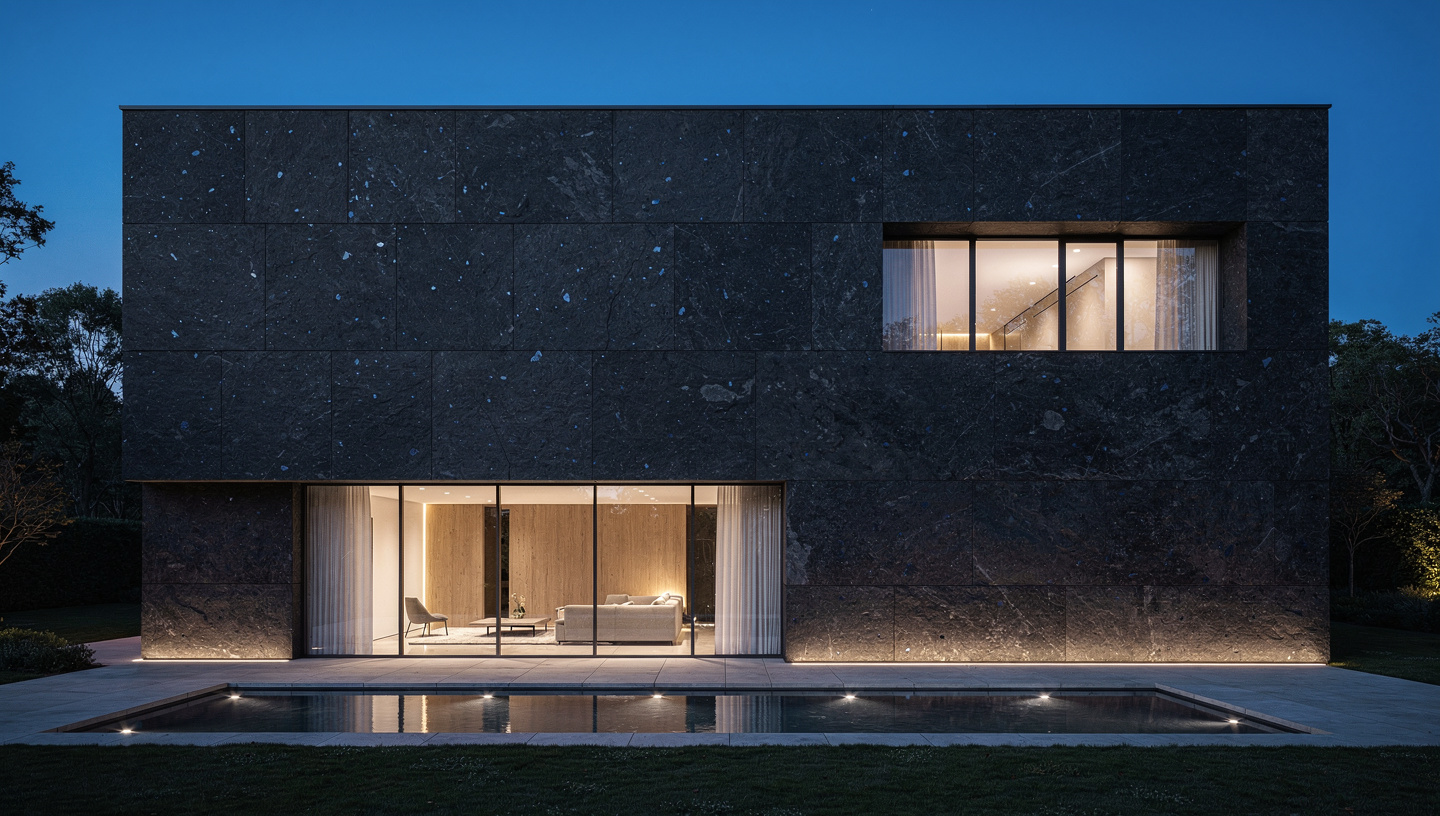
Labradorite in Contemporary Architecture
Natural stone architecture has become a defining element of premium facades in contemporary design. In modern architecture, stone is no longer just a material — it is an architectural statement.
Modern architecture is undergoing a profound rethinking of materials. After decades dominated by composites, artificial panels, and synthetic finishes, architects are returning to natural foundations. Yet this is no longer simply about using stone — it is a new philosophy of interaction between nature, light, and space.
In this context, Volga Blue labradorite opens a new chapter. It is not merely a decorative material. It is a natural stone that elevates architecture beyond function and transforms it into an emotional focal point of space. A stone that unites the eternity of nature with the demands of modernity. It is no coincidence that leading architects increasingly choose Volga Blue for premium projects — from facades to private residences.
A New Era of Natural Materials
The Trend Toward Authenticity
Global architectural practice demonstrates a strong movement toward authenticity. Space is no longer disguised. Materials are no longer imitated. Stone must remain stone, wood must remain wood, metal must remain metal.
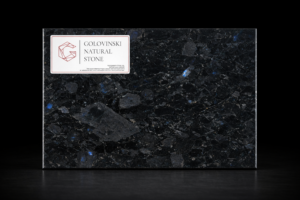
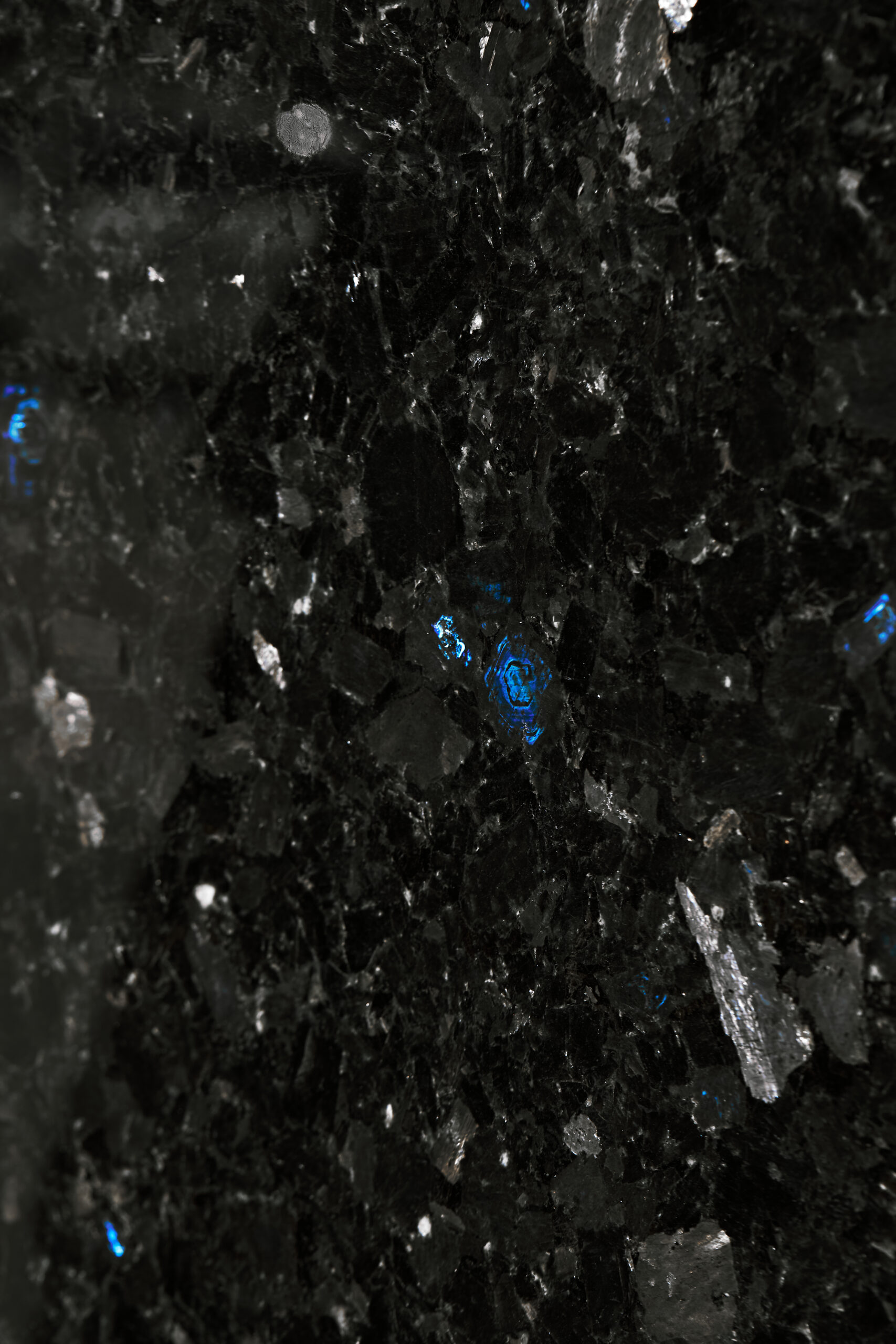
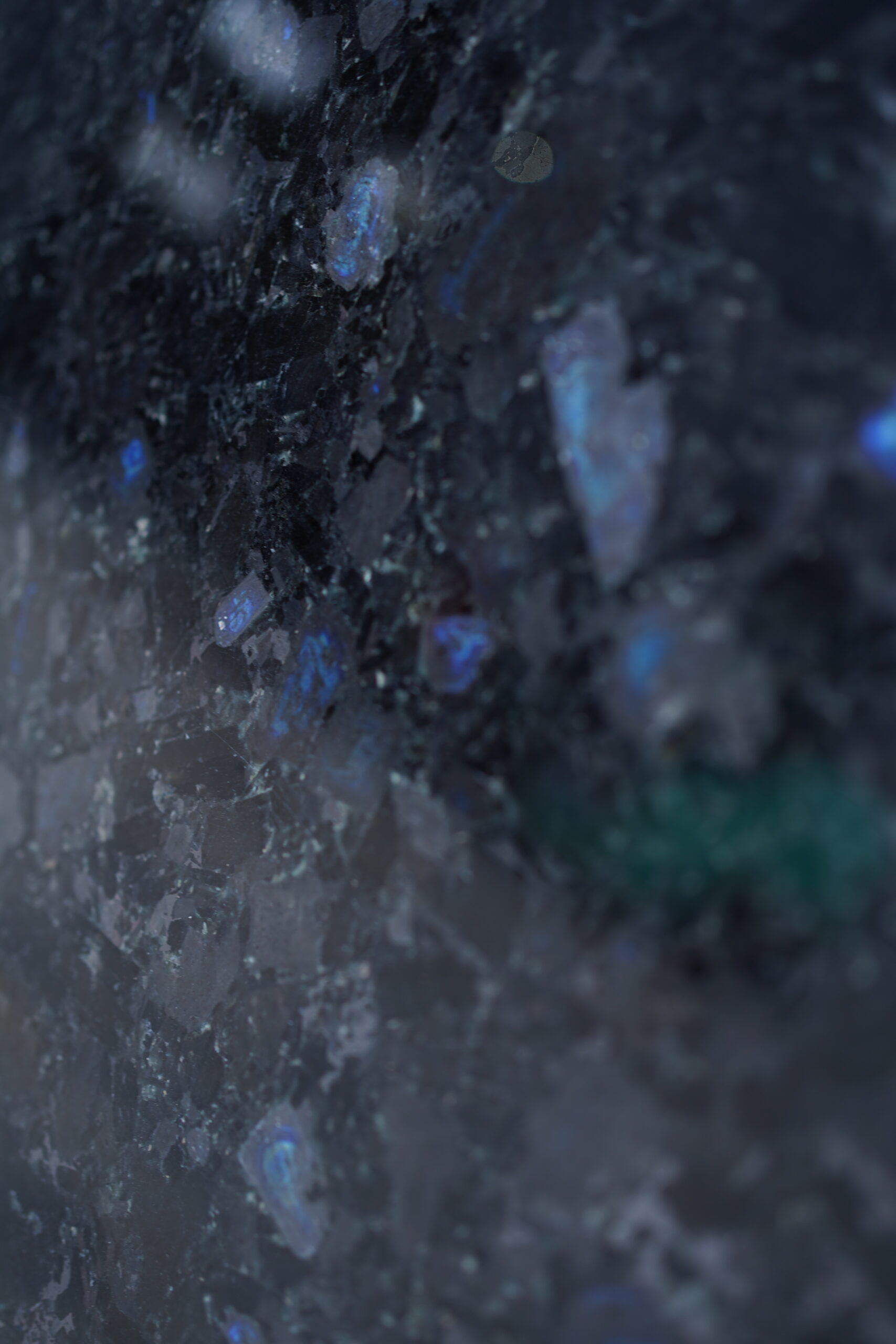
Labradorite responds to this demand with precision. Its deep dark background combined with characteristic blue iridescence creates the effect of a living surface. Light interacts with its crystalline structure, producing dynamics that cannot be replicated by artificial materials.
In contemporary architecture, stone is no longer secondary — it becomes dominant. It defines the identity of the building. Volga Blue is especially valued for the purity of its blue spectrum — deep, saturated, and free of secondary tones. This enables architects to work with contrast, minimalism, and sophisticated lighting scenarios.
Sustainable Development
Sustainability is no longer a marketing slogan — it is a requirement of our time. Natural stone is recognized in architecture as a material with a long life cycle, minimal replacement needs, and high reparability.
Labradorite demonstrates exceptional physical and mechanical properties:
-
high density;
-
minimal water absorption;
-
frost resistance;
-
abrasion resistance;
-
long-term durability without aesthetic degradation.
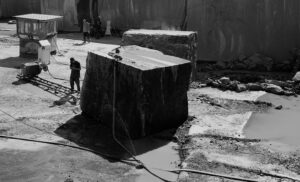
The Volga Blue quarry in Ukraine ensures controlled extraction, where each block undergoes primary quality evaluation before processing. Modern cutting and polishing technologies minimize waste and ensure maximum efficiency in the use of natural resources.
Within the framework of sustainable architecture, this means one thing: the material serves for decades without losing its functionality or visual strength.
Opportunities for Architects
Facades
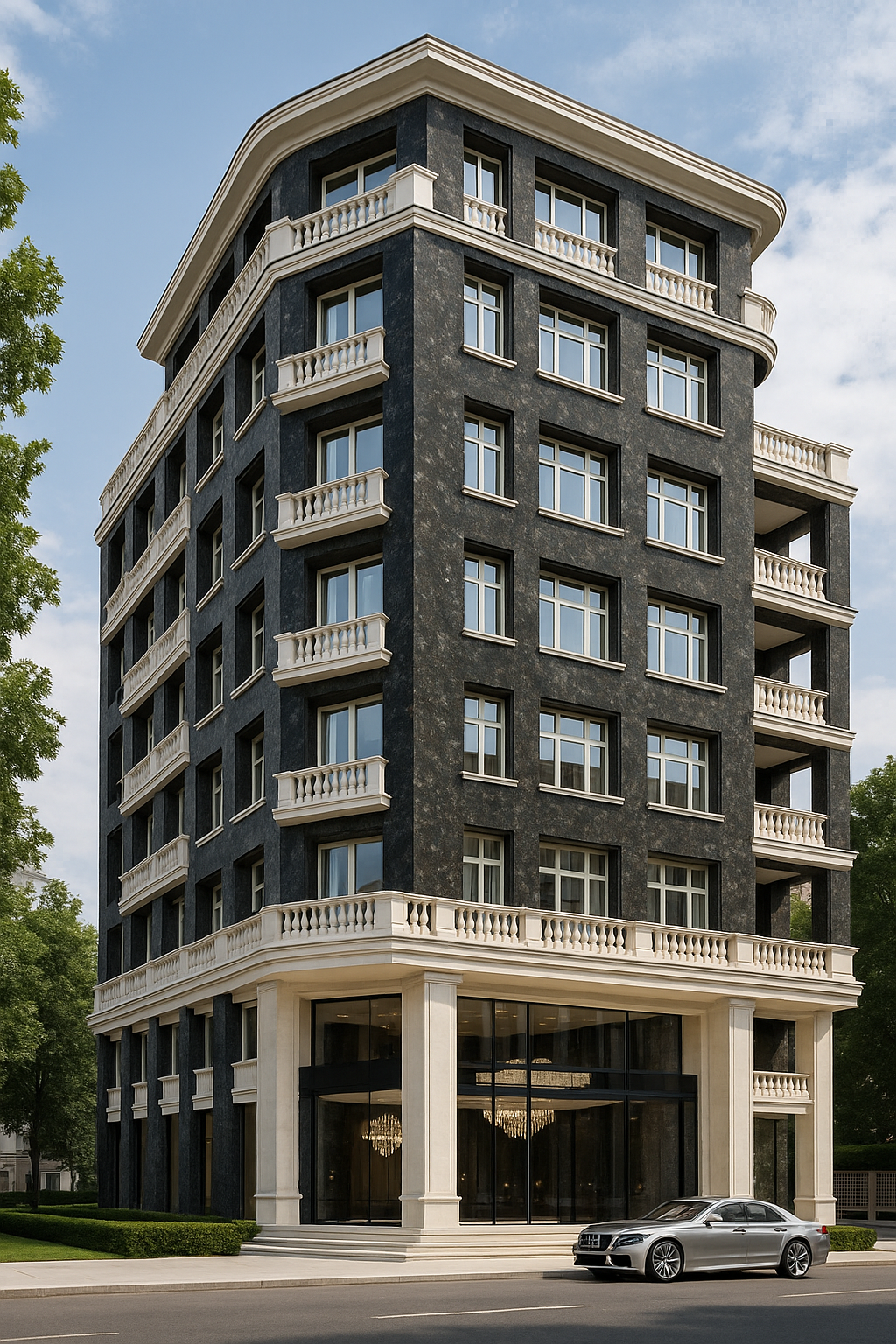
Premium facades today combine minimalism, monumentality, and the play of light. Volga Blue performs exceptionally well in large-format solutions. Slabs up to 3×2 meters allow for seamless surfaces with expressive texture.
In daylight, the facade appears restrained and monumental. In evening lighting, the blue iridescence activates, creating the effect of a “living” building.
Contemporary architecture increasingly integrates stone not only as cladding but as part of the structural concept itself. Ventilated facade systems with labradorite demonstrate high resistance to environmental influences and preserve their aesthetic qualities for decades.
Public Spaces
In public environments, beauty alone is not enough — durability is essential. Airports, business centers, hotels, and concert halls require materials capable of withstanding intensive use.
Labradorite is applied in:
- flooring systems;
- staircases;
- columns;
- reception areas;
- art installations.
The dark base with deep blue radiance creates an atmosphere of refined prestige and intelligent luxury. In large spaces, the stone conveys stability and significance.


Premium Residences
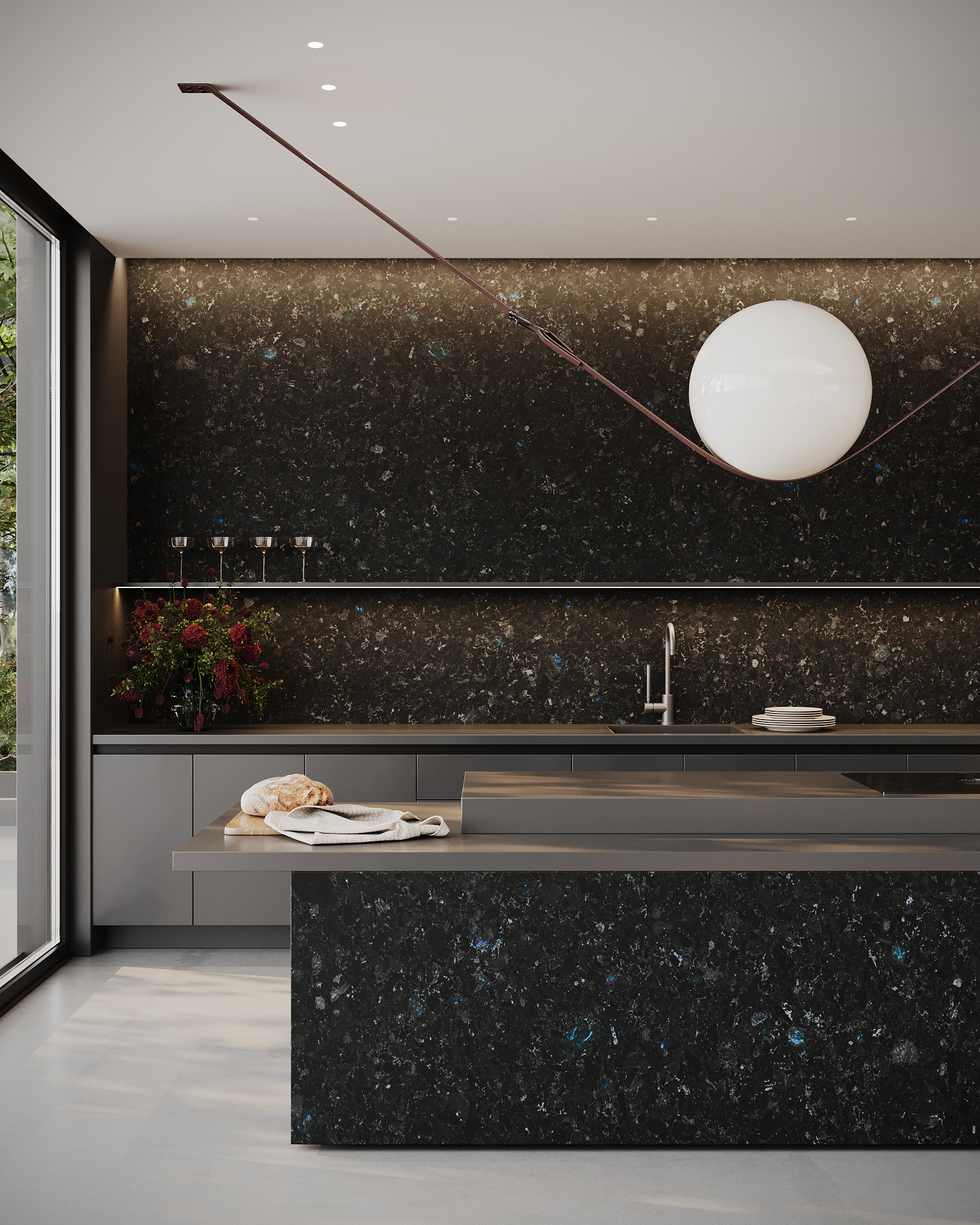
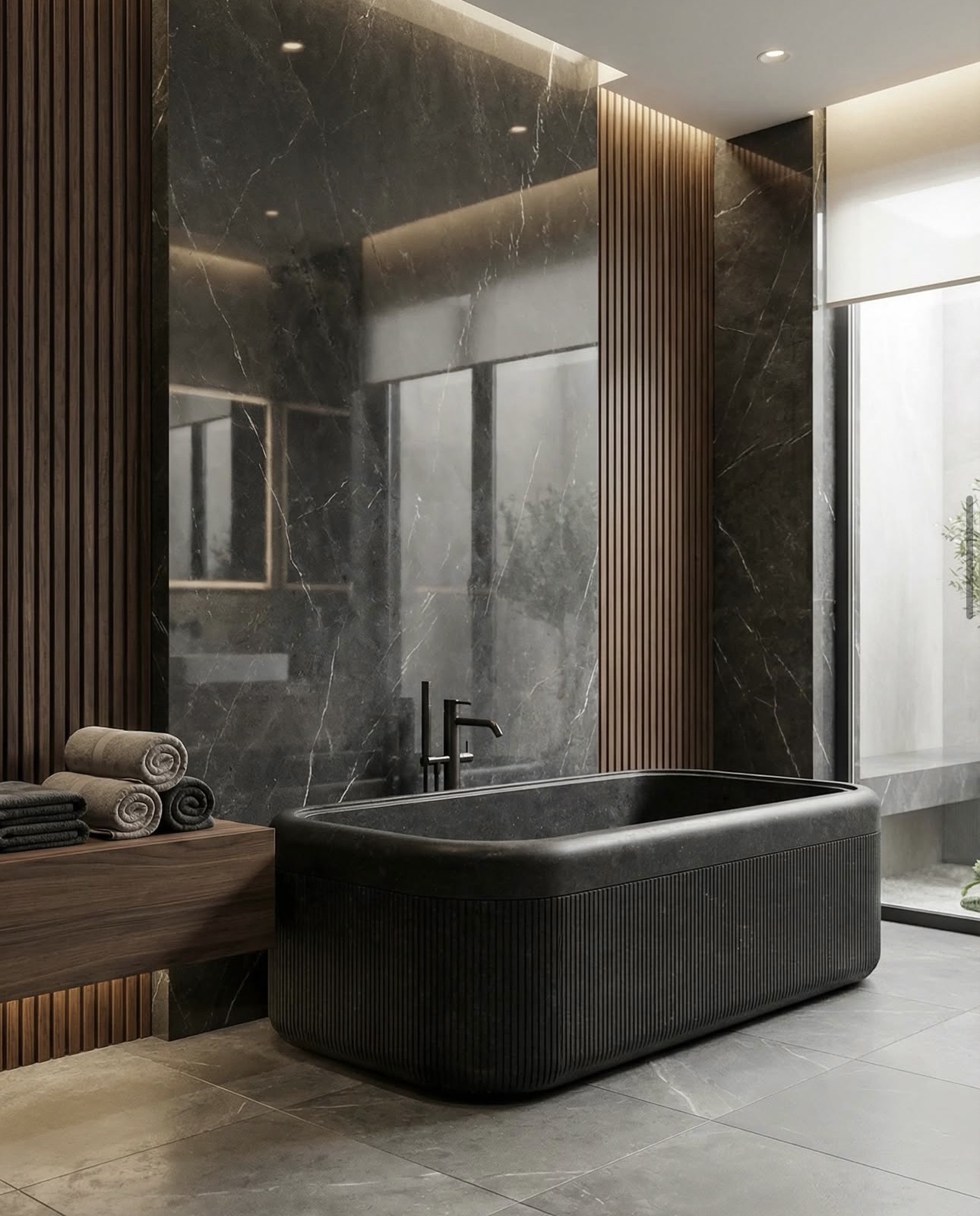
In private architecture, Volga Blue becomes a symbol of individuality. Kitchen islands, fireplaces, staircases, bathrooms, accent walls — each element transforms into a sculptural object.
Contemporary architecture integrates stone as a central accent. Labradorite allows interiors to exist without excessive decoration. The material itself becomes art.
Technical Advantages
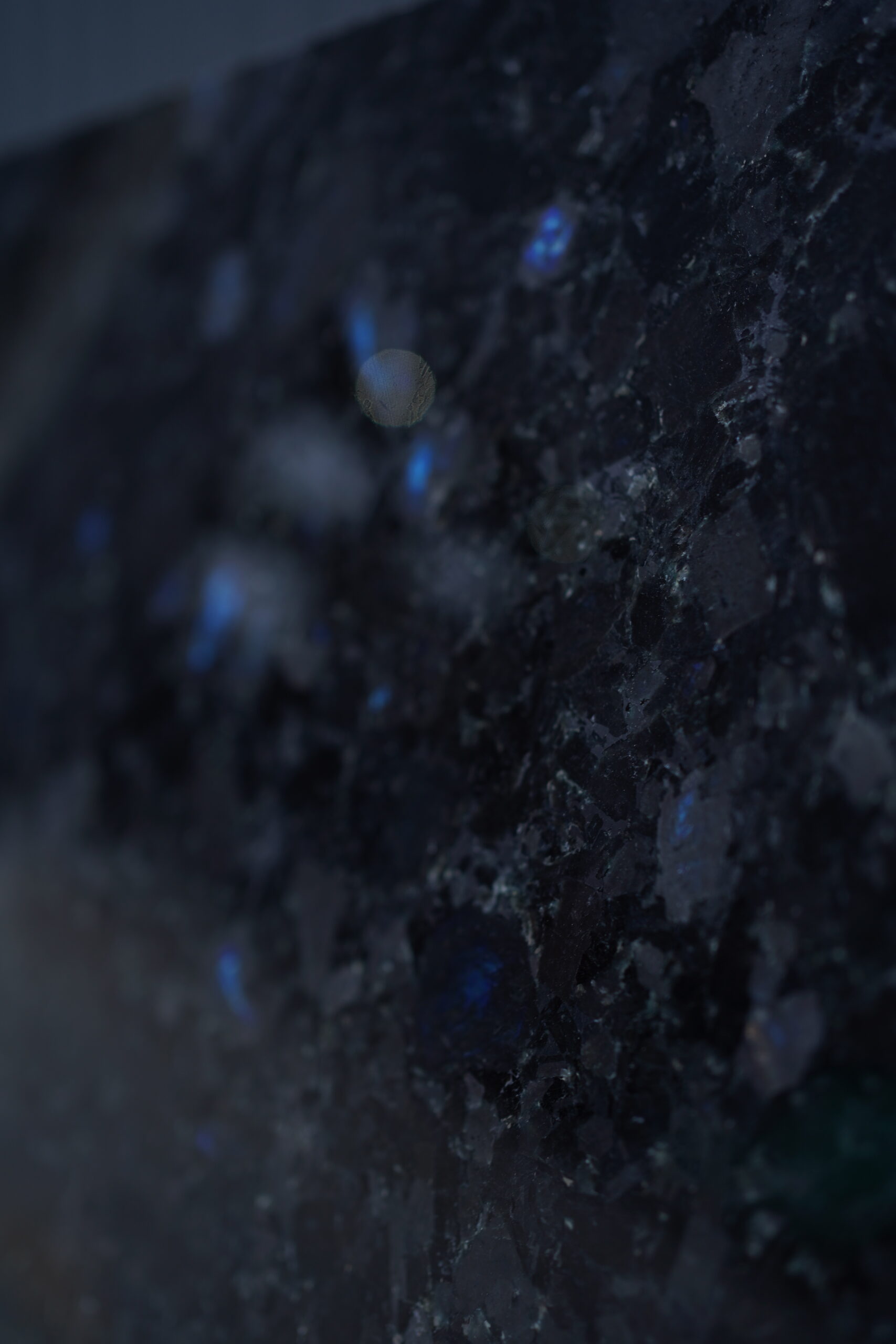
Modern processing technologies enable a deep mirror-like polish without losing the natural texture. Slabs maintain stable geometry, which is critical for facade systems and precision installation.
Key characteristics include:
-
compressive strength;
-
UV resistance;
-
low porosity;
-
color stability;
-
durability exceeding 50 years in exterior environments.
For architects, this means predictability of results and minimized operational risk.
Iconic Projects with Volga Blue
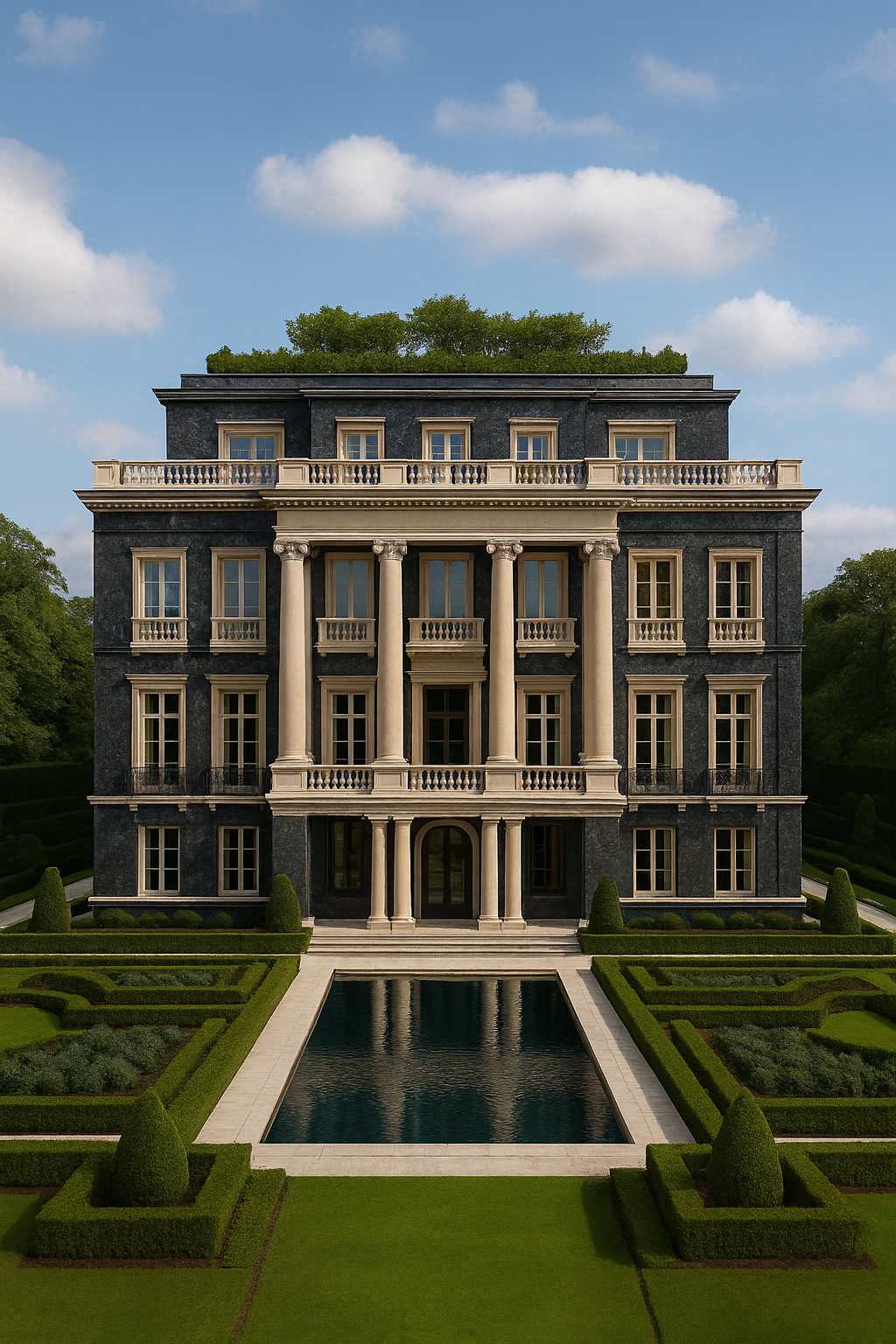
Volga Blue is used in landmark structures where durability and symbolism are essential. Monumental buildings, memorial complexes, and administrative facilities demonstrate the stone’s resilience over time.
It is chosen for:
-
uniqueness of pattern;
-
depth of color;
-
stability in various climate conditions;
-
ability to create strong visual impact across large surfaces.
Labradorite is changing the rules of architecture. It is a material that functions simultaneously as structure, finish, and art. It does not adapt to trends — it defines them.