You might be interesting:

Day 2 Recap at Coverings 2026
Day 1 Recap at Coverings 2026
Golovinski to Present Golovinski Labradorite and Architectural Surface Finishes at Coverings 2026
Labradorite Flooring: Black Stone That Holds a Space for Decades

Labradorite Care: Easier Than You Think

10 min | 22.02.2026
Simple rules for cleaning labradorite and effective protection of Volga Blue stone for decades.

Labradorite Care: Easier Than You Think

Simple rules for cleaning labradorite and effective protection of Volga Blue stone for decades.

10 min | 22.02.2026 by golovinski company
Star
by golovinski company
scroll down Down
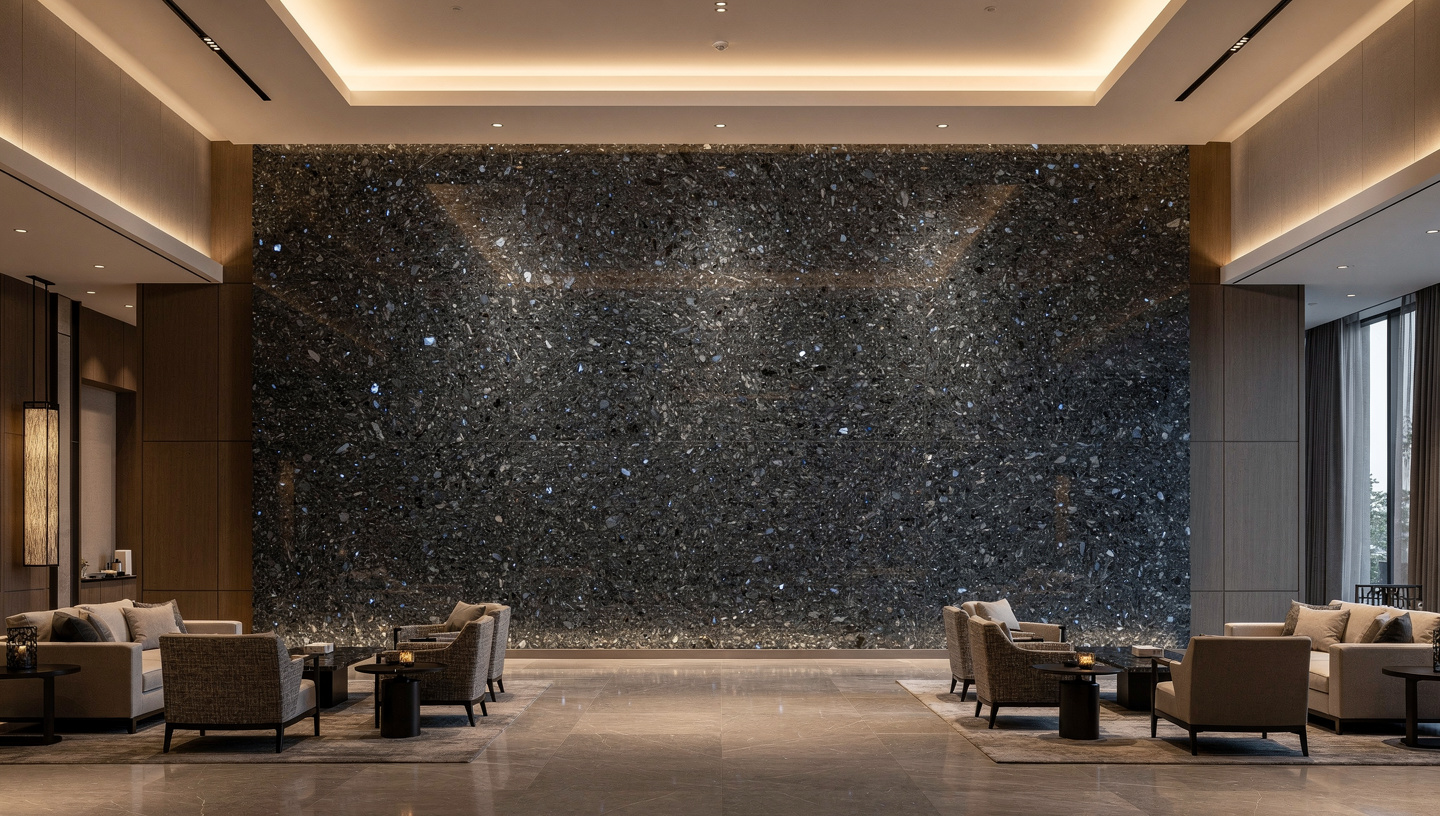
Feature wall in Volga Blue labradorite in a premium hotel lobby compliant with international stone standards labradorite cleaning and maintenance of Volga Blue stone surface

Proper labradorite cleaning is essential to preserve the depth, shine, and structure of Volga Blue stone for decades. Labradorite care made simple. Cleaning labradorite, stone protection, and professional stone maintenance for Volga Blue in interiors and facades.

Volga Blue labradorite is a premium natural stone with a deep graphite-gray base and subtle blue iridescence. It is widely used in modern architecture, luxury facades, high-end interiors, and public spaces.

Despite its sophisticated appearance, labradorite care is far simpler than many expect. This dense, low-porosity material is naturally resistant to environmental impact. Proper cleaning of labradorite, appropriate stone protection, and minimal stone maintenance ensure its beauty lasts for decades.

Why Labradorite Is Low-Maintenance

Labradorite Cleaning: Low Porosity and Dense Structure

Volga Blue labradorite forms through the slow cooling of magma, resulting in:

  • High density
  • Minimal porosity
  • Uniform crystalline structure
  • Low water absorption

Low porosity means the surface does not absorb contaminants as easily as more porous materials. This is why cleaning labradorite does not require aggressive chemicals or complex procedures.

The dense structure also reduces the risk of staining from water, coffee, or everyday liquids in interior applications.

Chemical Stability

Labradorite belongs to the feldspar mineral group and demonstrates excellent stability when exposed to neutral household cleaning agents.

This means:

  • The stone does not react to pH-neutral products
  • The color remains stable
  • The polished surface maintains its depth and shine

As a result, stone maintenance remains straightforward and predictable in daily use.

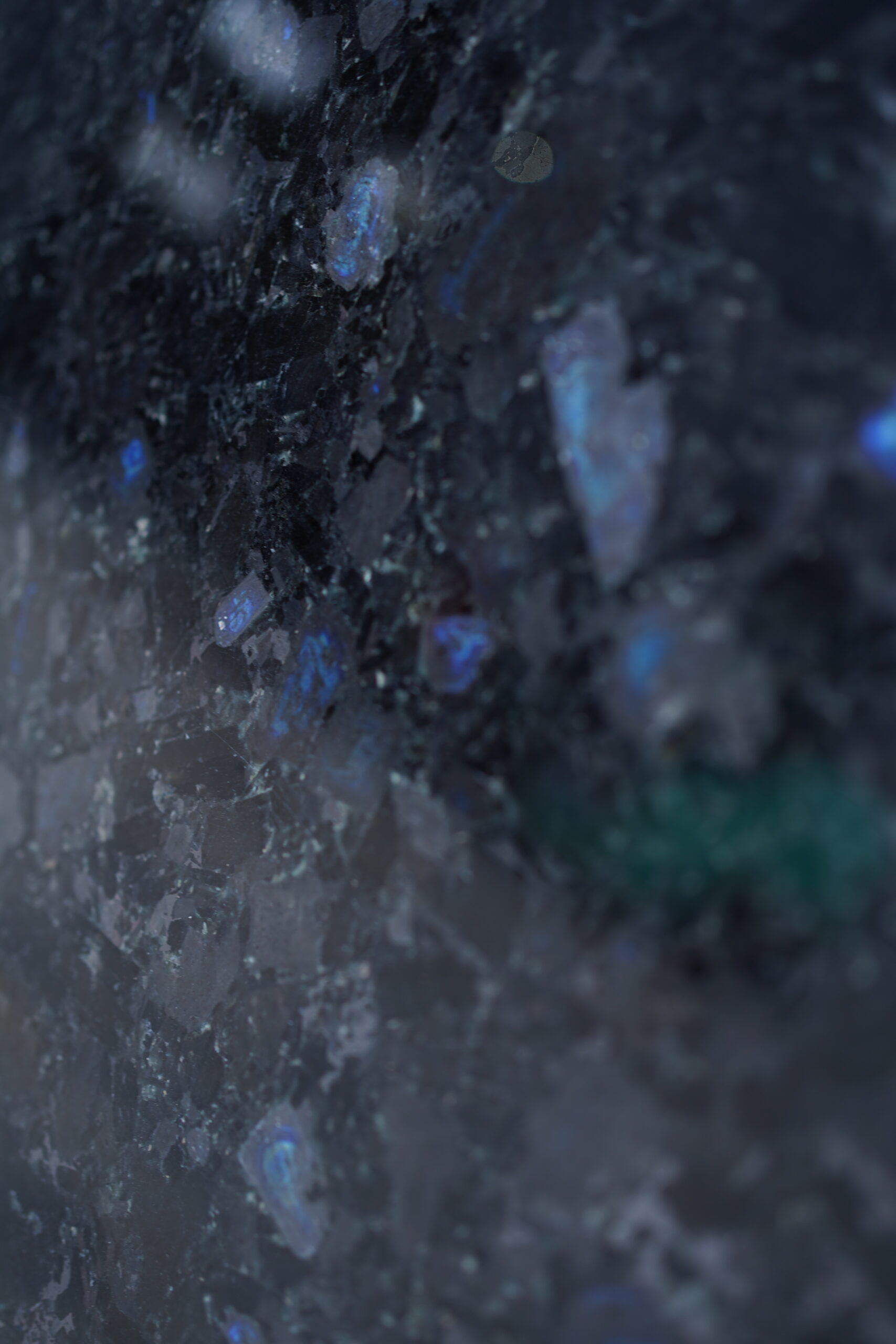
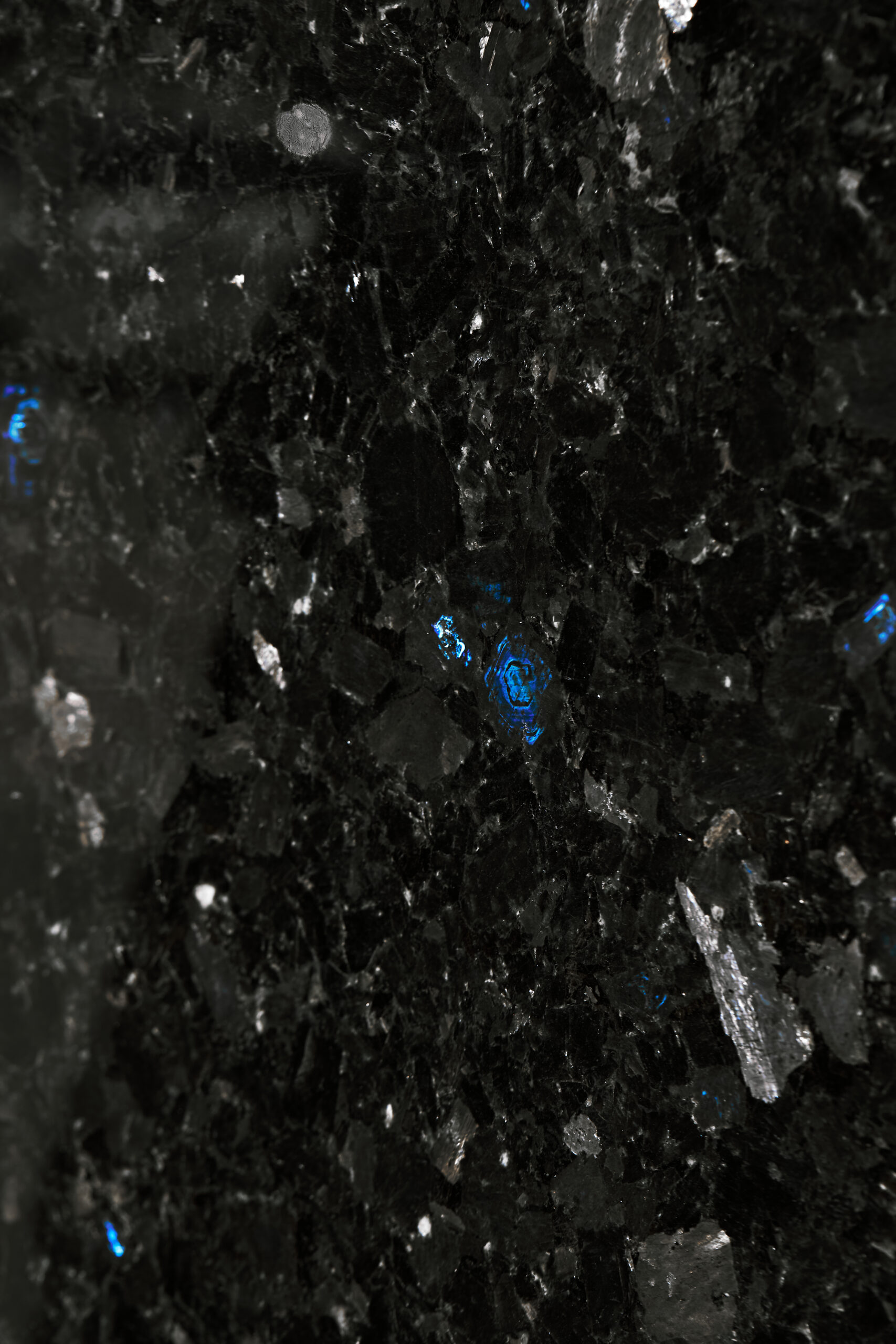
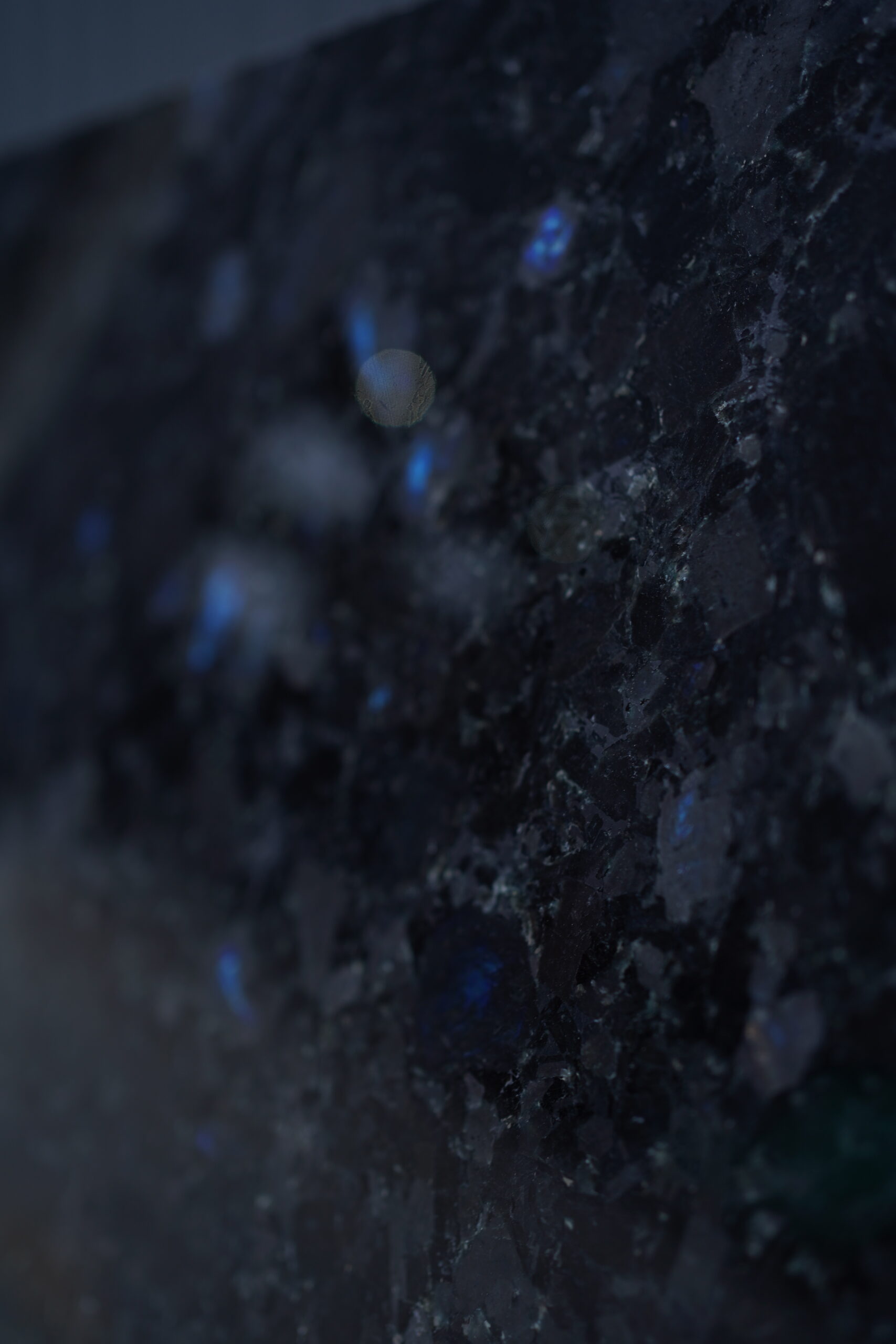
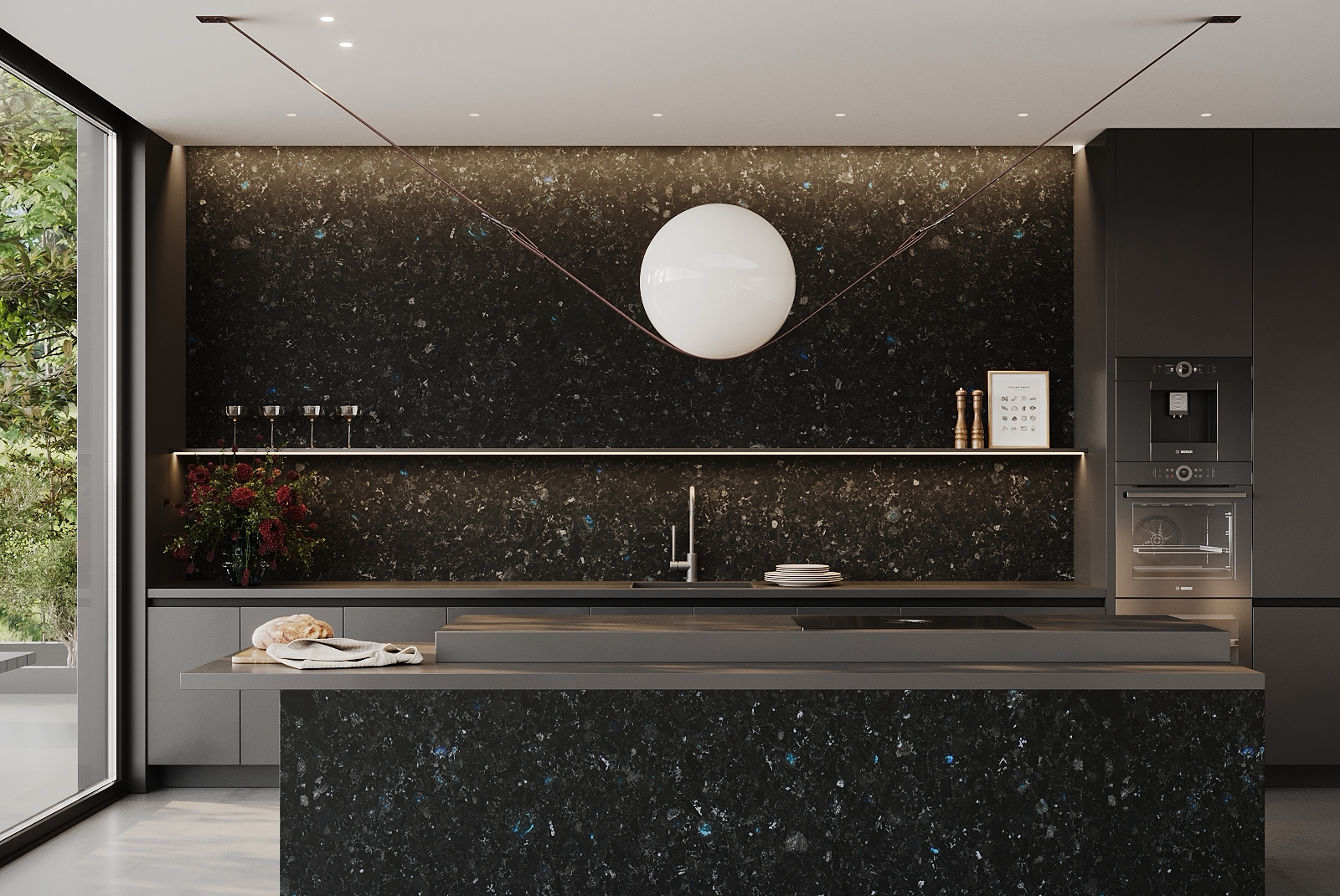
Natural Volga Blue labradorite stone texture for premium facades and modern architecture Natural Volga Blue labradorite – dark graphite texture with natural blue iridescence Natural Volga Blue labradorite texture with deep graphite base and subtle blue iridescence

Daily Labradorite Care

Cleaning Methods and Products

The key principle: neutral products and soft materials.

For routine cleaning of labradorite, you only need:

  1. A soft microfiber cloth

  2. Warm water

  3. A pH-neutral stone cleaner (if necessary)

Basic technique:

  • Remove dust with a dry cloth

  • Wipe the surface with a slightly damp microfiber cloth

  • Dry the surface to maintain the polished finish

For kitchen countertops, it is recommended to wipe spills promptly — not because the material is vulnerable, but to preserve flawless aesthetics.

Avoid abrasive pads. They will not damage the structure but may reduce the polish level over time.

Stone Protection: Is Sealing Necessary?

Volga Blue labradorite has low water absorption, meaning additional sealing is often optional.

However, stone protection may be advisable in:

  • Kitchen work areas

  • High-traffic zones

  • Exterior facade systems in demanding climates

Professional impregnation:

  • Reduces moisture penetration

  • Simplifies cleaning labradorite

  • Enhances resistance to surface contamination

A properly applied penetrating sealer does not form a visible film and does not alter the stone’s deep graphite tone.

In most interior applications, a single treatment followed by periodic evaluation every few years is sufficient.

What to Avoid

Although labradorite is highly durable, avoid:

  • Acidic cleaners (vinegar or strong acidic solutions)

  • Abrasive powders

  • Non-professional polishing compounds

  • Uncontrolled mechanical grinding

Improper cleaning products may not harm the structure but can affect surface gloss.

Always use products designed specifically for natural stone.

Professional Stone Maintenance

For large-scale facade systems and architectural installations, periodic professional inspection is recommended.

Professional stone maintenance may include:

  • Joint condition assessment

  • Inspection of mounting systems (for ventilated facades)

  • Renewal of protective treatments (if required)

  • Local polishing in case of mechanical damage

Polished labradorite can be restored effectively without compromising its depth or natural texture — one of its major advantages as a premium architectural material.

Labradorite in Interior and Exterior Applications

In interiors, labradorite is used for:

  • Flooring

  • Staircases

  • Kitchen countertops

  • Feature walls

  • Fireplace surrounds

In exterior architecture, it demonstrates stability under temperature fluctuations and environmental exposure.

Its deep graphite base does not fade in sunlight, and its subtle iridescence remains natural — without artificial coatings.

For this reason, stone maintenance remains preventive rather than corrective.

Preserving Beauty for Decades

Key recommendations:

  1. Routine cleaning of labradorite using neutral products

  2. Soft materials for wiping and polishing

  3. Avoidance of aggressive chemicals

  4. Periodic professional inspections for facades

  5. Optional stone protection treatment where necessary

Labradorite is a material designed by nature for longevity. Its dense crystalline structure ensures long-term stability with minimal intervention.

This natural stone combines low porosity, chemical stability, and structural density. Proper cleaning of labradorite, appropriate stone protection, and occasional professional stone maintenance allow Volga Blue to retain its architectural elegance for decades.

For architects, designers, and property owners, this means reliability, durability, and timeless aesthetics — without complicated upkeep.