
You might be interesting:

Black Natural Stone — Why the World is Discovering Labradorite
10 min | 18.03.2026Black Natural Stone — Why the World is Discovering Labradorite
Labradorite: a new definition of black natural stone


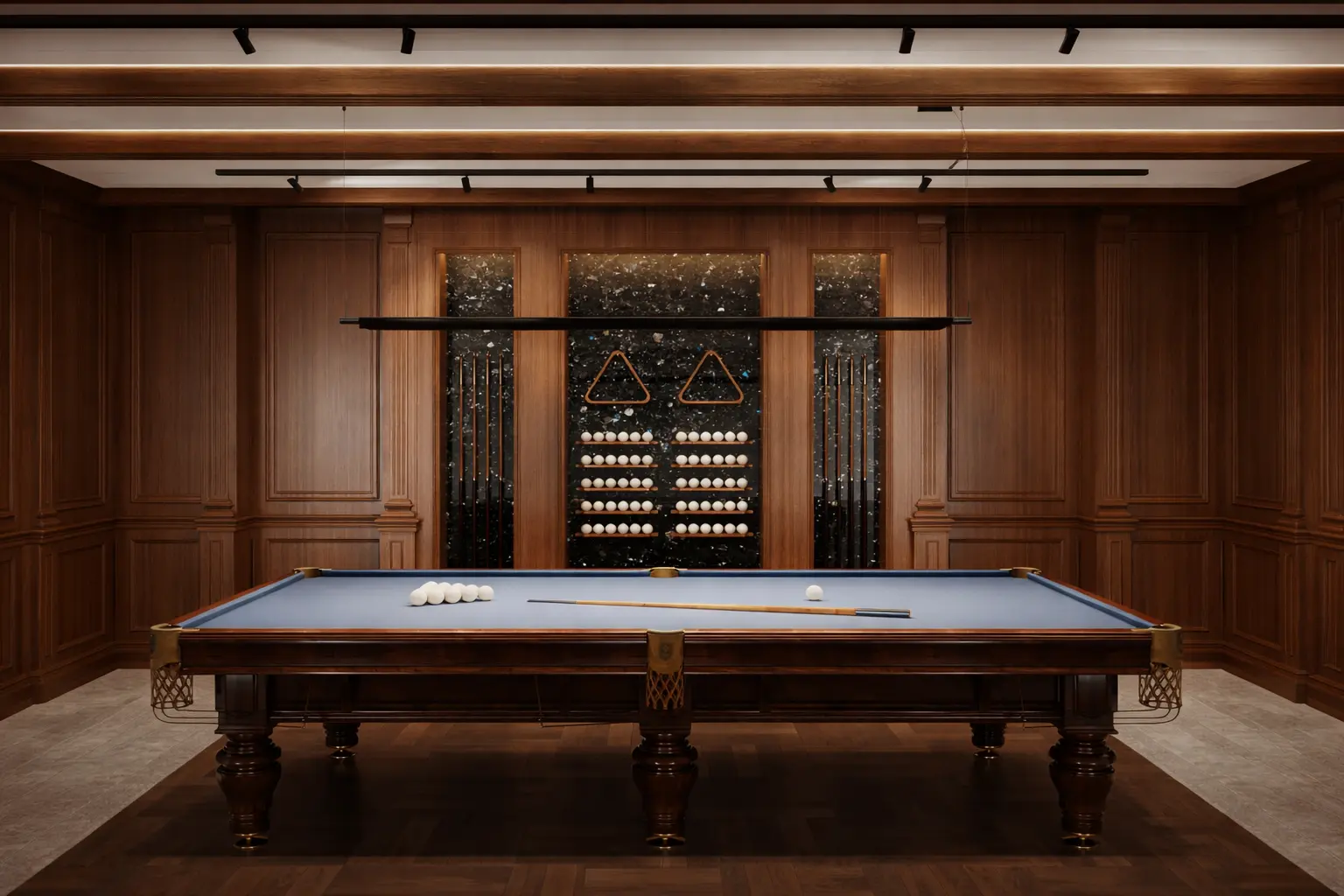
In many projects, black natural stone is still associated with marble or granite. Black natural stone has always been associated with strength, status, and architectural clarity. Traditionally, architects relied on materials like black granite or black marble to achieve depth and contrast.
Today, a new material is redefining this category — labradorite.
Often referred to as black granite or black marble, labradorite is in fact a distinct mineral with unique optical and structural properties that no other stone possesses.
It is not a variation.
It is a new benchmark in black natural stone.
A discovery for modern architecture
From niche material to global demand
For years, labradorite remained a material known only within a narrow professional circle. It was used selectively — in projects where material depth and density were critical.
Today, labradorite is entering global architectural practice.
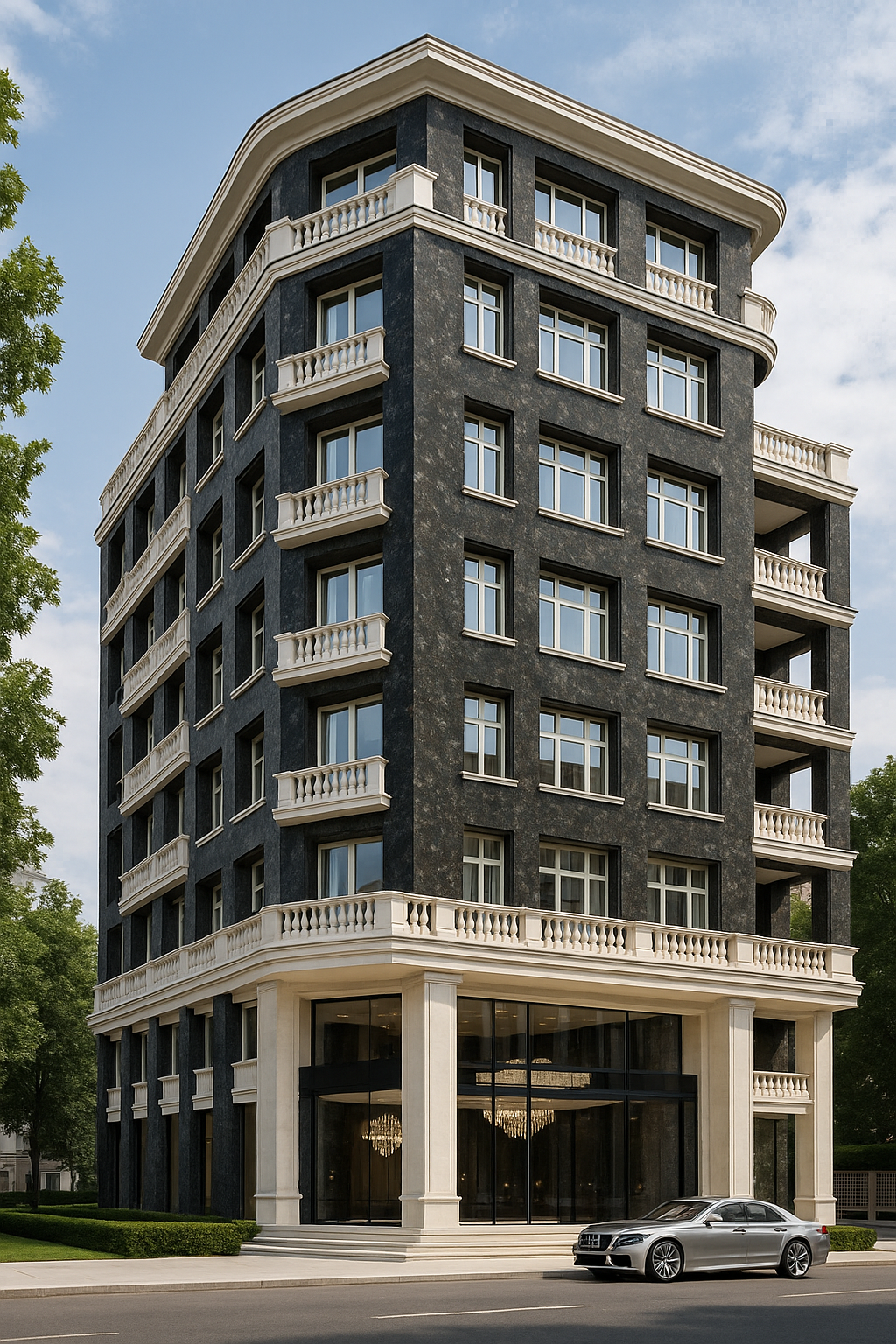
From private residences to large-scale commercial interiors, black natural stone is no longer a background element. It becomes a focal point.
Recognition by architects and designers
Modern architecture is no longer about form alone. Material defines perception.
Labradorite is chosen when a project requires:
-
depth without visual noise
-
texture without chaos
-
effect without artificiality
Compared to black marble, which often features strong veining, or black granite, which appears uniform, labradorite offers controlled complexity.
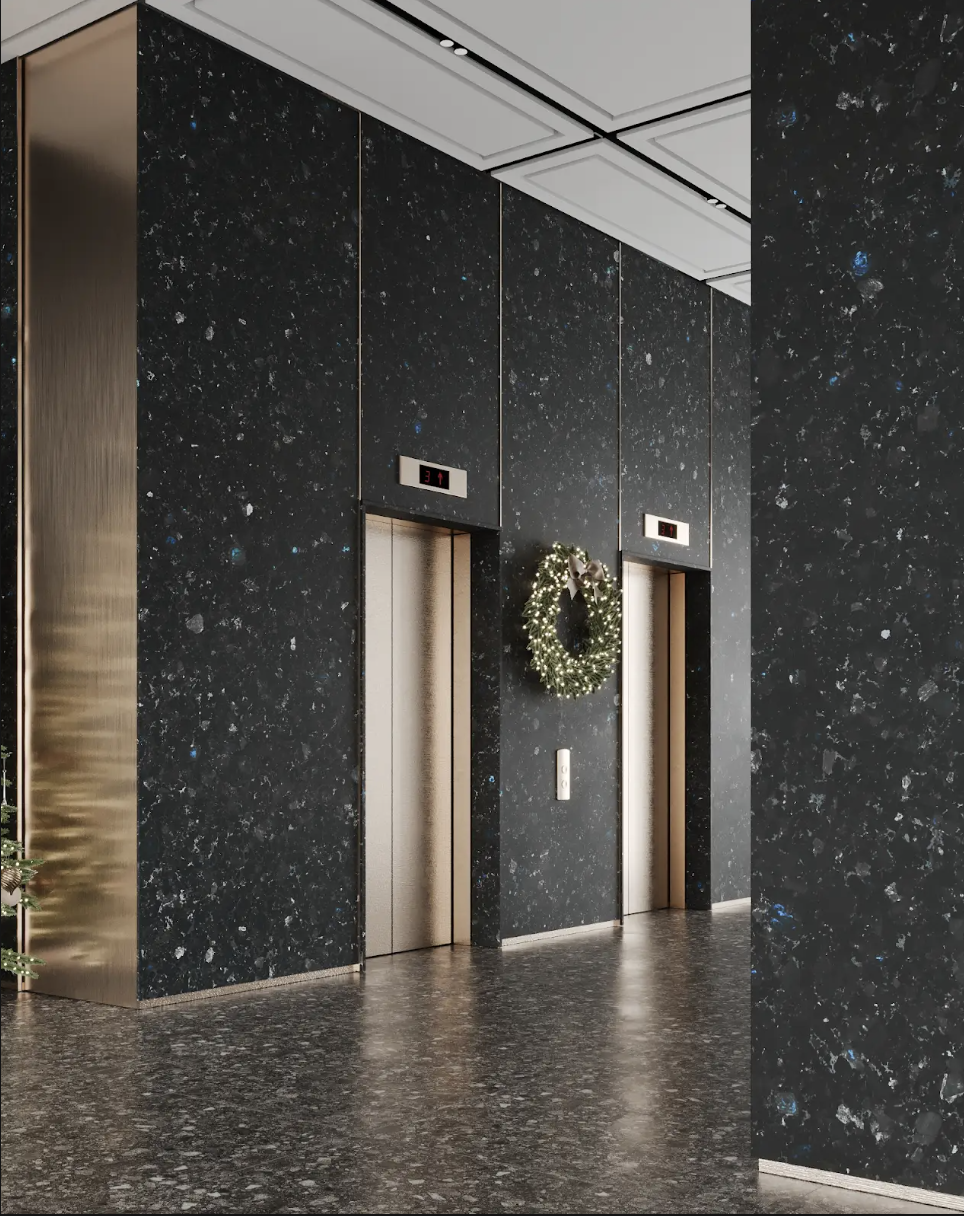
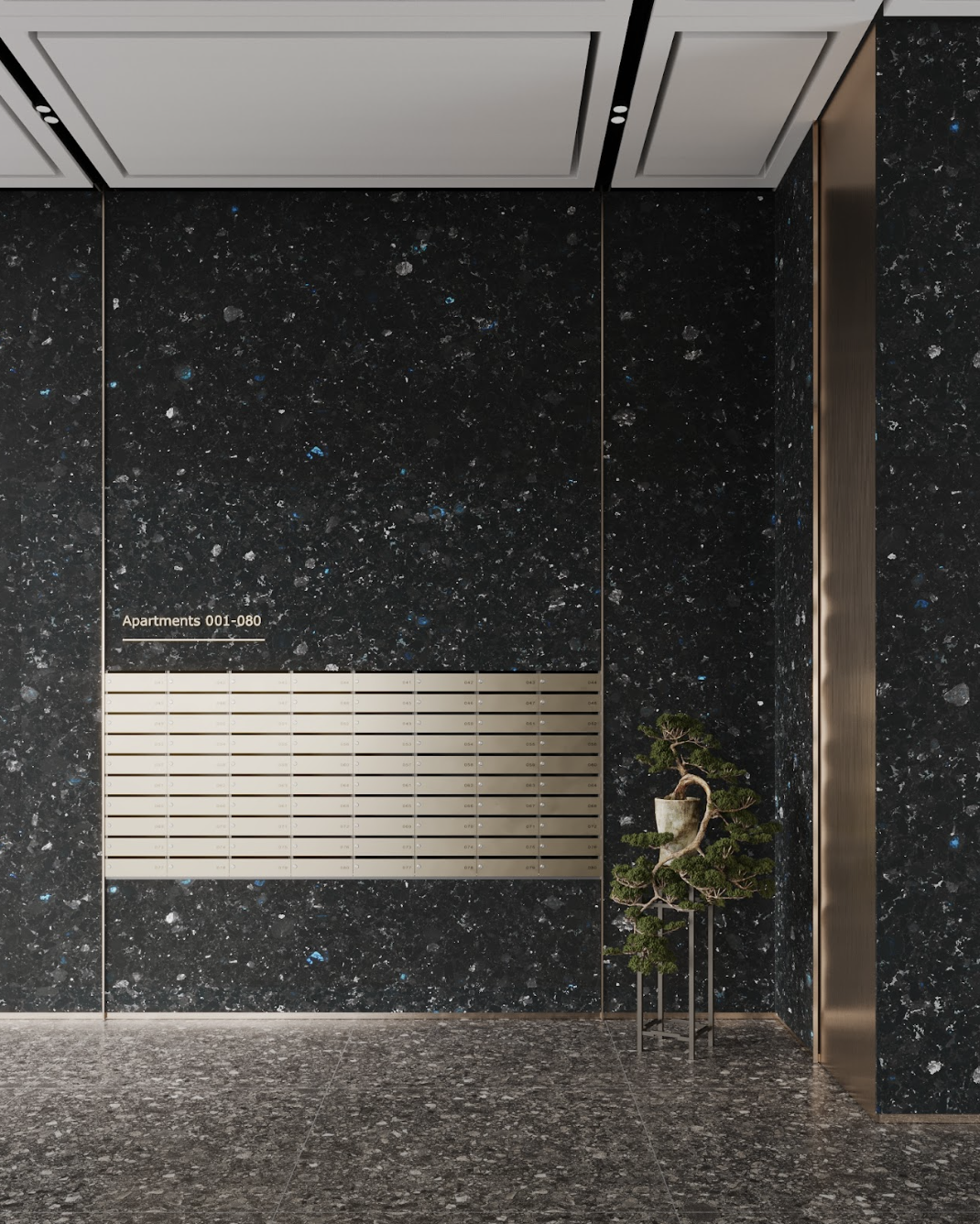
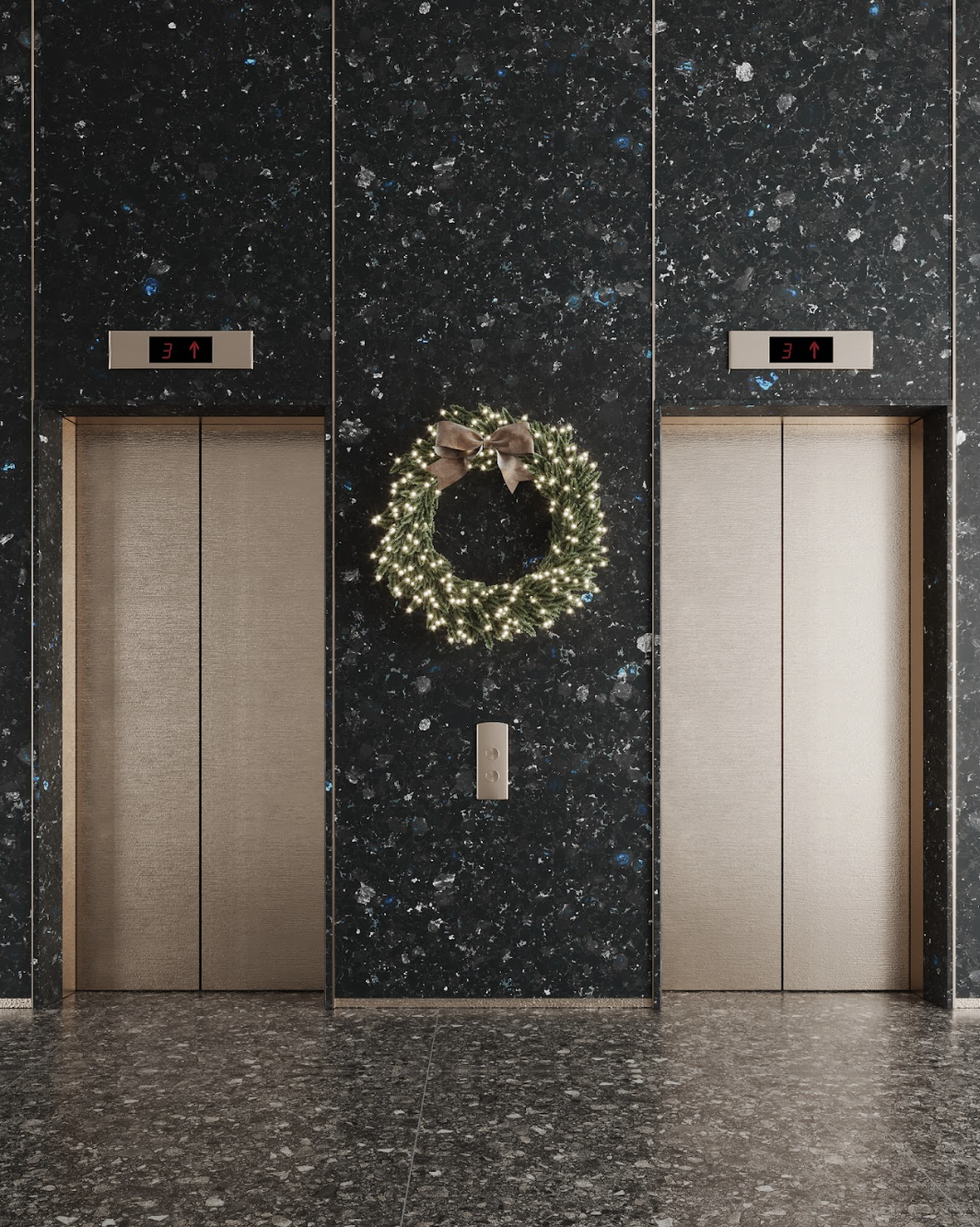
Unique properties of labradorite
Labradorescence: a natural optical effect
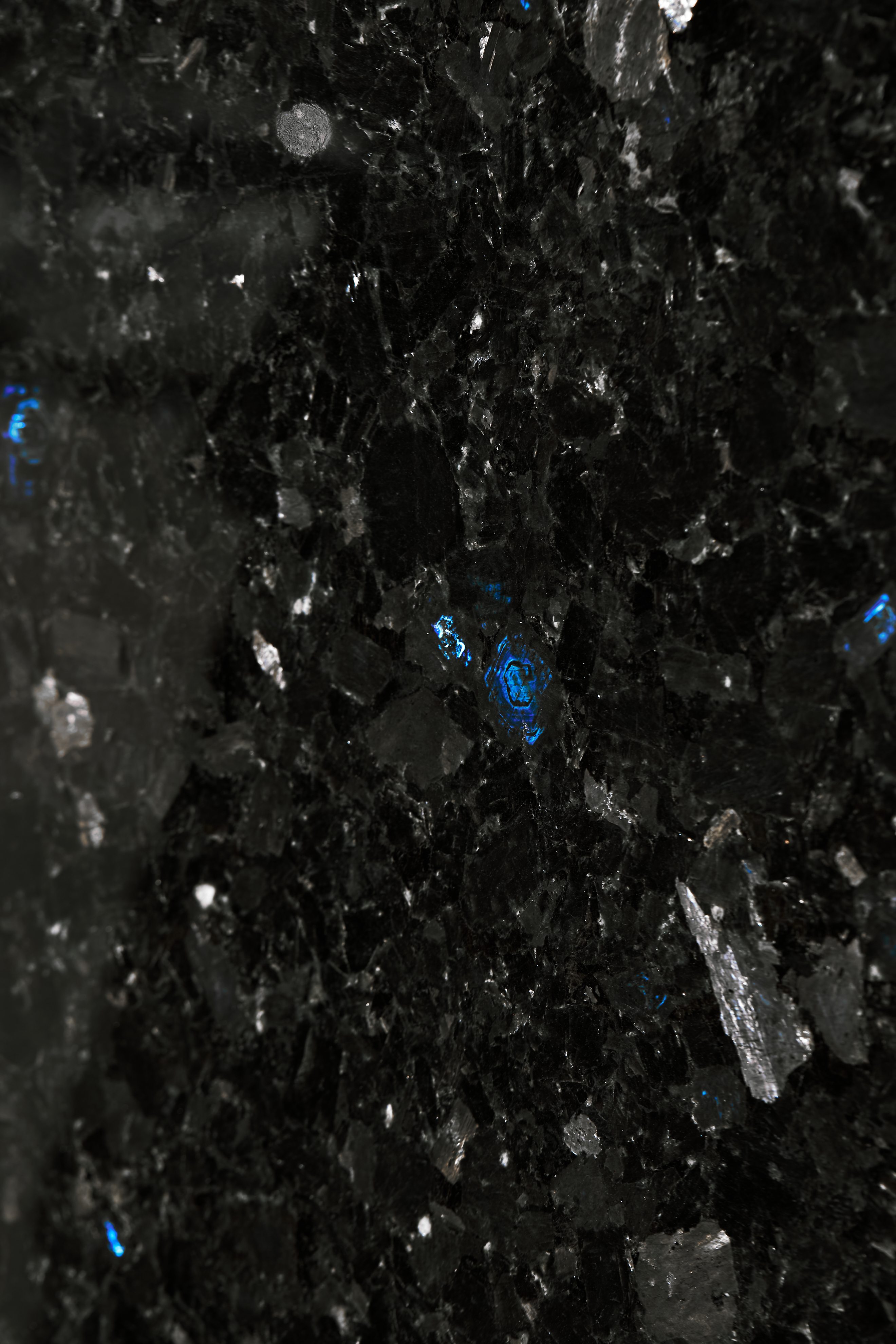
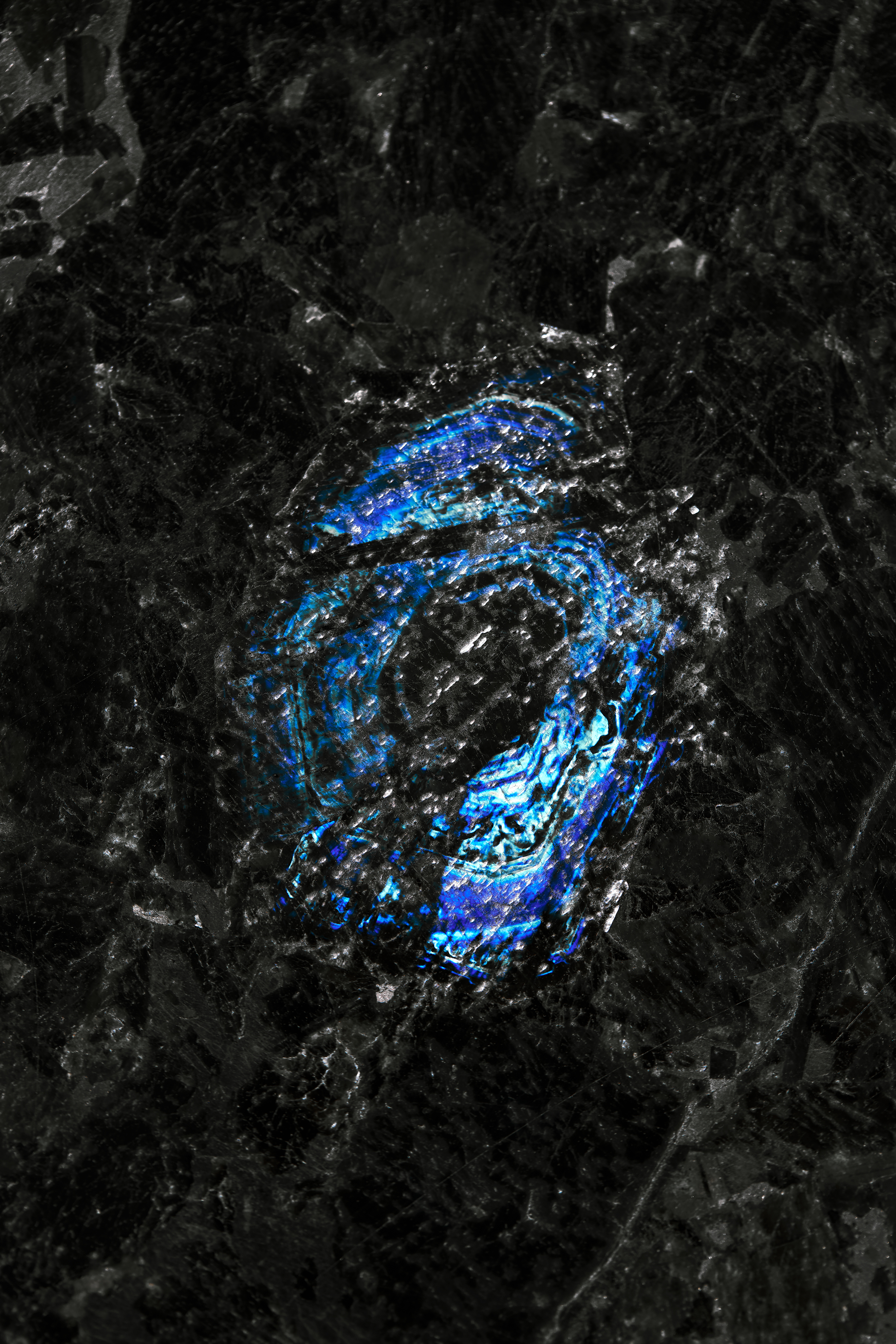
The defining feature of labradorite is labradorescence.
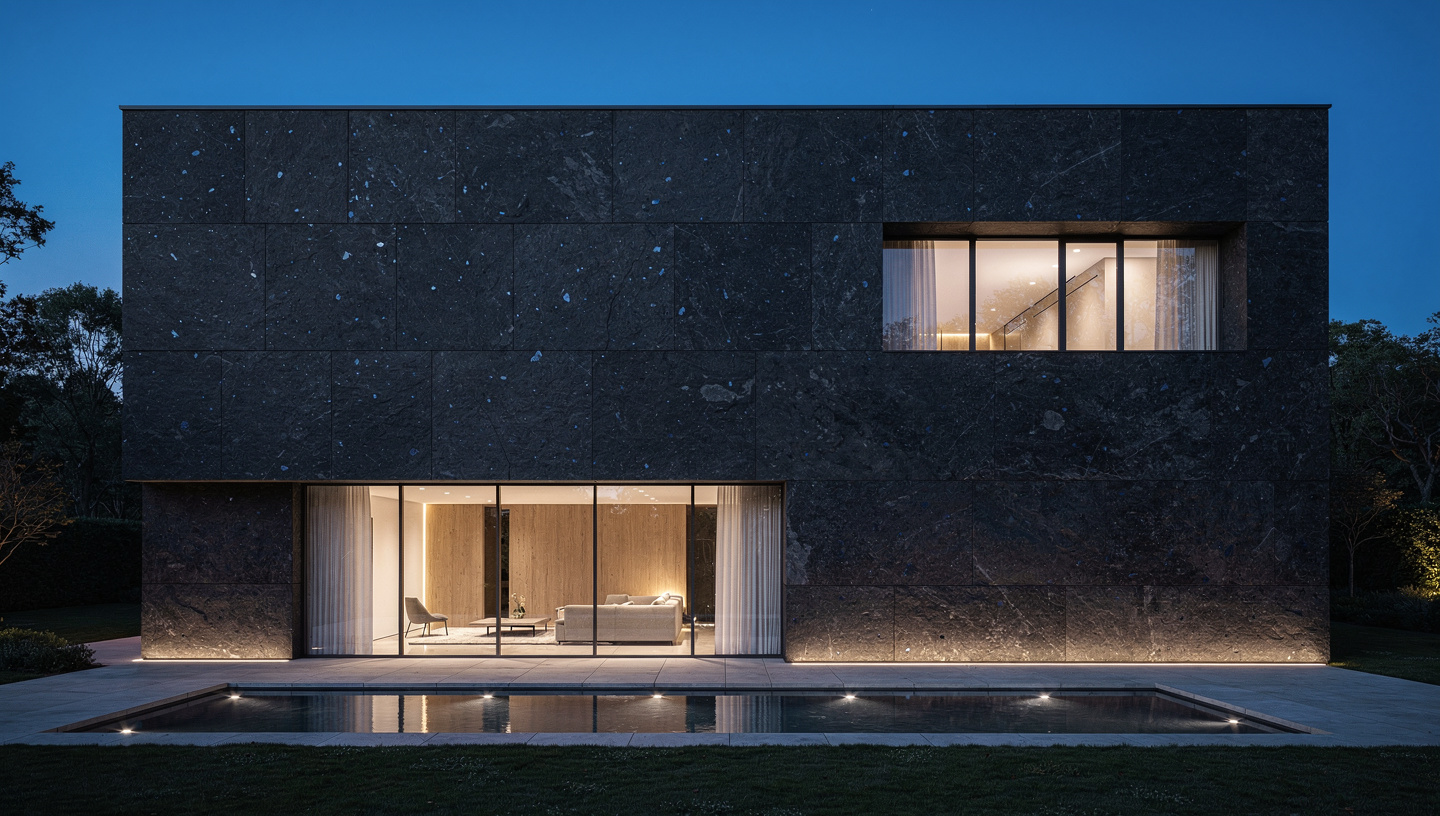
Depending on light and viewing angle, the surface reveals deep blue reflections. This is not a surface finish — it is an internal optical phenomenon.
Light interacts with the mineral structure, creating depth rather than reflection.
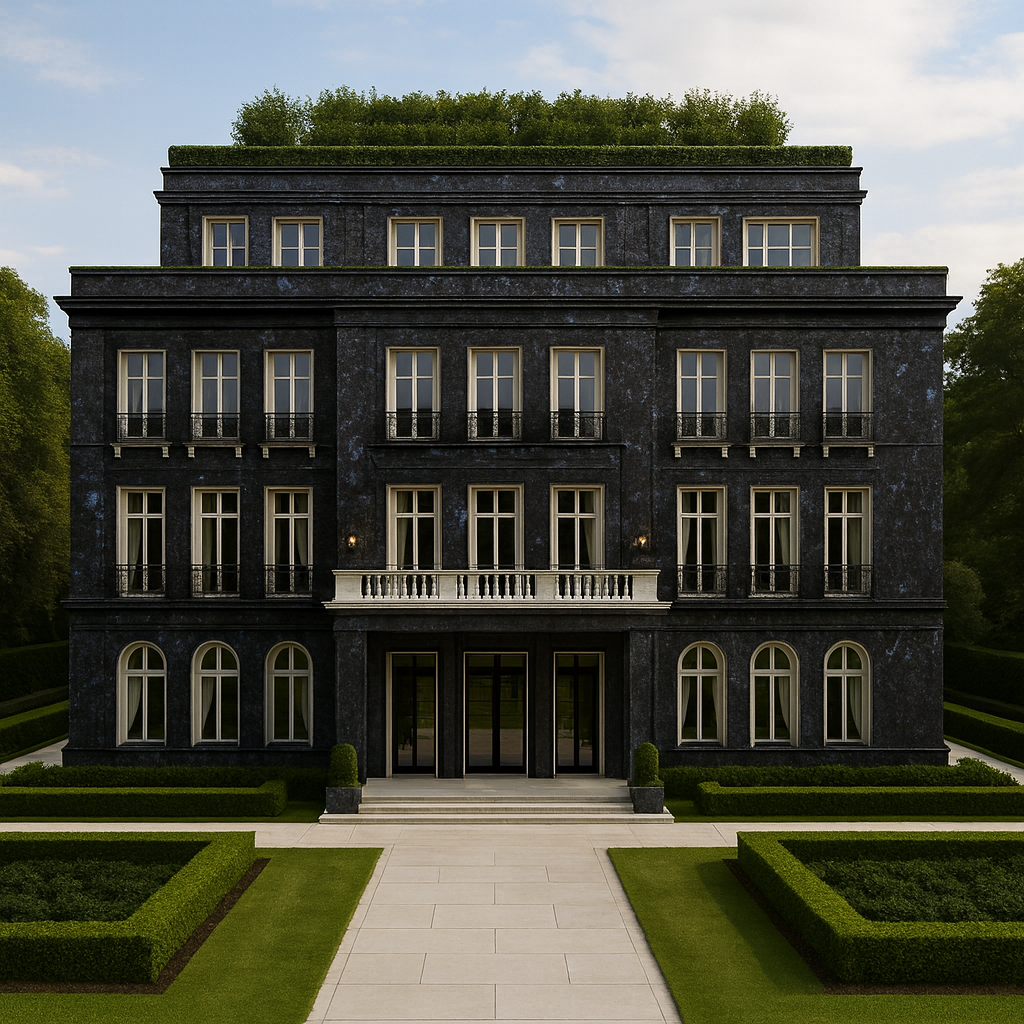
Daytime — restrained graphite tone.
Evening — expressive depth.
Strength meets aesthetics
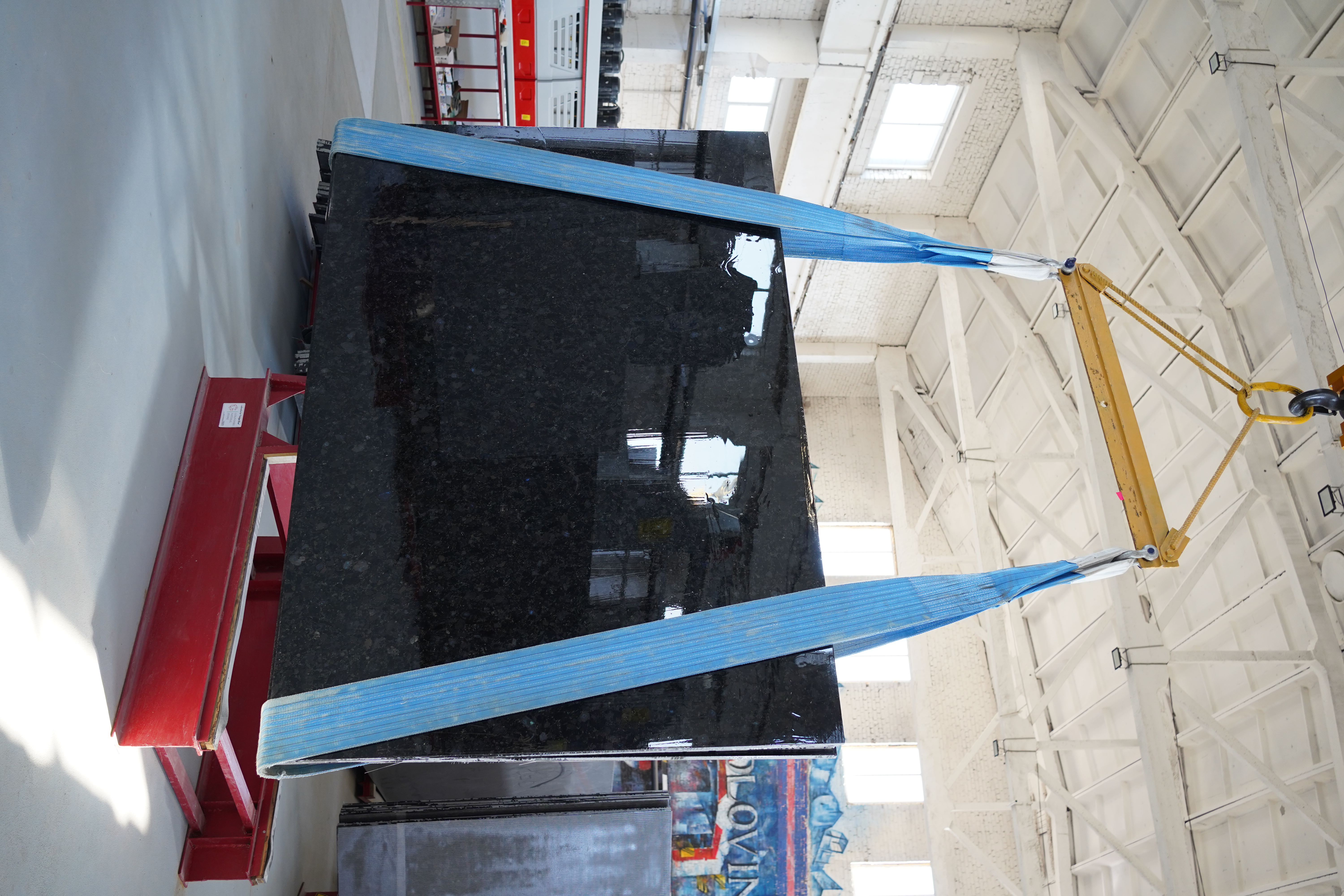
Labradorite combines visual depth with performance.
It offers:
-
high density
-
resistance to mechanical stress
-
long-term stability
Unlike black marble, which can be sensitive in high-use environments, labradorite maintains both structure and appearance over time.
A timeless architectural material
Not all black stone ages equally.
Labradorite maintains:
-
depth of color
-
structural integrity
-
visual relevance
It does not fade into a flat surface. It evolves with light and environment.
Why now is the time for labradorite
Architecture is shifting toward material honesty.
Key trends include:
-
natural materials
-
minimalism
-
spatial depth over decoration
Black natural stone is returning as a central element — but only when it delivers more than color.
Labradorite meets this demand:
-
it enhances geometry
-
it interacts with light
-
it defines space
Labradorite as an Alternative to Black Marble and Granite
In many projects, black natural stone is still associated with marble or granite. However, these materials have their limitations.
Black marble is valued for its expressive pattern, but it often creates visual noise and requires more delicate use. Black granite, on the other hand, appears stable but can feel too uniform and lacks the depth that contemporary architects seek.
Labradorite occupies a different position. It is a black stone that combines structural density with complex visual behavior. Its surface does not overload the space, yet it responds to light, creating a sense of depth.
This is why labradorite is increasingly considered an alternative to black marble and granite in premium projects. It allows architects to achieve a balance between aesthetics and functionality without compromise.
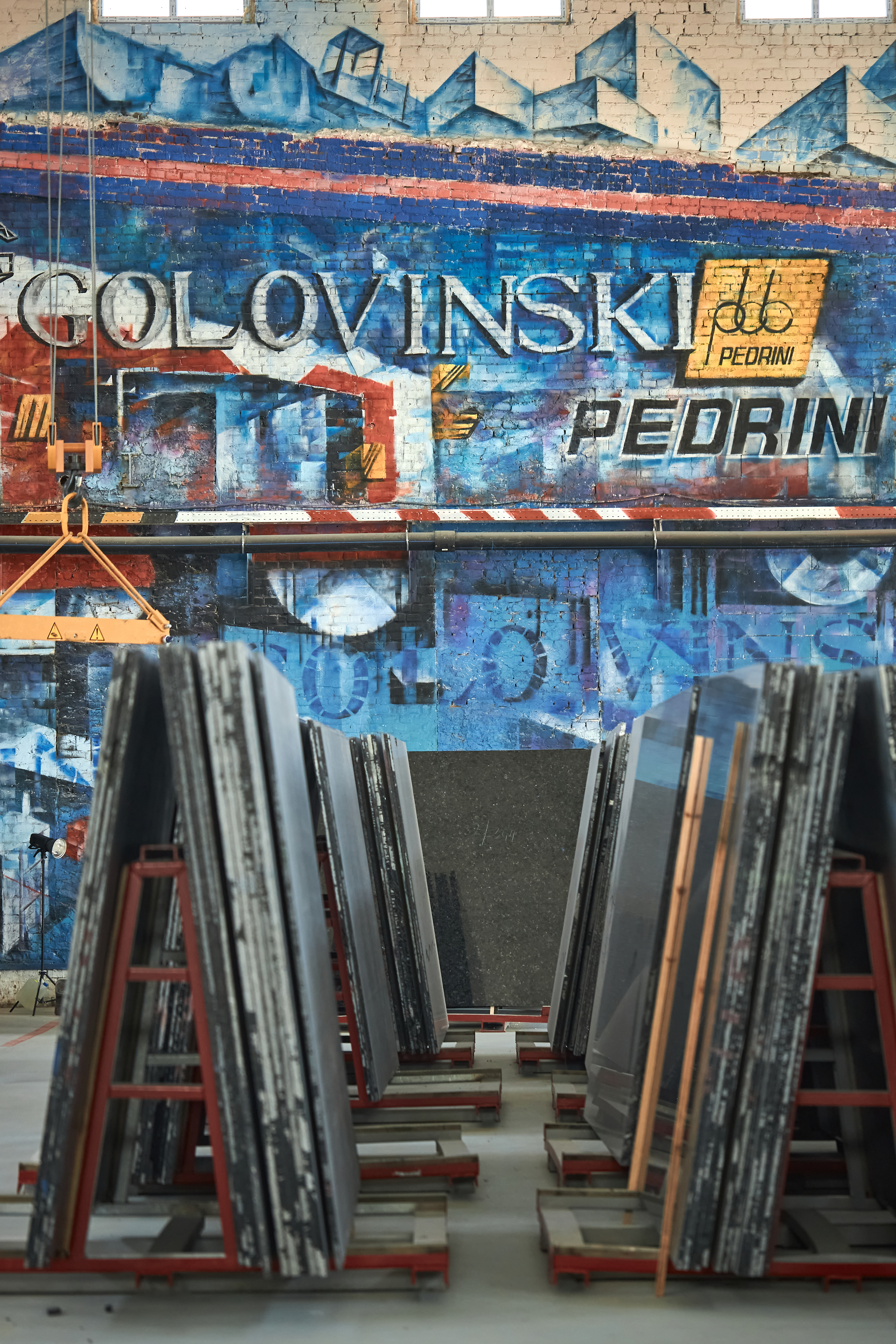
Golovinski — source of premium labradorite
Consistency defines quality in natural stone.
Golovinski provides:
-
controlled extraction
-
stable material characteristics
-
scalability for large projects
Labradorite from Golovinski is positioned for global architectural use.
Black natural stone is no longer limited to granite or marble.
Labradorite introduces a new standard — combining depth, durability, and optical complexity.
It is a material increasingly chosen where architecture demands more than surface. As global demand for black natural stone continues to grow, labradorite is becoming a material of choice for architects seeking depth, durability, and visual precision.