
You might be interesting:

Labradorescence: The Magic of Light in Stone
10 min | 12.02.2026Labradorescence: The Magic of Light in Stone
Volga Blue — The Benchmark of Labradorescence


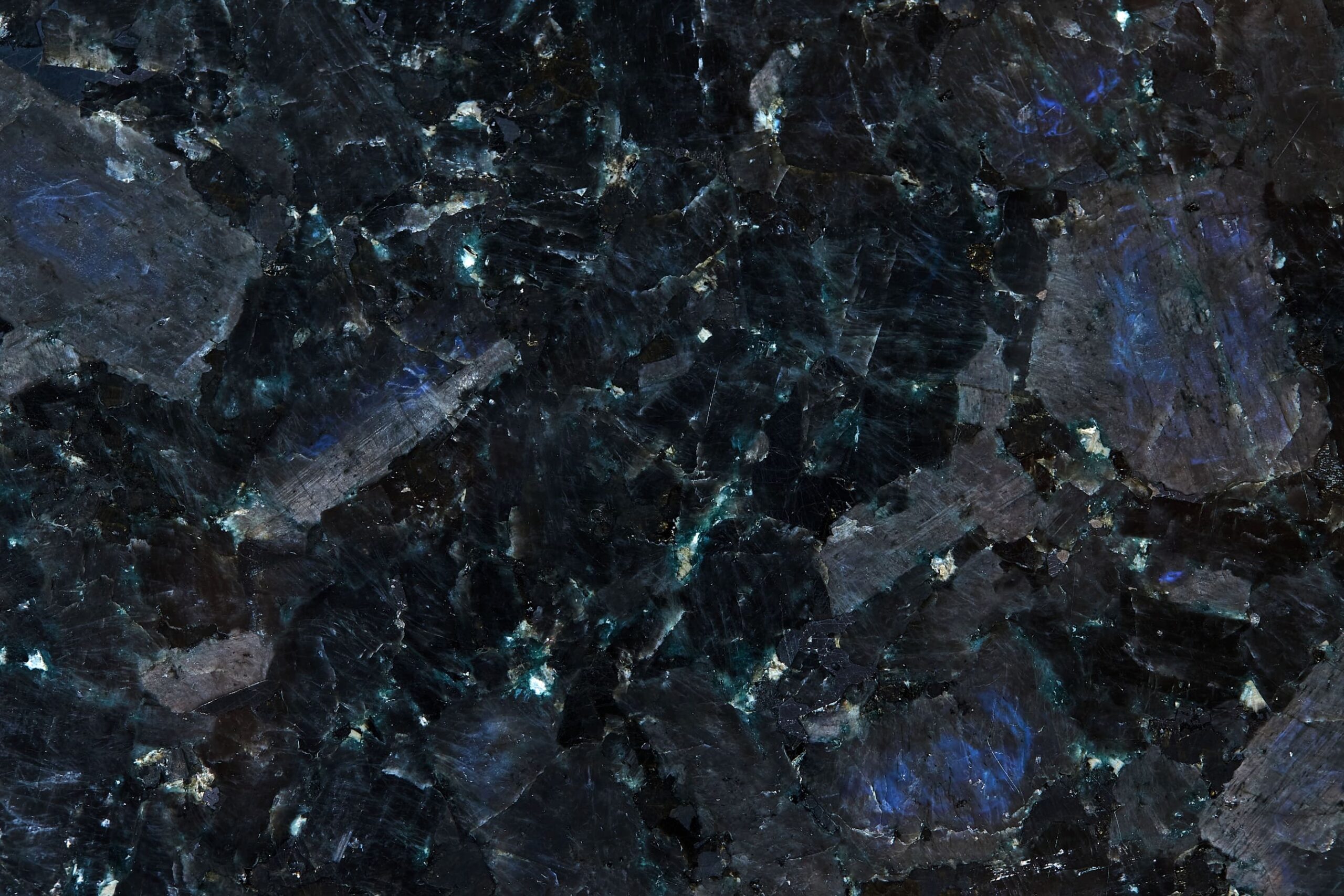
Labradorite Iridescence — Magic in Stone
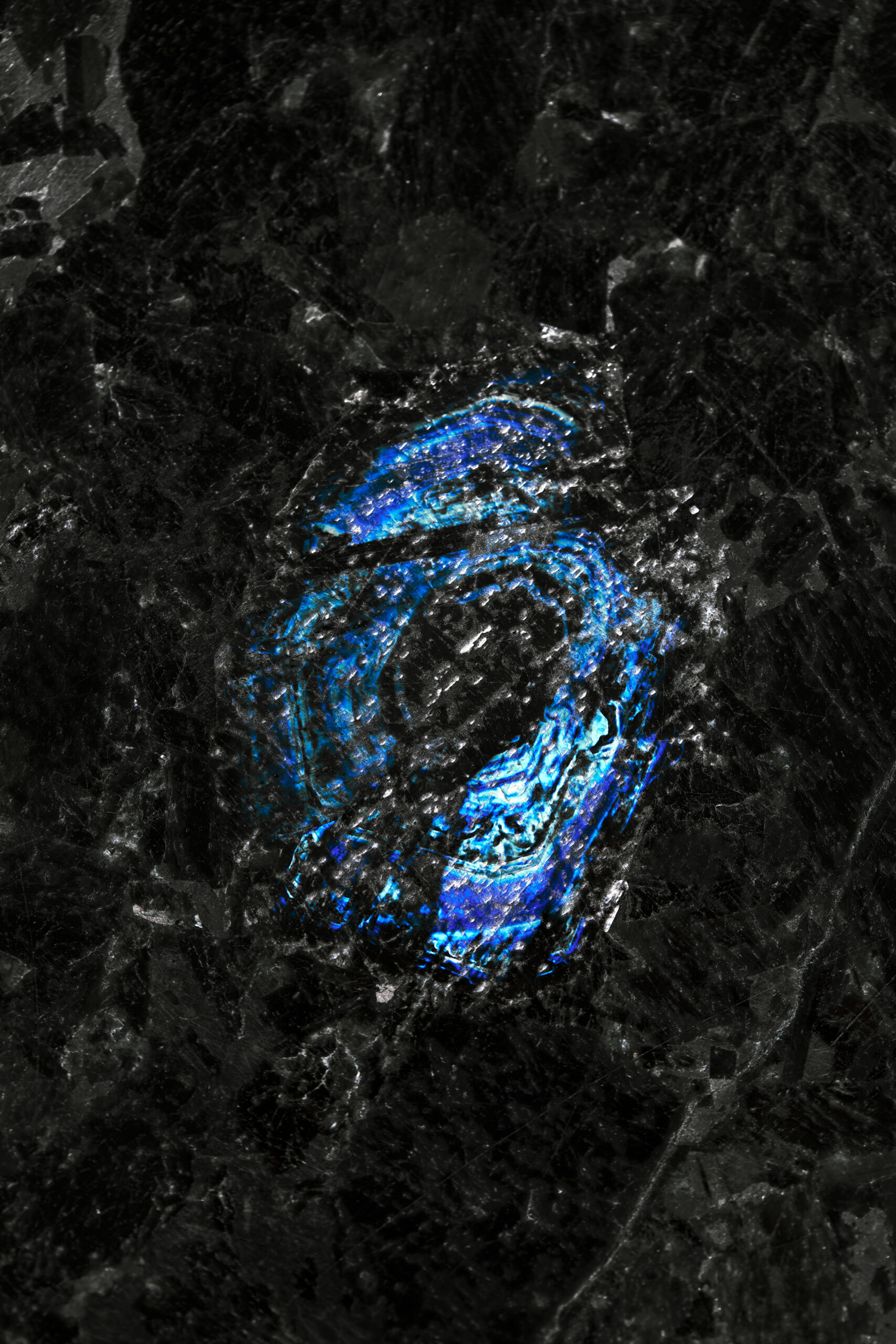
Labradorescence is a unique optical effect that makes labradorite stand out among all natural stones. It is this phenomenon that creates the blue glow of the stone, which changes depending on the lighting angle. The stone seems to “come alive” — dark in one position, then suddenly flashing deep blue or green light in another.
This labradorite effect cannot be painted or artificially recreated. It is a natural phenomenon formed over millions of years. And it is precisely what makes Volga Blue one of the most valuable varieties of labradorite in the world.
The Science Behind the Beauty
Labradorescence looks like magic, but it has a clear physical explanation. The stone does not glow on its own — it interacts with light in a unique way.
Light Interference – when light hits the surface of labradorite, part of it penetrates into the stone. Inside, it reflects from thin internal layers of the mineral. The light waves overlap, creating the optical effect we see as shimmering reflections.
That is why the play of light in stone depends on:
-
the viewing angle,
-
the direction of light,
-
the quality of polishing,
-
the internal mineral structure.
Crystal Microstructure: Inside labradorite there are extremely thin natural layers. They are invisible to the naked eye, yet they create the labradorite effect.
The more uniform and well-formed these layers are, the stronger the optical effect. At the Volga Blue deposit, the mineral structure is especially stable, which is why the reflections appear deep and pure.
Color Spectrum
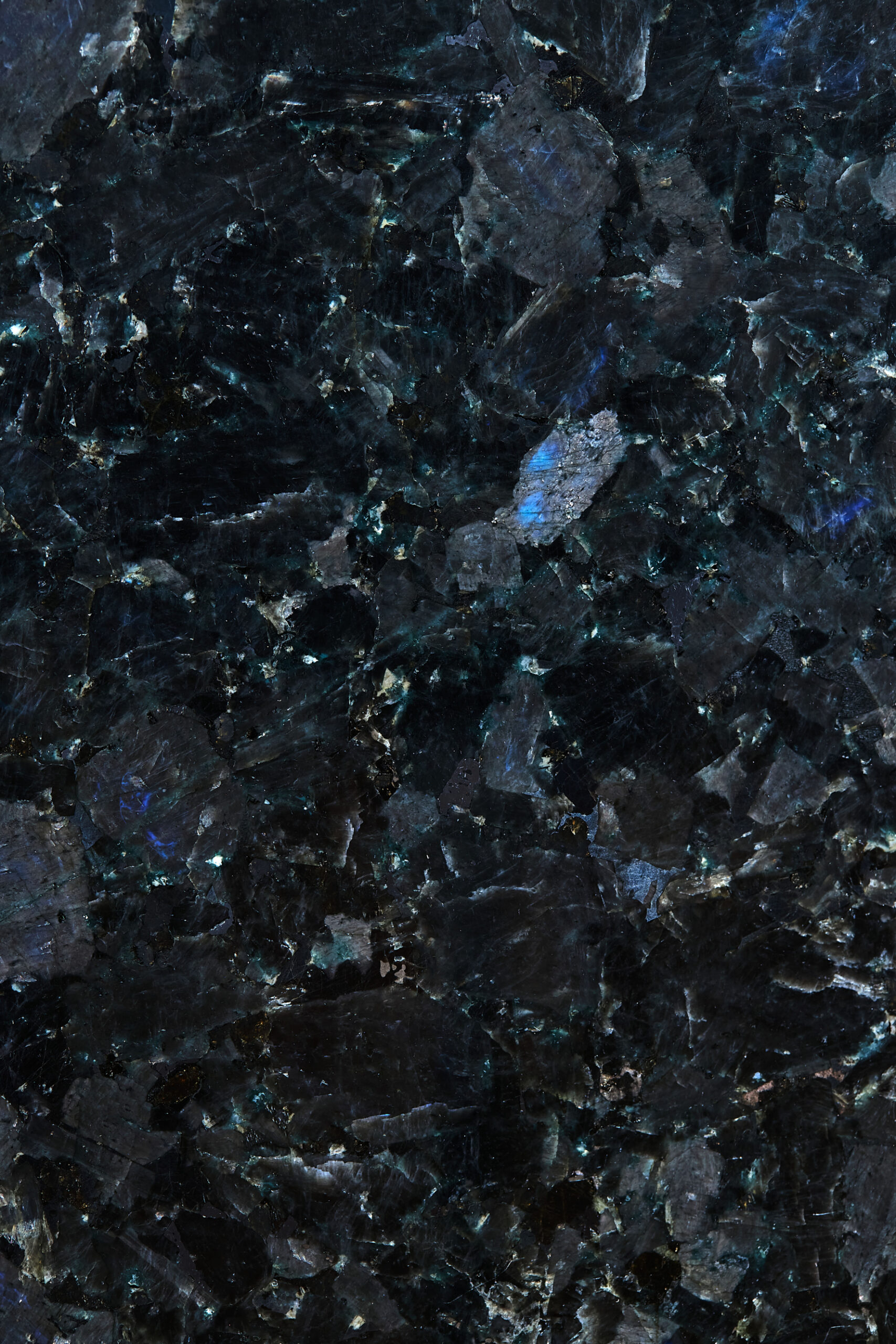
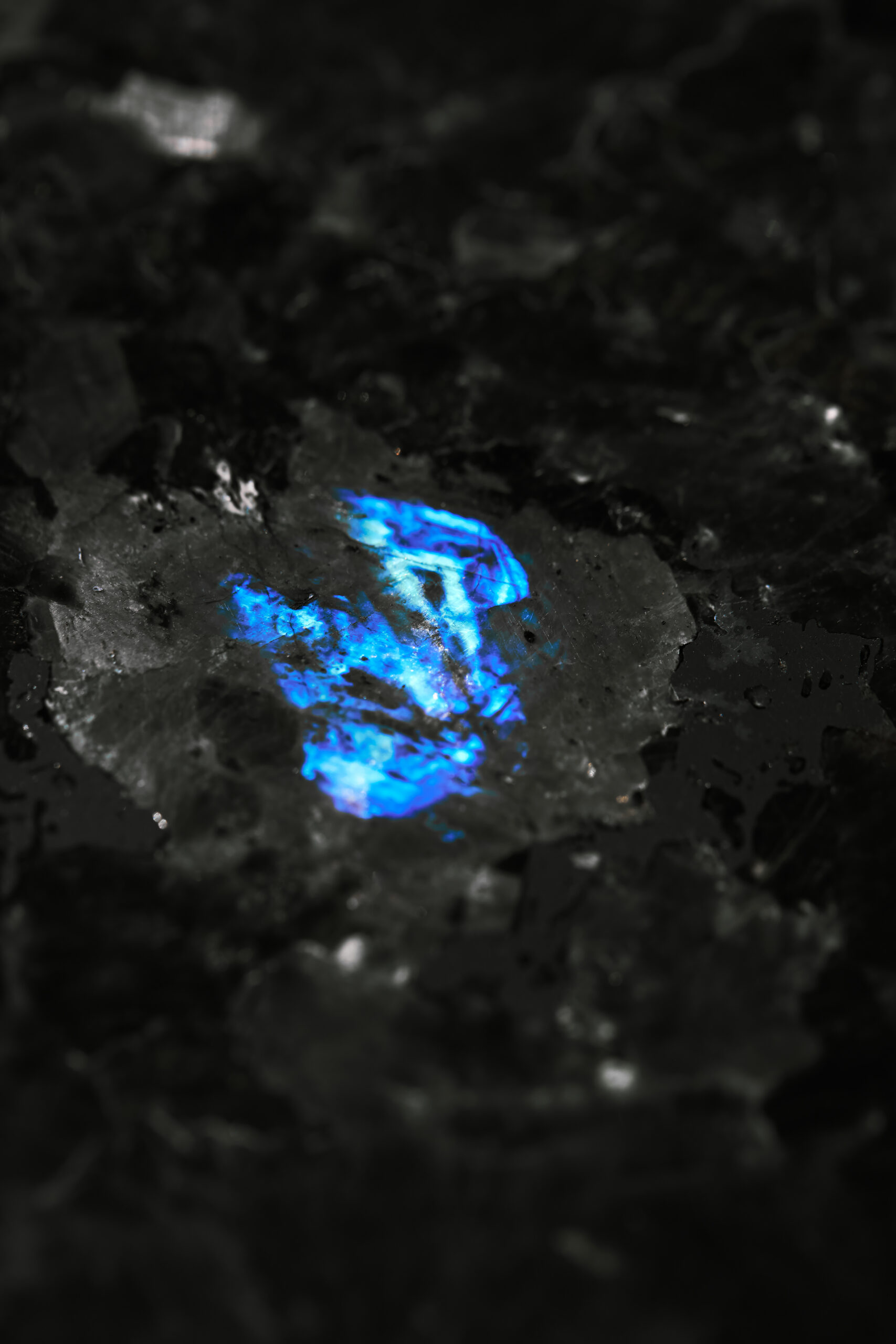
Labradorite can display various colors, but blue is considered the most valuable.
The deep blue glow of the stone is a sign of premium quality. In Volga Blue, the blue reflections are rich, highly contrasted, and clearly visible even on large slabs.
It is this blue tone that creates the dramatic effect so valued by designers. The stone appears deep, almost cosmic.
Green and Gold
In addition to blue, labradorite may also display:
-
green reflections,
-
golden flashes,
-
combined color tones.
Sometimes several shades appear within a single fragment. This makes every slab unique — no two surfaces are identical.
How to Use the Effect in Design
Labradorescence is not just a property of stone. It is a powerful design tool for creating a striking visual impact.
Lighting and Angles
To fully reveal the play of light in stone, lighting must be properly arranged.
Best results are achieved with:
-
directional light at an angle,
-
warm or neutral LED lighting,
-
large uninterrupted surfaces.
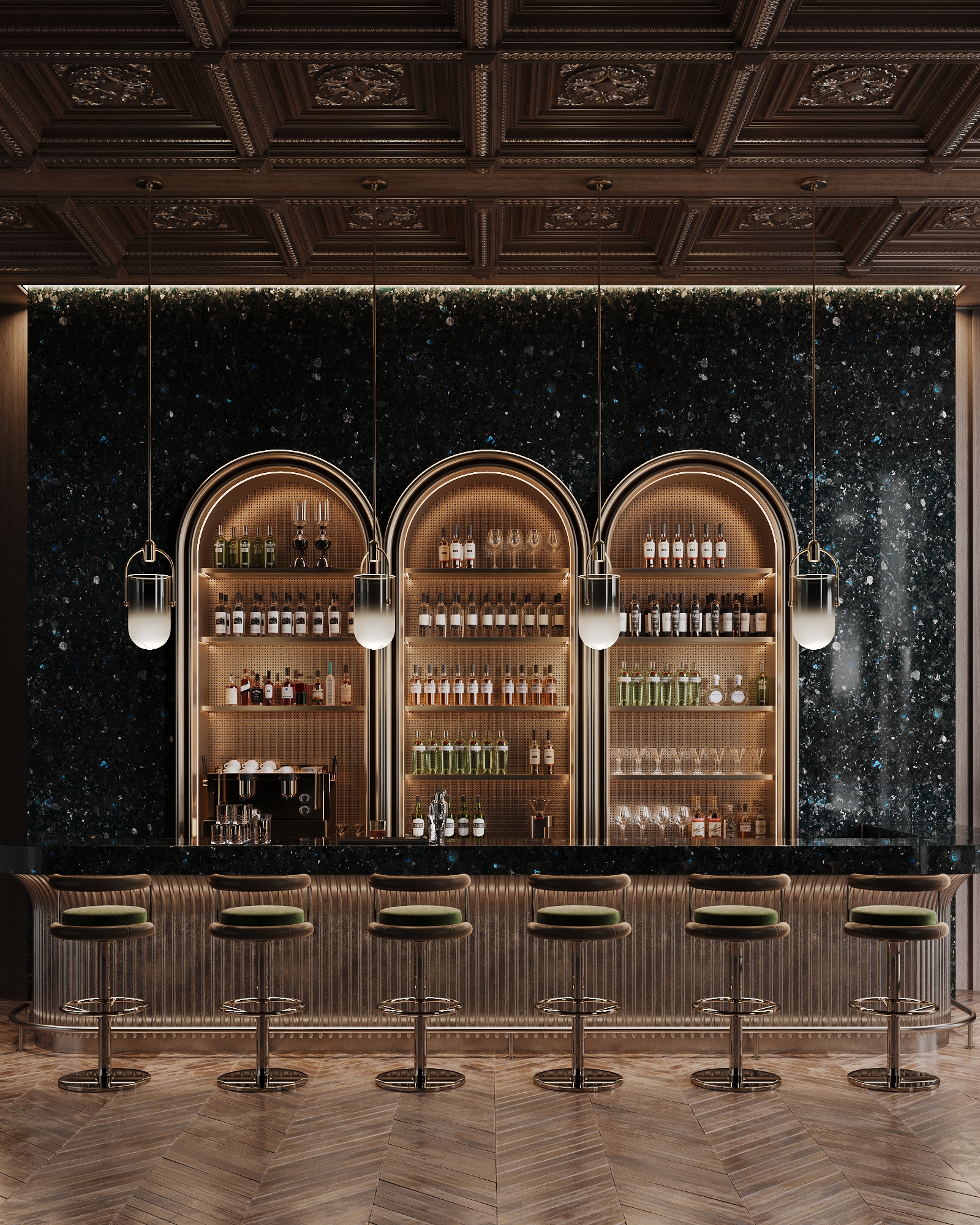
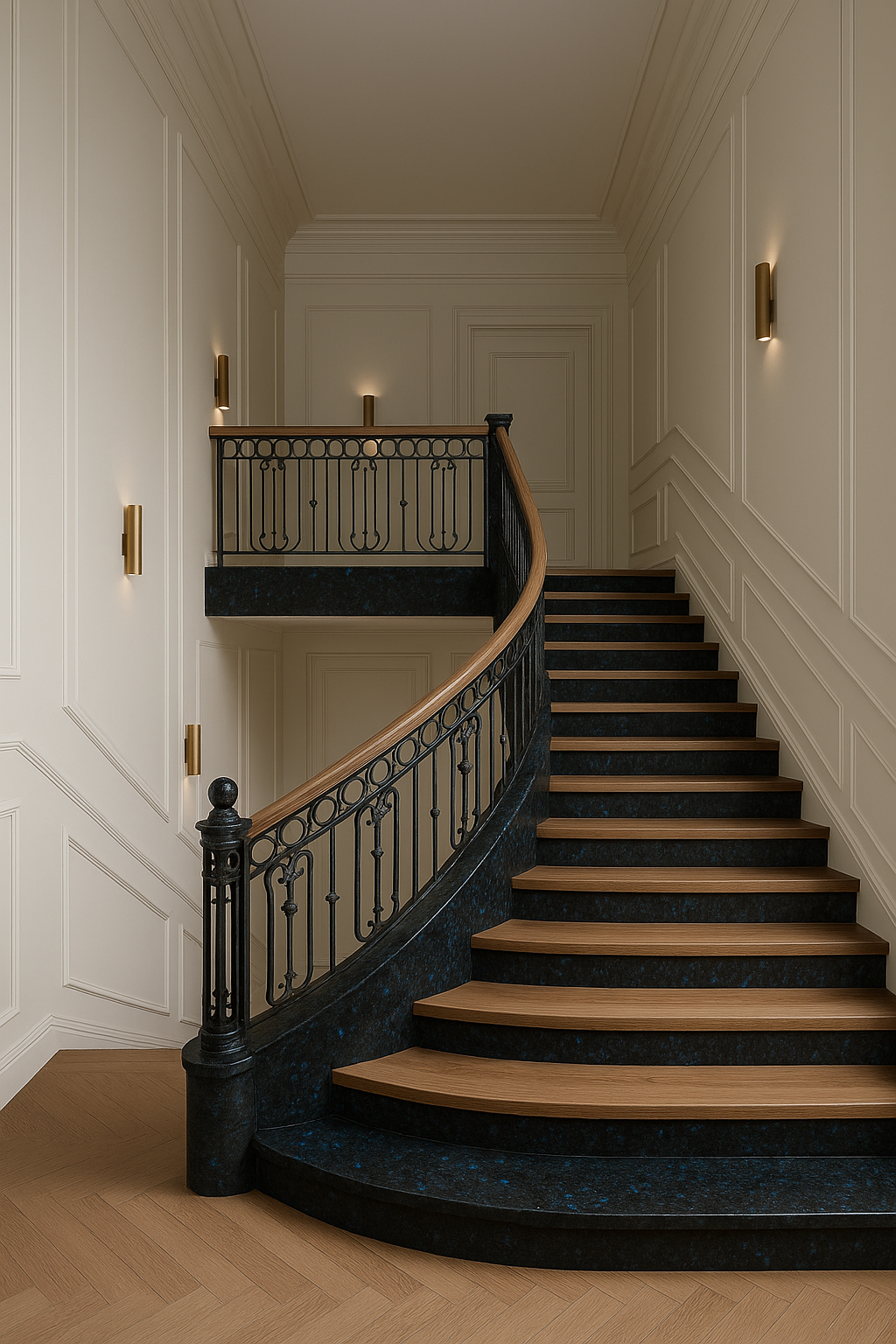
Volga Blue looks especially impressive in:
-
kitchen islands,
-
wall panels,
-
fireplace portals,
-
bar counters,
-
staircases.
In dark interiors, the blue glow of the stone becomes the main visual accent of the space.

Volga Blue — The Benchmark of Labradorescence
Labradorite deposits exist in various countries, but Volga Blue from the Golovinski deposit stands out for the depth of its reflections.
Extraction
The stone is extracted in large blocks. This preserves the natural structure and allows production of large slabs up to 3×2 meters. The larger the surface, the more powerful the optical effect.
Block selection takes into account:
-
intensity of labradorescence,
-
purity of the blue tone,
-
structural uniformity.
Processing
The labradorite effect directly depends on processing quality. If the cutting direction is chosen correctly and polishing is performed properly, the reflections become deeper.
A polished surface allows light to penetrate into the stone and maximizes the blue glow effect.
Why Labradorescence Is So Highly Valued
Labradorite is not just a finishing material. It is a stone with character.
Its main feature is the play of light in stone, which changes throughout the day. In the morning it appears restrained, in the evening — dramatic. In different interiors, it reveals itself differently.
The optical effect makes the surface feel alive. That is why Volga Blue is often used in premium projects where emotion matters as much as functionality. Labradorescence is a natural phenomenon that combines the physics of light with the beauty of stone.
The blue glow of the stone, the labradorite effect, the dynamic play of light in stone and the deep optical effect — all of this results from the mineral’s unique structure and millions of years of geological processes.
Volga Blue is an example of how nature creates a material that requires no additional decoration. Light itself makes it the main accent of the space. And that is the true magic of labradorescence.