
You might be interesting:

Black Stone for Facades — Architecture of a New Generation
10 min | 09.02.2026Black Stone for Facades — Architecture of a New Generation
The power of form. The depth of material. The architecture of the future.


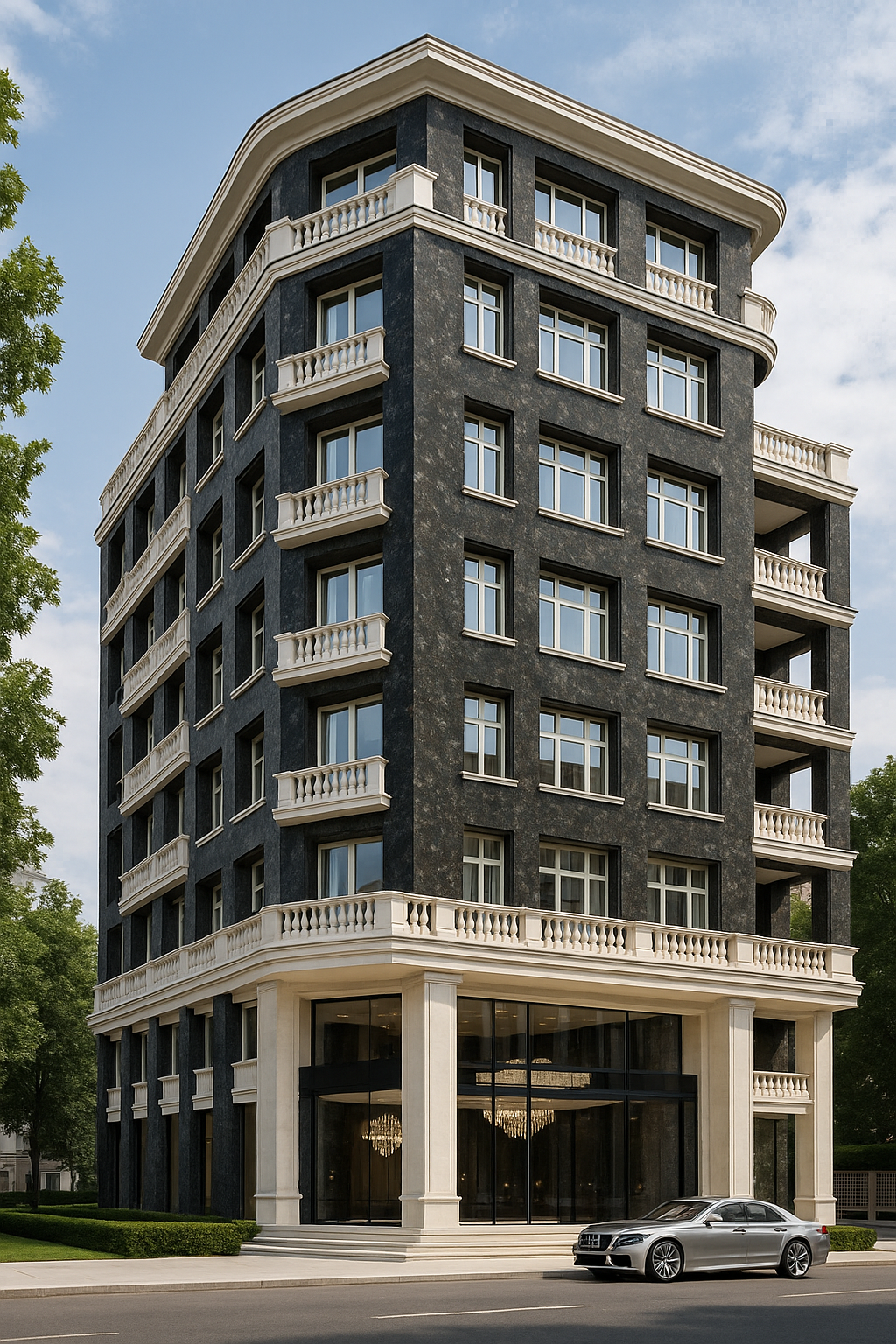

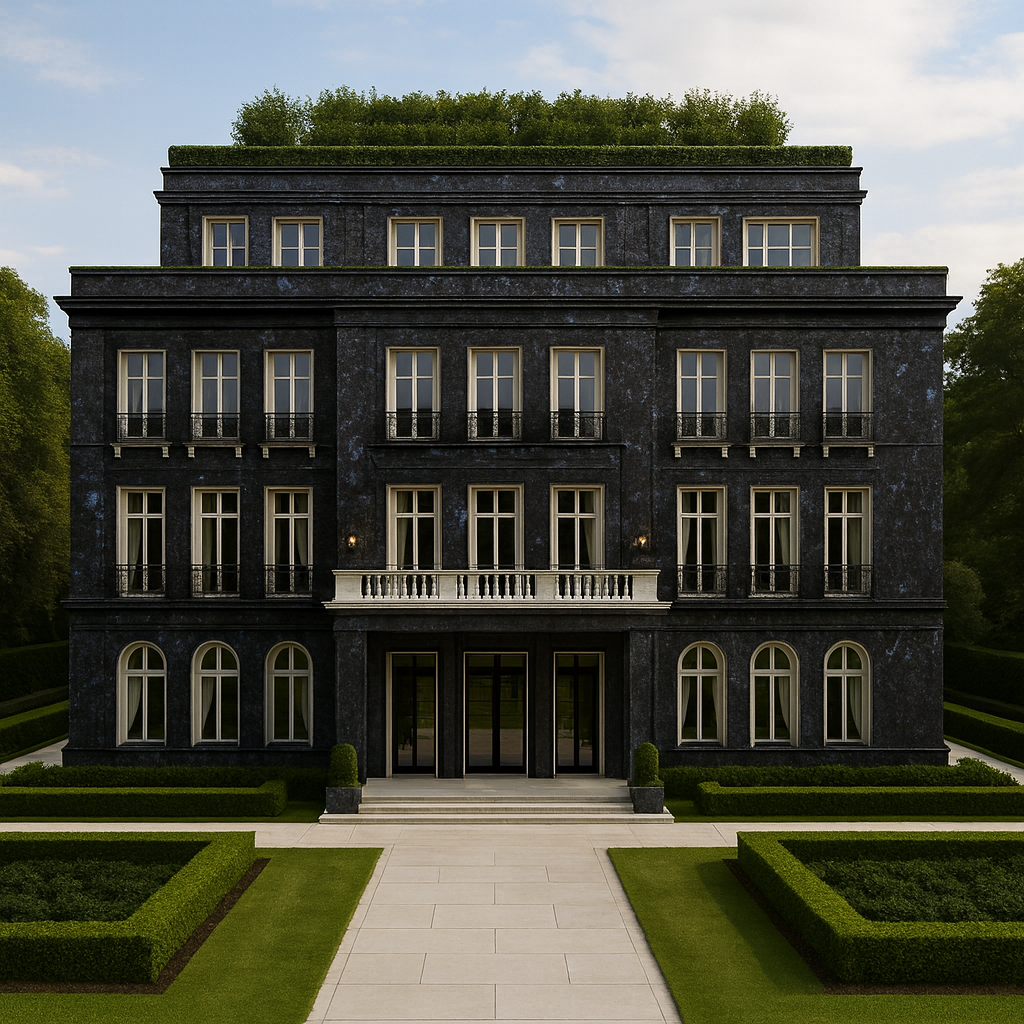
Black Stone for Facades — Architecture of a New Generation
Modern architecture increasingly speaks the language of materials. Among them, black stone for facades has become a true symbol of a new generation of buildings — restrained, monumental, and confident. It doesn’t shout, yet it draws attention. It doesn’t try to please, but it commands respect.
Such a material is Volga Blue labradorite — a stone that architects often refer to as black granite, emphasizing its strength, durability, and status. On a facade, it works as a statement: of taste, project level, and the ambitions of the client.
This article explores why dark stone facades have become an architectural classic of the 21st century, how labradorite is used in exterior architecture, and why a premium facade today increasingly begins with Volga Blue.
Black Facades as the Language of Contemporary Architecture
Architecture no longer strives to decorate — it strives to be honest. Clear forms, simple lines, well-considered proportions. In this context, black stone for facades becomes the ideal architectural tool.
A dark facade:
-
emphasizes the geometry of the building
-
adds depth and monumentality
-
works perfectly with scale
-
remains relevant over time
That is why black granite facades (in professional terms — dark igneous stone) are widely used in private residences, business centers, hotels, and cultural or public buildings.
Labradorite — The “Black Granite” Architects Choose
In practice, when architects refer to black granite facades, they often mean labradorite. This is not a marketing trick, but a professional generalization: labradorite belongs to durable igneous stones and performs exceptionally well in exterior applications.
A labradorite facade offers:
-
high strength
-
resistance to moisture and temperature fluctuations
-
color stability
-
a noble dark texture
Most importantly, it has a unique visual quality — a blue iridescent shimmer that appears under light. This effect brings the facade to life and distinguishes Volga Blue from any artificial material.
Volga Blue: A Stone with Ukrainian Origins and Global Recognition
Volga Blue labradorite is quarried in Ukraine, at the Holovynske labradorite deposit. It is one of the most renowned labradorite deposits in Europe, valued for its decorative stone with pronounced iridescence.
Crucially, the entire process — from extraction to processing — is controlled by the manufacturer. In particular, Golovinski works with Volga Blue as an architectural material, not merely as cladding stone.
This ensures:
-
stable material characteristics
-
predictable facade results
-
the ability to work with large formats
-
consistent quality from slab to slab
For architecture, this level of control is essential.
Why Volga Blue Is Ideal for Facades
Frost Resistance and Climate Stability
One of the key requirements for exterior materials is frost resistance. Volga Blue labradorite has a F100+ frost resistance rating, meaning it withstands repeated freeze–thaw cycles.
This makes it suitable for:
-
private houses
-
multi-story residential buildings
-
public and commercial projects
-
climates with cold winters
Resistance to Moisture and Time
A dark stone facade must not only look impressive at installation but also retain its appearance for decades. Labradorite resists rain, snow, and UV exposure and does not fade like paints or composite materials.
Strength and Safety
The stone handles structural loads well, does not deform, and is suitable for ventilated facade systems.
Black Stone Facades: The Aesthetics of Scale
On a facade, labradorite works not as simple “cladding” but as a true architectural element. It shapes the identity of the building.
Where Volga Blue Performs Best
-
Private residences — restrained luxury without excess
-
Business centers — status and confidence
-
Hotels and resorts — premium appeal and recognizability
-
Cultural buildings — monumentality and longevity
Dark stone pairs perfectly with:
-
glass
-
concrete
-
metal
-
natural wood
This makes it a universal tool in contemporary architecture.
Formats and Finishes: How Stone Works on Facades
For facades, labradorite is available in several finishes:
-
Thermal finish — matte, slip-resistant surface with expressive texture
-
Honed finish — restrained, architectural appearance
-
Polished finish — for accent areas and details
Slab format also matters. Large-format slabs reduce visible joints and create a monolithic look — exactly what defines a premium facade.
Labradorite as a Continuation of the Interior
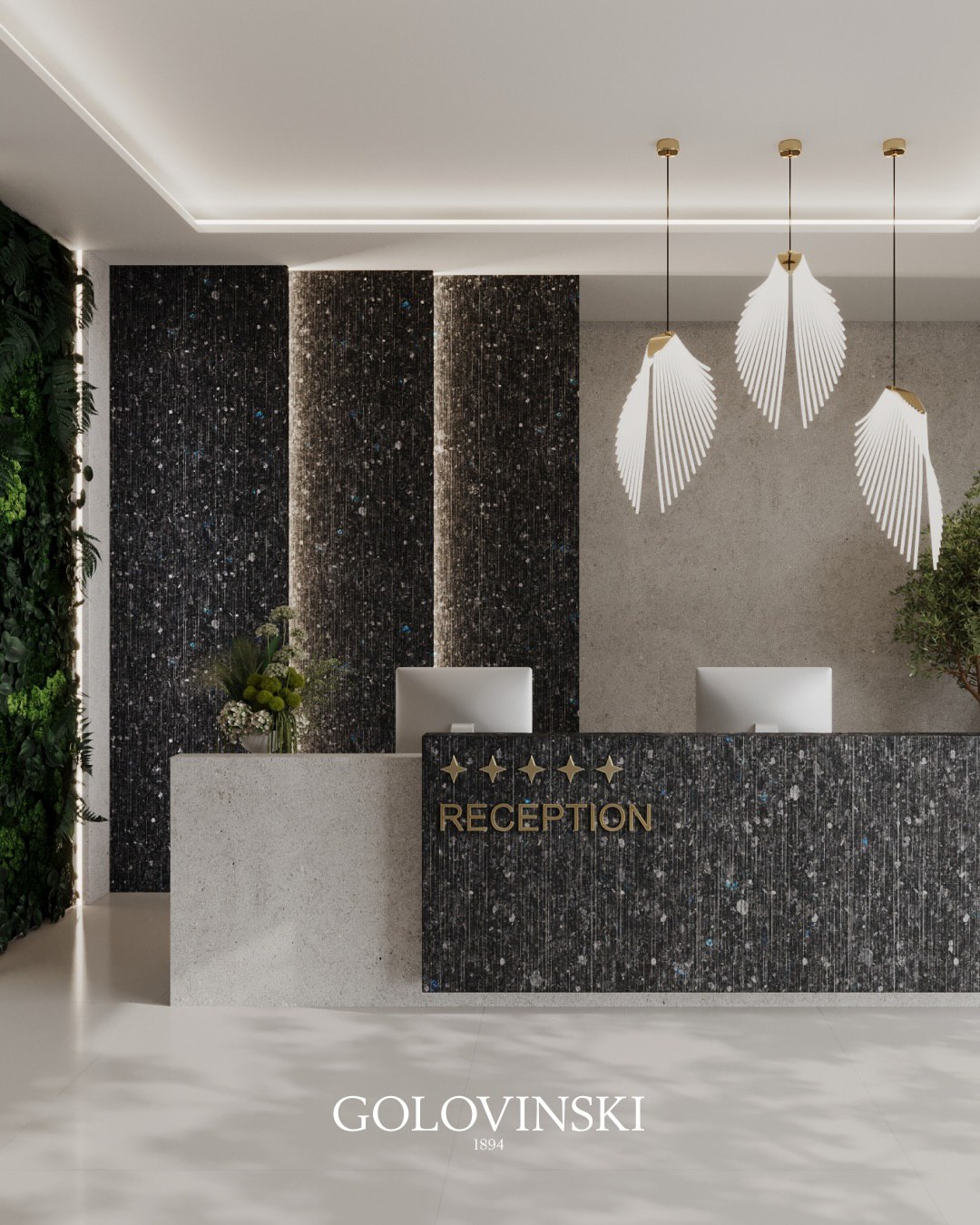
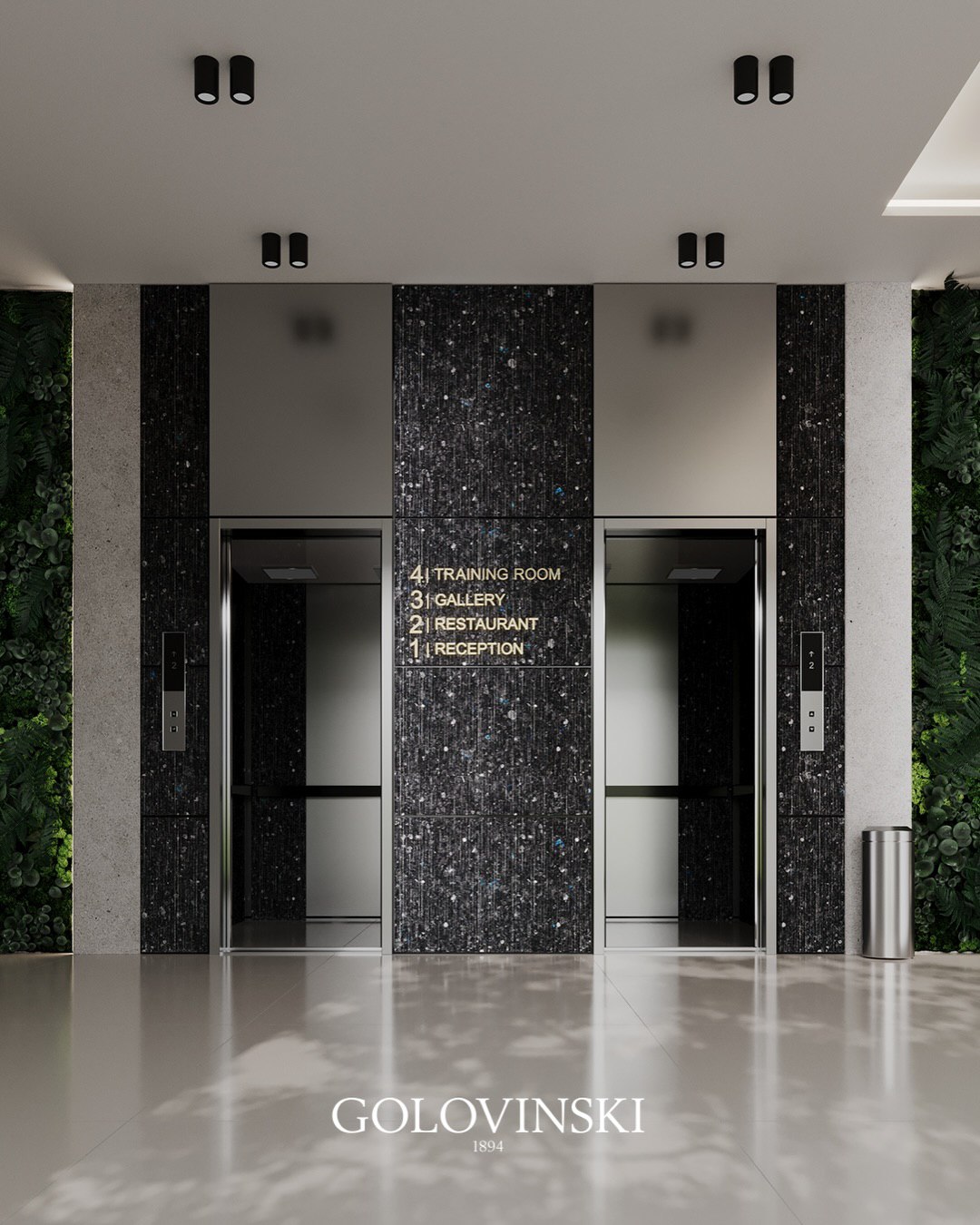
A strong architectural approach is when the material flows from the facade into the interior. Volga Blue labradorite is often used in:
-
entrance groups
-
lobbies
-
staircases
-
reception areas
This creates a cohesive architectural concept and strengthens the overall impression of the building.

Why Architects Choose Labradorite for Facades
The expert assessment is simple:
Labradorite on a facade is a statement of status.
The stone architects call black granite creates buildings that impress with scale and elegance.
It:
-
does not follow short-term trends
-
does not lose relevance
-
looks expensive without decoration
-
performs reliably for decades
How to Choose Black Stone for a Facade
A few practical recommendations:
-
choose stone with verified origin
-
confirm frost resistance and finish type
-
work with large formats
-
plan the fastening system carefully
-
involve the manufacturer at the design stage
The facade is the face of a building. Mistakes here are costly.
Black stone for facades is the choice of next-generation architecture. Volga Blue labradorite combines strength, F100+ frost resistance, deep aesthetics, and a truly premium appearance.
It is not just cladding.
It is an architectural statement.
It is a premium facade that enhances a building’s image for decades.