
You might be interesting:

Labradorescence and Artificial Lighting: How to Illuminate Black Stone
10 min | 28.04.2026Labradorescence and Artificial Lighting: How to Illuminate Black Stone
Lighting and labradorescence


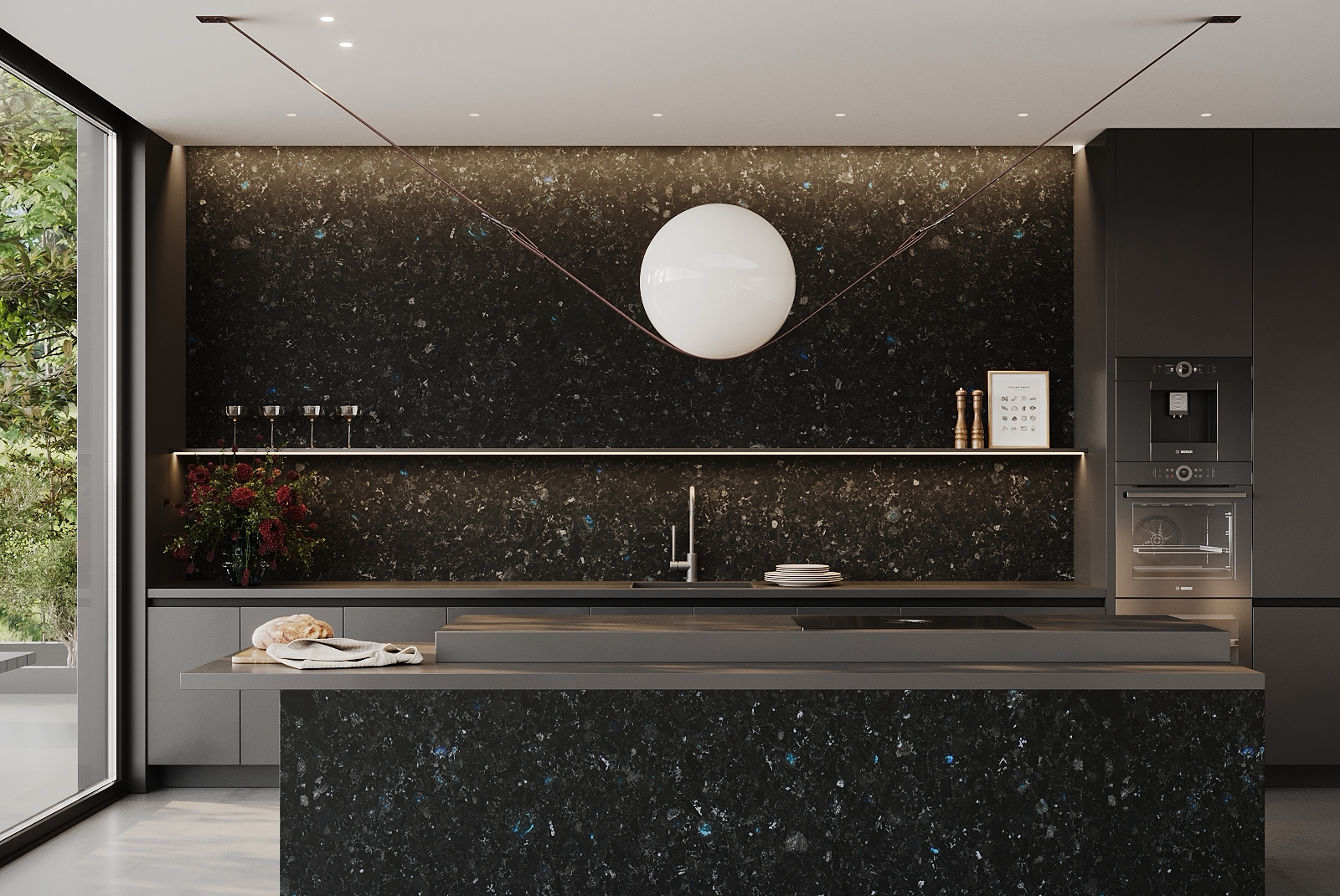
Stone Lighting as Part of Architecture
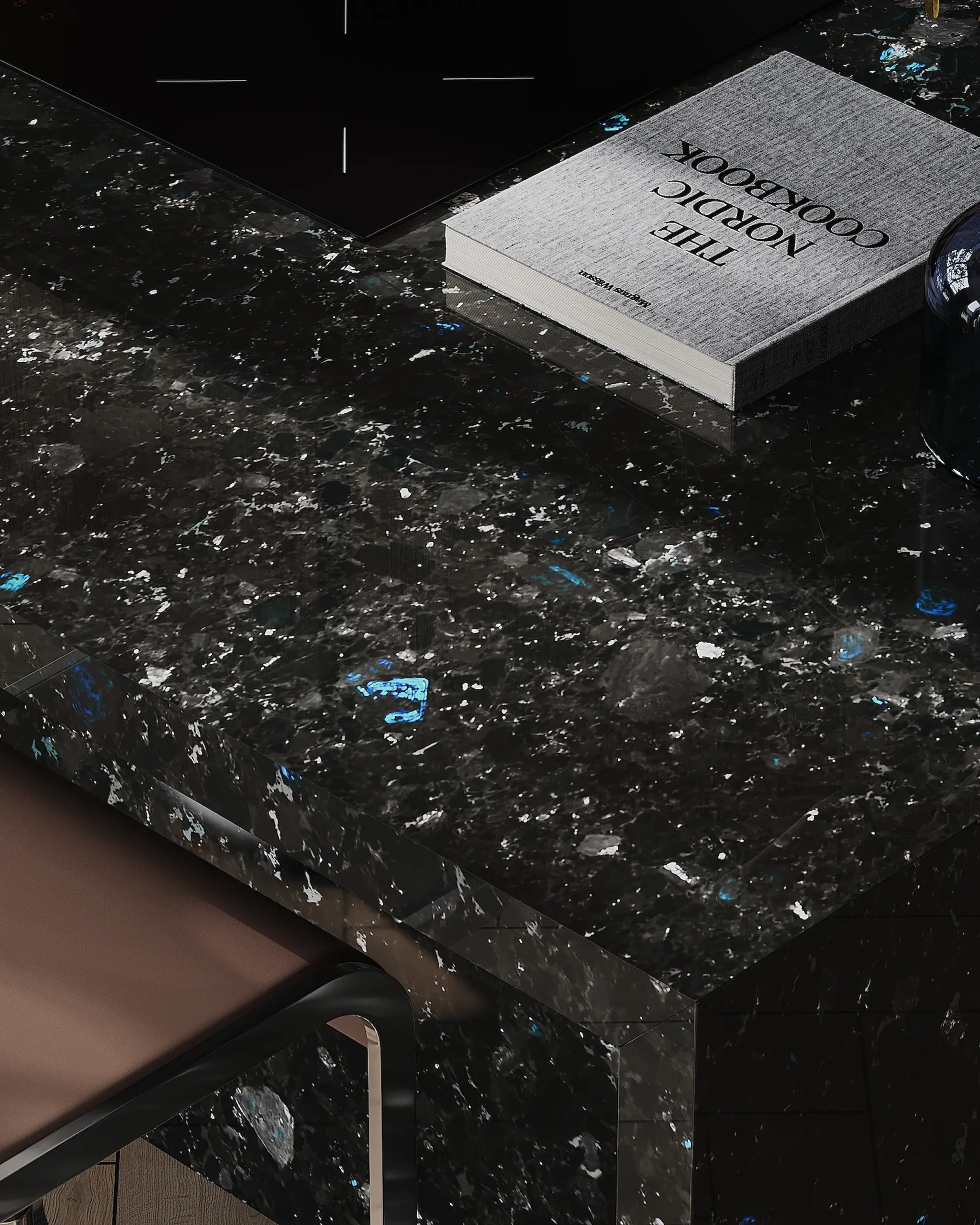
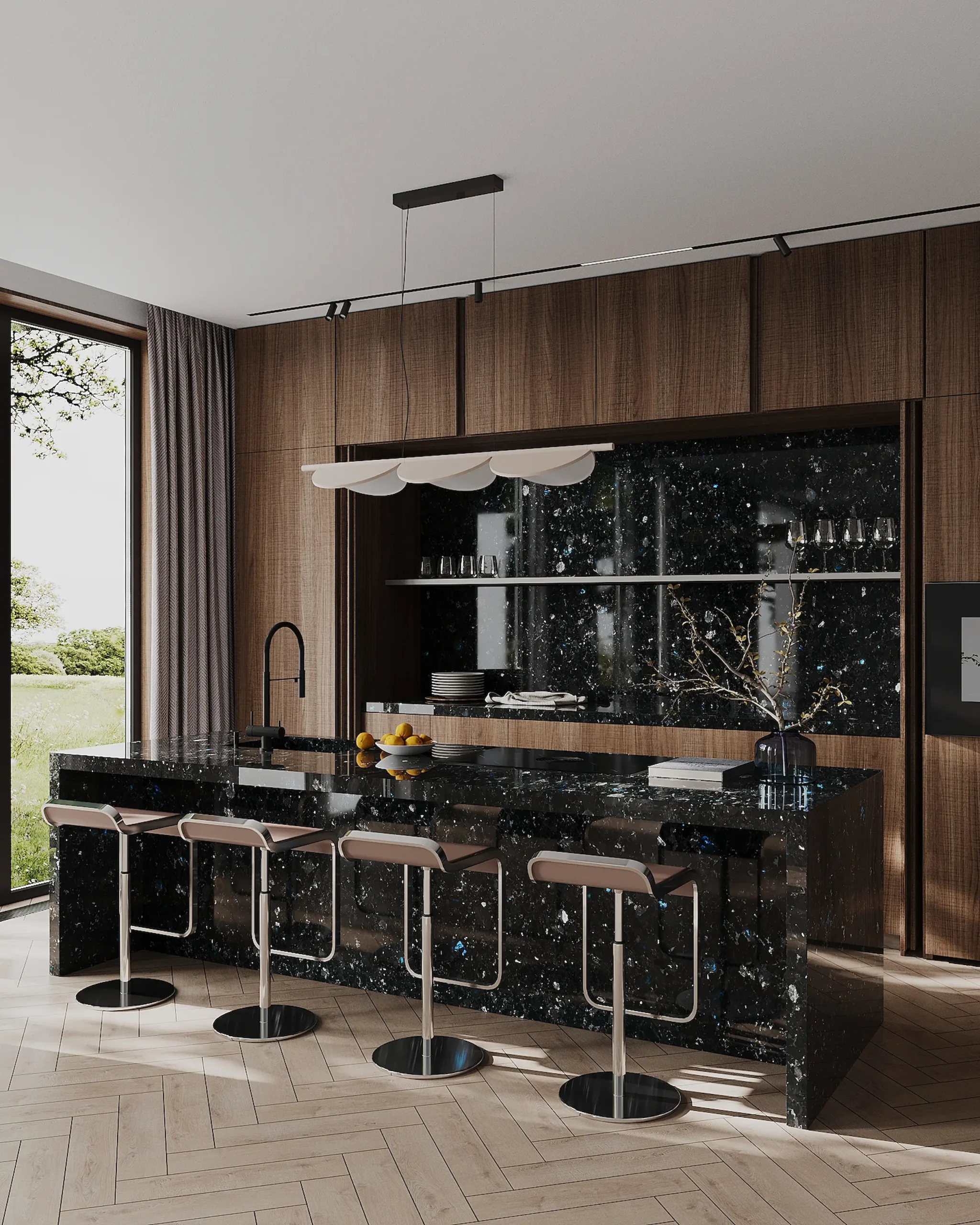
Stone lighting design is not a finishing step — it is part of the architectural concept. In the case of labradorite, it defines whether the material remains a restrained black stone or reveals its full depth and natural iridescence.
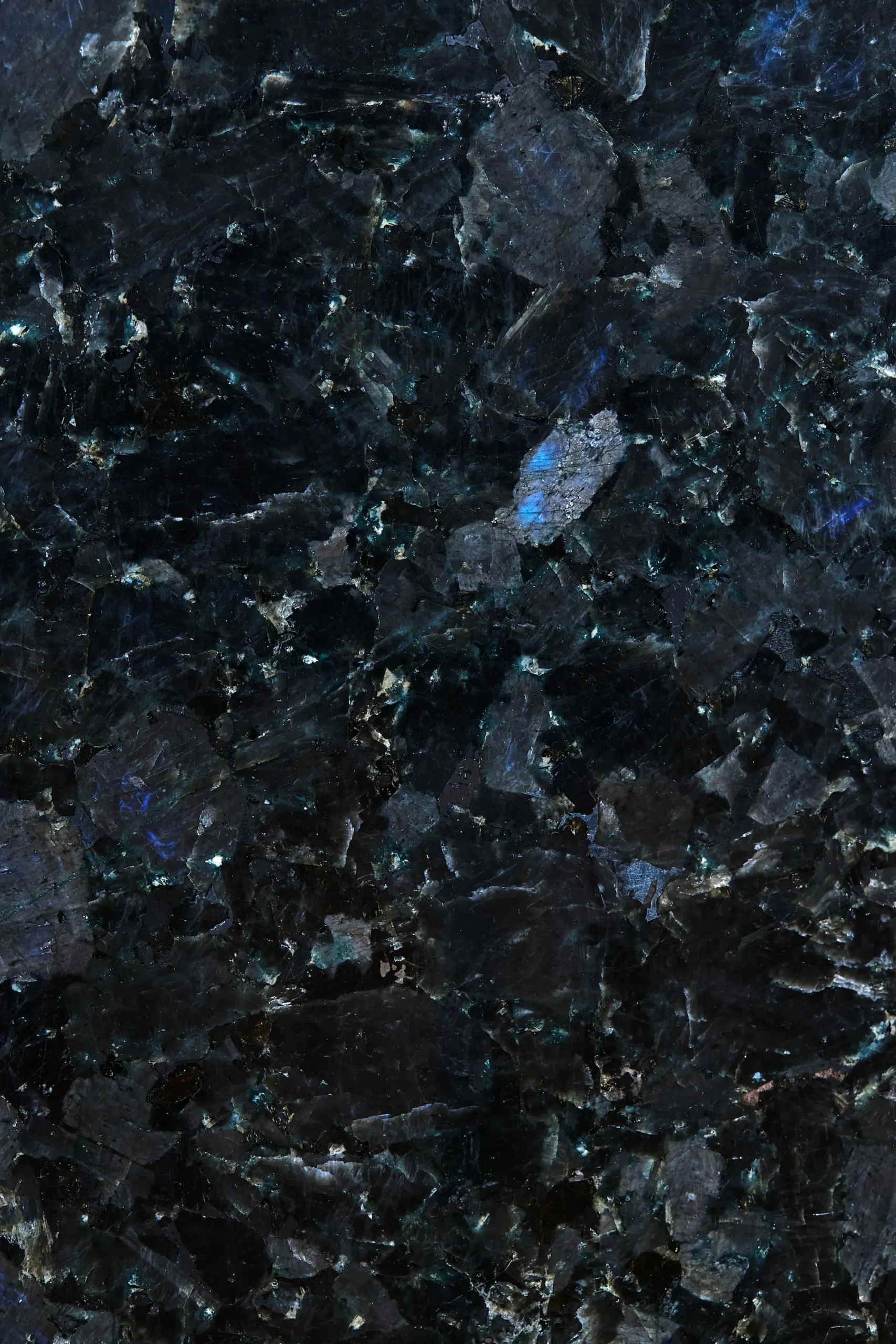
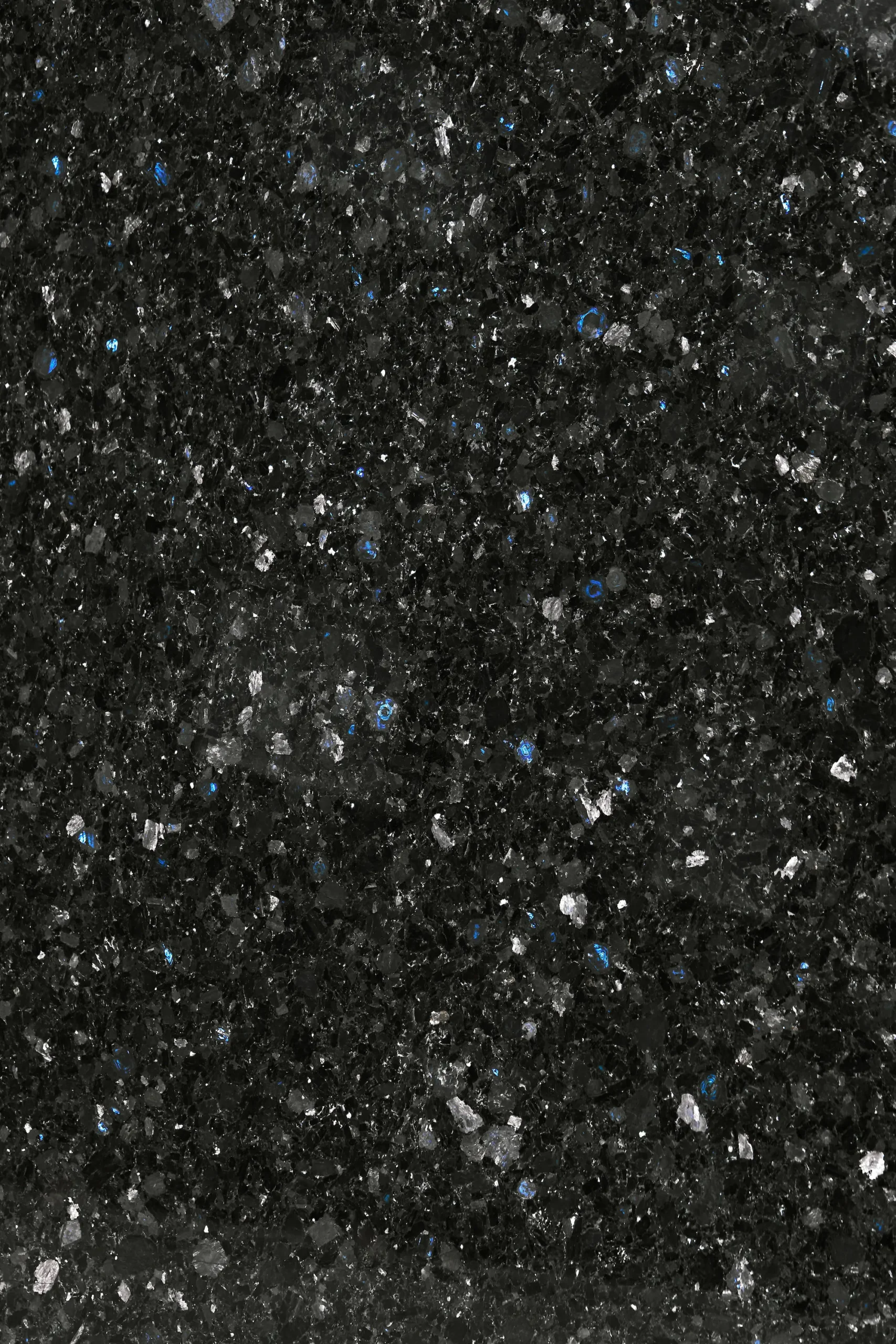
Labradorescence is a physical optical effect that depends on the angle, temperature, and intensity of light. This is why labradorite lighting must be considered at the design stage, not after installation.
How Light Type Affects the Effect
LED 2700K — Warm Golden Glow
Warm light enhances depth and creates a soft atmosphere. In this scenario, black stone appears calm and refined, while blue iridescence remains subtle and localized. This is typically used in residential interiors where atmosphere is more important than contrast.LED 3000K — Balanced Blue
The most versatile solution for black stone illumination. At this temperature, labradorite reveals its graphite base with controlled blue highlights. This is the optimal choice for most interior and architectural applications.LED 4000K — Cool Depth
Cooler light increases contrast and makes the structure more pronounced. Iridescence becomes more visible, but the space may lose warmth. This approach is often used in minimalistic or material-focused architecture.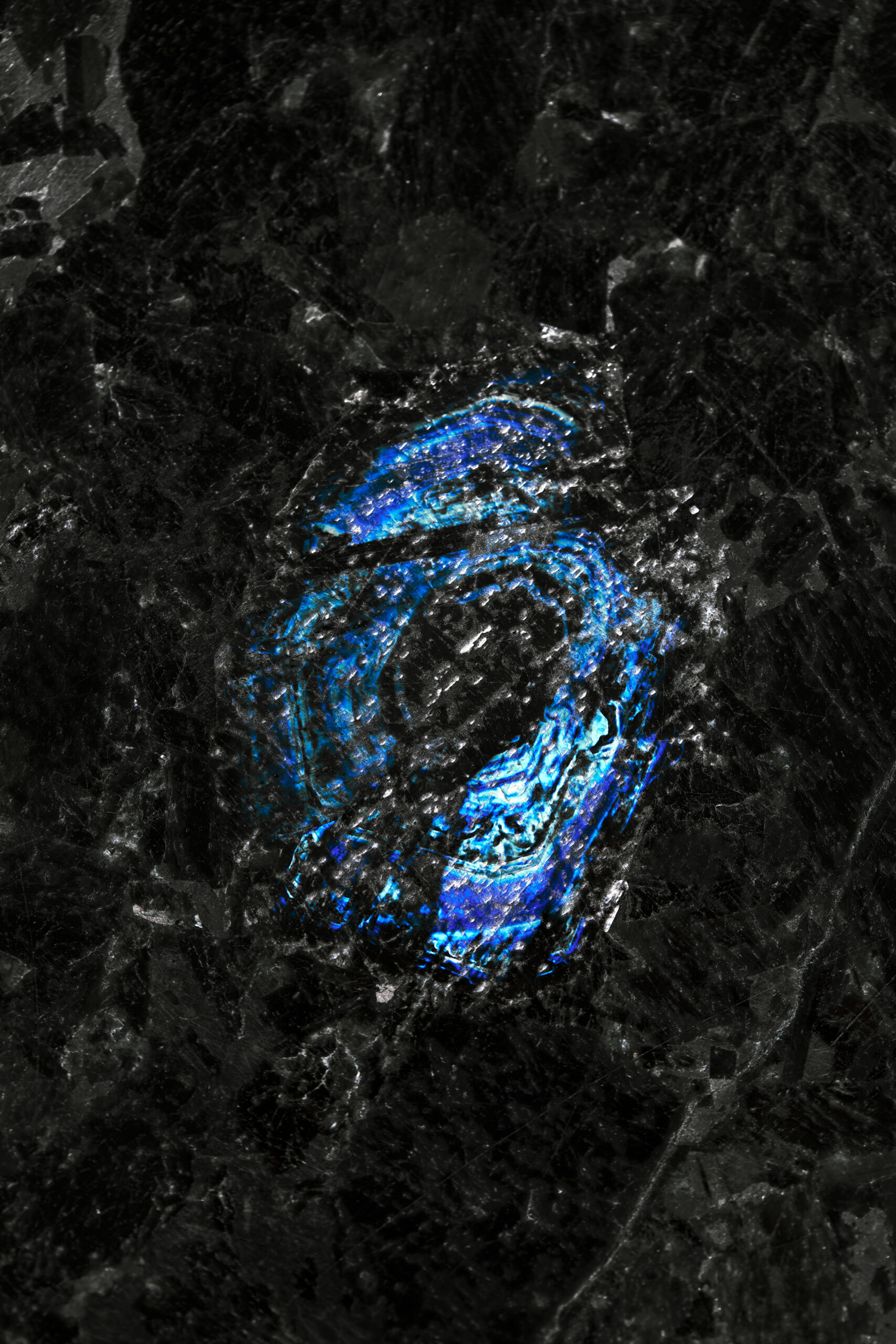
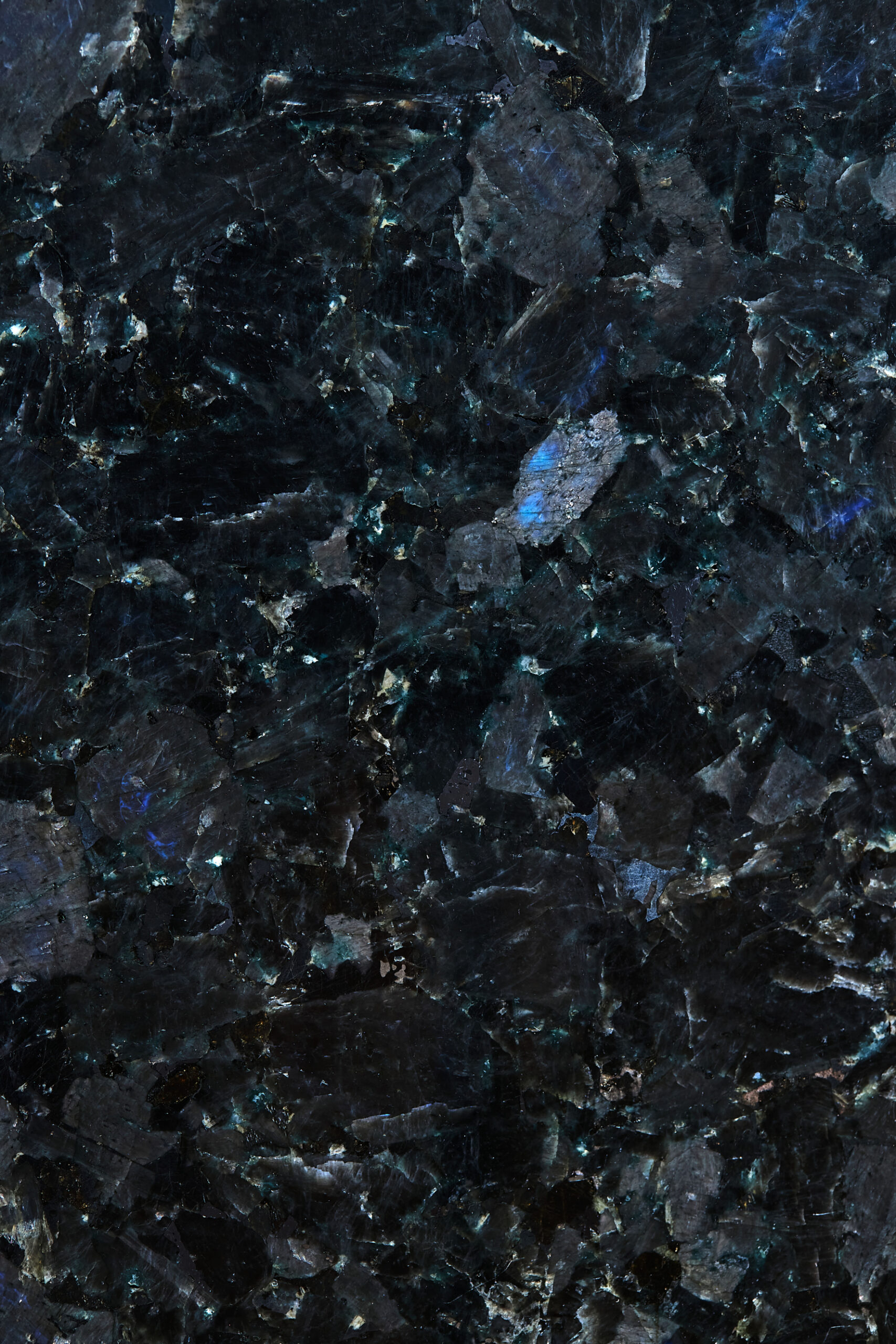
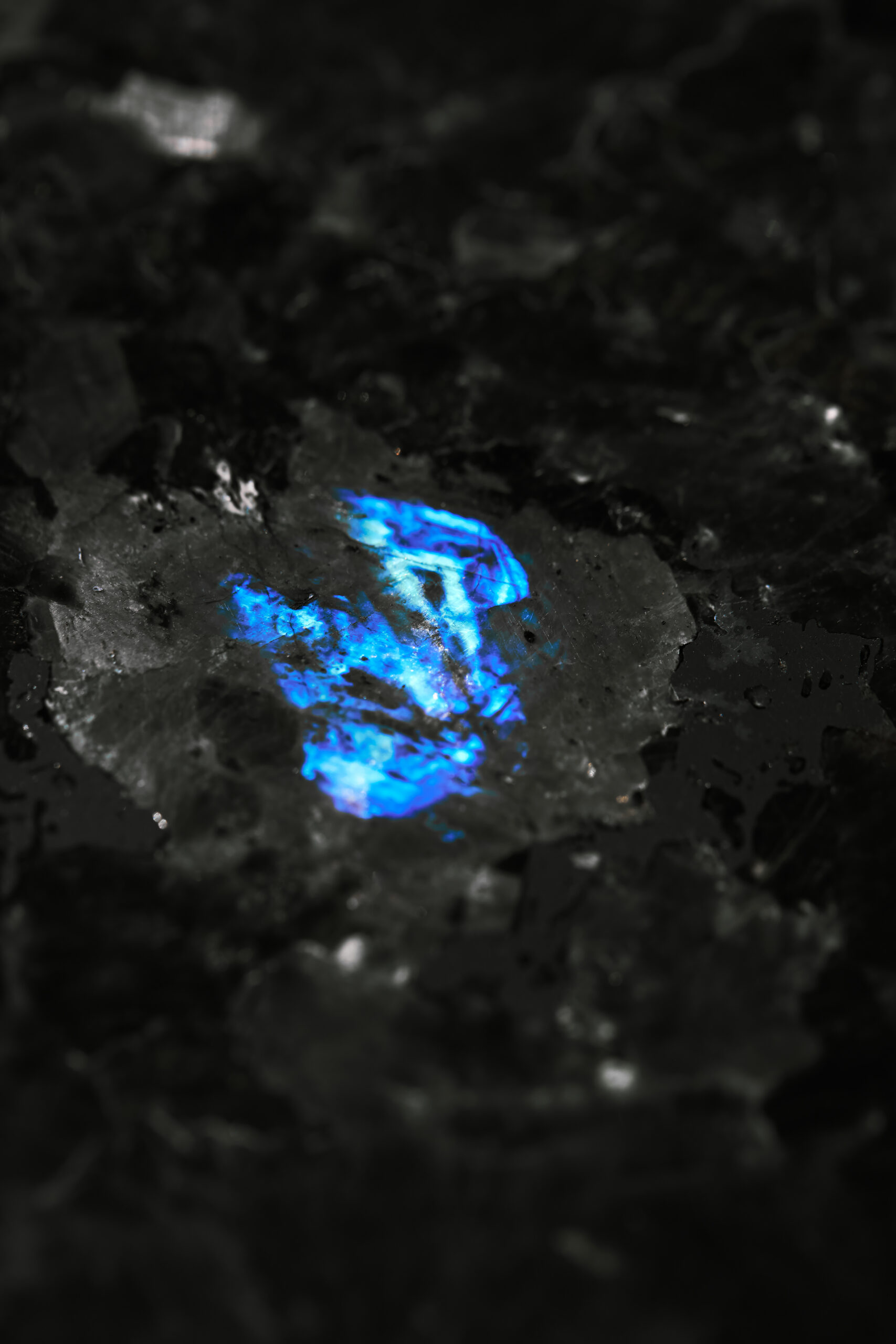
Light Angles
30–45° — Optimal Angle
Light at a 30–45° angle allows it to penetrate the crystalline layers of labradorite. This is where the characteristic blue shimmer becomes visible. This angle is critical for:- vertical wall cladding
- feature panels
- large-format surfaces
Less than 30° — Surface Effect
Light becomes too sharp and creates excessive contrast, reducing depth perception.More than 45° — Loss of Iridescence
Light becomes too direct. Labradorite appears as a flat dark surface without visual depth.Spot vs Diffuse Lighting
Spot Lighting
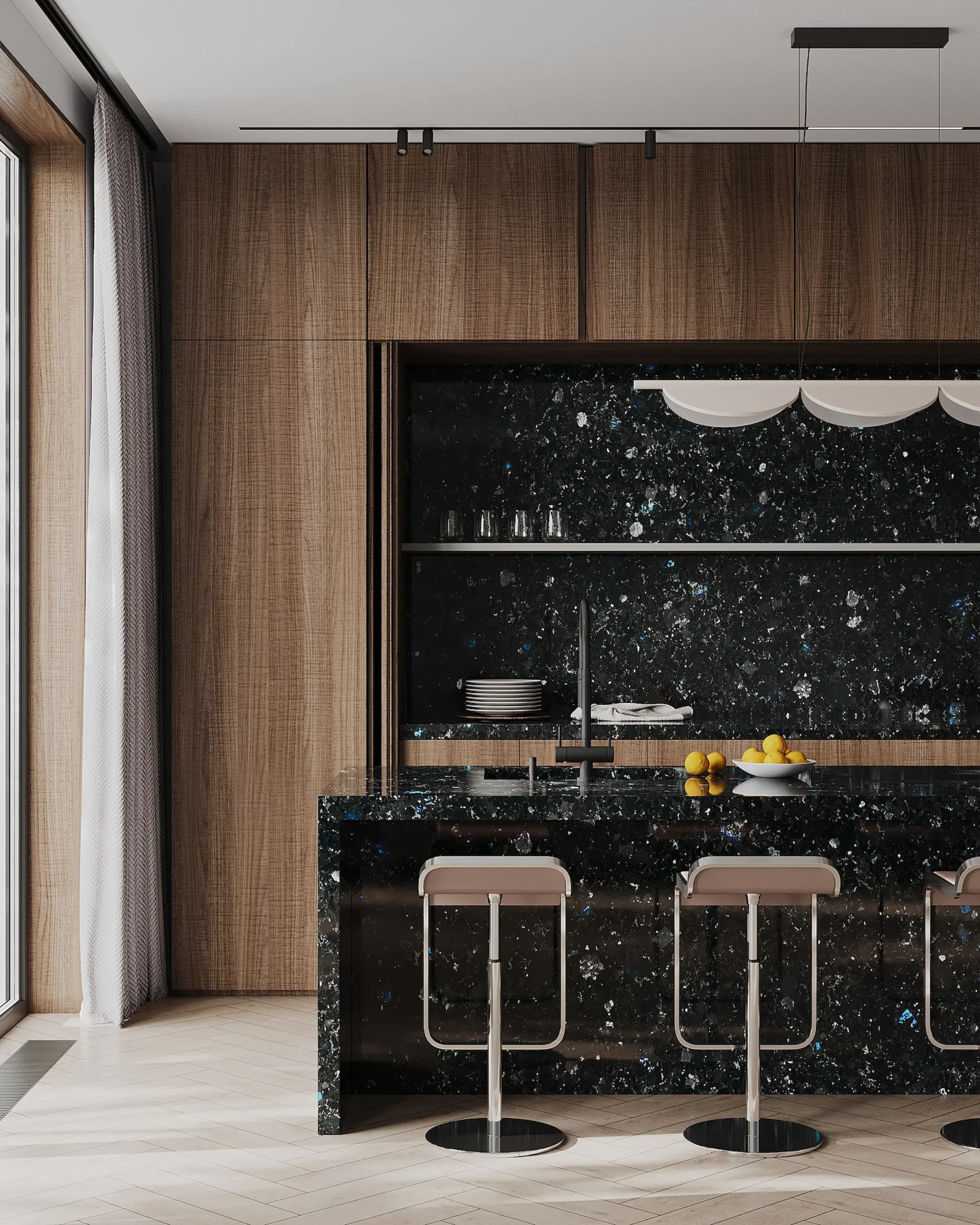
Directional lighting (spotlights, track systems, recessed fixtures) is essential for revealing labradorescence. It:- highlights structure
- creates depth
- activates the material
Diffuse Lighting
Provides overall illumination and sets the general tone of the space. In this condition:- black stone appears more restrained
- iridescence is reduced
- focus shifts from material to form
Combined Approach
The most effective strategy:- base diffuse lighting
- targeted accent lighting
Natural Daylight
Side Light
The most effective natural condition. It acts similarly to angled artificial lighting and reveals structure.Direct Sunlight
Can overwhelm the surface. Reflections become uncontrolled and less refined.Diffuse Daylight
Creates a uniform, restrained appearance. Labradorite acts as a deep architectural background.Day-to-Evening Transition
This is a key advantage of the material.- Day → restrained graphite surface
- Evening → activated blue iridescence under warm light
Common Mistakes in Stone Lighting
Frontal Lighting
The most common mistake. It suppresses labradorescence completely.Uniform Lighting Across Surfaces
Lack of rhythm and contrast. Black stone appears flat and inactive.Incorrect Colour Temperature
Lighting that is too warm or too cold can distort the material’s appearance.Low Light Intensity
Insufficient light prevents the optical effect from appearing.Lack of Real Material Testing
Lighting is not tested on actual slabs. This is critical when working with labradorite.Designer Checklist
- integrate lighting at the concept stage
- use 30–45° angles
- combine lighting types
- choose appropriate colour temperature (2700–3000K for residential)
- test lighting on real material samples
FAQ
What is the best lighting temperature for black stone?
2700–3000K is optimal for revealing labradorescence while maintaining depth.Why doesn’t black stone show blue iridescence?
Usually due to incorrect lighting angle or lack of directional light.Can general lighting alone reveal labradorescence?
No. Accent lighting is required.Does natural light change the effect?
Yes. Labradorite reacts dynamically to daylight conditions.How Lighting Defines Black Stone
Lighting defines how black stone performs in an interior — as a restrained background or as an active architectural element. It is light that reveals labradorescence, interacting with the internal crystalline structure of the material and creating a depth that cannot be achieved by surface texture alone.
With the correct angle, colour temperature, and light intensity, labradorite changes its character throughout the day: in daylight it remains a calm graphite mass, while in the evening it reveals a subtle blue iridescence. This variability makes natural black stone not a static material, but a part of the architectural scenario of the space.